Vajad kellegagi rääkida?
Küsi julgelt abi LasteAbi
Logi sisse

Exercise Physiology - lecture 4 Blood, gas exchange, transport (0)

1 Hindamata
Punktid
Exercise  
Physiology
Blood
Gas Exchange and 
Transport
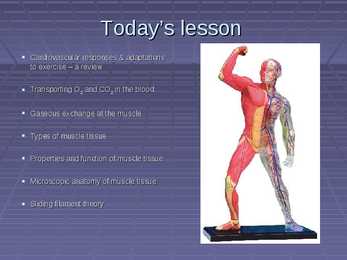
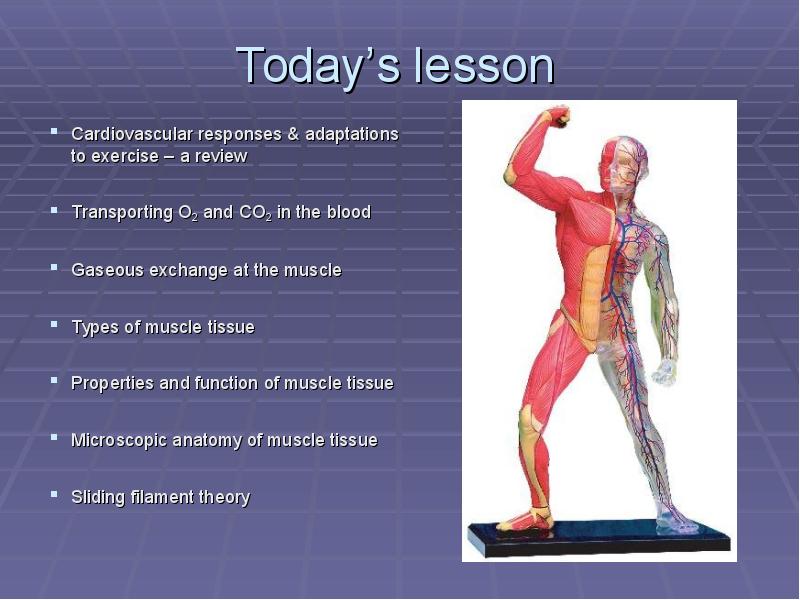
Today’s lesson
 Cardiovascular  responses  & adaptations 
to exercise – a review
 Transporting O  and CO  in the  blood
2
2
 Gaseous exchange at the  muscle
  Types  of muscle tissue
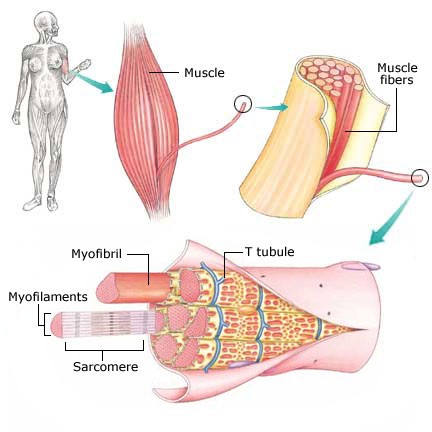
 Properties and  function  of muscle tissue
 Microscopic  anatomy  of muscle tissue
 Sliding  filament  theory
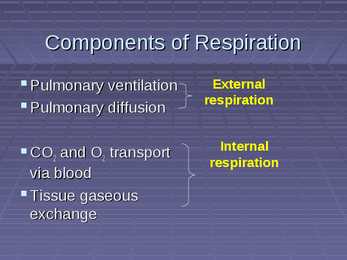
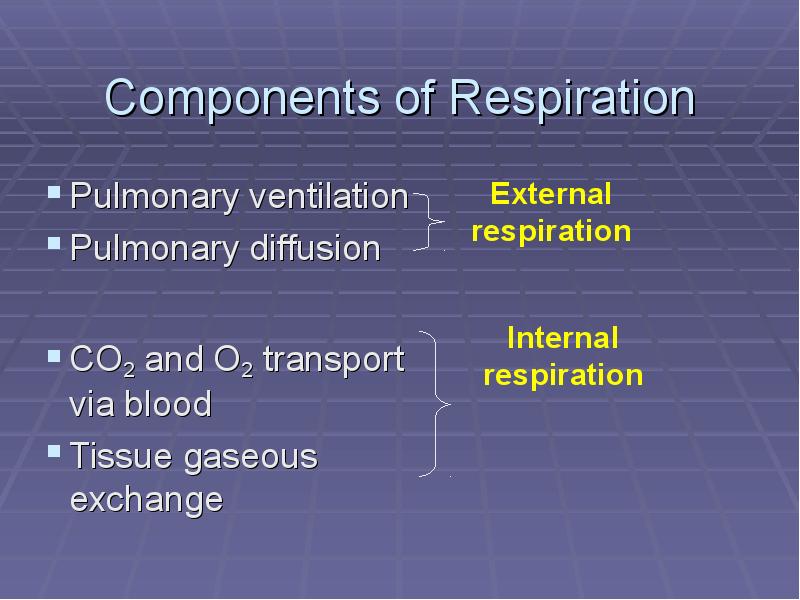
Components  of Respiration
 Pulmonary ventilation 
External  
 Pulmonary diffusion
respiration
 CO  and O  transport 
Internal  
2
2
respiration
via blood
 Tissue gaseous 
exchange
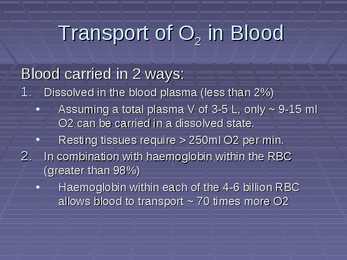
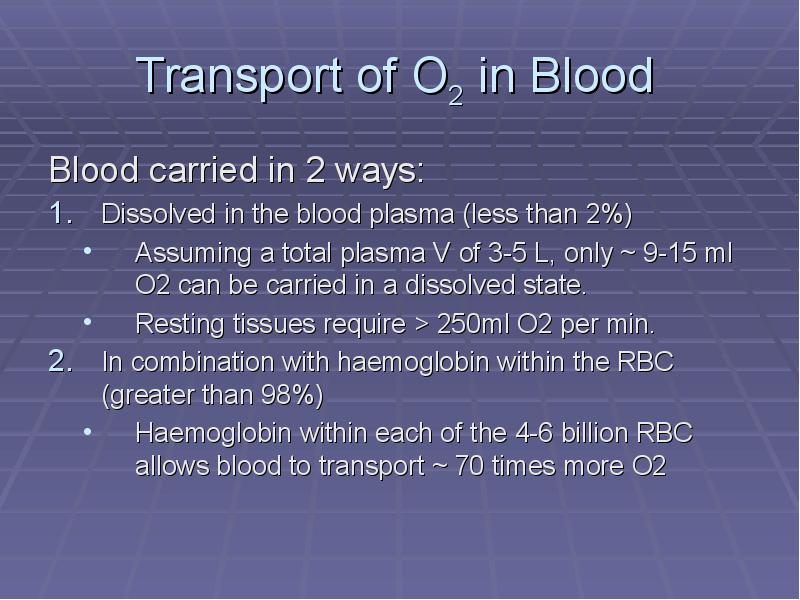
Transport of O  in Blood
2
Blood carried in 2  ways :
1. Dissolved in the blood  plasma  (less  than  2%)

Assuming a total plasma V of 3-5 L, only ~ 9-15 ml 
O2 can be carried in a dissolved state.

Resting tissues require > 250ml O2 per min.
2. In combination with haemoglobin within the RBC 
( greater  than 98%)

Haemoglobin within each of the 4-6 bil ion RBC 
al ows blood to transport ~ 70  times  more O2
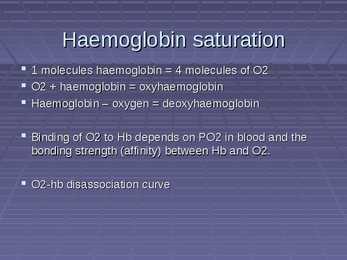
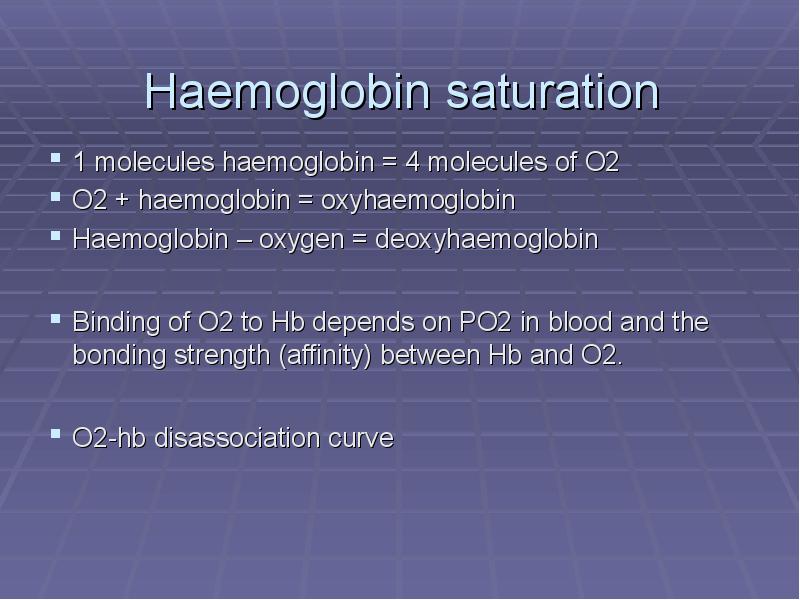
Haemoglobin  saturation
 1 molecules haemoglobin = 4 molecules of O2
 O2 + haemoglobin = oxyhaemoglobin
 Haemoglobin –  oxygen  = deoxyhaemoglobin
 Binding of O2 to Hb depends on PO2 in blood and the 
bonding  strength  (affinity) between Hb and O2.
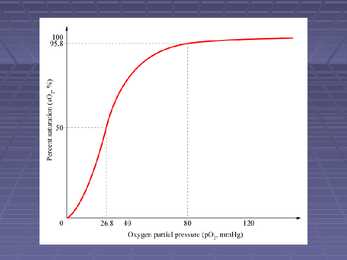
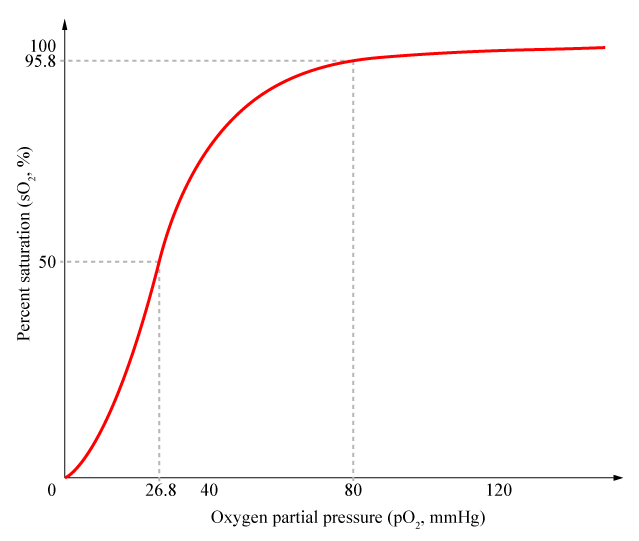
 O2-hb disassociation curve
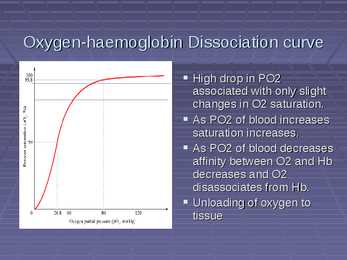
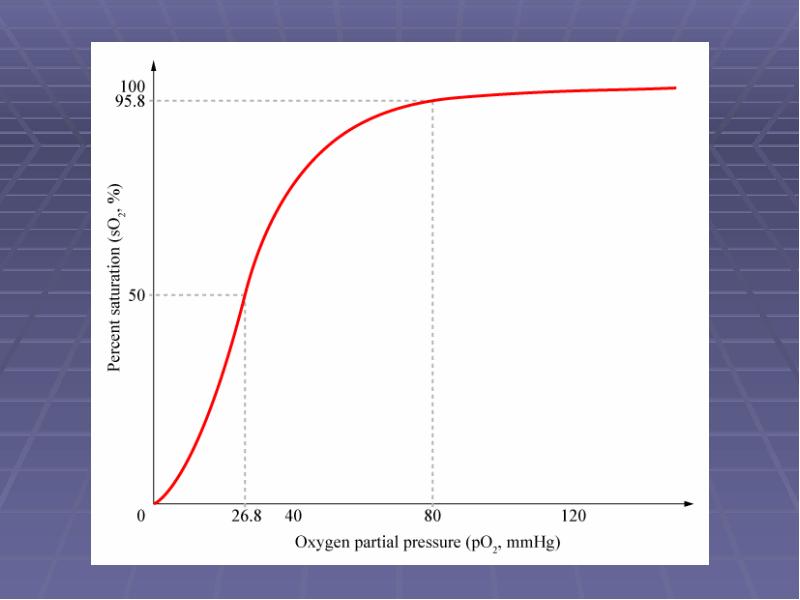
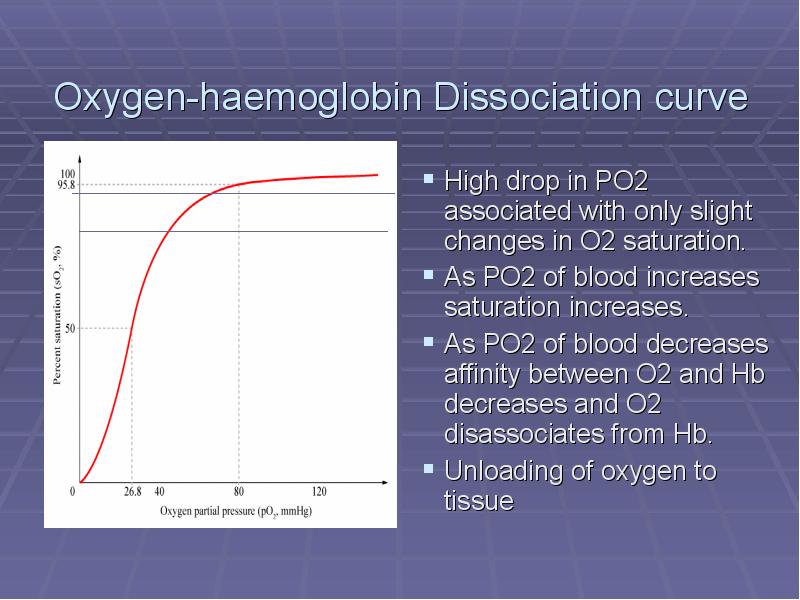
Oxygen-haemoglobin Dissociation curve
 High drop in PO2 
associated with only slight 
changes  in O2 saturation.
 As PO2 of blood  increases  
saturation increases.
 As PO2 of blood decreases 
affinity between O2 and Hb 
decreases and O2 
disassociates from Hb.
 Unloading of oxygen to 
tissue
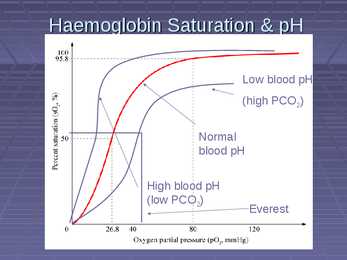
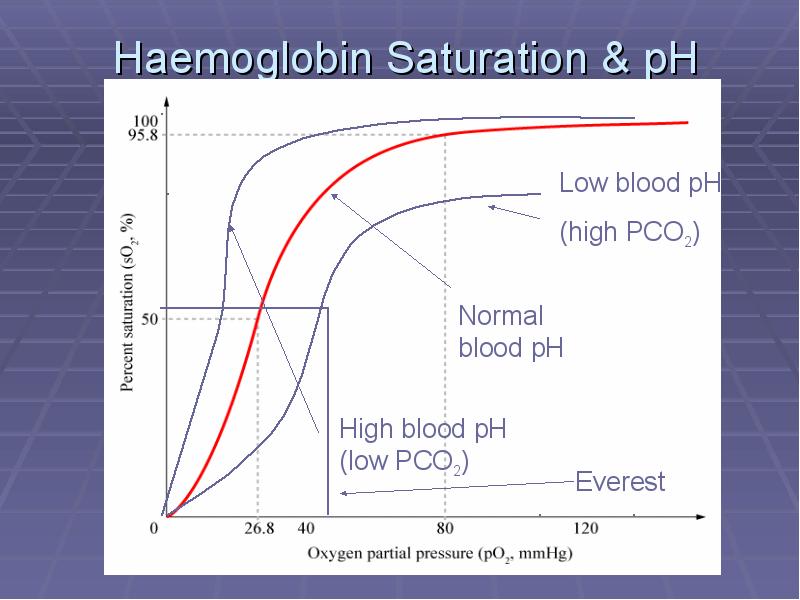
Haemoglobin Saturation & pH
Low blood pH
(high PCO )
2
Normal 
blood pH
High blood pH 
(low PCO )
2
Everest
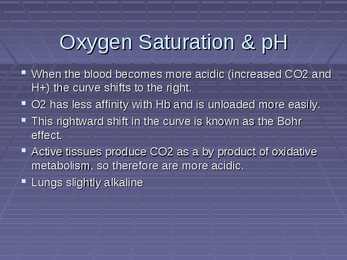
Oxygen Saturation & pH
 When the blood becomes more acidic (increased CO2 and 
H+) the curve shifts to the right. 
 O2 has less affinity with Hb and is unloaded more easily. 
 This rightward shift in the curve is known as the  Bohr  
effect. 
  Active  tissues produce CO2 as a by product of oxidative 
metabolism , so therefore are more acidic.
 Lungs slightly alkaline
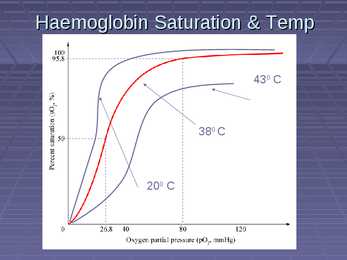
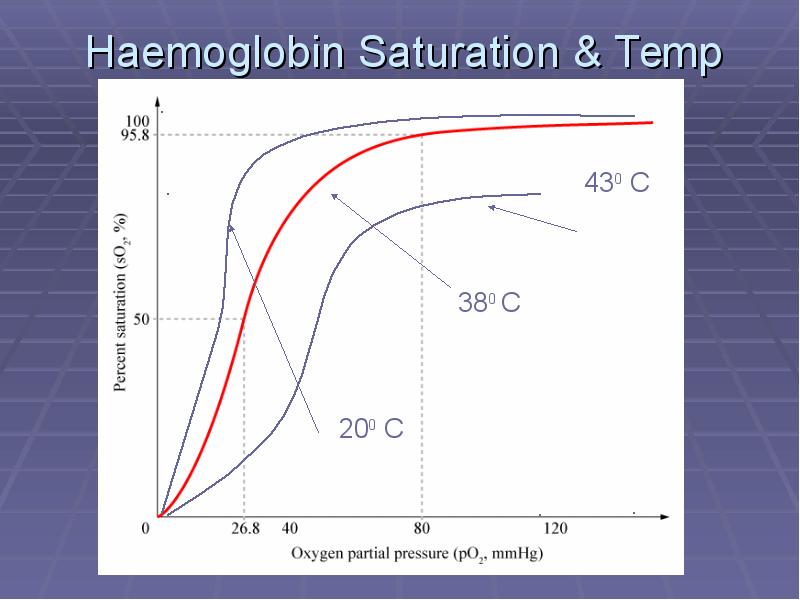
Haemoglobin Saturation & Temp
430 C
380 C
200 C
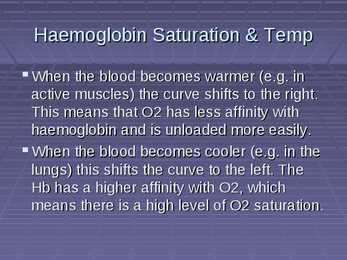
Haemoglobin Saturation & Temp
 When the blood becomes warmer (e.g. in 
active muscles) the curve shifts to the right. 
This  means  that O2 has less affinity with 
haemoglobin and is unloaded more easily.
 When the blood becomes cooler (e.g. in the 
lungs) this shifts the curve to the  left . The 
Hb has a  higher  affinity with O2, which 
means  there  is a high level of O2 saturation.
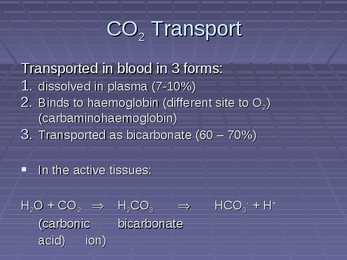
CO  Transport
2
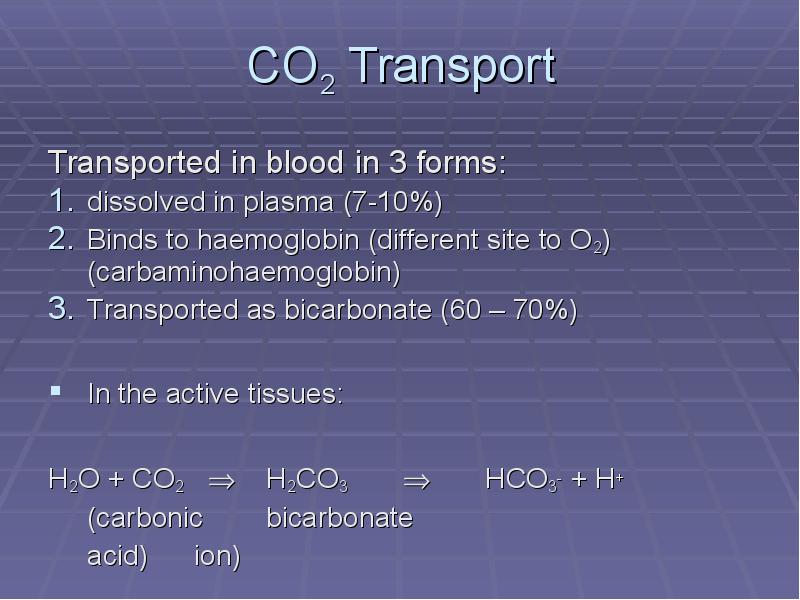
Transported in blood in 3 forms:
1. dissolved in plasma (7-10%)
2. Binds to haemoglobin ( different site to O ) 
2
(carbaminohaemoglobin)
3. Transported as bicarbonate (60 – 70%)
 In the active tissues:
H O + CO    ⇒  H CO        ⇒
HCO - + H+
2
2
2
3
3
(carbonic
bicarbonate
acid)
ion)
CO  Transport
2
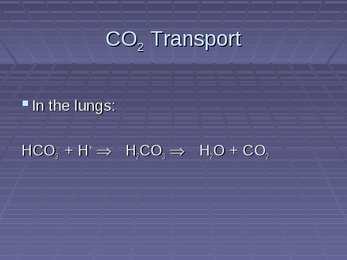
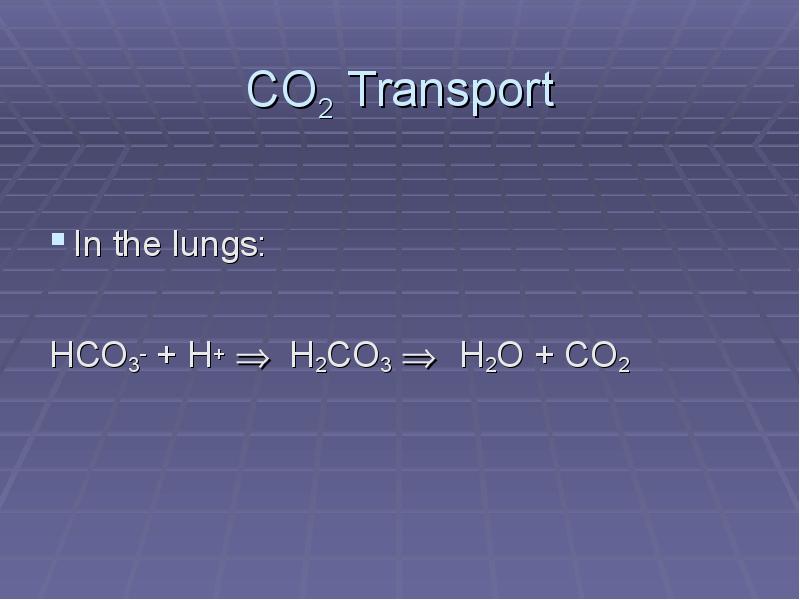
 In the lungs:
HCO - + H+ ⇒  H CO  ⇒  H O + CO
3
2
3
2
2
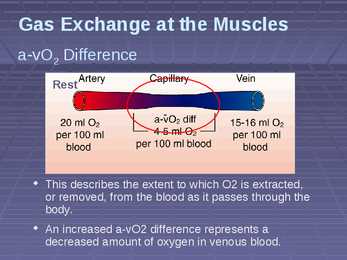
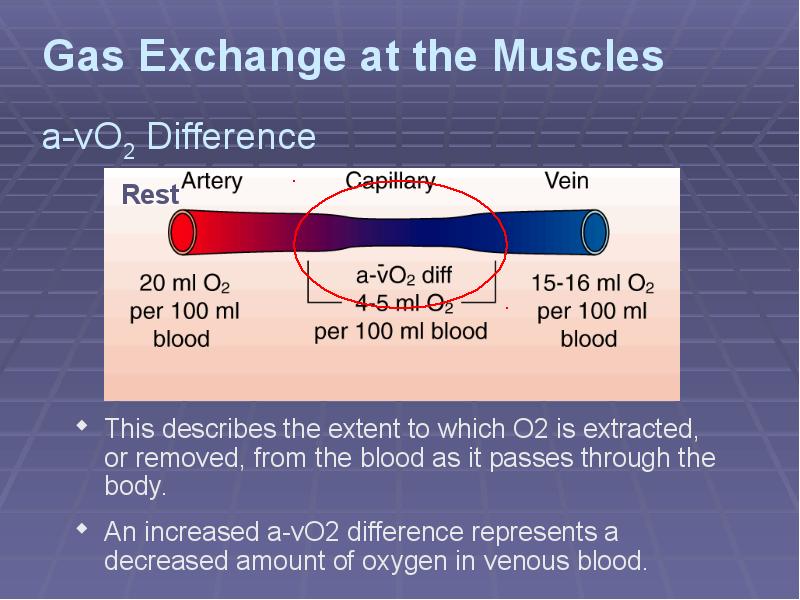
Gas Exchange at the Muscles
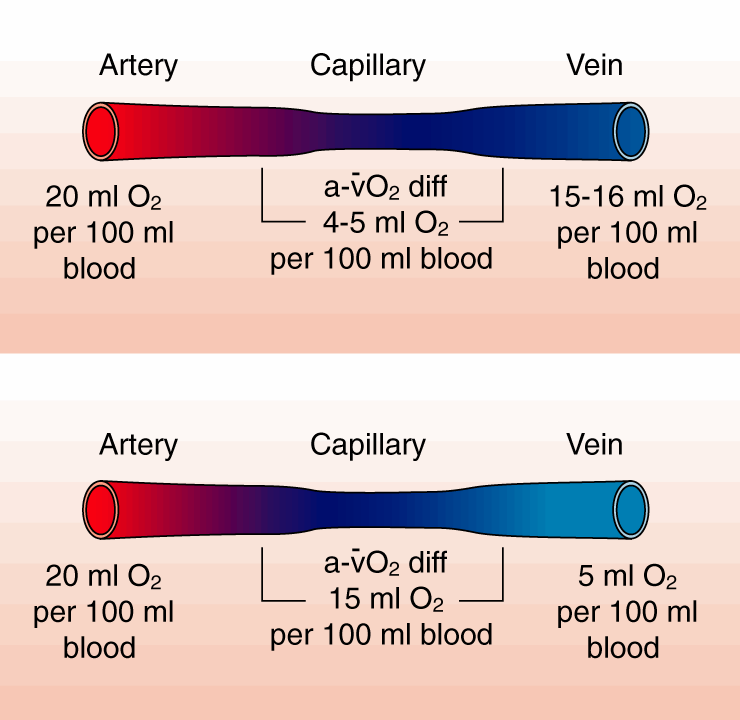
a-vO  Dif-ference
2
Rest
 This describes the extent to which O2 is extracted, 
or removed, from the blood as it passes  through  the 
body .
 An increased a-vO2  difference  represents a 
decreased amount of oxygen in venous blood.
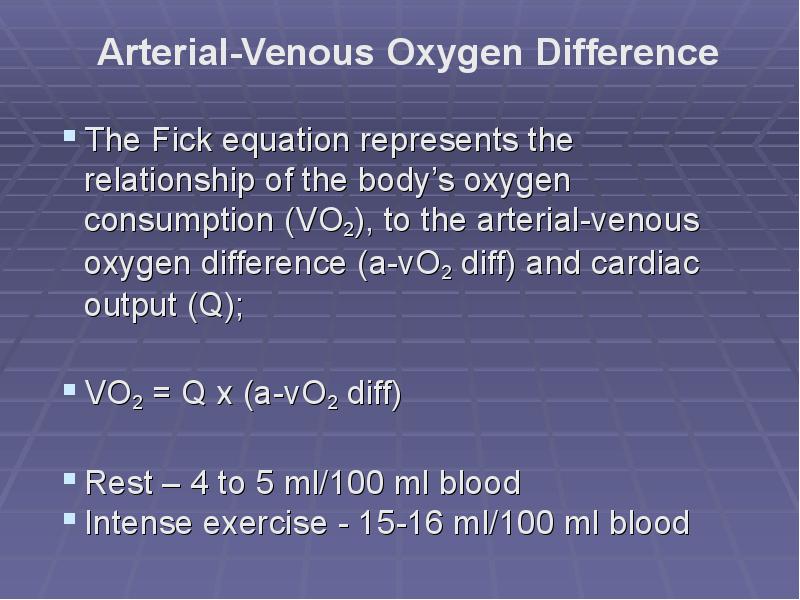
Arterial -Venous Oxygen Difference
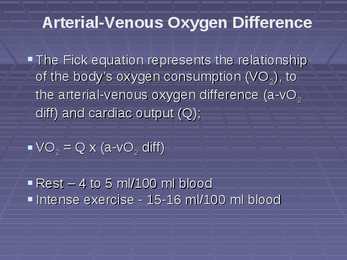
 The Fick equation represents the  relationship  
of the body’s oxygen  consumption  (VO ), to 
2
the arterial-venous oxygen difference (a-vO  
2
diff ) and  cardiac  output (Q);
 VO  = Q x (a-vO  diff)
2
2
 Rest – 4 to 5 ml/100 ml blood
 Intense exercise - 15-16 ml/100 ml blood
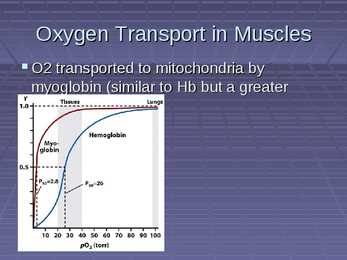
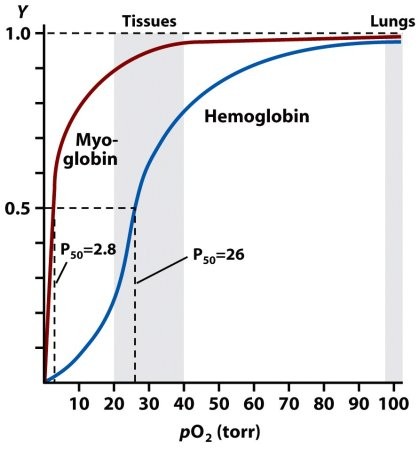
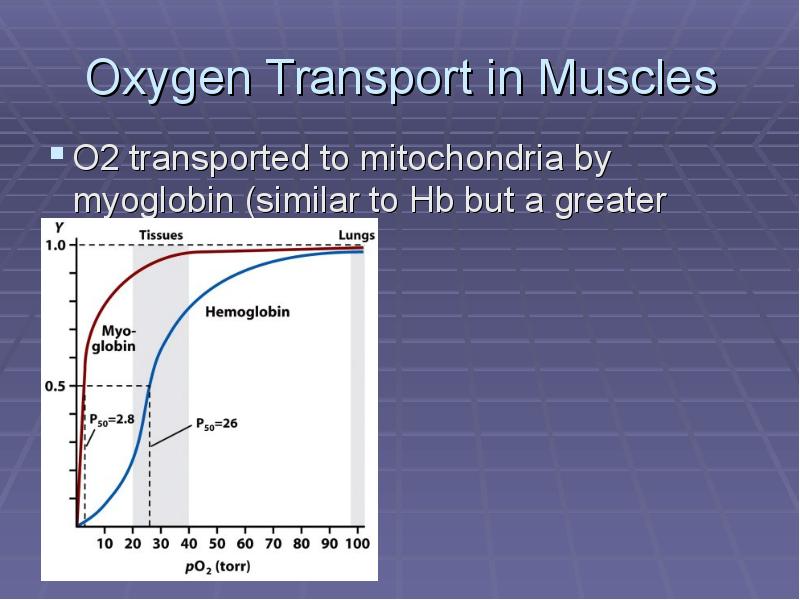
Oxygen Transport in Muscles
 O2 transported to mitochondria by 
myoglobin (similar to Hb but a greater 
affinity to O2)
Factors affecting O2  delivery  and 
Uptake
 O2 content of blood
 Blood flow
 Local conditions  (e.g. pH, temp)
Recommended Reading
 Baechle, T. R., Earle, R.W. (eds) (2008) 
Essentials of strength training and conditioning
2nd ed., National Strength and Conditioning 
Association . Champaign, Il .: Human Kinetics.
 Marieb, E.N. (2000) Essentials of human 
anatomy and physiology. 6th ed.,  Addison  
Wesley, Longman.
 McArdle, W.D., Katch, F.I., Katch, V.L. (2006) 
Essentials of exercise physiology. 3rd ed., 
London: Lippincott,  Williams  & Wilkins. 
 Wilmore, J.H., Costil , D.L. and Kenney, L.W. 
(2008) Physiology of  sport  and exercise. 3rd ed., 
Champaign, Il .: Human Kinetics.
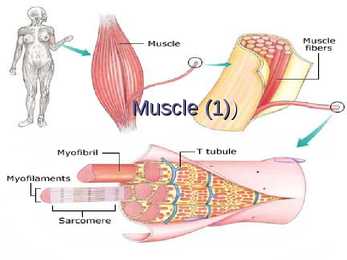
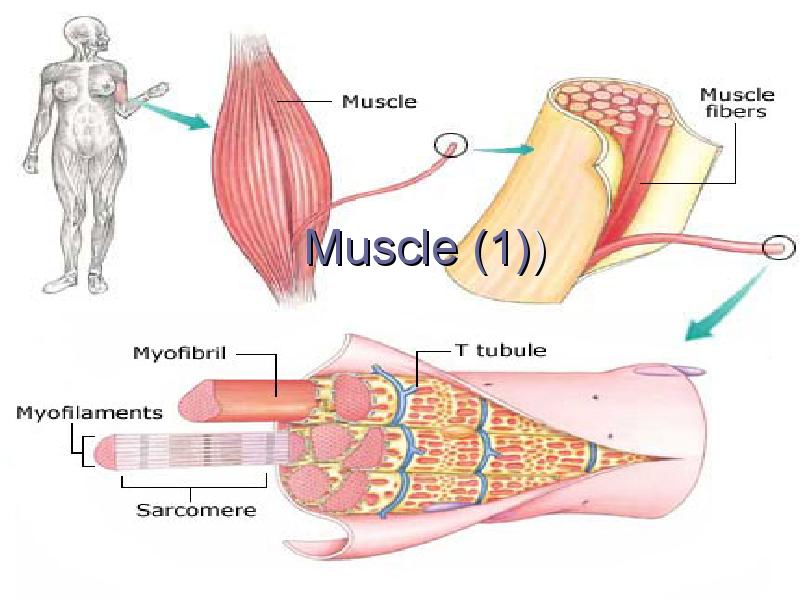
Muscle (1))
Types of muscle tissue
Task
(i) identify the 3 types of muscle tissue
(ii) give an example of each
(iii) try to identify similarities and  differences  
between the 3 types 
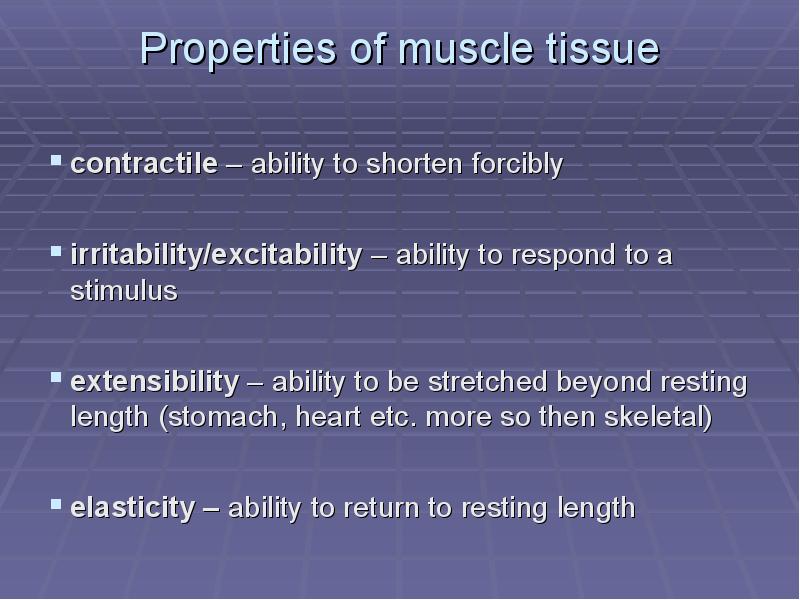
Properties of muscle tissue
 contractile –  ability  to shorten forcibly
 irritability/excitability – ability to respond to a stimulus
 extensibility – ability to be stretched  beyond  resting 
length  (stomach,  heart  etc. more so then skeletal)
 elasticity – ability to return to resting length  
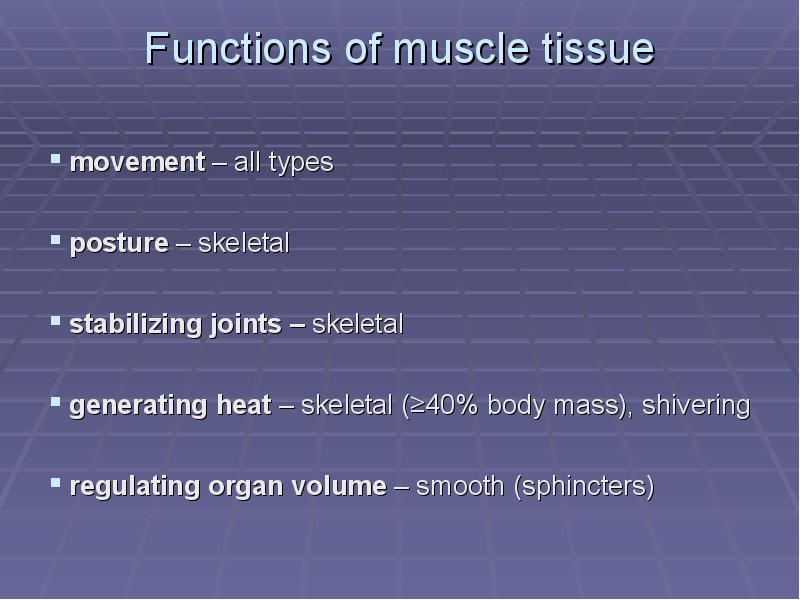
Functions  of muscle tissue
  movement  – al  types
 posture – skeletal 
 stabilizing  joints  – skeletal
 generating heat – skeletal (≥40% body mass), shivering 
 regulating organ  volume  – smooth (sphincters) 
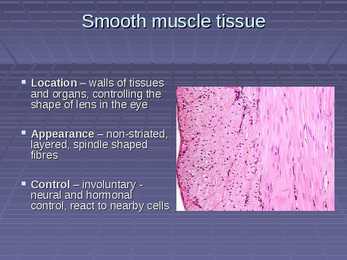
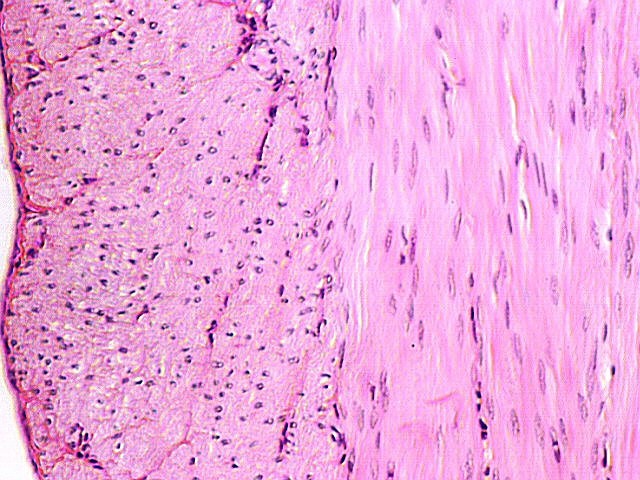
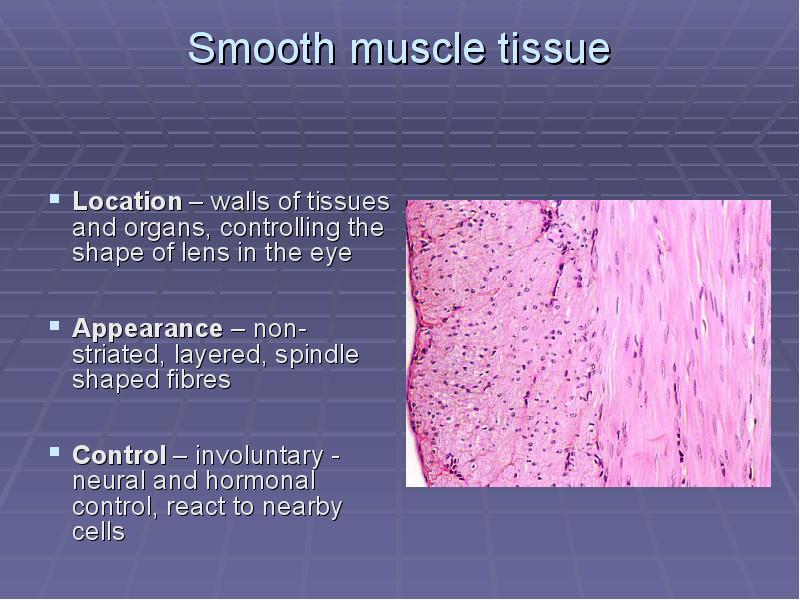
Smooth muscle tissue
  Location  – walls of tissues 
and organs , controlling the 
shape  of lens in the eye
 Appearance – non-striated, 
layered, spindle shaped 
fibres
  Control  – involuntary - 
neural and hormonal 
control,  react  to nearby cells
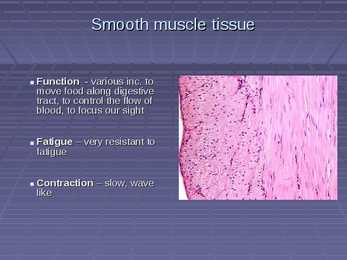
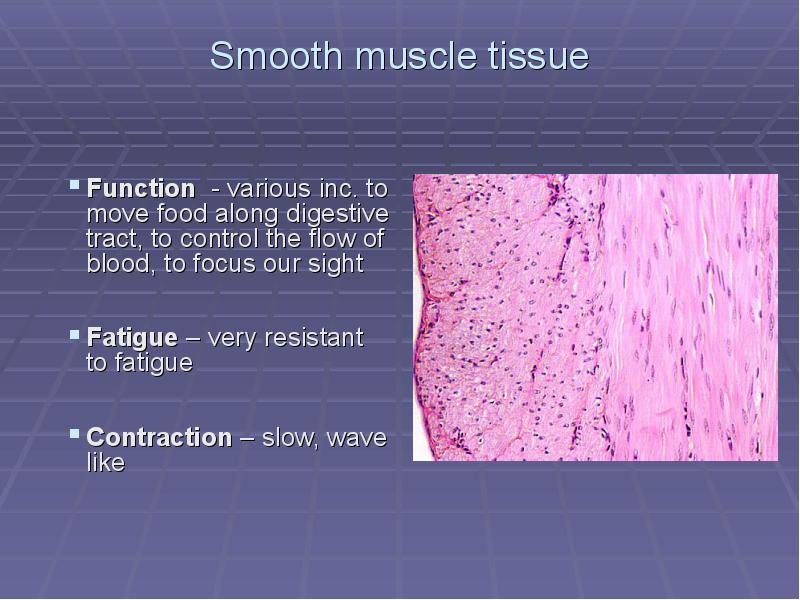
Smooth muscle tissue
 Function  - various inc. to 
move  food  along  digestive 
tract , to control the flow of 
blood, to  focus  our  sight
  Fatigue  – very resistant to 
fatigue
 Contraction –  slow , wave 
like 
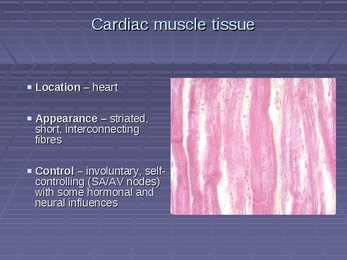
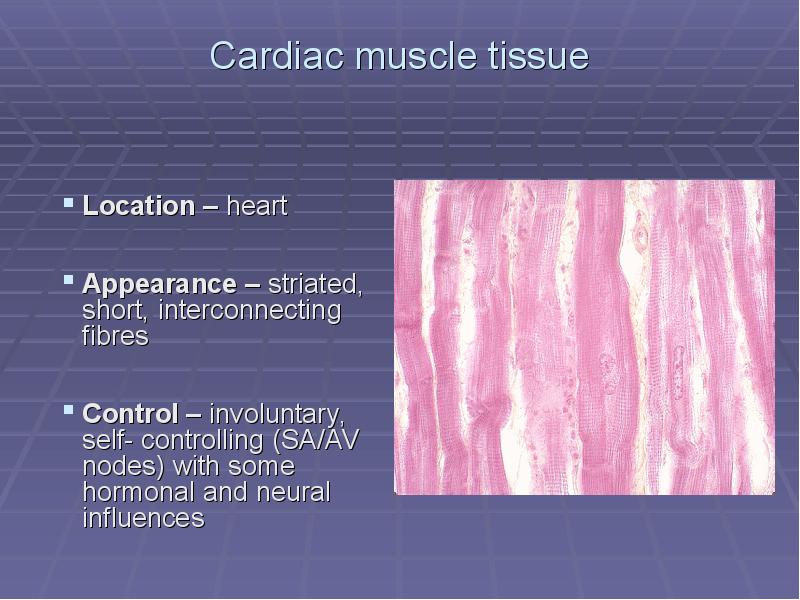
Cardiac muscle tissue
 Location – heart
 Appearance – striated, 
short, interconnecting 
fibres
 Control – involuntary, self- 
controlling (SA/AV nodes) 
with some hormonal and 
neural influences
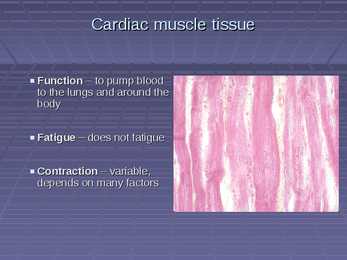
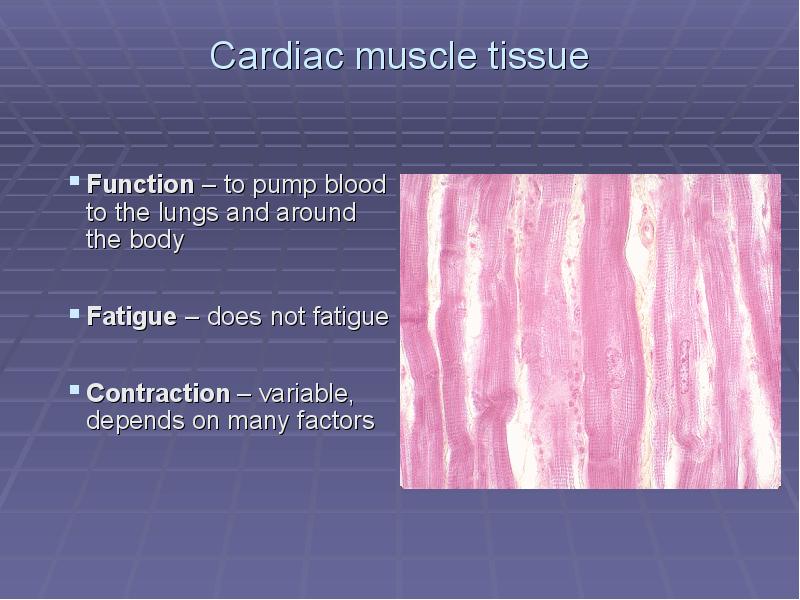
Cardiac muscle tissue
 Function – to  pump  blood 
to the lungs and  around  the 
body
 Fatigue – does not fatigue
 Contraction – variable, 
depends on many factors
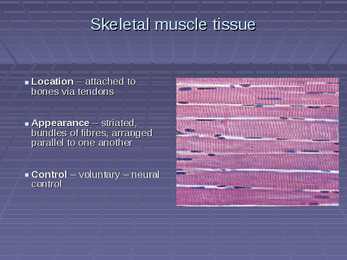
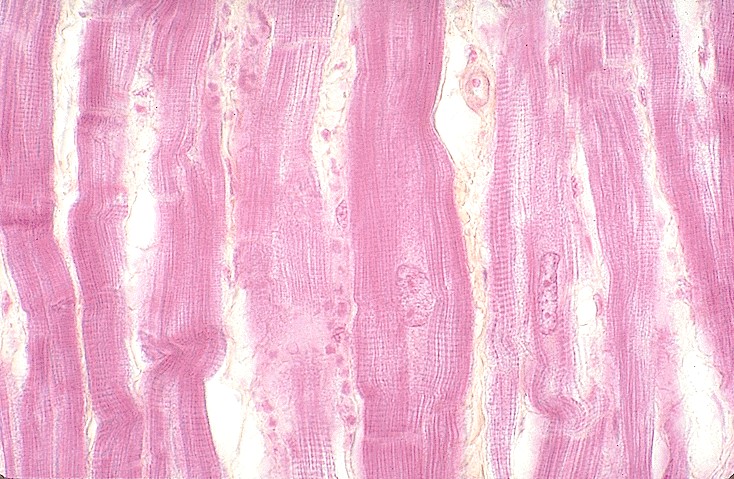
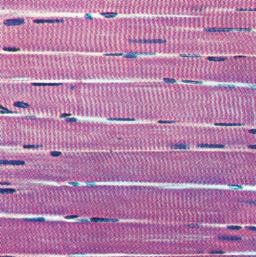
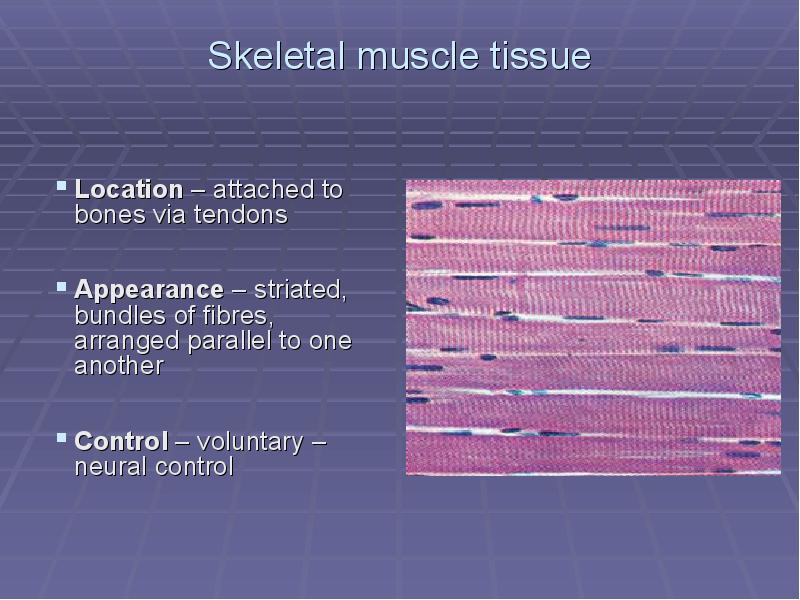
Skeletal muscle tissue
 Location – attached to 
bones via tendons
 Appearance – striated, 
bundles of fibres, arranged 
paral  el to one  another
 Control – voluntary – neural 
control
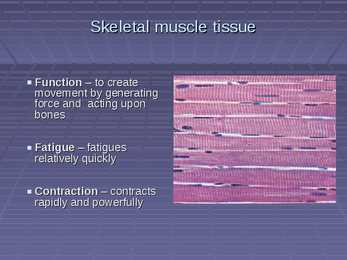
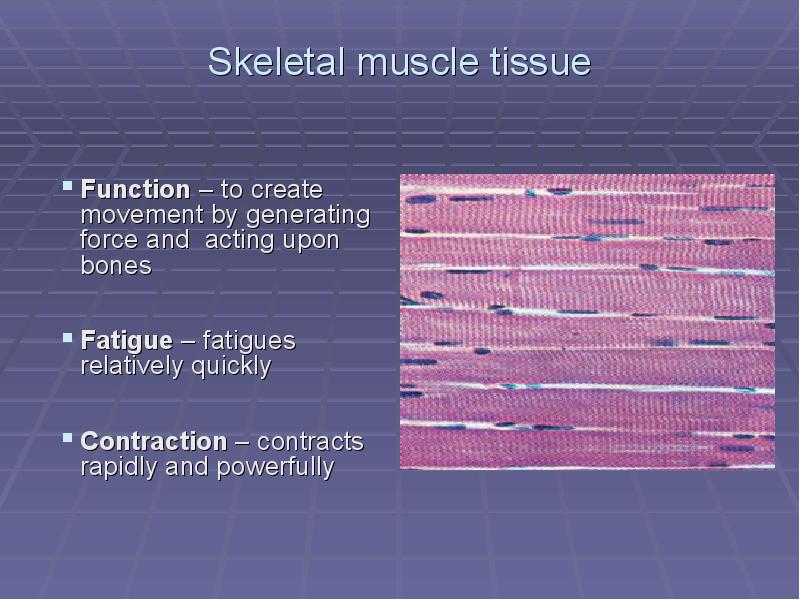
Skeletal muscle tissue
 Function – to create 
movement by generating 
force  and   acting  upon 
bones
 Fatigue – fatigues 
relatively quickly
 Contraction – contracts 
rapidly and powerfully

Document Outline

  • Exercise Physiology
  • Today’s lesson
  • Components of Respiration
  • Transport of O2 in Blood
  • Haemoglobin saturation
  • Slide 6
  • Oxygen-haemoglobin Dissociation curve
  • Haemoglobin Saturation & pH
  • Oxygen Saturation & pH
  • Haemoglobin Saturation & Temp
  • Slide 11
  • CO2 Transport
  • Slide 13
  • Slide 14
  • Slide 15
  • Oxygen Transport in Muscles
  • Factors affecting O2 delivery and Uptake
  • Recommended Reading
  • Slide 19
  • Types of muscle tissue
  •  Properties of muscle tissue 
  •  Functions of muscle tissue 
  •  Smooth muscle tissue 
  • Slide 24
  •  Cardiac muscle tissue 
  • Slide 26
  •  Skeletal muscle tissue 
  • Slide 28
Vasakule Paremale
Exercise Physiology - lecture 4 Blood-gas exchange-transport #1 Exercise Physiology - lecture 4 Blood-gas exchange-transport #2 Exercise Physiology - lecture 4 Blood-gas exchange-transport #3 Exercise Physiology - lecture 4 Blood-gas exchange-transport #4 Exercise Physiology - lecture 4 Blood-gas exchange-transport #5 Exercise Physiology - lecture 4 Blood-gas exchange-transport #6 Exercise Physiology - lecture 4 Blood-gas exchange-transport #7 Exercise Physiology - lecture 4 Blood-gas exchange-transport #8 Exercise Physiology - lecture 4 Blood-gas exchange-transport #9 Exercise Physiology - lecture 4 Blood-gas exchange-transport #10 Exercise Physiology - lecture 4 Blood-gas exchange-transport #11 Exercise Physiology - lecture 4 Blood-gas exchange-transport #12 Exercise Physiology - lecture 4 Blood-gas exchange-transport #13 Exercise Physiology - lecture 4 Blood-gas exchange-transport #14 Exercise Physiology - lecture 4 Blood-gas exchange-transport #15 Exercise Physiology - lecture 4 Blood-gas exchange-transport #16 Exercise Physiology - lecture 4 Blood-gas exchange-transport #17 Exercise Physiology - lecture 4 Blood-gas exchange-transport #18 Exercise Physiology - lecture 4 Blood-gas exchange-transport #19 Exercise Physiology - lecture 4 Blood-gas exchange-transport #20 Exercise Physiology - lecture 4 Blood-gas exchange-transport #21 Exercise Physiology - lecture 4 Blood-gas exchange-transport #22 Exercise Physiology - lecture 4 Blood-gas exchange-transport #23 Exercise Physiology - lecture 4 Blood-gas exchange-transport #24 Exercise Physiology - lecture 4 Blood-gas exchange-transport #25 Exercise Physiology - lecture 4 Blood-gas exchange-transport #26 Exercise Physiology - lecture 4 Blood-gas exchange-transport #27 Exercise Physiology - lecture 4 Blood-gas exchange-transport #28
Punktid 100 punkti Autor soovib selle materjali allalaadimise eest saada 100 punkti.
Leheküljed ~ 28 lehte Lehekülgede arv dokumendis
Aeg2013-11-20 Kuupäev, millal dokument üles laeti
Allalaadimisi 2 laadimist Kokku alla laetud
Kommentaarid 0 arvamust Teiste kasutajate poolt lisatud kommentaarid
Autor NyLily Õppematerjali autor
Veri, gaasivahetus ja transport. Inglise keelne PP esitlus antud teemadest.

Sarnased õppematerjalid

Exercise Physiology - lecture 1
24
ppt

Exercise Physiology - lecture 1

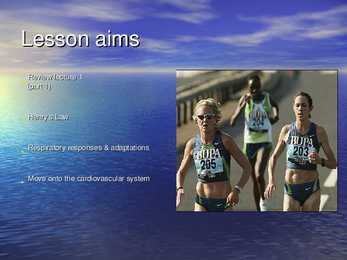
Lesson aims Review lecture 1 Review lecture 1 · (part 1) (part 1) Henry's Law · Respiratory responses & adaptations · Move onto the cardiovascular system · Lecture 1 ­ recall task 1) Identify the route that air takes from the atmosphere to the blood (e.g., air enters through the mouth and then...). 2) Explain the mechanism of how air is drawn into the body with reference to Boyle's law and diffusion. 3) With reference to Dalton's law explain why training at altitude can be problematic for athletes. Henry's Law · When a mixture of gases is in contact with a liquid, each gas will dissolve in the liquid in proportion to its partial pressure. · Greater concentration of gas, the more and

Anatoomia ja füsioloogia
Inglise keel unit 5 answers
276
docx

Inglise keel unit 5 answers

may code for no protein [2] 5. 1 mark max for general effect of mutations: mutation may give different, amino acid / primary structure; A ref stop codon some mutations alter, molecular shape / tertiary structure / binding; max 3 for explaining data in Table: - so unable to, accept / transport, HCO3 ; unable to bind ATP; so increase in acidity / decrease in pH; effect on mucus; effect on enzyme(s) /ref pH optimum of enzyme(s); poor digestion of, protein / lipid / starch; AVP; e.g. some mutations, give some transport / have less effect. > 33% (of norm) allows normal digestive function / < 6% [A very low] does not. max 3

Inglise keel
Fitness In Soccer
409
pdf

Fitness In Soccer

above. As a soccer coach, you often tread a thin line between what has been proven scientifically and what is considered “best practice.” Unfortunately, science in soc- cer is still in its infancy, and there are still many question marks in this regard. Soccer is a very complex sport in which different physical abilities are used in tan- dem, often competing for adaptation. Because not everything in the field of soccer science has been “mapped out” yet, we often have to rely on our experience and intuition. I hope this book can help in some small way to make you a better “reasonable

Kategoriseerimata
Neurobioloogias sönade seletus-ingl keelne
9
doc

Neurobioloogias sönade seletus, ingl keelne

AMYGDALA – A structure in the forebrain which is a component of the limbic* system. It is implicated in control of emotions. ANTAGONIST – A chemical which blocks receptors* and stops (inhibits) the effects of agonists*. ANTERIOR – Towards the front, e.g. anterior cingulate cortex – frontal part of the cingulate cortex (part of the brain). ANTEROGRADE AMNESIA – Inability to remember new information since the moment, which triggered amnesia (e.g. stroke, head trauma). ANTEROGRADE TRANSPORT Transport of materials, e.g. neurotransmitter molecules, along the axon, away from the neurone body to axon terminals* where the material is needed. It uses neuronal cystoskeleton, i.e. the system of neurotubules and neurofilaments which make a kind of scaffolding inside a neurone. APHASIA – Absence of speech. ASSOCIATION CORTEX – Areas of the cerebral cortex which are involved in higher processing of sensory information. They integrate new information with that stored in the memory.

Psühholoogia
Liha töötlemine
1168
pdf

Liha töötlemine

is the primary component of sarcoplasmic for locomotion and other gross movements, (cytoplasmic) fluid. It is important in thermo- and they must also perform finer tasks regulation; as a medium for many cellular such as maintaining balance and coordina- processes; and for transport of nutrients tion. Muscle movement and metabolism within the cell, between cells, and between are associated with other diverse functions the muscle and the vascular system. such as aiding in movement of blood and The second largest component of muscle lymph and also in maintaining body tempera-

Inglise keel
Füsioloogia kordamisküsimused 2014
67
docx

Füsioloogia kordamisküsimused 2014

Diffundeeruvad keemilised signaalid kasutatakse: Parakriinne signalisatsioon – some are local mediators that act on neighboring cells, reaching their targets by diffusion over relatively short distances 3 Autokriinne signalisatsioon – secreted chemical also acts on the cells that secreted it Endokriinnääre – hormones are secreted into the blood by specialized glands – to act on various tissues around the body Sünaptiline signaliseerimine – nerve cells release chemicals at their endings to affect the cells they contact Autokriinne, parakriinne ja endokriinne regulatsioon. Parakriinne: signaalid “atakeerivad” neid rakke, mis asuvad lähedal. Nt: mast cells (тучные клетки, мастоциты)- rakudes, mis asuvad sidekudedes on palju sekretoorseid graanuleid, mis sisaldavad enndas histamiini, mis

Füsioloogia
Stretches and exercises in office
12
doc

Stretches and exercises in office

hazards that can come with having an office job. It doesn't have to be that way. Human bodies are made to move. It is recommended that a person break for 5-10 minutes for every hour spent at a workstation. Working "mini" activity breaks into your day can really make a difference in how you feel and even how well you perform your job. Even the busiest person can do it. Just five minutes of movement every hour or two can boost energy and improve your attitude. You'll find that getting your blood pumping and oxygen circulating will help you concentrate better and be more productive, calm, and efficient. Breaks can minimize strain, but they can not relieve stress or improve flexibility, for example. Most people should stretch prior to any strenuous activity. Routine activities like typing or using the phone can lead to injury over a period of time. So, stretching can: - increase your flexibility. Flexible muscles can improve your daily performance. Tasks

Ergonoomika
Kvalitatiivne uurimustöö Emotsioonide regulatsioon ja stress
32
doc

Kvalitatiivne uurimustöö Emotsioonide regulatsioon ja stress

These results indicate that HER is related to a lower cortisol response to psychosocial stress. In conclusion these results suggest that HER and DAR have an impact on the cortisol response. Emotion regulation in relation.. 3 Acknowledgements Firstly I would like to thank my supervisor xxx for his help and advice throughout this research and also xxx is gratefully acknowledged for his support and advice on blood markers of stress. Emotion regulation in relation.. 4 Table of Contents 1 Introduction 5 1.2 The effects of emotion regulation (ER) strategies in response to psychological stress 6 Figure 1. A process model of emotionregulation 8 Figure 2

Psühholoogia


Meedia

Kommentaarid (0)

Kommentaarid sellele materjalile puuduvad. Ole esimene ja kommenteeri


Sellel veebilehel kasutatakse küpsiseid. Kasutamist jätkates nõustute küpsiste ja veebilehe üldtingimustega Nõustun