Physical hazards konspekt (0)
TMT0050 Microclimate and lighting 2014 tudeng [Compatibility Mode]
1
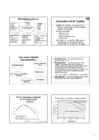
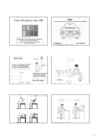
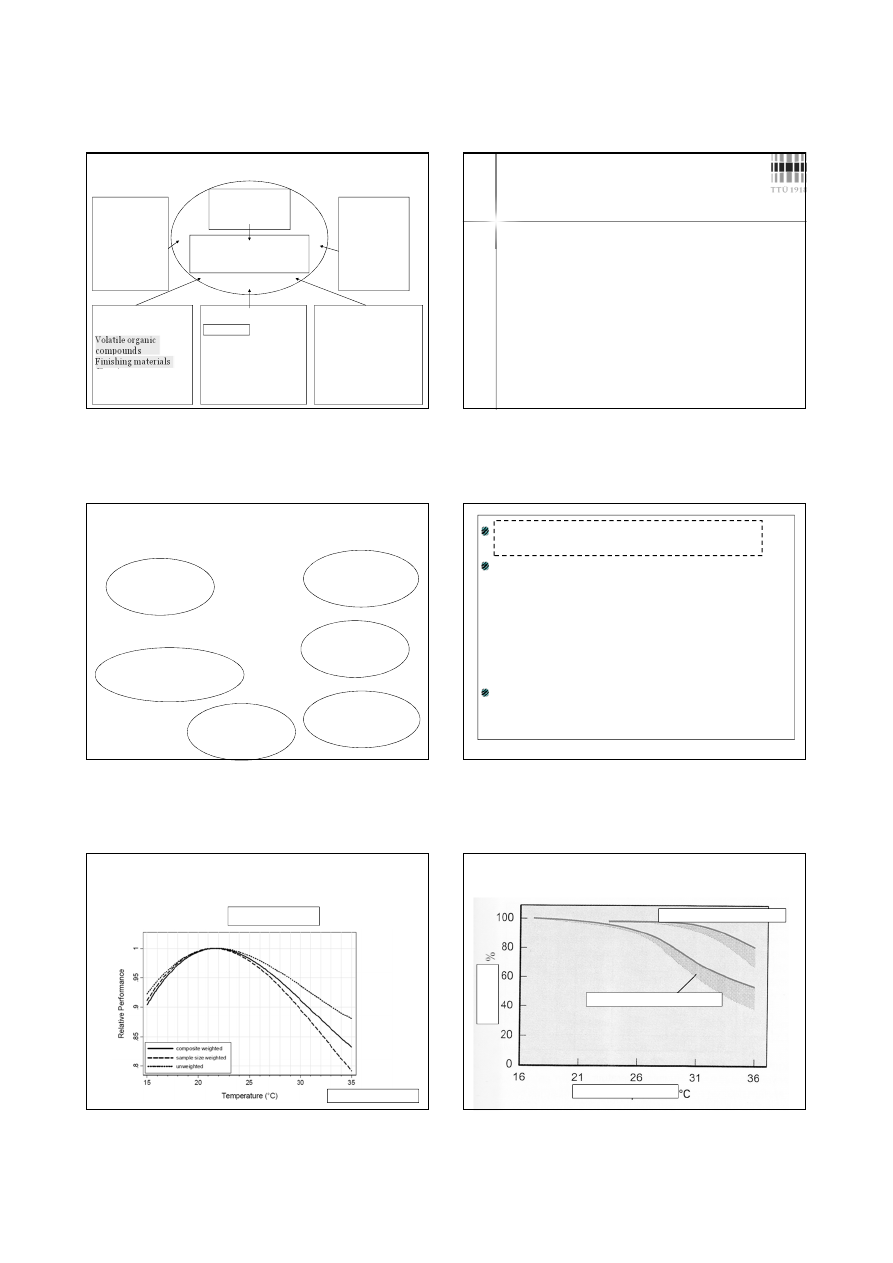
PHYSICAL HAZARDS
in the working environment:
Part I – Inconvenient indoor
climate
Poor lighting
Physical
hazards
Inconvenient
indoor climate
Poor
lighting
Noise
Vibration
Ionizing
radiation
Risk of falling,
slipping,
tripping
Risk from
sharp objects
Risk of fire and
electrical shock
Non-ionizing
radiation
(magnetic
fields)
Indoor climate
Air temperature
Air humidity
Air pressure
Ventilation
Content of oxygen in air
Air ionization
Heat exchange between
the environment and human
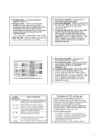
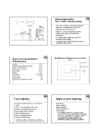
Sick Building
Syndrome (1)
SBS is a combination of
ailments (a syndrome)
associated with an individual's place of work
and is presumably connected with overstress
of organism’s adaption mechanisms.
Building occupants complain of symptoms
associated with acute discomfort, e.g.,
headache; eye, nose, or throat irritation; dry
cough; dry or itchy skin; dizziness and nausea;
difficulty in concentrating; fatigue; and
sensitivity to odors.
Eye irritation
Nose irritation
Throat irritation
Skin irritation
Fatigue,
dizziness,
nausea
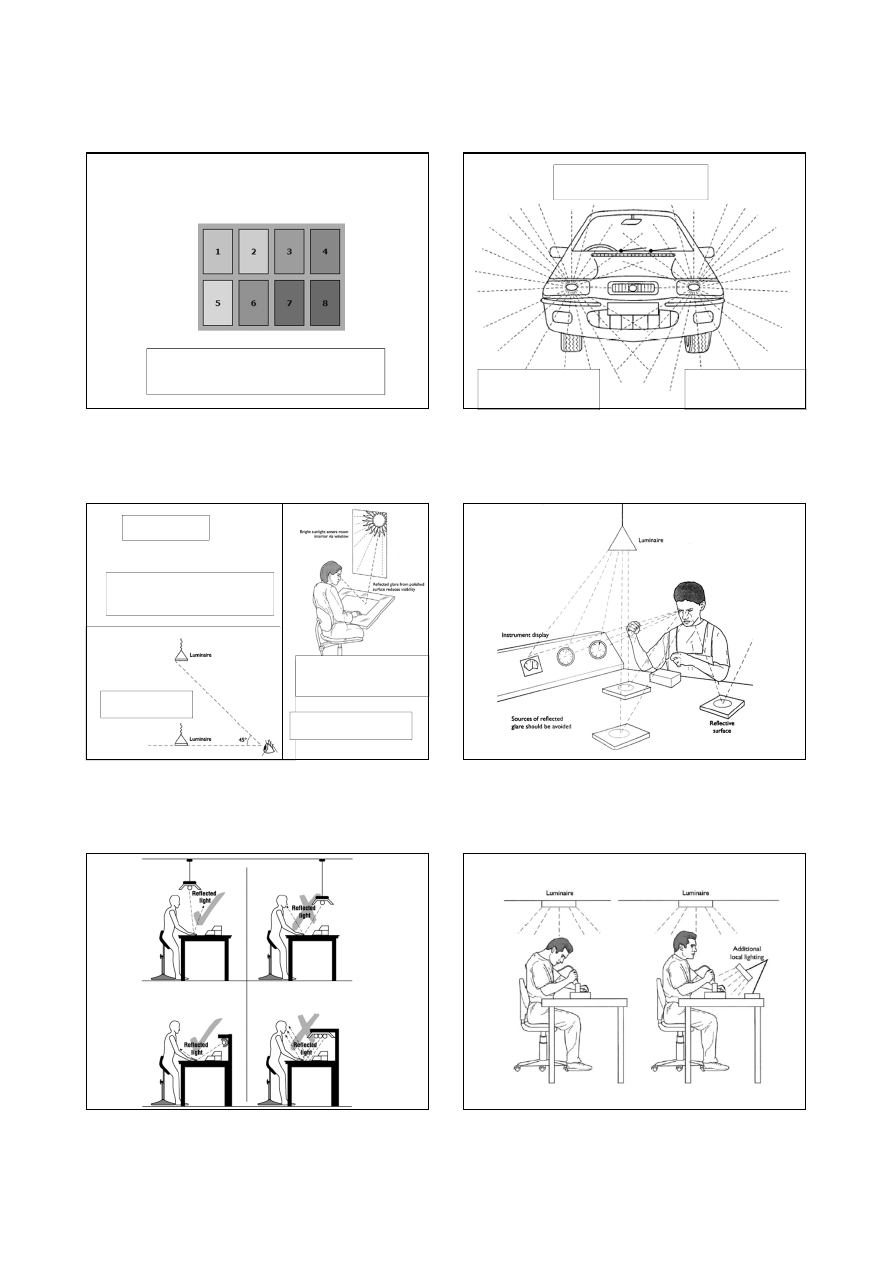
Sick
Building
Syndrome
Sick Building Syndrome (2)
Sick building syndrome is strongly
suspected when the following
circumstances are present:
– Symptoms are temporally related to time spent
in a particular building or part of a building
– Symptoms resolve when the individual is not in
the building
– Symptoms recur seasonally (heating, cooling)
– Co-workers, peers have noted similar
complaints.
SBS reduces worker productivity and
may also increase absenteeism
.
2
Sick Building Syndrome
Indoor Air
Quality
Health effects connected
with a building
Physical factors:
•Ventilation
•Air moisture
•Air temperature
•Electrostatical fields
•Lighting
•Radon
•Noise
Chemical factors:
•CO2
•Volatile organic
compounds
•Finishing materials
•Cleaning agents
•Office chemicals
Psycho-social factors:
•Smoking
•Occupancy of rooms
•Occupation
•Dissatisfaction with work
•Stress
•Health condition
Biological
agents:
•Bacteria
•Molds
•Pollen
•Viruses
General factors:
•Climate
•Location
•Pollution
•Age of building
•Used materials
•Renovation
Estimation of Air Quality
Different variables are used, one of
them is concentration of VOC (volatile
organic compounds)
VOC-compounds:
– Building materials
– Finishing materials
– Volatile compounds outdoor
– Cleaning agents
In indoor air, about 50...300 organic
compounds can be found, but the
concentration is hardly over 50 µg/m3
The indoor climate
characteristics:
Air temperature
Air pressure
Air velocity
Air absolute and relative
humidity
Content of oxygen
in air
Content of CO
2
in the air
Temperature - is a measure of the heat
content of the air, (oC)
Air pressure - is the force exerted by the
weight of a column of air above a particular
location, measured either in mmHg, mbar or hPa.
Air pressure is measured using a barometer.
Several different barometers exist, two of the most
common are the mercury barometer and the
aneroid barometer.
1 bar = 1000 mbar = 105 Pa (N/m2) = 750 mmHg
Air velocity – is the rate of displacement of air
(m/s), and is measured with anemometer.
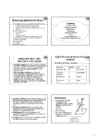
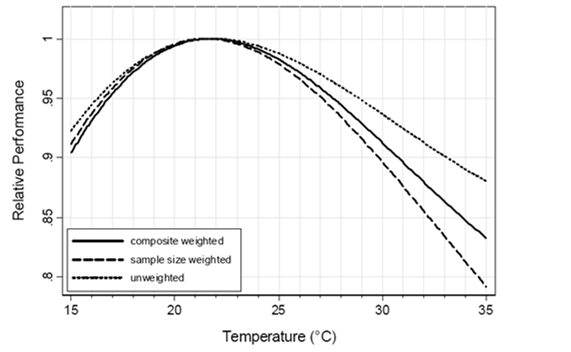
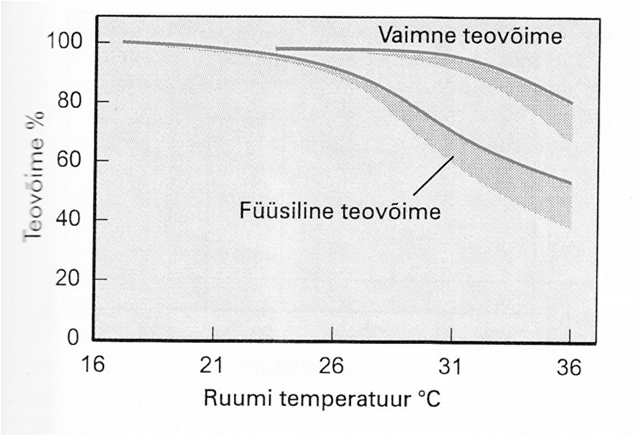
Which temperature is the best
for your productivity?
Mental work
Seppänen, et.al 2006
Productivity vs mental and physical work
Mental work performance
Physical work performance
Temperature
P
ro
d
u
c
ti
v
it
y
3
Temperature - is a measure of the heat
content of the air, (oC)
Air pressure - is the force exerted by the
weight of a column of air above a particular
location, measured either in mmHg, mbar or hPa.
Air pressure is measured using a barometer.
Several different barometers exist, two of the most
common are the mercury barometer and the
aneroid barometer.
1 bar = 1000 mbar = 105 Pa (N/m2) = 750 mmHg
Air velocity – is the rate of displacement of air
(m/s), and is measured with anemometer.
Air absolute humidity - is the quantity of
water vapor present in air, (g/m3)
Air relative humidity - is the ratio of the vapor
partial pressure of the air to the saturation vapor
partial pressure of the air at a prescribed
temperature, (%)
Content of oxygen in air – the average oxygen
content of our air is approximately 20-21%
outdoors, and lower in polluted areas. Indoors,
the acceptable level is 18...21%. There have been
suggestions that low air oxygen content (10...15%)
could be leading to the noticeable increases in
cancers, cardiovascular diseases, and chronic
degenerative diseases.
Air absolute humidity - is the quantity of
water vapor present in air, (g/m3)
Air relative humidity - is the ratio of the vapor
partial pressure of the air to the saturation vapor
partial pressure of the air at a prescribed
temperature, (%)
Content of oxygen in air – the average oxygen
content of our air is approximately 20-21%
outdoors, and lower in polluted areas. Indoors,
the acceptable level is 18...21%. There have been
suggestions that low air oxygen content (10...15%)
could be leading to the noticeable increases in
cancers, cardiovascular diseases, and chronic
degenerative diseases.
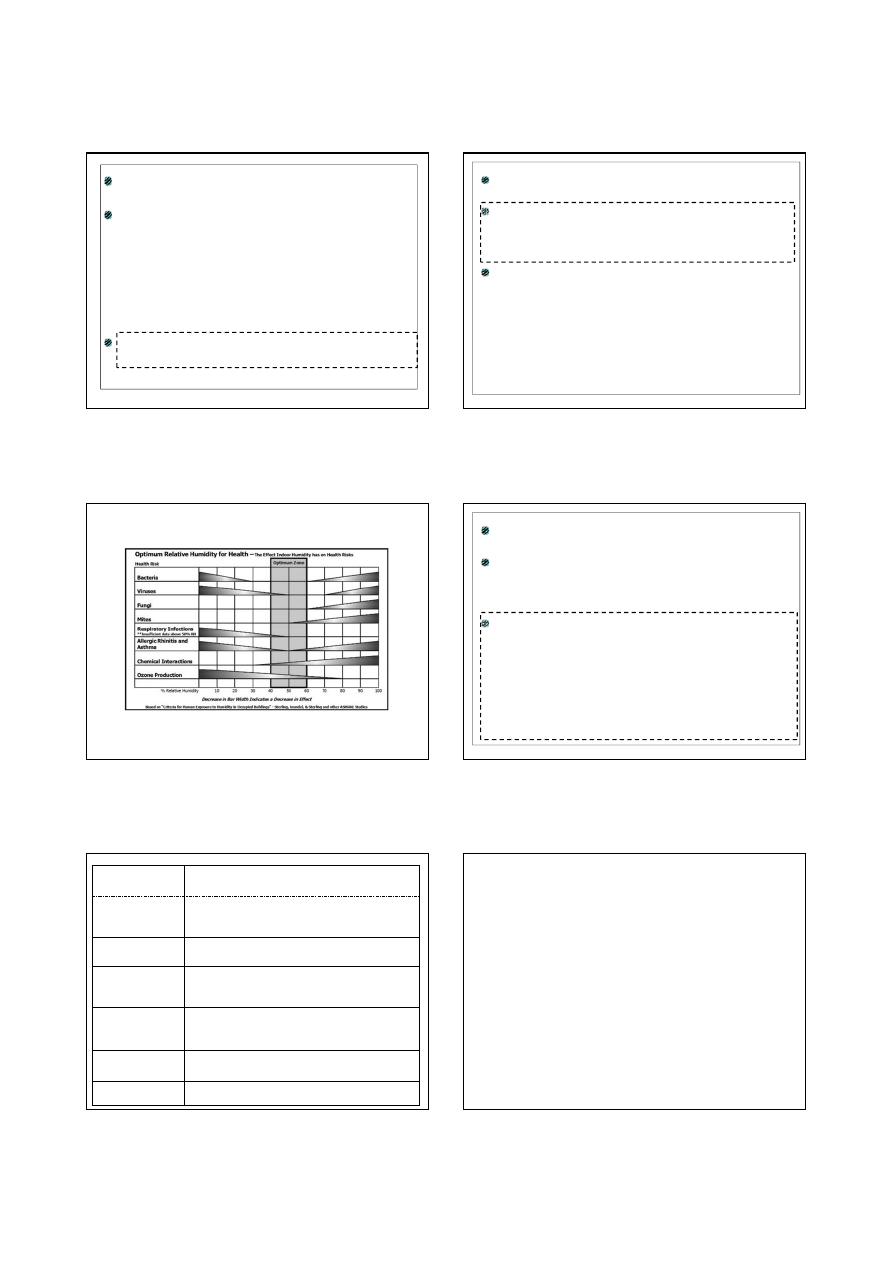
Oxygen
content of air
Signs and symptoms
15...19.5%
Decreased ability to work strenuously. May impair co-
ordination and may induce symptoms in persons with
coronary, pulmonary or circulatory problems.
12...15%
Respiration deeper, increased pulse rate and
impaired co-ordination, perception and judgement.
10...12%
Further increase in rate and depth of respiration,
further increase in pulse rate, performance failure,
giddiness, poor judgement and blue lips.
8...10%
Mental failure, nausea, vomiting, fainting,
unconsciousness, blue lips, ashen face.
6...8%
8 minutes may be fatal in 50...100% of exposures,
4...5 minutes recovery with treatment.
4...6%
Coma in 40 seconds, convulsions, respiration ceases.
Content of CO
2 in the air
• Epidemiologic and intervention research has
shown that higher levels of CO
2 within the range
found in normal indoor settings are associated with
perceptions of poor air quality, increased
prevalence of acute health symptoms (headache,
mucosal irritation), slower work performance, and
increased absence (Erdmann and Apte, 2004)
• Serious health impacts:
– concentrations > 20,000 ppm cause deepened breathing;
– concentrations > 40,000 ppm increases respiration markedly;
– concentrations > 100,000 ppm causes visual disturbances
and tremors and has been associated with loss of
consciousness (Lipsett et al, 1994)
• Standard EN 15251:2007→ in office rooms 850…1000 ppm.
4
Ensuring optimized values
Design/planning measures (position of working rooms)
– Hot departments to different naves in the building
– Heat flows emitted by machines should not cross
– Materials which are cooling down should place to the fresh air
entrance
Constructive measures
– Heat insulation
– Screens
– Sealing the machines
– Outside surface of machines should be lowered to <45˚C
Hard physical occupations in extreme conditions
should be automized
Distant piloting
Ventilation
Protective clothing
Lighting
Luminous flux
Luminous intensity
Illuminance
Luminance
Luminous efficacy
Glare
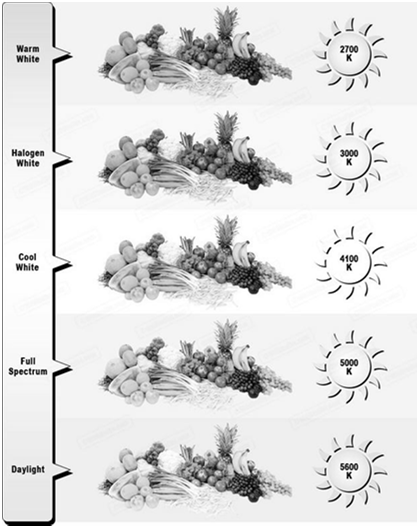
Colour temperature
Colour Rendering Index (CRI)
IONIZING AND NON-
IONIZING RADIATION
Ionizing radiation consists of highly-energetic
particles or waves that can detach (ionize) at least
one electron from an atom or molecule (beta-
particles, neutrons, alpha-particles, X-rays,
gamma-rays)
Non-ionizing radiation is any type of
electromagnetic radiation that does not carry
enough energy per quantum to ionize atoms or
moleculs; but has sufficient energy only for
excitation, the movement of an electron to a
higher energy state (ultraviolet, visible light,
infrared, microwave, radio waves, low frequency
RF and static fields)
Light technical measuring
system
Consists of 4 main variables:
Measures
Symbol
Unit
Luminous flux
Φ
lm (lumen)
Luminous
intenstity
I
cd (candela)
Illuminance
E
lx (lux)
Luminance
L
cd/m2
Luminous flux (Ф)- the total perceived power of
light emitted in all directions, measured in lm. It’s
the value of radiant flux which contains those
wavelenghts which are detectable by the human
eye.
Luminous intensity (I) is a measure of the
luminous flux over a solid angle (steradian (ω))
emitted to a given direction (cd).
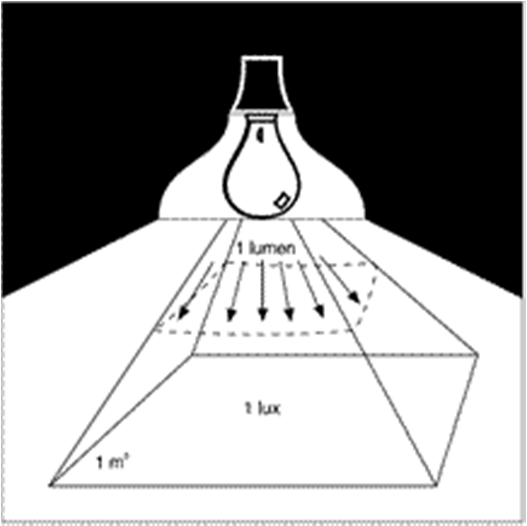
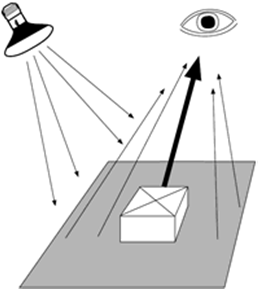
Illuminance (E) is the term given to the
quanitify of luminous flux falling on unit area of a
surface, measured in lx.
Luminance (L) is the luminous intensity emitted
by a light source per unit area (cd/m).
Illuminance
Illuminance (E) is the
term given to the
quanitify of luminous flux
falling on unit area of a
surface.
E = Ф/A
Unit - lux (lx)
The value of illuminance
depends on the distance
of lighting source.
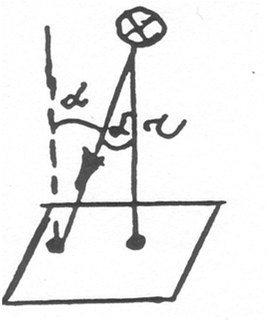
• E = I cos α / r2, where
α
– falling angle
• Ф/A = I cos α / r2
• I = Ф r2/ S cos α
5
1 lux
1 m2
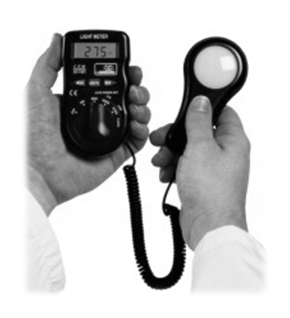
Lightmeter
Vellemon DVM1300
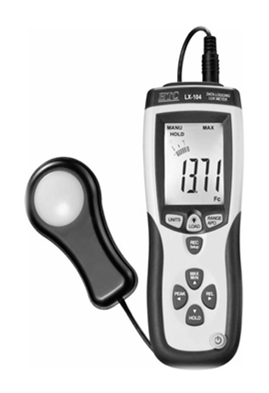
Lightmeter
HTC LX-104
Source: http://www.vellemanusa.com/products/view/?country=us&lang=enu&id=351244
www.mrclab.com
Luminance
Luminance (L) is the
luminous intensity
emitted by a light source
per unit area.
Unit – cd/m2
Examples:
1.6 * 109 cd/m2 Solar disk at noon (don't look!)
600 000 cd/m2 Solar disk at horizon
8 000 cd/m2 Average clear sky
2 500 cd/m2 Moon surface
2 000 cd/m2 Average cloudy sky
0.0004 cd/m2 Darkest sky
Other measures:
Luminous efficacy (lm/W) – the ratio between
the total luminous flux emitted by a device and
the total amount of input power it consumes;
Colour temperature (K) – is desrcibed as the
absolute temperature of perfect black body (e.g.
tungsten filament lamp: 2800 K);
Colour rendering index CRI (without unit) –
describes how a light source makes the color of an
object appear to human eyes and how well subtle
variations in color shades are revealed. CRI is a
scale from 0 to 100 percent indicating how
accurate a "given" light source is at rendering
color when compared to a "reference" light
source.
Other measures:
Luminous efficacy (lm/W) – the ratio between
the total luminous flux emitted by a device and
the total amount of input power it consumes;
Colour temperature (K) – is desrcibed as the
absolute temperature of perfect black body (e.g.
tungsten filament lamp: 2800 K);
Colour rendering index CRI (without unit) –
describes how a light source makes the color of an
object appear to human eyes and how well subtle
variations in color shades are revealed. CRI is a
scale from 0 to 100 percent indicating how
accurate a "given" light source is at rendering
color when compared to a "reference" light
source.
6
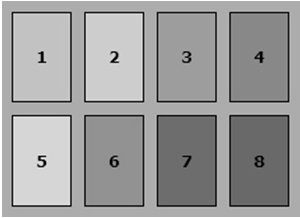
Colour Rendering Index CRI
Eight standard color samples used in the test-color
method for measuring and specifying
the color rendering properties of light sources.
Adapted from IESNA Handbook
Source: http://emergencetechnologyconsultants.com/cri.php
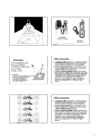
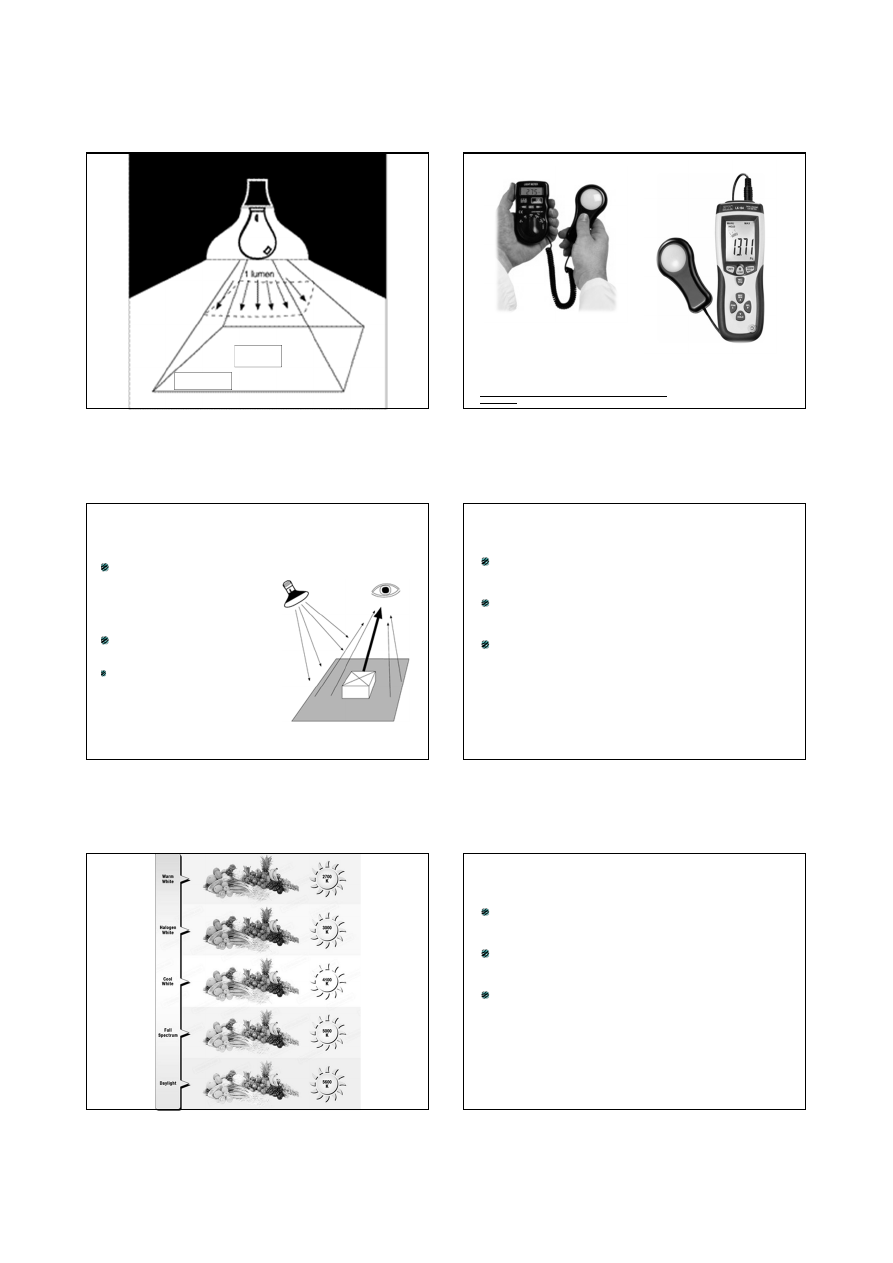
Glare
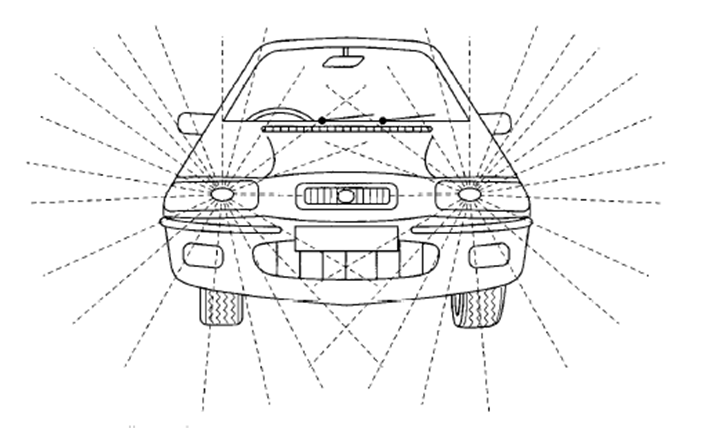
An excessive variation in luminance within the visual field.
Disability glare
Discomfort glare
Source: Lighting for Health and Safety, By: Smith, N.A. © 2000 Elsevier
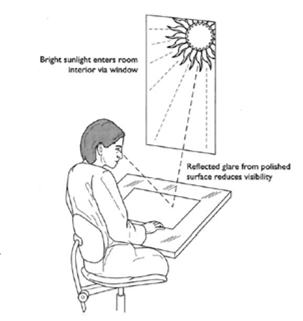
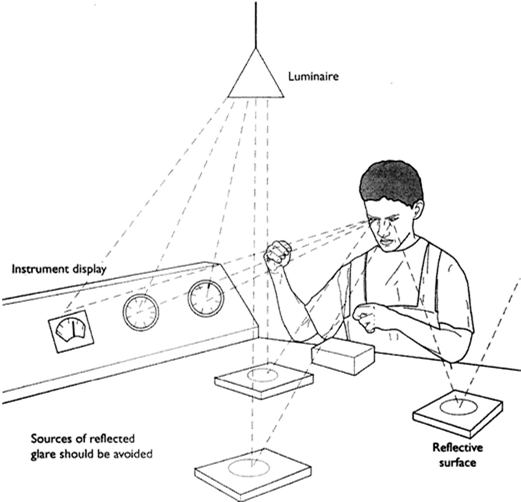
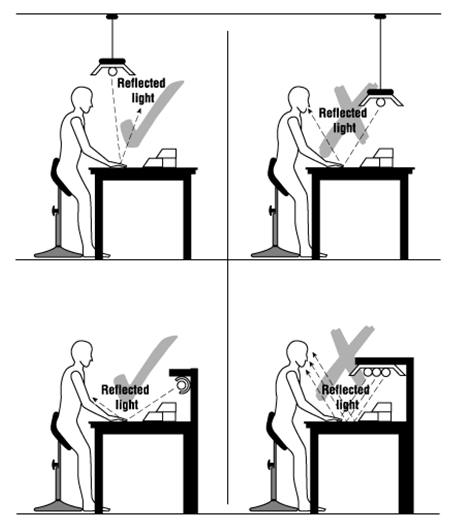
Reflected glare from polished
surfaces reduces visibility
and causes discomfort glare.
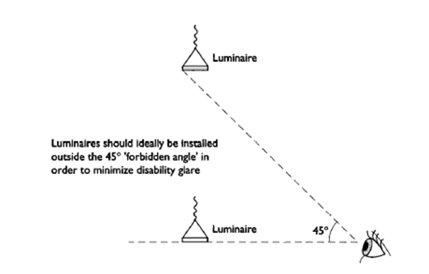
Luminaries should ideally be installed
outside the 45 0 “forbidden angle”
in order to minimize disability glare.
DIRECT GLARE
REFLECTED GLARE
Source: Lighting for Health and Safety, By: Smith, N.A. © 2000 Elsevier
Source: Lighting for Health and Safety, By: Smith, N.A. © 2000 Elsevier
Source: Lighting for Health and Safety, By: Smith, N.A. © 2000 Elsevier
Source: Lighting for Health and Safety, By: Smith, N.A. © 2000 Elsevier
7
Visual ergonomics
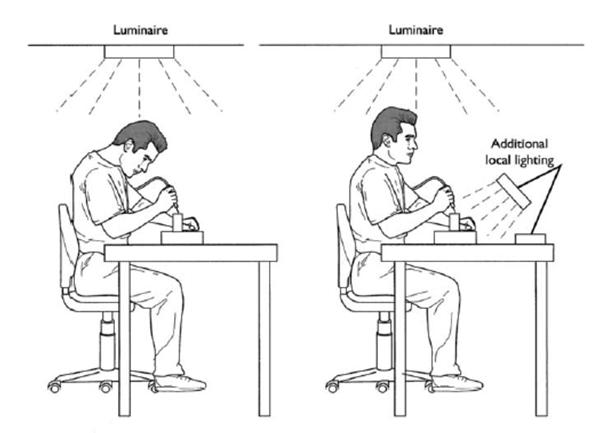
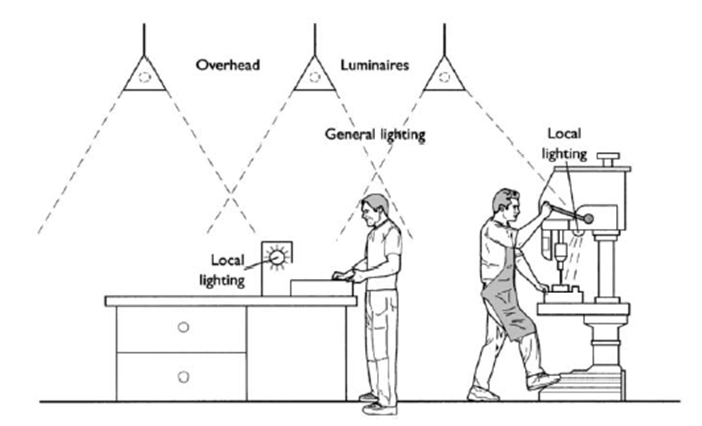
How to design a workplace lighting?
• The value of luminous intensity should be
adequate considering the specific job;
• Lighting should be balanced;
• Adecuate contrast should be provided
between the object and immediate
backround;
• The light source should not cause the
glistening of the object;
• The light source should not elicit excessive
disability or direct glare.
General recommendations
of illuminance:
Offices
300 lx
Writing, data processing, reading
500 lx
Classrooms, laboratories
500 lx
Bookshelves in libraries
200 lx
Corridords
100 lx
Stairs
150 lx
Cafeterias
200...300 lx
Sports halls
300 lx
Parking lots
75 lx
Lighting is prohibited to be under
10 lx
Far around
1
Near surround
3
Target
10
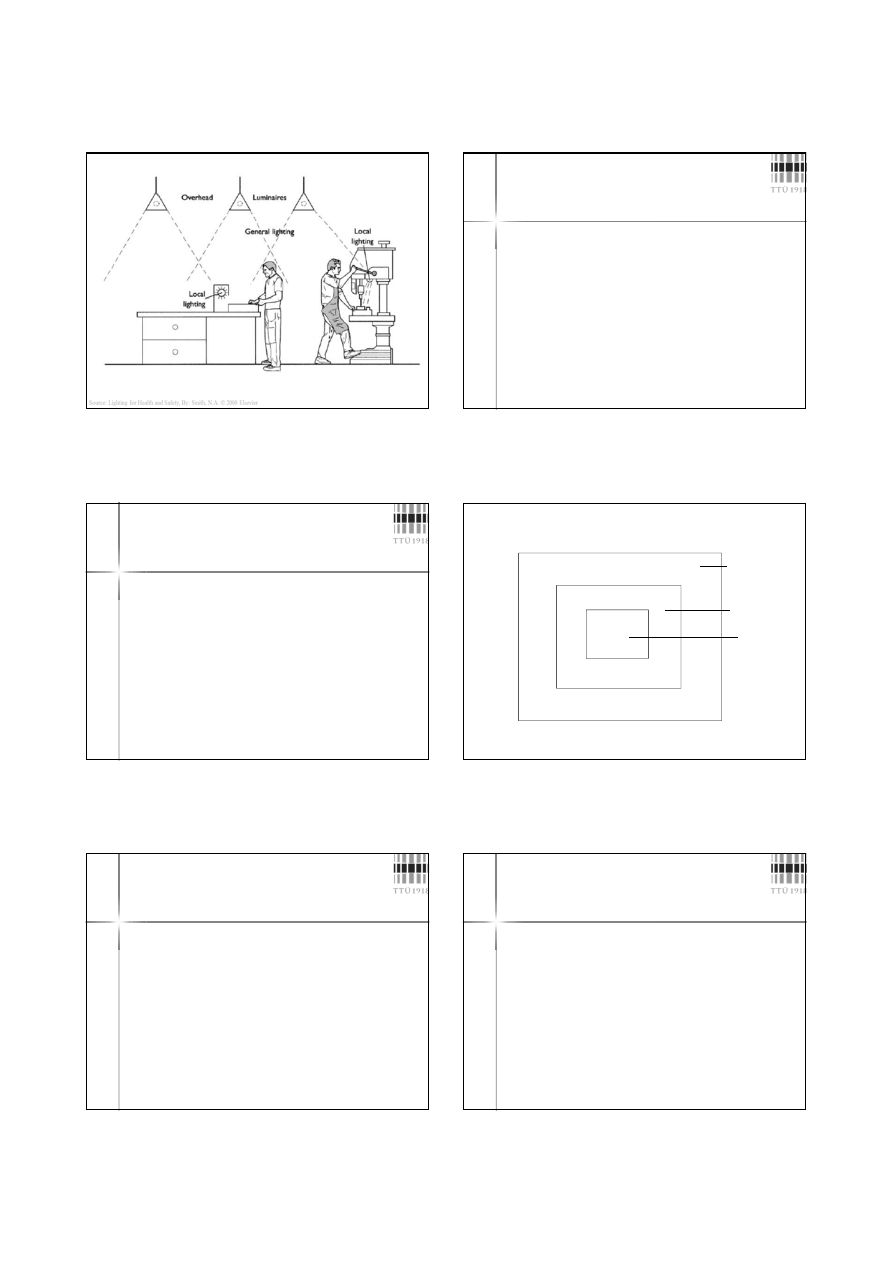
Ideal luminance distribution across a visual task
10:3:1
Poor lighting
Insufficient light (luminance and illuminance
levels)
Glare – too much light for the need
Improper luminance contrast level
Unacceptable colour contrast
Poorly distributed light
Flicker, stroboscopic effect
Many visual distractions
Poor lighting can affect the quality of work, specifically in
situation where precision is required, and overall productivity.
Signs of poor lighting:
Eyestrain;
Eye irritation;
Blurred vision;
Dry burning eyes;
Headaches.
Poor lighting affects not only the ocular
system but can also contribute to stiff necks
and aches in shoulder area. These problems
can occur when humans adopt poor or
awkward postures when trying to do
something under poor lighting conditions.
8
Safety Lighting
Divided by application field:
– Evacuation lighting is foreseen for people
in danger to find the evacuation way and
rescue equipment quickly and safely;
– Panic avoidance lighting is meant to
prevent panic among people who are
present in large rooms to reach the
location where evacuation way is lighted
properly;
– Risk area lighting is a part of safety lighting
which is meant to switch off the equipment
in potentially dangerous area.
PHYSICAL HAZARDS in the working environment:
Part I – Inconvenient indoor climate Poor lighting.
Sick Building Syndrome (1)
� SBS is a combination of ailments (a syndrome) associated with an individual's place of work and is presumably connected with overstress of organism’s adaption mechanisms.
� Building occupants complain of symptoms
associated with acute discomfort, e.g.,
headache; eye, nose, or throat irritation; dry cough; dry or itchy skin; dizziness and nausea; difficulty in concentrating; fatigue; and sensitivity to odors.
Sarnased õppematerjalid
![Energy - põhjalik referaat energiast]()
62
doc
Energy - põhjalik referaat energiast
SISUKORD
ENERGY STORY................................................................................................................4
USES OF ENERGY............................................................................................................. 4
2.1 Uses of energy in homes...............................................................................................5
2.2 Types of energy used in homes.................................................................................... 6
2.3 Energy use in different types of homes........................................................................ 6
2.4 Commercial Energy Use...............................................................................................9
2.5 Industrial and Manufacturing Energy Use..................................................................11
2.6 Transportation Energy Use.........................................................................................12
RENE
Inglise keele foneetika ja fonoloogia
![Liha töötlemine]()
1168
pdf
Liha töötlemine
Kálmán Incze
22. Semidry and Dry Fermented Sausages 379
Graciela Vignolo, Cecilia Fontana, and Silvina Fadda
23. Restructured Whole-Tissue Meats 399
Mustafa M. Farouk
24. Functional Meat Products 423
Keizo Arihara and Motoko Ohata
PART III. Controls 441
25. Physical Sensors for Quality Control during Processing 443
Marta Castro-Giráldez, Pedro José Fito, Fidel Toldrá, and Pedro Fito
26. Sensory Evaluation of Meat Products 457
Geoffrey R. Nute
27. Detection of Chemical Hazards 469
Milagro Reig and Fidel Toldrá
28. Microbial Hazards in Foods: Food-Borne Infections and Intoxications 481
Daniel Y. C. Fung
![Formaldehyde]()
11
doc
Formaldehyde
Formaldehyde
Formaldehyde is a colorless, flammable gas at room temperature. It has a pungent, distinct odor and
may cause a burning sensation to the eyes, nose, and lungs at high concentrations. Formaldehyde is
also known as methanal, methylene oxide, oxymethylene, methylaldehyde, and oxomethane.
Formaldehyde can react with many other chemicals, and it will break down into methanol (wood
alcohol) and carbon monoxide at very high temperatures.
Formaldehyde is naturally produced in very small amounts in our bodies as a part of our normal,
everyday metabolism and causes us no harm. It can also be found in the air that we breathe at home
and at work, in the food we eat, and in some products that we put on our skin. A major source of
formaldehyde that we breathe every day is found in smog in the lower atmosphere. Automobile
exhaust from cars without catalytic converters or those using oxygenated gasoline also contain
formaldehyde. At home, forma
![Inglise keel unit 5 answers]()
276
docx
Inglise keel unit 5 answers
1. (a) (i) gene
length of DNA;
codes for a (specific), polypeptide / protein / RNA; max 1
allele
alternative form of a gene;
found at a, locus / particular position on, a chromosome; max 1
(ii) assume allele refers to coat colour allele
(coat colour) gene / alleles, only on X chromosome;
A no (coat colour), gene / allele, on Y chromosome
male cats, XY / only have one X chromosome;
males have only one (coat colour) allele / cannot have two (coat colour)
alleles;
need black and orange alleles for tortoiseshell colour; 2
r r w w
(b) parental genotypes C C × C C ;
r w
gametes C , C ;
F1 genotypes and pheno
![ABS Piping Australian Presentation]()
92
ppt
ABS Piping Australian Presentation
thermoplastic pipe materials) Variable speed drives
Flow control valve Soft starters
Air/Vacuum Release valves Valve closure and opening
Intermediate check valves times
Non slam check valves Increasing the inertia of pumps
Bypass Valves and motors (i.e. flywheels or by
Gas accumulators selection)
Liquid accumulators Minimising resonance hazards by
Surge tanks additional supports
Surge shafts Investment in more engineering
�Questions?
�Typical Applications of ABS Piping
Building Power Generation
Services/HVAC Industrial Processes
Water & Waste water Electronics
Mining & Mineral Steelmaking &
Processes Processing
Sugar Processing
Paper
�Typical Applications of ABS Piping
Building Services
Chilled Water
Cooling Water
Potable Water
![2-stroke tuners handbook tuners]()
171
pdf
2-stroke tuners handbook tuners
�� Two-Stroke
TUNER’S HANDBOOK
By Gordon Jennings
Illustrations by the author
Copyright © 1973 by
Gordon Jennings
Compiled for reprint © 2007 by Ken
�i
� PREFACE
Many years have passed since Gordon Jennings first published this manual. Its
2007 and although there have been huge technological changes the basics are still the
basics. There is a huge interest in vintage snowmobiles and their “simple” two stroke
power plants of yesteryear. There is a wealth of knowledge contained in this manual.
Let’s journey back to 1973 and read the book that was the two stroke bible of that era.
Decades have passed since I hung around with John and Jim. John and I worked
for the same corporation and I found a 500 triple Kawasaki for him at a reasonable price.
He converted it into a drag bike, modified the engine completely and added mikuni carbs
and tuned pipes. John borrowed Jim’s cop
![PETROLEUM]()
29
rtf
PETROLEUM
demand remain static.
�Chemistry
Octane, a hydrocarbon found in petroleum. Lines represent single bonds; black spheres
represent carbon; white spheres represent hydrogen.
Petroleum is a mixture of a very large number of different hydrocarbons; the most
commonly found molecules are alkanes (linear or branched), cycloalkanes, aromatic
hydrocarbons, or more complicated chemicals like asphaltenes. Each petroleum variety
has a unique mix of molecules, which define its physical and chemical properties, like
color and viscosity.
The alkanes, also known as paraffins, are saturated hydrocarbons with straight or
branched chains which contain only carbon and hydrogen and have the general formula
CnH2n+2. They generally have from 5 to 40 carbon atoms per molecule, although trace
amounts of shorter or longer molecules may be present in the mixture.
The alkanes from pentane (C5H12) to octane (C8H18) are refined into petrol, the ones
![Soil microflora]()
10
docx
Soil microflora
active and the aerobes get suppressed. While in the absence of adequate moisture in soil, some
of microbes die out due to tissue dehydration and some of them change their forms into
resting stages spores or cysts and tide over adverse conditions. Therefore optimum soil
moisture (range 20 to 60 %) must be there for better population and activity of microbes in
soil.
4. Soil temperature: Next to moisture, temperature is the most important environmental factor
influencing the biological physical & chemical processes and of microbes, microbial activity
and population in soil. Though microorganisms can tolerate extreme temperature (such as - 60
° or + 60 u) conditions, but the optimum temperature range at which soil microorganisms can
grow and function actively is rather narrow.
Depending upon the temperature range at which microorganisms can grow and function, are
divided into three groups i.e. psychrophiles (growing at low temperature below 10 °C)
Meedia
Kommentaarid (0)
 100 punkti
Autor soovib selle materjali allalaadimise eest saada 100 punkti.
100 punkti
Autor soovib selle materjali allalaadimise eest saada 100 punkti.
 ~ 8 lehte
Lehekülgede arv dokumendis
~ 8 lehte
Lehekülgede arv dokumendis
 2016-01-13
Kuupäev, millal dokument üles laeti
2016-01-13
Kuupäev, millal dokument üles laeti
 3 laadimist
Kokku alla laetud
3 laadimist
Kokku alla laetud
 0 arvamust
Teiste kasutajate poolt lisatud kommentaarid
0 arvamust
Teiste kasutajate poolt lisatud kommentaarid
 AnnaAbi
Õppematerjali autor
AnnaAbi
Õppematerjali autor
 annaabi.ee















































Kõik kommentaarid