Leidsid 33 sarnast õppematerjali, mis on seotud failiga "Exercise Physiology - lecture 1". Need materjalid aitavad sul teemat sügavamalt mõista.
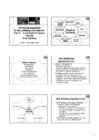
exercise, breath, minute, volume, blood, increase, diff, adaptation, alveolar, liquid, pressure, response, improved, task, change, thing, part, acute, result, rise, dead, space, diffusion, training, greater, constant, gradient, across, oxygen, changes, rate, tidal, reach, rest, increases, arterial, cont, muscle, henry, explain, reference, dissolveExercise Physiology Blood Gas Exchange and Transport Today's lesson Cardiovascular responses & adaptations to exercise a review Transporting O2 and CO2 in the blood Gaseous exchange at the muscle Types of muscle tissue Properties and function of muscle tissue Microscopic anatomy of muscle tissue Sliding filament theory Components of Respiration Pulmonary ventilation External respiration Pulmonary diffusion Internal CO2 and O2 transport respiration via blood Tissue gaseous exchange Transport of O2 in Blood Blood carried in 2 ways: 1
converted to Glucose 6-phosphate. Glucose to glucose 6-phosphate costs 1 ATP · Glycolysis produces pyruvic acid, without oxygen pyruvic acid is converted to lactic acid. · Net gain 3 moles of ATP (glucose = 2 ATP) Anaerobic Glycolysis · Reserve fuel activated when a person accelerates during race, during the last 200 m of a mile run, or performs a 400 m run or 100 m swim. Lactic Acid/Lactate Formation · During very high intensity exercise high rate of glycolysis H+ released faster than they can be removed by NADH (ETC) increased lactic acid production. · The above due to both lack of O 2 and the recruitment of fast twitch fibres. · Lactic acid lactate diffuses into blood for buffering and rapid removal. Lactic Acid as an Energy Source · Lactic acid allows high rates of ATP production for short duration (2-3 minutes). · As exercise intensity slows or during recovery sufficient O2 available again
"Part scientist and part adventure hunter, Tim Ferriss has created a road map for an entirely new world. I devoured this book in one sitting --I have seen nothing like it." --Charles L. Brock, chairman and CEO of Brock Capital Group; former CFO, COO, and general counsel of Scholastic, Inc.; and former president of the Harvard Law School Association "Outsourcing is no longer just for Fortune 500 companies. Small and mid-sized rms, as well as busy professionals, can outsource their work to increase their productivity and free time for more important commitments. It's time for the world to take advantage of this revolution." -- Vivek Kulkarni, CEO of Brickwork India and former IT secretary of Bangalore; credited as the "techno-bureaucrat" who helped make Bangalore an IT destination in India "Tim is the master! I should know. I followed his rags to riches path and watched him transform himself from competitive ghter to entrepreneur. He tears apart conventional assumptions until
Some techniques of time management (aja mahavõtmine?) may help a person to control stress. In the face of high demands, effective stress management (ohjeldamine) involves learning to set limits and to refuse some demands that others make. A destressitizer is any process by which an individual can relieve stress. Include some of the following: · Autogenic training (kehaline) · Cognitive therapy (tunnetuslik) · Conflict resolution (konflikti lahendus) · Exercise (harjutused) · Getting a hobby · Meditation · Deep breathing · Yoga · Relaxation techniques · Artistic Expression (kunstiline väljaelamine) -1- · Spas · Spending time in nature · Stress balls · Clinically validated (kehtestatud) alternative treatments (ravimeetodid) · Listening to certain types of relaxing music, particularly: o New Age music http://www.youtube
– Co-workers, peers have noted similar complaints. Nose irritation Throat irritation SBS reduces worker productivity and may also increase absenteeism. 1 Sick Building Syndrome Indoor Air Estimation of Air Quality General factors: Quality Biological •Climate
[2] 5. 1 mark max for general effect of mutations: mutation may give different, amino acid / primary structure; A ref stop codon some mutations alter, molecular shape / tertiary structure / binding; max 3 for explaining data in Table: - so unable to, accept / transport, HCO3 ; unable to bind ATP; so increase in acidity / decrease in pH; effect on mucus; effect on enzyme(s) /ref pH optimum of enzyme(s); poor digestion of, protein / lipid / starch; AVP; e.g. some mutations, give some transport / have less effect. > 33% (of norm) allows normal digestive function / < 6% [A very low] does not. max 3 [3] 6
hazards that can come with having an office job. It doesn't have to be that way. Human bodies are made to move. It is recommended that a person break for 5-10 minutes for every hour spent at a workstation. Working "mini" activity breaks into your day can really make a difference in how you feel and even how well you perform your job. Even the busiest person can do it. Just five minutes of movement every hour or two can boost energy and improve your attitude. You'll find that getting your blood pumping and oxygen circulating will help you concentrate better and be more productive, calm, and efficient. Breaks can minimize strain, but they can not relieve stress or improve flexibility, for example. Most people should stretch prior to any strenuous activity. Routine activities like typing or using the phone can lead to injury over a period of time. So, stretching can: - increase your flexibility. Flexible muscles can improve your daily performance. Tasks
Being normal components of intermediary metabolism, neither formaldehyde nor formate are stored to any significant extent in any tissue of the body. Formate is excreted in the urine (primarily as formic acid), incorporated into other cellular molecules, or oxidized to carbon dioxide and exhaled. Formaldehyde vapors are readily absorbed from the respiratory tract. Due to rapid metabolism to formate, little, if any, intact formaldehyde can be found in the blood of humans or animals exposed to formaldehyde. Formaldehyde is also readily absorbed from the gastrointestinal tract and meets with the same metabolic fate as formaldehyde after inhalation exposure. The studies available in the open literature suggest that very little formaldehyde is absorbed via the dermal route. In all cases, absorption appears to be limited to cell layers immediately adjacent to the point of contact. Entry of formaldehyde into the blood (i.e
Psychology Gleitman Blood flow in the brain during different activities: the rate of blood flow is measured by special radiation counters that are placed at various points of the skull and that monitor radiation from mildly radioactive gas injected into the bloodstream. Blood flow pattern depends on what the patient does ( different pattern is found when person is reading aloud, yet another when he watches a moving light and so on). Ambiguous sights and sounds: The way ambiguous figures are perceived often depends on what we have seen just before. For example, if we are first shown an unambiguous figure of a rat, the ambiguous picture will be seen as a rat. If we are first exposed to an unambiguous face, we see the ambiguous figure as a face.
v= @vD = tper s The power of waves is given by rH O *g2 * h2 *tper W 2 P= @PD = 32 *p mcrl or with the approximation P ~ h2 ä tper . The power is defined per meter of crest length. Exercise: North Atlantic offshore wave conditions Wave climate for the north Atlantic offshore region is given by the table below. The unknown values have to be calculated. 5 Period High Power density Velocity wavelength kW @tD=s @hD=m @PD= @vD= m @lD=m
Illustrative of the drugs prepared from aniline is paracetamol. The principal use of aniline in the dye industry is as a precursor to indigo, the blue of blue jeans. Like most volatile amines, it possesses the unpleasant smell of rotten fish. 2. Physico-chemical properties Name: Alinine CAS number: 62-53-3 IUPAC name: Phenylamine Molecular formula: C6H5NH2 Physical properties: Molar mass: 93.13 g/mol Appearance: colorless liquid Density: 1.0217 g/mL, Melting point: -6.3 °C Boiling point: 184.13 °C, 457 K, 363 °F Solubility in water: 3.6 g/100 mL at 20°C Solubility in ethanol: perfectly Viscosity: 3.71 cP (3.71 mPa·s at 25 °C) pH: >7 log Pow: 0.90/0.98 Koc: 25,5 3. Kinetics and metabolism The substance can be absorbed into the body by inhalation, through the skin and by ingestion, also as a vapour
Tallinn 2013 Ott Speek Subject: English Geodesy Study group: GI-21b PETROLEUM PRESENTATION Petroleum (L. petroleum, from Greek: Πέτρα (rock) + Latin: oleum (oil) is a naturally occurring flammable liquid consisting of a complex mixture of hydrocarbons of various molecular weights and other liquid organic compounds, that are found in geologic formations beneath the Earth's surface. The name Petroleum covers both naturally occurring unprocessed crude oils and petroleum products that are made up of refined crude oil. A fossil fuel, it is formed when large quantities of dead organisms, usually zooplankton and algae, are buried underneath sedimentary rock and undergo intense heat and pressure. Petroleum is recovered mostly through oil drilling. This comes after the studies of
a tremendous force on the projectile, accelerating it to a speed of many kilometers per second (km/s). Although these speeds are possible, the heat generated from the propulsion of the object is enough to erode the rails rapidly. Under high-use conditions, current railguns would require frequent replacement of the rails, or to use a heat-resistant material that would be conductive enough to produce the same effect. The barrel must withstand these conditions for up to several rounds per minute for thousands of shots without failure or significant degradation. These parameters are well beyond the state of the art in materials science for now. 1.3 How a railgun works The power supply is simply a source of electric current. Typically, the current used in medium- to large-caliber railguns is in the millions of amps. The rails are lengths of conductive metal, such as copper. They can range from 1.2 to 9 meters long. The armature bridges the gap between the rails
These results indicate that HER is related to a lower cortisol response to psychosocial stress. In conclusion these results suggest that HER and DAR have an impact on the cortisol response. Emotion regulation in relation.. 3 Acknowledgements Firstly I would like to thank my supervisor xxx for his help and advice throughout this research and also xxx is gratefully acknowledged for his support and advice on blood markers of stress. Emotion regulation in relation.. 4 Table of Contents 1 Introduction 5 1.2 The effects of emotion regulation (ER) strategies in response to psychological stress 6 Figure 1. A process model of emotionregulation 8 Figure 2
chain-drive from the engine's crankshaft. Getting more fuel into the charge would make for a more powerful explosion. But you can't simply pump more fuel into the engine because an exact amount of oxygen is required to burn a given amount of fuel. This chemically correct mixture -- 14 parts air to one part fuel -- is essential for an engine to operate efficiently. The bottom line: To put in more fuel, you have to put in more air. That's the job of the supercharger. Superchargers increase intake by compressing air above atmospheric pressure, without creating a vacuum. This forces more air into the engine, providing a "boost." With the additional air in the boost, more fuel can be added to the charge, and the power of the engine is increased. Supercharging adds an average of 46 percent more horsepower and 31 percent more torque. In high-altitude situations, where engine performance deteriorates because the air has low density and pressure, a supercharger delivers higher-pressure
such as maintaining balance and coordina- processes; and for transport of nutrients tion. Muscle movement and metabolism within the cell, between cells, and between are associated with other diverse functions the muscle and the vascular system. such as aiding in movement of blood and The second largest component of muscle lymph and also in maintaining body tempera- is protein (U.S. Department of Agriculture ture. All of these functions are dependent 2008). Protein makes up an average of 18.5% on cellular metabolism and the ability of the
problems had decreased after displacing dirtier fuels with biogas. If parasitic diseases had previously been common, the improvement in hygiene also has economic benefits (reduced working time). The more fully the sludge is digested, the more pathogens are killed. High temperatures and long retention times are more hygienic. The availability of biogas can have effects on nutritional patterns too. With easy access to energy, the number of warm meals may increase. Whole grain and beans may be cooked longer, increasing their digestibility, especially for children. Water may be boiled more regularly, thus reducing waterborne diseases. Biogas plants also improve health conditions in the homes: Since biogas burns clean, homes do not fill with smoke and ash. Women and children experience less bronchial problems and can expect to live longer. Homes are also more hygienic. Dung cakes are no longer stored in the homes
3.3 How Do We Measure Renewable Energy? 15 Each of the energy sources we use is measured, purchased, and sold in a different form. Many units of measurement are used to measure the energy we use. Learn more about converting energy units in the Units of Measurement section. NONRENEWABLE ENERGY Nonrenewable energy sources come out of the ground as liquids, gases and solids. Right now, crude oil (petroleum) is the only naturally liquid commercial fossil fuel. Natural gas and propane are normally gases, and coal is a solid. Coal, petroleum, natural gas, and propane are all considered fossil fuels because they formed from the buried remains of plants and animals that lived millions of years ago. Uranium ore, a solid, is mined and converted to a fuel. Uranium is not a fossil fuel. These energy sources are considered nonrenewable because they can not be replenished (made again) in a short period of time.
Tallinn University Natural and exact sciences Molecular Biochemistry and Ecology Maria Gnidenko Capillary electrophoresis Essay Supervisor: Kert Martma Tallinn 2015 Table of contents Acronyms and symbols used Introduction History and development Physical basis and principle of separation Elektrophoresis Electroosmotic flow Separation process Electrodispersion Various methods of separation Capillary zone�
stabilisers Food Test for taint with food Caramel & chocolate stuffs before design Wine Creams Grade 1 Medical water Renal dialysis Electronics Abrasion Resistance Size distribution of particles Concentration of solids by Some relationships predicting volume wear in pipelines: Relative density of solids Wear Velocity (2.5-4.5) Shape of particles E=6.1 dm^2.15*U^3.7 Sharpness of particles Flow regime affects angle of Where :- impingement, sliding bed etc E= wear rate (at bottom of pipe, mm/year Temperature of fluid dm = mean particle size,
Diffundeeruvad keemilised signaalid kasutatakse: Parakriinne signalisatsioon – some are local mediators that act on neighboring cells, reaching their targets by diffusion over relatively short distances 3 Autokriinne signalisatsioon – secreted chemical also acts on the cells that secreted it Endokriinnääre – hormones are secreted into the blood by specialized glands – to act on various tissues around the body Sünaptiline signaliseerimine – nerve cells release chemicals at their endings to affect the cells they contact Autokriinne, parakriinne ja endokriinne regulatsioon. Parakriinne: signaalid “atakeerivad” neid rakke, mis asuvad lähedal. Nt: mast cells (тучные клетки, мастоциты)- rakudes, mis asuvad sidekudedes on palju sekretoorseid graanuleid, mis sisaldavad enndas histamiini, mis
generators. The table shows an overview of costs of various renewable energy technologies. For comparison with the prices in the table, electricity production from a conventional coal-fired plant costs about 4¢/kWh. Though in some G8 nations the cost can be significantly higher at 7.88p (~15¢/kWh).Achieving further cost reductions as indicated in the table below requires further technology development, market deployment, an increase in production capacities to mass production levels,and of the establishment of an emissions trading scheme and/or carbon tax which would attribute a cost to each unit of carbon emitted; thus reflecting the true cost of energy production by fossil fuels which then could be used to lower the cost/kWh of these renewable energies. Type 2001 energy costs
To most people alcohol is considerd a downer that reduces activity in the nervous system. Some of the things alcohol effects you is, the alcohol intoxicated person exhibits lose muscle tone, loss of fine moter coordination,and often has a staggering "drunken" gait. The eyes may appear somewhat "glossy" and pupils may be slow to respond to stimulus. At high doses pupils may become constricted. At intoxing doses, alcohol can decrease heart rate, lower blood pressure and respiration rate, and result in decreased reflex and slower reaction times. Skin may be cool to touch but to the user may feel warm or normal, profuse sweating may accompany alcohol use. Loose muscle tone, lose of fine motor coordination,odor of alcohol on the breath,and a stagging "drunken"gait. The effects of alcohol intoxication are greatly influenced by individual variations among users. Some users may become intoxicated at a much lower Blood Alcohol
People who eat too much fast, fatty, or sugary foods without doing enough physical activity, may put on weight. This has serious effects and can lead to heart disease. Similarly, people who smoke and drink too much run the risk of getting cancers and heart disease. However, by avoiding these things and doing simple things such as walking short distances instead of driving, eating five portions of fresh fruit and vegetables a day, and taking 20 minutes' exercise three times a week reduces this risk and can prevent disease. As regards genetic factors, the situation is not so clear. Certain genetic factors mean that some people are forced into a lifestyle. For example, people who have certain allergies have to avoid foods containing the things they react badly to. In this case, avoiding certain foods as prevention is obviously necessary. Other more serious genetic diseases, for instance neuropathies,
They were used for signalling, for whaling, and even for rescuing people from sinking ships. If a boat got into trouble near to the shore, a rocket with a thin rope tied to it would be fired out over the boat; survivors in lifeboats could use the ropes to pull themselves ashore. These traditional rockets are still used as distress signals on boats and planes. However, in the 1920s and 30s a great leap forward in the use of rockets took place with the introduction of liquid fuel. This made rockets much more powerful. The new rockets were so impressive that for the first time people began to seriously think about using rockets to take people to space. The development of the space rockets took place during World War II. It was the Germans who built the first really big rockets, as a way of bombing Britain without needing to use aircraft. First the V1 was
comparison with standard equations for velocity field? In what cases these advantages are often used? Vorticity transport depends on the three Partial differential equations (PDEs) for u, v and p in the "primitive variable" form. Stream function depends on only two Partial differential equations (PDEs) for the scalars and . We win on variables and this is the main advantage. 3. How will change vorticity transport equation if Reynold number will increase? Then Re number increase, it means, that we have turbulent flow. In this conditions Navier-Stokes equation take form of Euler equation. Navier-Stokes equation consist of two parts. One part, that consist volume becomes greater and equation transform into linear. Another part, what consist viscosity, becomes smaller and transform into non-linear term equation. 4. What means asymptotic analysing of the problem? Asymptotic analysing is a method of describing limiting behaviour(boundary conditions). For example in
Symptoms include: chills; general ill feeling (malaise); high fever (102 degrees Fahrenheit / 39 degrees Celsius); seizures; painful lymph gland swelling called a bubo, commonly found in the groin, but may occur in the armpits or neck, most often at the site of the initial infection (bite or scratch); pain may occur in the area before the swelling appears. (Wikipedia homepage: http://en.wikipedia.org/wiki/Bubonic_plague) Other symptoms include heavy breathing, continuous blood vomiting, urination of blood, aching limbs, coughing, and extreme pain. The pain is usually caused by the decaying or decomposing of the skin while the person is still alive. Additional symptoms include extreme fatigue, gastrointestinal problems, lenticular (black dots scattered throughout the body), delirium and coma. (Wikipedia homepage: http://en.wikipedia.org/wiki/Bubonic_plague) 2 BLACK DEATH IN ENGLAND BEFORE THE GREAT PLAGUE
when they break through to the industrial scale. 2. The scale of biofuels production 2.1. Drivers of biofuels production Lal (2010) stated that "three inter-connected challenges face humankind in the 21st century": food security, climate change, and energy security. The world population is projected to reach 9 billion in 2050, posing more demands on energy, food, and other natural resources. It has been estimated that the world food production needs to double and meat production increase by 85% by 2050 to fulfill projected demand by population (Karp, 2011). In the recent decades, the food consumption in the most populous counties has shifted from grain-based diets to meat and dairy diets. Meat production requires times more biomass in the form of animal feed and that puts further pressures on natural resources. As food production is very energy intensive, it is closely linked to global energy consumption. Global fuel consumption
5 m) from 6 sites in Estonian rivers and Previously described methods that employ PCR and direct streams from 3 drainage basins (see [7]) the Peipsi-Pihkva Lake sequencing for determining allele frequencies in pooled DNA and the Narva River drainage basin: River Piusa (specimen Pi) and PLOS ONE | www.plosone.org 1 June 2013 | Volume 8 | Issue 6 | e66601 Intragenomic Profiling Using Multicopy Genes River Ro~uge (specimen R); the Gulf of Finland drainage basin: denaturation at 95uC for 45 s, annealing at 55uC or 61uC for 45 s, Stream Vanamo~isa (specimens V1, V2, V3, V4, V5 and V6); the and extension at 72uC for 1 min with a final extension at 72uC for
· Vesinikside Nõrk Teljelisus Summatsioon · Vesinikside valgumolekuli struktuuri hoidjana Vee agregaatseisundid ,,kohev" vesi ,,tihe" vesi Vee molekulid jää struktuuris NB! Puhas vesi! of death would probably be water intoxication. Water And Electrolytes Water intoxication is the extreme result of a bodily imbalance between electrolytes (the minerals in your blood and body fluid that carry an electric charge) and water, a condition called "hyponatremia." Chemically speaking, an electrolyte is any substance that ionizes, i.e. gains or loses an electron or electrons, when dissolved in a solvent like water. A classic example is table salt, chemical formula NaCl, which dissociates into a positively charge sodium ions and negatively charged chloride ions when dissolved in water.
exchangers such as in small nonindustrial boiler systems where water is heated up or steam is generated inside the helical coil by direct heating via burning fuel such as diesel oil or other burning materials. Polyethylene is also manufactured inside helical coils, where oxidation of ethylene takes place. The heat from this exothermic reaction is taken away by cooling water circulating around the helical coils. In many industrial applications helical coils are used to heat up cold liquid circulating around the coils, by steam condensation inside the coil. In addition to heating up the liquid around, coils can also be used to cool it down, if the bulk liquid around the coil acts as a reactor and the reaction is exothermic. There are many applications for helical coils that have been used in chemical industries for several decades. (Hewitt, et al., 1994) The three basic mechanisms in heat transfer are conduction, convection and radiation. In
in the reality, the supply chain is a complex and dynamic network of facilities and organizations with different, conflicting objectives. Supply chains exist in both service and manufacturing organizations, although the complexity of the chain may vary greatly from industry to industry and firm to firm. Unlike commercial manufacturing supplies, services such as clinical supplies planning are very dynamic and can often have last minute changes. Availability of patient kit when patient arrives at investigator site is very important for clinical trial success. This results in overproduction of drug products to take care of last minute change in demand. R&D manufacturing is very expensive and overproduction of patient kits adds significant cost to the total cost of clinical trials. An integrated supply chain can reduce the overproduction of drug products by efficient demand management, planning, and inventory management.
. . . . . . . . . . . . . . . . . . . . . . . . . . . . . . 0.59 mm (0.023 in) HCS engines: Inlet . . . . . . . . . . . . . . . . . . . . . . . . . . . . . . . . . . . . . . . . . . . . . . . . . 0.22 mm (0.008 in) Exhaust . . . . . . . . . . . . . . . . . . . . . . . . . . . . . . . . . . . . . . . . . . . . . . 0.32 mm (0.012 in) Cooling system Recommended antifreeze concentration . . . . . . . . . . . . . . . . . . . . . . . . 45% by volume Fuel system Idle speed: Carburettor models: All except Weber 2V TLDM carburettor . . . . . . . . . . . . . . . . . . . . . 750 to 850 rpm Weber 2V TLDM carburettor . . . . . . . . . . . . . . . . . . . . . . . . . . . . . . 700 to 800 rpm Bosch K-Jetronic fuel injection models . . . . . . . . . . . . . . . . . . . . . . . 750 to 850 rpm Bosch KE-Jetronic fuel injection models: 1985 models . .
 annaabi.ee