Vajad kellegagi rääkida?
Küsi julgelt abi LasteAbi
Logi sisse

Reported speech presentation (0)

5 VÄGA HEA
Punktid


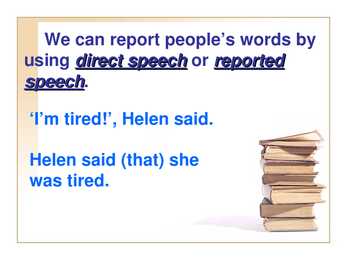
We can  report  people’s  words  by 
using  direct   speech  or  reported  
speech. 
‘I’m tired!’,  Helen  said.
Helen said (that) she 
was tired.
 
 
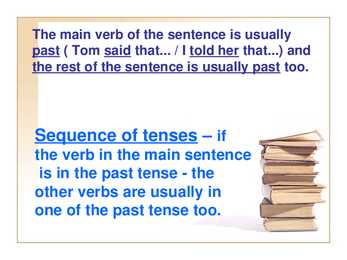
The main  verb  of the sentence is  usually  
past ( Tom said that... / I  told  her that...) and 
the  rest  of the sentence is usually past too.
Sequence of tenses – if 
the verb in the main sentence 
 is in the past tense ­ the 
other   verbs  are usually in 
one of the past tense too. 
 
 
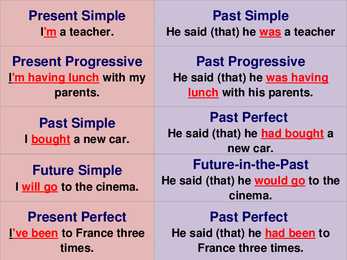
Present   Simple
Past Simple
I'm a  teacher .
He said (that) he was a teacher
Present Progressive
Past Progressive
I'm  having   lunch  with my 
He said (that) he was having 
parents .
lunch with his parents.
Past Simple
Past  Perfect  
I bought a new car.
He said (that) he had bought a 
new car.
Future Simple
Future­in­the­Past
I will go to the  cinema .
He said (that) he would go to the 
cinema.
Present Perfect
Past Perfect 
I've been to  France  three 
He said (that) he had been to 
 
times .
 
France three times.
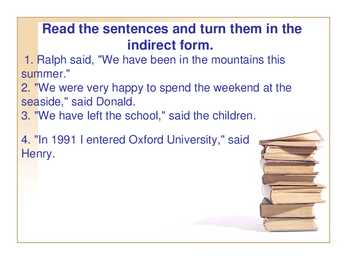
Read the  sentences  and  turn   them  in the 
indirect  form. 
 1.  Ralph  said, "We have been in the  mountains  this 
summer ." 
2. "We were very happy to spend the  weekend  at the 
seaside," said  Donald
3. "We have  left  the school," said the  children
4. "In 1991 I entered Oxford  University ," said 
Henry
 
 
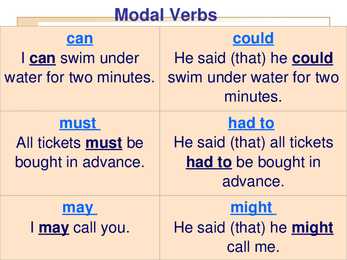
Modal Verbs
can
could
can  swim  under 
He said (that) he could 
water for two minutes. swim under water for two 
minutes.
must 
had to 
All  tickets  must be 
He said (that) all tickets 
bought in advance.
had to be bought in 
advance.
may 
might 
may  call  you.
He said (that) he might 
 
 
call me.
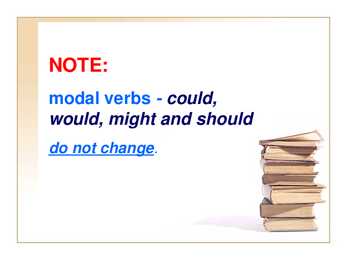
NOTE : 
modal verbs ­ could, 
would, might and should 
do not  change
.


Changes in reported speech 
 
 
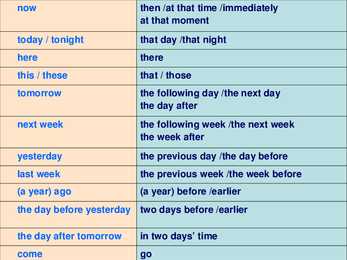
now
then /at that time /immediately
at that moment

today  / tonight
that day /that night
here
there
this / these
that / those
tomorrow
the  following  day /the next day
the day after

next week
the following week /the next week
the week after

yesterday
the  previous  day /the day  before
last week
the previous week /the week before
(a  year ) ago
(a year) before /earlier
the day before yesterday two  days  before /earlier
the day after tomorrow
in two days’ time
 
 
come
go
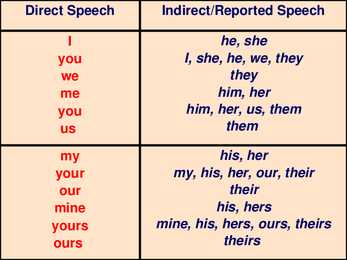
Direct Speech
Indirect/Reported Speech
I
he, she
you
I, she, he, we, they
we
they
me
him, her
you
him, her, us, them
us 
them 
my
his, her
your
my, his, her, our, their
our
their
mine
his, hers
yours
mine, his, hers, ours, theirs
ours 
theirs 
 
 
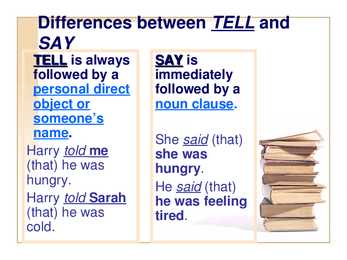
Differences  between   TELL  and 
SAY
TELL is always 
SAY is 
followed by a 
immediately 
personal direct 
followed by a 
object  or 
noun  clause.
someone ’s 
name.
She said (that) 
Harry  told me 
she was 
(that) he was 
hungry.
hungry.
He said (that) 
Harry told  Sarah  
he was  feeling  
(that) he was 
tired.
cold.
 
 
Reporting special  questions  
 
 
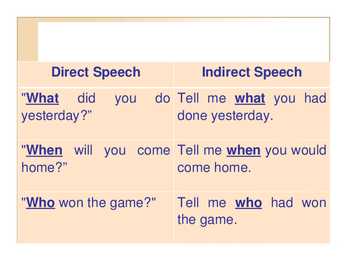
Direct Speech
Indirect Speech
"What  did  you  do  Tell  me  what  you  had 
yesterday?”
done yesterday.
"When  wil   you  come  Tell me when you would 
home?”
come home.
"Who won the  game ?"
Tell  me  who  had  won 
the game.
 
 
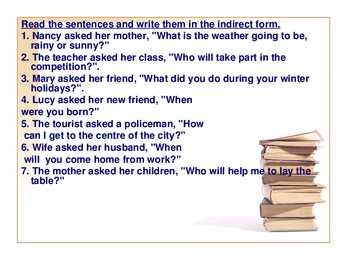
Read the sentences and write them in the indirect form.
1.  Nancy   asked  her  mother , "What is the  weather  going to be, 
rainy or sunny?" 
2. The teacher asked her  class , "Who will take  part  in the 
competition ?". 
3. Mary asked her  friend , "What did you do  during  your  winter  
holidays?".
4.  Lucy  asked her new friend, "When 
were you born?"
5. The  tourist  asked a policeman, "How
 can I get to the  centre  of the city?" 
6. Wife asked her  husband , "When
 will  you come home from  work ?" 
7. The mother asked her children, "Who will help me to lay the 
table?" 
 
 
Reporting general questions 
 
 
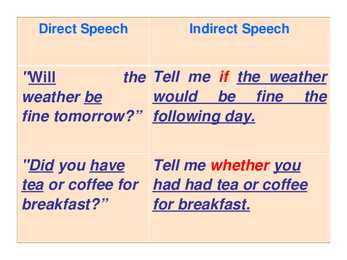
Direct Speech
Indirect Speech
"Will 
the  Tell  me  if  the  weather 
weather be
would  be  fine  the 
fine tomorrow?” following day.
"Did you have 
Tell me whether you 
tea or  coffee  for  had had tea or coffee 
breakfast ?” 

for breakfast.
 
 
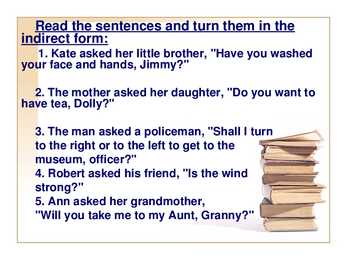
Read the sentences and turn them in the 
indirect form:
 1. Kate asked her  little  brother, "Have you washed 
your  face  and  hands , Jimmy?" 
2. The mother asked her  daughter , "Do you want to 
have tea,  Dolly ?" 
3. The man asked a policeman, " Shall  I turn 
to the right or to the left to get to the 
museum , officer?" 
4. Robert asked his friend, "Is the wind 
strong ?" 
5. Ann asked her grandmother, 
"Will you take me to my Aunt,  Granny ?" 
 
 
Reporting 
imperative sentences
 
 
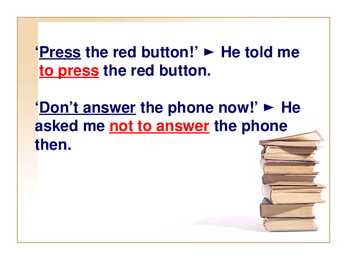
‘Press the red  button !’  He told me 
 to press the red button.
‘Don’t  answer  the  phone  now!’  He 
asked me not to answer the phone 
then. 
 
 
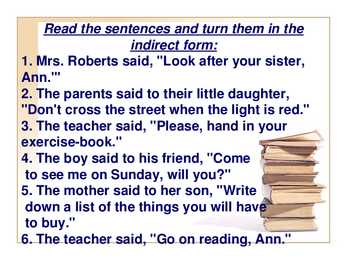
Read the sentences and turn them in the 
indirect form:
1. Mrs.  Roberts  said, " Look  after your sister, 
Ann."'
2. The parents said to their little daughter, 
"Don't  cross  the  street  when the  light  is red." 
3. The teacher said, " Pleasehand  in your 
exercise ­book." 
4. The boy said to his friend, "Come
 to see me on  Sunday , will you?" 
5. The mother said to her son, "Write
 down a list of the things you will have
 to buy." 
6. The teacher said, "Go on  reading , Ann."


Document Outline

  • Slide 1
  • Slide 2
  • Slide 3
  • Slide 4
  • Slide 5
  • Slide 6
  • Slide 7
  • Slide 8
  • Slide 9
  • Slide 10
  • Slide 11
  • Slide 12
  • Slide 13
  • Slide 14
  • Slide 15
  • Slide 16
  • Slide 17
  • Slide 18
  • Slide 19
  • Slide 20
Vasakule Paremale
Reported speech presentation #1 Reported speech presentation #2 Reported speech presentation #3 Reported speech presentation #4 Reported speech presentation #5 Reported speech presentation #6 Reported speech presentation #7 Reported speech presentation #8 Reported speech presentation #9 Reported speech presentation #10 Reported speech presentation #11 Reported speech presentation #12 Reported speech presentation #13 Reported speech presentation #14 Reported speech presentation #15 Reported speech presentation #16 Reported speech presentation #17 Reported speech presentation #18 Reported speech presentation #19 Reported speech presentation #20
Punktid 50 punkti Autor soovib selle materjali allalaadimise eest saada 50 punkti.
Leheküljed ~ 20 lehte Lehekülgede arv dokumendis
Aeg2013-04-11 Kuupäev, millal dokument üles laeti
Allalaadimisi 10 laadimist Kokku alla laetud
Kommentaarid 0 arvamust Teiste kasutajate poolt lisatud kommentaarid
Autor elii Õppematerjali autor

Sarnased õppematerjalid

Reported speech reeglid
4
docx

Reported speech reeglid

Reported speech is often also called indirect speech. When we use reported speech, we are usually talking about the past (because obviously the person who spoke originally spoke in the past). The verbs therefore usually have to be in the past too. For example: "I'm going to the cinema". He said he was going to the cinema. Basic tense chart The tenses generally move backwards in this way (the tense on the left changes to the tense on the right): present simple past simple I'm a teacher. He said he was a teacher past continuous. present continuous He said he was having lunch with his I'm having lunch with my parents. parents. past perfect simple

Inglise keel
Reported speech kokkuvõte ja harjutused
3
odt

Reported speech kokkuvõte ja harjutused

Reported Speech (in other words Indirect Speech) If we report what another person has said, we usually do not use the speaker's exact words (direct speech), but reported (indirect) speech. Therefore, you need to learn how to transform direct speech into reported speech. We use reported speech when we are saying what other people say, think or believe. - Example: If this verb is in the present tense (says), it's easy. We just put 'she says' and then the sentence. When we are reporting things in the present, future or present perfect we don't change the tense. : direct speech: "I like ice cream" reported speech: She says she likes ice cream - But, if the reporting verb is in the past tense (said), then usually we change the tenses in the reported speech: direct speech: "I like ice cream" reported speech: She said she liked ice cream. .........

Inglise keel
Direct and indirect speech revs
16
ppt

Direct and indirect speech revs

· NOW · THEN · TOMORROW · THE FOLLOWING DAY · NEXT WEEK · THE FOLLOWING WEEK · TONIGHT · THAT NIGHT · TODAY · THAT DAY · YESTERDAY · THE DAY BEFORE · LAST NIGHT · THE NIGHT BEFORE · LAST WEEK · THE WEEK BEFORE · HERE · THERE · THIS · THAT · THESE · THOSE CHANGES OF TENSES · DIRECT · INDIRECT · SIMPLE PRESENT · SIMPLE PAST · SIMPLE PAST · PAST PERFECT · PRESENT PERFECT · PAST PERFECT · PRESENT · PAST CONTINUOUS CONTINUOUS · PAST PERFECT · PRESENT PERFECT CONT. CONT. · SIMPLE FUTURE · PAST FUTURE 1. STATEMENT HE SAID HE SAID TO ME THAT REPORTED WORDS HE TOLD ME STATEMENT EXAMPLE · DIRECT · INDIRECT

Inglise keel
English Grammar Book 1
159
pdf

English Grammar Book 1

The Imperative 141 The Articles 71 The Subject and the Object 143 Demonstrative Determiners 73 Direct and Indirect Objects 144 Interrogative Determiners 74 Positive and Negative Sentences146 Possessive Determiners 75 Questions 147 7 Verbs and Tenses 79 14 Punctuation 150 The Simple Present Tense 80 Period 150 Am, Is and Are 83 Comma 151 The Present Progressive Tense 89 Exclamation Point 152 Have and Has 93 Question Mark 152 The Present Perfect Tense 96 Apostrophe 153 1 What is Grammar? Here's an old children's rhyme about the eight parts of speech of English grammar

Inglise keel
Superstar 1 tests
41
doc

Superstar 1 tests

Tests Superstar 1 Luke Prodromou Test 1 Name____________________ Class_______ Use your English 1 Complete these sentences using the correct form (present simple or present continuous) of the verb in brackets. _ 1 She is in a band and she _________________________________ (record) a CD at the moment. _ 2 She is an actress and often _________________________________ (appear) on television. _ 3 At the moment she _________________________________ (have) a rest because she is tired. _ 4 Mike is a doctor and he _________________________________ (live) in Manchester. _ 5 I _________________________________ (start) work at 8.30 every morning.

Inglise keel
Inglise keele jaotusmaterjal
37
doc

Inglise keele jaotusmaterjal

3 TALLEGG 11 MIZDE 4 VESITERM 12 LADA 5 STOW 13 SCHWUNG 6 KALEV 14 MAIASMOKK 7 YAMAHA 15 ISKU 8 ESTRAVEL 2 Affirmative tense Use Signal Words Negative/Questions · action in the present taking always, Present Simple A: He speaks. place once, never or several every ..., N: He does not speak. normally, often, Q: Does he speak? times seldom, · facts sometimes,

Inglise keel
Grammatika inglise keel
30
doc

Grammatika inglise keel

want/like/know/go etc have/has ­ had wanted/liked/knew/went etc will would can could wanted/liked had wanted/had liked Direct speech Reported speech Jo says: Jo said: ,,I like tennis." (that) she liked tennis. ,,John is going to learn it too." (that) John was going to learn it too. ,,Mary has given up her hobby too." (that) Mary had given up her hobby too. ,,I can´t play tennis on Monday" (that) she couldn´t play tennis on Monday.

Inglise keel
Inglise keel Harjutused enesekontrolliks
5
rtf

Inglise keel Harjutused enesekontrolliks

1) Ann is my best friend! We........each other for years A know B knew C knows D have known 2) Nicky........to San Francisco when the accident happened. A flies B has flown C was flying D has been flying 3) Why don`t you let her........her story? A finish B to finish C finishing D have finished 4) Tim........in a cafe at present, but he has already applied for a new job A work B have worked C is working D worked 5) My father........already worked for two years before he went to University. A was B had C has D is 3. Change the order of the words to make a correct sentence. ( 5 points ) 1) I wonder / can / you / me / help / if 2) a / my / to / written / I / mother / already / letter / long / have

Inglise keel


Meedia

Kommentaarid (0)

Kommentaarid sellele materjalile puuduvad. Ole esimene ja kommenteeri


Sellel veebilehel kasutatakse küpsiseid. Kasutamist jätkates nõustute küpsiste ja veebilehe üldtingimustega Nõustun