Vajad kellegagi rääkida?
Küsi julgelt abi LasteAbi
Logi sisse

Reported speech reeglid (0)

1 Hindamata
Punktid
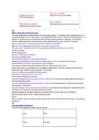
Reported speech is often also called indirect speech. When we use reported speech, we are usually talking about the past (because obviously the person who spoke originally spoke in the past). The verbs therefore usually have to be in the past too. For example:
"I'm going to the cinema ".
He said he was going to the cinema.
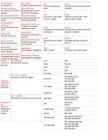
Basic tense chart
The tenses generally move backwards in this way (the tense on the left changes to the tense on the right):
present simple
I'm a teacher .
past simple
He said he was a teacher
present continuous
I'm having lunch with my parents .
past continuous.
He said he was having lunch with his parents.
present perfect simple
I've been to France three times .
past perfect simple
He said he had been to France three times.
present perfect continuous
I've been working very hard.
past perfect continuous
He said he had been working very hard.
past simple
I bought a new car.
past perfect
He said he had bought a new car.
past continuous
It was raining earlier.
past perfect continuous
He said it had been raining earlier.
past perfect
The play had started when I arrived .
past perfect
NO CHANGE POSSIBLE
past perfect continuous
I'd already been living in London for five years .
past perfect continuous
NO CHANGE POSSIBLE
Other verb forms
Other verb forms also sometimes change:
will
I'll come and see you soon.
would
He said he would come and see me soon.
can
I can swim under water for two minutes.
could
He said he could swim under water for two minutes.
must
All tickets must be bought in advance.
had to
He said that all tickets had to be bought in advance.
shall
What shall we do about it?
should
He asked what we should do about it.
may
May I smoke ?
might
He asked if he might smoke.
Things are slightly more complicated with imperatives.
positive imperative
Shut up!
tell + infinitive
He told me to shut up.
negative imperative
Don't do that again !
tell + not + infinitive
He told me not to do it again.
imperatives as requests
Please give me some money.
ask + infinitive
He asked me to give him some money.
When verbs don't follow the rules
The verb tenses do not always follow the rules shown above . For example, if the reporting verb is in the present tense, there is no change in the reported sentence. Also, a sentence in direct speech in a present or future tense can remain the same if what is said is still true or relevant. For example:
You've invited someone for dinner at your house, and the phone rings. It's them ! They say:
I'm sorry , but I think I'm going to be a bit late . There's a lot of traffic .
After you finish speaking on the phone, you say to someone else:
That was Juan . He said he thinks he's going to be late because there's a lot of traffic.
Another example:
A friend says to you:
María's ill. She's got chickenpox!
You say to someone else:
Laura said that María's ill. She's got chickenpox.
However, the following day you see María at the beach . You're surprised and say to her:
Laura said that you were ill. She said you had chickenpox.
This has to change to the past because it isn't true. María obviously isn't ill.
Direct statements in a past tense do not always change either, because a change might alter the meaning or just make it sound confusing. For example:
A friend is telling you about the horrible weather:
It started raining heavily when I left work .
This is where things get confusing:
He said it had started raining heavily when he had left work (it sounds horrible and the sentence is almost nothing but verbs).
He said it had started raining heavily when he left work (is wrong because it means it was already raining when he left work)
He said it started raining heavily when he left work (is the best version because it is accurate, short, and there is no confusion because of the time context )
Generally speaking, the past simple and continuous don't always need to be changed if:
there is a time context which makes everything clear,
and/or
there is another action already using the past perfect, which might alter the meaning or make things confusing.
Time and place references
Time and place references often have to change:
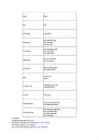
now
then
today
that day
here
there
this
that
this week
that week
tomorrow
the following day
the next day
the day after
next week
the following week
the next week
the week after
yesterday
the previous day
the day before
last week
the previous week
the week before
ago
previously
before
2 weeks ago
2 weeks previously
2 weeks before
tonight
that night
last Saturday
the previous Saturday
the Saturday before
next Saturday
the following Saturday
the next Saturday
the Saturday after
that Saturday
Examples :
I went to the theatre last night.
He said he had gone to the theatre the night before.
I'm having a party next weekend.
He said he was having a party the next weekend.
I'm staying here until next week.
He said he was staying there until the following week.
I came over from London 3 years ago.
He said he had come over from London 3 years before.
Personal pronouns
You also need to be careful with personal pronouns. They need to be changed according to the situation. You need to know the context. For example, there is possible confusion when you try to change reported speech to direct speech:
She said she'd been waiting for hours .
(Is she one person or two different people?)
I told them they would have to ask permission .
(Are we talking about two groups of people or only one?)
Reported speech reeglid #1 Reported speech reeglid #2 Reported speech reeglid #3 Reported speech reeglid #4
Punktid 50 punkti Autor soovib selle materjali allalaadimise eest saada 50 punkti.
Leheküljed ~ 4 lehte Lehekülgede arv dokumendis
Aeg2010-07-04 Kuupäev, millal dokument üles laeti
Allalaadimisi 63 laadimist Kokku alla laetud
Kommentaarid 0 arvamust Teiste kasutajate poolt lisatud kommentaarid
Autor Adolf Hitler Õppematerjali autor
reported speech

Sarnased õppematerjalid

Reported speech
1
doc

Reported speech

present simple past simple will would I'm a teacher. He said he was a teacher I'll come and see you He said he would come and see present continuous past continuous. soon. me soon. I'm having lunch with my He said he was having parents. lunch with his parents. can could present perfect simple past perfect simple I can swim under water He said he could swim under I've been to France three He said he had been to for two minutes. water for two minutes. times. France three times. present perfect past perfect continuous continuous He said he had been I've been working v

Inglise keel
Reported speech presentation
20
ppt

Reported speech presentation

We can report people's words by using direct speech or direct speech reported speech. speech `I'm tired!', Helen said. Helen said (that) she was tired. The main verb of the sentence is usually past ( Tom said that... / I told her that...) and the rest of the sentence is usually past too. Sequence of tenses ­ if the verb in the main sentence is in the past tense the other verbs are usually in one of the past tense too. Present Simple Past Simple I'm a teacher. He said (that) he was a teacher

Inglise keel
Inglise keele jaotusmaterjal
37
doc

Inglise keele jaotusmaterjal

MODULE 1 Greeting. Introducing oneself and the others. The alphabet. Spelling. The tenses. How to introduce yourself and others Formal introductions How to respond and reply to an May I introduce myself? I am John introduction Smith. How do you do. Allow me to introduce John Smith to Pleased to meet you. you. Standard introduction Nice to meet you. I'd like you to meet John Smith. Hello. I want you to meet John Smith. I'm so pleased to meet you. This is Jane Smith. I'm Jane Smith. My name's John Smith. Informal introduction Hi. John. Jane. Hello. Titles: Mr Mrs Miss Ms Ms is a modern form of address for women. It replaces the traditional forms of Mrs and Miss. Greetings Good morning/afternoon/evening! 'How are you?' Very often people expect you to s

Inglise keel
Contitional sentences
4
doc

Contitional sentences

Conditionals Sentences with if are used to express possibilities. 0 Zero conditional If-clause present (past) simple Main clause present (past) simple Sometimes sentences with if express certainty rather than possibility. The zero conditional is used to talk about sth. that is always true (such as a scientific fact), or that was always true in the past. In this type of conditional we can use when instead of if. E.g., If/When you mix blue and red, you get purple. If/When you don't water flowers, they die. (present simple in both parts of the sentence) If/When I asked her to come with us, she always said no. (past simple in both parts of the sentence) 1 First conditional If-clause present simple; Main clause future tense (or: can, must, may, etc., + bare infinitive) Used to talk about the consequences of a possible action (a real or very probable situation in the present or future). E.g., If I write my essay this afternoon

inglise teaduskeel
English Grammar Book 1
159
pdf

English Grammar Book 1

Book 1 BASIC ENGLISH BASIC ENGLISH GRAMMAR GRAMMAR BASIC ENGLISH GRAMMAR Book 1 Book 1 Younger students at beginning to intermediate levels will greatly benefit from this step-by-step approach to English grammar basics. This is the ideal supplement to your language arts program whether your students are native English speakers or beginning English language learners. Skill-specific lessons make it easy to locate and prescribe instant reinforcement or intervention. · Illustrated lessons a

Inglise keel
Ajavormide teooria
18
doc

Ajavormide teooria

Windows are not made of wood. Simple Present · · New York is a small city. It is not important that this fact is untrue. [VERB] + s/es in third person USE 3 Scheduled Events in the Near Examples: Future · You speak English. · Do you speak English? · You do not speak English. USE 1 Repeated Actions Examples: · The train leaves tonight at 6 PM. · The bus does not arrive at 11 AM, it arrives at 11 PM. ·

Inglise keel
Inglise keele ajavormid
10
odt

Inglise keele ajavormid

FUTURE SIMPLE BE GOING TO Will + infinitive (will go) Am/is/are going to + infinitive (is going to rain) 1.A decision at the moment of 1.Future plans made before the speaking: moment of speaking: A: 'I'm cold'. A: 'We've run out of milk.' B: 'I'll close the window'. B: 'I know, I'm going to buy some.' 2.Prediction based on opinion: 2.Prediction based on present I think the Conservatives will win the evidence: next election. Look at those boys playing football! 3.A future fact: They're going to break the window. He will be ten next year. 4.Promises / requests / refusal / willingness: I'll help you with your homework. Will you give me a hand? 5.In the same way as the future continuous, but with state verbs: I'll be at the

Inglise keel
Inglise keele põhitõed algajale
42
pptx

Inglise keele põhitõed algajale

INGLISE KEELE PÕHITÕED C.K 2017 A – AN – SOME Singular: a or an Use some for things you can't count ◦ *a banana *a car *a monkey *a football ◦ *some milk *some water *some coffee ◦ *an egg*an accident *an umbrella *an *some sugar eagle ◦ *some tea *some juice*some money *some butter Plural: some Exercises: 1. http://www.english-4u.de/a_an_some_ex1.htm ◦ *some bananas *some cats *some monkeys *some 2. http://www.english-4u.de/a_an_some_ex3.htm balls ◦ *some eggs*some oranges *some umbrellas *some 3. http://www.english-4u.de/a_an_some_ex6.htm eagles We us the

Inglise keel


Meedia

Kommentaarid (0)

Kommentaarid sellele materjalile puuduvad. Ole esimene ja kommenteeri


Sellel veebilehel kasutatakse küpsiseid. Kasutamist jätkates nõustute küpsiste ja veebilehe üldtingimustega Nõustun