Leidsid 33 sarnast õppematerjali, mis on seotud failiga "Reported speech presentation". Need materjalid aitavad sul teemat sügavamalt mõista.
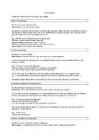
direct, asked, speech, tell, report, other, indirect, them, verb, teacher, sentences, before, come, mother, told, simple, bought, turn, yesterday, friend, reported, tired, usually, tense, verbs, present, parents, perfect, could, might, tomorrow, following, days, ours, weather, helen, having, lunch, cinema, france, times, left, children, modal, swimReported speech is often also called indirect speech. When we use reported speech, we are usually talking about the past (because obviously the person who spoke originally spoke in the past). The verbs therefore usually have to be in the past too. For example: "I'm going to the cinema". He said he was going to the cinema. Basic tense chart The tenses generally move backwards in this way (the tense on the left changes to the tense on the right): present simple past simple I'm a teacher
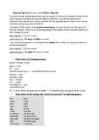
Reported Speech (in other words Indirect Speech) If we report what another person has said, we usually do not use the speaker's exact words (direct speech), but reported (indirect) speech. Therefore, you need to learn how to transform direct speech into reported speech. We use reported speech when we are saying what other people say, think or believe. - Example: If this verb is in the present tense (says), it's easy. We just put 'she says' and then the sentence. When we are reporting things in the present, future or present perfect we don't change the tense. : direct speech: "I like ice cream" reported speech: She says she likes ice cream - But, if the reporting verb is in the past tense (said), then usually we change the tenses in the reported speech: direct speech: "I like ice cream" reported speech: She said she liked ice cream. .........
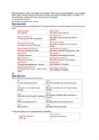
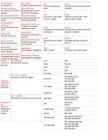
· DIRECT · INDIRECT · Am, is, are · Was/were · Shall/will · Should/would · Can · Could · May · Might · Must · Have/has to · Ought to · Had to CHANGES OF ADVERB OF TIME & PLACE · DIRECT · INDIRECT · NOW · THEN · TOMORROW · THE FOLLOWING DAY · NEXT WEEK · THE FOLLOWING WEEK · TONIGHT · THAT NIGHT · TODAY · THAT DAY · YESTERDAY · THE DAY BEFORE · LAST NIGHT · THE NIGHT BEFORE · LAST WEEK · THE WEEK BEFORE · HERE · THERE · THIS · THAT · THESE · THOSE CHANGES OF TENSES · DIRECT · INDIRECT
All rights reserved. No part of this book may be reproduced in any form or by any means, electronic or mechanical, including photocopying, recording, or by any information storage and retrieval system, without the written permission of the publisher. ISBN 1-59905-201-6 Printed in the United States of America 13 12 11 10 09 08 07 9 8 7 6 5 4 3 2 1 Introduction Grammar is a very old field of study. Did you know that the sentence was first divided into subject and verb by Plato, the famed philosopher from ancient Greece? That was about 2,400 years ago! Ever since then, students all over the world have found it worthwhile to study the structure of words and sentences. Why? Because skill in speaking and writing is the hallmark of all educated people. Lesson by lesson, this book provides basic instruction in the eight parts of speech--nouns, pronouns, verbs, adjectives, adverbs, prepositions, conjunctions, and
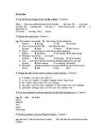
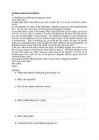
Tests Superstar 1 Luke Prodromou Test 1 Name____________________ Class_______ Use your English 1 Complete these sentences using the correct form (present simple or present continuous) of the verb in brackets. _ 1 She is in a band and she _________________________________ (record) a CD at the moment. _ 2 She is an actress and often _________________________________ (appear) on television. _ 3 At the moment she _________________________________ (have) a rest because she is tired. _ 4 Mike is a doctor and he _________________________________ (live) in Manchester. _ 5 I _________________________________ (start) work at 8.30 every morning.
8 I (like) the weekends. 9 Mario (play) football twice a week. 10 They (eat out) on Sundays. 2. Exercises: put the correct tense (simple present or present continuous) 1 We (always start) at nine. 2 I (think) he's away. 3 She (usually stay) with Barbie when we go to Chicago. 4 While the butter (melt), you (take) three eggs and (break) them into a bowl. 5 Scientists (believe) the weather (change). 6 I (not see) what the problem is. 7 Why (you look) at me like that. 8 Now I (understand) what she (want). 5 3. Exercise: Read what Sharon says about a typical working day and write what she did or didn't do yesterday: I usually get up at 7.30 and have a big breakfast
tegevusverbid, näiteks ei saa öelda I am liking või you are knowing, vaid I like ja you know. Järgmiseid verbe ei kasutata tavaliselt kestvas olevikus. like love hate want need prefer know realise suppose mean understand believe remember belong contain consist depend seem Past Simple Lihtmineviku moodustamine Jaatav vorm Eitav vorm Küsiv vorm I asked I did not ask Did I ask? He/she/it went He/she/it did not go Did he/she/it go? We/you/they made We/you/they did not make Did we/you/they make? Lihtminevik väljendab: · Üksikut tegevust või üksteisele järgnevaid tegevusi, mis on lõpetatud enne kõnemomenti või on toimunud
Mary........blue eyes and blond hair, but her brother ........dark hair. He ........in his late twenties. He........married and........two sons. I........short, but my sister........tall. We........a dog and a cat. Our uncle........two dogs. They........brown. 2. Choose the correct item. ( 5 points ) e.g. The residents were made...D....their homes by the authorities. A leave B leaving C left D to leave 1) Ann is my best friend! We........each other for years A know B knew C knows D have known 2) Nicky........to San Francisco when the accident happened. A flies B has flown C was flying D has been flying 3) Why don`t you let her........her story? A finish B to finish C finishing D have finished 4) Tim........in a cafe at present, but he has already applied for a new job
ühtki selle töövihiku osa paljundada ei elektroonilisel, mehaanilisel ega muul viisil. Töövihik on kooskõlas 2009. a uuendatud õppekomplektiga I Love English 6. Tartu, 2014 ISBN 978-9949-436-59-0 Kirjastus Studium Riia 15b, Tartu 51010 www.studium.ee Trükitud OÜ Greif trükikojas Lohkva, Luunja vald Tartumaa 62207 --- 3 xxx 1. The Big Apple 1. Write the verbs in the present continuous or the past continuous tense. Do you remember? am is are was were verb -ing 1 Sorry. I ... (write) a report at the moment. I can't come with you. 2 When Peter arrived, his friends ... (play) football. 3 I ... (sleep) when the alarm went off in my sister's room. 4 Dad's mobile phone is switched off because he ... (fly) to Paris. He's on the plane at the moment. 5 I ... (read) an interesting book. It's a collection of memories. 6 Leo was late again. He ... (step) out of his father's car when the bell rang. 7 Helen ..
UNIT 4 4.1 Like and as Kasutame like, et öelda, et asjad on sarnased. He looks like his father. Ametlikumas vormis kasutame as, et öelda, et asjad on sarnased (esineb enne alust) The exam starts at 9.30 as I have already said. Kasutame as, et rääkida ametitest ja töödest, mida inimesed teevad She works as a teacher in a primary school. Kasutame as, kui me viitame informatsioonile, mida nii rääkija kui kuulaja juba teavad As you know, I'm starting a new job next month. 4.2 Narrative tenses 4.2a Lihtminevik Kasutame: et rääkida sündmustest minevikus, mis on nüüdseks lõppenud I went to the zoo last weekend. et rääkida mineviku situatsioonidest I lived next door to my best friend. kaudses kõnes 4.2b Kestev minevik Kasutame:
languages. 1 The capital of Norway is Oslo. 2 Kevin lives in Chicago. He is American. 3 Michail comes from Moscow. He speaks Russian. 4 What nationality are you? I´m Estonian. 5 The descendants of the Africans brought to America are called settlers. 6 Uwe´s grandparents live in Germany. They speak German. 7 Michael comes from Australia. He speaks Australian English. 8 Eve lives in Ireland. She speaks English and Irish. 3 Write the sentences in reported speech. 1 Martin said, "We´re going on a class trip tomorrow." Martin said they were going on a class trip the next day. 2 Mary said to us, "I bought a book on big cats yesterday." Mary told us she had bought a book on big cats the day before. 3 Ben said to Brian, "You can wait for me here." Ben told Brian he could wait for him there. 4 Dad said, "I´ll finish work early today." Dad said he would finish work early that day. 5 My sister said to me, "This dress looks good on you."
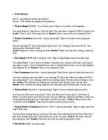
present simple past simple will would I'm a teacher. He said he was a teacher I'll come and see you He said he would come and see present continuous past continuous. soon. me soon. I'm having lunch with my He said he was having parents. lunch with his parents. can could present perfect simple past perfect simple
I'm playing very badly today. (NOT I play very badly today.) Look! It's raining! (NOT Look! It rains!) 12. Use for with a period of time. Use since with the beginning of the period. for the last two hours = since 9 o'clock for three days = since Monday for five years = since I left school I've been learning English for five years. (NOT I've been learning English since three years.) We've been waiting for ages, since eight o'clock. 13. Don't separate the verb from the object. VERB OBJECT She speaks English very well . (NOT She speaks very well English.) Andy likes skiing very much. (NOT Andy likes very much skiing.) 14. Don't use the present perfect have/has seen, have/has gone etc with words that name a finished time. I saw him yesterday. (NOT I have seen him yesterday.) They went to Greece last summer. (NOT They have gone ... last summer.) 15. English (the language) normally has no article. You speak very good English
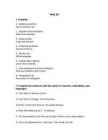
Artiklid ja eessõnad 7 Eessõnad 7 Kesksõnad 8 Prefiksid ehk eesliited 8 Sufiksid ehk järelliited 9 Artikkel the pärisnimedega 10 Artikkel the geograafiliste nimedega 10 Artikkel a, an 10 Muu 11 Otsekõne Direct speech 11 Kaudkõne Reported speech 11 Kaudküsimused Reported questions 12 Passiiv Passive voice 12 Loendatavad nimisõnad Countable nouns 12 Loendamatud nimisõnad Uncountable nouns. 13 Mitmuse moodustamine 13 Siduvad asesõnad 14 Omastav kääne 14
................................................................................................... 9 Artikkel the pärisnimedega...........................................................................................10 Artikkel the geograafiliste nimedega............................................................................10 Artikkel a, an.................................................................................................................10 Otsekõne Direct speech..............................................................................................11 Kaudkõne Reported speech........................................................................................11 Kaudküsimused Reported questions..........................................................................12 Passiiv Passive voice .................................................................................................12
Language: a systematic, conventional use of sounds, signs or written symbols in a human society for communication and self-expression. - human language at all levels is rule- or principle-governed. Linguistics: the scientific study of human natural language Synchronic approach to language: Diachronic approach to language: Linguistic competence: Linguistic performance: What is grammar?: "The sounds and sound patterns, the basic units of meaning, such as words, and the rules to combine them to form new sentences constitute the grammar of a language" Prescriptive grammar vs. Descriptive garmmar: Descriptive grammar: the systematic study and description of a language. Descriptive grammar refers to the structure of a language as it is actually used by speakers and writers. Prescriptive grammar: a set of rules and examples dealing with the syntax and word structures of a language, usually intended as an aid to the learning of that language. Prescriptive grammar refers
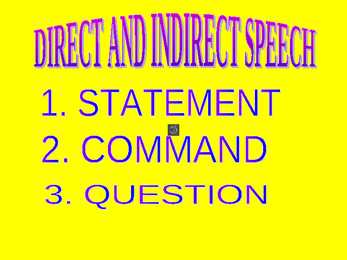
kaudselt.Otsene kõne kordab kõneleja sõnu täpselt Näiteks: She says, ,,I am a student ." Kaudne kõne annab kõneleja sõnu edasi ümberjutustatult. Näiteks: She says that she is a student. Otsene kõne Otsene kõne antakse kaudses kõned edasi sihitislausega, kusjuures toimuvad mõningad muudatused , näiteks muutuvad vastavalt lause mõttele asesõnad ja mõnel juhul ka verbi pöördevormid. Saatelause Otsene kõne Reporting clause Direct speech He says, ,,I like your car." Kaudne Kõne Indirect speech Pealause Sidesõna Sihitislause Main clause Linking word Object clause He says that he likes my car Väitlaused kaudses kõnes Statements in indirect speech Tom says to me he likes my car Joe is saying that Mary is leaving next week
are -- were do/does --- did want/like/know/go etc --- have/has had wanted/liked/knew/went etc will --- would can --- could wanted/liked --- had wanted/had liked Direct speech Reported speech Jo says: Jo said: ,,I like tennis." (that) she liked tennis. ,,John is going to learn it too." (that) John was going to learn it too. ,,Mary has given up her hobby too." (that) Mary had given up her hobby too. ,,I can´t play tennis on Monday"
· Is he sitting or standing? · They are reading their books. Examples: · They are not watching television. · What are you doing? · She is always coming to class late. · Why aren't you doing your homework? · He is constantly talking. I wish he would shut up. USE 2 Longer Actions in Progress Now · I don't like them because they are always complaining. REMEMBER Non-Continuous Verbs/ Mixed Verbs Examples: (All of these sentences can be said while Examples: eating dinner in a restaurant.) · She is loving this chocolate ice cream. Not · I am studying to become a doctor
If-clause present (past) simple Main clause present (past) simple Sometimes sentences with if express certainty rather than possibility. The zero conditional is used to talk about sth. that is always true (such as a scientific fact), or that was always true in the past. In this type of conditional we can use when instead of if. E.g., If/When you mix blue and red, you get purple. If/When you don't water flowers, they die. (present simple in both parts of the sentence) If/When I asked her to come with us, she always said no. (past simple in both parts of the sentence) 1 First conditional If-clause present simple; Main clause future tense (or: can, must, may, etc., + bare infinitive) Used to talk about the consequences of a possible action (a real or very probable situation in the present or future). E.g., If I write my essay this afternoon, I will have time to go out tonight. (or: I might go out tonight).
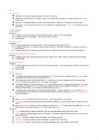
............................................................................................. ...................................................................................................... ............................................................................. 1.2 Read the text and strike though words that don't suit. She stood and watched on/the darkening autumn sky. It was cold. So cold, that the little girl could/might not even cry. She was/is scared, but having no other choice, she stood/stands still until it started to rain. Then, finally, a/an older woman spotted the shaking creature, and called her in for/due to a cup of hot chocolate. The little girl had been/was really happy and followed the kind woman. They became good friends and in/at the evening the woman said that/if the girl could stay as long as she wanted/had wanted. And so it was decided that the girl would/will/is going to/was going to stay with her new stepmother. Happy end 1
going to go to the party. I told you he was going to come to the party. I already told Mark that when he arrived, we would go out for dinner. Active= I knew John would finish the work by 5:00 PM. Passive= I knew the work would be finished by 5:00 PM. 17. Gerunds See on nimisõna, mis on tuletatud teguseõnast ning lõppu käib -ing. Reading helps you learn English. He enjoys not working. 18. Infinitives See on tegusõna to vorm. Näiteks: sõnast learn tekib to learn 19. Phrasal Verb See on tegusõna + eessõna või määrsõna, mis loob esimesest lausest teise tähenduse, kasutades sama tegusõna. I ran into my teacher at the movies last night. He ran away when he was 15. 20. Negative question Negatiivsed küsimused sisaldavad enamasti emotsioone ning kõlavad teatud situatsioonides ebaviisakalt. Didn't she like the film? Yes, she did. Aren't they reading now? Yes, they are. Isn't he a student? Can't you read? Isn't she a beauty? 21. General question
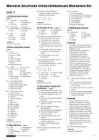
6 have/'ve known interested and it looks as though shipwrecked three times. 7 walked they are working hard. Most of She was lucky because she survived 8 have you phoned them are looking at the experiment each of the three disasters. 2 1 written 8 was trying and working together. They are 4 1 D 3 F 5 G all wearing uniform it's quite an 2 been meaning 9 came
→ Grammar is the system of a language, could also be described as rules in how to form new sentences constitute (tervik) the grammar of a language. Although you don’t need to know grammar to learn a language (children for example start speaking before they learn grammar), it makes studying a foreign language easier because it helps to understand the system of a specific language. Grammar divides into two: Prescriptive grammar → Prescribes rules that tell to the speaker the way the language should be written or spoken in order for the speaker to appear correct or educated. It could be said that this is an academic and strictly correct language use. For example: Never use ain’t
We don't usually use an article week, every day, every night, last morning, last • to talk about things in general. • before the names of countries, cities, towns and villages. week, all night, all day, tomorrow, yesterday,... • with plural nouns and uncountable nouns when talking about them • use the with in the morning, in the afternoon, generally. during the night, the winter, the summer, the day Examples: She has got long hair. He wears black shoes. after tomorrow,... • when talking about sports, people's first names, languages, names of • use a /an or the with whole and entire.
1. FIRST SIGHT My mother drove me to the airport with the windows rolled down. It was seventy-five degrees in Phoenix, the sky a perfect, cloudless blue. I was wearing my favorite shirt -- sleeveless, white eyelet lace; I was wearing it as a farewell gesture. My carry-on item was a parka. In the Olympic Peninsula of northwest Washington State, a small town named Forks exists under a near-constant cover of clouds. It rains on this inconsequential town more than any other place in the United States of America. It was from this town and its gloomy, omnipresent shade that my mother escaped with me when I was only a few months old. It was in this town that I'd been compelled to spend a month every summer until I was fourteen. That was the year I finally put my foot down; these past three summers, my dad, Charlie, vacationed with me in California for two weeks instead. It was to Forks that I now exiled myself-- an action that I took with great horror. I detested
....................................................................... their son every year. (VISIT) 18. The first fast food restaurants ................................................................. in the USA in 1916.(OPEN) 19. The party ...........................................................................................................(START) 20. The grapes ............................................................................................. in California. (GROW) 3.Reported Speech 1. Andrew: "Clean the blue bike!" Andrew ........................................................................................................................................ ............ 2. Christopher: "Do you want to dance?" Christopher asked me ............................................................................................................................... 3. Richard: "I am going to ride a skateboard." Richard..................................................................
Chapter 21 Chapter 42 Chapter 1 It is a truth universally acknowledged, that a single man in possession of a good fortune, must be in want of a wife. However little known the feelings or views of such a man may be on his first entering a neighbourhood, this truth is so well fixed in the minds of the surrounding families, that he is considered the rightful property of some one or other of their daughters. "My dear Mr. Bennet," said his lady to him one day, "have you heard that Netherfield Park is let at last?" Mr. Bennet replied that he had not. "But it is," returned she; "for Mrs. Long has just been here, and she told me all about it." Mr. Bennet made no answer. "Do you not want to know who has taken it?" cried his wife impatiently. "You want to tell me, and I have no objection to hearing it." This was invitation enough. "Why, my dear, you must know, Mrs
THE PREDICATE (does, is doing, has done, etc – action/statement), THE OBJECT (WHO/WHAT is the action/statement directed at?) : Marion (who?) has a boy-friend (who?). She (who?) likes to read books (what?). The earth (what?) is a planet (what?). Besides, there are: THE ATTRIBUTE (WHAT?/WHAT KIND?) and THE ADVERBIAL (WHEN? - adverbial modifier of time/WHERE? – adverbial modifier of place/ HOW? – adverbial modifier of manner) Attributes modify nouns and stand in front of them. Adverbials modify verbs and usually stand behind them: This girl has a beautiful smile. This girl smiles beautifully. Attributes are usually adjectives but sometimes nouns as well: This is an interesting (adjective) story. The kitchen ( noun) door is locked. 2 Word Order in Affirmative Sentences In English the word order is not as flexible as in many other languages. The basic structure of an affirmative sentence is SUBJECT (Who?/What
quickly as possible. I'd deliberately chosen to clock the short trip during a busy time on a Monday, so I was pleased when I reached the Crossfire Building, which housed Waters Field & Leaman, in less than thirty minutes. I tipped my head back and followed the line of the building all the way up to the slender ribbon of sky. The Crossfire was seriously impressive, a sleek spire of gleaming sapphire that pierced the clouds. I knew from my previous interviews that the interior on the other side of the ornate copper-framed revolving doors was just as awe-inspiring, with golden-veined marble floors and walls, and brushed aluminum security desk and turnstiles. I pulled my new ID card out of the inner pocket of my pants and held it up for the two guards in black business suits at the desk. They stopped me anyway, no doubt because I was majorly underdressed, but then they cleared me through. After I completed an elevator ride up to the
· A few words · No more · For certain/sure Tel · The truth l · A lie, story, secret, joke · The time · The difference · One from another · Somebody one's name · Somebody the way · Somebody so · Someone's · fortune as · a question k · a favour · the price · after somebody · the time · around · something/somebo dy Direct speech Reported speech Present simple Past simple My flight leaves He said his flight left at 3 3 o'clock. o'clock. Present Past Continuous continuous He said he was playing I am playing tennis that afternoon. tennis this afternoon. Present Perfect Past Perfect I have cleaned I said he had cleaned my room. his room. Past Simple Past Simple or Past I paid 12 for the Perfect video
Moved to Cali 2005 Was Born Traveled to Europe Husband 1978 School graduates @ Oxford 1999 Started Got married School 1983 2008 2 The Six English Verb Tenses Three Simple Tenses Simple continuous Present You walk. You are walking I run. I am running. Past You Walked You were walking. I ran. I was running. Future You will walk. You will be walking. I will run. I will be running. Three Perfect Tenses Perfect continuous
slamming, the footsteps passing the window, the key turning in the lock. She laid aside her sewing, stood up, and went forward to kiss him as he came in. "Hullo darling," she said. "Hullo darling," he answered. She took his coat and hung it in the closer. Then she walked over and made the drinks, a strongish one for him, a weak one for herself; and soon she was back again in her chair with the sewing, and he in the other, opposite, holding the tall glass with both hands, rocking it so the ice cubes tinkled against the side. For her, this was always a blissful time of day. She knew he didn't want to speak much until the first drink was finished, and she, on her side, was content to sit quietly, enjoying his company after the long hours alone in the house. She loved to luxuriate in the presence of this man, and to feel -
 annaabi.ee