Vajad kellegagi rääkida?
Küsi julgelt abi LasteAbi
Logi sisse

Present perfect and Present perfect continious (0)

1 Hindamata
Punktid
Inglise keel - Kõik luuletused, mis on inglise keeles


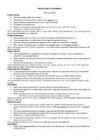
Present Perfect Simple and Present Perfect Continuous  
 
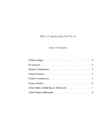
Table of Contents 
 
 
Present Perfect Simple.............................................................................2 
When to use the Present Perfect Simple ...........................................2 
Present Perfect Continuous ...................................................................3 
When to use the Present Perfect Continuous..................................4 
Time expressions with Present Perfect...............................................5 


Present Perfect Simple 
  
The Present Perfect is the present tense of have + a past participle 
 
 
have washed    
/ I’ve washed 
                   you have written  /you’ve written 
                   he/she/it has worked /he’s/she’s/it’s worked 
                   we have forgotten  /we’ve forgotten 
                   they have gone   
/they’ve gone 
Negative  
 
I/you/we/they have not washed  / haven ’t washed 
                            he/she/it has not worked 
 
/hasn’t worked 
Question   
Have I/you/we/they worked
                            Has he/she/it washed
  
 
When to use the Present Perfect Simple 

 
Present Perfect refers to: 
•           Recent events , without a definite time given . The recentness 
may be indicated by just
We've missed the turning
 
   
I've just  seen  a ghost! 
•           Indefinite eventswhich happened at an unknown time in 
the past. No definite time is given. 
  
  Jim 
has had three car accidents. (up to the present) 
•          Indefinite events, which may have an obvious result in the 
present. 
 
   
I've twisted my ankle . (that’s why I'm limping) 
•          With state verbs , a state which lasts up to the present
  
  I've lived  here  for the past ten years
 
2
•        A habitual action  in a period of time up to the present. 
 
   
I've been jogging every morning  for the last  month
 
Contrasts with Past Simple   
Past Simple is used with time expressions which refer to definite times
The time may be stated or understood. Compare
I've bought a new car. (indefinite) 
       bought a new car last week. (definite) 
       bought the car after all. (implied definite: the car we  talked  about) 
Choice between Past Simple and Present Perfect for recent events may 
depend on the mental attitude of the speaker. This in turn may depend 
on whether the speaker feels distant in time or place from the event. 
I've left  my wallet in the car. I'm going back  to get it. 
Here the speaker may be about to return , and feels that the event is 
connected with the present. 
   
left my wallet in the car. I'm going back to get it. 
Here the speaker may feel separated in time from the event, or be further 
away
 
Present Perfect Continuous 
  
The Present Perfect Continuous is the present tense of have + been + an 
ing-form 
I/you/we/they have been waiting    /I/you/we/they’ve been waiting 
he/she/it has been working   
/he/she/it’s been working 
Negative 
I/you/we/they have not been waiting 
/haven’t been  
waiting 
  he/she/it 
has not been working 
/hasn’t been working 
Question  Have I/you/we/the been waiting
Has he/she/it been working
 
3
When to use the Present Perfect Continuous 
 
Present Perfect Continuous (Progressive) can refer to a range of 
meanings, depending on the time expression used and the context
•          A state which lasts up to the present moment 
  
  I've been waiting for you for three hours
•          An incomplete activity  
  
  I've been cleaning the house but I  still haven't  finished
•          To emphasise duration 
  
  I've been writing  letters  all morning. 
•       A recently finished activity 
   
 
I've been running. That's why I  look  hot. 
•         A repeated activity 
   
 
I've been taking   French lessons this  year
  
Contrasts with Present Perfect Simple 
There may be little contrast when some state verbs are used. 
  
How 
long 
have you lived here? 
  
How 
long have you been living here? 
Some verbs (especially sit, lie,  wait  and  stayprefer the continuous form. 
There may be a contrast between completion and incompletion, 
especially if the number of items completed is mentioned. 
Completed: emphasis on  achievement  
 
 I've ironed  five shirts this morning. 
Incomplete or recently completed: emphasis on duration 
  
I've been ironing my shirts this morning. 


4
Time expressions with Present Perfect 
 
 
Meaning with Present Perfect tenses is associated with certain time 
expressions. Contrast with Past Simple may depend on the choice of time 
expression. 
Past Simple: referring to a  specific time 
 
   yesterday , last week, on Sunday  
Present Perfect Simple
 
  since  1968 (the beginning of a period of time) 
 
   already  (indefinite past) 
Many time expressions are not associated with a specific tense. 
  

haven't seen  Helen recently. 
  

saw Jim recently. 


5

Document Outline

  •  Present Perfect Simple 
  • When to use the Present Perfect Simple 
  • Present Perfect Continuous 
  • When to use the Present Perfect Continuous 
  • Time expressions with Present Perfect 
    •  
Vasakule Paremale
Present perfect and Present perfect continious #1 Present perfect and Present perfect continious #2 Present perfect and Present perfect continious #3 Present perfect and Present perfect continious #4 Present perfect and Present perfect continious #5
Punktid 50 punkti Autor soovib selle materjali allalaadimise eest saada 50 punkti.
Leheküljed ~ 5 lehte Lehekülgede arv dokumendis
Aeg2014-12-14 Kuupäev, millal dokument üles laeti
Allalaadimisi 10 laadimist Kokku alla laetud
Kommentaarid 0 arvamust Teiste kasutajate poolt lisatud kommentaarid
Autor 213757 Õppematerjali autor
Reeglid Akadeemilises inglise keeles teemal Present perfect and Present perfect continious

Sarnased õppematerjalid

Inglise keele kordamine
4
doc

Inglise keele kordamine

TIME CLAUSES Present Simple · Permanent states, facts (Tom works..) · Repeated and habitual actions, routines (She usually goes..) · Laws of nature and general truths (The sun sets in the west) · Timetables and programmes · Sporting commentaries, rewiews (Beckham wins the ball, crosses and Owen scores) · Feelings and emotions (I love Tallinn..) TIME EXPRESSIONS USED WITH PRESENT SIMPLE: usually, often, always, every day/week etc, in the morning/evening etc, at night/the weekend, on Fridays etc. Present Continuous · Actions taking place at or arount the moment of speaking (The kids are watching TV..) · Fixed arrangements in the near future (I'm going to the dentist tomorrow) · Currently changing ang developing situations (The number of burgularies is increasing)

Inglise keel
Inglise keele ajavormid
10
odt

Inglise keele ajavormid

Will + infinitive (will go) Am/is/are going to + infinitive (is going to rain) 1.A decision at the moment of 1.Future plans made before the speaking: moment of speaking: A: 'I'm cold'. A: 'We've run out of milk.' B: 'I'll close the window'. B: 'I know, I'm going to buy some.' 2.Prediction based on opinion: 2.Prediction based on present I think the Conservatives will win the evidence: next election. Look at those boys playing football! 3.A future fact: They're going to break the window. He will be ten next year. 4.Promises / requests / refusal / willingness: I'll help you with your homework. Will you give me a hand? 5.In the same way as the future continuous, but with state verbs: I'll be at the station when you arrive. 'Shall' is used mainly in the forms 'shall I

Inglise keel
Ajavormide teooria
18
doc

Ajavormide teooria

Windows are not made of wood. Simple Present · · New York is a small city. It is not important that this fact is untrue. [VERB] + s/es in third person USE 3 Scheduled Events in the Near Examples: Future · You speak English. · Do you speak English?

Inglise keel
Inglise keele põhitõed algajale
42
pptx

Inglise keele põhitõed algajale

  on Christmas Day (but at Christmas) We use at in these expressions:     at night - at Christmas - at the moment / at present - at the     same time - at weekends - at the age of...       IN   DURING

Inglise keel
Active tenses
25
odp

Active tenses

The professor (subject doing action) teaches (verb) · the students (object receiving action). · Mary (subject doing action) · washes (verb) · the dishes ( object receiving action). The tenses of the verb 1.Present (olevik) 2.Past (minevik) 3.Future (tulevik) 4.Future in the past (kaudne tulevik) Iga aeg võib esineda neljas eri rühmas 1.IndefiniteTenses (üldajad) 2.Continious Tenses (kestvad ajad) 3.Perfect Tenses (perfekti ajad) 4.Perfect Continious Tenses (perfekti kestvad ajad) Indefinite Tenses (üldajad) used to describe actions but do not state whether the action is completed or on- going märgivad tegevuse sooritamise fakti Peter visits us every day. Peter visited us yesterday. Peter will visit us tomorrow. Continuous Tenses (kestvad ajad) are used when talking about a particular point in time · We were sleeping when the storm began. What were you doing at five o'clock?

Inglise keel
Reported speech reeglid
4
docx

Reported speech reeglid

Reported speech is often also called indirect speech. When we use reported speech, we are usually talking about the past (because obviously the person who spoke originally spoke in the past). The verbs therefore usually have to be in the past too. For example: "I'm going to the cinema". He said he was going to the cinema. Basic tense chart The tenses generally move backwards in this way (the tense on the left changes to the tense on the right): present simple past simple I'm a teacher. He said he was a teacher past continuous. present continuous He said he was having lunch with his I'm having lunch with my parents. parents. past perfect simple

Inglise keel
Inglise keele jaotusmaterjal
37
doc

Inglise keele jaotusmaterjal

3 TALLEGG 11 MIZDE 4 VESITERM 12 LADA 5 STOW 13 SCHWUNG 6 KALEV 14 MAIASMOKK 7 YAMAHA 15 ISKU 8 ESTRAVEL 2 Affirmative tense Use Signal Words Negative/Questions · action in the present taking always, Present Simple A: He speaks. place once, never or several every ..., N: He does not speak. normally, often, Q: Does he speak? times seldom, · facts sometimes,

Inglise keel
Ways of expressing the Future
16
pdf

Ways of expressing the Future

Table of Contents Future Simple ...................................................................... 2 Be going to ........................................................................... 3 Present Continuous .............................................................. 3 Present Simple ..................................................................... 4 Future Continuous ............................................................... 4 Future Perfect....................................................................... 6 Other ways of referring to the future ..................................... 7 Other future references......................................................... 8 Future Simple In Future Simple we use the modal verb will + the verb. It is the same in all persons. I will work I’ll work you will study you’ll study

Inglise keel


Kommentaarid (0)

Kommentaarid sellele materjalile puuduvad. Ole esimene ja kommenteeri


Sellel veebilehel kasutatakse küpsiseid. Kasutamist jätkates nõustute küpsiste ja veebilehe üldtingimustega Nõustun