 50 punkti
Autor soovib selle materjali allalaadimise eest saada 50 punkti.
50 punkti
Autor soovib selle materjali allalaadimise eest saada 50 punkti.
 ~ 18 lehte
Lehekülgede arv dokumendis
~ 18 lehte
Lehekülgede arv dokumendis
 2014-04-09
Kuupäev, millal dokument üles laeti
2014-04-09
Kuupäev, millal dokument üles laeti
 4 laadimist
Kokku alla laetud
4 laadimist
Kokku alla laetud
 0 arvamust
Teiste kasutajate poolt lisatud kommentaarid
0 arvamust
Teiste kasutajate poolt lisatud kommentaarid
 AnnaAbi
Õppematerjali autor
AnnaAbi
Õppematerjali autor
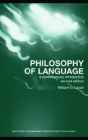
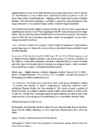
proper names, Searle's cluster theory, and the causalhistorical theory. Part II, Theories of Meaning, surveys the competing theories of linguistic mean- ing and compares their various advantages and liabilities. Part III, Pragmatics and Speech Acts, introduces the basic concepts of linguistic pragmatics, includes a detailed discussion of the problem of indirect force and surveys approaches to metaphor. Part IV, new to this edition, examines the four theories of metaphor. Features of Philosophy of Language include: · new chapters on Frege and puzzles, inferentialism, illocutionary theories of meaning, and relevance theory · chapter overviews and summaries · clear supportive examples · study questions · annotated further reading · glossary Praise for the First Edition: "This exceptional text fulfils two essential criteria of a good introduc- tory textbook in the philosophy of language: it covers a broad range of
British Literature in the 20th-21st Century REVISION QUESTIONS 1. The Contradictory, diverse, chaotic 20th century. New developments in science and philosophy. The essence and influence of Freudian theory. Contradictory, diverse, chaotic 20th c- simultaneous rejection and invocation of the past. While modernists apotheosized the creative geniuses of the past, they also rejected old poetic forms. Challenge old and established beliefs and more and more people had access to books and education more people went to universities. profound change in morals: · No universal value and perspective on things
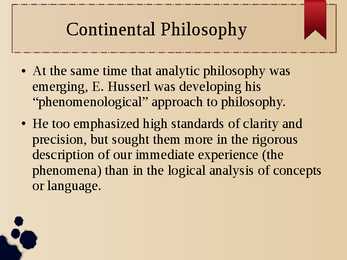
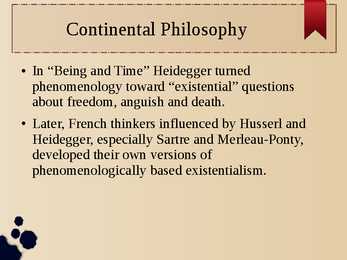
· Phenomenology · Human choice, creativity and self actualisation are important · the study of conscious experience · Meaning precedes objectivity in research · Existentialism · Value is placed on the dignity of the person · philosophy emphasising personal choice and the importance of existence `now' rather than what was past or what might be in future · Need to emphasise growth and potential in the person's personality · Humanistic approach · focuses on uniquely human experience; on human potential for growth
English literature is one of the oldest literatures in Europe; dates back to the 6th century AD. Oral literature, i.e. not written down, spread from person to person. In 449 AD Anglo-‐Saxon tribes invaded England – beginning of the Anglo-‐Saxon period in English literature. The first form of literature was folklore, carried by scops and gleemen, who sang in alliterative verse (a kind of simple poetry). Prose developed much later. The first form of recorded English literature was the epic Beowulf, which was produced sometime near the end of the 7th and beginning ?
people, bringing in some new and radical ideas. Republicanism: The doctrine of republicanism asserts a system of a government that is elected by the people of the nation. The roots of this ideology go back to ancient Greece, when the concept of a democratic government was examined by philosophers such as Plato and Aristotle. Individual Liberty: "Life, Liberty, and the pursuit of Happiness" developed as the motto of this era, which forms the cornerstone of the U.S. Constitution today. Since the colonies had very few individual rights, they declared certain fundamental rights that they deemed "inalienable." Democracy: The colonies had no say in the formation of the government, and had no representation in the lawmaking process. Consequently, they were attracted to the idea of democracy, where the government is "of the people, by the people, for the people," as Lincoln later expressed in his Gettysburg Address
Dos Passos beocme less radical in the end of his life. Became almost a right wing activist. He is remembered for his USA trilogy and the way he shows human disintregation. The Body of American. Richard Roe and John Doe-if the identity is unknown. Polysyndeton, direct speech, lack of punctuation, contrast of styles, fragmentation. Steinberg. 06.03.13 1930's. Time of unemployment and crisis and so on. John Steinberg. Like Dos Passos he was critical of american social order but his philosophy was different. He is more optimistic, believes that life goes on and that is indestructable. Although many individual lives were ruined, the life goes on, everything is not material success. Racial minorytis, who do not have all the rights, the have nots, the simple, the poor, the idiots. His method is very interesting. A lot of naturalistic elements, unpleasant details, not pure naturalist. Narrator's point of view, his style is more poetic of the style, rhythm and repetition
worser."). VERBS: The Historical Present (present tense) in the author's narrative is used to render past events, creating the illusion of things happening at the present moment. Continuous tenses may express surprise, disbelief, indignation (e.g. "One day, when I am no longer spending time running a sweet stool, I am to write a book about us all."). Sometimes continuous tenses are more polite and mild (e.g. "He is not feeling too well today."). In the dialogue we may come across ungrammatical instances: we, I, he + ain`t; I says; we says; times has changed; he done me harm; etc. These cases reflect ungrammatical, uneducated, original, or excited state of mind. Archaic verbal forms may be used to create the historical background or make the narrative more elevated. On the other hand they may suggest the colloquial speech, because these forms are preserved in dialects (e.g
account that I have no exact information about the activities of all Estonian composers living outside Estonia. From this uneven and variegated whole I had to choose works worthy of attention. Thus I have had to treat the symphonists in the same manner. I apologise if a colleague does not find his name mentioned. The volume for this extensive work is limited. As the manifold activity of several elder composers still has deep significance today, I have, for the sake of completeness, discussed their other spheres of operation. Symphonic music is divided into two large subsections: instrumental and choral (oratorio and cantata) works. The latter has been severely cut from this work; some examples from momentous stage and oratorical works constitute an exception. The orchestral music will be discussed in some detail, bringing forth the human being and their eternal problems in the widest and deepest sense
 annaabi.ee







Kõik kommentaarid