 5 punkti
Autor soovib selle materjali allalaadimise eest saada 5 punkti.
5 punkti
Autor soovib selle materjali allalaadimise eest saada 5 punkti.
 ~ 2 lehte
Lehekülgede arv dokumendis
~ 2 lehte
Lehekülgede arv dokumendis
 2009-01-05
Kuupäev, millal dokument üles laeti
2009-01-05
Kuupäev, millal dokument üles laeti
 140 laadimist
Kokku alla laetud
140 laadimist
Kokku alla laetud
 1 arvamus
Teiste kasutajate poolt lisatud kommentaarid
1 arvamus
Teiste kasutajate poolt lisatud kommentaarid
 suslu
Õppematerjali autor
suslu
Õppematerjali autor
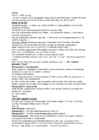
essay) Punctuation (NB! When joining 2 simple sentences, use “;”, NO COMMA BEFORE “THAT” Paragraph 1: introduction Hook (question, interesting observation, unique scenario, quote and surprising statistics) to capture the reader’s interest. Connecting information Clear thesis statement (the points/point of view that you will discuss/explain in length in the later paragraphs) In other words, the reader, having read the introduction, should know exactly what to expect in the body of the essay. DO NOT bring in any new thoughts later! Paragraph 5: Conclusion Final remark (significance, personal effect, etc) Strong, effective message the reader will remember. NO NEW IDEAS! Types: For-and-against essay For example: Discuss the advantages and disadvantages of living in a foreign country. Package holidays: good or bad? Outline: Introduction- state topic Paragraph 2 – ALL the advantages/arguments for Paragraph 3 – ALL the disadvantages/arguments against
writing (i.e. reports, proposals, reviews, letters and essays). Bands Descriptors • Write 10-minute plans for a variety of questions in past papers, so that planning becomes Cambridge English writing examiners are extensively trained to assess learners’ writing using these automatic and quick. assessment scales, bands and descriptors. The quality and consistency of their marks is closely • Look at model answers, such as those featured in coursebooks, to see what is expected at
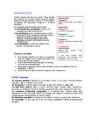
The Essay Writing Manual Brain Storming The process of writing the application essay can be broken into five very basic parts: Brainstorming Selecting the essay topic Writing the essay Revising the essay Coming up with the final draft 1. BRAINSTORMING: Brainstorming is the process of coming up with ideas spontaneously from free flowing writing or talking. To brainstorm, you can simply sit down with a pen and jot down every idea that comes into your head. Another approach is to simply start writing and see where you end up. Record as much information as you can recall, such as schools attended, courses taken, jobs held, research projects undertaken. Work on
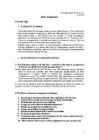
OPINION ESSAY Opinion essays are formal in style. They require your opinion on a topic which must be clearly Introduction stated and supported by reasons. It is necessary Paragraph 1 to include the opposing viewpoint in another State the topic and your opinion paragraph. clearly A successful opinion essay should have: Main Body a) an introductory paragraph in which you Paragraph 2 state the topic and your opinion; Viewpoint 1 and reason b) a main body which consists of two or more Paragraph 3 * paragraphs. Each paragraph should present a Viewpoint 2 and reason separate viewpoint supported by your reasons
Instructions in the native language, dealing with feelings in the native language Integrative testing (write a paragraph/ oral interview) Selfevaluation Teacher gives right versions in case errors appear Studentdesigned syllabus Comprehension and speaking are of big importance I had a look at several clips. In one of them native language was used for explaining. The tape-recording was used. Afterwards the teacher played the recordings and the students had to write on the board what they heard. I enjoyed the clip where the question about student´s feelings, opinions about the lesson and method was asked. Students agreed that it was relaxed environment to study, no pressure. Errors were corrected in non-threatening manner. Students could express their feelings and opinions freely and share their knowledge in the group. All the students were actively involved. The main goals are speaking, active interaction, relaxing learning environment.
To make contrasting points although, yet, however, nevertheless, in spite of, but, while, despite, even if, even though, at the same time, it can be argued that, one can argue that To conclude finally, lastly, all in all, taking everything into account, on the whole, all things considered, in conclusion, as I have said, as was previously stated, to sum up · Expressing arguments for and against a topic Introduction Introduce the subject of the essay. State why it is an important issue at the present time Main body Para.2. Give the arguments in favour of the statement, examples and justifications Para.3. Give the arguments against the statement, examples and justifications Conclusion Conclude by giving a well-balanced consideration · Providing solutions to problems Introduction State the problem, the main reasons for the problem and that there are several solutions to it Main body Para.2
· Paragraph 1 reasons for writing · Paragraphs 2, 3 development · Final paragraph closing remarks · Name · Letters are divided into two categories, formal and informal. There are various types of formal and informal letters . · It is important to think about the person who you are writing to before you begin writing a letter. If the wrong style is used, the letter will look impolite, silly or odd. For example, if you used formal language to write to a close friend, the letter would look odd, or if you used informal language to write a letter to a company, the letter would look impolite. · There are certain characteristics which allow us to distinguish between formal and informal letters. These are: ~ The salutation (e.g. Dear Sir/Madam, Dear Bill) ~ The style or language (e.g. use of formal language for formal letters, or the use of slang and idioms for informal letters) ~ The closing remarks (e.g
Writing gives structure and form to our ideas. In the business world this is done for a purpose: to persuade, recommend, offer advice, give an order, etc. The business text must therefore be easily and quickly read and its message must be understood exactly as intended. If you learn to recognize and avoid the more common errors of information control, grammar and style, you will achieve this aim. You will write more confidently and more correctly if you check everything you write. Pay particular attention to the following: · Appropriate Subject Heading Take care to prepare your reader by introducing the subject appropriately in your subject heading. · Carefully Organized Information If a reader needs to be persuaded or convinced, your information will need careful planning and organizing. · Correct Grammar and Spelling Train yourself to check for major grammatical errors,
 annaabi.ee









Kõik kommentaarid