 50 punkti
Autor soovib selle materjali allalaadimise eest saada 50 punkti.
50 punkti
Autor soovib selle materjali allalaadimise eest saada 50 punkti.
 ~ 25 lehte
Lehekülgede arv dokumendis
~ 25 lehte
Lehekülgede arv dokumendis
 2016-05-17
Kuupäev, millal dokument üles laeti
2016-05-17
Kuupäev, millal dokument üles laeti
 2 laadimist
Kokku alla laetud
2 laadimist
Kokku alla laetud
 0 arvamust
Teiste kasutajate poolt lisatud kommentaarid
0 arvamust
Teiste kasutajate poolt lisatud kommentaarid
 liiliaveerik
Õppematerjali autor
liiliaveerik
Õppematerjali autor
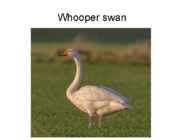
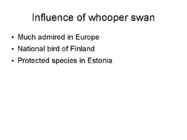
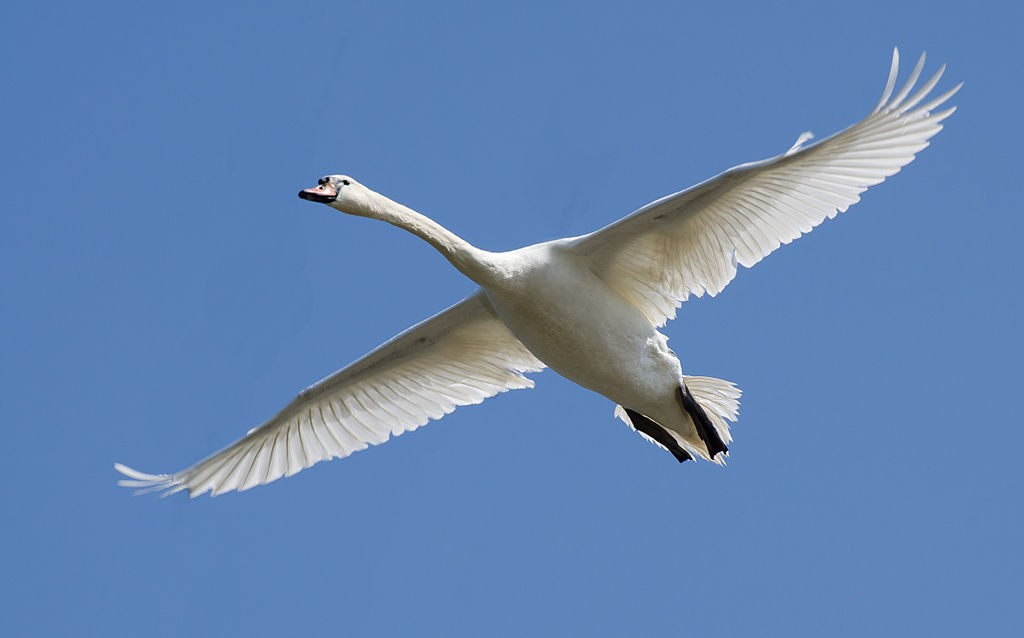
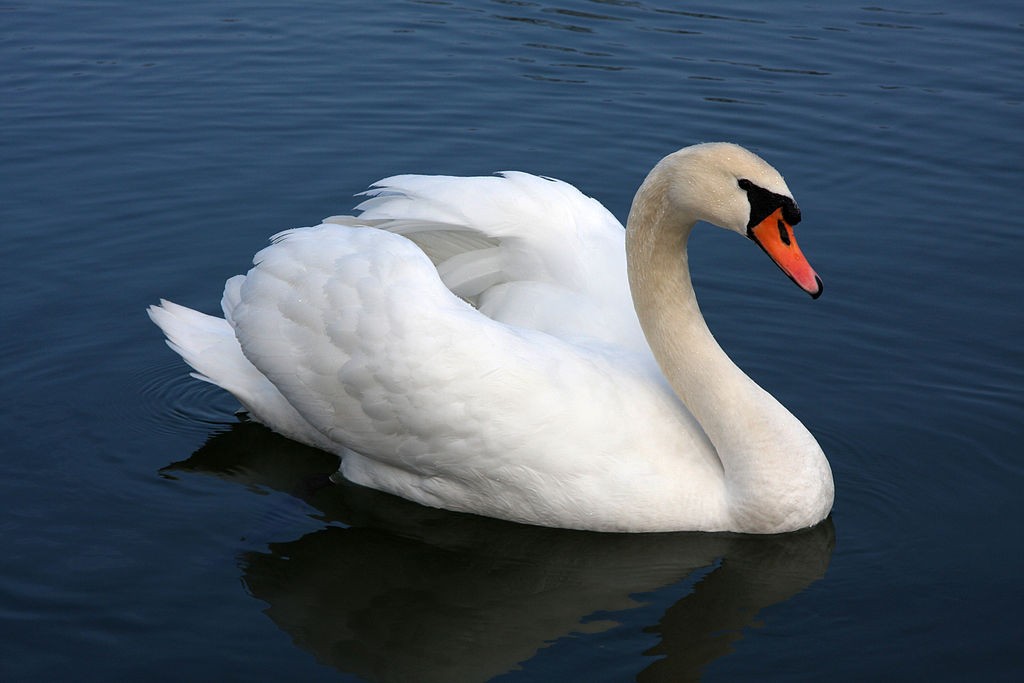
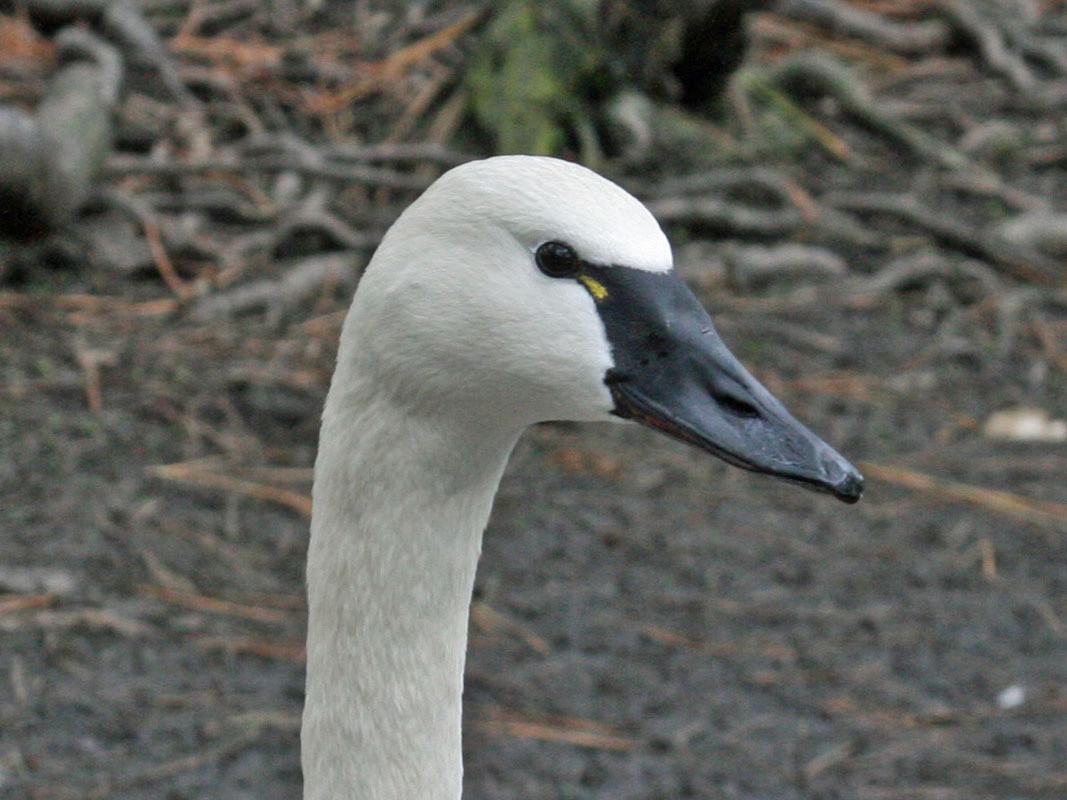
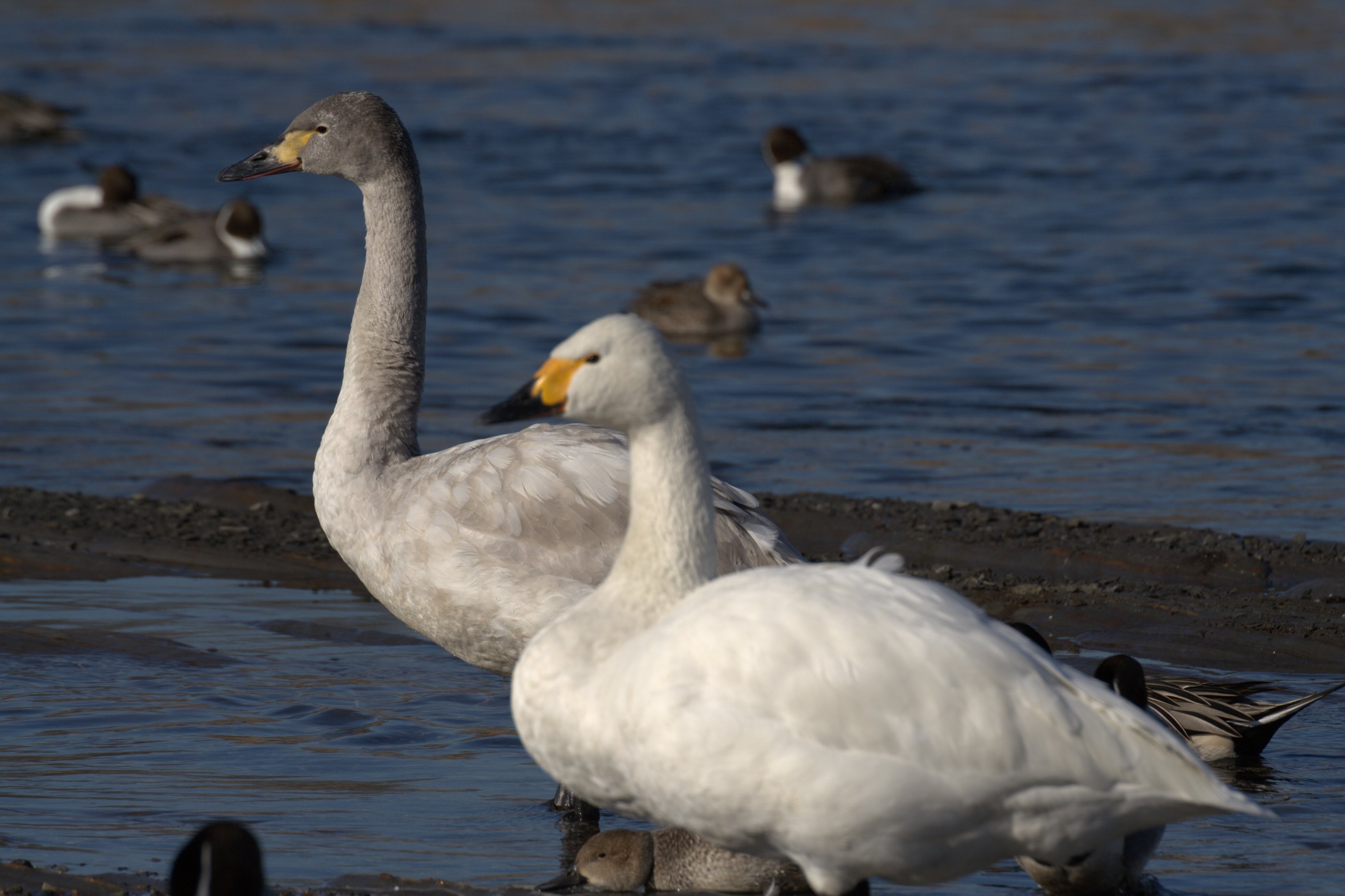
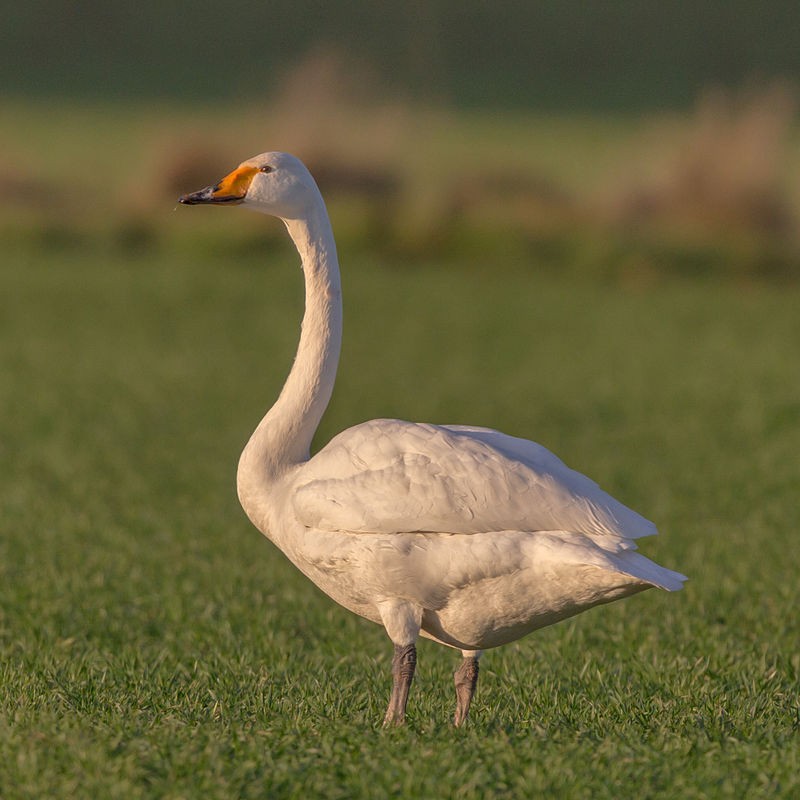
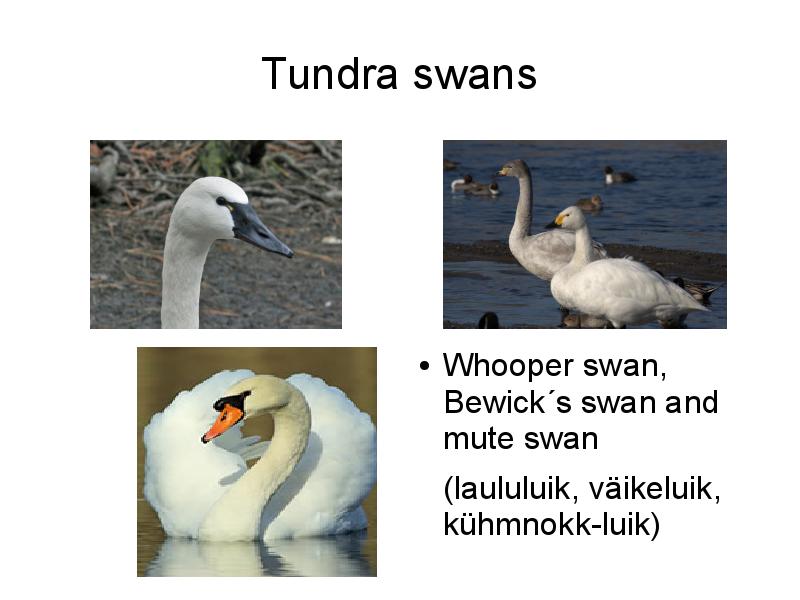
and frog species present today, many migrating from neighbouring countries thousands of years ago. Large and widely recognised wildlife mammals found in Finland are the Brown Bear (the national animal), Gray Wolf, elk and reindeer. Other common mammals include the Red Fox, Red Squirrel, and Mountain Hare. Some rare and exotic species include the flying squirrel, Saimaa Ringed Seal and the Arctic fox, which is considered the most endangered. The Whooper Swan, the national bird of Finland, is a large Northern Hemisphere swan. The most common breeding birds are the Willow Warbler, Chaffinch and Redwing. Of some seventy species of freshwater fish, the northern pike, perch and others are plentiful. Salmon remains the favorite of fly rod enthusiasts. The endangered Saimaa Ringed Seal, one of only three lake seal species in the world, exists only in the Saimaa lake system of southeastern Finland, down to only 300 seals today. It has
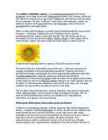
The sunflower (Helianthus annuus) is an annual(iga aastane) plant in the family Asteraceae, with a large flower head (inflorescence(õiekobar, õisik, õitseaeg, õidumine)). The stem(tüvi) of the flower can grow up to 3 metres tall, with the flower head reaching 30 cm in diameter. The term "sunflower" is also used to refer(nimetama, viitama, üle andma) to all plants of the genus(perekond, sugu) Helianthus, many of which are perennial(alaline, aastaringne) plants. What is usually called the flower is actually a head (formally(ametlikult) composite(liit-, komposiit- ; korvõieline, komposiit) flower) of numerous flowers (florets) crowded(täistuubitud, tunglev, rahvarohke) together. The outer flowers are the ray florets(pähik (õisiku osa) and can be yellow, maroon, orange, or other colors, and are sterile(steriilne, viljatu). The florets inside the circular head are called disc florets. Sunflower head displaying florets in spirals of 34 and 55 around the outside The florets wi
There are more than eight hundred kinds of birds in Australia. The emu, which is two metres tall, is the second largest bird in the world.It cannot fly at all, but it can run at fifty kilometres an hour. Then there is the kookaburra,whose cry sounds like someone laughing, and the budgerigar,a little blue or yellow bird that people keep in their homes all over the world. The lyrebird has got its name from the lyre-like tail of the he-bird.He can imitate all kinds of noises. The black swan is also found in Australia only. Many bright coloured parrots, birds of paradise and other colourful birds live in Australian forests. Ordinary mammals are few in Australia.The dingo is a wolflike dog that is believed to have come to Australia with some of the groups of Aboriginal people sometime between 3,500 and 4000 years ago.The dingo is a menace to the local cattle-breeders.The dingo is a very social animal and they live in large family groups
These North American reindeer became known as caribou. Although they are called by different names, they are both considered to be a single species. Unlike deer, both the male and female have antlers. The antlers of the male are long, branched and massive, and they are a little flattened at the ends. The antlers of the female are much shorter, simpler and more slender and irregular. Their large, spreading hooves support the animal in snow in the winter and marshy tundra in the summer. Reindeer are also great swimmers and use their feet as paddles. They can also lower their metabolic rate and go into a semi-hibernation when conditions get very harsh. When it looks like there is nothing to eat on the winter tundra, reindeer will scrape the snow away with their wide feet or antlers and eat lichens, dried sedges and small shrubs. In the summer they the will eat leaves of willows, sedges, flowering plants, mushrooms.
Introducing Red Grouse Scoticus(Lagopus Lagopus scotica ) Evelyn Landing Red grouse scoticus: medium-sized bird found in heather moorland in Great Britain and Ireland usually classified as a subspecies of the Willow Ptarmigan but is sometimes considered to be a separate species moorfowl or moorbird Description plumage being reddish brown, and not having a white winter plumage tail is black and the legs are white white stripes on the underwing red combs over the eye young birds are duller and lack the red combs Habitat Red Grouse is endemic to the British Isles The British population is estimated at about 250,000 pairs with around 15,000 pairs in Ireland Pretators like Hen Harrier, foxes and sometimes dogs hunt them. What they eat? The Red Grouse is herbivorous and feeds mainly on the shoots, seeds and flowers of heather. It will also fee
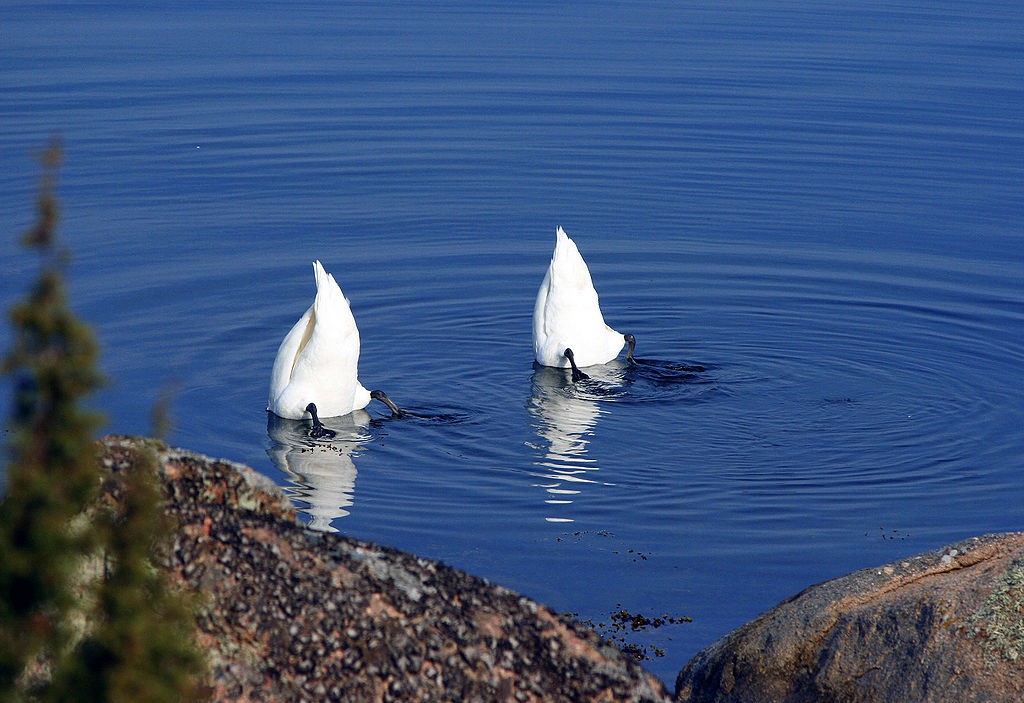
The most important rivers are the Pärnu River and the Emajõgi River. Estonia has more than 1 500islands. The largest of these is Saaremaa,. Saaremaa is followed in size by Hiiumaa, Muhu and Vormsi. The islands and the coastal areas of the mainland are interesting owing to the fact that they are on the migratory route for waterfowl. Twice a year - in the spring and autumn - several hundreds of thousands of birds are visitors in Estonia. The barnacle goose, the swan, the eider plus many more are protected species. The mild sea climate and the rather level landscape of the island, makes Saaremaa an area abundant in flora and fauna. Rare and beautiful species of orchids can be found in many places, and a large number of rare animals including seals live there. Tallinnis the capital and largest city of Estonia. Tallinn is the oldest capital city in Northern Europe Tartu is the second largest city of Estonia. Tartu is often considered the intellectual and
Tundra Tundra is the world's youngest biome. It was formed 10 000 years ago. Located at latitudes 55° to 70° North. Almost all tundras are located in the Northern Hemisphere, encircling arctic desert and extending south to the coniferous forests of the taiga. The ecotone (ecological boundary region) between the tundra and the forest is known as the tree line or timberline. Tundra comes from the Finnish word tunturi, meaning treeless plain. It is noted for its frost-moulded landscapes, extremely low temperatures, little precipitation, poor nutrients, and short growing seasons. Dead organic material functions as a nutrient pool. The two major nutrients are nitrogen and phosphorus. Nitrogen is created by biological fixation, and phosphorus is created by precipitation.
Perth is the capital of the Australian state of Western Australia. A population of 1,477,800 makes Perth the largest city in Western Australia and home to threequarters of the state's residents. The city is also the fourth most populous urban area in Australia. The metropolitan area is located in the south west of the continent between the Indian Ocean and a low coastal escarpment known as the Darling Range. The central business district and suburbs of Perth are situated on the Swan River. Founded in 1829 by Captain James Stirling as the political centre of the free settler Swan River Colony, Perth has continued to serve as the seat of Government for Western Australia to the present day. Traditionally, Perth and the Swan River have usually been viewed and photographed from Kings Park, situated on a hill to the southwest of the city or from the South Perth foreshore. The
 annaabi.ee






Kõik kommentaarid