 50 punkti
Autor soovib selle materjali allalaadimise eest saada 50 punkti.
50 punkti
Autor soovib selle materjali allalaadimise eest saada 50 punkti.
 ~ 7 lehte
Lehekülgede arv dokumendis
~ 7 lehte
Lehekülgede arv dokumendis
 2015-11-29
Kuupäev, millal dokument üles laeti
2015-11-29
Kuupäev, millal dokument üles laeti
 2 laadimist
Kokku alla laetud
2 laadimist
Kokku alla laetud
 0 arvamust
Teiste kasutajate poolt lisatud kommentaarid
0 arvamust
Teiste kasutajate poolt lisatud kommentaarid
 antta
Õppematerjali autor
antta
Õppematerjali autor
PRODUCTS and BRANDS 1. product catalogue - a list of different products of one company 2. product mix - a range of similar in some way products considered together 2. product range - different particular and specific products of a company 3. product lifecycle - the stages of product lifetime and amount of people who use it at each stage 4. product positioning - is how we see a product or how a company would like us to see it in relation to other products 5. product placement - hidden commercial of a product. Customer can see a product in films, music videos and so on. 6. raw materials - basic materials from which products are made or manufactured 7. finished goods - are goods(products) that have completed manufacturing process and are ready to be sold and used by the end user 8. consumer goods - goods which are produced to satisfy consumer current needs and are bought for individual use 9. consumer durables - long time lasting products, such as home appliances, cars and so on 10. fast
microchips tiny pieces of silicon containing complex electronic circuits design to make or draw plans for something financial relating to money or how money is managed electronic involving the use of electric current in devices such as TV sets or computers Internet the large system of connected computers around the world print to produce text and pictures using a printer unformatted a disk that is completely blank, so information can't be recorded onto it Extranet a network that allows communication between a company and the people it deals with transmission the process of sending data over a communication channel reboot to restart the computer, without switching it off completely microbrowser a web browser designed for small screens on handheld devices software engineer a person who designs and maint
Motherboard - the principle printed circuit board assembly in a computer; includes core logic (chipset), interface sockets and/or slots, and input/output (I/O) ports. Printed circuit board (PCB) - a thin, laminated sheet composed of a series of epoxy resin and copper layers and etched electronic circuits (signal, ground and power) Chipset (or core logic) - two or more integrated circuits which control the interfaces between the system processor, RAM, I/O devises, and adapter cards. Processor slot/socket - the slot or socket used to mount the system processor on the motherboard AGP - Accelerated Graphics Port - a high speed interface for video cards; runs at 1X (66MHz), 2X (133MHz), or 4X (266MHz). PCI - Peripheral Component Interconnect - a high speed interface for video cards, sound cards, network interface cards, and modems; runs at 33MHz. ISA - Industry Standard Architecture - a relatively low speed interface primarily used for sound cards and modems; runs at approx. 8MHz. RAM - Ran
Games Programming with Java and Java 3D Andrew Davison Dept. of Computer Engineering Prince of Songkla University HatYai, Songkhla 90112 E-mail: [email protected] Draft: 14th January 2003, #2 Abstract This article looks at the advantages and disadvantages of using Java and Java 3D for games programming. It assumes the reader is familiar with Java, but presents short overviews of gaming, the low-level APIs OpenGL and DirectX, and Java 3D. No programming examples are included here, although links to online code are supplied. 1. Background to Gaming Giving a definition for `computer game' is problematic, due to the wide range of game types. For example, the ArcadePod site (http://www.arcadePod.com) divides its hundreds of Java games into more than ten categories: 3D games, multiplayer, action
1. OBJECT-ORIENTED PARADIGM The Model •The model defines an abstract view to the problem. This implies that the model focuses only on problem related stuff and that you try to define properties of the problem. These properties include: 1 •the data which are affected and 2 •the operations which are identified by the problem. Object-oriented Paradigm •Everything is an object •A program is a bunch of objects telling each other what to do by sending messages •Each object has its own memory made up of other objects •Every object has a type •All objects of a particular type can receive the same messages Domain Model •A domain model does not represent the entire domain as it is in the real world. It includes only the concepts that are needed to support the application. Object •Is a partitioned area of memory where object code is stored •The area of memory is protected •This code can function relatively independently of other objects •Can be used b
1 nädal. Sissejuhatus: arvuti ja info, ajaloo algus ... 1940 Meanings: Bit - the smallest unit of storage ( 1 binary digit) Byte - collection of 8 bits / is a unit of storage, 8 binary digits long Kilobyte - A unit of storage capacity (1024 bytes ) Megabyte - 1,048,576 bytes Gigabyte - 1,073,741,824 bytes Terabyte - 1 trillion bytes Algorithm - is a step by step method of solving a problem Program - is the expression of an algorithm in a programming language. ALGORITM - kindel eeskirjade jada, mis määrab üheselt ülesande lahenduskäigu. PROGRAMM - programmeerimiskeeles kirja pandud algoritm Greek logicians ( Kreeka loogikud ): Parmenides (5 sajand e.m.a.) : kasutas pikki loogilisi põhjendusi. Zenon Eleast (5 sajand e.m.a.) - apooriad/paradoksid Sofistid - Sokrates (470-399 e.m.a) - Platon (428/427 - 348/347 e.m.a): Aristoteles : väidete struktuur kui iseseisev uurimisobjekt Aristoteles Süllogismide näited: 1. eeldus: iga koer on imetaja. 2. eeldus: mõned nel
Thesis “How is it possible to calculate IT security effectiveness?” Kristjan Kivimaa August 2022 1 Abstract In IT Security world, there is lack of available, reliable systems for measuring security levels/posture. They lack the range of quantitative measurements and easy and fast deployment, and potentially affects companies of all sizes. Readily available security standards provide qualitative security levels, but not quantitative results – that would be easily comparable. This deficiency makes it hard for companies to evaluate their security posture accurately. Absence of security metrics makes it complicated for customers to select the appropriate measures for particular security level needed. The research question for this research project is – “How is it possible to calculate IT security effectiveness?”. The aim of this research is to use this reference m
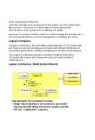
1.The Conceptual Architecture identifies the high-level components of the system, and the relationships among them. Its purpose is to direct attention at an appropriate decomposition other system without delving into details. Moreover, it provides a useful vehicle for communicating the architecture to non-technical audiences, such as management, marketing, and users. Logical Architecture In Logical Architecture, the externally visible properties of the components are made precise and unambiguous through well-defined interfaces and component specifications, and key architectural mechanisms are detailed. The Logical Architecture provides a detailed "blueprint" from which component developers and component users can work in relative independence. Logical Architecture. Model System Behavior Execution Architecture An Execution Architecture is created for distributed or concurrent systems. The process view shows the mapping of components onto the processes of the physical system, with atte
 annaabi.ee









Kõik kommentaarid