 10 punkti
Autor soovib selle materjali allalaadimise eest saada 10 punkti.
10 punkti
Autor soovib selle materjali allalaadimise eest saada 10 punkti.
 ~ 2 lehte
Lehekülgede arv dokumendis
~ 2 lehte
Lehekülgede arv dokumendis
 2013-04-25
Kuupäev, millal dokument üles laeti
2013-04-25
Kuupäev, millal dokument üles laeti
 10 laadimist
Kokku alla laetud
10 laadimist
Kokku alla laetud
 0 arvamust
Teiste kasutajate poolt lisatud kommentaarid
0 arvamust
Teiste kasutajate poolt lisatud kommentaarid
 Jaak Raud
Õppematerjali autor
Jaak Raud
Õppematerjali autor
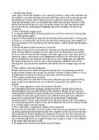
LL URKI Carol Stack I~I ZAPADOCESKA W I,, , ""-,", , ", , , ",,"" UNIVERZITA v Plzni ;Q;3 i 43(194873:9: NENIC MNE! BasicBooks A Subsidiary of Perseus Books, L.L.c. CON,EN,S Dedicated with respect and admiration to my parents, Ruth and Isadore Berman, to my friend Acknowlcdg men ts vii "Huby Banks," and to the other people of The Introduction ix Flats I. The Flats 1 ZapadoCi',,"
THE FAMILY Marriage changes over the centuries constantly, surprisingly and swiftly. It cannot be defined as a sacred union between a man and a woman, as marriages have not always been considered sacred. Marriage has often been seen as a union between one man and several women. And sometimes marriage has been seen as a union between one woman and several men, as in southern India, for example, one bride may be shared by several brothers. Marriage has also, at times, been recognized as a union between two men (as in ancient Rome, where marriages between aristocratic males were recognized by law), or as a union between two siblings (as in medieval Europe, when valuable property was at stake); or as a union between two children (again in Europe, when parents wanted to protect their property); or as a union between two unborn (ditto); or as a union between two people of the same social class (once more in Europe, where medieval peasan
Anna herself. The talk doesn't go well. Anna lies and pretends nothing is going on. Karenin is blatantly nervous, cracking his knuckles. Inside, though, Anna is fraught with frustration and anger. To her, Karenin doesn't know the slightest thing about love. She begins to forget her guilt; rather, she starts to blame Karenin internally for his failed attempt at loving her. Karenin gives up, aware now that there is nothing he can really do to save his marriage. In Chapter 10, Anna and Vronsky consummate their love, after a year of courting and flirting. Yet Anna has a strange reaction: she falls at Vronsky's feet and begs forgiveness. She is again consumed by her guilt. At this point, Anna and Vronsky realize they have started a new chapter in their relationship, and neither is quite sure of how to deal with the realization of the extramarital affair. Chapters 12-17
Book 1 BASIC ENGLISH BASIC ENGLISH GRAMMAR GRAMMAR BASIC ENGLISH GRAMMAR Book 1 Book 1 Younger students at beginning to intermediate levels will greatly benefit from this step-by-step approach to English grammar basics. This is the ideal supplement to your language arts program whether your students are native English speakers or beginning English language learners. Skill-specific lessons make it easy to locate and prescribe instant reinforcement or intervention. · Illustrated lessons a
with this eBook or online at www.gutenberg.org Title: Pride and Prejudice Author: Jane Austen Release Date: August 26, 2008 [EBook #1342] [Last updated: August 11, 2011] Language: English Character set encoding: ASCII *** START OF THIS PROJECT GUTENBERG EBOOK PRIDE AND PREJUDICE *** Produced by Anonymous Volunteers, and David Widger PRIDE AND PREJUDICE By Jane Austen Contents Chapter 1 Chapter 22 Chapter 2 Chapter 23 Chapter 43 Chapter 3 Chapter 24 Chapter 44 Chapter 4 Chapter 25 Chapter 45 Chapter 5 Chapter 26 Chapter 46 Chapter 6 Chapter 27 Chapter 47 Chapter 7 Chapter 28 Chapter 48 Chapter 8 Chapter 29 Chapter 49
Ameerika Kirjandus 30.01.13 Naturalism · France, Emile Zola · Put down his theory in 1879: Le Roman Experimental, attempt to explain the development of human society throuch biological laws · Outlook is deterministic, pessimistic, fatalistic (fate or biology) · Man as an animal-clever than other beasts, still explainable within the framework · Man is not a free agent, is govern by something · Unable to determine his own faith · Hereditary · Naturalists tried to apply in fiction the processes of natural sciences · Writers task is to record facts, systems of behaviour, living conditions, never revealing any natural unbiased (completely natural) · Point of view: amoral-outside the category of morality, neither good or bad · Naturalist find it absurd to blame the wicked. These criminals are doing what nature, environment, their unconscious tells them to do. Naturalists do not judge their characters, they sim
Chapter1: An unknown woman was found lying in the street and brought into the workhouse. She delivered a sickly child who had trouble breathing. The woman, without a word of who she was, died and left her new born boy, Oliver, to the drunken nurse that stood by. Chapter2: The State gave Oliver to Mrs. Mann who housed a number of orphaned children. Mrs. Mann took a large portion of the money given to her by the authorities for each child's food so Oliver grew up small and malnourished. On his ninth birthday, the town beadle, Mr. Bumble, came to collect Oliver and take him to the board for an interview. They told him he was to live with other wards of the state to become educated and learn a trade. Oliver did not mind this, but soon after he arrived, the state decided to implement a plan that would save money by feeding the people very little. After a time on this diet, the boys at the table chose Oliver to go ask the head cook for more gruel. Oliver did this, and was taken away. A flye
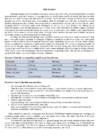
People and Behaviour 1. Underline the most suitable word or phrase. a) Please don't push. It's very bad-tempered/rude/unsympathetic. b) Jack hates spending money. He's rather frank/greedy/mean. c) Our teacher is very proud/strict/tolerant and won't let us talk in class. d) Helen never does her homework. She is rather gentle/lazy'/reliable. e) I didn't talk to anyone at the party because I felt ambitious/lonely/shy. f) When Harry saw his girlfriend dancing with Paul he felt jealous/selfish/sentimental. g) I don't like people who are noisy and aggressive/courageous/sociable. h) Thanks for bringing us a present. It was very adorable/grateful/thoughtful of you. i) Teresa never gets angry with the children. She is very brave/patient/pleasant. j) Tom always pays for everyone when we go out. He's so cheerful/generous/honest. 2. Match the words in the box with the descriptions (a-l). Use each word once only. bad-tempered determine
 annaabi.ee








Kõik kommentaarid