 10 punkti
Autor soovib selle materjali allalaadimise eest saada 10 punkti.
10 punkti
Autor soovib selle materjali allalaadimise eest saada 10 punkti.
 ~ 3 lehte
Lehekülgede arv dokumendis
~ 3 lehte
Lehekülgede arv dokumendis
 2015-02-26
Kuupäev, millal dokument üles laeti
2015-02-26
Kuupäev, millal dokument üles laeti
 2 laadimist
Kokku alla laetud
2 laadimist
Kokku alla laetud
 0 arvamust
Teiste kasutajate poolt lisatud kommentaarid
0 arvamust
Teiste kasutajate poolt lisatud kommentaarid
 asd12345
Õppematerjali autor
asd12345
Õppematerjali autor
Stonehenge One of the best known ancient wonders of the world, 5000 years old Megalith monument, built by western mediterraneans during 3000-1600 BC Circular structure, large standing stones, aligned with rising sun at teh solstice Attlers and bones were sued to dig pits that hold the stones The Celts in Britain and their legacy 700-200 BC celts invade Britain Gaels or Goehls(Ireland and Scotland),Cymri(Wales) and Brythons(gave name to Brittany) Fierce fighters,superb horsemen.Most of them farmers, lived in thatched houses Good at art, craftmanship, used iron Divided into tribes, ruled by kings, only in face of danger would they choose a single leader Legacy- hill-forts, farms, churches, field system, woodland, pasture, weapons, iron objects, langugae, culture Caesar in Britain The great Roman Emperor Firts came 55 BC to gather information, celts were doing agriculturally well,so romans wanted
Halt! Who goes there! -The Keys. Whose Keys? -Queen Elizabeth’s Keys. Pass on, Queen Elizabeth’s Keys. 30. Buckingham Palace. Buckingham Palace is the official London residence of Her Majesty. It became the permanent home of the monarch in 1837 when Queen Victoria ascended to the throne. In 1993 the Palace was opened to visitors for the first time in order to raise money to repair the damage done by the fire in the Windsor Castle. In August and September people can visit the grand staircase and the state rooms. The Queen’s Gallery is one of the foremost displays in the world. 31. Houses of Parliament. The Houses of Parliament is today the more widely used name for the Palace of Westminster, built by Edward the Confessor in the 11th century and rebuilt by William the Conqueror. A fire in 1834 left all but the Westminster Hall in ruins. The
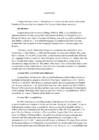
Lennart Meri Lennart Meri was a writer, a film director and a statesman who served as the second President of Estonia. Meri was a leader of the Estonian independence movement. His lifestory: Lennart Georg Meri was born in Tallinn, 29 March 1929, a son of the Estonian diplomat and later translator Georg Meri, and Estonian Swedish Alice-Brigitta Engmann. Because his father was a diplomat, Lennart left Estonia at an early age and studied abroad, in nine different schools and in four different languages. In addition to his native Estonian, Lennart Meri fluently spoke five other languages: Finnish, French, German, English and Russian. The family was in Tallinn when Estonia was occupied by the armed forces of the Soviet Union in June 1940 and in 1941, the Meri family was deported to Siberia. They came back to Estonia 1945. In 1953, Lennart Meri graduated cum laude from the Faculty of History and Languages of the Uni
Lennart Meri Lennart Meri was a writer, film director and statesman who served as the second President of Estonia. Meri was a leader of the Estonian independence movement. His lifestory: Lennart Georg Meri was born in Tallinn, 29 March 1929, a son of the Estonian diplomat and later translator Georg Meri, and Estonian Swedish Alice-Brigitta Engmann. Because his father was a diplomat, Lennart left Estonia at an early age and studied abroad, in nine different schools and in four different languages. In addition to his native Estonian, Lennart Meri fluently spoke five other languages: Finnish, French, German, English and Russian. The family was in Tallinn when Estonia was occupied by the armed forces of the Soviet Union in June 1940 and in 1941, the Meri family was deported to Siberia. They came back to Estonia 1945. In 1953, Lennart Meri graduated cum laude from the Faculty of History and Languages of the Univers
and continued until the early 20th century. Serfdom and the intensifying manorial economy The impact of the Swedish social order in Estonia continued under the Russian Empire. Although the Northern War meant a severe setback to the development of schools, the Swedish church and school systems remained practically unchanged. Most peasants learned to read at home, though the level of literacy in North Estonia was 40%, in South Estonia 55% and in Saaremaa Island 62%. The 1739 declaration of Otto Fabian von Rosen, a Livonian district magistrate, postulated the landlords' limitless right of ownership over the entire property and person of a peasant. It can be regarded as the ideal legislative model expressing the supremacy of the nobility. But everyday life during the serfdom period, which in Estonia has been researched even less than the agrarian legislation, was still largely shaped by the patriarchal relations between landlords and peasants, founded on customs and traditions
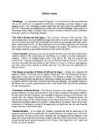
History exam *Stonehenge - is a monument located in England. It is one of the most famous prehistoric sites in the world and is composed of earthworks surrounding a circular setting of large standing stones. The surrounding circular, earth bank and ditch, have been dated to about 3100 BC. Stonehenge was produced by a culture with no written language. Many aspects of Stonehenge remain subject to debate. There is little or no direct evidence for the construction techniques used by the Stonehenge builders. *The Celts in Britain and their legacy The Cets lived in Britain in The Iron Age. They were warring tribes who were battleful amongst themselves as well as inter-tribal war. They were not centrally governed. The Celts brought iron working, iron ploughs and metal swords, horses, wheels and chariots - all these things gave them an instant superiority over the native tribes. The Celts built a number of hill forts throughout the region. The society
FAMOUS ESTONIANS Markus Ohtla Ken Koolmeister Koit Toome Born on the 3. January 1979. Koit Toome is an Estonian singer and musical actor. In March 2010, he released his first studio album, named "Kaugele siit" ("Far from here") Koit Toome has also embarked on a voice acting career, dubbing animated films. He provided the Estonian voice for Lightning McQueen in the Disney movie Cars. Ott Sepp Born on the 29. June 1982 he is an Estonian actor, singer, writer and television presenter Born in Tallinn, Sepp graduated from the Estonian Academy of Music and Theatre in 2004 and began performing at the Estonian Drama Theatre in 2005. Since 2006 he has been a principal actor at the Vanemuine theater in Tartu. Sepp has had prominent roles in Estonian films such as Names in Marble (2002), Malev (2005) and Tulnukas (2
descendant through his father, although ultimately not male line, of the rulers of the Welsh Kingdom of Deheubarth. Through his mother he descended from a legitimised branch of the English royal House of Lancaster. The Tudor family rose to power in the wake of the Wars of the Roses, which left the House of Lancaster, to which the Tudors were aligned, extirpated. 18. Henry VII - was King of England and Lord of Ireland from his seizing the crown on 22 August 1485 until his death on 21 April 1509, as the first monarch of the House of Tudor. Henry won the throne when he defeated Richard III at the Battle of Bosworth Field. He was the last king of England to win his throne on the field of battle. He was successful in restoring the power and stability of the English monarchy after the political upheavals of the Wars of the Roses. He founded a long-lasting dynasty and was peaceably succeeded by his son, Henry VIII, after a reign of 23 years.
 annaabi.ee






Kõik kommentaarid