 50 punkti
Autor soovib selle materjali allalaadimise eest saada 50 punkti.
50 punkti
Autor soovib selle materjali allalaadimise eest saada 50 punkti.
 ~ 2 lehte
Lehekülgede arv dokumendis
~ 2 lehte
Lehekülgede arv dokumendis
 2009-04-15
Kuupäev, millal dokument üles laeti
2009-04-15
Kuupäev, millal dokument üles laeti
 13 laadimist
Kokku alla laetud
13 laadimist
Kokku alla laetud
 0 arvamust
Teiste kasutajate poolt lisatud kommentaarid
0 arvamust
Teiste kasutajate poolt lisatud kommentaarid
 bon3r
Õppematerjali autor
bon3r
Õppematerjali autor
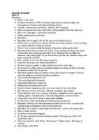
The Road to WiganGeorge PierOrwell Compiled by Priit J oasoo 12D 2009 Author George Orwell =Eric Arthur Blair Born on J une 25, 1903 in India Brought to England at the age of one Indian Imperial Police in Burma 1922-1928 1936 fought in Spanish Civil War II World War wrote a political commentary Died of tuberculosis on J anuary 21, 1950 Animal Farm, Nineteen Eighty-Four and The Road to Wigan Pier Setting Location: Indrustrial towns of North England - Lancashire and Yorkshire Time: Before the World War II (1936) Main Character · George Orwell - an English author and journalist, who describes the living conditions of poor miners in northern England. He also talks about socialism and his life. The Plot Book is in two parts I part indrustrial towns & unemploiment He lives in Brookers lodging-house Miners work is hard:
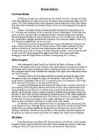
" Kipling's family became yearly visitors to Simla and Lockwood Kipling was asked to serve in the Christ Church there. He returned to Simla for his annual leave each year from 1885 to 1888, and the town figured prominently in many of the stories Kipling was writing for the Gazette. Kipling describes this time: "My month's leave at Simla, or whatever Hill Station my people went to, was pure joy--every golden hour counted. It began in heat and discomfort, by rail and road. It ended in the cool evening, with a wood fire in one's bedroom, and next morn--thirty more of them ahead!--the early cup of tea, the Mother who brought it in, and the long talks of us all together again. One had leisure to work, too, at whatever play- work was in one's head, and that was usually full." Back in Lahore, some thirty-nine stories appeared in the Gazette between November 1886 and June 1887. Most of these stories were included in Plain
those people. The book follows the lives of nine characters. All aspects of the lives are represented to us, the rich are corrupt, the poor may be not so corrupt, decent, but they can accomplish nothing because they are poor. The unjust triumph and the whole trilogy ends with a memorable sketch of a young harmless hitchhiker who wants to catch a car on a highway that leads nowhere. The final scene is the big indictment-critisism of america, road to nowhere. It is one of the experimental novels. The narrative structure is very complex. 12 fictional narratvies each told from the point of view, interrupted by three formal devices. The first device is the Newsreels, then the second is simply biographies and the third the camera eye. 69 newsreels, these are collages of real newspaper headlines. News story fragments, snatches of song lyrics, political speeches of that times and even advertisement. Mass culture
This Glorious Revolution (1688) was accompanied by a Bill of Rights, which made it obligatory for the sovereign to rule with Parliament's assistance and outlawed Catholicism for all Englishman, including the King. In 1707 the Act of Union united English and Scottish Parliaments. The last monarch of the Stuarts was Queen Anne. The House of Hanover At the beginning of the 18th century the English parliament asked George of Hanover, a Protestant descendant of James I, to become king. George I was a controversial king who spent most of his time in Hanover, leaving the country in the care of the Cabinet. This was eventually headed by Sir Robert Walpole, Britain's first Prime Minister and the first to live at 10 Downing Street. During the reigns of George I and George II, Parliament assumed almost absolute responsibility for running the country. Large areas of Canada and India were
Power of Guilt in The Scarlet Letter If a character does something wrong but no one knows, that character can both gain and lose from what they have done. This happens multiple times in The Scaret Letter. Characters commit evil deeds, some are caught, some are not. For those that aren't caught, they have a decision to make. To turn themselves in or to live their lives as if it never happened. For those that choose to live on as if it never happened they are faced with a tough road ahead. They have to deal with the guilt of what they've done. All the while, they must watch to see if anyone is on to them or suspects them of the crime they have commited. However they are rewarded. They get to live on as a regular member of society rather than be imprisoned or even worse, put to death. These are examples of characters who have commited crimes without confessing. Arthur Dimmesdale is a minister, a father, a sinner and a man who feels incredible guilt
that declaired that they would no longer be colonies of Great Britain. The stars in the flag show the number of states in the United States. During the Civil War the Soldiers of the South had their own flag. The North won the war and so once again the country had only one flag the Stars and Stripes. The national flag of the United Kingdom is called the Union jack or the Union Flag. The large Red Cross in the flag is the cross of St. George. The other cross is made up of the cross of St. Andrew and the cross of St. Patrick. The British merchant flag is red with the Union Jack in one corner. On the fourth of July, in 1776 the Declaration of Independence was signed in the Independence Hall. The Liberty Bell was rang to let the people know about the new country. But Britain refused to recognize this fact until1783, when the Americans won the War of Independence. 11) STONEHENGE
plane crash. But he was still going on and he even got rich after the accident and that shows he's a very strong man with an iron will. He was Ruby Keene's new friend. He was staying at the hotel with his son's widow and daughter's widower. Raymond Starr was a male dancer, the partner of Ruby Keene in the show. He was a handsome man and a good tennis player. He was really eager to help the police and tried to answer the questions as accurately as possible. George Bartlett was also a guest at the hotel. He was a dumb man who did not remember or pretended not to remember anything about the night when Ruby was murdered. The policemen were really annoyed with him and he was definitely a suspect. Ruby Keene was a young girl who was found dead from Mr and Mrs Bantry's home library. She had been strangled to death. Nobody nearby recognized the poor girl but police from a nearby county identified the body as a missing 18-year-old woman
The Renaissance In the history the Middle Ages were followed by the Renassance period. During this period a new class called bourgeoeisie came into being. This is the period when monarchies based on nationality were estabilished. The Renaessance started in Italy In the 14th century. Then it spread all over Europe, reached England in 16th century. The struggle for power culminated in a war called The War of Roses. It was a civil war between two dynasties, families. They had different emblems on one side the Yorks (white rose) other Lancasters (red). They couldn't decide who gets the throne. War ended 1485. A new dynasty came to throne, Tudor, the first king in this dynasty was Henry Vll. When he came to throne a period of stability followed because he built a nation based state. He was good at diplomacy.He could avoid quarrels and wars with neigbouring countries. France, Spain - greatest enemies.So he could save much money and thus laid a good economi
 annaabi.ee






Kõik kommentaarid