 50 punkti
Autor soovib selle materjali allalaadimise eest saada 50 punkti.
50 punkti
Autor soovib selle materjali allalaadimise eest saada 50 punkti.
 ~ 3 lehte
Lehekülgede arv dokumendis
~ 3 lehte
Lehekülgede arv dokumendis
 2016-02-07
Kuupäev, millal dokument üles laeti
2016-02-07
Kuupäev, millal dokument üles laeti
 2 laadimist
Kokku alla laetud
2 laadimist
Kokku alla laetud
 0 arvamust
Teiste kasutajate poolt lisatud kommentaarid
0 arvamust
Teiste kasutajate poolt lisatud kommentaarid
 liisam25
Õppematerjali autor
liisam25
Õppematerjali autor
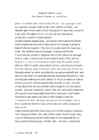
The Cement Garden - Ian McEwan Character Sketch - Tom Tom is the brother of the narrator of the story. He is the youngest child in the family. Tom was a 6-year-old little boy with pale skin. He had a bit big ears, black hair and his smile seemed idiotic. Tom was tender but mettlesome. Since he was the youngest child in the family he was mostly left out due to his age. Other siblings had their own activities together and Tom was too young to understand or take part. I.g. the game of scientists examining a specimen from outer space
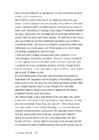
" "But I hope you will get over it, and live to see many young men of four thousand a year come into the neighbourhood." "It will be no use to us, if twenty such should come, since you will not visit them." "Depend upon it, my dear, that when there are twenty, I will visit them all." Mr. Bennet was so odd a mixture of quick parts, sarcastic humour, reserve, and caprice, that the experience of three-and-twenty years had been insufficient to make his wife understand his character. Her mind was less difficult to develop. She was a woman of mean understanding, little information, and uncertain temper. When she was discontented, she fancied herself nervous. The business of her life was to get her daughters married; its solace was visiting and news. Chapter 2 Mr. Bennet was among the earliest of those who waited on Mr. Bingley. He had always
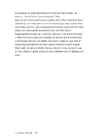
Sowerberry began insulting her 1 again. She then burst into tears because Oliver was talking back to her, and this forced Mr. Sowerberry to punish Oliver severely. They then sent him to bed, and early the next morning he rose and left the house. On his way towards London he stopped by the house of Mrs. Mann and saw his friend Dick, who appeared to be dying, out in the garden. The boys embrace, talk, and say their farewells to each other, and Oliver heads towards the city intent on running away from the Sowerberrys. Chapter 8: Òliver began his walk to London. He had very little food and had to beg for it on his way. He walked for seven days and had very little luck getting food or shelter from people in the towns he went through. He sat with bleeding feet on a doorstep one morning when a curious looking young gentleman around his age began talking to him
A group of Russian volunteers, including Vronsky, who does not plan to return alive, depart from Russia to fight in the Orthodox Serbian revolt that has broken out against the Turks. Meanwhile, amid the joys and fears of fatherhood, Levin no longer feels he lacks Christian faith; he decides to give his life its own meaning through acts of goodness. Part 1, Chapters 1-6 The first line of the book is one of the most famous in literature: "Happy families are all alike; every unhappy family is unhappy in its own way." The line leads into a household crisis between a wife and husband, Dolly and Stiva, but also forecasts the issues that will arise throughout the rest of the book, all of them having to do with personal relationships and family structures: especially those of Stiva and Dolly, Anna and Karenin, and Anna and Count Vronsky. Stiva's habits are described in detail. To avoid
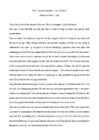
low, thrilling voice. It was the kind of voice that the ear follows up and down, as if each speech is an arrangement of notes that will never be played again. Her face was sad and lovely with bright things in it, bright eyes and a bright passionate mouth, but there was an excitement in her voice that men who had cared for her found difficult to forget: a singing compulsion. Jay Gatsby is the one who fell for Daisy’s seductive and unforgettable character. To him, Daisy is the embodiment of perfection. Daisy and Jay were in a relationship long, long time ago when they were young and way before Jay left to go to fight in the war. Daisy promised to wait for him, but instead she married Tom who promised her a wealthy and otherwise great life. To Gatsby, Daisy is charming, sophisticated and all other great things but in reality she is a shallow person who is in love with money and materialistic things
Domestic Networks 98 Appendix A: AFDC Case History Survey 133 D: Kin-Structured Domestic Neworks 99 Appendix B: Outline of Interview Topics 146 Notes 155 TABLES I! Bibliography: Literature Cited 160 1. Frequency of Child-Keeping, AFDC Data 68 I1 Index 169 2. Frequency of Child-Keeping, AFDC Data 69 ~ 3. Status and Location of Biological Mother 70 4. Patterns of Child-Keeping, AFDC Data 71
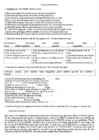
of Sheila to put out the fire on her own. h) Our neighbours look down on us. They are a bit ……………. i) Don't eat all the cakes! You really are becoming……………. ! j) If you lend me the money, I'll be very ……………. k) I am very ……………. of my new motorbike. 1) My parents don't mind my crazy hairstyle. They are very ……………. 4. Use the word given in capitals at the end of each line to form a word that fits in the space in the same line. Jack's real character How easy is it to understand another person's character? My friend Jack, was once a rather (1) ANNOY person. He was always getting into trouble at school because he was so (2) OBEY. In class he was very (3)TALK and never stopped making jokes. The teachers all told him he was (4) POLITE because he interrupted them. When I met him he was very (5) FRIEND and didn't want to talk to me at all. People told me that he stole things, and that he was (6) HONEST His school work was terrible
.. And you, ye well-known trees!" Elinor, however, experiences a far more subdued depression--though she is leaving behind not just her home but also a man she has grown to deeply care for and admire. The early chapters also display the wry irony for which Austen is so famous as a novelist. She is unsparingly critical of the characters she dislikes, but conveys her criticism with a pointed subtlety, which makes it all the more forceful. For example, in the opening chapter, Austen sketches the character of John Dashwood in three masterful sentences, achieving a biting acerbity: the author begins elliptically with a double negative, only slyly to refute it: "He was not an ill-disposed young man, unless to be rather cold-hearted and rather selfish is to be ill-disposed..." She then ends the paragraph by explicitly skewering both John and his wife: "Mrs. John Dashwood was a strong caricature of himself; more narrow-minded and selfish." Austen
 annaabi.ee







Kõik kommentaarid