suure hulga liike. Üks neist tegi 65 miljoni aasta eest lõpu pikale ja sinnani väga edukale dinosauruste valitsemisajale. Eelnevast suurem väljasuremine kaotas umbkaudu 245 miljonit aastat tagasi 96 protsenti mereloomade liigirikkusest. Igaüks neist sündmustest puhastas elu näitelava enamikust esinejatest, kuid sellest hoolimata taastus järelejäänud osa trupist kiiresti, andes suurel hulgal uusi vorme. Burnie, D. (1999). Evolutsioon linnulennul. East Sussex: Ivy Press 3.2 Erinevate liikide kadumine Näiteks Põhja-Ameerikas elanud rändtuvi kunagi maailma kõige arvukam lind. 19. sajandil kütiti neid massiliselt, kuid isegi pärast jahipidamise leevendamist jätkus tuvide arvukuse kahanemine kuni väljasuremine 1914.aastal. 1970.aastal leitud geoloogilised tõendid kinnitavad üpris veenvalt, et dinosaurused hävisid pärast hiigelmeteoriidi Maale langemist. Teised massilise väljasuremise põhjused pole pole nii
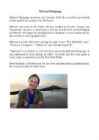
Michael Morpurgo Michael Morpurgo was born on 5 October 1943. He is well-known British author and he has written over 100 books. Michael was born in St Albans. He has studied in London, Sussex and Canterbury. He went to university in London and there he studied English and French. He began his working life as a primary- school teacher and he discovered his writing talent there. Michael has four favourites among his own books "The Butterfly Lion", "Kensuke´s Kingdom", "Warhorse" and "Private Peaceful". "Warhorse" is a children´s novel which is written by Michael Morpurgo. It was published in Great Britain in 1982. The book tells the story about a
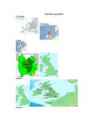
Ajalooline geograafia 1) Iirimaa 2) sotimaa 3)Wales 4)Mercia 5)Wessex 6) Sussex 7) Essex 8) Kent 9) Danelaw 10) Northumbria 11)Rootsi 12) Skåne 13)Soome 14)Dalmaatsia All Rooma impeeriumi ajal 15)Norra 16)Taani 17)Holstein 18)Schleswig 19)Brandenburg 20)Pommer (Pomerania? Või Pommern?) 21) Preisimaa 22)Masoovia 23)Kujaavia 24)Sileesia 25)Suur-Poola 26) Väike-Poola 27)Galiitsia 28)Leedu 29)Liivimaa 30)Tsehhimaa 31)Moraavia 32)Ungari 33)Horvaatia 34)Vestfaal 35)Ostfaal
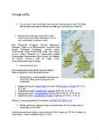
· 100 species in 20th century · Important wintering host for birds · Large mammals extinct · 3,354 plant species · Fortingwall Y ew · Trees up to 65 metres RELIGION · Christianity: · Anglicanism · Roman Catholic Church · Patron Saint: Saint Alban · The Jews expelled from England in 1290 but allowed to return in 1656 Cantenbury Cathedral HISTORY Boxgrove Quarry, Sussex 500,000 years 8,000 years ago joined to the continent by a strip of low marsh. Gaelic tribes, Germanic tribes Kingdoms unified in 10th century 1066 William the Conqueror 1 May 1707 "United Kingdom of Great Britain" · Kasutatud kirjandus: http:// www.washingtonpost.com/wp-srv/world/countries/greatbritain.html · http://www.great-britain.co.uk/ · http://www.woodlands- junior.kent.sch.uk/customs/questions/britain/britain.htm · http://en.wikipedia.org/wiki/Great_Britain
After the war, he wrote a denunciation of war titled Peace with Honour (1934). During World War II, Milne was one of the most prominent critics of English writer P. G. Wodehouse. Milne accused Wodehouse of committing an act of near treason by cooperating with his country's enemy. He married Dorothy "Daphne" de Sélincourt in 1913, and their only son, Christopher Robin Milne, was born in 1920. In 1925, A. A. Milne bought a country home, Cotchford Farm, in Hartfield, East Sussex. He retired to the farm after a stroke and brain surgery in 1952 left him an invalid, and by August 1953 "he seemed very old and disenchanted". Milne died in January 1956, aged 74. Alan Alexander Milne
LETTER OF APPLICATION Rua de Gloria 10 3000 Coimbra Portugal 10th October 2007 The Manager Sundance Health Club Harbour lane Chichester Sussex PO1 2JE Dear Sir/ Madam, I am writing in reply to your advertisement in ,,Health and Fitness" magazine for general part- time work in your health club. I am a 20-year-old Portugese student and I come from Coimbra in the north of Portugal. At present I am still studying at college but I am taking my final exams in May. I have studied English for six years but I want to spend some time in England in order to improve my spoken English.
Delaware Pirjo Mononen IVÕ Geography Bordered by Maryland, Pennsylvania and New Jersey Second smallest state (5,161 sq km) Three counties – New Castle, Kent and Sussex Biggest city – Wilmington Capital – Dover History Discovered in 1609 by Henry Hudson First permanent colony: New Sweden 1638 First of the 13 original states to ratify the Constitution - December 7, 1787 During the Civil War, Delaware was one of five border states – a slave state but remained in the Union Chemical industry Facts The abbreviation for Delaware is DE Named after Thomas West, Baron De La Warr
Michael Morpurgo 1. Introducton. This project is about Michael Morpurgo. He is a well-known British author. He writes the sort of stories he likes to tell his own children. 2. Biographical data. Michael Murporgo´s full name is Michael Andrew Bridge Morpurgo. He was born 5 October 1943 in St Albans, Hertfordshire. He was the son of Tony bridge who was an actor. He attended schools in London, Sussex and Canterbury. 3. Biogrphies. There has been released three biogrphies about Michael Morpurgo. First on was released in 1999 called "Interview with Michael Morpurgo", written by Joanna Carey. In 2004 was released "Dear mr Morpingo: Inside the world of Michael Morpurgo", written by Geoff Fox. In 2005 was released "Michael Morpurgo", written by Shaun McCarthy. 4. Favorites among his own books. Favorites among his own books are The Butterfly Lion, Kensuke´s Kingdom, War
"A Scandal in Bohemia" "The Red-Headed League" "A Case of Identity" "The Boscombe Valley Mystery" "The Five Orange Pips" "The Man with the Twisted Lip" "The Adventure of the Blue Carbuncle" "The Adventure of the Speckled Band" "The Adventure of the Engineer's Thumb" "The Adventure of the Noble Bachelor" "The Adventure of the Beryl Coronet" "The Adventure of the Copper Beeches" The Five Orange Pips A young Sussex gentleman named John Openshaw has a strange story: in 1869 his uncle Elias Openshaw had suddenly come back to England to settle on an estate at Horsham, West Sussex after living for years in the United States as a Planter in Florida and serving as a Colonel in the Confederate Army. Not being married, Elias had allowed his nephew to stay at his estate. One strangeness is that although John could go anywhere in the house he could never enter a locked room with his Uncle's trunks
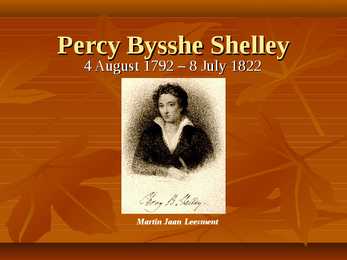
Percy Bysshe Shelley 4 August 1792 8 July 1822 Martin Jaan Leesment Major works are long visionary poems Approximately 50 readers as his audience, it is said that he made no more than 40 pounds from his writings. His father was Sir Timothy Shelley, a Whig Member of Parliament, and his mother, a Sussex landowner Born at Field Place in Horsham, England The eldest of the children Received his early education at home On 10 April 1810, he matriculated at University College, Oxford Expelled from Oxford on 25 March 1811 After being expelled, he eloped to Scotland with the 16- year-old schoolgirl Harriet Westbrook Visited Ireland shortly afterward and wrote his Address to the Irish People On 28 July 1814, Shelley abandoned his family and ran
Gildas, the Anglo-Saxon Chronicle, saints' lives, poetry, archaelogical findings and place- name studies. British landlords ruled small, unstable kingdoms and continued some Roman traditions of governance. In the mid-5th cent, Vertigern, a British leader, hired Germanic mercenaries to help defend against peoples of the north (Picts & Scots). In the end they revolted & the process of invasion and settlement began. The first Saxon ,,kings" were Hengist & Horsa in Kent, Aelle in Sussex, Cerdic / Cynric in Wessex. So the first ,,English" became mainly from Northern Germany & Denmark. The resistance of the Celts was long. They were free at the time, not like other Roman provinces on the Continent. Around 500, the Britons seem to have won several victories. One of their leaders was Ambrosius Aurelianus and one of their victories was at the place called Mount Badon. The main leader of the Britons at this time may have been the warrior later called King Arthur. By the 7th cent
Black Country English Brummie (Birmingham) Potteries (north Staffordshire) o Southern Received Pronunciation Cockney (East London) East Anglian (Norfolk, Suffolk and North Essex) Estuary (Thames Estuary) Kentish (Kent) Multicultural London English (Inner London) Sussex o West Country · Scotland o Scottish English Highland Glaswegian Cromarty · Wales o Welsh English Ireland · Mid Ulster English · Hiberno-English o Dublin o Cork Isle of Man · Manx English Channel Islands · Guernsey English · Jersey English Malta · Maltenglish North America
* Suffered from a bad eyesight * Collection of poems "Schoolboy lyrics", at the age of 16 * 1881- after finishing school returned to India * 1882- 1889- a journalist in India and the USA * Collections stories, essays, articles . Department ditties (poetry) ; Barrack room ballads (poetry); The seven seas , The five nations * 1892- got married, travelled in America, Canada, Japan * 1896- came back to England and settled down in Sussex * 1894 - The Jungle Book * 1895 - The second jungle book * 1898 - visited Africa * Boer war- tried to raise money for the troops * Saw the miseries of war * 1901- Kim was published * 1902- Just so stories * Stories of different animals' origin * Illustrations by himself * 1907- awarded the nobel prize for literature * Was extremely popular in England- colonial ideas, supported the English rule in colonies
Advance halted by King Arthur Distortions of popular history In folklore, myth (and films) a great English hero, an example of medieval nobility and chivalry In fact a Romanized Celt, lived before medieval times, fought the Anglo-Saxons (people who became "the English") Predominated by the end of the 6th c. Kingdoms established: Wessex, Essex, Sussex, Mercia, Northumbria, East Anglia etc. Kingdoms constantly at war with each other Celtic culture and language survived in Scotland, Wales and Cornwall Anglo-Saxon lifestyle A great impact on the countryside Introduced new farming methods Established numerous villages (formed the basis of English society for centuries) First they were pagan Christianity spread during the 6th and 7th c. The south of England: straight from Rome (St Augustine settled in
„Dry aging“ ©2015 Sebastian and Co. http://www.sebastianandco.ca/dryAging.htm Perry, Neil. „Dry aging beef“ 1.06.2011 http://www.sciencedirect.com/science/article/pii/S1878450X11000060 Lüdikainen, Kamilla. „Veiseliha laagerdamine“ Tartu Kutsehariduskeskus http://e-ope.khk.ee/oo/votepren/veiseliha_laagerdamine/laagerdamise_meetodid.html Wikipedia. „Beef aging“ http://en.wikipedia.org/wiki/Beef_aging Weald Packaging Supplies Ltd, East Sussex, Inglismaa. http://www.wealdpackaging.co.uk/dry-aging-beef-bags/ BPEX Pork Chain Unit, „Ageing and the Impact on Meat Quality“ 5.09.2008. http://www.thepigsite.com/articles/2364/ageing-and-the-impact-on-meat-quality/ AITÄH
Tallinna Rahumäe põhikool Report Michael Morpurgo Lizett Käos 8A Tallinn, 2014 Michael Morpurgo His biographical data Michael Murporgo´s full name is Michael Andrew Bridge Morpurgo. He was born 5 October 1943 in St Albans, Hertfordshire, he attended schools in London, Sussex and Canterbury. He went on to London University to study English and French, followed by a step into the teaching profession and a job in a primary school in Kent. It was there that he discovered what he wanted to do. Morpurgo's biological father was actor Tony Van Bridge. His mother, Kippe Cammaerts (otherwise Catherine Noel Kippe, daughter of Emile Cammaerts), who had been an actress, met (and in 1946 married) Jack Morpurgo (subsequently
eventual destruction fighting in the East, likely during the Bar Kochba Revolt. The invasion was delayed by a mutiny of the troops, who were eventually persuaded by an imperial freedman to overcome their fear of crossing the Ocean and campaigning beyond the limits of the known world. They sailed in three divisions, and probably landed at Richborough in Kent, although some suggest that at least part of the invasion force landed on the south coast, in the Fishbourne area of West Sussex. The Romans defeated the Catuvellauni and their allies in two battles: the first, assuming a Richborough landing, on the river Medway, the second on the Thames. One of the Catuvellaunian leaders, Togodumnus, was killed, but his brother Caratacus survived to continue resistance elsewhere. Plautius halted at the Thames and sent for Claudius, who arrived with reinforcements, including artillery and elephants, for the final march to the Catuvellaunian capital, Camulodunum
A third time for having the largest stadium audience in history when 184,000 paid to see him perform at Maracana Stadium in Rio de Janeiro on April 1990. The fourth time is for having the fastest ticket sales in history, which took place in 1993 when 20,000 tickets for 2 shows in Sydney, Australia sold out in eight minutes. "Yesterday" was confirmed as world's most popular song with 6,000,000 airplays in the USA. received an honorary Doctorate of Music from the University of Sussex. the first rock musician ever to receive Chile's Order of Merit for "services to music, peace, and human understanding". first recipient of the Swedish Polar Music Award ("Nobel prize for music"). The End
A-S prose: · Venerable Bede lived in the 7th century, a well-educated man, a theologician who knew all the religious texts. Wrote only in Latin. Most well-known work Ecclesiastical history (religious history). The history of England from Caesar's invasion until 731. · Aelfric a monk who lived in the 11th century. · Alfred, King of Wessex (at one point there were 7 kingdoms Sussex, Essex, Wessex, Northumbria, Mercia, East Anglia, Kent). Wrote in his native A-S dialect, his greatest work is called ,,The Anglo-Saxon Chronicle". History of England, even more detailed than Bede's. The Norman period / the late Medieval period The Kingdom was more or less unified and was conquered by William who came from Normandy. Originally he was the Duke of Normandy. The Normands were Vikings who had settled in the north of France
The Romans bring along the Christian faith The beginning of Christianization of the Celts. The Romans withdrew their forces together with the fall of the Roman empire. Anglo Saxon Invasion 5th 6th century AD. Germanic tribes from Scandinavia: the Angles, the Saxons and the Jutes settle in what today is known as England and force the Celtic tribes to move to Scotland, Ireland, Wales. The Angles settled in Northumberland, East Anglia, Mercia; The Saxons in Essex, Sussex, Wessex and the Jutes in Kent. 569 AD Pope Gregory the great sends missionaries led by St. Augustine to Britain. The Benedictines establish a chain of monasteries; Britain is linked to the Latin civilization of the roman Church and Christian cultures of Western Europe. Aethelbert 1 of Kent becomes the first Christian King of England. By the end of the 7 th century all the kingdoms of the Anglo-Saxon Britain accepted the Christian faith. 3
mootorsõidukite osakaal sealt kõige suurem ning problemaatilisem. 18. Leia andmeid suuremate ilmastikukatastroofide kohta, ajaloolise jaotuse kaupa. o 1091 - Londoni Tornaado o 1580 - Dover Straits maavärin of 1580 o 1607 - Bristol Kanali üleujutus, 20 Jaanuar 1607 (võimalik tsunami) o 1703 Suur torm o 1607 - Lynmouthi üleujutus, Devon o 1638 Suur äikesetorm, Devon o 1729 - Tornaado Sussex´is o 1755 Tsunami lööklaine Cornwall ,Lisboni maavärinast o 1796 - Lynmouth´i üleujutus , Devon o 1836 - Laviin Lewes´is, ainuke suur laviin Inglismaal o 1884 Colchester´i maavärin, Essex o 1931 - Dogger Bank maavärin o 1952 - Lynmouth üleujutus, Devon o 1947 - Talv 19461947 tugev külm ja lumetormid o 1881 - Eyemouth katastroof, torm, sotimaa o 1953 Põhja mere üleujutus , Inglismaa
10-5. saj eKr keltide sisseränne - edukas majandus, mis rajanes raua tootmisel - leiutasid uusi põllutööriistu(nt vikat, ader) 1. saj m.a.j. roomlaste vallutus - Britanniast sai Rooma provints - 5. saj tekkis barbarite ründeoht ja Rooma lahkus oma vägedega Britanniast 5. saj germaanihõimude massiline sissetung anglid, saksid, jüütid, friisid(anglosaksid) - orjastasid suure osa keltidst - rajasid sinna oma kuningriigid: Essex, sussex, Wessex, northurnbia, Kent. 829 ühendati need Inglise kuningriigiks. - Keldid jäid elama Wales'i , sotimaale ja Iirimaale Normannide sissetung (taanlased) - inglise kuningas Alfred suur sõlmis sõdade tulemusena taanlastega kokkuleppe riigi jagamiseks(876) taanlaste riiki nimetati Danelaev e taani õigus - norralased tungisid sotimaale , kuhu rajasid oma asundused. - 1016 alistasid taanlased kogu Inglismaa
wonderful." The epitaph on his gravestone reads: STEEL TRUE BLADE STRAIGHT ARTHUR CONAN DOYLE KNIGHT PATRIOT, PHYSICIAN & MAN OF LETTERS Undershaw, the home Conan Doyle had built near Hindhead, south of London, and lived in for at least a decade, was a hotel and restaurant from 1924 until 2004. It was then bought by a developer, and has been empty since then while conservationists and Conan Doyle fans fight to preserve it. A statue honours Conan Doyle at Crowborough Cross in Crowborough, East Sussex, England, where Sir Arthur lived for 23 years. There is also a statue of Sherlock Holmes in Picardy Place, Edinburgh, Scotland, close to the house where Conan Doyle was born. Arthur Conan Doyle Teacher: Merilyn Meristo Pupil:Gert Jüriväli
Old Mr. Dashwood is the owner of a large estate in Sussex called Norland Park. Following the death of his sister, Mr. Dashwood invites his nephew Mr. Henry Dashwood to come live with him at Norland. The younger Mr. Dashwood brings John Dashwood, his son from a previous marriage, as well as the three daughters born to his present wife. John Dashwood is grown and married, and has a four-year-old son, Harry. When Old Mr. Dashwood dies, he leaves his estate to John and little Harry, who had much endeared himself to the old man
sajandist, kuid vanim muusikaga seotud ürik on 1839. aastal avaldatud "Barzaz-Breizh" mahukas kogumik rahvalaule ja luulet. b) Sellest etapist on Inglismaa ajalukku jäänud ka legendaarne kuningas Art(h)ur. Uuri järele, kes ta oli keltide või germaani hõimude esindaja ning millega ta ajalukku on läinud (eestikeelsetest materjalidest ei pruugi seda Internetist olla lihtne leida). c) Tasapisi hakkasid anglosakside kuningriigid (nt Wessex, Essex, Sussex, Kent jt) liituma, nii kujuneski Anglia ehk Inglismaa. 6. Viikingite rüüsteretked a) Anglosakside kuningriigid hakkasid tegema koostööd alles siis, kui neid ähvardas hädaoht väljastpoolt: taas jõudsid Inglismaa aladele võõrvallutajad viikingid. Viikingite hiilgeaeg oli 9.-11. sajand; just Norrast ja Taanist pärit viikingid hakkasid rüüstama Lääne-Euroopa rannikualasid sh ka Ida-Inglismaa rannikut. Viikingid rüüstasid peamiselt kloostreid:
tulemuse andis omavaheline võimuvõitlus. Seda riikliku struktuuri nimetatakse ajalookirjanduses heptarhiaks ehk seitsmikriigiks. Paljuski on riikide tekkelood segunenud müütidega, aga üldjoontes võib leppida järgnevate arengulugudega. ·Kent ( Kagu- Inglismaa )- selle hõivasid jüüdid, pealinnaks Canterbury. Sealne rahvas pidas riigile alusepanijaks Hengestit, kelle aujärje päris tema poeg Oisc. ·Sussex- poolmüütiline traditsioon kõneleb, et 477. a saabus väepealik Aelle, kelle juhtimisel kujuneski eelnimetatud ajalooline piirkond. Alles 7. saj keskpaigast hakkavad tulema andmed, mille alusel saame täpsemat teavet Sussexi kohta. ·Essex- hakkas kujunema 500. a paiku. Esimene teadaolev valitseja oli Ricola. Essexi piirkonda jäi ka Londoni linn, aga linna ja riigi areng oli täiesti erinev. ·East- Anglia( Ida- Anglia) - aastal 520 rajas riigi Wuffa.
tulemuse andis omavaheline võimuvõitlus. Seda riikliku struktuuri nimetatakse ajalookirjanduses heptarhiaks ehk seitsmikriigiks. Paljuski on riikide tekkelood segunenud müütidega, aga üldjoontes võib leppida järgnevate arengulugudega. ·Kent ( Kagu- Inglismaa )- selle hõivasid jüüdid, pealinnaks Canterbury. Sealne rahvas pidas riigile alusepanijaks Hengestit, kelle aujärje päris tema poeg Oisc. ·Sussex- poolmüütiline traditsioon kõneleb, et 477. a saabus väepealik Aelle, kelle juhtimisel kujuneski eelnimetatud ajalooline piirkond. Alles 7. saj keskpaigast hakkavad tulema andmed, mille alusel saame täpsemat teavet Sussexi kohta. ·Essex- hakkas kujunema 500. a paiku. Esimene teadaolev valitseja oli Ricola. Essexi piirkonda jäi ka Londoni linn, aga linna ja riigi areng oli täiesti erinev. ·East- Anglia( Ida- Anglia) - aastal 520 rajas riigi Wuffa.
Karli järglase Ludwig I Vaga (814-840) ajal hakkas Frangi riik lagunema. Verduni lepinguga (843) jagati Frangi riik kolmeks osaks, millest hiljem kujunesid Prantsusmaa, Saksamaa ja Itaalia. Anglite ja sakside riik Britannias 450. a paiku maabusid jüüdid, anglid ja saksid roomlaste poolt mahajäetud Inglismaal. Nad tõrjusid britid Walesi, Cornwalli, Sotimaale ja Bre-tagne'i poolsaarele ja asutasid 7 riiki: Kent (jüüdid); Northumbria, Mercia, East-Anglia (anglid); Essex, Sussex, Wessex (saksid). Pärast Northumbria ülemvõimu 7. saj saab 8. saj juhtivaks Mercia, kelle mõjuvõim laieneb kuni Cornwalli ja Walesini. Põhjagermaanlased ei lahkunud oma asualadelt Skandinaavias ja Jüütimaal. Reini ja Elbe vahelisel alal kujunesid välja järgmised saksa hõimud, mis tekkisid mitmete hõimude ja hõimukildude segunemisel ning ühinemisel (hõimuliidud): alemannid, saksid, frangid (saali, ripuaari, Moseli ja Maini frangid, hatid), hiljem tüüringid ja baierlased
Woman, No Cry", "Three Little Birds", "Exodus", "Could You Be Loved", "Jammin'", "Redemption Song", and "One Love".[2] His posthumous compilation album Legend (1984) is the best-selling reggae album ever, with sales of more than 12 million copies.[2] Early life and career Marley was born in the small village of Nine Mile in Saint Ann Parish, Jamaica. His father, Norval Sinclair Marley, (born in 1895), was a Jamaican of English descent, with parents from Sussex. Norval was a Marine officer and captain, as well as a plantation overseer, when he married Cedella Booker, a black Jamaican then eighteen years old. Norval provided financial support for his wife and child, but seldom saw them, as he was often away on trips. Marley was ten years old when his father died of a heart attack in 1955 at age 60. Marley suffered racial prejudice as a youth, because of his mixed racial origins,[3] and faced questions about his own racial identity throughout his life
(Scotland) and west (Wales). They came from the North and Baltic Seas. Along with them came their dialects, which constitute the basis for Old English. Around 4500 words are still used today. They also had their own religion and Germanic gods. Their names are still used today: Freya Friday, Thor Thursday, Angle-land England. The Anglo-Saxons divided the cuntry into small warring kingdoms Northumbria, Mercia, Wessex, Sussex, Essex, Kent, East Anglia. Due to constant conflict weakened the kingdoms. The political power was in Wessex, which was the most powerful of the kingdoms. The Anglo-Saxons were farmers and fishermen and lived in small communities. They deployed a crop rotation over three fields; used heavy ploughs. In 787 AD came the Vikings from Scandinavia, who set up their own state Danelaw. Had their own religion, however their rituals did not demand sacrifices. Introduced new words (1800).
lendavaid kalu ja kummalist veeläiget, mis ilmub lõunamere vetes. Lasti maha tundmatuid linde ja tõmmati meresügavusest välja tundmatuid kalu. Soodsa kirdepassaadiga läks sõit kiiresti ekvaatori poole. Järgmisena tahtis Cook sisse sõita Rio De Janeiro sadamasse, kuna aga pärismaalased olid väga vaenulikud, siis sinna pikemalt peatuma ei jäätud. 11. jaanuaril 1769. aastal tuli nähtavale Tulemaa rand. Peale seda peatuti mõnda aega Bay of Sussex´is. 27. jaanuaril jäeti Atlandi ookean selja taha ja tüüriti Vaiksesse ookeani. Aprilli algul nähti maad, mis näis koosnevat madalaist, ilusat laguuni ümbritsevaist rahnudest. Oli jõutud ühe juurde neist korallsaartes, mis on tekkinud väikeste korall-loomakeste väga pikaaegse töö tulemusena. Cook otsustas mitte maale minna, sest metslastel ei näinud olevat suuremat isu neid maale lasta. Nii jätkati reisi merel. n kõige paremaks vahendi Tahitil. 12
Inglismaal on põhilised keldid. Inglismaa muutub 1 saj pKr Rooma provintsiks. Piirialadele rajatakse võimsad kindlistused. Pärast Rooma riigi langemist unustatakse Roomna kultuur. Risitiusuga ollakse tutvutud aga see ka ununeb. 5,6 saj rändavad sisse anglid, saksid, ja jüütid. Nad saavad domineerima. Enamus kelte assimileerub anglide ja saksidega ja keldid jäävad püsima Iirimaale. 7 saj on kujunenud hulgaliselt väikseid anglosakside kuningriike. Tähtsamad kuningriigid on: Essex, Sussex, Wessex, Kent, Mercia. Kord tõuseb üks esile, kord teine. Wessex tõuseb kõige tähtsamaks kuningriigiks. Kuningas Egbert ühendab Inglismaa 829.a ühtseks riigiks. Riik saab nimetuse Inglismaa. Ühinemine oli vajalik, sest talupoegade pärisorjastamine oli vaja lõpule viia ja välisoht oli päris suur, sest Inglismaad ründavad normannid. Inglismaa tähtsamaid kuningaid, kes valitseb 871-900 oli Alfred Suur. Ta võitleb normannide vastu väga jõudsalt. Taanlaste pealetung pannakse seisma
Angus Dexter Charolais Wagy Adaptaur Corriente British White Welsh Black Crioulo Afrikaner cattle Caracu White Park Lageano Blonde d'Aquitaine Nguni Square Meater Buffalow American Bonsmara North Devon Sussex Bison Tabel 2. Maailma lihaveised 12 Dexter Dexterid on kõige väiksemad veised Euroopas, nad on umbes poole väiksemad traditsioonilisest Herefordist. Seda tõugu peeti haruldaseks kuni viimaste aastateni. Pärit on Dexteri veised Iirimaalt kust nad peaaegu hääbusid, säilisid vaid üksikud puhtad karjad Inglismaal. Sinna toodi veised 1882 aastal. Täiskasvanud dexteri veised kaaluvad 270320 kg ja pull umbes 450kg
by her parents in their literate and well-connected household at 22 Hyde Park Gate, Kensington. Virginia Stephen married writer Leonard Woolf in 1912. On 28 March 1941, rather than having another nervous breakdown, Woolf drowned herself by weighing her pockets with stones and walking into the River Ouse near her home. Her body was not found until April 18. Her husband buried her remains under a tree in the garden of their house in Rodmell, Sussex. · The Voyage Out (1915) · Night and Day (1919) · Jacob's Room (1922) · Mrs Dalloway (1925) · To the Lighthouse (1927) · The Waves (1931) · The Years (1937) · Between the Acts (1941)
wildlife has had little time to develop since the last glacial period. The high level of urbanisation on the island has contributed to a species extinction rate that is about 100 times greater than the background species extinction rate. 2 The History of the Great Britain The island was first inhabited by people who crossed over the land bridge from the European mainland. Traces of early humans have been found (at Boxgrove Quarry, Sussex) from some 500,000 years ago and modern humans from about 30,000 years ago. Until about 10,000 years ago, Great Britain was joined to Ireland, and as recently as 8,000 years ago it was joined to the continent by a strip of low marsh to what is now Denmark and the Netherlands. Britain in the reign of Elizabeth 3 Elizabeth II (Elizabeth Alexandra
rock, and Molko's high-pitched vocals. The first single for the album, "Taste in Men", was one of their most popular, with a trance synthesiser in the background and wailing distorted guitars. Black Market Music did not receive the same level of long term recognition and media hype as Without You I'm Nothing did, but its peak sales outperformed those of its predecessor, in both the UK and France. The Kooks are an English indie rock band formed in Brighton, East Sussex, in 2004. Formed by Luke Pritchard (vocals/guitar), Hugh Harris (lead guitar), Paul Garred (drums), and Max Rafferty (bass guitar), the lineup of the band remained constant until 2008 and the departure of Rafferty. Dan Logan was drafted in as a temporary replacement, until Peter Denton joined the band on a permanent basis in October 2008.A self-described "pop" band, their music is primarily influenced by the 1960s British Invasion movement and post-punk revival of the new millennium
kelti, kuid ei suutnud romaniseeruda neid nii nagu gallialasi. Roomlaste tugipunktideks on nende linnad ja asulad. Rooma riik kutsus leegionid 5. saj väed Britanniast ära. 5. saj toimub germaani hõimude massiline tungimine Britanniasse, (anglid, saksid, jüüdid), roomlastest vabanenud keldid osutavad visa vastupanu. 7. saj pkr on keldid surutud äärealadele. Kuningas Arthur võitleb germaani hõimudega, võidab mitu lahingut. Suurbritannias hakkavad kujunema anglosakside riigid: Wessex, Sussex, Essex, Kent. Normannid nõuavad peale anglosakside kuninga surma trooni, sest William Vallutaja I on tema sugulane. Selleks ajaks olid normannidest saanud prantslased. 1066 toimubki Hastingi lahing, milles anglosaksid saavad lüüa ja William Vallutaja saab Britannia troonile. Hakatakse peale suruma prantsuse keelt ja kombeid, kuid lihtrahvale need mõju ei avalda. 6. Islami usu teke ja levik (§10): araablaste usund enne Muhamedi, islami usu kujunemine, islami
3.REFERENCES Balakian, Anna. 1993. ‘Symbolism’, in Preminger and Brogan (eds.):1256-1259. Bayley, John. 1988. “Larkin’s Short Story Poems”, in Hartley (ed.): 272-283. Brogan, T. V. F. and Scott, Clive. 1993. “Enjambren”, in Preminger and Brogan (eds.): 359-60. Brownjohn, Alan. 1975. Philip Larkin. Essex: Longman. Chesters, Graham. 2007 “Philip Larkin and the Poetics of Resistance.” About Larkin 23. Cooper, Stephen. 2004. Philip Larkin: Subversive Writer. Brighton: Sussex Academic. Everett, Barbara. 1986. “Philip Larkin: After Symbolism”. Essays in Criticism, XXX: 230-44. Guillén, Jorge. 1969. Lenguaje y poesía. Madrid: Alianza. Haffenden, John. 1981. Viewpoints: Poets in conversation. Londres. Hartley, George. 1988. Philip Larkin. 1922-1985. A tribute. Londres: The Marvell Press. István D., Rácz. 2011. Philip Larkin's Poetics: Theory and Practice. Larkin, Philip. 1983. Required Writing: Miscellaneous Pieces 1955-1982. Levi, Peter. 1986
jüütid, kelle seniseks elupaigaks oli tänapäeva Holland ja Põhja-Saksamaa, purjetasid 5. Sajandi II poolel üle põhjamere ja asusid Suurbritanniasse. Britid tõrjuti saare idaossa või sunniti põgenema Iirimaale. Vallutatud maad hakati nimetama Inglismaaks (Anglia- angli hõimu järi) ja selle asukaid anglosaksideks. Kõige varasem Britannia riik-Kent- asutati jüütide poolt Jüüti poolsaare kaguossa. Saksid hõivasid saare lõunaosa ja lõid kolm riiki : Wessex, Sussex, Essex ehk idasakside, lõunasakside ja läänesakside riik. Anglid rajasid põhja pool kaks riiki : East-Anglia ja Northumbria. Anglide ja sakside vahel oli segaasutusega Meroia riik. Algas seitsme riigi verine võitlus ülemvõimu üle. Juhtiv poistisoon pendeldas kuni viikingiaja alguseni. (esimene rüüsteretk 793), mil esivõim oli siirdunud Wessexi kätte, kes jäi taanlaste ehk normannide (anglosaksid kutsusid taanlasi nõnda) laastamisest esialgu kõrvale
" To boss someone, to sack someone, 29. Compounds Two or more nouns combined to form a single noun. Compound nouns are written as separate words (grapefruit juice), as words linked by a hyphen (sister-in-law), or as one word (schoolteacher). A compounded noun whose form no longer clearly reveals its origin (such as bonfire or marshall) is sometimes called an amalgamated compound. Many place names (or toponyms) are amalgamated compounds: e.g., Norwich (north + village) and Sussex (south + Saxons). Sunglasses, chalkboard, sleepwalk 30. Solid, hyphenated, and open compounds Solid compounds blackbird hyphenated compounds muddle-headed open compounds coffee cup …there is an additional preference in US English for the form to be one word and in British English for the form to be two words, e.g. buck tooth Br bucktooth US Eng 31. Endocentric and exocentric compounds
410 lahkusid roomlased Britanniast ning jätavad ala saatuse hooleks 3. Anglosaksi aeg 5. saj pKr Suure rahvasterände ajal jõudsid Inglismaale anglid ja saksid. Aegade jooksul nad segunesid ja sulandusid Keldid, kes just vabanesid Rooma võimu alt, olid sunnitud võitlema uute võõrvallutajatega. Üheks visamaks võitlejaks oli legendaarne keltide kuningas Arthur 7. sajandiks oli kujunenud 7 väikest anglosaksi riiki: Wessex, Sussex, Essex jne. Seoses viikingite vallutustega hakkasid nad koostööd tegema 4. Normannide aeg 9.- 11. saj Prantsusmaa kuningas andis viikingitele maatüki Põhja-Prantsusmaal ehk Normandias, kus kujunes välja väike viikingite piirkond. Võtsid üle prantsuse keele ja kombed. 11. saj William Vallutaja Normandia prints, kelle esivanemad oli viikingid läks Inglismaad vallutama läheb oma osa saama (vanemad oli feodaalid)
· Sex, weight, estimated age (1-2 years) and parasite load (count of ectoparasites in 1 mln) recorded for each study animal · Urban animals were 1,52 kg heavier than animals from nearby rural study area (10,5kg vs 9 kg) · Radio tracking: o Repeatedly recording animals locations Range of individuals and groups · Mean individual home ranges: males 6,16ha; females 3,8 · Mean group ranges: o Brighton: 9ha o Sussex: 90ha o A town in Belarus; Poland: 1280 ha · Smallest recorded ranges for badgers · Badgers only require small range in this urban habitat Habitat selection · Scrub and garden habitats particularly important · Scrub is `natural' habitat that provides shelter and somewhere to locate sett.. but does not ecplain small ranges · Importance of garden habitat: o Abundant food available in gardens: 53% of households provided food, either
Well-founded scraps of tradition, first work of history, where AD system is used Angles, Saxons, Jutes. Frisians 430´s onwards, Germans settlers arrived in large numbers. Anglo-Saxon invasions in 499 The Saxons- Saxon country to South and West The Angles- Angulus to East Anglia, Jutes in Kent Same culture as southern Scandinavia, Germany, northern France 600 they had founded their 7 kingdoms The Anglo-Saxon kingdoms Kent-JUtes, Essex, Sussex, Vessex- Saxons East Anglia, Mercia, Nothumbria- Angles Series of over-kings from various kingdoms St Patrick Conversion of Irish- 432-461 Patron saint of Ireland, originally pagan, slave He escaped, became a Christian priest and later bishop. Ireland was largely christian by 6th C Monasteries multiplied, monastic lines, provinces were ruled by abbots St Columba 6th, 7th C Irish sent missionaries to Gaul,
established literary norms once again comes through. 25. Ian McEwan: the progress of a mainstream writer. McEwan's psychological fiction. Violence and alienation as part of Zeitgeist. McEwan's children. Responses to urgent contemporary concerns: climate change and ecocriticism. Ian McEwan: the progress of a mainstream writer. · Born on 21 June in 1948, England · Spent much of his childhood traveling, because father was officer in army · Sussex University, Creative Writing course · First Love, Last Rites (1975),In Between the Sheets(1978) · claustrophobic tales of childhood, deviant sexuality and disjointed family life · first books were remarkable for their formal experimentation and controlled narrative voice. · Ian McEwan has written plays for television and film screenplays · wrote the libretto to Michael Berkeley's music for the oratorio Or Shall We Die?
jüütid, kelle seniseks elupaigaks oli tänapäeva Holland ja Põhja-Saksamaa, purjetasid 5. sajandi II poolel üle Põhjamere ja asusid Suurbritanniasse. Britid tõrjuti saare idaossa või sunniti põgenema Iirimaale. Vallutatud maad hakati nimetama Inglismaaks (Anglia anglide hõimu järgi) ja selle asukaid anglosaksideks. Kõige varasem Britannia riik Kent asutati jüütide poolt Jüüti poolsaare kaguossa. Saksid hõivasid saare lõunaosa ja lõid kolm riiki: Wessex, Sussex ja Essex ehk idasakside, lõunasakside ja läänesakside riik. Anglid rajasid põhja pool kaks riiki: East-Anglia ja Northumbria. Anglide ja sakside vahel oli segaasustusega Meroia riik. Algas seitsme riigi verine võitlus ülemvõimu üle. Juhtiv positsioon pendeldas kuni viikingiaja alguseni (esimene rüüsteretk 793), mil esivõim oli siirdunud Wessexi kätte, kes jäi taanlaste ehk normannide (anglosaksid kutsusid taanlasi nõnda) laastamisest esialgu kõrvale
Põhja-Saksamaa, purjetasid 5. sajandi II poolel üle Põhjamere ja asusid Suurbritanniasse. Britid tõrjuti saare idaossa või sunniti põgenema Iirimaale. Vallutatud maad hakati nimetama Inglismaaks (Anglia anglide hõimu järgi) ja selle asukaid anglosaksideks. Kõige varasem Britannia riik Kent asutati jüütide poolt Jüüti poolsaare kaguossa. Saksid hõivasid saare lõunaosa ja lõid kolm riiki: Wessex, Sussex ja Essex ehk idasakside, lõunasakside ja läänesakside riik. Anglid rajasid põhja pool kaks riiki: East-Anglia ja Northumbria. Anglide ja sakside vahel oli segaasustusega Meroia riik. Algas seitsme riigi verine võitlus ülemvõimu üle. Juhtiv positsioon pendeldas kuni viikingiaja alguseni (esimene rüüsteretk 793), mil esivõim oli siirdunud Wessexi kätte, kes jäi taanlaste ehk normannide (anglosaksid kutsusid taanlasi nõnda) laastamisest esialgu kõrvale
Aadliteliigakunnivastu-viimaniopositsioon-hukkuslahingus Inglismaa: Anglosakside riigid. Anglid ja saksid hakkasid tungima Inglismaale V sajandi keskel. Saksid vallutasid Lõuna-Inglismaa, Anglid Kesk-Inglismaa, jüüdid Kenti. Anglosaksidel oli komme valida endale ohu korral nn. ülemkuningas. V-VIII sajandini kestnud sõjas allutati suuremosa britoonide riike (va Walesi riigid). Põhilised anglosaksi riigid olid Wessex, Essex, Sussex (saksid), Mercia, Ida-Anglia, Northumbria (anglid) 865 algas taanlaste invasioon Alfred Suur (871-899) Wessexi kuningas, kes tuli troonile taanlaste invasiooni ajal. 876-878 taanlaste rünnakud hõlmasid ka tema riigi (varjas end teatava aja soodes). 878 kogus armee ja vallutas taanlaste tugipunkti Wessexis, tegi taanlastega rahu. Uuendas sõjaväge, ehitas laevastiku, tegi piirikindlustused, lasi koostada anglosaksi õiguse kogumiku. Tõlkis ladina ja vanakreeka keelest teoseid
rahvastega. Nende edukas majndus edenes rauatootmises ja selle kasutamine põlluharimises. Leiutasid uusi põllutöö riistu , vikat ader ja ringiaetav käsikivi.- 1saj meie ajajärgi roomlaste vallutus. Britanniast sai rooma provints kuni 5saj tekkis barbarite ründe oht ja rooma lahtkus sealt oma vägedega. Anglid,saksid,jüütid,friisid. Nim anglosaksideks · Rajasid oma kuningriigid · Orjastasid suure osa keltidest · Kuningriigid- essex,sussex,wessex,kent,northumbria,east anglia · 889a ühentatti neid inglismaa kuningriigiks. · Keldid jäid elama walesi sotimaale ja iirimaale. (Taani) normannide sissetung. · Inglise kuningas alfred suur sõlmis sõdade tulemusel 876a taanlastega kokkuleppe riigi jagamiseks. Taanlaste riiki hakati nimetama danelawiks ehk taani õiguse alaks · Norralased tungisid sotimaale kuhu rajasid nad oma asundused. · 1016a alistasid taanlased kogu inglismaa ära.
Around the year 600, almost all of present-day England was under Anglo-Saxon rule. Hardly anything is left of Celtic language and culture in England, except for the names of some rivers (Thames, Severn, Avon). They have survived only in Scotland and Wales, as well as in Ireland and Brittany. Radical changes The Anglo-Saxons established seven kingdoms, some of which still exist in the county or regional names to this day: Essex (East Saxons), Sussex (South Saxons), Wessex (West Saxons), East Anglia (East Angles). The seven kingdoms were first united into one under Egbert of Wessex, who became the first king of England (829–839). And the country got its new name, England, ‘the land of Angles’. One of the institutions created by the Anglo-Saxons in the ninth century was the King’s Council, called the Witan, which included nobles and senior churchmen. The
South and West, the Angles in the East Anglia, Mercia, Northumbria and the Jutes in Kent. They probably thought of themselves as separate peoples, but they shared a common language and similar customs. *The 7 Anglo-Saxon kingdoms The first of the Anglo-Saxon kingdoms, which was popularly known as the Heptarchy (or the Seven Kingdoms), was founded in the latter half of the 5th century. Englan was divided into seven ancient kingdoms: Northumbria, Mercia, East Anglia, Essex, Kent, Sussex and Wessex. The period supposedly lasted until the kingdoms began to consolidate into larger units, but the actual events marking this transition are debatable. *St Patric and the Christianization of Ireland was a Christian missionary and is the patron saint of Ireland. Legend says that Patrick tought the Irish about the concept of the Trinity by showing people the shamrock, a 3-leaved clover. The christianization of Ireland
 annaabi.ee