 50 punkti
Autor soovib selle materjali allalaadimise eest saada 50 punkti.
50 punkti
Autor soovib selle materjali allalaadimise eest saada 50 punkti.
 ~ 3 lehte
Lehekülgede arv dokumendis
~ 3 lehte
Lehekülgede arv dokumendis
 2016-12-06
Kuupäev, millal dokument üles laeti
2016-12-06
Kuupäev, millal dokument üles laeti
 1 laadimist
Kokku alla laetud
1 laadimist
Kokku alla laetud
 0 arvamust
Teiste kasutajate poolt lisatud kommentaarid
0 arvamust
Teiste kasutajate poolt lisatud kommentaarid
 kkool34
Õppematerjali autor
kkool34
Õppematerjali autor
the semi-autobiographical novel A Portrait of the Artist as a Young Man (1916). Although he spent most of his adult life outside Ireland, Joyce's psychological and fictional universe is firmly rooted in his native Dublin, the city which provides the settings and much of the subject matter for all his fiction. In particular, his tempestuous early relationship with the Irish Roman Catholic Church is reflected through a similar inner conflict in his recurrent alter ego Stephen Dedalus. As the result of his minute attentiveness to a personal locale and his self-imposed exile and influence throughout Europe, (notably in Paris, France), Joyce became paradoxically one of the most cosmopolitan yet one of the most regionally-focused of all the English language writers of his time. · Stephen Hero (written 19046, published 1944) · Chamber Music (1907 poems) · Giacomo Joyce (written 1907, published 1968) · Dubliners (1914)
Rudyard Kipling - One of the most memorable English writers of all time Family of Joseph Rudyard Kipling Mother- Alice MacDonald Kipling. Alice Kipling (one of four remarkable Victorian sisters) was a vivacious woman about whom a future Viceroy of India would say, "Dullness and Mrs. Kipling cannot exist in the same room."[3] Father - John Lockwood Kipling. Lockwood Kipling, a sculptor, an illustrator, museum curator and pottery designer, was the principal and professor of architectural sculpture at the newly- founded Sir Jamsetjee Jeejeebhoy School of Art and Industry in Bombay. Later in life Kipling illustrated many of Rudyard Kipling's books, and other works. Kipling also remained editor of the Journal of Indian Art and Industry, which carried drawing works from the students of the Mayo School. COUPLE named their son after the place they had first met Rudyard Lake. Alice Kipling Fleming - Sister of British author Rudyard Kipling who became a well-known psychic, producing automa
Merde Actually By Stephen Clarke "Merde Actually" is written by Stephen Clarke, who is a British journalist and a novelist living in Paris. When he first arrived in Paris, he experienced a cultural shock and got inspired by it. He started to keep a diary of his experiences and decided to publish it as a novel when the Anglo-French relationships were at their worst during the Iraq War spring 2003. Therefore his novels (he has written three in this series) have become enormously popular all around the world, especially because they are partly true
This lack of a conceptualized theory, however, does not indicate a lack of principles. In the first part of this study I will offer an outline of Larkin’s poetics, based on the form and the style he used to use, to get in to a second part in which I will assess the way he presents and expresses his ideas. 1.CHAPTER I 1.1. LARKIN STUDIES POINTS OF VIEW: BIOGRAPHY AND POETRY In the collection of essays edited by Stephen Regan (Philip Larkin, 1997) we can find some underlying question as: are we discussing the poem or the poet? Or, in Larkin’s terms: are we more deceived or less deceived by the metonymy of the phrase “we are reading Larkin”? The main purpose of the volume may be discussing and assessing Larkin’s poetry, but there are at least as many references to his letters (mainly published in SL) and to his life as to the poems themselves.
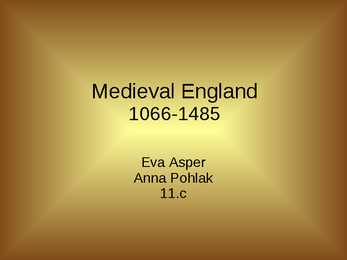
recalled his only surviving legitimate daughter Matilda to England and married her to Geoffrey Plantagenet - Henry's relationship with his daughter and son-in- law was not good but he still wished for them to succeed him. However, he did not finish the official paperwork before he died in 1135, making it possible for others to claim the throne Civil War 1139 due to a battle for the throne between Stephen and Matilda, grandchildren of William I - In 1141 Stephen was captured and Matilda claimed the throne as "Lady of the English" however the people disliked her and when Stephen's wife raised an army against her, she was forced to release Stephen (from prison) who became the king in the same year Stephen agreed to a treaty which said he could peacefully reign England till his death if he accepted Matilda's son, Henry II Plantagenet as
The making of a new nation. The Enlightenment in America. The emergence of the notion of the American Dream. The great Enlighteners: Crèvecoeur, Jefferson, Paine, Franklin. The American Enlightenment is the intellectual thriving period in the United States in the midtolate 18th century (17151789), especially as it relates to American Revolution on the one hand and the European Enlightenment on the other. Influenced by the scientific revolution of the 17th century and the humanist period during the Renaissance, the Enlightenment took scientific reasoning and applied it to human nature, society, and religion. American Enlightenment a gradual but powerful awakening that established the ideals of democracy, liberty, and religious tolerance in the people of America. If there were just one development that directly caused the American Revolution and uplifted the intellectual culture of the continent while it was only a British colony, it would be the American Enlightenment. Broadly
Novel ,,Master of the Moor" was Publisher 1982. She has been rewarded with Silver, Gold and Cartier Diamond Daggers awards from Crime Writers' Assosiation and many other awards. Setting The action takes place in the city of Vangmoor. Lots of action goes around the Moor. Time of the story unknown. Characters Stephen Whalby ''Voice of Vangmoor", Loves walks on the Moor. Suspected of killing girls because he knows Moor very well. Not very into the marriage. Lyn Whalby Stephens wife. Leaves Stephen because of Nick. Dadda Whalby Stephens father. Owns a shop and loves antiques. Peter Naulls Stephens old friend and playfriend when he was litte. Loves to travel and Works in London. Nick Stephens old schoolfriend. Lyns new boyfriend. Frank Malm Police Officer. Has known Stephen long and his father. Insp. Malm Head detective. Inspects girls death. Rip Killer, hamed by Stephen. Killers real name unknown. The Plot
THE PRE-RAPHAELITES The PRB was formed in 1848 in London and it was an association of painters, poets, critics, sculptors. It was founded by three Royal Academy students who wanted to brake free from the academic art and return to the moral and descriptive truthfulness that they felt was gone from art. (The Royal Academy of Arts is and institution with a purpose to promote the creation, enjoyment and appreciation of the visual arts through exhibitions, education and debate.). The founders were William Hunt, John Millais, Dante Rossetti. Because of the fact that they were all students they were also very young- the oldest one, Hunt, was 21. They were soon joined by William Rossetti(critic), James Collison(painter), Frederic Stephens (critic), Thomas Woolner(sculptor). The three youthful Pre-Raphaelites deliberately challenged the established view of art, drawing up a manifesto of their intentions and publishing them in the four issues of a periodical called
 annaabi.ee







Kõik kommentaarid