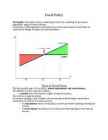
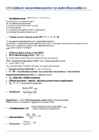
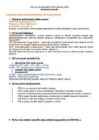
The tools the government would use are 1) Increasing G, or 2) lowering taxes (on households) and thus increasing C, or 3) some combination of the two. Expansionary Fiscal Policy The goal of expansionary fiscal policy is to reduce unemployment. Therefore the tools would be an increase in government spending and/or a decrease in taxes. This would shift the AD curve to the right increasing real GDP and decreasing unemployment, but it may also cause some inflation. Contractionary Fiscal Policy The goal of contractionary fiscal policy is to reduce inflation. Therefore the tools would be an decrease in government spending and/or an increase in taxes. This would shift the AD curve to the left decreasing inflation, but it may also cause some unemployment. Supply-Side Economics Supply-Side economic policy occurs when the government tries to increase the AS curve.
kasutatakse ühte raha ühikut ostude sooritamiseks. Raha ringluskiirust saab suurendada, kui pangad vähendavad intressimäära, millega kaasneb laenude väljastamise kasv või kui indiviidid suurendavad oma kulutusi. Raha ringlusekiiruse kasv ei tekkida alati inflatsiooni, kuid kui kasv on ühiskonnas liiga suur, hüppeliselt suureneva nõudluse arvelt, on tagajärjeks inflatsioon. (Pettinger, Velocity of circulation and inflation 2013) Samuti on inflatsiooni tekkeks psühholoogiline tegur, kus indiviidid hakkavad ennustama tuleviku inflatsiooni määra. Eeldades kindlat hinnatõusu toodete ja teenuste puhul, proovivad isikud koheselt vajaminevaid tooteid tarbida,et hinnatõusu vältida. Selline käitumine suurendab nõudlust ja hinnatõusu turul, kus majandusringlusele kaasneb infltsioon, mis oleks kui „isetäituv ennustus“, kuid mille täpsemad mõõtmed on ettearvamatud ja ebastabiilsed. (Piana 2001)
olema pisut kõrgem 2,5 protsendist. Seejärel peaks majanduskasv jälle tõusma üldisele arengutasemele ning inflatsioon langema määratud tasemele. Erinevate kaupade hinnad ja kulumäärad Elektrienergia Ühendatud Kuningriigi kütuseturgu varustatakse rannalähedase toodanguga. Suurem osa kütust saadakse Ühendatud Kuningriikide sektorist kuid osa kütust imporditakse Norra sektorist. Kütusetoru, mis ühendab Põhja-Iirimaad ja Kirde Sotimaad ehitus lõpetati 1996. aastal. Inflation CPI rate unchanged at 1.6%, RPI at 3.2% Annual inflation rates 12 month % change CPI inflation the Government's target measure remained at 1.6 per cent in February. Upward pressures from transport costs and seasonal food were balanced by less marked recoveries from sales compared with last year for some product groups. Transport costs rose this year as airfares, particularly European and domestic, increased in February. A small
Author Group Girli Vasiljev RB1X Title of report Number of pages Economic Country Review: Finland, Estonia 20 and Hungary Teacher Kalevi Torunen The goal of this paper is to compare the economic performance of Finland, Estonia and Hungary. First, a general overview on the countries will be given. After, economic indicators (real GDP growth rate, inflation, unemployment, household consumption, investment, current account, government budget and deficit) of the three countries will be compared to draw a conclusion. Keywords GDP, inflation, unemployment, household consumption, investment, current account, government budget, deficit, surplus Table of contents 1 Introduction .......................................................................................1 2 Country Specs ................................................
· The decision of how much to save, at the firm or household level; · To understand how an individual, on average, will change their behavior we will then understand the large scale relationships in an economy. Macroeconomics can also be useful. · The economicwell-being of all consumers, rich or poor, is affected by movements in interest rates, exchange rates,and the rate of inflation. · Businesses stand to gain or lose considerable amounts of money when their economic environment changes, regardless of how well they are managed. Macroeconomics is relevant to voters who · wonder what their governments are up to · can also help governments avoid the worst economic crises Economic growth is one of the most exciting issues in macroeconomics. The list of reasons why economies grow:
leading foreign exchange earners. Supported by multilateral financial institutions, Jamaica has, since the early 1980s, sought to implement structural reforms aimed at fostering private sector activity and increasing the role of market forces in resource allocation. Since 1991, the Government has followed a programme of economic liberalization and stabilization by removing exchange controls, floating the exchange rate, cutting tariffs, stabilising the Jamaican currency, reducing inflation and removing restrictions on foreign investment. Emphasis has been placed on maintaining strict fiscal discipline, greater openness to trade and financial flows, market liberalisation and reduction in the size of government. During this period, a large share of the economy was returned to private sector ownership through divestment and privatisation programmes. 4
42) Tasakaal lihtsas majandusmudelis - Tasakaalutingimuse kujutamiseks kasutatakse alati 45-kraadise tõusuga joont. Kõik sellel joonel asuvad punktid vastavad tasakaalutingimusele Y = E. Juhul, kui kogukulutuste kõver on allpool tasakaalujoont, on EY, st varud hakkavad suurenema ning tootmist tuleb vähendada. Kui kogukulutuste kõver on ülalpool tasakaalujoont, siis EY, st varud hakkavad vähenema ning tootmist tuleb suurendada. 43) Inflatsioon (Inflation) üldine/keksmine hinnataseme tõus. (Kõik hinnad ei pea tõusma) 44) Inflatsioonimäär (inflation rate) on ühe perioodi üldise hinnataseme protsentuaalne muutus võrreldes teise perioodi hinnatasemega. 45) Inflatsiooni mõõtmise vahendid: a. Tarbijahinnaindeks (consumer price index) CPI - nn keskmise tarbijate tarbimiskorvi kuuluvate kaupade ja
Keskmine SKP kasv aastas oli 3,0%, mis oli 2 korda rohkem kui sel ajal euroalal. Aastatel 2000-2007 tõusis SKP riigis 2,3 miljardilt dollarilt kolmele miljardile.(Gross Domestic Product (GDP) in Cyprus...2014) Samuti oli kriisieelsetel aastatel Küprosel madal inflatsioon. Inflatsioonimäär näitab hinnataseme %-set muutust võrreldes baasperioodi hinnatasemega ning inflatsioon on üldine hinnatõus. Joonis 1. Küprose inflatsioonimäär aastatel 2000-2008. Allikas: Cyprus Inflation Rate 2014 Inflatsioonimäära peaks hoidma võimalikult madalal ja stabiilsena, sest muidu pole riik majanduslikult stabiilne kui inflatsioon kõigub. Antud joonis näitab, et inflatsioonimäär 6 Küprosel küll kõikus, kuid ei ületanud ühtegi korda 6%-ti. Normaalseks aastaseks inflatsioonimääraks loetakse 2-3% ja nagu joonisel näha kõikuski see kõige rohkem 2- 3% vahel. Inflatsioonimäära võrdluseks võib samadel aastatel tuua Eesti.
TALLINNA TEHNIKAÜLIKOOL Majandusteaduskond Rahvusvaheliste suhete instituut Lühikokkuvõte artiklist „Monetary Policy, Money, and Inflation“ Kodutöö aines Rahvusvahelise majanduse alused Juhendaja: Tallinn 2015 Rahapoliitika, raha ja inflatsioon. Rahanduse õpikud väidavad, et rahapakkumise kasvatamine viib kõrgema inflatsioonini. USA Föderaalreservi kogemuse põhjal see siiski hetkel ei toimi. Alates 2008.aastast on Föderaalreserv kolmekordistanud oma baasraha, ilma et inflatsioon oleks tõusnud.
- European Monetary System Replaced the „snake“ and was based on the exchange rate mechanism of the European Currency Unit (ECU). The value of ECU was a basket EC currencies weighted according to their relative strength. Committment to keep national currencies within +/-2.25% (6% for Italy) – UK and DE left in early 1990s. III loeng Maastrich Criteria towards a single EU currency The European Monetary Union (EMU) was decided in Maastricht: 1. Inflation rate (not more than 1.5% points from the best) 2. Annual govt. deficit (3%); Govt. debt (60%) 3. Exchange rate stable 4. Long-term interest rate Enlargement came with problems - Old institutional structure designed for 6 - Obsolete voting majorities - Complex division between „community“ and „inter-governmental“ policy areas - New challenges – Foreign Afairs (YU) - Institution membership too big (EP, Commission) Enhanced cooperation:
International Standards The international standard for measuring GDP is contained in the book System of National Accounts (1993), which was prepared by representatives of the International Monetary Fund, European Union, Organization for Economic Co-operation and Development, United Nations and World Bank. Nominal GDP and Real GDP The GDP calculation is distorted by inflation. This unadjusted GDP is known as the nominal GDP. In practice, GDP is adjusted by dividing the nominal GDP by a price deflator to arrive at the real GDP. · GDP usually is reported each quarter on a seasonally adjusted annualized basis In an inflationary environment, the nominal GDP is greater than the real GDP. If the price deflator is not known, an implicit price deflator can be calculated by dividing the nominal GDP by the real GDP:
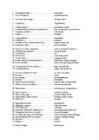
C 1. To be in dept Osakonnas olema 2. To owe võlgnema, võlgu olema 3. To lend laenama, laenuks andma 4. To borrow laenama, laenuks võtma 5. The stock market aktsiaturg, börs 6. To invest investeerima 7. Shares aktsiad 8. Profit kasu, kasum; tulu 9. Loss kahju 10. Tax hinda v. kulu määrama 11. Inflation inflatsioon 12. Insurance kindlustamine, kindlustus 13. A fine trahv 14. A pension pension; abiraha 15. A sale turustus; oksjon; odav väljamüük 16. A bargain (kauba)tehing; allahinnatud kaup, allatingitud kaup 17. To inherit pärima, päranduseks saama 18. An heir pärija
standard of living of its citizens. (pikas perspektiivis riigi `s võime toota kaupu ja teenuseid määrab elatustasemekodanikele) 2. In the short run, aggregate demand influences the amount of goods and services that a country produce. (lühiajalises perspektiivis kogunõudlust mõjutavad kogus kaupu ja teenuseid, mida riiktoota) 3. In the long run, the rate of money growth determines the rate of inflation, but it does not affect the rate of unemployment. (pikemas perspektiivis, määra raha kasvu määrab inflatsiooni, kuid see ei mõjuta töötuse määr) 4. In the short run, policy makers who control monetary and fiscal policy face a tradeoff between inflation and unemployment. (lühiajalises perspektiivis, poliitikud, kes kontrollivad raha-ja fiskaalpoliitika nägu kompromiss vahel inflatsioon ja tööpuudus)
Heidutatud töötajad Discoraged workers Отчужденный работник Tööpuuduse määr Unemployment rate Уровень безработицы Tööhõive määr Employment rate Уровень занятости Tööjõus osalemise määr Labour force participation rate, LFPR Степень участия в рабочей силе Inflatsioon Inflation Инфляция Deflatsioon Deflation Дефляция Hinnaineks Price index Индекс цен Tarbihahinnaindeks, THI Consumer price index, CPI Индекс потребительских цен Tootjahinnaineks Producer price index Индекс производственных цен
Central bank Def- A national bank that provides financial and banking services for its country's goverment and commercial banking system Monetary policy Def- The way a central bank controls the amount of money in the economy at a particular time, for axample by changing interest rates. Fluctuate Def- The irregular rise and fall of number or amount. Speculate Def- To buy goods, shares, property, etc. in the hope that their value will increase so that can be sold for a profit. Inflation Def- A general invrease in the proce of goods and services and a fall in the relative value of money. Basis point Def- A unit of measure used in the financial world to describe the percentage change in the value or rate of a financial instrument. One basis point is equivealent to 0.01% or 1/100the of a percent. TURUNDUS Marketing- The action or business of promoting products or services to the public other businesses.
https://www.mindomo.com/mindmap/reasons-for-uneven-development-in-the-world-3ab71a2351e04ce 2a078fec73ee81ba0 https://www.slideshare.net/luoyanjie/reasons-for-uneven-development-15058139 https://en.wikipedia.org/wiki/List_of_countries_by_Human_Development_Index https://prezi.com/ifpzyzggjroo/causes-of-uneven-development/ http://hdr.undp.org/en/content/human-development-index-hdi http://www.countrydetail.com/top-10-countries-natural-resources-world/ http://www.cnbc.com/2017/01/20/venezuela-2016-inflation-hits-800-percent-gdp-shrinks-19-percent- document.html
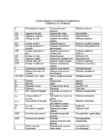
curve, fronier производственных kõver возможностей PPI Production price index Индекс цен производства Tootmise hinnaindeks PPP Purchase power parity Паритет покупательской Ostujõu pariteet способности π Inflation Инфляция Inflatsioon Π Profit Прибыль Kasum Q Quantity Количество Kogus r Real interest Реальный процент Reaalintress R Reserve Резервы Reservid S Supply Предложение Pakkumine
there were Catholic schools and churches In 1916 Ireland was declared a free country In 1921 the northern and southern parts separated, the latter became the Irish Free State. Northern Ireland remained part of the UK In 1949 the southern part declared itself the Republic of Ireland Today Ireland has many political conflicts; many people have been killed in outbursts of violence Economic development Transport costs are high due to its location Low inflation and tax breaks attract foreign investors to the Republic The economy is heavily dependent on agriculture Tourism is a flourishing branch of the economy All the major cities lie on the coast or near the sea. They are Dublin, Galway, Limerick, Cork and Waterford Where to go? Ireland features wild coastlines, sandy beaches, lush valleys, dark peat lands and unruffled lakes. The island may be divided into the following parts: * Southeast Ireland * Cork and Kerry
USA is the biggest dept owner as a county and also have a large dept per person. Budget deficit of USA is 483 billion dollars which has gone down from 2009 crisis. In 2011 the deficit was 440 billion dollars in CAB and 784,775 billion dollars in WTO which was then almost six times bigger than the second place deficit country which was UK wit 162.973 billion dollars deficit. With deficit comes also inflation on the dollar which was 1.7% in December. The dept accumulates from Public finances which were in the minus in 2013. The revenue came from Social insurance 34.2%, income taxes 47.4%, corporate tax 9.9% and other 8.5%. This made a total of 3.95 trillion dollars of revenue which was basically eliminated by the expenses which measured up to 3.95 trillion dollars. The main expenses come from social security 23.2%, defence 17
kukkumise põhjuseks. Kuid inflatsioonist vabanemisega seotud kahjud võivad olla sama halvad kui inflatsiooni endaga seotud. KASUTATUD KIRJANDUS "Inflatsioon" http://www.rak.edu.ee/opiobjektid/raha/inflatsioon.html "Inflatsioon Eestis" Natalja Viilmann, Eesti Pank. 2008 veebruar. http://www.eestipank.info/pub/et/dokumendid/publikatsioonid/seeriad/selgitused/inflatsioon.p df?ok=1 "Inflatsioon" Euroopa komisjon, majandus ja rahandus. http://ec.europa.eu/economy_finance/focuson/inflation/what_et.htm "Inflatsioon", 2012 veebruar http://et.wikipedia.org/wiki/Inflatsioon "Inflatsioon ongi olnud meie majanduskasv?" Einar Eiland, 2011 november. http://www.ohtuleht.ee/454137 "Eesti inflatsioon Euroopa Liidu suurim" Virgo Kruve, 2011 august. http://www.kesknadal.ee/est/uudised?id=17388 "Mis on inflatsioon?" Euroopa keskpank http://www.ecb.int/ecb/educational/hicp/html/index.et.html "5.3. Inflatsioon" https://docs.google.com/viewer? a=v&q=cache:TVTqjUCX27QJ:www.htg.tartu
resilient and solvent. Until recent years the Estonian economy continued to grow with admirable rates. Estonian GDP grew by 6.4% in the year 2000 and with double speeds after accession to the EU in 2004. The GDP grew by 7.9% in 2007 alone. Increases in labor costs, rise of taxation on tobacco, alcohol, electricity, fuel, and gas, and also external pressures (growing prices of oil and food on the global market) are expected to raise inflation just above the 10% mark in the first months of 2009. In the first quarter 2008 GDP grew only 0,1%. The government made a supplementary negative budget, which was passed by Riigikogu. The revenue of the budget was decreased for 2008 by EEK 6.1 billion and the expenditure by EEK 3.2 billion. 1 Estonia joined the World Trade Organization in 1999. A sizable current account
race, Fuhrer principal, dislike of Communism and Democracy and need to conquer Russia Legal Rise to Power • Used popularity from failed revolution and book to seize power legally • Spoke to mass audiences about making Germany a great nation again • Nazi Party: – 1930 = 18% of vote – 1932 = 30% of vote – Hitler becomes Chancellor in 1933 Appeal of Hitler • Germany was in the midst of an economic depression with hyper-inflation • Hitler was a WW I hero who talked about bringing glory back to the “Fatherland” • He promised the rich industrialists that he would end any communist threat in Germany • Constantly blamed Jews for Germany’s problems, not the German people. • Hitler was an excellent public speaker. Strong Arm Tactics • The “Brownshirts” or SA (Stormtroopers) • SA was used to put down opposition parties • Threatened and beat up Jews and ant-Nazi voters
Long-term problems include low investment and uncertain property rights. The political turmoil in Fiji has had a severe impact on the economy, which shrank by 2.8% in 2000 and grew by only 1% in 2001. The tourism sector recovered quickly, however, with visitor arrivals reaching pre-coup levels again during 2002, which has since resulted in a modest economic recovery. This recovery continued into 2003 and 2004 but grew by 1.7% in 2005 and grew by 2.0% in 2006. Although inflation is low, the policy indicator rate of the Reserve Bank of Fiji was raised by 1% to 3.25% in February 2006 due to fears of excessive consumption financed by debt. Lower interest rates have so far not produced greater investment for exports. However, there has been a housing boom from declining commercial mortgage rates. The tallest building in Fiji is the fourteen-storey Reserve Bank of Fiji Building in Suva, which was inaugurated in 1984. The Suva Central Commercial
All this is not necessary, if we would have a “fat” professor, wouldn’t it? Why they allowed to write how they like, but we need to do the work, which is not needed for Jesus Christ? It is enough to make the discovery and present the report for further discussion in global community, we are not writing a book for the schools. [1] Nikodem J. Poplawski, Cosmology with torsion: An alternative to cosmic inflation, Phys.Lett.B694:181-185,2010; Erratum-ibid.B701:672,2011, arXiv:1007.0587 [2] Trevor W. Marshall and Max K. Wallis, Stellar collapse in field theories of gravitation, Journal of Cosmology, 2010, Vol. 6, 1473-1484. http://journalofcosmology.com/MarshallWallis.pdf [3] Peskin, Michael E.; Schroeder, Daniel V. (1995). Introduction to Quantum Field Theory. Read- ing, MA: Addison-Wesley Publishing Company. Chapter 20. 4
" For example: "You don't mean you met the Tony Blair, do you?" !Note - The doesn't mean all:- "The books are expensive." = (Not all books are expensive, just the ones I'm talking about.) For example: "Books are expensive." = (All books are expensive.) No article We usually use no article to talk about things in general:- Inflation is rising. People are worried about rising crime. (Note! People generally, so no article) You do not use an article when talking about sports. My son plays football. For example: Tennis is expensive. You do not use an article before uncountable nouns when talking about them generally. Information is important to any organisation. For
But to these, who are not in EU, have to pay pretty high prize to trade in member states. Sixth to fight international crime and terrorism, there is assure cooperation with member country's police, border service, Migration Boar and courts. One state decree of the court must apply in other states too. There are lot's of limitation, requirement and new laws which accomplish seems a bit weird or trifle. Prizes must be stable, inflation low and balance of payments must be in order. If the regulations are not executed, there will be sizeable mulct. So, everything must strictly meet requirements. To me, as a student and average person, EU is land of opportunitis. But- for example- I want to be enterpriser, I have to consider lot's of regulations and orders to have my own business. Used Sources http://europa.eu/about-eu/basic-information/index_et.htm http://en.wikipedia.org/wiki/European_Union http://www.eu-in-china
Disinflatsioon-kõrge inflatsiooni oluline vähenemine või kadumine. Võib tunduda üllatav, kuid inflatsiooni tagajärjel mõned inimesed kaotavad, mõned aga võidavad. Inflatsiooniga seotud kaotused on põhiliselt kaht tüüpi. Esiteks võib inflatsioon alandada tootmise ja jaotuse efektiivsust, mille tõttu kannatab elatustase. See on inflatsiooni reaaltulude kulu (kahju) (real-income costs of inflation). Teiseks murrab inflatsioon nii ilmutatud kui ka ilmutamata leppeid, mis seovad inimesi omavahel. Selles avalduvad inflatsiooni sotsiaalsed kulud (social costs of inflation). Inflatsiooni reaaltulude kulu seisneb selles, et inflatsioon kasvatab tehingukulusid (transaction costs), muutes hinnainfo kiiremini vananenuks ning sunnib kasutama ressursse, mida oleks saanud efektiivselt kasutada mujal, ümberhindluseks (repricing).
September 2001, stunted economic growth; the economy rebounded moderately in 2003, with one of the best tourist seasons on record. But the economy faces serious long-term problems: high interest rates; increased foreign competition; a pressured, sometimes sliding, exchange rate; a sizable merchandise trade deficit; large-scale unemployment; and a growing internal debt, the result of government bailouts to ailing sectors of the economy. Inflation, previously a bright spot, is expected to remain in the double digits. Depressed economic conditions have led to increased civil unrest, including gang violence fueled by the drug trade. In 2004, the government faces the difficult prospect of having to achieve fiscal discipline in order to maintain debt payments while simultaneously attacking a serious and growing crime problem that is hampering economic growth. Crime
foreign language language www.investbg.government.bg MACROECONOMIC INDICATORS GDP Growth (%) 3 1.6 1.3 1.5 0.1 0.2 2010 2011 2012 2013 2014 2015 MACROECONOMICS DATA Inflation Rate (%) 3.0 3.4 GDP: 44.16 billion EUR 2.4 GDP per capita: 5 700 EUR 0.4 Budget Deficit: -3.1% of GDP 2010 2011 2012 2013 2014 2015 Government debt: 27.2% of GDP -1.1 Exports, FOB: 52.1% of GDP -1.6 Unemployment Rate (%) Imports, CIF: 59.2% of GDP
The Cabinet meets at the Prime Minister's house 10 Downing Street. Cabinet ministers are responsible to Parlament and may all be questionised and held accountable for governmet actions and decisions. Even the Prime Minister must answer questions every Tuesday and Thursday in the House of Commons. The UK is the fourth largest economy in the World and the second largest in Europe. It is one of the strongest in Europe; inflation, interest rates, and unemployment remain low. During the 19th century Britain used to have many coal and iron mines and had the natural resources to make textiles, steel and ships. Today, coal and textiles can be produced more cheaply in other countries and so many British factories and mines have closed. The natural resources in the UK for example are: coal, ptroleum, natural gas, limestone, salt, iron, etc. Most of the land is suitable for
more than trebled (144 seats). With the wave of patriotism she stayed in power up to 1983 and a short upturn in the economy returned her to third term in office in 1987. Throughout all three terms she pursued economic policies that reduced the power of the unions, decreased public spending, increased personal tax cuts, increased privatization of public utilities and industry. Thatcher is recognized for reducing runaway inflation, public spending and the power of the British unions. However, her programmes, known as "Thatcherism," produced high unemployment (which nearly tripled in her first two terms), high interest rates and increased class differentiation, as well as growth of the underclass. Resignation Despite winning the general election in 1987, Thatcher resigned in November 1990 because of increasing opposition concerning her economic policies. She held a parliamentary seat as a
31.kulutused korrakaitsele- security expenditure 32.tarbjakulutuste järk kasv- gradual growth of consumer costs 33.struktuurieelarve defitsiiti vähendama- to deplete the underlying/structural budget deficit 34.investeeringud elamumajandusse- investment in housing 35.käibemaks, lisandväärtusmaks- value-added tax, turnover tax, sales tax 1. Majanduskasv - economic growth/ expanding economy 2. Tarbjahinnaindeks - consumer price index 3. Aastane inflatsioonimäär - annual rate of inflation 4. Hüpoteeklaenude intressimaksed - mortgage interest payments 5. Langus täistööajaga töötamises - fall in full-time employment 6. Avaliku sektori kogukulutused - total public expenditure 7. Peamised tuluallikad - main sources of revenue 8. Tõstma investeeringuid elamuehitusse - to boost investment in housing 9. Jätkusuutlik kasv ja elukvaliteet - sustainable growth and the quality of life 10. erastatud avaliku sektori ettevõtted - privatised public sector business 11
arengutaseme näitajaks ning OECD (Majanduskoostöö ja Arengu Organisatsioon) on määranud keskmise, mille järgi võrrelda liitunud riikide taset. Austraalia tase OECD 3 liikmesriikidega võrreldes on olnud alati keskmisest kõrgemal, kuid viimastel aastatel langevas trendis. Uus-Meremaa võib leida võrdeliselt allpool OECD keskmist määra. 2. Hinnakasv ja selle dünaamika Inflation, consumer prices (annual %) 5.00 4.50 4.00 3.50 3.00 2.50 2.00 1.50 1.00 0.50 0.00 Australia New Zealand Austraalia kuulub majanduse arengu poolest arenenud riikide hulka. Eelmise kümnendi keskel sai Austraalia nautida kiiret hindade tõusu peamiste toorainete ekspordis ( joonis 3). See tõi kaasa enneolematu õitsengu kaevanduste investeeringutel
Currency and taxes. In June 1992, Estonia replaced the ruble with its own freely convertible currency, the Kroon (EEK). A currency board was created and the new currency was pegged to the German Mark at the rate at 8 EEK for 1 DEM. When Germany introduced the Euro, the peg was changed to 15.6466 Kroon for 1 Euro. The Estonian government is intending to adopt the Euro as the country's currency on 1 January 2008 due to continued high inflation, and finalised the design of Estonia's Euro coins in late 2004. Some people try to avoid paying taxes. But the situation has changed positively from 1991 and now about 25% of the people don't pay them. Personal income tax in Estonia is 26% and it is the same for all the people with different incomes. Corporate income tax is also 26% but comes only from profit so nothing is deducted from wages/salaries. Value added tax is the country's main income. It is not
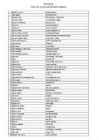
232 inadequate puudulik 233 incentive ergutav motiiv 234 income sissetulek 235 income sissetulek 236 income tax tulumaks 237 income year rahandusaasta 238 industrial goods tööstuslikud kaubad 239 inequality ebavõrdsus 240 inflated prices üleskruvitud hinnad 241 inflation raha väärtuse langus 242 informal mitteametnik 243 innovation uuendus, innovatsioon 244 insufficent puudulik 245 insurance kindlustus 246 insurance agency kindlustusselts 247 insurance contract kindlustusleping 248 interest rate intressimäär 249 intermediary vahendaja
form of Gaelic (about 60,000 in Scotland) Religion Christian (Anglican, Roman Catholic, Presbyterian, Methodist) 71.6%, Muslim 2.7%, Hindu 1%, other 1.6%, unspecified or none 23.1% (2001 census) Ethnic Group(s) white 92.1%, black 2%, Indian 1.8%, Pakistani 1.3%, mixed 1.2%, other 1.6% (2001 census) Economic Overview Currency/Exchang 1 United Kingdom Pound (GBP) = $1.77 e Rate (April 17, 2006) Inflation Rate 2.0%, 1.9%, 1.7% (2004E, 2005E, 2006F) Gross Domestic $2.2 trillion Product (2005E) Real GDP Growth 3.2%, 1.8%, 2.2% Rate (2004E, 2005E, 2006F) Unemployment 4.7% Rate (2005E) External Debt $7.1 trillion (2005E) Exports (2005E) $380 million Exports - manufactured goods, fuels, chemicals; food, beverages, tobacco Commodities Exports - Partners US 15%, Germany 10.7%, France 9.2%, Ireland 6.8%, (2004E) Netherlands 6.1%, Belgium 5
remove this hindrance by January 2009 when the temporary derogation expires. In June 1992, Estonia replaced the ruble with its own freely convertible currency, the Kroon (EEK). A currency board was created and the new currency was pegged to the German Mark at the rate at 8 EEK for 1 DEM. When Germany introduced the Euro, the peg was changed to 15.6466 Kroon for 1 Euro. The Estonian government is intending to adopt the Euro as the country's currency on 1 January 2008 due to continued high inflation, and finalised the design of Estonia's Euro coins in late 2004.
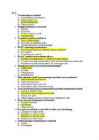
30. Brändi rahalise väärtuse hindamisel a) Mõõdetakse tarbija teadvuses oleva brändi positsiooni maksumust rahas b) Mõõdetakse brändi spontaanset tuntust c) Mõõdetakse brändi identiteeti 31. Isiklikus kommunikatsioonis seisneb üksikisiku mõjutamise eelis massikommunikatsiooni ees a) Heas sõnumi selguses b) Keskmises sõnumi selguses c) Halvas sõnumi selguses 32. AIDAS mudeli tähed tähendavad õiges järjestuses järgmist a) Action, inflation, desire, attention, satisfaction b) Attention, IQ, desire, action, satisfaction c) Attention, interest, desire, action, sexuality d) Attention, interest, desire, action, satisfaction 33. Tõmbestrateegia on suunatud a) Turustuskanalite liikmete ergutamisele b) Kauba turult ära tõmbamisele c) Vahendajate ostunõudluse ergutamisele 34. Tööstusturu toetust iseloomustab a) Reklaami domineerimine b) Suhtekorralduse domineerimine
.................majandusharu 231. Inelastic demand ............................................mitteelastne nõudlus 232. Inelastic supply ..............................................mitteelastne pakkumine 233. Inexpensive ....................................................odav 234. Inferior goods ................................................väheväärtuslikud kaubad 235. Inflated prices ................................................üleskruvitud hinnad 236. Inflation .........................................................inflatsioon 237. Informal - ..........................................................mitteametlik 238. Infrastructure .................................................. infrastruktuur 239. Innovation ......................................................uuendus 240. Input markets .................................................teguriturud 241. Input of productions ......................................tootmissisendid
Antud ainetöö tegemisel sai autor põhjaliku ülevaate raha olemusest ning kuidas sellega tegutsetakse. 14 KASUTATUD KIRJANDUS Eamets, R. Rahaturg j pangandus, 2005. http://www.andrus.planet.ee/ar/Makro %C3%B6konoomika%202012/MA%20Loeng%20-%2008_1%20-%20Rahaturg.pdf , 08.05.2014. Euroopa Komisjon. Inflatsiooni tagajärjed. http://ec.europa.eu/archives/economy_finance/inflation/consequences_et.htm , 08.05.2014. Eesti Pank. Rahvusvaheline Valuutafond. http://www.eestipank.ee/eesti-pank/rahvusvaheline- valuutafond , 08.05.2014. Eesti Pank. Euroraha ajalugu. http://www.euro.eesti.ee/EU/Prod/Euroveeb/index.html , 08.05.2014. Finantsaabits, Printon. 2011 Finantsinspektsioon. Tuletisväärtpaberid. http://www.minuraha.ee/tuletisvaartpaberid/ , 08.05.2014. Finantsinspektsioon. Turuosaliste nimekirjad. http://www.fi.ee/?id=290 , 08.05.2014. Zirnask, V.,Liikane, K
where the borders of the Netherlands, Belgium and Germany meet. The Netherlands has a temperature climate, thanks to its long coastline. The average temperatures are 18 degrees Celsius in summer and three degrees Celsius in winter. Average annual rainfall is 800 millimetres. (6) 4 1.3 Economy The Netherlands is a prosperous and open economy depending heavily on foreign trade. The economy is noted for stable industrial relations, moderate inflation, a sizable current account surplus, and an important role as a European transportation hub. Industrial activity is predominantly in food processing, chemicals, petroleum refining, and electrical machinery. A highly mechanized agricultural sector employs no more than 4% of the labor force but provides large surpluses for the food-processing industry and for exports. The Netherlands, along with 11 of its EU partners, began circulating the euro currency on 1 January 2002. The country
LOENG 1 1. VALUUTAKURSS, INTRESSIMÄÄRAD JA INFLATSIOON: PÕHISEOSED Valuutakursid, intressimäärad ja inflatsioon on rahvusvaheliste finantsturgude põhinäitajad. Neil on tähtis roll turuosaliste finantsotsuste tegemisel ja turu tasakaalu saavutamisel. Alljärgnevad teooriad seletavad nende seoste olemust: · rahapakkumine ja inflatsioon (Money and Inflation) · Fisheri efekt (The Fisher Effekt, FE) · ostujõu pariteedi teooria (Purchasing Power Parity, PPP) · rahvusvaheline Fisheri efekt (The International Fisher Effect, IFE) · intressimäära pariteedi teooria (The Interest rate Parity, IRP) · õiglase forvard-kursi teooria (The Unbiased Forward Rate, UFR). 1.2. Raha ja inflatsioon (seos 1) Kõikide finantsturu osaliste soov on võimalikult täpselt prognoosida valuutakursi.
A program that is supposed to expand the popular financial sector that is supposed to focus lending to smaller financial institutions 7 that in return will lend to small businesses. "In January 2007 co-op loans stood at 11.1 percent of private bank lending; by July 2012 this percentage had nearly doubled, to 19.6 percent. Co- op loans have also seen a large increase in the absolute total amount, tripling in real (inflation- adjusted) terms during this period." Conclusively, the authors explain, "Ecuador is a relatively small, middle income developing country with an open economy that does not even have its own currency, yet in five years it has accomplished some of the most comprehensive financial reforms of any country in the 21st century" (Maiello, 2013). Ecuador economic growth has been inclusive, which has directly reduced poverty and inequality levels and increased the middle class
neist valdav osa, 3,7 miljonit, Suurbritannias - ja vabatahtlikult ligi pool miljonit. Pärast Esimest maailmasõda rakendasid töötuskindlustust Itaalia (1919), Austria (1920), Venemaa (1922), Poola (1924), Bulgaaria (1925), Saksamaa (1927) ja teised riigid. (Pihlamägi 2010). 1980ndate aastate rasket elu leiab (Henry) Charles Bukowski ütlusest: ,,Thanksgiving. It proved you had survived.another year with its wars, inflation, unemployment, smog, presidents." Sellega tahtis Bukowski öelda, et pühade ajal said aru, et olid kuidagiviisi veel ühe aasta sõdu, inflatsiooni, tööpuudust, tossu ja presidente ära kannatanud. (Bukowski 1978: 171) Kindlasti oli kogu maailm 1980ndatel siiski kiires pidevas arengus. 1.2. Töötu või tööotsija Tööotsija on isik, kes otsib tööd ja on tööotsijana arvele võetud Tööturuameti piirkondlikus struktuuriüksuses. Tööotsija peab vähemalt kord 30 päeva jooksul
lähevad THI vaatleb ainult keskmise tarbija ostukorvi kuuluvate kaupade ja teenuste hindasid. (2) SKP deflaator sisaldab ainult kodumaist toodangut THI puhul võib ostukorv sisaldada ka välismaiseid tooteid. (3) SKP deflaator ei määra kaupade ja teenuste hindadele osakaalusid, vaid kujuneb vabalt THI puhul koosneb ostukorv aastaselt fikseeritud kaubagruppide osakaaludest. 14) Alusinflatsiooni mõiste Alusinflatsiooni (core inflation) arvutamisel jäetakse tarbija ostukorvist välja toidukaupade (mõnikord ka alkohoolsete jookide ja tubaka) ja energia hinnad, kuna need on lühiajaliselt kõige volatiilsemad ja võivad seetõttu moonutada tegelikke inflatsiooniprotsesse majanduses. 15) Inflatsiooniga seonduvad kulud · Äraarvatud inflatsiooni kulud 1) ,,saapatalla kulu" ehk sularaha hoidmise alternatiivkulu tõus 2) ,,menüükulud" ehk hinnatõus sunnib ettevõtteid sagedamini hindu muutma
korrelatsioonikordaja sõltuva muutujaga. Parameetrite märgid ebaloogilised Parameetrite hinnangud väga tundlikud -üksikute tunnuste lisamise/eemaldamise suhtes -vaatluste arvu suurenemisel/vähenemisel 69) Multikollineaarsuse tugevuse hindamine: variatsiooniindeks VIF ja selle arvutamine Korrelatsioonimaatriks -suure arvu regressorite korral ebamugav; näitab vaid paarikaupa esinevat kollineaarsust Varieeruvusindeks VIF (Variance Inflation Factor) - matemaatiliselt lihtsalt arusaadav; kasutame seda. Konditsiooniindeks (condition number) – matemaatiliselt keerukam (maatriksi omaväärtused) VIF arvutamine - VIF leitakse iga regressori Xi jaoks eraldi. Vastavas abiregressioonis on Xi avaldatud ülejäänud regressorite kaudu. Kui VIF >10 siis on seos tugev. 70) Mis juhtub parameetrite hinnangutega ja nende standardvigadega, kui esineb multikollineaarsus?
fromPage=online&aid=8331074] 20.05.2013 3. Eesti Panga strateegiline arengukava 2011-2013.Tallinn: Eesti Pank, 2011 [http://www.eestipank.ee/eesti-pank/eesti-panga-strateegiline-arengukava-2011- 2013] 23.04.2013. 4. El raha- ja fiskaalpoliitika TÜ Euroopa kolledz loengukonspekt [http://www.materjalid.tmk.edu.ee/.../Eesti%20Pank%20ja%20rahapoliitika] 23.04.2013. 5. Inflatsiooni ohjamine - Euroopa Komisjon [http://ec.europa.eu/economy_finance/focuson/inflation/how_et.htm] 23.04.2013 6. Ivanova, N. Pangandusettevõtlus. Tartu: TÜ Kirjastus, 1998.) 7. Keskpanga roll ühiskonnas Tallinn: Eesti Pank, 1999 [http://www.eestipank.ee/sites/default/files/publication/et/Aastaaruanne/.../_1.p] 23.04.2013 8. Keskpanga funktsioonid. Tallinn 2013 [http://www.seit.ee/agenda21/EA21/2_22pangandus.html#funktsioonid] LISAD Lisa 1. Kasutatud lühendid EKP - Euroopa Keskpank EKPS - Euroopa Keskpankade Süsteem
sq_Korgharitud 48734,3 73334,3 0,6645 0,5093 X2_X3 -23761,4 13938,4 -1,705 0,0943 * X2_X4 -13735,4 13049,8 -1,053 0,2975 X2_X5 -8144,71 13638,6 -0,5972 0,5530 Unadjusted R-squared = 0,159573 Test statistic: TR^2 = 9,574352, with p-value = P(Chi-square(8) > 9,574352) = 0,296180 Lisa 11. Multikollineaarsuse test Variance Inflation Factors Minimum possible value = 1.0 Values > 10.0 may indicate a collinearity problem Korgharitud 1,006 DAasta_1 1,500 DAasta_2 1,505 DAasta_3 1,501 VIF(j) = 1/(1 - R(j)^2), where R(j) is the multiple correlation coefficient between variable j and the other independent variables Properties of matrix X'X: 1-norm = 115,11179 Determinant = 10938,745 Reciprocal condition number = 0,0015792541 Lisa 12. Jääkliikmete normaaljaotuse testid Test for normality of uhat8:
between 2000 and 2004, and then stagnated. Missteps in Domestic Economy With a windfall to rely on, Ukraine not only failed to diversify its exports but also mismanaged its domestic economy. Since 1992 Ukraine has had just one year, 2002, with a 8 balanced budget. Income growth has been huge, and the ratio of domestic savings declined as consumption boomed. Since 2001 annual growth in average monthly earnings has always surpassed consumer price inflation, until 2008 quite frequently by more than 20 percentage points and never much below that. Such income growth was supported by the country's high export, especially steel, prices. Boosted by rapidly improving terms of trade, import volumes grew much faster than export volumes and the net growth impact of foreign trade was negative by some 5 percent annually. As imports were liberalized in the 1990s, consumers and investors alike preferred
saavutades 1994 a. maksimumi. Sündimusekordaja on hakanud alates 1989 aastast oluliselt vähenema. Loomuliku iibe kordaja oli kuni 1989 aastani positiivne, hiljem muutus negatiivseks. Keskmine eluiga peale sõda suurenes ja saavutas kõrgeima taseme 1989 a. Seejärel hakkas vähenema. Eesti meeste keskmine eluiga on olnud kogu aeg väiksem kui naistel. 22. Makromajanduslikud ökonomeetrilised mudelid (olemus; kasutamine): · Kleini mudelid; · NAIRU (Non-Accelerating-Inflation Rate of Unemployment) mudelid; · HERMES (Harmonized Econometric Research for Modelling Economic Systems) mudelid; · üleminekumajanduse makromajanduslikud mudelid; · Eestis koostatud makromajanduslikud mudelid. · Eesti piimandussektori makro-ökonomeetriline mudel. · Eesti taimekasvatussektori makro-ökonomeetriline mudel; · Eesti lihasektori makro-ökonomeetriline mudel. Makromajanduslikke ökonoomilisi mudeleid kasutatakse makromajanduses protsesside
 annaabi.ee