 50 punkti
Autor soovib selle materjali allalaadimise eest saada 50 punkti.
50 punkti
Autor soovib selle materjali allalaadimise eest saada 50 punkti.
 ~ 1 leht
Lehekülgede arv dokumendis
~ 1 leht
Lehekülgede arv dokumendis
 2011-10-05
Kuupäev, millal dokument üles laeti
2011-10-05
Kuupäev, millal dokument üles laeti
 64 laadimist
Kokku alla laetud
64 laadimist
Kokku alla laetud
 1 arvamus
Teiste kasutajate poolt lisatud kommentaarid
1 arvamus
Teiste kasutajate poolt lisatud kommentaarid
 Ronald Laarmaa
Õppematerjali autor
Ronald Laarmaa
Õppematerjali autor
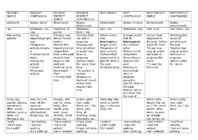
PRESENT PRESENT PRESENT PRESENT PAST SIMPLE PAST PAST PERFECT PAST PERFECT SIMPLE CONTINIOUS PERFECT PERFECT CONTINUOUS SIMPLE CONTINUOUS SIMPLE CONTINUOUS Lihtolevik Kestev olevik Täisminevik Kestev Lihtminevik Kestev minevik Enneminevik Kestev täisminevik enneminevik I pv Am/is/are, I pv, Has/have, III Has/have, II pv, -ed Was/were, -ing Had, III pv Had, been, -ing -ing pv/-ed been, -ing *Recurring *Action *(Giving new *Actions that *Short action *Longer actio
· Mary has been feeling a little depressed. · Lisa has not been practicing her English. · What have you been doing? IMPORTANT Remember that the Present Perfect Continuous has the meaning of "lately" or "recently." If you use the Present Perfect Continuous in a question such as "Have you been feeling alright?", it can suggest that the person looks sick or unhealthy. A question such as "Have you been smoking?" can suggest that you smell the smoke on the person. Using this tense in a question suggests you can see, smell, hear or feel the results of the action. It is possible to insult someone by using this tense incorrectly. REMEMBER Non-Continuous Verbs/ Mixed Verbs Examples: · Sam has been having his car for two years. Not Correct · Sam has had his car for two years. Correct Past Perfect [had + past participle] Examples: · You had studied English before you moved to New York. · Had you studied English before you moved to New York?
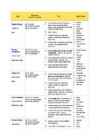
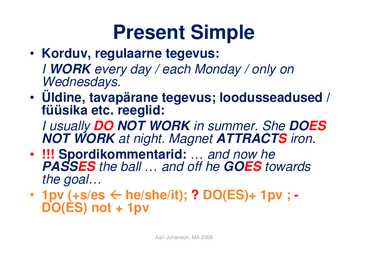
Affirmative tense Use Signal Words /Negative/Question · always · action in the present taking place Simple Present A: He speaks. · every ... once, never or several times N: He does not speak. tegevus, mis toimub ühe korra, mitte · never Lihtolevik Q: Does he speak? · normally kunagi või mitu korda · often I pv
FUTURE SIMPLE BE GOING TO Will + infinitive (will go) Am/is/are going to + infinitive (is going to rain) 1.A decision at the moment of 1.Future plans made before the speaking: moment of speaking: A: 'I'm cold'. A: 'We've run out of milk.' B: 'I'll close the window'. B: 'I know, I'm going to buy some.' 2.Prediction based on opinion: 2.Prediction based on present I think the Conservatives will win the evidence: next election. Look at those boys playing football! 3.A future fact: They're going to break the window. He will be ten next year. 4.Promises / requests / refusal / willingness: I'll help you with your homework. Will you give me a hand? 5.In the same way as the future continuous, but with state verbs: I'll be at the
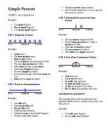
PRESENT SIMPLE (lihtolevik) Form: 1st form (+s) Use: 1. Things in general. Nurses look after patients in hospitals. 2. Things that happen all the time or repeatedly. She usually goes away at weekends. 3. Laws of nature (things that are true in general). The sun rises in the east. 4. Timetable events. The train leaves at 6.50 p.m. Negative form: I don't (do not) normally eat my lunch here. He doesn't (does not) like this film at all. Question form: Do you live here? How often does it rain around here? Signal words: always, every day/month, never, normally, often, seldom, sometimes, usually etc. PRESENT CONTINUOUS/PROGRESSIVE (kestev olevik) Form: am/is/are + ing Use: 1. Unfinished actions happening at or around the time of speaking. Listen! Somebody is crying. They are building a new bridge in our town. 2. Changes happening around now.
INGLISE KEELE KORDAMINE TIME CLAUSES Present Simple · Permanent states, facts (Tom works..) · Repeated and habitual actions, routines (She usually goes..) · Laws of nature and general truths (The sun sets in the west) · Timetables and programmes · Sporting commentaries, rewiews (Beckham wins the ball, crosses and Owen scores) · Feelings and emotions (I love Tallinn..) TIME EXPRESSIONS USED WITH PRESENT SIMPLE: usually, often, always, every day/week etc, in the morning/evening etc, at night/the weekend, on Fridays etc. Present Continuous · Actions taking place at or arount the moment of speaking (The kids are watching TV..) · Fixed arrangements in the near future (I'm going to the dentist tomorrow) · Currently changing ang developing situations (The number of burgularies is increasing) · With ,,Always" to express anger or irritat
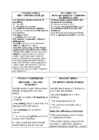
Aari Juhanson, MA 2008 Past Perfect Progressive · Mineviku lõpetamata tegevuse protsessi või kestvuse rõhutamine: They had been WATCHing TV since morning (and he was going slightly mad). · Äsja lõppenud tegevuse (tagajärjed nähtavad) kirjeldus minevikus: It had not been RAINing for weeks, everything was crisp and dry and brown. He had been PAINTing. · had BEEN + 1pv-ing Aari Juhanson, MA 2008 Future Tenses · Lihttulevik (Future Simple / Future Indefinite) markeerimata tuleviku tegevus · Kestev tulevik (Future Progressive / Future Continuous) pooleli- või käimasolev tegevus tulevikus · Perfekti tulevik!!! (Future Perfect) tulevikus tehtud saav tegevus Æ ON NUD (= saab olema lõppenud) · Kestev perfekti tulevik (Future Perfect Progressive) tulevikus pooleli- või käimasoleva tegevuse rõhutamine Aari Juhanson, MA 2008
INGLISE KEEL Sisukord Sisukord 2 Ajavormid Tense vorms 3 Lihtolevik The present simple 3 Lihtminevik The past simple 3 Lihttulevik The future simple 3 Kestev olevik The present continuous 3 Kestev minevik The past continuous 4 Kestev tulevik The future conrinuous 4 Täisminevik The present perfect 4 Enneminevik The past perfect 4
 annaabi.ee





Kõik kommentaarid