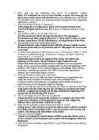
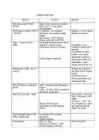
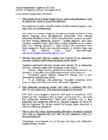
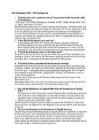
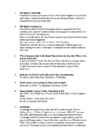
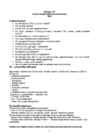
1. What were the two institutions that Henry VII establised? Explain. Henry VII established the Court of Star Chamber to make the barons give up their private armies and overall restored finances by collecting taxes. Also Henry VII extended royal control over local government through the local magistrates called justice of peace. 2. What was the idea of the Act of supremacy? With passing the Act of Supremacy, Henry VIII was made the head of the Church of England and he was now free to divorce Catherine and marry Anne Boleyn. 3. Why did Henry VIII get the title Fidei Defensor? The title was given to him by the pope because Henry VIII was against Protestantism and other religious reforms by J. Calvin and M. Luther. For that, the pope named Henry VIII the Fidei Defensor, meaning Defender of the Faith 4. Why did Mary I get the nickname Bloody Mary?
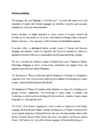
Only the internal politics of Lilliput are described in detail; these are parodies of British politics, in which the great central issues of the day are belittled and reduced to unimportance. For instance, the two major political parties of the day were the Whigs and the Tories. The Tories are parodied as the Tramecksanor "HighHeels" (due to their adhesion to the high church party of the Church of England, and their exalted views of royal supremacy), while the Whigs are represented as the Slamecksan or "LowHeels" (the Whigs inclined toward low church views, and believed in parliamentary supremacy). These issues, generally considered to be of fundamental importance to the constitution of Great Britain, are reduced by Swift to a difference in fashions. The Emperor of Lilliput is described as a partisan of the LowHeels, just as King George I employed
(consistorium) and, considering the times, a huge warehouse (cellarium civitatis). Three walls and seven windows representing Tallinn's oldest secular architecture have come down to our days from that building. In the first quarter of the 14th century the existing building was extended and the basement enlarged. The so-called diele-dornse (front-back room) system was established. In 1346 the King of Denmark handed over his supremacy over Estonia to the Teutonic Order. As a member of the Hanseatic League, Tallinn gained control of trade with the East by the so-called goods yard right. Fast development of trade and economic prosperity led to the need for new utility rooms in the Town Hall and its more dignified appearance. In 137174 the Town Hall acquired its full present-day length and ground floor volume. From that time the Town Hall has its oldest and rarest pieces of medieval woodcarving: benches in the Gothic style
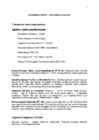
· Tekkis esimene usulahk kalvinism /Prantsusmaal-hugenotid,Inglismaal- puritaanid,Sotimaal-presbüterlased Reformatsioon Inglismaal: · Algatas kuningas Henry VIII (1509-47) · Soovis lahutada abikaasa Aragoni Katariinast · Tahtis abielluda Anne Boleyn'iga · Sündis tütar Elizabeth (hilisem Elizabeth I) · Anne hukati riigireetmise eest ei sünnitanud poega · Kokku 6 abikaasat · 1534- supremaatia akt ( Act of Supremacy) · Inglismaa kuningas kuulutati kirikupeaks · Tekkis Inglismaa ehk anglikaani kirik · Algas kloostrite riigistamine · Kirikumaad jagati rikaste vahel laiali · Tulemuseks oli katoliiklaste ja protestantide vahelin7e võitlus · Kestis ligi 150 aastat Vastureformatsioon: · Nimetatakse katoliku kiriku hilinenud vastulöök · Oluline roll inkvisitsioonikohtul · Jeuiitide ordu 1540 · Ignatius Loyola poolt loodud
The Tudor era (1485 1603) Henry Tudor end to the Wars of the Roses (1455- 1488) Henry VIII - 1534 the Breach with the papacy Act of Supremacy made The formation of the Anglican the crown the spiritual church head of the nation The Elizabethan period (1558- Fourfold growth in London 1603)- A golden age population Timber buildings Stuart dynasty The Civil War Oliver Cromwell
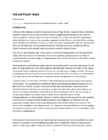
London March 28th Parliament of the United Kingdom The Parliament of the United Kingdom, commonly known as the UK Parliament or British Parliament, is the supreme legislative body in the United Kingdom, British Crown dependencies and British overseas territories. It alone possesses legislative supremacy and thereby ultimate power over all other political bodies in the UK and its territories. Its head is the Sovereign of the United Kingdom (currently Queen Elizabeth II) and its seat is the Palace of Westminster in the City of Westminster, one of the Boroughs of the British capital - London. Tower of London The Tower of London, officially Her Majesty's Royal Palace and Fortress of the Tower of London, is a historic castle located on the north bank of the River Thames in central London.
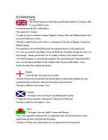
Due to the division of the population along ethnic, religious and political lines, a wide variety of flags can be seen flying from lampposts and private houses across Northern Ireland. Government. The British Constitution is an unwritten constitution, not being contained in a single legal document. England and Wales have no criminal or civil code. It is case law there. It contains two main principles the rule of law (nobody can escape from the law) and the supremacy of Parliament (in theory the Parliament can do whatever it wishes). Since the age of absolute monarchy there has been a gradual decline in the Sovereign's power and, while formally still the head of the executive and the judiciary, commander-in-chief of all the armed forces, and temporal governor of the Church of England, nowadays monarchs reign but they do not rule. Parliament is the supreme legislative authority. There is usually a one-party government
Vahetu kohaldatavuse põhimõte põhimõtte sätestas 1963. aasta Euroopa Kohtu lahend Van Gend en Loos (kohtuasi 26/62). Vahetu kohaldatavus (ingl. k. direct effect) - EL seadusandlus laieneb otseselt kõigile liikmesriikide kodanikele ning on samaväärne rahvusriigi seadusandlusega Põhimõtte sätestas 1964. aasta Euroopa Kohtu lahend Costa v ENEL (kohtuasi 6/64). EL õiguse ülimuslikkus (ingl. k. supremacy) - Euroopa Kohtu konstitutsiooniline lähenemine mis kohati vastandub suveräänse riigi arusaamadele: juhul kui tekib konflikt rahvusriigi seadusandluse ja EL seadusandluse vahel on EL õigusaktid ülimuslikud. Ei, nad ei ole samatähenduslikud- EL õigus on ülimuslik liikmesriigi õigusnormide üle, vahetu kohaldatavus aga samaväärne riigi seadusandlusega. 20. Kas liikmesriigi õiguskorras peab olema õiguskaitsevahend, mis võimaldab
Elizabeth ruled wisely and well for 45 years. Through her policy of middle-of-the-road Protestantism, she held in check throughout her reign the proponents of Catholicism on one hand and the growing numbers of Puritan extremists on the other. A master politician, wise in the choice of her councilors, Elizabeth established a strong central government that received the loyal support of her subjects. 10. What led England to become a world power? During Elizabeth's reign, England began to gain supremacy on the seas. Threatened by an invasion from the long-time enemy, the King of Spain, Elizabeth sent Hawkins and Drake out to destroy the Spanish Armada. England's increasing population created new markets and brought about the exploitation of new sources of raw materials, among them those of the New World. The commercial ventures of the Virginia Company in North America and of the East India Company in the Orient were aspects of this expansion.
then submit a defense to the Court within one month. The applicant then has one month to submit a reply, and the defendant has an additional month to lodge a rejoinder. The court's procedures are extremely slow and laborious, with preliminary rulings typically taking 18 months, and direct actions two years. In urgent cases, the court is able to issue interim rulings through accelerated procedures. Direct effect and Supremacy Direct effect is a principle of EU law. It applies to those aspects of EU law that are enforceable directly by Union citizens in their own Member State, regardless of whether the Member State has introduced specific national laws to implement the provisions. It can apply in relation to regulations, directives, Treaty provisions and decisions. ECJ identified three situations necessary to establish direct effect of primary EU law. These are:
Henry III, Edward I (14 th century), Edward II, Edward III, Richard II (14th century). *Henry II and Thomas a Becket Henry was a good administrator, but he had a terrible temper, which would get him into trouble. Becket was Henry's friend and chief administrator. Henry convinced Becket to become the new Archbishop as he thought Becket (as his friend) would be his ally. But instead, Thomas underwent a change of character and opposed Henry over the question of the supremacy of courts. Henry claimed that the clerks should be tried in royal courts. To his surprise, Becket refused to agree. Becket fled to France after defying Henry. Four foolish knights seeking to please the king, killed Becket in front of the altar, where he was praing. However, Henry was very sad to hear about his friends death. *The Anglo-Norman invasion of Ireland, the Pale King Henry II gained papal approval to invade Ireland. However, the invasion of Ireland was not motivated by religion
8,79 m, leaving at least 20 centimetres before the limit! Carl got dressed again and went away. Two hours later he's ready for the final of 200 m. His acceleration burns the track and, twenty meters far from the goal, raises his arms and greets the spectators. Final time: 19"75!! Journalists, who were astounded, asked him why he didn't try to break the world record (19"72): "I run against opponents not against absents" he replied. So the world championships of Helsinki confirmed his supremacy: three golds. It wasn't a secret Carl planned to win four gold medals at Los Angeles and he was at top during trials. He won all the competitions running 100 m in 10"06 (-2,2 m/s), 200 m in 19"86 (-0,2 m/s) and jumping 8,71 (+0,1 m/s). Two months later he's successful in winning four golds (100m ,200 m, long jump and 4x100 m relay). Equalizing Jesse Owens he becomes the "son of the wind" and "King Carl", two nicks which will take him up to the end of career.
Sir Ralph let his jealousy of the Abbot cloud his clear sightedness. When throwing the bell to the depths of the sea, he did not perceive that in the future, he might need the services of the warning device for himself. So it could be said that Southey believed the doom for mankind to lie in the selfishness and short-sightedness of men. Southey used very typical romanticist images in this poem. The sea was a very popular theme at that period, because it is the best proof of nature's supremacy over humans. The scene at sea can change very quickly, at one moment being calm and smooth, and at the next with a raging storm. It is absolutely uncontrollable, and so is the best way to show people how small they are when compared to the awesome power of Mother Nature. 3 The Inchcape Rock Robert Southey No stir in the air, no stir in the sea, The ship was still as she could be, Her sails from heaven received no motion,
Henry VII perekonnaga. 1504. aastal valiti ta Inglise parlamenti. Järgmisel aastal abiellus More Jane Coltiga ning ta pööras palju rõhku naistele hariduse andmisele, olles selles eeskujuks ka paljudele teistele kõrgklassi peredele. 1532. aastal pani More seoses parlamendis vastu võetud kirikuvastaste sätetega lordkantsleri ameti maha ning asus Chelseas ägedalt ketserlust ründama, avaldades ka ketserlusevastaseid kirjatöid. 1534. aastal vastu võetud Supremaadiaktiga (Act of Supremacy) kuulutati kuningas Henry VIII Inglismaa kirikupeaks ning kõiki inglasi sunniti seda tunnustama. Thomas More seda ei teinud ning ta heideti selle eest Towerisse. 1. juulil 1535 peeti tema üle kohut ning mõisteti reetmises süüdi. 6. juulil surmati More pea maharaidumisega. 1935. aastal kuulutati Thomas More pühakuks ning tema mälestuspäevaks määrati 6. juuli. "Utoopia" Utoopia on hüpoteetiline ideaalriik või ideaalne ühiskond. Selle sõna väljamõtlejaks
complete by the mid 8th century. Throughout the 7th and 8th centuries, power fluctuated between the larger kingdoms. Bede records Aethelbert of Kent as being dominant at the close of the 6th century, but power seems to have shifted northwards to the kingdoms of Mercia and Northumbria. Aethelbert and some of the later kings of the other kingdoms were recognised by their fellow kings as Bretwalda. The so-called 'Mercian Supremacy' dominated the 8th century, though again it was not constant. Aethelbald and Offa, the two most powerful kings, achieved high status. This period has been described as the Heptarchy, though this term has now fallen out of academic use. The word arose on the basis that the seven kingdoms of Northumbria, Mercia, Kent, East Anglia, Essex, Sussex and Wessex were the main polities of south Britain. More recent
When used as time period or duration, reign becomes a noun. However, it is also used as a verb to express domination or control or even influence of one or the other kind as in violence reigns, poverty reigns, etc. History books make good use of reign to refer to the time periods during which a particular king or queen remained on the throne of a territory. For example, during the reign of Queen Victoria, reign of King Phillip, and so on. However, the word reign is also used to reflect the supremacy of a king or queen in royal rule or authority as in King Edward reigned. Reign is also used to indicate something that is predominant or prevalent as in the reign of terror or panic reigned. To rule Rule is a word that is primarily used to refer to a set of regulations or guidelines that are put in place within a place or aspect of life. For example, there are codes of conduct in different places like hospitals, churches, libraries, schools, offices, etc. that is referred to as rules.
Henry Tudor of the House of York became the King. The Tudors 1485 1603 Lively / 'lavl / pulbitsev, elav Armada / :'m:d / sõjalaevastik Invincible / n'vnsbl / võitmatu Unfazed / nfeizd / külma kõhuga, häirimatu Bowls / blz / keegel Supremacy / s'prems / ülemvõim, üleolek Intellectual brilliance / nt'lektl 'brlns / vaimne hiilgus Flourishing / 'flr / õitseng, õitsev Prosperity / pr'spert / majanduslik õitseng Evergreen / 'evgri:n / igihaljas A lively period where much new was learned, naval battles won, sea explored and trading flourished. England beat Spanish Armada, under the guidance of Sir Francis Drake, which was thought to be unbeatable.
14. Henry VIII. 1491-1547. He is famous for his six wives and his ambitions. He was a natural leader but not really interested in the day-to-day running of government and this encouraged the beginnings of a professional bureaucracy. It was during his reign that the reformation took place. When he chose to divorce his first wife, who had not given him a son, he broke away from the Roman Catholic Church. The Parliament’s Act of Supremacy in 1534 made the kind Head of the Church of England, which became Protestant. King Henry VIII held the title Defender of the Faith, which was given to him by the Pope. His daughter Elizabeth I became one of England’s greatest monarchs. 15. Elizabeth I. Elizabeth I, daughter of Henry VIII, was the first of three long-reigning queens in the British history (the other two are Victoria and Elizabeth II). During her long
boundaries were always changing. The greatest & most important kingdoms were Kent, Northumbria, Mercia & Wessex. King Offa of Mercia claimed ,,Kingship of the English". His power his shown by the border barrier he built between Mercia & Wales Offa's Dyke. It probably took 5000 men to build it. It stretches for about 180 km, was 7 metres high, the ditch in front of it 2 metres deep. By the beginning of the 9th cent. Wessex had become the strongest. Wessex never again lost its supremacy. In 829 King Egbert was acknowledged by Kent, Mercia & Northumbria. This was the beginning of the united kingdom. King Egbert became 1st King of England. The clergy, royal warriors & officials supported the king's power. He granted them land and the right to collect dues from the peasants & hold judgement over them. Another important class developed the men of learning, came from the Christian Church. Nobody knows when christianity first reached Britain. Christianity came from 2 directions,
Arthuri lese Aragoni Katariinaga. 24 aastat ei andnud elavat troonipärijat. Ainuke ellujäänu oli hilisem kuninganna Mary I. Henry VIII’le oli poeg aga ülimalt oluline Tudorite liini jätkamiseks. 1526.aastal armus Henry VIII õuedaami Anne Boleyn’i. Paavst Clemens VII keeldus andmast luba lahutuseks. Tegemist polnud ainult dogmaatiliste tõekspidamisetega, vaid Clemens VII oli suures sõltuvuses Karl V’st, kes oli Katariina õepoeg. Ülimuslikkuse seaduse (Act of Supremacy) vastuvõtmine 1533-1534. 1533 sai ametisse Thomas Cramner, Cantenbury peapiiskop. Tema esimene ülesanne oli Henry isiklike ambitsioonide rahuldamine ja Inglismaa lahtisidumine Rooma võrgust. 1534 väljastati Ülimuslikkuse seadus (Act of Supremacy), mis kuulutas Henry VIII ülimuslikuks ja kõrgeimaks kirikupeaks Inglismaal. Inglismaa Kiriku (the Church of England) olemus. Riigikiriku teke, kuid see ei tähenda et Inglismaa muutus protestantlikuks. Ei toonud kaasa suuri muutusi kirikus
Its two great rivers are the Liffey in the east and the Shannon in the west. Lough Neagh is the largest stretch of inland water in the British Isles. Ireland is noted for its pastures and the world's best dairy products. 6 4) British Institutions The British Constitution is an unwritten constitution. It is based on statutes and important law, case law, customs and conventions. It contains two main principles the rule of law and the supremacy of Parliament. Parliament is the supreme legislative authority and consists of three separate element: the Sovereign, the House of Lords and the House of Commons. There are 650 Members of Parliament (MPs) each member representing one of the 650 geographical areas (constituencies). The House is presided over by the Speaker. The main function of the House of Commons is to legislate. The House of Lords is presided over by the Lord Chancellor. It is made
Surely, this step had great influence on political parties, especially on United Russia, as the president's power of appointment is a very strong incentive for governors to join the party: with no independent electoral mandate, governors were forced to earn the approval of the president in order to secure reappointment (Reuter 2010: 299). Thus, the new law gave the president real power over the most influential regional actors in Russia and by doing that helped to maintain the electoral supremacy of United Russia. The amendment to the law ,,On the Election of Duma Deputies", which was passed in 2005 states that all 450 Duma members are elected on party lists in a single nationwide constituency under proportional representation (Law on Elections of Deputies to the State Duma, Article 1). The introduction of the PR electoral system, which removed independent candidates from the elections, assures that only individual political parties can compete.
Between sessions of a Diet, the legislative power of the knighthoods belonged to the Council of the Diet. The towns were governed by the Town Councils, which supplemented their ranks from among the representatives of merchants and lawyers. The citizens and the inhabitants of a town did not coincide -- most of the population had no civic rights. The lower class mainly consisted of Estonians. While an special status secured the supremacy of the Baltic knighthood and the German upper classes in towns, it considerably aggravated the legal and social situation of Estonians. It can be said that the pre-nationhood Landesstaat, with its strict social structure, effectively prevented Estonians from becoming Germans. Considering their relatively small number, the beneficiaries of the Landesstaat were additionally protected by their disproportionally large representation amongst the Russian elite during the following two centuries
Henry's son and heir, Henry VIII created the Royal Navy, which culminated with the sinking of the Spanish Armada in 1588. One of the leaders of the English navy was Sir Francis Drake, who was the first Englishman to sail around the world. The Royal Navy also enabled England to realize her imperialistic ambitions and defy the Pope and the Catholic powers of Europe. Henry used Parliament to establish himself as the head of the Protestant Church with the Act of Supremacy (1534). His Reformation led to the creation of the religiously distinct Anglican Church. The dissolution of the monasteries provided Henry with much needed wealth. The reign of Elizabeth I was called the Golden Age of English history, because it produced poets like Shakespeare and Spenser and prosperity for the entire nation. She also restored national unity and made England Protestant again. The discovery of America placed
oleks, vaadeldakse järgnevalt omalaadse laboratooriumina Ameerika Ühendriikide varajast ajalugu. 2. Võrdlev pilk Ameerika Ühendriikidele Euroopa Liitu tavatsetakse võrrelda Ameerika Ühendriikidega, arvates mõlemad föderalistlike või kvaasiföderalistlike võimusüsteemide hulka. Ameeriklasi, kes asuvad uurima Euroopa integratsiooni, võib nii mõnigi kord tabada kummaline déjà vu, sest mõisted nagu eeldatud pädevus (implied powers), ülimuslikkus (supremacy), jääkpädevus (residual powers) ja viimne otsustaja (final arbiter) on mänginud silmapaistvat rolli ka Ameerika föderaalriigi iseloomu üle mitme sajandi jooksul peetud debattides. Keskvõimu ja osariikide vahekord pole Ameerika Ühendriikides siiani lõpuni vaieldud ning vaevalt mingi üleüldise konsensuseni kunagi jõutaksegi. Föderatsioon on ise ebaselge mõiste.*27 19. sajandi teisel poolel vaidlesid Saksamaa õigusteadlased elavalt selle üle, kas föderatsiooni mõistel on üldse
· Elama pidi tagasihoidlikult ja alandlikult · Tekkis esimene luteri usulahk- kalvinism · Levis prantsusmaale-hugenotid · Inglismaale-puritaanid · Sotimaale- presbüterlased Reformatsioon Inglismaal · Algatajaks kuningas Henry VIII (1509-47) · Soovis lahutada abikaasa Aragoni Katariinast · Kokku 6 abikaasat- vt lk 231(NB faktiviga) · Oli algul suur reformatsiooni vastane · Pälvis paavstilt usukaitsja tiitli · 1534-Supremaatia akt (act of supremacy) · Inglismaa kuningas kuulutati kirikupeaks · Tekkis inglismaa ehk anglikaani kirik. · Algas kloostrite riigistamine · Kirikumaad jagati rikaste vahel laiali · Tulemuseks katoliiklaste ja protestantide vaheline võitlus · Kestis ligi 150 aastat. Vastureformatsioon · Nimetatakse katoliku kiriku hilinenud vastulöök · Oluline roll inkvisitsioonikohtul · Jesuiitide ordu 1540aasta · Ignatius Loyola poolt loodud
and its alliance wih the Anglican Church and rural masses The Glorious Revolution 1688 It replaced the reigning king, James II with Mary and her dutch husband, William of Orange James was chatolic. Whigs rose up against him, they made a contact with Orange which dashed the hopes of Mary´s son passing a throne. James agreed on Williams demand to call a free parliament. He himself fled to France. The revolution limited royal authority, established the supremacy of parliament over the crown. The Bill of Rights 1689, The Act of Settlement 1701 The Bill of rights was the constitutional outcome of the Glorious Revolution, which established that only a protestant could become a king. Political, civil rights to people. It was supplemented by The Act of Settlement. Which provided that should William III and Anne die without heirs, succession should pass to Sophia, electress of Hanover The war of the Spanish
1689. That was the beginning of parliamentary monarchy in Britain. Most of its traditions and habits were established in the eighteenth century. Britain’s Parliament is the supreme legislative authority and consists of three separate elements: the Sovereign, the House of Lords and the elected House of Commons. Over the centuries, the balance between the three parts of the legislature has changed, so that the Monarch’s role is now only formal, and the House of Commons has gained supremacy over the House of Lords. Notes a) 1. Flemish, relating to Flanders (Фландрия), or its people or their language (фламандский). Fleming (a person from Flanders) has become a popular surname in England since the period in question (e.g.: Alexander Fleming, famous microbiologist; Ian L. Fleming, author of spy novels about James Bond). 2. John Lackland, king of England (1199–1216), forced by the barons to sign
saavutada ühenduse tasandil. 35.Proportsionaalsuse põhimõte Ükski ühenduse meede ei lähe kaugemale sellest, mis on vajalik käesoleva lepingu eesmärkide saavutamiseks. 36.Vahetu kohaldatavuse põhimõte EÜ õiguse vahetu kohaldatavus (ingl. k. direct effect) - EL seadusandlus laieneb otseselt kõigile liikmesriikide kodanikele ning on samaväärne rahvusriigi seadusandlusega 37.EÜ õiguse ülimuslikkuse põhimõte EÜ õiguse ülimuslikkus (ingl. k. supremacy) - Euroopa Kohtu konstitutsiooniline lähenemine mis kohati vastandub suveräänse riigi arusaamadele: juhul kui tekib konflikt rahvusriigi seadusandluse ja EÜ seadusandluse vahel on EÜ õigusaktid ülimuslikud. (2) Euroopa Liidu institutsionaalne süsteem ja otsusetegemise protsess 38.Euroopa Komisjon keda/mida esindab? Nt. komisjoni liikmed volinikud ei esinda oma riiki vaid peavad toimima täiesti sõltumatult. 39
saavutada ühenduse tasandil. 35.Proportsionaalsuse põhimõte Ükski ühenduse meede ei lähe kaugemale sellest, mis on vajalik käesoleva lepingu eesmärkide saavutamiseks. 36.Vahetu kohaldatavuse põhimõte EÜ õiguse vahetu kohaldatavus (ingl. k. direct effect) - EL seadusandlus laieneb otseselt kõigile liikmesriikide kodanikele ning on samaväärne rahvusriigi seadusandlusega 37.EÜ õiguse ülimuslikkuse põhimõte EÜ õiguse ülimuslikkus (ingl. k. supremacy) - Euroopa Kohtu konstitutsiooniline lähenemine mis kohati vastandub suveräänse riigi arusaamadele: juhul kui tekib konflikt rahvusriigi seadusandluse ja EÜ seadusandluse vahel on EÜ õigusaktid ülimuslikud. (2) Euroopa Liidu institutsionaalne süsteem ja otsusetegemise protsess 38.Euroopa Komisjon – keda/mida esindab? Nt. komisjoni liikmed volinikud ei esinda oma riiki vaid peavad toimima täiesti sõltumatult. 39
saavutada ühenduse tasandil. 35.Proportsionaalsuse põhimõte Ükski ühenduse meede ei lähe kaugemale sellest, mis on vajalik käesoleva lepingu eesmärkide saavutamiseks. 36.Vahetu kohaldatavuse põhimõte EÜ õiguse vahetu kohaldatavus (ingl. k. direct effect) - EL seadusandlus laieneb otseselt kõigile liikmesriikide kodanikele ning on samaväärne rahvusriigi seadusandlusega 37.EÜ õiguse ülimuslikkuse põhimõte EÜ õiguse ülimuslikkus (ingl. k. supremacy) - Euroopa Kohtu konstitutsiooniline lähenemine mis kohati vastandub suveräänse riigi arusaamadele: juhul kui tekib konflikt rahvusriigi seadusandluse ja EÜ seadusandluse vahel on EÜ õigusaktid ülimuslikud. (2) Euroopa Liidu institutsionaalne süsteem ja otsusetegemise protsess 38.Euroopa Komisjon keda/mida esindab? Nt. komisjoni liikmed volinikud ei esinda oma riiki vaid peavad toimima täiesti sõltumatult. 39
saavutada ühenduse tasandil. 35.Proportsionaalsuse põhimõte Ükski ühenduse meede ei lähe kaugemale sellest, mis on vajalik käesoleva lepingu eesmärkide saavutamiseks. 36.Vahetu kohaldatavuse põhimõte EÜ õiguse vahetu kohaldatavus (ingl. k. direct effect) - EL seadusandlus laieneb otseselt kõigile liikmesriikide kodanikele ning on samaväärne rahvusriigi seadusandlusega 37.EÜ õiguse ülimuslikkuse põhimõte EÜ õiguse ülimuslikkus (ingl. k. supremacy) - Euroopa Kohtu konstitutsiooniline lähenemine mis kohati vastandub suveräänse riigi arusaamadele: juhul kui tekib konflikt rahvusriigi seadusandluse ja EÜ seadusandluse vahel on EÜ õigusaktid ülimuslikud. (2) Euroopa Liidu institutsionaalne süsteem ja otsusetegemise protsess 38.Euroopa Komisjon keda/mida esindab? Nt. komisjoni liikmed volinikud ei esinda oma riiki vaid peavad toimima täiesti sõltumatult. 39
stranger" (hostis). And again: "Right of ownership is inalienable for ever in dealings with a stranger" (hostis). What can exceed such charity, when he with whom one is at war is called by so gentle a name? And yet long lapse of time has given that word a harsher meaning: for it has lost its signification of "stranger" and has taken on the technical connotation of "an enemy under arms." But when a war is fought out for supremacy and when glory is the object of war, it must still not fail to start from the same motives which I said a moment ago were the only righteous grounds for going to war. But those wars which have glory for their end must be carried on with less bitterness. For we contend, for example, with a fellow-citizen in one way, if he is a personal enemy, in another, if he is a rival: with the rival it is a struggle for office and position, with the enemy for life and honour
aasta konventsioon, millega rakendatakse 14. juuni 1985. aasta Schengeni lepingut Beneluxi Majandusliidu riikide, Saksamaa Liitvabariigi ja Prantsuse Vabariigi valitsuste vahel nende ühispiiridel kontrolli järkjärgulise kaotamise kohta 2.EUROOPA LIIDU ÕIGUS: - liigitus ja allikad - üldpõhimõtted - õigusaktide liigid ÕIGUSE ALLIKAD JAGUNEVAD: Esmased e primaarsed; Teisesed e sekundaarsed. Euroopa Liidu õiguse põhiprintsiibid ÜLIMUSLIKKUSE PÕHIMÕTE Ülimuslikkuse (supremacy) põhimõte sätestab, et juhul kui tekib konflikt siseriikliku seadusandluse ja liidu seadusandluse vahel on riikideülesed õigusaktid ülimuslikud ehk prioriteetsed. Põhimõtte rakendamise aluseks on Euroopa Kohtu poolt 1964. aastal menetletud kohtuasi `Costa v. ENEL (case 6/64)'. VAHETU KOHALDATAVUSE PÕHIMÕTE Euroopa Liidu seadusandlus laieneb otseselt kõigile liikmesriikide kodanikele ning on samaväärne rahvusriigi seadusandlusega.
Born in Ireland but lived in England and travelled to America and many countries in Europe. Gave lectures on aestheticism, became known for his sharp wit and flamboyant dress. Also worked as a journalist and wrote essays, poetry and drama. Believed in the supremacy of art. Only novel The Picture of Dorian Gray, first published in 1890 as a story and criticized for its decadence and homosexual references. The version read today was altered significantly by Wilde and republished in book form 1891.
käesoleva lepingu eesmärkide saavutamiseks. 36. Vahetu kohaldatavuse põhimõte EÜ õiguse vahetu kohaldatavus (ingl. k. direct effect) 40. Volinike bürood e. kabinetid (põhiülesanded) - EL seadusandlus laieneb otseselt kõigile liikmesriikide kodanikele ning on samaväärne rahvusriigi seadusandlusega Büroo ülesandeid võib jagada nelja kategooriasse: 37. EL õiguse ülimuslikkuse põhimõte EÜ õiguse ülimuslikkus (ingl. k. supremacy) Euroopa Kohtu a) Poliitikaküsimused konstitutsiooniline lähenemine mis kohati vastandub suveräänse riigi arusaamadele: juhul kui tekib konflikt rahvusriigi Kuna volinikud ise ei jõua jälgida kõiki seadusandluse ja EÜ seadusandluse vahel on EÜ õigusaktid poliitikavaldkondi, siis vajab ta nõu vastava ala ülimuslikud
poolt) ning puudutavad Ühenduse seaduste rakendussfääri (jurisd), tuleb käsitleda riikide seadustena.' b) toob kaasa kohustused mitte ainult liikmesriigi ja kodaniku, vaid ka kodanike endi vahel; c) sellega vastanduti tavapärasele rahvusvahelise õiguse praktikale i) lahendus pidi leitama liikmesriigi enese õigussüsteemi seest 2) ülimuslikkuse (supremacy) doktriin (1964): a) 'Konflikti korral liikmesriigi vastava normiga Ühenduse jurisdiktsiooni kuuluvas sfääris on Ühenduse kehtestatud norm ülimuslik.' b) selgelt konstitutsionaliseeriv tähendus avaldub koos otsekohaldatavuse doktriiniga c) lisaks: Euroopa Kohus on võtnud endale ka pädevusala määramise pädevuse (nb! kehtib siiski vaid Ühenduse jurisdiktsioonis)
paremini saavutada ühenduse tasandil. Ükski ühenduse meede ei lähe kaugemale sellest, mis on vajalik käesoleva lepingu eesmärkide saavutamiseks. Protokoll nr. 30 - subsidiaarsuse ja proportsionaalsuse põhimõtte kohaldamise kohta · Euroopa Kohtu otsustest tulenevad põhimõtted 1. EL õiguse ülimuslikkus (ingl. k. supremacy) - Euroopa Kohtu konstitutsiooniline lähenemine mis kohati vastandub suveräänse riigi arusaamadele: juhul, kui tekib konflikt rahvusriigi seadusandluse ja EL seadusandluse vahel, on EL õigusaktid ülimuslikud. 2. EL õiguse vahetu kohaldatavus (ingl. k. direct effect) - EL seadusandlus laieneb otseselt kõigile liikmesriikide kodanikele ning on samaväärne rahvusriigi seadusandlusega
January. Traditionally, the years were reckoned from the purported creation of the World, but after Peter's reforms, they were to be counted from the birth of Christ. Thus, in the year 7207 of the old Russian calendar, Peter proclaimed that the Julian Calendar was in effect and the year was 1700. Great Northern War Peter made a temporary peace with the Ottoman Empire that allowed him to keep the captured fort of Azov, and turned his attention to Russian maritime supremacy. He sought to acquire control of the Baltic Sea, which had been taken by the Swedish Empire a half-century earlier. Peter declared war on Sweden, which was at the time led by the young King Charles XII. Sweden was also opposed by DenmarkNorway, Saxony, and the PolishLithuanian Commonwealth. Russia was ill-prepared to fight the Swedes, and their first attempt at seizing the Baltic coast ended in disaster at the Battle of Narva in 1700. In the conflict, the forces of Charles XII,
rakendussfääri (jurisd), tuleb käsitleda riikide seadustena.' b) toob kaasa kohustused mitte ainult liikmesriigi ja kodaniku, vaid ka kodanike endi vahel; c) sellega vastanduti tavapärasele rahvusvahelise õiguse praktikale i) lahendus pidi leitama liikmesriigi enese õigussüsteemi seest 2) ülimuslikkuse (supremacy) doktriin (1964): a) 'Konflikti korral liikmesriigi vastava normiga Ühenduse jurisdiktsiooni kuuluvas sfääris on Ühenduse kehtestatud norm ülimuslik.' b) selgelt konstitutsionaliseeriv tähendus avaldub koos otsekohaldatavuse doktriiniga c) lisaks: Euroopa Kohus on võtnud endale ka pädevusala määramise pädevuse (nb! kehtib siiski vaid Ühenduse jurisdiktsioonis)
Intellectually, we are bankrupt and decrepit. We have a very short attention span, and have a very short burst of energy which easily extinguishes in the face of impediment. We prefer to be parasites of a culture which we had no hand in creating, a Caucasian culture which took them years to perfect, and which we cannot easily emulate in its basic tenets a predisposition to make wars not only on themselves but more so on others for intimidation and supremacy. Unlike his Caucasian counterpart, the African is a compassionate #%!&, easily influenced to hospitality of known enemies because of their acts of deceitful intentions. The balkanization of Africa by the six Caucasian nations, Britain, France, Spain, Italy, Portugal and Germany, resulted in the creation of disparate and at best, baseless boundaries, countries without geographical significance. The fight to gain independence was not so much the aggressive pursuit of the
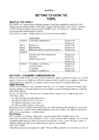
Therefore, regular use of a thesaurus will build your vocabulary and help you prepare for the TOEFL. Most of the same word labels used in dictionaries appear in a thesaurus. Many entries do not specify the difference between adjective and adverb, since the same forms can often appear both as adjectives or adverbs. The abbreviation mod. is used to mark such a word. Let's examine an entry for the word maximum. maximum, mod. -Syn. supreme, highest, greatest; see best 1. maximum, n.-Syn. supremacy, height, pinnacle, preeminence, culmination, matchlessness, preponderance, apex, peak, greatest number, highest degree, summit, nonpareil; see also climax: Ant. minimum*, foot, bottom. There are two entries for this word. The abbreviation mod. in the first entry indicates that the word could be used as a modifier of other words. Following this, syn. indicates that synonyms for the word follow. At the end of the listing appears the suggestion see best 1. This suggestion refers us to
than others, and most members of that tribe, nation or race have a share in it to a greater or lesser degree. Almost every woman has her share in the collective female pain-body, which tends to become activated particularly just prior to the time of menstruation. At that time many women become overwhelmed by intense negative emotion. The suppression of the feminine principle especially over the past two thousand years has enabled the ego to gain absolute supremacy in the collective human psyche. Although women have egos, of course, the ego can take root and grow more easily in the male form than in the female. this is because women are less mind-identified than men. They are more in touch with the inner body and the intelligence of the organism where the intuitive faculties originate. The female form is less rigidly encapsulated than the male, has greater openness and sensitivity toward other life-forms, and is more attuned to the natural world.
However, at the end of the decade it became obvious that the reforms had not been effective. At that time, one could observe a new aggravation of the internal political situation. The new leaders, after a short period of liberalisation, took a turn towards conservatism and from there to regression. Political persecution started again, as did the Russification in other Soviet republics. During those years, the so-called Brezhnev’s doctrine was molded: the despotic supremacy of the Soviet Union to control all of its East-European members, both economically and militarily. The end of the “thaw” became evident in August 1968 when the Soviet military forces brutally suppressed the new liberal communist tide in Czechoslovakia. The population of Estonia was incessantly growing on the account of immigrants from the East, on average 9,000 people per year1. The suppression of critical opposition, revived political trials, created a
when the war did. "I do not want to exaggerate the importance of what we achieved, although in this one year of my collaboration with the Hungarians there were at least a hundred successes such as seldom fall to the lot of a Secret Service working in the ordinary ways," Hottl wrote. His impressive tribute, which independently seconds the praise that Schellenberg offered to other cryptanalysts,' confirms the overwhelming supremacy that communications intelligence attained in both quantity and quality over almost any other form of secret intelligence in World War II. Germany's armed forces had their own agencies for cryptanalytic intelligence. Of these there were four: one in the Oberkommando der Wehrmacht for the armed forces as a whole, and one each for the high commands of the Army (O.K.H., or Oberkommando des Heeres), the Navy (O.K.M., or Oberkommando der Kriegsmarine), and the Air Force (O.K.L., or
 annaabi.ee