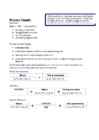
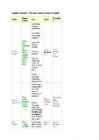
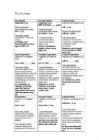
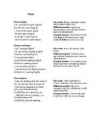
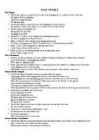
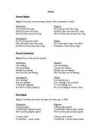
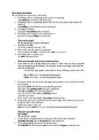
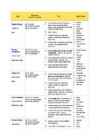
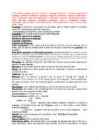
The Present Simple is the most basic tense in the English language. It is an interesting tense because it can be used Present Simple to express the future. Generally, though, we use it to Basic form describe the present activities or to talk about routines or Subject + Verb + -s (present form) John lives in New York. We play football every day. You are really kind. The meeting starts at 3 PM. Use the Present Simple: with state verbs. to talk about situations in life that last a relatively long time. when an event is certain to happen in the future. to talk about events that we can't change (for example, an official meeting or a train departure). The Present Simple is also used in narration...
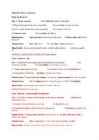
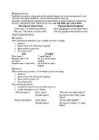
Olevik: PS He/she/it + -s /Does I/you/we sama /Do PC am/is/are + -ing PP ... + Have/has + III PPC ... + Have/has been + -ing Minevik: PS -ed/III PC Was/were + -ing PP I/she/it/you/they + Had + -ed/III PPC - ... + had + been + -ing PPS - ... + have/has + III Olevik: Present Simple Lihtolevik: Tegijale harjumuspärane, tihti korduv tegevus, loodusseadused, sõiduplaanid, püsiv olukord. Eevery day/month/ year/once twice a week /often/ usually/ always/seldom/never. Tulevikku väljendades pärast: when, after, as soon as, until. Olekut väljendavate tegusõnadega: Like, love, hate, enjoy, prefer, adore; See, hear, smell, taste, feel, look, sound; Know, believe, understand, realise, remember, forget, notice, recognise, think, seem; Be, contain, include, belong, need, cost, mean, want, have, wish, own. He/she/it + -s /Does I/you/we sama /Do Present Continuous Kestev olevik: Tegevus toimub praegu. Tegevus toimub lähiajal....
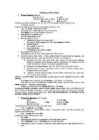
PRESENT SIMPLE (lihtolevik) Form: 1st form (+s) Use: 1. Things in general. Nurses look after patients in hospitals. 2. Things that happen all the time or repeatedly. She usually goes away at weekends. 3. Laws of nature (things that are true in general). The sun rises in the east. 4. Timetable events. The train leaves at 6.50 p.m. Negative form: I don't (do not) normally eat my lunch here. He doesn't (does not) like this film at all. Question form: Do you live here? How often does it rain around here? Signal words: always, every day/month, never, normally, often, seldom, sometimes, usually etc. PRESENT CONTINUOUS/PROGRESSIVE (kestev olevik) Form: am/is/are + ing Use: 1. Unfinished actions happening at or around the time of speaking. Listen! Somebody is crying. They are building a new bridge in our town....
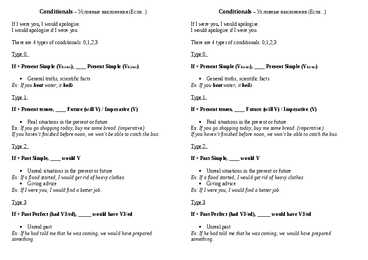
Conditionals (...) Conditionals (...) If I were you, I would apologise. If I were you, I would apologise. I would apologise if I were you. I would apologise if I were you. There are 4 types of conditionals: 0,1,2,3 There are 4 types of conditionals: 0,1,2,3 Type 0. Type 0. If + Present Simple (V1(s/es)), ____ Present Simple (V1(s/es)) If + Present Simple (V1(s/es)), ____ Present Simple (V1(s/es)) · General truths, scientific facts · General truths, scientific facts Ex: If you heat water, it boils. Ex: If you heat water, it boils. Type 1. ...
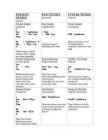
PRESENT PAST TENSES FUTURE TENSES TENSES minevik tulevik olevik Present Simple Past Simple Future Simple lihtolevik Lihtminevik Lihttulevik I You + I põhivorm + II pv We ? , - Do + I pv. ?, - Did + I pv Will + I põhivorm They He + I põhivorm + S Tegevus tulevikus, mis ei She ?,- Does + I pv Lõpetatud tegevus ole ettekavatsetud It (yesterday, last week) (tomorrow, next week, next year) Korduv tegevus, faktid (always, often, usually, every day, normally) Present Continuous Past Continuous GOING-TO Future Kestev olevik Kestev minevik ...
ACTIVE TENSES Active form You use an active verb when you want to say that the subject of a sentence does something. · [Thing doing action] + [verb] + · +[thing receiving action] · Examples The professor (subject doing action) teaches (verb) · the students (object receiving action). · Mary (subject doing action) · washes (verb) · the dishes ( object receiving action). The tenses of the verb 1.Present (olevik) 2.Past (minevik) 3.Future (tulevik) 4.Future in the past (kaudne tulevik) Iga aeg võib esineda neljas eri rühmas 1.IndefiniteTenses (üldajad) 2.Continious Tenses (kestvad ajad) 3.Perfect Tenses (perfekti ajad) 4.Perfect Continious Tenses (perfekti kestvad ajad) Indefinite Tenses (üldajad) used to describe actions but do not state whether the action is completed or on- going märgivad tegevuse sooritamise fakti Peter visits us every day. Peter visited ...
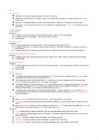
English tenses – worksheet / test http://first-english.org Name: …......................................... class: …............... date: …......................... Put the verb into the right tenses: Solution sheet simple present + : We talk to our parents. simple present - (negative): We don't talk to our parents. simple present ? (question): Do we talk to our parents? present perfect + : We have talked to our parents. present perfect - (negative): We haven't talked to our parents. present perfect ? (question): Have we talked to our parents? simple past + : We talked to our parents. simple past - (negative) : We didn't talk to our paren...
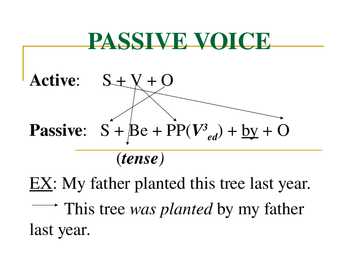
PASSIVE VOICE Active: S + V + O Passive: S + Be + PP(V3ed) + by + O (tense) EX: My father planted this tree last year. This tree was planted by my father last year. TABLE OF ENGLISH TENSES IN PASSIVE VOICE The Simple Present Tense Active: S + V(s/es) + O Passive: S + am/is/are + PP + by + O EX: He reads books every day. Books are read (by him) every day. TABLE OF ENGLISH TENSES IN PASSIVE VOICE The Present Continuous Tense Active: S + am/is/are + Ving + O Passive: S + am/is/are + being +PP + by + O EX: He is writing a novel at the moment. A novel is being written (by him) at the moment. TABLE OF ENGLISH TENSES IN PASSIVE VOICE The Present Perfect Tense Active: S + Has/Have + V3ed + O Passive: S + has/have + been +PP + by + O EX: He has just finished a novel. A novel has just been finished (by him). TABLE OF ENGLISH TENSES ...
Verbs! Verb forms Review of tenses Chapter 12, Pg 215 1 Timeline Draw a timeline of your life. List 810 events on the time line. Make sure you list your future graduation date! Moved to Cali 2005 Was Born Traveled to Europe Husband 1978 School graduates @ Oxford 1999 Started Got married School 1983 2008 2 The Six English Verb Tenses Three Simple Tenses Simple continuous Present You walk. You are walking I run. I am running. Past You Walked You w...
Present tenses : 1) Present simple regular actions and routines especially with frequency(kordumine ) adverbs(määrsõna) N: Do you go to school by car every day ? I don't often watch TV. 2)Present continuousbe + verb + ing. Actions happening now N; Look! It's snowing. I'm meeting Jane tonight. You're always losing things. 3)keep + ingto describe habitual actions which may be irritating. N: my uncle keeps making silly jokes. Present perfect: 1) Present perfect simple: have/has + past participle. N: I've been here for ten minutes .The phone has rung ten times today. Look at this cheque,'I've won first prize. They have made a new star wars film. I've just got home. How long have you been here ? Have you ever been to Paris? It's the best book I've ever read. It's the first time I have ever been abroad. 2)Present perfect continious : have/has + been + ing. N:I'v...
· · Past tenses Past Simple is used for: Past actions which happened one immediately after the other. E.g. She stood up, went up to her and grabbed her wrists. Completed actions or events, which happened at a stated past time. E.g. I went to the cinema last night. Past habits or states. E.g. my grandfather always wore a hat. Complete actions not connected to the present with a stated or implied time reference. E.g. Beethoven created wonderful classical pieces. Time expressions used with Past Simple: yesterday, last week/month etc, ago, then, just, now, when, in 1991, etc Past continuous is used for: Actions in the middle of happening at a stated past time. E.g. She was flying to Paris this time last Monday. A past action in progress interrupted by another past action. The longer action is in the Past Continuous, the shorter action is in the past Simple. E.g. I ...
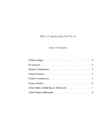
Present Simple and Continuous Table of Contents Present Simple ..................................................................... 2 The spelling of endings in the Present Simple ....................... 2 When to use the Present Simple ........................................... 3 The verb 'be' ......................................................................... 4 Present Continuous.............................................................. 5 The spelling of endings in the Present Continuous................ 5 When to use the Present Continuous.................................... 6 State verbs and event (action or dynamic) verbs ................... 7 Present Simple In the Present Simple we use the verb without an ending. I work you live we think they dance NB! In the third person singular (he, she, it, Mary, my friend, etc....
Reported Speech. Kaudkõnet kasutatakse kellegi poolt öeldu, mõeldu, kirjutatu või küsitu edasiandmiseks, ilma selle isiku sõnu täpselt kordamata. (otsesest kõnest kaudsesse kõnesse). Kaudkõne sissejuhatamiseks kasutatakse mitmeid ütlemist, arvamist, mõtlemist, küsimist või tõotamist väljendavaid verbe. Tähtsaimad neist on : say, tell, think, ask, want to know. Direct Speech (Otsene Kõne) Reported Speech (Kaugkõne) Oliver says, "I`m not from poor family." Oliver says that he is not from poor family. Pille says, "The weather has been awful." Pille says that the weather has been awful. Asja Selgitavad tabelid. Statements. When transforming statements, check whether you have to change: · pronouns · present tense verbs (3rd person singular) · place and time expressions · tenses (backshift) Type Example Direct speech "I sp...
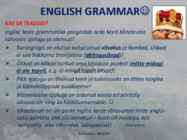
ENGLISH GRAMMAR KAS SA TEADSID? Inglise keele grammatika peegeldab seda keelt kõnelevate rahvaste ajalugu ja olemust! Kuningriigis on olulisel kohal olnud viisakus ja kombed. Ülikud ei saa hakkama teenijateta (abitegusõnad)! Ülikud on kõikjal tuntud oma kitsiduse poolest (mitte midagi ei ole topelt, e.g. ei mingit topelt eitust)! Pikk ajalugu on lihvinud keelt ja tulemuseks on lihtne loogika ja käändelõppude puudumine! Mitmekesine ajalugu on aidanud kaasa eri päritolu sõnavarale ning ka hääldusmuredele. Väidetavalt on üle poole inglise keele sõnavarast mitte anglo- saksi päritolu, ehk siis laenatud – kontrolli hoolega, kas ‘sympathy’ ikka tähendab ‘sümpaatiat! kaastunne Aari Juhanson, MA 2009 Tenses – Tegusõna ajad • Olevik (Present) • Minevik (Past) • Tulevik (Future) • Kaudne tulevik (Future-in-the-Past) ...
Reported Speech (in other words Indirect Speech) If we report what another person has said, we usually do not use the speaker's exact words (direct speech), but reported (indirect) speech. Therefore, you need to learn how to transform direct speech into reported speech. We use reported speech when we are saying what other people say, think or believe. - Example: If this verb is in the present tense (says), it's easy. We just put 'she says' and then the sentence. When we are reporting things in the present, future or present perfect we don't change the tense. : direct speech: "I like ice cream" reported speech: She says she likes ice cream - But, if the reporting verb is in the past tense (said), then usually we change the tenses in the reported speech: direct speech: "I like ice cream" reported speech: She said she liked ice cream. ......... · When there are Changing tenses: present changes to past:::: am/is --- was are -...
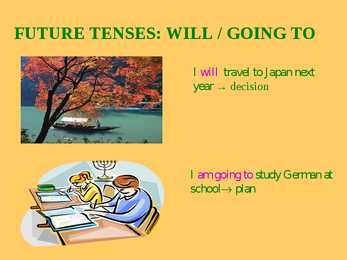
FUTURE TENSES: WILL / GOING TO I will travel to Japan next year decision I am going to study German at school plan WILL/GOING TO The Simple Future has two different forms in English: "will" and "be going to." Although the two forms can sometimes be used interchangeably, they often express two very different meanings as mentioned before. I will probably go to Italy next Summer I am going to fly to Italy next Saturday Future Tense: Will Form Affirmative: I will travel to Madrid in October Interrogative : Will you travel by bus? Negative : I will not travel - won't Will you travel by train or by bus? I won't travel by bus I will probably travel by train Future Tense: Uses of ...
Future tenses Present Simple I pv. (Timetables) My bus leaves at 6 am. We are leaving at 6 tomorrow (Present continuous) Present Continuous Tegija + am, is, are + ing I am learning. Kindel tulevikuplaan Be going to 1. Kindlate tõendite põhjal tehtav tulevikuennustus Look at the clouds, its going to rain soon. 2. Tulevikuplaanid (mittekindel) Future Simple Will + I pv. · Tuleviku ennustused, mida tehakse arvamuste põhjal. · Hetkeotsused · Lubadused, ähvardused, pakkumised, palved etc. I will never speak to you again · Tegevused, mis toimuvad meie tahtest sõltumata. She will have a baby in June. Future Continuous Will be + ing Next year I will be graduating from school.' Future Perfect Will have +III pv. I will have eaten my dinner. · Tegevuste puhul, mis saavad olema lõpetatud, mingiks teatud ajaks. Future Perfect Continuous Will have been + ing · Due to - · Be about to -
THE TENSES AJAVORMID JA NENDE KASUTAMINE AJAVORMI NIMETUS MOODUSTAMINE KASUTAMINE; SAGEDAMINI ESINEVAD AJAMÄÄRUSED THE PRESENT SIMPLE I pv. (+ s); do/does + I pv. Tegevus toimub korduvalt, on harjumuspärane. püsiv olukord, ajagraafikutega seotud tulevik Lihtolevik live, goes every day, usually, often, sometimes, always THE PAST SIMPLE II pv.; did + I pv. Tegevus toimub minevikus. Lihtminevik lived, went yesterday, last week two years ago, in 1998 THE FUTURE SIMPLE be going to/ will + I pv. Tegevus toimub tulevikus. Lihttulevik will go/ won´t tomorrow, next week, soon, later, in 2012 TH...
Present Tenses - Kehtivad ajavormid Sõnade järjekord jutustavas lauses inglise keelse on alati ühesugune : Alus(Kes?Mis?), Öeldis (Mida teeb?), Sihitis(mida?keda?), kohamäärus ( Kus? ), Ajamäärus ( Millal? ), Viisimäärus ( Kuidas ? ). Küsilause järjekord: Abiteg , tegija , põhiteg . Jaatav lause: Yes , Tegija , abiteg. Eitav lause: No, tegija, abiteg. Present Simple: Abiteg: Do/Does. Jutustav lause : Nt . I never gome to school late . Jaatav lause: nt. Yes she does/ Yes I do . Eitav lause: nt . No, he doesn't/ No, i don't . põhitegusõna jääb eitavas ja küsivas lauses samaks . Sellepärast , et Do-d kasutatakse I ja you korral . Does kasutatakse He , She, It korral . Present Continous: Abiteg: am, is, are. Jutustav lause: nt. I am writwning now . Jaatav lause: Yes I am/ Yes they are/ Yes He is Eitav lause:No, I'm not/No they aren't/ No he isn't Eitavas ja küsivas lauses on põhitegusõna ing vormiga . Sellepärast, et ...
The Passive Voice Table of Contents The Passive Voice................................................................................. 2 Tenses in the Passive Voice ................................................................ 2 Modal Verbs and Future in the Passive Voice ................................. 3 The Passive with ’get/have’ ................................................................ 4 When to use the Passive ..................................................................... 5 Verbs with two objects ........................................................................ 5 The Passive with ’by/with’ .................................................................. 6 Talking about what other people say ................................................ 6 The Passive Voice The subject is the starting point of the sentence, the thing we are talking...
FUTURE TENSES FUTURE SIMPLE (WILL/SHALL) Form: will/shall + algvorm USE: 1)Predicting a future happening or situations 2)Shalll can be used with i and we 3)Descisions to do smthing at the time of speakin (offering to o / agreeing to do smthing/ promising to do smth) Negative: I can see you' re busy, so I WON't BE GOING TO Form: am/is/are going to + algvorm Use: 1) Descisions to do smthing, intentions. I'm going to buy a new car 2) Predictions about the future, which are based on the situation now. PRESENT SIMPLE ( I do) WITH A FUTURE MEANING Use: 1)Talking about timetables, programmes: My train leaves at 11.30. 2) Talking about people if their plans are fixed like a timetable. PRESENT CONTINUOUS (I am doing) WITH A FUTURE MEANING Use: 1)Talking about descisions and arrangements (sbdy has decied and arranged to do smthing). He is playing squash on Monday afternoon 2) You can use present contiuous for an action just before you b...
Reported speech is often also called indirect speech. When we use reported speech, we are usually talking about the past (because obviously the person who spoke originally spoke in the past). The verbs therefore usually have to be in the past too. For example: "I'm going to the cinema". He said he was going to the cinema. Basic tense chart The tenses generally move backwards in this way (the tense on the left changes to the tense on the right): present simple past simple I'm a teacher. He said he was a teacher past continuous. present continuous He said he was having lunch with his I'm having lunch with my parents. parents. p...
Unprepared monologue 1.INTRODUCTION: · Presentation of the topic (Think about the topic, what have other people said about it?) · Presentation of the theme (What is the message you want to convey?) · Preview of the body (In my presentation today I`m going to explain...;The topic of this presentation...) · Transition (Use linking devices,think of coheison..) 2.THE BODY: · Point one (Firstly, I`d like to..; My first point is...; To start with, I`d...; The first option is...;) · Point two (Secondly we can...; Another aspect is...; My next point is...; On the other hand...;) · Point three (Thirdly..; Let me move on to...; The third point is about...;) · Transition (Move to conclusion. Dont forget linking devices and coheison) 3.CONCLUSION: · Review and summary (Give an account of points...
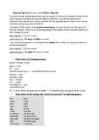
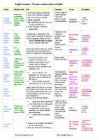
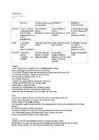
English Grammar - The most common tenses in English Signal Example Tense Use Form words s something happens repeatedly how often something happens every one action day follows sometim another es I work always infinitive Present things in he/she/it he works often Simple general + s I go usually he goes seldom ...
TENSES (Table) Past Simple Present Simple Future Simple Tegusõna 2. pv Tegusõna 1. pv Tegusõna on esitatud kujul [NB! He/She/It _____(e)s] Küsimuse/eituse will + 1. pv moodustamiseks kasut. Küsimuse/eituse did + 1. pv moodustamiseks kasut. Eituste moodustamisel do / does + 1. pv will not = won't Tunnused lauses: Lihtminevik. Keegi tegi Tunnused lauses: Tunnused lauses: midagi. Jutt käib tavalisest, Lihttulevik. Ennustused. yesterday, last harjumuspärasest Lubadused. Hetkeotsused (summer), (five years) tegevusest. (rääkimise hetkel ago, in 1987, etc. always, sometimes, sündivad). usually, often, e...
Future Tenses Will-future and going to-future Andrea Terasväli Future forms Will-future Going to- Simple Present Future Future future presen progressi progressi perfect t ve ve • • Planned Future Planned Action Sth. Will Prediction, action in action action in will already assumptio the future is fixed the near definitely have n (assur future happen happene • logical ed/de (it d before • conseque ffinite) usually a certain spontaneo nce (sth. happens) time in us action Is goint to the happen) future Form Will-future Goi...
PRESENT CONTINUOUS Klaarika Kaljula 9a Use 1.Present actions 2.Temporary actions 3.Longer actions in progress 4.Future (personal) arrangements and plans 5.Trends 6.Irritation 1.Present Actions Happening at the moment of speaking Most often, we use the Present Continuous tense to talk about actions happening at the moment of speaking. Ex. He is eating a dinner. Mary is talking with her friends. They are swimming in the pool. Stative Verbs There is a certain group of verbs that usually does not appear in the Continuous form. They are called Stative Verbs, and if used in the Continuous form, they have a different meaning. Ex. I think you look pretty today. Meaning: Opinion I'm thinking of moving to San Francisco. Meaning: Act of thinking 2.Temporary Actions Activities continuing only for a limited period of time This tense is also used fo...
Tenses Present simple: Key words: always, sometimes, usually, ? do I/you/we they speak English? rearly, seldom, often, every does He/she/it speak English? Millal kasutatakse? igapäevase, harjumispärase, teatud aja järel korduva + I/you/we/they speak engish tegevuse väljendamiseks He/she/it speaks english? Example sentence: The President of The -do not(don't) speak English. USA lives in The White House. Carol does not (doesn't) speak english. usually brushes her teeth twice a day. Present continuous: ? Am I speaking English? Key words: now at the moment, look! Are you/we/they speaknig English? Listen! Is he/she/it speaking English? Millal kasutatakse? Hetkel toimuva, ...
CHARACTERISTIC FEATURES OF OLD ENGLISH - 15 monophtongs, (7 long, 7 short, 1 central), 4 diphtongs, 17 consonants. Free variaton of R, and it was pronounced everywhere. Very much Germanic in character. Quite some special consonants that no longer exist. About morphology: synthetic with numerous aglutinating tendencies. System of tenses Germanic, but with a reduction of tenses. Paradigmatic leveling; Stress shift; Word order; Loan words (Old Norse, Old French). Dual pronouns. Determiners - no separate definite article. Strong and weak verbs. Word order relatively free with tendencies towards SVO. SVO, SOV, VSO most common. Adposition and podposition were both possible (eesliide ja tagaliide). About syntax: clauses were joined much simpler than nowadays, using and, then etc. Because of case syncretion the word order in a sentence became much more important to be able to tell the difference between words. FIRST CONSONANT SHIFT (GRIMM'S L...
Present Perfect Simple and Present Perfect Continuous Table of Contents Present Perfect Simple.............................................................................2 When to use the Present Perfect Simple ...........................................2 Present Perfect Continuous ...................................................................3 When to use the Present Perfect Continuous..................................4 Time expressions with Present Perfect...............................................5 Present Perfect Simple The Present Perfect is the present tense of have + a past participle I have washed / I’ve washed you have written /you’ve written he/she/it has worked /he’s/she’s/it’s worked we have forgotten /we’ve forgotten they have gone /they’ve gone Negative I/y...
English Grammar - The most common tenses in English Tense Signal words Use Estonian Form Examples · something happens repeatedly *korduv tegevus every day · how often something happens *püsiv olukord sometimes, *tulevikus · one action follows another I work Present twice a week toimuv, seotud · things in general infinitive he works Simple always, often sõiduplaanidega · after the following verbs (to love, ...
7. Verb: The principal forms of the verbs: Verbil on 4 põhivormi: Regular verb Irregular verb 1. the base form Talk Speak üldoleviku tüvivorm 2. the past form/ -ed form Talked Spoke üldmineviku vorm 3. the past participle (-ed Talked Spoken participle) mineviku kesksõna 4. the present participle (- Talking Speaking ing participle) oleviku kesksõna The tenses: Expressing the future: Simple Perfect Continuous Perfect Continuous Present Base Have / has + to be + base+ ing has/ have been +s + pariticiple base+ -ing He drinks tea at ...
PAST TENSES Past Simple Used to talk about a completed past action which happened at a completed time in the past. We went to Tallinn yesterday. I saw him a long time ago. We met last week. Used to talk about a series of events that happened one after another. He walked to school, took off his coat, went to class and fell asleep. Used to report what people said. He said that he was tired. He asked to go home. Used after "It's time" (even though we're talking about now) It's time we talked about the past (now). After "I'd rather" (even though we're talking about now) I'd rather you drove (now). (But "I'd rather drive" if talking about yourself) After "I wish" (even though we're talking about now) I wish I had a million dollars (now). After "If only" (even talking though we're talking about now= ...
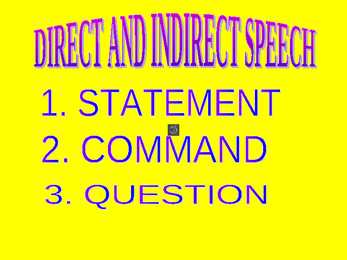
· DIRECT · INDIRECT · Am, is, are · Was/were · Shall/will · Should/would · Can · Could · May · Might · Must · Have/has to · Ought to · Had to CHANGES OF ADVERB OF TIME & PLACE · DIRECT · INDIRECT · NOW · THEN · TOMORROW · THE FOLLOWING DAY · NEXT WEEK · THE FOLLOWING WEEK · TONIGHT · THAT NIGHT · TODAY · THAT DAY · YESTERDAY · THE DAY BEFORE · LAST NIGHT · THE NIGHT BEFORE · LAST WEEK · THE WEEK BEFORE · HERE · THERE · THIS · THAT · THESE · THOSE CHANGES OF TENSES · DIRECT · INDIRECT · SIMPLE PRESENT · SIMPLE PAST · SIMPLE PAST · PAST PERFECT · PRESENT PERFECT · PAST PERFECT · PRESENT · PAST CONTINUOUS CONTINUOUS · PAST PERFECT ...
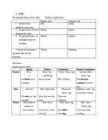
Tenses Present Simple When? Every day, every morning, always, often, sometimes, usually. Affirmative Negative I/You know this song. I/You do not know this song. He/She/It knows this song. He/She/It does not know this song. We/You/They know this song. We/You/They do not know this song. Interrogative Do I/You know this song? Näited Does He/She/It know this song? Do I listen these songs every day? Do We/You/They know this song? Sometimes I listen these songs. Present Continuous When? Now, at the present moment. Affirmative Negative I am reading. I am not reading. You are reading. You are not reading. He/She/It is reading. He/She/It is ...
The present continuous We use the present continuous to talk about: 1. Something which is happening at the moment of speaking. I'm reading the Grammar referance page. 2. Something which is happening around now but not necessarily at the moment of speaking. I'm reading a lot of detective novels these days. 3. A changing situation. Computers are getting faster and faster. 4. Something which happens often and annoys us. My boss is always asking me to stay late. The present simple We use the present simple to talk about: 1. A routine or a habit. Jim always sets the alarm for 7.30. 2. Facts which stay the same for a long time. I have a friend who lives in London. She works in a museum. 3. Something which is always true. Ice melts when you heat it. Verbs not normally used in the continuous form 1. Some verbs are not normally used in the coniuous. These...
Affirmative tense Use Signal Words /Negative/Question · always · action in the present taking place Simple Present A: He speaks. · every ... once, never or several times N: He does not speak. tegevus, mis toimub ühe korra, mitte · never Lihtolevik Q: Does he speak? · normally kunagi või mitu korda · ...
UNIT 4 4.1 Like and as Kasutame like, et öelda, et asjad on sarnased. He looks like his father. Ametlikumas vormis kasutame as, et öelda, et asjad on sarnased (esineb enne alust) The exam starts at 9.30 as I have already said. Kasutame as, et rääkida ametitest ja töödest, mida inimesed teevad She works as a teacher in a primary school. Kasutame as, kui me viitame informatsioonile, mida nii rääkija kui kuulaja juba teavad As you know, I'm starting a new job next month. 4.2 Narrative tenses 4.2a Lihtminevik Kasutame: et rääkida sündmustest minevikus, mis on nüüdseks lõppenud I went to the zoo last weekend. et rääkida mineviku situatsioonidest I lived next door to my best friend. kaudses kõnes 4.2b Kestev minevik Kasutame: et rääkida asjades, mis on minevikus kestvad. They were walking along the bank of a river. et rääkida sündm...
Ways of expressing the Future Table of Contents Future Simple ...................................................................... 2 Be going to ........................................................................... 3 Present Continuous .............................................................. 3 Present Simple ..................................................................... 4 Future Continuous ............................................................... 4 Future Perfect....................................................................... 6 Other ways of referring to the future ..................................... 7 Other future references......................................................... 8 Future Simple In Future Simple we use the modal verb will + the verb. It is the same in all persons. I will work I’ll work ...
Tenses 27. jaanuar 2012. a. 9:24 SIMPLE CONTINUOUS -ing PERFEFCT PERFECT on alati sees! CONTINUOUS PRESEN I work in school. I am working in I have worked in I have been working T loodusseadused school. school. in school for/since 5 pidev korduv lähituleviku plaanid Surnute kohta EI SAA years. tegevus(hommiku ÖELDA! siiamaani kestab kohvi) aja-graafikud PAST I worked in I was working in the I had worked in school. I had been working. school. school. fakt on tähtis (for since) finito aeg(see et ta aeg on lõpetada ...
We can report people's words by using direct speech or direct speech reported speech. speech `I'm tired!', Helen said. Helen said (that) she was tired. The main verb of the sentence is usually past ( Tom said that... / I told her that...) and the rest of the sentence is usually past too. Sequence of tenses if the verb in the main sentence is in the past tense the other verbs are usually in one of the past tense too. Present Simple Past Simple I'm a teacher. He said (that) he was a teacher Present Progressive Past Progressive I'm having lunch with my He said (that) he was having parents. lunch with his parents. Past Simple Past Perfect He said (that) he had bought a I bought a new car. new car. Future Simple ...
englisch-hilfen.de LEARNING ENGLISH ONLINE Examples Examples Examples Tense Signal words Use Form affirmative negative interrogative every day something happens repeatedly sometimes how often something happens always I work. I don't work. Do I work? one action follows another often Infinitive He works. He doesn't work. Does he work? Sim...
Technical translation Technical translation Forms a part of specialised translation The other part is comprised by institutional translation (politics, commerce, finance, government, etc.) Can be considered somewhat culture-free (not really true?) Universal: not confines to one speech community Characteristic features: Terminology (5-10%), only that much, but it makes the text hard to translate Format: technical report, but also instructions, manuals, notices, publicity Grammatical features in English: passives, third persons, empty verbs, present tenses. Technical Style Free from emotive language, connotations, sound-effects, original metaphor Part of technical translator’s job often is to rephrase poorly written language and convert metaphor to sense. Varieties of Technical Style Academic or scientific styl...
Future Forms Future Forms · 1) Future Simple will work · 2) Be going to am/is/are going to work · 3) Present Continuous am/is/are working · 4) Present Simple start(s) Future Forms · 5) Future Continuous will be working · 6) Future Perfect will have worked · 7) Future Perfect Continuous will have been working Future Simple · We do our morning exercises and think, "I think we will have a nice day " · Prediction (ennustused kõhutunde põhjal) · verbs think, believe, guess, expect, hope etc · expressions be sure, be afraid etc · adverbs probably, perhaps, certainly Future Simple · You see your little brother carrying a very heavy suitcase and you think, "I will help him carry the suitcase." · on-the-spot decision (hetkeotsused) Future Simple "Will you help me if I forget my moves?" "Don't worry! I will ta...
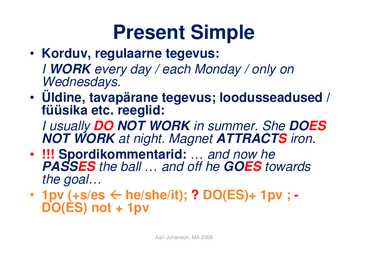
Present Simple · Korduv, regulaarne tegevus: I WORK every day / each Monday / only on Wednesdays. · Üldine, tavapärane tegevus; loodusseadused / füüsika etc. reeglid: I usually DO NOT WORK in summer. She DOES NOT WORK at night. Magnet ATTRACTS iron. · !!! Spordikommentarid: ... and now he PASSES the ball ... and off he GOES towards the goal... · 1pv (+s/es Å he/she/it); ? DO(ES)+ 1pv ; - DO(ES) not + 1pv Aari Juhanson, MA 2008 Present Progressive · Hetkel toimuv, pooleliolev tegevus: S/he IS TALKing on the phone now. I AM READing an interesting book. · Ajutine, regulaarsele ja tavapärasele vastanduv tegevus (tulevikku viitav): This summer they ARE not GROWing cucumbers as usual. They'RE GROWing tomatoes instead. · !!! Halvakspanu väljendus harjumuspärase tegevuse kohta: He IS always COMPLAINing! · BE (am/is/are) + 1pv-ing Aari Juhanson, MA 2008 ...
Golden Grammar rules 1. Don't use an with own. Sue needs her own room. (NOT Sue needs an own room.) I'd like a phone line of my own. (NOT ... an own phone line.) 2. Use or rather to correct yourself. She's German or rather, Austrian. (NOT She's German or better, Austrian.) I'll see you on Friday or rather, Saturday. 3. Use the simple present play(s), rain(s) etc to talk about habits and repeated actions. I play tennis every Saturday. (NOT I am playing tennis every Saturday.) It usually rains a lot in November. 4. Use will ..., not the present, for offers and promises. I'll cook you supper this evening. (NOT I cook you supper this evening.) I promise I'll phone you tomorrow. (NOT I promise I phone you tomorrow.) 5. Don't drop prepositions with passive verbs. I don't like to be shouted at. (NOT I don't like to be shouted.) This needs to be thought about some more. (NOT This needs to be thought some more.) 6. Don'...
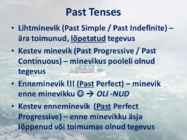
Past Tenses • Lihtminevik (Past Simple / Past Indefinite) – ära toimunud, lõpetatud tegevus • Kestev minevik (Past Progressive / Past Continuous) – minevikus pooleli olnud tegevus • Enneminevik !!! (Past Perfect) – minevik enne minevikku OLI -NUD • Kestev enneminevik (Past Perfect Progressive) – enne minevikku äsja lõppenud või toimumas olnud tegevus Created by Aari Juhanson, MA 2009 Past Simple • Ära toimunud (regulaarne) tegevus: I WORKED yesterday. S/he didn’t WORK last Monday. • Lõpetatud tegevus: I already CALLED them today. (I’m not going to call again!) Which countries did you VISIT? (You’re back …) BUT: Which countries have you VISITED so far? (You’re not back yet or you travel regularly …) • Jutustused, mineviku sündmuste kirjeldus: Once upon a time there LIVED a Garfield who HAD many friends. The first one WAS Odie, … • 2pv; ?/-...
1. Be ready to explain the terms (lecture 1): language, linguistics, synchronic approach to language, diachronic approach to language, linguistic competence, linguistic performance, what is grammar?, prescriptive grammar vs. descriptive grammar; phonology, phonetics, phone, allophone, phoneme; morphology, morphemes (types of morphemes), morphs, allomorphs, types of affixes, derivational affixes, inflectional affixes; open vs closed class words; syntax. Language: a systematic, conventional use of sounds, signs or written symbols in a human society for communication and self-expression. - human language at all levels is rule- or principle-governed. Linguistics: the scientific study of human natural language Synchronic approach to language: Diachronic approach to language: Linguistic competence: Linguistic performance: What is grammar?: "The sounds and sound patterns, the basic units of meaning, such as words, and the rules to combine them...
TENSES. ACTIVE VOICE. 1. Present Simple (üldolevik) I (he, she, it s) he works Eitav,küsiv do (I, you, we, they) he does not work does (he, she, it) does he work? Verbidele, mis lõpevad infinitiivis ss, -sh, -ch, -x või o, lisatakse ainsuse 3. pöördes es he touches, she goes Verbidel, mis lõpevad y-ga, mille ees on konsonant, muutub y->ies carry - he carries Vrdl: play he plays 1. Harjumuspärane, korduv tegevus või seisund olevikus. Tom drinks tea every day. He lives in Brussels. 2. Üldtuntud tõed, loodusseadused The earth goes round the sun. 3. Tulevikus toimuv tegevus a) Sõiduplaanid, planeeritud programmid. The train for Tallinn leaves at 10. The course begins on Monday. ...
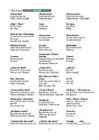
1. Basic Phrases ¡Buenos días! ¡Buenas tardes! ¡Buenas noches! bway-nohs dee-ahs bway-nahs tard-ays bway-nahs noh-chays Hello! / Good morning! Good afternoon! Good evening! / Good night! ¡Hola! / ¡Chao! Adiós. Por favor. oh-lah / chow ah-dee-ohs por fah-bor Hi! / Bye! Good bye. Please. Hasta la vista / Hasta luego. Hasta pronto. Hasta mañana. ah-stah lah vees-tah / ah-stah ah-stah prohn-toh ah-stah mahn-yahn-ah loo-ay-go See you soon. See you tomorrow. See you / See you later. (Muchas) Gracias. De nada. Bienvenidos (moo-chah...
 annaabi.ee