Vajad kellegagi rääkida?
Küsi julgelt abi LasteAbi
Logi sisse

Past perfect simple and past perfect continious (0)

5 VÄGA HEA
Punktid
Inglise keel - Kõik luuletused, mis on inglise keeles


Past Perfect Simple and Continuous  
 
 
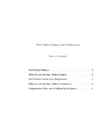
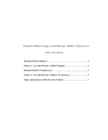
Table of Contents 


Past Perfect Simple ............................................................... 2 
When to use the Past Perfect Simple ..................................... 2 
Past Perfect Continuous (Progressive) ................................... 3 
When to use the Past Perfect Continuous.............................. 3 
Comparison of the use of different past tenses  ...................... 4 
 
 
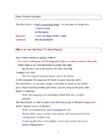
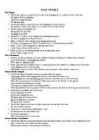
Past Perfect Simple  
 
The Past Perfect is had + a past participle. It is the same in all persons. 


had worked 


he had gone  
Negative   

had not slept /hadn’t slept 
Question   
Had he studied? 
  
When to use the Past Perfect Simple 
 
Past Perfect tenses in general refer to: 
An event in the past which happened before another event in the past
where there is no time expression to make this clear
 
 By the time I got to the  station , the  train  had left
Compare this with: 
 
 The train left  five  minutes before I got to the station. 
In this example, the sequence of events is made clear by before. 
The Past Perfect is not used simply to describe an event in the distant 
past. There must be another past event, less far away in the past, with  
which it contrasts
   
When the company went  bankrupt, it had lost  over a million  
pounds. 
The Past Perfect is used to make clear that one action in the past happened 
before another action in the past.  
 
When we  arrived home, Anna had gone to bed.  
          George didn’t want to  come  to the cinema  with us because he had  
already   seen  the film  twice. 
          It was my  first  time in an airplane . I was very nervous because I  
hadn’t flown before. 
 
2
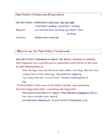
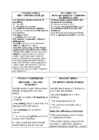
Past Perfect Continuous (Progressive) 
  
The Past Perfect Continuous is had been + an -ing-form. 


had been reading  / you’d been reading 
Negative  
you 
had not been working  /you hadn’t been  


working 
Question   
Had he been waiting
 
  
 When to use the Past Perfect Continuous 
  
The Past Perfect Continuous is used to talk about a situation or activity  
that happened over a period up to a particular point of time in the past, 
or until shortly before it.  
When the boys came into the house, their clothes were dirty , their hair  was 
untidy  and one had a  black eye. They had been fighting
I was very tired when I arrived home. I’d been working  hard  all 
day.  
 The Past Perfect Continuous can be used to say how long something  
had been happening before something else happened. 
The  football match had to be stopped. They had been playing  for  half  an 
hour  when a terrible  storm   started
          Ken had been smoking for 30  years  when he  finally gave it up.  


3
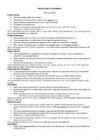
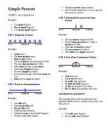
 Comparison of the use of different past tenses 
 
The contrasts between  Past Simple and Past Continuous can be made in Past 
Perfect tenses for events further back in the past. 
had been living in a bed-sitter up to then. 
Whilehad been talking  on the phone , Jimmy had escaped. 
The  whole place  was deserted, but it was obvious that  someone  had been 
living there. They'd been cooking in the  kitchen  for a start, and they 
hadn’t bothered to clear up the  mess
 
Compare how the Past Perfect Continuous and the Past Perfect are used: 
Id been finishing  some work in he 
I’d finished  all my work, so I had very 
garden and hadn’t seen Sue come home.   little to do. 
Bill  had been saving  since Christmas to  Bill had saved enough money to buy 
buy a new bike
the bike he wanted
  
We use the Past Perfect Continuous when we talk about the continuity or 
duration of a situation or activity, and the Past Perfect to talk about the 
completion of a situation or activity or its effects
  
If we talk about how long something went on up to a particular point of time in 
the past, we prefer the Past Perfect Continuous. If we talk about how many 
times something happened in a period up to a particular point of time in the 
past, we use the Past Perfect
 
They had been travelling for about 36 hours
When the company went bankrupt, it had been losing money for months. 
We had been looking  at the painting for about ten minutes before we 
realised who the artist was. 
          I’d heard the symphony many times before. 
The  teacher  had let  them  get away with their bad behaviour  once too often. 
 
4
Vasakule Paremale
Past perfect simple and past perfect continious #1 Past perfect simple and past perfect continious #2 Past perfect simple and past perfect continious #3 Past perfect simple and past perfect continious #4
Punktid 50 punkti Autor soovib selle materjali allalaadimise eest saada 50 punkti.
Leheküljed ~ 4 lehte Lehekülgede arv dokumendis
Aeg2014-12-14 Kuupäev, millal dokument üles laeti
Allalaadimisi 4 laadimist Kokku alla laetud
Kommentaarid 0 arvamust Teiste kasutajate poolt lisatud kommentaarid
Autor 213757 Õppematerjali autor
Reeglid Akadeemilises inglise keeles teemal Past perfect simple and past perfect continious

Sarnased õppematerjalid

Chpt 12 Verb Tenses
38
ppt

Chpt 12 Verb Tenses

Cali 2005 Was Born Traveled to Europe Husband 1978 School graduates @ Oxford 1999 Started Got married School 1983 2008 2 The Six English Verb Tenses Three Simple Tenses Simple continuous Present ­ You walk. You are walking I run. I am running. Past ­ You Walked You were walking. I ran. I was running. Future ­ You will walk. You will be walking. I will run. I will be running. Three Perfect Tenses Perfect continuous Present perfect ­ you have walked

Inglise keel
Past Tenses
2
docx

Past Tenses

PAST TENSES Past Simple Used to talk about a completed past action which happened at a completed time in the past. We went to Tallinn yesterday. I saw him a long time ago. We met last week. Used to talk about a series of events that happened one after another. He walked to school, took off his coat, went to class and fell asleep. Used to report what people said. He said that he was tired. He asked to go home. Used after "It's time" (even though we're talking about now) It's time we talked about the past (now).

Inglise keel
Inglise keele ajavormid
10
odt

Inglise keele ajavormid

Will you give me a hand? 5.In the same way as the future continuous, but with state verbs: I'll be at the station when you arrive. 'Shall' is used mainly in the forms 'shall I ?' and 'shall we?' in British English. These forms are used when you want to get someone's opinion, especially for offers and suggestions: •Shall I open the window? (=do you want me to open the window). •Where shall we go tonight? (=what's your opinion?). PRESENT CONTINUOUS PRESENT SIMPLE AM/IS/ARE + ING (AM INFINITIVE (WORK;WORKS) WORKING) We talk about things that we have We talk about events in the future already arranged to do in the which are 'timetabled'. future. •My plane leaves at 6 in the •I've got my ticket. I'm leaving on morning. Thursday. •The shop opens at 9.30. •I'm seeing Julie at 5 and then I'm

Inglise keel
Inglise keele kordamine
4
doc

Inglise keele kordamine

INGLISE KEELE KORDAMINE TIME CLAUSES Present Simple · Permanent states, facts (Tom works..) · Repeated and habitual actions, routines (She usually goes..) · Laws of nature and general truths (The sun sets in the west) · Timetables and programmes · Sporting commentaries, rewiews (Beckham wins the ball, crosses and Owen scores) · Feelings and emotions (I love Tallinn..) TIME EXPRESSIONS USED WITH PRESENT SIMPLE: usually, often, always, every day/week etc, in the morning/evening

Inglise keel
Ajavormide teooria
18
doc

Ajavormide teooria

Mixed Verbs Examples: (All of these sentences can be said while Examples: eating dinner in a restaurant.) · She is loving this chocolate ice cream. Not · I am studying to become a doctor. Correct · I am not studying to become a dentist. · She loves this chocolate ice cream. Correct · I am reading the book Tom Sawyer. Simple Past [VERB+ed] or irregular verbs Examples: Examples: · I lived in Brazil for two years. · You called Debbie. · Shauna studied Japanese for five years. · Did you call Debbie? · They sat at the beach all day. · You did not call Debbie. · They did not stay at the party the entire

Inglise keel
Reported speech reeglid
4
docx

Reported speech reeglid

Reported speech is often also called indirect speech. When we use reported speech, we are usually talking about the past (because obviously the person who spoke originally spoke in the past). The verbs therefore usually have to be in the past too. For example: "I'm going to the cinema". He said he was going to the cinema. Basic tense chart The tenses generally move backwards in this way (the tense on the left changes to the tense on the right): present simple past simple I'm a teacher. He said he was a teacher past continuous. present continuous He said he was having lunch with his I'm having lunch with my parents. parents. past perfect simple

Inglise keel
Present perfect and Present perfect continious
10
pdf

Present perfect and Present perfect continious

Present Perfect Simple and Present Perfect Continuous Table of Contents Present Perfect Simple.............................................................................2 When to use the Present Perfect Simple ...........................................2 Present Perfect Continuous ...................................................................3 When to use the Present Perfect Continuous..................................4 Time expressions with Present Perfect...............................................5 Present Perfect Simple The Present Perfect is the present tense of have + a past participle I have washed / I’ve washed you have written /you’ve written he/she/it has worked /he’s/she’s/it’s worked we have forgotten /we’ve forgotten they have gone /they’ve gone

Inglise keel
Inglise keele põhitõed algajale
42
pptx

Inglise keele põhitõed algajale

UNTIL   FROM - TO We use until/till to say how long a situation continues   We use from - to + beginning and end of a period Let's wait until it stops raining. I stayed in bed until half past Last evening we watched TV from 5 to 8 o' clock.   nine. QUESTIONS WORDS Exercises: 1. http:// www.english-4u.de/question_word

Inglise keel


Kommentaarid (0)

Kommentaarid sellele materjalile puuduvad. Ole esimene ja kommenteeri


Sellel veebilehel kasutatakse küpsiseid. Kasutamist jätkates nõustute küpsiste ja veebilehe üldtingimustega Nõustun