 10 punkti
Autor soovib selle materjali allalaadimise eest saada 10 punkti.
10 punkti
Autor soovib selle materjali allalaadimise eest saada 10 punkti.
 ~ 2 lehte
Lehekülgede arv dokumendis
~ 2 lehte
Lehekülgede arv dokumendis
 2016-12-15
Kuupäev, millal dokument üles laeti
2016-12-15
Kuupäev, millal dokument üles laeti
 3 laadimist
Kokku alla laetud
3 laadimist
Kokku alla laetud
 0 arvamust
Teiste kasutajate poolt lisatud kommentaarid
0 arvamust
Teiste kasutajate poolt lisatud kommentaarid
 Ingrids
Õppematerjali autor
Ingrids
Õppematerjali autor
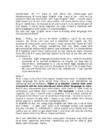
Prescriptive law – prescribe how people ought to behave Descriptive law – describes the way people or natural phenomena behave Break the law – do something illegal Penalty – punishment Government – system by which a state or community is controlled Law – the system of rules System of courts – all judicial institutions Enforce – to make people obey the law Authority – a group of people with official responsibility for a particular area of activity /the moral or legal right or ability to control Prescribe – to tell someone what they must have or do, or to make a rule of something Impose The word law can have several meanings, it can be divided into prescriptive and descriptive law. Descriptive law – describes the way people or natural phenomena behave, e. g. law of gravity Prescriptive law – prescribe how people ought to behave e.g. speed limits In all societies relations between people are regulated by prescriptive law; customs (informal
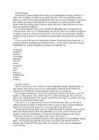
fine (trahv) - certain sum of money person pays for breaking a law corruption (korruptsioon) - dishonest or unethincal conduct by a person entrusted with a position of authority suspension (kõrvaldamine) - form of punisment that people recieve for violating rules and regulations Civil Action (tsiviilhagi) - lawsuit between two private parties prosecution (süüdistus) - the institution and carrying on of legal proceeding against a person injury (vigastus) - an act or event that causes someone/something no longer to be fully healthy claim (nõudeõigus) - to apply for compensation or to inherit something prison (vangla) - residence for incaretaking criminals majority (enamus) - greater amount of the group public opinion (avalik arvamus) - collective opinion of many people on same issue, problem etc.
They say it's unimaginable, boring, tasteless, it's chips with everything and totally overcooked vegetables. The basic ingredients, when fresh, are so full of flavour that British haven't had to invent sauces to disguise their natural taste. What can compare with fresh pees or new potatoes just boiled and served with butter? Why drown spring lamb in wine or cream and spices, when with just one or two herbs it is absolutely delicious? If you ask foreigners to name some typically English dishes, they will probably say "Fish and chips" then stop. It is disappointing, but true that, there is no tradition in England of eating in restaurants, because the food doesn't lend itself to such preparation. English cooking is found at home. So it is difficult to a good English restaurant with a reasonable prices. In most cities in Britain you'll find Indian, Chinese, French and Italian restaurants. In London you'll also find Indonesian, Mexican, Greek..
How to use this guide.............................................................................................................................. 3 learners’ writing skills in preparation for the C1 Advanced exam. Key terminology........................................................................................................................................ 4 About C1 Advanced Understanding the Cambridge English Writing Assessment Scale.................................................... 6 ✔ Tests reading, writing, speaking and listening ✔ Comes after B2 First or B2 First for Schools and skills, plus use of English before C2 Proficiency
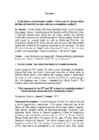
What we are going to do, what is needed: · What we do - 1 test, on words. · 2 Essays, that means that we have to look into academic writing · Homereading we read a case from European Court of Justice thingy. · Oral thing. · 90% you have to attend · Have to prepare for class and take part of it etc What we learn: Terms Expressions / collocations (nt obey/abide by the law) Explaining AWOL absence without a leave Legal English can be divided into 3 levels. We learn the first one, which is needed for the other two! You have to know the vocabulary etc. Second level has to do with legal contracts... The third level both 1 and 2 and explaining... We learn the vocabulary + explaining. Process of law-making draft law/bill (seaduseelnõu) is developed draft is sent to the parliament readings(amendments made to the law (seadusemuudatused)pass/ adopt the lawpass on to the presidentproclame
problems associated to them?); language use – tenor, mode and domain (what do these notions mean and what are some problems associated to them?). Register-analysis Language user vs. language use – the two main parameters of language change. Variability in the language user is further defined by three broad parameters: 1-Time- (when?) the time when the speaker or the writer lived. For example, if you were to translate a Dickens book from english to russian, you could use the same language as did Dostoyevsky, because they lived at the same time (19th century) 2-Region- The second parameter that defines the language user is region. Region refers to where the author/speaker (sometimes character) is from. May be on a broader scale – Middle East, Western world; but also narrower – Germany, Latvia, Minnesota; and even narrower – Conrwall, London, Pärnu, etc. Problems related to region (similar to the problems covered in previous
wishes/Yours, Mike. 4. Remember that it is not necessary to write addresses in the exam. Style in formal and informal letters Formal letters Greeting: Dear Sir/Madam / Mr bobbins, Informal letters · impersonal style Greeting: Dear Julie, · complex sentence structure - frequent · personal, short, zappy style use of Passive Voice - single word · use of slang or colloquial English use of verbs - non-colloquial English -- formal idioms/phrasal verbs language · pronouns are often omitted · each paragraph develops one specific · chatty, wide use of descriptive adjectives topic · use of short forms · only facts, infrequent use of descriptive Best wishes / Love / Yours / Regards.
We've made lots of compleints to the Autocheck Manager about the work Autocheck is doing just now and he's had more than enough chance to tell us why things have got worse but he hasn't replied any of our letters (I've attached copies) and every time one of our reps tries to get in touch with him either persinnaly face to face or in the phone, he's out. Bearing all these things in mind, you must have a look at the contract with Autocheck as soon as possible and ask the legal dept. about it. TO: Michael Jones, Transport Manager FROM: Peter Blackburn, Transport Supervisor (Field Services) SUBJECT: Deterioration in Services Provided by the Autocheck Maintenance Company DATE: 6 April 2001 With reference to our telephone conversation of 5 April concerning the maintenance of field vehicles, 1 would like to confirm that the quality of the services provided by the Autocheck Maintenance Company has deteriorated noticeably during the last few
 annaabi.ee











Kõik kommentaarid