state borders. A few tribes went peacefully, but many resisted the relocation policy. During the fall and winter of 1838 and 1839, the Cherokees were forcibly moved west by the United States government. Approximately 4,000 Cherokees died on this forced march, which became known as the "Trail of Tears." By 1837, the Jackson administration had removed 46,000 Native American people from their land east of the Mississippi, and had secured treaties which led to the removal of a slightly larger number. Most members of the five southeastern nations had been relocated west, opening 25 million acres of land to white settlement and to slavery. Reservations After being forced off their native lands, many American Indians found life to be most difficult. Beginning in the first half of the 19th century, federal policy dictated that certain tribes be confined to fixed land plots to continue their traditional ways of life.
In principle, the Commission proposes new laws, and the Parliament and Council adopt them. The Commission and the member countries then implement them, and the Commission ensures that the laws are properly applied and implemented. Two other institutions play vital roles: the Court of Justice of the EU upholds the rule of European law the Court of Auditors checks the financing of the EU's activities. The powers and responsibilities of all of these institutions are laid down in the Treaties, which are the foundation of everything the EU does. They also lay down the rules and procedures that the EU institutions must follow. The Treaties are agreed by the presidents and/or prime ministers of all the EU countries, and ratified by their parliaments. The EU has a number of other institutions and interinstitutional bodies that play specialised roles: the European Central Bank is responsible for European monetary policy
At the moment there are 28 member states in the EU. To become a member, a country must meet the Copenhagen criteria. These require a stable democracy that respects human rights and the rule of law; a functioning marketeconomy; and the acceptance of the obligations of membership, including EU law. No member state has ever left the Union. After 1952, there have been 7 enlargements: 1973, 1981, 1986, 1995, 2004 (including Estonia), 2007, 2013. Most important 5 treaties (lepingud) till today are Paris, Rome, Brussels, Maastrict and Lisbon. Leaders: President of the Commission José Manuel Barroso and President of the European Council Herman Van Rompuy. EU law The European Union is based on the rule of law. This means that every action taken by the EU is founded on treaties that have been approved voluntarily and democratically by all EU member countries. A treaty is a binding agreement between EU member countries. It sets out
Therefore, PIL regulates people indirectly. Another unique feature: domestic law sources have a clear pyramid (top to bottom: constitution, laws, individual contracts, they cannot contradict each other) and all sources are written. In PIL there is no such hierarchy, but there are primary sources (all are equally important) and secondary sources and all are not written. Primary sources: written documents (int treaties, conventions, declarations etc), international customary law (legally binding), fundamental principles (legally binding). PIL= system of (legally binding) norms and principles, written or customary, regulates the conduct of states and intergovernmental international organizations. Also known as International Law, but called PIL to distinguish from private international law, i.e. solution for conflict of laws.
European Union Exam 1949 France, UK and the Benelux countries decide to set in place a Council of Europe. 1951 Treaty of Paris signed by the Six (Belgium, France, Germany, Italy, Luxembourg, Netherlands), establishing the European Coal and Steel Community (ECSC). 1957 Treaties of Rome establish the European Economic Community (EEC) and the European Atomic Energy Community (Euratom). 1959 July, seven countries of the Organisation for European Economic Co- operation (OEEC) – Austria, Denmark, Norway, Portugal, Sweden, Switzerland and the UK – decide to establish a European Free Trade Association (EFTA). 1960 Creation of European Free Trade Association 1961 UK applies to join the Community. 1962 The Parliamentary Assembly changes its name to the European Parliament
the daily lives of its citizens: For example, on environmental protection, consumer rights, equal opportunities, transport, and the free movement of workers, capital, services and goods. Parliament also has joint power with the Council over the annual budget of the European Union. Jerzy Buzek is the President of the European Parliament The Council is the EU's main decision-making body. Like the European Parliament, the Council was set up by the founding treaties in the 1950s. It represents the member states, and its meetings are attended by one minister from each of the EU's national governments. Which ministers attend which meeting depends on what subjects are on the agenda. Javier Solana gives EU diplomacy a face as High Representative for the Common Foreign and Security Policy The Commission is independent of national governments. Its job is to represent and uphold the interests of the EU as a whole. It drafts proposals for new
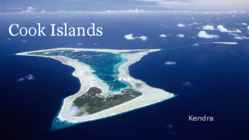
Area: 240 square km Time zone: 12h behind Associated: New Zealand Geography Capital: Avarua Divided into two Coastline: 120km Natural resources: coconuts Climate: Tropical Mountainous, volcanoes, palms, soils, caves, People European, Chineese, African settlers Polynesian roots 2 polynesian languages: Pukapuka and other islands Official language Cook Islands Maori, English Population: 14,974 Villages, farms Politics Left: Henry Puna, right: John Key Self-governing state In international treaties Head of state: British monarch Parliamentary elections: 4 years Independence: 4th August 1965 Political parties: Cook islands party, the Democratic Economy Few natural resources: cobalt, phosphate Inadequate infrastructure Main industries: Tourism, fishing, banking, mining Export: citrus & tropical fruits, handicrafts, clothes Import: fuels GDP: $183,2 million Education Free Compulsory (5-15) University of the south Pacific in Avarua vast majority: literate
Ministrite nõukogus. Tulevik: Laienenud EL-is (aastal 2004), kuhu kuulub 25 riiki, võib kvalifitseeritud häälteenamus olla 232 häält (kokku 321 häält). Aastast 2007, kui El-is on 27 riiki, võib häälteenamus olla 258 häält (kokku 345 häält). 6 Kasutatud kirjandus 1) http://et.euabc.com/word/599 2) http://www.tlu.ee/~sirvir/Eurolaw/Eurolaw/Iosa/1/lecture- 1-5-ee.htm 3) eur- lex.europa.eu/et/treaties/dat/11997D/word/11997D.doc 4) http://elik.nlib.ee/? id=32&kv_id=1047&lightStr=amsterdami leping 7
world, Lebron James. At that time it was eight times the budget, which was approved by the Estonian Government. So it was a heavy sum to pay. In Britain I think they can only blame themselves. You see, unlike many other nations, the UK has no single core constitutional document. In this sense, it is said not to have a written constitution, but much of the British constitution is embodied in written documents, within statues, court judgments and treaties. So in my opinion that's a stupid system. Because if you watch other countries how much do they pay for compensation claims then it's nothing. Though in other countries there are huge sums what civilians get from companies. A former female police officer was awarded an estimated £1,000,000 in a package, after complaining of bullying and sexual and racial harassment. For instance I think it's absolutely ridiculous to get a million for that. I think many people have suffered
I. Addressing and Preventing the Growing Threat of Lethal Autonomous Weapons. The Kingdom of Belgium recognizes the serious threat of Lethal Autonomous Weapons. Permitting machines to take human life in warfare or in law enforcement and other circumstances raises a host of serious ethical, legal, moral, societal and other concerns. Autonomous weapon systems, as defined, are not specifically regulated by International Humanitarian Law treaties either. However, it is undisputed that any autonomous weapon system must be capable of being used, and must be used, in accordance with IHL. These weapons don't yet exist but are under development in several countries. Once they are created, it may be too late to stop their use. Last December the government of Belgium funded a research conducted by 116 Professors and PhD students from Belgium, America and Georgia to investigate the threats and problems of so- called "Killer Robots"
22.Gross domestic product – sisemajanduse koguprodukt 23.Prejudice – eelarvamused 24.Appalling - jubedus, kohutav, õõvastav 25.Instigators – aluspanija, algataja 26.Mutual enmity – vastastikune vaenulikkus 27.Disputes – vaidlus 28.Comprasions – võrdlused 29.Admittedly - tõsi küll 30.Appoints – lähetab, määrab 31.Representative – esindaja 32.Issuing bank – keskpank 33.Repeal – tühistama 34.Impose – määrama, kehtestama 35.Essential – oluline, vajalik 36.Treaties – aluslepingud 37.Ratified - ratifitseeritud 38.Quarter – neljandik, kvartal 39.Alliance – liit, ühendus 40.Consumer protection – tarbijakaitse 41.Strict – range, karm 42.Strengthen – tugevdama, jõudu koguma 43.Harmful – kahjulik, halb 44.Emissions – heide(heitekogus) 45.Forefront – suunanäitaja 46.Strive – püüdma, püüdlema 47.Persuade – veenma 48.Maintenance – hooldus 49.Compulsory - kohustuslik 50.Rural – maa, maakoha
employment by 2010. Treaty of Nice: adopted European social policy agenda up to 2005, converting the political commitments made at Lisbon into concrete action. Treaty of Lisbon: emphasizes EU’s social objectives, among which full employment (social employment policy), solidarity between generations and protection of the rights of the child are mentioned + Charter of Fundamental rights as having the same binding force as the treaties: recognizes the so-called “solidarity rights” such as workers’ right to information and consultation and the right to collective bargaining and to fair and just working conditions as well as to social security and social assistance. Employment policy: Objectives: - The promotion of high level employment by developing a coordinated strategy, particularly with regard to the
People in Estonia are also involved in other sectors of industry, such as wood, construction, electronic and energy. Estonia is a democratic parliamentary republic. It has a single-chamber parliament with 101 members that are elected by the people in every four years. It is called Riigikogu. The parliament determines the income and expenses of Estonia as well as presents statements and declarations to the people of Estonia. It also has the right to accept new laws and ratify national treaties. It also elects the President and appoints other high officials. The President of Estonia is elected for five years and can be elected for maximum two terms in a row. Estonia also has a government that consists of the Prime Minister and other ministers; currently it has 13 ministers in addition to the Prime Minister. The government is responsible for dealing with Estonian domestic and foreign policy. The supreme political authority is vested in the people of Estonia.
- Council of Europe 1949 - ECSC 1951 The founding fathers - Christian democrats – universalism - Peripheral regions, borders - Victims of nationalism - Federalists Towards the European Economic Community - Election of Spaak – relaunching integration at the Messina Conference 1955 - Integration in all aspects of economy - Creation of a single market - Marginalization of federal idea The creation of EEC - Spaak report - Treaties of Rome (1958) 4 goals: - Single market within 12 years - Elimination of custom duties and tariffs - Extablisment of common agriculture, trade, transpoer, competition policy - Creation of European Social Fund and European Investment Bank Single market - Free trade area for goods - Common policies on product regulation and freedom of movement of the factors of production - A Common Market is a first stage towards a signle market
safeguards Estonia's security and welfare Parlament: it is a permanently functioning unicameral legislative body consisting of 101 members, the Parlament sits in Toompea Castle, members of the Parlament are elected for a 4- year term by private ballot in free elections. Government: it wields executive power, it issues orders and regulations, submits bills to the Parlament for passage into law and foreign treaties for ratifications, drafts the state budget for submission to the Parlament abd effects it after adoption. The President nominates a minister candidate for the post of Prime Minister. Court system: it is a 3-tier system. The chancellor of justice examines all new laws, regulations and other legal acts to ensure their compliance with the Constitution and existing laws. The auditor general checks the finances of government bodies and the use and management of public property
isikute. Need väärtused on ühised liikmesriikide koos, mis iseloomustab pluralism, mittediskrimineerimine, sallivus, õiglus, solidaarsus ja võrdsus meeste ja naiste vahel, "- ütles Maastrichti lepingus - dokument legaliseeris Euroopa Liidu loomine. 3 Robert Bartlett (2001). Euroopa sünd. Vallutused, koloniseerimine ja kultuurivahetus950-1350. Tallinn: Kunst. 4 http://europa.eu/eu-law/decision-making/treaties/index_et.htm 3 PIDEVA MUUTUMISES, ARENGUS ELi PIIRE Edasi laienemine Euroopa Liitu on avatud igale Euroopa demokraatlik riikidele, kus on vabaturg, millel on soov ja võimalus tuua seadused kooskõlla ELi õigusega. Selline väärtus aitab arendama riiki majanduslikust seisukohast. Alates teisest vaatenurgast, see aitab ühendada Euroopa rahavast, koos säilitamisega eri riikide ja rahvaste huve
theobserver *Jeremy Symons, a former whistleblower at the Environmental Protection Agency (EPA), said that suppression of the report for four months was a further example of the White House trying to bury the threat of climate change. *Senior climatologists, however, believe that their verdicts could prove the catalyst in forcing Bush to accept climate change as a real and happening phenomenon. They also hope it will convince the United States to sign up to global treaties to reduce the rate of climatic change. *Among those scientists present at the White House talks were Professor John Schellnhuber, former chief environmental adviser to the German government and head of the UK's leading group of climate scientists at the Tyndall Centre for Climate Change Research. He said that the Pentagon's internal fears should prove the 'tipping point' in persuading Bush to accept climatic change.
dokumendis või kahes või enamas omavahel seotud dokumendis ja mis on selle nimetus. Olulised aspektid: · lepingute alla ei kuulu selles kontekstis suulised kokkulepped · lepingute alla ei kuulu selles kontekstis sellised lepingud, mis on allutatud mõne riigi siseriiklikule õigusele · lepingute nimetusel ei ole tähtsust Ainult üks vorminõue peab olema kirjalik. Lepingute liigitus: · kahepoolsed lepingud bilateral treaties · mõnepoolsed lepingud plurilateral treaties, vähemalt kolme osapoolega suletud lepingud (saab ühineda teiste osapoolte nõusolekul) · mitmepoolsed lepingud multilateral treaties, vähemalt kolme osapoolega avatud lepingud ( saab vabalt ühineda iga riik) Igal suveräänsel riigil on rahvusvaheline õigusvõime lepingute sõlmimiseks volitatud isikute vahendusel: · riigipead, valitsusjuhid, välisministrid kõik lepingu sõlmimisega seotud
non-pecuniary damages) incurred as a result of actions or omissions of the state authorities and their officials, as well as compensation for the value of the expropriated investment; time limitation (6 months) for return of the investment (including profits gained), etc. In practice, though, it might be difficult to challenge actions or omission committed by the state before national courts. Ukraine maintains more than 50 bilateral investment treaties ("BITs") concluded with countries from the Americas, Europe, Asia, etc (including with Estonia since 1995). In line with modern international practice, BITs sustain an effective tool in the hands of foreign investors to defend themselves against arbitrary and discriminatory measures of the state authorities. Most of Ukraine's BITs contain clauses granting a "most favored nation" treatment and national treatment to foreign investments and investors.
world. History The beginning of EU might consider the year 1951, when European Coal and Steel Community (ECSC) was constitute. Six countries joined with it for peace: Belgium, Netherlands, Luxembourg, Italy, France and Germany. With that move, coal and steel industry were put under one organisation, so war was almost impossible between these six country. Cooperation in different areas improved, when in 25. March 1957 Treaties of Rom , European Economic Community and European Atomic Energy Community memorandum of association were signed. These were sundry organisations. But they had one name- European Community. As the authorisations broaden, it become European Union in 1993. The European Union was formally established when the Maastricht Treaty came into force. In 1985, the Schengen Agreement led the way toward the creation of open borders without
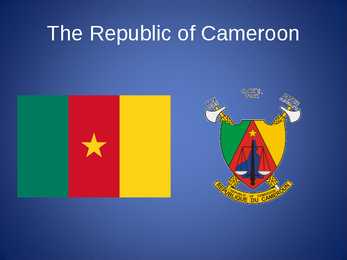
Kamerun in 1884 and began a steady push inland. · An economic crisis took effect in the mid-1980s to late 1990s as a result of international economic conditions, drought, falling petroleum prices, and years of corruption, mismanagement, and cronyism. Politics and Government · The President of Cameroon has broad, unilateral powers to create policy, administer government agencies, command the armed forces, negotiate and ratify treaties, and declare a state of emergency · The president appoints government officials at all levels, from the prime minister (considered the official head of government), to the provincial governors, divisional officers, and urban-council members in large cities) · Cameroon's legal system is largely based on French civil law with common law influences · The judiciary is officially divided into tribunals, the court of appeal, and the supreme court. Politics and Government
The Parliament of Estonia is elected by people for a four-year term by proportional representation. The Estonian parliament has 101 members and influences the governing of the state primarily by determining the income and the expenses of the state. The Parliament of Estonia’s duties are as follows: approve legislations; appoint high officials, including the Prime Minister and Chief Justice of the Supreme Court; elect the President; ratify significiant foreign treaties that impose military and properietary obligations; bring about changes in law; approve the budget presented by the government a law; monitor the executive power. The President of the Republic of Estonia is the Head of State of Estonia. The President has limited political power, but a representational function and the balancer of powers. The President is a ceremonial figureheas with no executive power. The Head of State of Estonia
It may also have jurisdiction of last resort in judgments delivered by the General Court. In this case, it rules on the questions of law only and not on the facts of the case. General Court The General Court is attached to the Court of Justice and is designed to reduce that Court's workload. The General Court has jurisdiction to hear at first instance actions brought by Member States or individuals in the cases provided for by the European Treaties. Specialised Courts The Specialised Courts were created by the European Parliament and the Council in accordance with the ordinary legislative procedure. These courts have jurisdiction at first instance in certain categories of action on specific matters. Different types of action The CJEU is responsible for ensuring compliance with European law. It has jurisdiction in actions brought by Member States, other European institutions and European citizens. There are several types of procedure:
01.2008, mil jõustus täna kehtiv isikaundmete kaitse seaduse redaktsioon ja andmekogude regulatsioon muutus osaks avaliku teabe seadusest. EUROOPA AKTID, MIS REGULEERIVAD INIMÕIGUSI SH ÕIGUST PRIVAATSUSE KAITSELE JA ÕIGUST INFORMATSIOONIVABADUSELE Inimõiguste Ülddeklaratsioon http://www.vm.ee/?q=node/12958 Inimõiguste ja põhivabaduste kaitse konventsioon https://www.riigiteataja.ee/akt/78154 Euroopa Liidu põhiõiguste harta http://eur-lex.europa.eu/et/treaties/dat/32007X1214/htm/C2007303ET.01000101.htm EUROOPA LIIDU AKTID, MIS REGULEERIVAD ISIKUANDMETE KAITSET Isikuandmete automatiseeritud töötlemisel isiku kaitse konventsioon https://www.riigiteataja.ee/akt/78300 Euroopa Parlamendi ja Nõukogu direktiiv 95/46/EÜ, 24.oktoober 1995, üksikisikute kaitse kohta isikuandmete töötlemisel ja selliste andmete vaba liikumise kohta (edaspidi loengutes isikuandmete kaitse direktiiv) http://eur-lex.europa.eu/LexUriServ/LexUriServ.do
state, but a governor generally acts as her representative. The governor generally performs only certain formal and symbolic tasks. Canada, a member of Commonwealth of Nations, is an independent, self-governing democracy, equal in rank to Great Britain and all other nations. Canada has equal rights with the United Kingdom; is loyal to Queen Elizabeth II; has membership in the United Nations; appoints her own ambassadors and other representatives abroad; makes her own treaties; draws up her own laws; imposes her own taxes, maintains her own army, navy and air forces. History The first inhabitants were the Native Indians, the Inuits. Around 1000 Vikings tried to arrive in Greenland but got lost and ended up in Canada. John Cabot from England, took back word that the sea was full of fish which could be taken not only with a net but in baskets let down into the water. Beaver fur brought Europeans to Canada. In 1608 the first permanent
crown jewels. The Tower was occupied as a palace by all the Kings and Queens down to James I. It was customary for each monarch to lodge in the Tower before his coronation and to ride in procession to Westminster through the city of London from the Tower. John Stow wrote during the reign of Elizabeth I, The Tower of London was "...a citadel to defend or command the city, a royal palace for assemblies or treaties, a prison of state for the most dangerous offenders; the only place of coinage for all England...The armoury for warlike provision; the treasury of the ornaments and jewels of the crown; and general conserver of the most records of the queen's courts of justice". In fact the Tower was no longer used as a royal residence, except before coronations, when Stow wrote those words. The Tudors had changed all that. St. Paul's Cathedral St. Paul's Cathedral has had an eventful history
Tribunals 15. Arbitration 16. Work of lawyers: notary public, prosecutor 17. Work of lawyers: judge, attorneyatlaw 18. Legalese 19. Provision of legal services outside the profession 20. Separation of powers Case brief words: Miscellaneous mitmesugune (E)ECTreaty - Strictly speaking, there is no specific document called the `EC Treaty'. The term generally refers to the original TreatyOfRome, which established the EEC, as variously ammendmented over the years by later treaties. The TreatyOfMaastricht renamed the EuropeanCommunities (by this time largely dominated by the EEC) to the `European Community', and re-issued the ammended (and renumbered) Treaty of Rome as the `Treaty Establishing the European Communities'. It is this that is generally contracted to `EC Treaty' ; The Treaties of Rome are two of the treaties of the European Union signed on March 25, 1957. Both treaties were signed by The Six: Belgium, France, Italy, Luxembourg, the
One of the Catuvellaunian leaders, Togodumnus, was killed, but his brother Caratacus survived to continue resistance elsewhere. Plautius halted at the Thames and sent for Claudius, who arrived with reinforcements, including artillery and elephants, for the final march to the Catuvellaunian capital, Camulodunum . The future emperor Vespasian subdued the southwest,Cogidubnus was set up as a friendly king of several territories, and treaties were made with tribes outside the area under direct Roman control.Romans built many roads and also many great bulidings like the Hadrians wall. Anglo-Saxons and Normans The history of Anglo-Saxon England broadly covers early medieval England from the end of Roman rule and the establishment of Anglo-Saxon kingdoms in the 5th century until the Conquest by the Normans in 1066. Christianisation of the Anglo-Saxon Kingdoms began around 600 and was essentially
an influence on PB&R (and I have to assume on other EU firms) business and caused financial damage so why company owners may claim for a compensations. Based on information provided upper there was a valuation of articles: 26 (1):The internal market shall comprise an area without internal frontiers in which the free movement of goods, persons, services and capital is ensured in accordance with the provisions of the Treaties; 34&35: Quantitative restrictions on imports/exports and all measures having equivalent effect shall be prohibited between Member States; 37: Member States shall adjust any State monopolies of a commercial character so as to ensure that no discrimination regarding the conditions under which goods are procured and marketed exists between nationals of Member States. e
state, but a governor generally acts as her representative. The governor generally performs only certain formal and symbolic tasks. Canada, a member of Commonwealth of Nations, is an independent, self-governing democracy, equal in rank to Great Britain and all other nations. Canada has equal rights with the United Kingdom; is loyal to Queen Elizabeth II; has membership in the United Nations; appoints her own ambassadors and other representatives abroad; makes her own treaties; draws up her own laws; imposes her own taxes, maintains her own army, navy and air forces. Population The Canadian people are not a compact, homogeneous group, but rather a collection of diverse national and cultural groups. The two biggest ethnic groups are those of British and French extraction, and in fact the country is officially bilingual. Canada has the population of about 34 million. Only 44 % are of British descent; 32 % of French ancestry; 15 % of foreign origin
dunes, peat moors and bogs. Kärdla is a green town full of gardens, parks, springs and artesian wells. GOVERNMENT The Estonian Parliament is a unicameral legislative body consisting of 101 members. The Parliament sits in Toompea Castle. Members of the Parliament, presided over by the Speaker, are elected for 4year term. The Governemt wields executive power. It issues orders and regulations, submits bills to the Parliament for passage into law and foreign treaties for ratification, drafts the state budget for submission to the Parliament and effects it after adoption. There are 12 ministries but there may be up to 15 ministers. The President nominates a candidate for the post of Prime Minister. The present Prime Minister Andrus Ansip. Judicial power is vested in a 3tier court system, the highest body of which being the Supreme Court, presided over the Chief Justice. The Chancellor of Justice examines all the new laws, regulations and
vahearuandes rõhutatakse, et kõik kodanikud peavad kogu oma elu jooksul omandama oskusi ja neid täiendama ning et erilist tähelepanu tuleb pöörata ühiskonna riskirühmadesse kuuluvate kodanike vajadustele. Täiskasvanuharidus (nii selle kvantiteet kui kvaliteet) on tähtis ka keskmise ja kõrgema haridustasemega inimeste teadmiste ja oskuste arendamise seisukohast.3 1 Euroopa Ühenduse asutamisleping, http://europa.eu/eur lex/en/treaties/dat/C_2002325EN.003301.html 2 Euroopa Komisjoni teatis: Euroopa elukestva õppe piirkonna rajamine, http://ec.europa.eu/education/policies/lll/life/communication/com_en.pdf 3 Komisjoni teatis nõukogule, Euroopa Parlamendile, Euroopa Majandus- ja Sotsiaalkomiteele ning Regioonide Komiteele: Paindlikkuse ja turvalisuse ühiste põhimõtete poole: rohkem paremaid töökohti 1 Komisjoni 2006
kust eksitada toote päritolu osas omadustele, mis tulenevad otseselt piirkonnast, kus toote kvaliteet, selle piirkonna keskkonnast, loodus- maine või muu omadus on olulisel likest ja inimteguritest määral seostatav geograafilises päritoluga 55 http://www.wipo.int/treaties/en/SearchForm.jsp?search_what=C 38 Kehtib peale nimetuste ka Olemas viide keskkonnale ja selle Olemas viide mainele (tähis võib ka sümbolitele seosele tootega vaid sellel põhineda), kuid puudub viide keskkonnatingimustele
There is no single or "correct" definition and the choice of a definition depends on the purpose for which it is to be used. The First nations are Indians, Metis and Inuits, but the term Indian is called inappropriate, so now they are called the Native peoples. There are also legal terms for them and it applies to a native person who is registered under the Indian Act and it means that they are entitled to free medical care, education and training. Some of them, whose ancestors signed treaties also receive a small amount of money. Metis are the people who are half indigenous and half other race, the came from the marriages between different races. They have good traditions and a dance called the jig. They live in communities in the rural areas. The Inuit, who don't want to be called Eskimos because of its meaning ,,meat- eaters", are the founded people, and over the years their life has changed dramatically
House. Each state has its own government - State Assemblies or, Legislatures with two houses. According to the constitution of the USA, all citizens of both sexes over 18 years of age has a right of voting, but in reality the number of voters is much smaller. The main task of Congress is to make federal laws, to levy federal taxes, to make rules for trade, to corn money, to organise Armed forces, to declare war, to make amendments to the constitution or put foreign treaties into effect. Under the constitution the US Senate has some special powers, not given to the House of representatives. It approves or disapproves the main presidential appointments: Ambassadors. Cabinet Members and federal judges; also ratify by a 2/3 vote treatments between the USA and foreign countries. The House of Representatives has a special power of its own - to invent a bill to raise money. The Senate is composed of 100 members - two from each of 50 states,
death penalty. He resisted against irrational moral emotions as the instigation for ethical conduct, saying only reasonable grounds could justify the moral decisions of individuals and legislators. And now his theory of is the one that is known for justifying torture (Verplaetse, 2008). Since 9/11 and the following fight against terrorism it became clear that the Bush administration thought of torture as something justifiable while it goes against all possible agreed upon treaties and conventions. One could indeed possibly think of situations that could serve as an exception to the prohibition of torture but these hypothetical situations can hardly relate to real situations. The ticking bomb argument looks at the hypothetical case where a leader of a state is asked to give their permission to torture a captured rebel leader because he (probably) knows the locations of a few explosives that are spread around the city in different apartment buildings
Resources Assessment Database), milles sisaldub ka Eesti andmestik; ühtlasi oleme siin aruandekohuslased. Ligipääs nimetatud andmebaasi andmete kogumise metoodikale, andmefailide struktuurile ning andmestikule on võimalik Global Forest Resources Assessment`i (FRA 2000) kodulehelt aadressil http://edcdaac.usgs. gov/glcc/fao/. Eeskätt Euroopa Liidu liikmes- ja kandidaatriikidele on tähtsad EL-i metsapoliitikat käsitlevad dokumendid. Ent Euroopa Liidu aluslepingud (Treaties on European Union) ei sätesta ühtset metsanduspoliitikat. Hoolimata sellest on metsade majandamine, kaitse ja säästev areng EL-i ühtse põllumajanduspoliitika (CAP), maapiirkondade arengu, keskkonna, kaubanduse, siseturu, teadusuuringute, tööstuse, arengukoostöö ja energiapoliitika kesksemaid probleeme. Metsasektoriga seotud poliitilisi arenguid on kõige põhjalikumalt kirjeldatud Euroopa Liidu metsandusstrateegias (Forestry Strategy for the European Union, 1998)
273. tried menetletud 274. to be vested in kuuluma 275. to compose koosnema 276. elect valima 277. for a term of 5 years 5 a pikkuseks ametiajaks 278. the chairman- eesistuja 279. presides over the sessions of the chamber juhatab istungite ajal 280. two terms in a row kaks ametiaega järjest 281. resolution otsus 282. to be promulgated olema väljakuulutatud 283. decrees issued by määrused, mille on välja andnud 284. international treaties concluded sõlmitud rahvusvah lepingud 285. local government KOV 286. contempt of court kohtu solvamine 287. court order kohtuotsus 288. injunction kohtulik keeld 289. writ kohtumäärus 290. amendment muutus *U9 291. bar association advokatuur 292. attorney advokaat 293. vested tagastud 294. council of attorneys advokaatide nõukogu 295. the most progressive ones kõige uuenduslikum 296. independent corporation sõltumatu korporatsioon 297
Move of over 70,000 natives (vabatahtlik-sunniviisiline) Reservations (kaitsealad)1851- the Indian Appropriations Act About 310 reservations 55,7 million acres Unevenly distributed Tribal sovereignty (iseseisvus) Poverty and unemployment · Indian citizenship Act of 1924 Granted citizenship to 300,000 indigenous people, to friendly tribes State support was limited Absorb Indians into the mainstream Didn't have the right to vote · Trail of Broken Treaties of 1972 Took place in 1972 Cross-country protest by American Indian organizations Intended to bring attention to American Indian issues such as treaty rights, living standards, and inadequate housing. Huge media coverage "20-Point Program" · Present situation 1 Reservations situated west of the Mississippi 1% of the population Minority group, less privileged Social problems Self-awareness Mixture of old and new
The constellation denotes that a new State is taking its place among other nations. The national anthem is called “The Star-Spangled Banner”. The national motto is “In God we trust”. 45. US government. Constitution of the USA. The federal government is composed of three branches (checks and balances): Legislative: The Congress, which is made up of the Senate and the House of Representatives, makes federal law, declares war, approves treaties, has the power of the purse, and has the power of impeachment, by which it can remove sitting members of the government. Executive: The President is the commander-in-chief of the military, can veto legislative bills before they become law (subject to Congressional override), and appoints the members of the Cabinet (subject to Senate approval) and other officers, who administer and enforce federal laws and policies.
American culture in the Great Plains of North America. As a new mode of travel the horse made it possible for some tribes to greatly expand their territories, exchange goods with neighboring tribes, and more easily capture game. In the nineteenth century, the incessant Westward expansion of the US forced large numbers of Native Americans to resettle further west. Under President Andrew Jackson, Congress passed the Indian Removal Act of 1830, which authorized the President to conduct treaties to exchange Native American land east of the Mississippi River for lands west of the river. As many as 100,000 Native Americans eventually relocated in the West as a result of this. 9. Culture The culture of the United States is a Western culture, and has been developing since long before the United States became a country. Its chief early influence was British culture, due to colonial ties with the British that spread the English language, legal system and other cultural inheritances
states, governments, international organizations, including the provision of technical assistance. 3. Exempt from the payment of duties: equipment, including machines, equipment, and materials are included in the scope of delivery of the equipment and components (except for excisable goods) imported into the customs territory of the Russian Federation in respect of loans to foreign governments and international financial institutions accordance with the international treaties of the Russian Federation. Exemption is made only in cases where this is provided for by international treaties of the Russian Federation. 47 4. Exempt from customs duty goods imported into the customs territory of the Russian Federation, including imported under lease, to perform work under a production sharing agreement in accordance with the program of work and a cost estimate, approved in the
europa.eu/atyourservice/en/displayFtu.html?ftuId=FTU_3.1.2.html, by Mariusz Maciejewsk, 12/2016 6 R. Barents "Charges have an Equivalent effect on Customs Duties" (1978) 15CNL rev 415 7 - Paul Craig, Gráinne de Búrca, EU Law: Text, Cases, and Materials, p.613, 617, 618, 2015 8 - http://eur-lex.europa.eu/legal-content/EN/TXT/?uri=CELEX%3A61968CJ0024 means of arbitrary discrimination or disguised restrictions on trade between Member States". Can Art. 28 Treaties to national trade rules that apply to all producers without discrimination? The answer to this question was the Court's decision in the 1979 case, known as Cassis de Dijon. The court found illegal the requirements of German legislation on the minimum alcohol content on the grounds that it does not correspond to the test of reasonableness (sometimes called the Cassis test)
7|Page Within Islamic jurisprudence, jihad is usually taken to mean military exertion against non Muslim combatants in the defense or expansion of the Islamic state, the ultimate purpose of which is to establish the universal domination of Islam. Jihad, the only form of warfare permissible in Islamic law, may be declared against states which refuse to convert to Islam or submit to the authority of Islam. Treaties (`ahd) may be established, subject to payment of the kharaj, although jurists differ over its permitted longevity. Most Muslims today interpret Jihad as only a defensive form of warfare: the external Jihad includes a struggle to make the Islamic societies conform to the Islamic norms of justice. Under most circumstances and for most Muslims, jihad is a collective duty (fard kifaya): its performance by some individuals exempts the others. Only for those vested with authority,
Legal English differs greatly from standard English in a number of ways. For example a lot of technical and Latin terms are used (e.g. ad hoc), ordinary words are used with specific meanings, punctuation is often absent, use of old-fashioned words (hereafter, herein) There are different kinds of legal writing: for example, academic legal writing as in law journals, juridical legal writing as in court judgments, and legislative legal writing as in laws, regulations, contracts, and treaties. The formal language of legal documents is often difficult for the non-lawyer to understand, because it is characterised by specific features. For example using Latin terms like ad hoc, de facto, de jure and so on. Secondly using technical terms can cause misunderstandings. For example subsidiary. If i noticed that term in the materials, I didn’t know what it meant so I had to look it up. Thirdly using old-fashioned words like thereafter or hereof can also cause
saavutada artiklis 174 seatud eesmärgid. · Ühtse komisjoni ja ühtse nõukogu loomise leping 22 Single Commission and a Single Council Merger Treaty Sõlmitud: aprill 1965 Brüsselis Jõustunud: juuli 1967 · Eelarve muutmise leping(ud) The Treaty(-ies) Amendig Certain Budgetary Provisions of the Treaties Sõlmitud: aprill 1970 Luksemburgis, jõustunud jaanuar 1971 Sõlmitud: juuli 1975 Brüsselis, jõustunud juuni 1977 · Ühendkuningriigi, Iirimaa ja Taani liitumisleping Sõlmitud: jaanuar 1972, Brüssel Jõustunud: jaanuar 1973 · Kreeka liitumisleping Sõlmitud: mai 1979, Ateena Jõustunud: jaanuar 1981 · Portugali ja Hispaania liitumisleping Sõlmitud: juuni 1985, Madrid ja Lissabon Jõustunud: jaanuar 1986 · Ühtne Euroopa Akt
conflicts between native rulers and the Company was forced into becoming a governing organisation The Company conrtolled the whole India while last persistent Marathas was defeated When a ruler died without children, the Company would be inheritor The end of the British raj may have been blessing for 300 million Indians who gained independence The British expansion in Asia Several Malay states were added under british suzerainty and treaties were concluded with many other states under British protection By 1881 as aresult of the British north Borneo Company, the whole of the north-east coast of the islands had passed under british control and continued to be administrated by the Company The House of Wettin Edward VII 20 C The movement for women´s emancipation and suffrage in the 19 C and 20 C The movement for women´s emancipation started in 18 C
Balti Riikide jaoks on mure see, mida mõtleb ja kuidas käitub Venemaa. Portugali jaoks pole Venemaa nt julgeoleku probleem number 1. 2. Allikad Detsentraliseeritud rahvusvahelises õigussüsteemison õiguse loomine ja leidmine keerulisem Õiguse allikad Rahvusvahelise Kohtu statuudi järgi: Kolm esimest- põhiallikad Teised- abiallikad ❏ Rahvusvahelised lepingud (treaties) Leping on mitme rahvusvahelise õiguse subjekti vaheline kokkulepe rahvusvaheliste õigussuhete loomiseks, muutmiseks või lõpetamiseks. Lepingul kui õiguse allikal on mitmed eelised: - Sisaldab täpselt formuleeritud õigusnorme - Muutub subjektile siduvaks pärast seda, kui viimane on andnud selleks selge nõusoleku - On parim vahend rahvusvahelise õiguse muutmiseks
families`.2 Similarly to how women were once viewed, children have been seen as irrational, emotional and incompetent and therefore are often excluded from the citizenship status. However, the adoption of the U.N Convention of the Rights of the Child (UNCRC) in 1989 was the initial legally binding law that for the first time, granted children the recognition as worthy individuals with rights of their own. 3 The UNCRC has been considered as one of the most innovative international treaties ever ratified. It laid the foundation for the potential change of attitude and perception of children as primarily objects of the adult world. The recognition of children by the UNCRC as respected individuals with rights of their own has given impetus to a significant field of academic study. Since then, there has been increasing sociological interest in children which has provided a new perspective around the
In 2005 the whole government resigned. One of the causes for the resignation was their unsuccessful anti- corruption policy. Unlike politicians the people dealing with criminal law had already for a long time deemed it necessary to reform the Criminal Code in order to develop completely new principles of criminal law. Such principles must develop along with the changes in and progress of society, and also comply with the requirements of the European Union and international treaties. More serious reform started in 1998 when the totalitarian Soviet elements were completely discarded. The reform of the corruption section arose directly from the fact that the Republic of Estonia had signed and become a member state of the Council of Europe Criminal Law Convention on Corruption on 8 June, 2000 in London. Bribery forms a part of corruption. It is certain that bribery is inseparably connected to the exercise of state power in developing countries
 annaabi.ee