 50 punkti
Autor soovib selle materjali allalaadimise eest saada 50 punkti.
50 punkti
Autor soovib selle materjali allalaadimise eest saada 50 punkti.
 ~ 2 lehte
Lehekülgede arv dokumendis
~ 2 lehte
Lehekülgede arv dokumendis
 2010-04-26
Kuupäev, millal dokument üles laeti
2010-04-26
Kuupäev, millal dokument üles laeti
 15 laadimist
Kokku alla laetud
15 laadimist
Kokku alla laetud
 0 arvamust
Teiste kasutajate poolt lisatud kommentaarid
0 arvamust
Teiste kasutajate poolt lisatud kommentaarid
 sheroin
Õppematerjali autor
sheroin
Õppematerjali autor
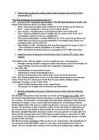
15. Canadian policy of multiculturalism. Who was the Prime Minister when the Canadian government officially endorsed this policy? Pierre Trudeau was the 15th Prime Minister of Canada from April 20, 1968 to June 4, 1979, and again from March 3, 1980 to June 30, 1984. On 1971, his government officially endorsed the policy of multiculturalism. 16. Official and non-official languages of Canada. Two official languages at the federal level: English, French. Canada's linguistic diversity extends beyond the two official languages. In Canada, about 14% of the population are reported speaking a language other than English or French most often at home and about 5% reported speaking such a language on a regular basis as a second language. Canada is also home to many indigenous languages. Taken together, these are spoken by less than one percent of the population. About .6% Canadians report an Aboriginal language as their mother tongue.
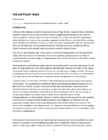
Tallinna Mustamäe Humanitargümnaasium Valeria Jefremenkova ENGLISH AS A GLOBAL LANGUAGE INGLISE KEEL KUI ÜLEMAAILMNE KEEL Research work Supervisor: Jevgenija Kozlova Tallinn 2016 1 Table of Contents СONTENT…………………………………………………………………………………...2 INTRODUCTION…………………………………………………………………………...3 CHAPTER I……………………………………………………………………………….....5 1.1. A Brief History of the English Language…………………………………………...…..5 1.2. Origins of English as the Global Language……………………………………..……....6 1.3. Necessity of a Global Language...……………………………………………………....8 1.4. Critici
1. What is known about the earliest settlers from Estonia to the territory of the present-day US? *The first immigrants from Estonia in the US = 1627 no trace of the "Estonians and Livonians" who left their homeland to settle at the mouth of the Delaware River (a Swedish colony) · 1654 at least one Estonian in the settlement of New Sweden on the Delaware River Johan Schalbrick, a drummer from Tallinn (Reval) · New Sweden Swedish colony on the Delaware River from 16381655 · 1657 Martinus Hoffman, born in Tallinn (Reval), came to New York (New Amsterdam), started to work as a saddlemaker. · His great-granddaughter Cornelia Hoffmann (b. 1734) married Isaac Roosevelt, which makes her the great-great-grandmother of Franklin Delano Roosevelt, president of the US from 193345. · Hans Rebane = 1897 founded the first Estonian-language newspaper in the US Eesti Ameerika Postimees (published in NY until 1911)
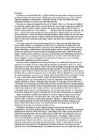
THE CAPITALIST NIGER Chika Onyeani ………………………Every African must internalise this book - period….DAA INTRODUCTION In October 1960, Nigeria received its independence from Britain. By then, Ghana the former Gold Coast had been independent for three years under the great Osagyefo Kwame Nkumah. It was a time for celebrating Africa’s coming of age, as more and more African countries received their independence either from Britain or France. It was especially a poignant time for Africa, as then British Prime Minister Harold McMillan articulated his now famous “winds of change” sweeping Africa. We had high hopes for Africa, for the Black race, that the insidious imposition of foreign rule on us, the looting of Africa’s natural resources by our colonial masters accorded us would be things of history. That is more than forty years ago. Unfortunately, the promise of independence has not been fulfilled. Today, Africa has become more desolate; there is more starvation
What Is Education For? Six myths about the foundations of modern education, and six new principles to replace them by David Orr One of the articles in The Learning Revolution (IC#27) Winter 1991, Page 52 Copyright (c)1991, 1996 by Context Institute We are accustomed to thinking of learning as good in and of itself. But as environmental educator David Orr reminds us, our education up till now has in some ways created a monster. This essay is adapted from his commencement address to the graduating class of 1990 at Arkansas College. It prompted many in our office to wonder why such speeches are made at the end, rather than the beginning, of the collegiate experience. David Orr is the founder of the Meadowcreek Project, an environmental education center in Fox, AR, and is currently on the faculty of Oberlin College in Ohio. Reprinted from Ocean Arks International's excellent quarterly tabloid Annals of Earth, Vol. VIII, No. 2, 1990
relates to American Revolution on the one hand and the European Enlightenment on the other. Influenced by the scientific revolution of the 17th century and the humanist period during the Renaissance, the Enlightenment took scientific reasoning and applied it to human nature, society, and religion. American Enlightenment a gradual but powerful awakening that established the ideals of democracy, liberty, and religious tolerance in the people of America. If there were just one development that directly caused the American Revolution and uplifted the intellectual culture of the continent while it was only a British colony, it would be the American Enlightenment. Broadly, the Enlightenment was an intellectual movement that changed the fundamental perspective of the masses, urging them to foster skepticism and apply scientific principles in matters of religion and morality. Its chief values were:
32 Purdy believes that children are `unfinished beings who need a period of development and 26 Childhood Matters: Social Theory, Practise and Politics, p. 125. 27 Such et al, p. 302. 28 Jeremy Roche, `Children, Rights, Participation and Citizenship`. Education, Vol 6.4 (1999) pp.475-493 (476). 29 Morrow, p.150 ; Children`s Rights and Early Education, p.8. 30 Martha Minow, `Interpreting Rights: An Essay for Robert Cover`, Yale Law Journal 1987 (96),1860-1915. 31 Laura Purdy, In Their Best Interest? The Case Against Equal Rights for Children` (London: Cornell University Press, 1992), p. 3. 10 teaching to become admirable human beings`.33 Purdy is convinced that by giving children equal rights `they are less likely to develop virtues and self-control upon which they depend.
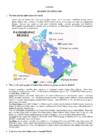
Mounties. Products made from the country's natural resources, such as maple syrup, are also associated with Canadian identity. In recent years, other symbols have become a source of pride: notably, the I Am Canadian campaign by Molson beer, most notably the commercial featuring Joe Canadian, infused home-grown beer with nationalism. 14. Conclusion Though Canada streches far north, people must not think about it as a cold and liveless country, as it offerst so much diversity in landforms, culture and climate. One should never forget how important resources this country has : from fresh water to grain, from uranium to gas. 15. Materials ,,A-Z Encyclopedia"The Kingfisher http://www.britannica.com/eb/article-43262/Canada http://atlas.nrcan.gc.ca/site/english/learningresources/facts/mountains.html http://www.canada.worldweb.com/ http://www.answers.com/topic/canada http://en.wikipedia.org/wiki/Canada http://en.wikipedia.org/wiki/Provinces_and_territories_of_Canada
 annaabi.ee






Kõik kommentaarid