 Tasuta
Faili alla laadimine on tasuta
Tasuta
Faili alla laadimine on tasuta
 ~ 9 lehte
Lehekülgede arv dokumendis
~ 9 lehte
Lehekülgede arv dokumendis
 2022-03-01
Kuupäev, millal dokument üles laeti
2022-03-01
Kuupäev, millal dokument üles laeti
 0 laadimist
Kokku alla laetud
0 laadimist
Kokku alla laetud
 0 arvamust
Teiste kasutajate poolt lisatud kommentaarid
0 arvamust
Teiste kasutajate poolt lisatud kommentaarid
 lisbetr
Õppematerjali autor
lisbetr
Õppematerjali autor
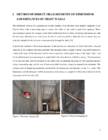
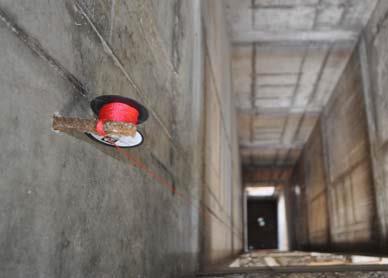
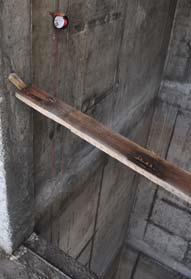
TABLE OF CONTENTS INTRODUCTION ..................................................................................................................................... 2 1 METHOD OF DIRECT MEASUREMENTS OF DIMENSIONS AND DISTANCES OF SHAFT WALLS ..................................................................................................................................................... 3 2 3D SCANNING ................................................................................................................................ 5 2.1 Polar method ............................................................................................................................... 5 2.2 Method of terrestrial laser scanning ........................................................................................... 6 SUMMARY ..............................................................................................................................................
conditions. Finally, one of the biggest issues facing the construction industry, is the inability to discern constructability problems during the preconstruction phase of a project (Mitchell, 2009). To understand the effects that three-dimensional building information models are having on the design, fabrication and construction of steel structures, it is important to understand how the structural steel components that make up a building’s frame are created. A paper by Autodesk on “BIM and Digital Fabrication” describes the steel fabrication process: First a steel mill uses a hot-rolling manufacturing process to create stock structural steel members. This stock material is purchased by steel fabricators who cut and prepare the stock structural beams and columns for building construction based on shop drawings – instructions that describe exactly how to fabricate each individual piece of a structure.
Copyright © 2001 by Butterworth–Heinemann A member of the Reed Elsevier group All rights reserved. No part of this publication may be reproduced, stored in a retrieval system, or transmitted in any form or by any means, electronic, mechanical, photocopying, recording, or otherwise, without the prior written permission of the publisher. Recognizing the importance of preserving what has been written, Butterworth–Heinemann prints its books on acid-free paper whenever possible. Library of Congress Cataloging-in-Publication Data Ball, Stuart R., 1956– Analog interfacing to embedded microprocessors : real world design / Stuart Ball. p. cm. ISBN 0-7506-7339-7 (pbk. : alk. paper) 1. Embedded computer systems—Design and construction. 2. Microprocessors. I. Title. TK7895.E42 .B33 2001 004.16—dc21 00-051961 British Library Cataloguing-in-Publication Data
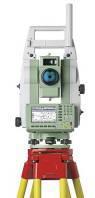
Laura Lüll KRG11/21 Total station: Problems 1. Distinguish between transits and theodolites. - Transits and theodolites are instruments for measuring horizontal and vertical angles. The distinction between these instruments is not very clear. At first, both of instruments were called theodolites. The instruments that were manufactured with long telescopes and could not be inverted end for end were called theodolites. As technology developed, people started making instruments with shorter telescopes that could be inverted or transited – these machines were called transits. Time went on and in the end most instruments – both theodolites and transits were manufactured with telescopes witch could be inverted. Now, the original distinction is no longer
Chapter 1. Introduction and Chapter 2. Lasers. 1. Name the common data collecting technologies. Contact and non contact. Non contact separaate to active and passive scanners. 2. Describe the data collected by laser scanning. Its land surveying method what measure and collect data from objects, surfuce, buildings, and landscapes. Laser scanning collects information from point cloud data witch consists of milions of 3D cordinates(XYZ) 3. What is Remote Sensing? 3D laser scanning is a remote sensing technology that uses laser technology to survey the surrounding environment. 4. Name Remote Sensing technologies. Depending on the scanning platform 3D laser scanning can be divided into: Airborn also reffered as ALS. A land based aka terrestrial , Static/Dynamic TLS 5. What do the acronyms TLS, MTLS, ALS, LIDAR, LASER, TOF, PS refer to? TLS (TerrestriaTLS (Terrestrial Laser Scanning) - viitab otseselt maapealsele,
of members of a small professional association. Others are incredibly complex, such as a survey of the general public across all countries of the European Union in which the same questions need to be answered in multiple languages by people of all educational levels. In the mid-twentieth century there was a remarkable similarity of survey procedures and methods. Most surveys of significance were done by face-toface interviews in most countries in the world. Self-administered paper surveys, usually done by mail, were the only alternative. Yet, by the 1980s the telephone had replaced face-to-face interviews as the dominate survey mode in the United States, and in the next decade telephone surveys became the major data collection method in many countries. Yet other methods were emerging and in the 1990s two additional modes of surveying— 3
Thesis “How is it possible to calculate IT security effectiveness?” Kristjan Kivimaa August 2022 1 Abstract In IT Security world, there is lack of available, reliable systems for measuring security levels/posture. They lack the range of quantitative measurements and easy and fast deployment, and potentially affects companies of all sizes. Readily available security standards provide qualitative security levels, but not quantitative results – that would be easily comparable. This deficiency makes it hard for companies to evaluate their security posture accurately. Absence of security metrics makes it complicated for customers to select the appropriate measures for particular security level needed. The research question for this research project is – “How is it possible to calculate IT security effectiveness?”. The aim of this research is to use this reference m
Ergo Pikas Integration of Lean Construction and Building Information Modelling DISSERTATION Tallinn 2010 2 UNIVERSITY OF APPLIED SCIENCES Author: Ergo Pikas- Civil Engineering student, Faculty of Construction, Tallinn University of Applied Sciences Supervisor: Rafael Sacks- Associate Professor, Faculty of Civil and Env. Engineering, Technion Israel Institute of Technology Consultant: Roode Liias- Professor and Dean, Faculty of Civil Engineering, Tallinn University of Technology Title: Integration of Lean Construction and Building Information Modelling Archived: University of Applied Sciences, Faculty of Construction ABSTRACT This research can be divided into two. The first part investigates the current state of the construction industry, while the second part looks at new emerging busin
 annaabi.ee



















Kõik kommentaarid