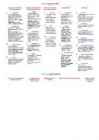
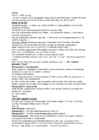
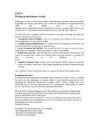
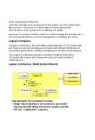
capital initial letters effect -original "I feel 97 y.o.") (new w-s added) -revived) is irony, meaningful names 4. PERSONIFICATI ("Mr. Snake") 4. UNDER- ON 6. LEXICAL REPETITION STATEMENT is deliberate presents inanimate repeating w-d, phrase, sent-e 4. IRONY lessening the size or significance of sth., or
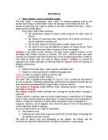
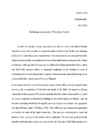
in that statement help the audience to visualize the impact of discrimination and segregation. The black community being bound my the chains of discrimination prevented them from being able to rise up. Chains and manacles can also be seen as objects that bring back memories among African Americans that once experienced criminal injustice by the police due to institutional discrimination. Perhaps the most frequently used literary device in this speech would be repetition. The phrase ‘’I have a dream’’ is used a number of times throughout the speech and is also the name of the speech. The repetition of this phrase helps to emphasize the importance of Martin Luther King’s vision while highlighting the number of transgressions against the African American community. The phrase becomes almost inspirational and continually reminds people that equality is obtainable, making the phrase the rally cry for the movement. The
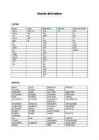
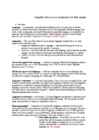
imagination imagine Imaginable Imaginably imaginatively courage encourage courageous courageously shape shape Shapeless shapelessly shaped expactation expect (un)expected (un)expectedly harm harm harmful harmfully Seriousness - serious seriously seriousity repetition repeat repeated reapeatedly development develop developed developingly majority major major majorly fortune - fortuante fortunately - - annual annually protection protect Protected protecyively protective security secure secure securely ability - able ably
· (Grammatical negation (science has no soul)) · The proximity of words carrying inherent negative connotations (vulgar and working-class) · The context of the sentence of the words that have a strong vulgar colouring (your bloody principles) · The use of certain intensifiers (too, too much, horribly, perfectly, so, only) (too clean, too new) · We may have a repetition of a word in a sentence (always preaching, preaching, quietly, quietly) · Graphical presentation: in the inverted commas (this "sweet" lady is a killer); uncommon use of punctuation. · Exclamatory and interrogative sentences (women and votes!) · The writer indicating the quality of the characters voice ("Society," he said grimly. Positive adherent connotation:
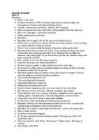
Negative adherent connotation 1. Grammatical negation results in words becoming negatively charged (e.g. "Science has not got a soul. Cannot help itself." science here becomes negative). 2. The neighbourhood or closeness of words bearing adherent negative connotation. 3. Vulgar words in the context lend their negative charge normally to the following word. 4. The same do certain intensifiers, such as: merely, only, too, too much, horribly, perfectly, so, etc. 5. Repetition of a word in a sentence makes the negative charge stronger. 6. Graphic presentation the inverted commas, quotation marks (e.g. "This `sweet' lady has killed five husbands."). 7. Uncommon use of punctuation. 8. Exclamatory and interrogatory sentences (e.g. "Women and votes!). 9. The writer may indicate the quality of the character's voice (e.g. "Society," she said blackly (shows speaker's negative attitude). "Society" becomes negatively because of "blackly").
The idea of the cycle of the Sun and the Moon, the movement of the waves, nature. · The subject matter of A-S poetry is actually centered on the three things that were most important in A-S lives: war, the sea that surrounded the British Isles and death. · Main qualities: somberness, awareness of inevitable death. Formal features of A-S poetry: 1. No rhyme, instead they used alliteration; A-S poetry is alliterative. (Alliteration the repetition of the same consonants in a line); 2. Every line contains a caesura a pause in the middle of a line; 3. In every half-line there are two stressed syllables, so all in all, 4 in a line; 4. The number of unstressed syllables is not fixed; 5. There is no rhyme; 6. There are very few similes (a direct comparison, i.e your hair is like gold), in Beowulf there are 5 similes; 7. On the other hand there are many metaphors, typically A-S metaphors kennings (a
Rhyme is regular sound repetition occurring at the end of poetic lines (rhyming words have similar or identical sound combinations). Full rhyme identical sounds (last stressed vowel and following consonant) tide-side, cold-gold. Incomplete rhyme derived from full rhyme. Vowel rhyme identical vowels and different consonants pen-best. Consonant rhyme identical consonants and different vowels love-live. Compound rhyme made up of 2 or more words united by single stress women=two men. Eye-rhyme contains identical letters while vowels are pronounced differently farm-warm. Internal rhyme occurs within a poetic line. Head rhyme connects the end of a line with the beginning of the next one by similar sound combinations. Couplet rhyme 2 lines are rhythmically linked by the final rhyme: a a. Cross rhyme rhyming combination: a b a b. Frame rhyme - rhyming combination: a b b a. Triple rhyme - rhyming combination: a a a....
Adj: obscene, corrupt, filthy, vulgar, ignorant Verbs: hate, opress, loath Nouns: stupidity, vice, fool, etc e.g I saw myself as Hummy would see me, uneducated and vulgar and working-class. (neutral) 3 The neighbourhood of vulgar words: e.g And you couldn't forget your bloody principles for one night. 4 With the use of certain intensifiers: merely, only, too, too much, horribly, perfectly, even, so. e.g They were too clean, too neatly arranged, too new. 5 Repetition of a word in a sentence, e.g You are sitting here, comfortably preaching about it everlasting preaching, preaching, words, words, words. 6 Graphic presentation ,,This sweet (negative meaning) lady has killed five husbands." Punctuation used uncommonly ,,But I have alwyas had to fight for my children while he sat over his books and played." (uncommon dash) 7 Exclamatory and interrogative sentences e.g Women and votes! It's the last stage of decomposition of the world
Pakkuda välja alternatiive nagu nt nikotiini sisaldavad närimiskummid ja plaastrid PATSIENDI MOTIVEERIMINE JA TOETAMINE SUITSETAMISEST LOOBUMISEL Nõustamiskabinetid Tubakast loobumisele motiveeriv intervjuu, mis koosneb „5R“ soovitustest: Relevance Olulisus, asjakohasus Risk – Riskid Rewards – kasu Roadblocks – takistused Repetition – kordamine MIS JUHTUB PÄRAST SUITSETAMISEST LOOBUMIST? Füüsiline vorm paraneb 15% võrra, tugevneb luustik ja lülisammas. 20 minuti möödudes lähenevad pulss ja vererõhk normaalsele tasemele 8 tundi hiljem vingugaasisisaldus veres väheneb ja hapnikusisaldus taastub 1 ööpäeva möödudes kahaneb risk südamelihaseinfarkti tekkeks 2 ööpäeva möödudes paraneb haistmis ja maitsmismeel
Omadussõn esineb kahte liiki märgatavalt erinevaid omadussõnu, ühed mis määravad a suurust, värvi ja teisi kvalitatiivseid täiendeid ning teine tüüp, mis sisaldab kolme vormi: con - `really, truly`, sek – ´very, too´ ja kyai - `only, just`. (Wivell 1981: 69). Määrsõna kahte tüüpi: ühed, mis käivad viisi kohta ja teised, mis sisaldavad: rruon completed action (c.a.), 'finished' leg repetition, 'again' qon sek kyai intensifier (int.), 'really, truly' excessiveness, 'overly, too much' restrictive, 'merely, only' (Wivell 1981: 130). Määrasõna esineb kahte sorti: numbrilised ja umbmäärased määrasõnad (Wivell 1981: 74). *Tabelist on välja jäetud tegusõnad ja asesõnad kuna nende puhul ei olnud midagi erialdi välja tuua. 2.3 Arvsõnad: 1 – tai 6 – lim-tai
- Power consumption: energia tarbimine; voolu tarbimine - Power of attorney: volikiri(authorise somebody else to do something) - Power of figure: arvuaste - The Great Powers: Suurriigid - Power station: elektrijaam Technical and Descriptive Terms Example: Est: pinta – troopiline nakkushaigus(descriptive) Entootne – kõrvasisene(technical) Reasons for using: absence of the object in the TL, need to avoid repetition, building a contrast with another term. You are talking to someone who is not professional, you would use technical Descriptive terms are usually longer and much more transparent than technical terms. Good practise: translate a technical term by a technical term and a descriptive by a descriptive term. Beginning a Technical Translation: The basic technology is engineering The main branch of engineering is mechanics
Adherent Bathos Dialectal w. Phonestheme Allusion Rhythm Expressive means Quotation Foot Stylistic devices Epigram Metre: Phonostylistics PU, deformed PU Iambus Phonetic. expr. means Synonymic repetition Trochee Prosody Lexical repetition Anapaest Orchestration Syntactic SD Dactyl Euphony Ellipsis Amphibrach Phonetic SD Aposiopesis Spondee Onomatopoeia Nominative sent. Pyrrhic
blatant rage", "Hardy heroes", "Fiendish claw", "Hideous fiend", "Outlaw dire" One can find several kennings, typical Anglo-Saxon compound metaphors, such as "From captive of hell", "Shepherd-of-evils", "Hardy-in-fight", "The bone-frame", "Keen-souled" etc. In addition to kennings there are also many ordinary metaphors like "The accursed" and "The outlaw", these two referring to Grendel. For the sake of emphasis, parallelism has been brought to play. The repetition of the same idea is a constantly used stylistic device. For example "No keenest blade, no farest of falchions", "That here was the last of life, an end of his days on earth", "Swallowed him piecemeal: swiftly thus the lifeless corse was clean devoured" have more or less the same meaning in both parts of the phrase. Another interesting characteristic of Anglo-Saxon literature is the rarity of similes. There are altogether only five similes in the entire epic and one of them -
For all its advantages, advertising your business on TV does have some disadvantages. Barring late night spots on your local cable television network, no other advertising medium is as likely to eat up your budget as quickly as TV will. Producing the ad, which can include hiring script writers, actors, film editors, or an advertising agency, is only the first step. You must also pay for air time, and because studies have shown that TV ads are most effective with repetition, you'll almost certainly want to run your piece a number of times. Because of this, most television stations structure their pricing to make it more attractive for you to purchase advertising in chunks. Another disadvantage is how difficult it can be to make changes. Whereas with newspaper advertising, updating sale pricing or a special offer is often as simple as swapping out a coupon, with television advertising it means updating your script and reshooting the entire ad, which
By the end of the 10th c, England was a united kingdom with a Germanic culture throughout Most of Scotland united (at least in name) in a (Celtic) Gaelic kingdom Anglo-Saxon verse No rhyme nor regular number of syllables in a line, rhythm is important. The stressed syllables in a line usually begin with the same consonant alliteration. A line is divided into two half-lines by a pause a caesura, it is a natural place for a stop. Parallelism the repetition of the same idea in a different form. Many nouns and names substituted with metaphors and kennings. sea: salt-streams, sail-road, wave-deeps warriors: the famous-for-prowess, heroes-in-battle, the cased-in- helmets king: ring-prince, folk-leader, folk-chief Anglo-Saxon verse Composed by bards (scops) Relied on a stock of ready-made formulaic expressions Produced an unhesitating flow of well-formed alliterative verses.
finite action of the epic within a broader, universal context. Oftentimes, the poet is also paying homage to the ancestors of audience members. 5. Main characters give extended formal speeches. 6. Use of the epic simile. A standard simile is a comparison using "like" or "as." An epic or Homeric simile is a more involved, ornate comparison, extended in great detail. 7. Heavy use of repetition and stock phrases. The poet repeats passages that consist of several lines in various sections of the epic and uses homeric epithets, short, recurrent phrases used to describe people, places, or things. Both made the poem easier to memorize. Aristotle described six characteristics: "fable, action, characters, sentiments, diction, and meter." Since then, critics have used these criteria to describe two kinds of epics:
.. Closing line: I hope that I have been of some assistance to you. Please do not hesitate to contact me if you need / require any further information. I look forward to …. 9) A thank you letter I am writing to thank you for this opportunity … (if there was an opportunity) Say thank you more than once! Once again, I would like to express my gratitude. Once again, thank you for the interview and for your consideration. Use synonyms. Otherwise you will lose points for the use of language (repetition is bad!!!). Thing = activity, item, goods etc. Bad = negative, appalling, disapproving etc. Good = remarkable, significant, positive, has its advantages etc,
Essay 200 (+/- 10%) words The text consists of 4-5 paragraphs discussing a specified topic. Usually the task contains points you have to discuss. Make sure they are all covered! Keep in mind! Formal language – no slang, so contracted forms, colloquialisms, try to avoid repetition of words. Indented lines! Clear paragraphs with one central idea. Avoid strong feelings 8everybody hates... it is absurd to believe...) and strong personal expressions Use generalization (children assume…), but do not use overgeneralizations (all children assume…) At least 2 linking words per paragraph (separate them from the rest of the sentence by commas!) that show the connection between paragraphs. Make references to other sources (Police officials believe that…)
It is retained when the writer wishes to emphasise his own role or that of the readers: 'Further to our telephone conversation ... I would like to confirm that...' Redundancy The writer has several times included words or phrases that are unnecessary because they add nothing to the reader's understanding: difficult problems (all problems are difficult) We've made lots of complaints to the Autocheck Manager about the work Autocheck is doing just now. (needless repetition) personally face to face (these two expressions mean the same thing and the second is therefore unnecessary) This use of unnecessary repetition, or redundancy, adds nothing to the report and can distract the reader's attention away from the main points. 5 Sentence Connection The final way in which the secretary has revised the report is in indicating how the different ideas are connected or related. We have already seen that in Text 2 the secretary makes the
Once again, Winthrop emphasizes on the importance of obeying God and threats that surround people if they don’t follow Him (“but if our hearts shall turn away so that we will not obey, but shall be seduced and worship other Gods, our pleasures, and profits, and serve them, it is propounded unto us this day, we shall surely perish out of the good Land whither we pass over this vast Sea to possess it”) (Winthrop, 1996) The ending is all about repetition of the most important messages. Focusing on the word of God and letting people to choose because religion is Puritan era was not forced on but rather naturally created. “Therefore let us choose life, that we, and our Seed, may live; by obeying his voice, and cleaving to him, for he is our life, and our prosperity” (Winthrop, 1996) The last paragraph is an excellent example of creating choices for people not limiting them
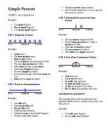
· I am meeting some friends after work. · I am not going to the party tonight. · Is he visiting his parents next weekend? · Isn't he coming with us tonight? Examples: USE 4 Repetition and Irritation with · You are learning English now. "Always" · You are not swimming now. · Are you sleeping? · I am sitting. · I am not standing. · Is he sitting or standing? · They are reading their books. Examples: · They are not watching television. · What are you doing? · She is always coming to class late. · Why aren't you doing your homework
way that the reader himself must reconstruct the gap between them. The device is usually introduced by dots and followed by the conjunction "and" or "but". The function is to give subjective evaluation of facts to introduce an effect or some cause. NT: It was not Cape town, where people only frowned when they saw a black boy and a white girl... but. (here he loved her) SSD-s that are based on REDUNDANCY OF ELEMENTS OF SPEECH are: (Here belong devices based on repetition) FRAMING FRAMING means repeating the same word, phrase or sentence at the beginning and at the end of a sentence or passage.In this way the repeated unit is emphasised. NT: the street, so soft and sunny. Here he comes. She smiles and stretches out her hands. ANADIPLOSIS ANADIPLOSIS means repeating a word or phrase at the end of the clause or sentence and at the beginning of the next one. NT: Such was life. Life without hope. NT: Three fishers went sailing out in the West. Out in the
this movement include Donald Judd, John McLaughlin, Agnes Martin, Dan Flavin, Robert Morris, Anne Truitt, and Frank Stella. It is rooted in the reductive aspects of Modernism, and is often interpreted as a reaction against Abstract expressionism and a bridge to Postmodern art practices. The terms have expanded to encompass a movement in music which features repetition and iteration, as in the compositions of La Monte Young, Terry Riley, Steve Reich, Philip Glass, and John Adams. (See also Postminimalism). The term "minimalist" is often applied colloquially to designate anything which is spare or stripped to its essentials. It has also been used to describe the plays and novels of Samuel Beckett, the films of Robert Bresson, the stories of Raymond Carver, and even the automobile designs of Colin Chapman
As Lobeck and Denham point out, there's some overlap between possessive determiners and possessive pronouns. The basic difference, they say, "is that pronouns replace full noun phrases. Possessive determiners, on the other hand, have to occur with a noun" possessive pronoun A possessive pronoun is a part of speech that attributes ownership to someone or something. Like any other pronoun, it substitutes a noun phrase and can prevent its repetition. For example, in the phrase, "These glasses are mine, not yours", the words "mine" and "yours" are possessive pronouns and stand for "my glasses" and "your glasses," respectively. preposition A preposition is a word used to link nouns, pronouns, or phrases to other words within a sentence. Prepositions are usually short words, and they are normally placed directly in front of nouns. In some cases, you’ll find prepositions in front of gerund verbs. preposition vs. adverb particle
Grammar: · Generalisation of word forms (I likes, they sees) · Non-standard use of ,,never" (I never did it) · Participles are often proceeded by ,,a" (I sat there a-watching) · Universal tag ,,isn't it" is used disregarding the main person, tense or auxiliary (You are going now, isn't it?) · In North-Wales Welsh use ,,yes" (You are studying Welsh, yes?) · Fronting of a constituent (Singing they were; Coming tomorrow he is) · Negative use of the word ,,too" (They can't do that too) · Repetition of an adjective or an adverb for emphasis (It was a high high building) · Use of ,,do" to assure (I do go to chappel every Sunday) · The use of ,,there" for exclamations (There strange it was! Meaning: How strange it was!) Vocabulary: · ,,Del" and ,,Bach"- terms of endearment · Welsh use ,,delight" in the meaning of ,,interest" · ,,Rise" in the meaning of ,,get" or ,,buy" (I'll rise the drinks) · ,,Tidy" in the meaning of ,,nice" or ,,good" (It's a tidy car)
Practice Online (TPO) This is an environment that helps students prepare for the Test of English as a Foreign Language (TOEFL). Unlike for the aforementioned predecessors, the goal for developing SpeechRater is to provide scoring for assessments that cover a wide range of speaking proficiency (i.e., not only pronunciation) and to elicit spontaneous and natural speech from the test candidates as opposed to mere reading or repetition (Xi, Higgins, Zechner, & Williamson,2008; Xi, Zechner, & Bejar, 2006; Zechner & Bejar, 2006; Zechner, Higgins, Xi & Williamson (in press). The tasks scored by SpeechRater are modeled on those used in the Speaking section of the tofel iBT (internet-based test) These tasks ask the examinee to provide information or opinions on familiar topics based on their personal experience or background knowledge, as well as to respond to read or audio stimuli related to campus
of shots, it is getting closer to firing more than 400 shots. So far only the Zumwalt class destroyers, capable of generating 78 megawatts of electricity and built specifically for that purpose can handle the railguns. 9 Picture 3. Zumwalt class destroyer Source: http://www.popularmechanics.com/military/research/news/a27455/us-navy-railgun- more-powerful 3.2 Multi-shot salvos Initial firing repetition rate (rep-rate) of multi-shot salvos have already been successfully conducted at low muzzle energy. The next test sequence calls for safely increasing launch energy, firing rates and salvo size. Railgun rep-rate testing will be at 20 megajoules by the end of the summer 2017 and at 32 megajoules by 2018. To put this in perspective; one megajoule is the equivalent of a one-ton vehicle moving at 160 miles per hour.
Post-1960 General Trends. Critics searched something to re-establish a connection with the past. The borders between painting and sculpture became blurred. Concept art stressed the idea of the artist over material execution to transform art from physical objects to mental images. Pop Art. Pop Art emerged as an original and irreverent parody of the vulgar imagery and artifacts of the commercial culture. It grew from Action Painting towards objectivity. Use of repetition and the elimination of dramatic climax were favored by the composer John Cage. Rauschenberg and Johns introduced "popular" materials into their art by depicting them or actually incorporating real objects. Pop Art debuted in 1962. The works spanned painting, sculpture and objects of daily use. "Happenings" (improvised semi-dramatic visual spectacles with audience participation) contributed to the Pop culture of the 1960s. The art form is based on the anonymous, mechanized and mass-produced
Post-1960 General Trends. Critics searched something to re-establish a connection with the past. The borders between painting and sculpture became blurred. Concept art stressed the idea of the artist over material execution to transform art from physical objects to mental images. Pop Art. Pop Art emerged as an original and irreverent parody of the vulgar imagery and artifacts of the commercial culture. It grew from Action Painting towards objectivity. Use of repetition and the elimination of dramatic climax were favored by the composer John Cage. Rauschenberg and Johns introduced "popular" materials into their art by depicting them or actually incorporating real objects. Pop Art debuted in 1962. The works spanned painting, sculpture and objects of daily use. "Happenings" (improvised semi-dramatic visual spectacles with audience participation) contributed to the Pop culture of the 1960s. The art form is based on the anonymous, mechanized and mass-produced
little more than mistakes, rants, unsolvable problems, or bad practices to be avoided if possible. Sometimes called pitfalls or dark patterns, this informal use of the term has come to refer to classes of commonly reinvented bad solutions to problems. Thus, many candidate anti-patterns under debate would not be formally considered anti-patterns. By formally describing repeated mistakes, one can recognize the forces that lead to their repetition and learn how others have refactored themselves out of these broken patterns. 7. The Zachman Framework is a framework for enterprise architecture, which provides a formal and highly structured way of viewing and defining an enterprise. The Framework in practice is used for organizing enterprise architectural "artifacts" in a way that takes into account both: · who the artifact targets for example, business owner and builder, and
all sports and power lifts. If you try this but start to miss workouts or postpone them, revert to the basic swings twice per week, as I do, which will still guarantee faster progress than most exercise programs. To mimic The Kiwi, perform A on Monday and B on Friday, and glute activation raises (seen earlier) are performed before each. Workout A All exercises, except for kettlebell swings, are performed for 10 repetitions using a 13- Repetition Max2 (RM) weight. 1. Heavy dumbbell front squat to press (ass to heels)--squeeze glutes at bottom for one second before rising 2. One-arm, one-leg DB row 3. Walking lunges with sprinter knee raise 4. Wide-grip push-ups3 5. Two-arm kettlebell swings × 2025 Repeat sequence 24 times. Workout B 1. One-leg Romanian Deadlift (RDL)4 (1012 reps each side) 2. Chin-up (four-second negative lowering portion only) × 10 or until you cannot control descent5 3
Main verbs can’t express negation like this For example: You should not do this. *She liken’t it.* Inversion In order to form a question, helping verbs can be inverted while main verbs cannot. For example: She likes it. Does she like it? Not: Likes she it?* Code Avoidance of repetition. For example: I can come and so can John. Not: I can come and so can come John.* Emphatic assertion The nuclear stress is on auxiliaries to mark a finite clause as positive rather than negative. For example: You must come tomorrow. I can come. (You are wrong to think I cannot). Helping verbs do not take ‘-s’ in the the 3rd person
was different. He is more optimistic, believes that life goes on and that is indestructable. Although many individual lives were ruined, the life goes on, everything is not material success. Racial minorytis, who do not have all the rights, the have nots, the simple, the poor, the idiots. His method is very interesting. A lot of naturalistic elements, unpleasant details, not pure naturalist. Narrator's point of view, his style is more poetic of the style, rhythm and repetition. Steinberg is fascinated in foreign elements, includeing immigrants. He is a believer of the superiority to the country people to the city people. Because when his characters manage to establish themselves on the land they are usually good hearted and hard working, but when they have to abandon their land the trouble comes. Like a naturalist, great cruelty and passion. Very often the characters are simple, when they do commit crimes they do it out of accident and they regret it immediately
employers as provided for in Directive 89/391/EEC. 4. The employer shall, without delay, report any serious and/or fatal occupational accidents and situations of serious danger to the competent authorities. If necessary, the employer shall update the safety and health document recording measures taken to avoid any repetition. Article 6 Communication, warning and alarm systems The employer shall take the requisite measures to provide the necessary warning and other communication systems to enable assistance, escape and rescue operations to be launched immediately if the need arises. Article 7 Keeping workers informed 1
The Overture is in sonata allegro form. The first bars indicate a kinship with Tubin’s Fifth Symphony. The main theme (Violin) proceeding in narrow and oppressing second-thirds, spinning around an axis, sounds like a cry for help: Example 83. A common atmosphere binds all that follows. The theme, quite short in essence, remains open, the composer widening by changing colours and shape. The performance principle of the runic song (usually pure repetition with only tiny deviations) becomes, to a certain extent, obvious. The middle section (development) is based on the subsidiary theme, the composer is offering several of its variants in delicate colours and harmonies. The initial rhythmical “drumming” (as with Tubin) is met almost through all the work creating high tension (an exception is a wide singing episode in the development). The recapitulation is hard and massive summing up all into a tragic end.
1999, p. 304, italics mine) in sharp contrast to a first-rate performance (Shakespeare's A Midsummer Night's Dream) in a theatre in Bucharest. Hoffman's obsessive repetition of the word `muddle' throughout her account strangely reminds of E.M. Forster's novel, A Passage to India, in which what the British colonizers stigmatize as `Indian muddle' seems to be the final cause for unsuccessful intercultural communication between East and West
ref to, decomposition/high numbers of decomposers; leading to high BOD; reference to ‘blue-baby’ syndrome; links to haemoglobin; max 4 [4] 39. 1 ref to setting grid/area to be sampled; 2 suitable systematic method chosen/ref to belt/line transect; 3 ref to repetition of line transects; 4 use of quadrats; 5 use of appropriate sized quadrat; 6 details of regular quadrat placing; 7 identify species/use of keys; 8 presence or absence in quadrat; 9 calculation of % of species frequency; 10 measure % cover/use of appropriate scale; e.g. (Braun-blanquet/ACFOR/ DAFOR/DOMIN) 11 ref to analysis of data/use of kite diagram; 12 AVP; ref to relevant statistical analysis, e.g
Some problems: no negative form *mayn't, only may not mightn't occurs but is not used by most speakers of AmE. - inversion: both may be inverted in matrix interrogatives. Does she like it? *Likes she it? Will you come? *Saw you them? Have you seen them? also: Seldom had he seen such a sight. Hardly had I left the room, when they began talking about me. Had I known he was coming, I'd have waited. - code: avoidance of repetition, ... and so... constructions I can come and so can John. I want to ask you and so does Mary. *I want to ask you and so wants Mary. Can you come tomorrow? I can. the whole VP is not repeated - emphatic assertion/positive: the nuclear stress is on auxiliaries to mark a finite clause as positive rather than negative: You `must come tomorrow. I' can come. (You are wrong to think I cannot.) Meanings of the modal verbs:
Poe came to conclusion that The most basic human emotion is fear, so he turned to the supernatural. His stories became much more popular than his poems. His stories were More or less successful. Poe's stories became popular because of Climactic arrangement of the events and the poetic style, appropriate for their mood. Poe's style: vocabulary is not natural, extremely formal. He prefers the literary, bookish layer of vocabulary. Unnatural way. Names are outlandish, fantastic. Repetition he repeats certain rhythms, motifs. He classified his stories into 3 categories: 1.Grotesque include a kind of grim, dark humour 2.Arabesque mostly horrors and strong emotions, fear. 3.Ratiocinative rational, logical analysis in reconstructing the order of events. Each category represented a different intention. He developed mastered, perfected stories. The short story of psychological effect
PPU Place of Primary Use PQA Palm Query Application PQFP Plastic Quad Flat Pack PQO Parallel Query Option PRACSA Public Remote Access Computer Standards Association PRAM Parallel Random-Access Machine + Parameter Random Access Memory .PRC Pilot Resource (file name extension) [Palm Pilot] .PRD Printer Driver (file name extension) [Microsoft] PRE Preformatted [HTML] PREP Power PC Reference Platform [IBM/Motorola] PRF Pulse Repetition Frequency .PRF Preferences (file name extension) [Grammatik IV] .PRG Program (file name extension) PRI Primary-Rate Interface PRINTF Print with Formatting [C Programming Language] PRISM Photo-Refractive Information Storage Material .PRJ Project (file name extension) [Borland] PRMD Private Management Domain [X.400] PRML Partial-Response Maximum-Likelihood .PRO Professionals (Domain Name) [Internet] + Profile (file name extension) PROC Procedure
international tourism United Nations Industrial Development Organisation responsible for industrial advancement of developing countries through technical assistance, advice and training. ATOMIC ENERGY AGENCY safe and peaceful use of atomic energy. Public International Law Grading: 55% final exam (90 min written, open book), 30% 2 planned quizzes (closed book, multiple choice), 15% work in class (repetition!!!) Simplified procedure: before exam he announces the grades based on quizzes and work in class. You can agree and skip the exam. Text books: books in the syllabus are not compulsory. There will be two parts in the class, general and specific. General part: similar branches for all. Specific part: different branches (one week one branch) Contacts: [email protected] Lecture 10 NEXT WEDNESDAY QUIZ! 9. October
He became an avid amateur anthropologist, joining the Natural Science Society of Danzig, unearthing prehistoric graves, and reporting on his work to learned journals. (One of his scholarly articles was cited in the Encyclopaedia Britannica.) Kasiski died on May 22, 1881, almost certainly without realizing that he had wrought a revolution in cryptology. That revolution began when Kasiski shrewdly noted a phenomenon: the conjunction of a repeated portion of the key with a repetition in the plaintext produces a repetition in the ciphertext: key RTJNRTJNRUNRUNRTJNRUNRUNRTJNRtJNRUN plaintext tobeornot tobethatisthequestion ciphertext KIO v i EE io K Io v NUB N v J N u VKHVMQZ I A Each time that the key RUNR engages the repeated plaintext to be, the repeated ciphertext tetragraph KIOV results. Like causes produce like effects. Similarly, when the repeated key-fragment UN operates upon the repeated th's, the ciphertext registers repeated NU'S.
vexation. She could not help frequently glancing her eye at Mr. Darcy, though every glance convinced her of what she dreaded; for though he was not always looking at her mother, she was convinced that his attention was invariably fixed by her. The expression of his face changed gradually from indignant contempt to a composed and steady gravity. At length, however, Mrs. Bennet had no more to say; and Lady Lucas, who had been long yawning at the repetition of delights which she saw no likelihood of sharing, was left to the comforts of cold ham and chicken. Elizabeth now began to revive. But not long was the interval of tranquillity; for, when supper was over, singing was talked of, and she had the mortification of seeing Mary, after very little entreaty, preparing to oblige the company. By many significant looks and silent entreaties, did she endeavour to prevent such a proof
ever you want to cancel out a thought or feeling that makes you angry or unhappy. The Law of Habit says, “Any thought or action that you repeat over and over will eventually become a new habit.” When you repeat- edly react and respond in a positive way, you take full control over your conscious mind. Soon it becomes automatic and easy to think and act in that manner. By using willpower and repetition, you de- velop new habits of thinking and acting. By applying this law, you can become a completely positive person and change your life. ■ STARVE YOUR NEGATIVE EMOTIONS Your negative emotions have all been learned, beginning in child- hood. And what has been learned can be unlearned, sometimes ccc_tracy_2_18-39.qxd 6/23/03 2:46 PM Page 20 20 ➤ CHANGE YOUR THINKING, CHANGE YOUR LIFE quite quickly
by multiple genes become visible. It would be possible to have genes which interact with the semi-dominant white spotting gene such that small patches of colour break through the white or which cause a breakdown in white spotting. Some breeders report a consistently high incidence of numerous small splashes of colour on the body in certain breeding lines which suggests to them that some other gene(s) is being inherited alongside the white spotting gene. This may see a repetition of the Chinese Harlequin programme. "BIMETALLIC" SIBERIANS & PLATINUM PERSIANS 2013-2014, Sarah Hartwell Many thanks to Silvia Perego and Lesley Morgan for allowing the use of their photographs on this page. Note on Terminology: At present, terminology isn't standardised. "Bi-metallic" describes a visual effect, while "sunshine" is the (current) proposed genetic name. In Siberian Cats, sunshine-silver produces the bi-metallic pattern.
different emphasis. M y theoretical framework has been shaken from every angle, and I think is the richer for it. A FORM, NOT A FORMULA First, I must address a significant objection about the whole idea of The Writer's Journey — the suspicion of artists and critics that it is formulaic, leading to stale XVI PREFACE repetition. W e come to a great divide in theory and practice about these principles. S o m e professional writers don't like the idea o f a n a l y z i n g the creative process at all, and urge students to ignore all b o o k s a n d teachers a n d "Just do it." S o m e artists make the choice to avoid systematic thinking, rejecting all principles, ideals, schools of thought, theories, patterns, and designs. For them, art is an entirely
expression, its antecedent, usually though not always occurring earlier in the sentence or in a previous sentence. For example, in 28 Reference and referring (15) The man who lived around the corner was eccentric. He used to snack on turtle heads "he" refers back to the man who lived around the corner. Geach (1962) called such a term a "pronoun of laziness" and suggested that it merely abbreviates a boilerplate repetition of the antecedent phrase, so that (15)'s second clause is precisely equivalent to "The man who lived around the corner used to snack on turtle heads." Geach's suggestion is only one among several theories of anaphoric pronouns, but the general idea is that the pronoun has the referent that it does only in virtue of its relation to the antecedent phrase. If Geach is right, then (15) poses no problem for the Theory of Descriptions;
 annaabi.ee