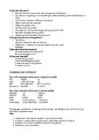
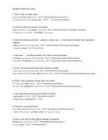
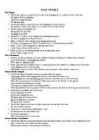
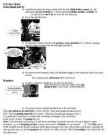
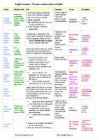
1) Describe the photo!! · Describe what you can see and what is happening in the photos. · Say where it's happening: ie on the left/right, at the bottom/top, in the middle,behind, in front · Use Present Continuous. What are they doing? · What clothes are they wearing? · What's the weather like? · Are they inside or outside? · Use adjectives. Do they look happy, sad, angry bored, tired? · How does the photo make you feel? · Would you like to be there? Why/Why not? 2)Comparing and contrasting photos!! · Similarities; all, most, some, both..also, as well, too · Differences; ..but/however/whereas/while/on the other hand.. Although.. 3)Speculate about the situation!! Use may/might/must/could/can't be... He seems to/appears to be.. 4)Give your reaction!! I'd love/hate do to that! It looks great/dangerous/awful! It makes me want to try/ go there.. ...
The Present Continuous What is Present Continuous The present continuous tense is formed from the present tense of the verb be and the present participle (-ing form) of a verb. Form am/is/are + verb + “ing” Examples: I am watching TV. He/she/it is watching TV. They/we/you are watching TV. How to use Present Countinuous When we use Present Continuous Use We use the present continuous tense to talk about the present: ● for something that is happening at the moment ● for something which is happening before and after a given time NB! Words what ends with -e: Make Making Invite Inviting
The Present Simple is the most basic tense in the English language. It is an interesting tense because it can be used Present Simple to express the future. Generally, though, we use it to Basic form describe the present activities or to talk about routines or Subject + Verb + -s (present form) John lives in New York. We play football every day. You are really kind. The meeting starts at 3 PM. Use the Present Simple: with state verbs. to talk about situations in life that last a relatively long time. when an event is certain to happen in the future. to talk about events that we can't change (for example, an official meeting or a train departure). The Present Simple is also used in narration...
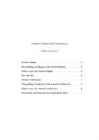
Present Simple and Continuous Table of Contents Present Simple ..................................................................... 2 The spelling of endings in the Present Simple ....................... 2 When to use the Present Simple ........................................... 3 The verb 'be' ......................................................................... 4 Present Continuous.............................................................. 5 The spelling of endings in the Present Continuous................ 5 When to use the Present Continuous.................................... 6 State verbs and event (action or dynamic) verbs ................... 7 Present Simple In the Present Simple we use the verb without an ending. I work you live we think they dance NB! In the third person singular (he, she, it, Mary, my friend, etc....
Conditionals Sentences with if are used to express possibilities. 0 Zero conditional If-clause present (past) simple Main clause present (past) simple Sometimes sentences with if express certainty rather than possibility. The zero conditional is used to talk about sth. that is always true (such as a scientific fact), or that was always true in the past. In this type of conditional we can use when instead of if. E.g., If/When you mix blue and red, you get purple. If/When you don't water flowers, they die. (present simple in both parts of the sentence) If/When I asked her to come with us, she always said no. (past simple in both parts of the sentence) 1 First conditional If-clause present simple; Main clause future tense (or: can, must, may, etc., + bare infinitive) Used to talk about the consequences of a possible action (a real or very probable situation in the present or ...
Ways of expressing the Future Table of Contents Future Simple ...................................................................... 2 Be going to ........................................................................... 3 Present Continuous .............................................................. 3 Present Simple ..................................................................... 4 Future Continuous ............................................................... 4 Future Perfect....................................................................... 6 Other ways of referring to the future ..................................... 7 Other future references......................................................... 8 Future Simple In Future Simple we use the modal verb will + the verb. It is the same in all persons. I will work I’ll work ...
Present Perfect Simple and Present Perfect Continuous Table of Contents Present Perfect Simple.............................................................................2 When to use the Present Perfect Simple ...........................................2 Present Perfect Continuous ...................................................................3 When to use the Present Perfect Continuous..................................4 Time expressions with Present Perfect...............................................5 Present Perfect Simple The Present Perfect is the present tense of have + a past participle I have washed / I’ve washed you have written /you’ve written he/she/it has worked /he’s/she’s/it’s worked we have forgotten /we’ve forgotten they have gone /they’ve gone Negative I/y...
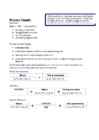
PRESENT CONTINUOUS Klaarika Kaljula 9a Use 1.Present actions 2.Temporary actions 3.Longer actions in progress 4.Future (personal) arrangements and plans 5.Trends 6.Irritation 1.Present Actions Happening at the moment of speaking Most often, we use the Present Continuous tense to talk about actions happening at the moment of speaking. Ex. He is eating a dinner. Mary is talking with her friends. They are swimming in the pool. Stative Verbs There is a certain group of verbs that usually does not appear in the Continuous form. They are called Stative Verbs, and if used in the Continuous form, they have a different meaning. Ex. I think you look pretty today. Meaning: Opinion I'm thinking of moving to San Francisco. Meaning: Act of thinking 2.Temporary Actions Activities continuing only for a limited period of time This tense is also used fo...
Conditionals: 0 and I What is a conditional sentence? • Conditional sentences have at least two clauses: IF clauses and THEN clauses • Examples: If I go into town tomorrow, then I will see a movie. If he spoke Chinese, then he would work as a guide in China. If they had been faster, then they would have won the race. IF Clauses (the condition) • IF clauses present the condition. • Examples: If I go into town tomorrow… If he spoke Chinese… If they had been faster… THEN Clauses (the results) • THEN clauses present the results. • Examples: … then I will see a movie. …. then he would work as a guide in China. … then they would have won the race. IF and THEN Clauses • The word “then” is optional, but the clause is still the result of the condition. So it is a “THEN” clause, without the word “then.” 0 CONDITIONAL • Situations that are always true if something happens. • Instructions, rules • If I am late, my father t...
FUTURE TENSES FUTURE SIMPLE (WILL/SHALL) Form: will/shall + algvorm USE: 1)Predicting a future happening or situations 2)Shalll can be used with i and we 3)Descisions to do smthing at the time of speakin (offering to o / agreeing to do smthing/ promising to do smth) Negative: I can see you' re busy, so I WON't BE GOING TO Form: am/is/are going to + algvorm Use: 1) Descisions to do smthing, intentions. I'm going to buy a new car 2) Predictions about the future, which are based on the situation now. PRESENT SIMPLE ( I do) WITH A FUTURE MEANING Use: 1)Talking about timetables, programmes: My train leaves at 11.30. 2) Talking about people if their plans are fixed like a timetable. PRESENT CONTINUOUS (I am doing) WITH A FUTURE MEANING Use: 1)Talking about descisions and arrangements (sbdy has decied and arranged to do smthing). He is playing squash on Monday afternoon 2) You can use present contiuous for an action just before you b...
FUTURE SIMPLE BE GOING TO Will + infinitive (will go) Am/is/are going to + infinitive (is going to rain) 1.A decision at the moment of 1.Future plans made before the speaking: moment of speaking: A: 'I'm cold'. A: 'We've run out of milk.' B: 'I'll close the window'. B: 'I know, I'm going to buy some.' 2.Prediction based on opinion: 2.Prediction based on present I think the Conservatives will win the evidence: next election. Look at those boys playing football! 3.A future fact: They're going to break the window. He will be ten next year. 4.Promises / requests / refusal / willingness: I'll help you with your homework. Will you give me a hand? 5.In the same way as the future...
INGLISE KEELE PÕHITÕED C.K 2017 A – AN – SOME Singular: a or an Use some for things you can't count ◦ *a banana *a car *a monkey *a football ◦ *some milk *some water *some coffee ◦ *an egg*an accident *an umbrella *an *some sugar eagle ◦ *some tea *some juice*some money *some butter Plural: some Exercises: 1. http://www.english-4u.de/a_an_some_ex1.htm ◦ *some bananas *some cats *some monkeys *some 2. http://www.english-4u.de/a_an_some_ex3.htm balls ◦ *some eggs*some oranges *some umbrellas *some 3. http://www.english-4u.de/a_an_some_ex6.htm eagles We us the ...
First Conditional: A real possibility in the future A First Conditional sentence is for future actions dependent on the result of another future action or event, where there is a reasonable possibility of the conditions for the action being satisfied. Formation: if + present simple, + will For example: If she gets good grades, she will go to university. We are talking about the future, but we use a present tense for the condition and will for the result. In this case, the person is sure about going to university. We can use other modal verbs in the result part of the sentence. For example: I Condition Result Possibility F she gets good she will go to If the condition is met, then she definitely If grades, university. will go he gets good he may go to If He is not sure about g...
Golden Grammar rules 1. Don't use an with own. Sue needs her own room. (NOT Sue needs an own room.) I'd like a phone line of my own. (NOT ... an own phone line.) 2. Use or rather to correct yourself. She's German or rather, Austrian. (NOT She's German or better, Austrian.) I'll see you on Friday or rather, Saturday. 3. Use the simple present play(s), rain(s) etc to talk about habits and repeated actions. I play tennis every Saturday. (NOT I am playing tennis every Saturday.) It usually rains a lot in November. 4. Use will ..., not the present, for offers and promises. I'll cook you supper this evening. (NOT I cook you supper this evening.) I promise I'll phone you tomorrow. (NOT I promise I phone you tomorrow.) 5. Don't drop prepositions with passive verbs. I don't like to be shouted at. (NOT I don't like to be shouted.) This needs to be thought about some more. (NOT This needs to be thought some more.) 6. Don'...
Present continuous and present simple We use present continuous For actions that we have already arranged to do in the near future, especially when the time has been decided. I’m coming back next Monday. What are you doing tomorrow evening? We use present simple For events that always happen at certain time, or are part of timetable. The supermarket closes at 9 p.m. His plane arrives at four o’clock tomorrow afternoon. After if in conditional sentences (type I). If you leave home at 7.30, you will be on time. Ekke Kaha
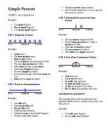
Windows are not made of wood. Simple Present · · New York is a small city. It is not important that this fact is untrue. [VERB] + s/es in third person USE 3 Scheduled Events in the Near Examples: Future · You speak English. · Do you speak English? · You do not speak English. USE 1 Repeated Actions Examples: · The train leaves tonight at 6 PM. · The bus does not arrive at 11 AM, it arrives at 11 PM. ...
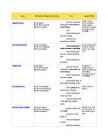
tense Affirmative/Negative/Question Use Signal Words always, every ..., action in the present Simple Present A: He speaks. never, normally, N: He does not speak. taking place once, never or often, seldom, Q: Does he speak? several times sometimes, usually if sentences type I facts (If I talk, ...) ...
INGLISE KEELE EKSAMI KONSPEKT Sisukord Sisukord ......................................................................................................................................... 1 Ajavormid ...........................................................................................
Present Perfect Simple The present perfect simple expresses an action that is still going on or that stopped recently, but has an influence on the present. It puts emphasis on the result. Form of Present Perfect Positive Negative Question I / you / we / the I have spoken. I have not spoken. Have I spoken? y he / she / it He has spoken. He has not spoken. Has he spoken? For irregular verbs, use the participle form (see list of irregular verbs, 3rd column). For regular verbs, just add "ed". Exceptions in Spelling when Adding `ed' Exceptions in spelling when adding ed Example after a final e only add d love loved final consonant after a short, stressed vowel admit admitted or l as final consonant after a vowel is doubled travel travelled final y after a consonant becomes i hurry hurried Use of Present Perfect ·...
The present continuous We use the present continuous to talk about: 1. Something which is happening at the moment of speaking. I'm reading the Grammar referance page. 2. Something which is happening around now but not necessarily at the moment of speaking. I'm reading a lot of detective novels these days. 3. A changing situation. Computers are getting faster and faster. 4. Something which happens often and annoys us. My boss is always asking me to stay late. The present simple We use the present simple to talk about: 1. A routine or a habit. Jim always sets the alarm for 7.30. 2. Facts which stay the same for a long time. I have a friend who lives in London. She works in a museum. 3. Something which is always true. Ice melts when you heat it. Verbs not normally used in the continuous form 1. Some verbs are not normally used in the coniuous. These...
ACTIVE TENSES Active form You use an active verb when you want to say that the subject of a sentence does something. · [Thing doing action] + [verb] + · +[thing receiving action] · Examples The professor (subject doing action) teaches (verb) · the students (object receiving action). · Mary (subject doing action) · washes (verb) · the dishes ( object receiving action). The tenses of the verb 1.Present (olevik) 2.Past (minevik) 3.Future (tulevik) 4.Future in the past (kaudne tulevik) Iga aeg võib esineda neljas eri rühmas 1.IndefiniteTenses (üldajad) 2.Continious Tenses (kestvad ajad) 3.Perfect Tenses (perfekti ajad) 4.Perfect Continious Tenses (perfekti kestvad ajad) Indefinite Tenses (üldajad) used to describe actions but do not state whether the action is completed or on- going märgivad tegevuse sooritamise fakti Peter visits us every day. Peter visited ...
PRESENT SIMPLE (lihtolevik) Form: 1st form (+s) Use: 1. Things in general. Nurses look after patients in hospitals. 2. Things that happen all the time or repeatedly. She usually goes away at weekends. 3. Laws of nature (things that are true in general). The sun rises in the east. 4. Timetable events. The train leaves at 6.50 p.m. Negative form: I don't (do not) normally eat my lunch here. He doesn't (does not) like this film at all. Question form: Do you live here? How often does it rain around here? Signal words: always, every day/month, never, normally, often, seldom, sometimes, usually etc. PRESENT CONTINUOUS/PROGRESSIVE (kestev olevik) Form: am/is/are + ing Use: 1. Unfinished actions happening at or around the time of speaking. Listen! Somebody is crying. They are building a new bridge in our town....
Unprepared monologue 1.INTRODUCTION: · Presentation of the topic (Think about the topic, what have other people said about it?) · Presentation of the theme (What is the message you want to convey?) · Preview of the body (In my presentation today I`m going to explain...;The topic of this presentation...) · Transition (Use linking devices,think of coheison..) 2.THE BODY: · Point one (Firstly, I`d like to..; My first point is...; To start with, I`d...; The first option is...;) · Point two (Secondly we can...; Another aspect is...; My next point is...; On the other hand...;) · Point three (Thirdly..; Let me move on to...; The third point is about...;) · Transition (Move to conclusion. Dont forget linking devices and coheison) 3.CONCLUSION: · Review and summary (Give an account of points...
Tense Form Use Hints Example + I pv ((e)+s) Present Simple 1. daily routines, habits or repeated actions Every hour/day/week etc , I always play football in -? do/does not+I pv 2. permanent states usually, always, in the the evenings morning/evening/night, at night Present Am/is/are+Iing 1. actions happening now, at the moment of speaking Now, at the moment, these I am writing a lettesat Continuous 2.actions happening around th...
INGLISE KEELE KORDAMINE TIME CLAUSES Present Simple · Permanent states, facts (Tom works..) · Repeated and habitual actions, routines (She usually goes..) · Laws of nature and general truths (The sun sets in the west) · Timetables and programmes · Sporting commentaries, rewiews (Beckham wins the ball, crosses and Owen scores) · Feelings and emotions (I love Tallinn..) TIME EXPRESSIONS USED WITH PRESENT SIMPLE: usually, often, always, every day/week etc, in the morning/evening etc, at night/the weekend, on Fridays etc. Present Continuous · Actions taking place at or arount the moment of speaking (The kids are watching TV..) · Fixed arrangements in the near future (I'm going to the dentist tomorrow) · Currently changing ang developing situations (The number of burgularies is increasing) · Wi...
The Passive Voice Table of Contents The Passive Voice................................................................................. 2 Tenses in the Passive Voice ................................................................ 2 Modal Verbs and Future in the Passive Voice ................................. 3 The Passive with ’get/have’ ................................................................ 4 When to use the Passive ..................................................................... 5 Verbs with two objects ........................................................................ 5 The Passive with ’by/with’ .................................................................. 6 Talking about what other people say ................................................ 6 The Passive Voice The subject is the starting point of the sentence, the thing we are talking...
Reported Speech (in other words Indirect Speech) If we report what another person has said, we usually do not use the speaker's exact words (direct speech), but reported (indirect) speech. Therefore, you need to learn how to transform direct speech into reported speech. We use reported speech when we are saying what other people say, think or believe. - Example: If this verb is in the present tense (says), it's easy. We just put 'she says' and then the sentence. When we are reporting things in the present, future or present perfect we don't change the tense. : direct speech: "I like ice cream" reported speech: She says she likes ice cream - But, if the reporting verb is in the past tense (said), then usually we change the tenses in the reported speech: direct speech: "I like ice cream" reported speech: She said she liked ice cream. ......... · When there are Changing tenses: present changes to past:::: am/is --- was are -...
Past Simple and Continuous Table of Contents Past Simple .......................................................................... 2 The spelling of endings in the Past Simple ............................ 3 When to use the Past Simple ................................................ 3 Past Continuous .................................................................. 4 When to use the Past Continuous......................................... 4 Used to & would................................................................... 5 Unfulfilled past events.......................................................... 5 Past Simple Regular Past Simple forms end in -ed. I worked he danced we apologized Some verbs have an irregular past form. I left he wrote The Past Simple is the same in all persons except in the past tense...
PAST TENSES Past Simple Used to talk about a completed past action which happened at a completed time in the past. We went to Tallinn yesterday. I saw him a long time ago. We met last week. Used to talk about a series of events that happened one after another. He walked to school, took off his coat, went to class and fell asleep. Used to report what people said. He said that he was tired. He asked to go home. Used after "It's time" (even though we're talking about now) It's time we talked about the past (now). After "I'd rather" (even though we're talking about now) I'd rather you drove (now). (But "I'd rather drive" if talking about yourself) After "I wish" (even though we're talking about now) I wish I had a million dollars (now). After "If only" (even talking though we're talking about now= ...
Conditionals Table of Contents Conditionals ......................................................................... 2 A. Real Conditionals ............................................................. 2 B. Unreal Conditionals ......................................................... 3 Linking words used in Conditionals ...................................... 4 Conditionals Conditions deal with imagined situations: some are possible, some are unlikely, some are impossible. A. Real Conditionals Real Conditionals refer to situations that are true, have happened, generally happen or are likely to happen. The First Conditional expresses a possible condition and a probable result: If I have time, I will help you. In the if-clause we use the Present Simple, in the main clause will + the verb. We can also use the Present Continuous or Perfect in the if-clause and...
FUTURE FORMS Future Simple (will +I) a) in predictions about the future usually with the verbs think, believe, expect, etc., the expressions be sure be afraid, etc., and the adverbs probably perhaps, certainly, etc I'm afraid we won't be on time for the meeting. b) for on-the-spot decisions. c) for promises (usually with the verbs promise, swear, guarantee, etc.), threats, warnings, requests, hopes (usually with the verb hope) and offers. d) for actions/events/situations which will definitely happen in the future and which we cannot control. The temperature will reach 40°C tomorrow. Be going to a) for plans, intentions or ambitions we have for the future. ...
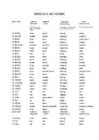
IRREGULAR VERBS INFINITIVE SIMPLE SIMPLE PRESENT PAST PRESENT PAST PARTICIPLE PARTICIPLE (for he, she, or it, (Use with is or was to refer (Use with have or had) add "s" in present to a continuing action) tense) TO ARISE arise arose arising arisen TO AWAKE awake awoke awaking awoken TO BEAR bear bore bearing borne, born TO BEAT beat beat beating beaten TO BECOME become became becoming become TO BEGIN begin began ...
Simple Present Present Progressive/Continious (99%) infinitive form of 'be' and verb + ing (3rd person singular: infinitive + 's') I speak I am speaking you speak you are speaking he / she / it speaks he / she / it is speaking we speak we are speaking they speak they are speaking Signal words: always, every, often, normally, usually, Signal words: at the moment, at this moment, today, sometimes, seldom, never, first, then now, right now, Listen!, Look! Rules · in general (regularly, often, never) · right now e...
present continues use 1- now right now I am playing basketball use 2-longer actions in progress I am practising skiing to become a master skier use 3-near future I am playing drums after school use 4-repitition and irritation with the word always she is always bossing people around past continues use 1- interrupted action in the past I was writing song lyrics when he came in use 2-specific time as interruption yesterday at 2 o'clock I was skiing use 3-parallel actions when he was playing basketball, I was playing guitar use 4-atmosphere when I walked into the classroom many people were busy doing hometasks,some were talking,and some were complaining about something use 5-repitation and irritation with the word always she was always bossing people around future continues use 1-interrupted action in the future I'll be singing when she leaves the classroom use 2-specific time as interruption in the future tonight at...
REPORT What´s the purpose of the report? A report is usually written to give information to somebody who needs it. This means that the writer knows more about the subject than the reader. You may be asked to give information, evaluate something, or make suggestions and recommendations. MAKE YOUR REPORT CLEAR AND SIMPLE. What style should I use? A report is based on facts and/ or data. Think carefully about the best way to present the facts. Be clear and avoid unnecessary detail. Give essential information and recommendations. A report is a formal piece of writing and it is impersonal (avoid using the pronoun " I "). Say what you have to say in as few words as possible. How should I structure a report? Every report, like an essay, should have the following parts: A. INTRODUCTION- state what you are going to write about. If the report is based on a survey, state when and by whom the survey...
Real conditions (Type I) These sentences describe what the speaker thinks will possibly happen as a result of a real situation. If you train hard, you will succeed in sport. If you don’t train hard, you won’t succeed in sport. We can also use modal verbs (can, may, must, should) instead of verbs in the main clause. If i have enough time, i can visit you. Unreal conditions (Type II) These sentences describe what the speaker thinks would possibly happen in an imaginary situation. If I saw a ghost, I would be scared. If I had wings, I could fly. We can give advice with If I were you. If I were you wouldn’t do that NOTE We normally use were instead of was in conditional sentences. I’d go to the cinema, if i weren’t so tired. E...
Book 1 BASIC ENGLISH BASIC ENGLISH GRAMMAR GRAMMAR BASIC ENGLISH GRAMMAR Book 1 Book 1 Younger students at beginning to intermediate levels will greatly benefit from this step-by-step approach to English grammar basics. This is the ideal supplement to your language arts program whether your students are native English speakers or beginning English language learners. Skill-specific lessons make it easy to locate and prescribe instant reinforc...
Verbs! Verb forms Review of tenses Chapter 12, Pg 215 1 Timeline Draw a timeline of your life. List 810 events on the time line. Make sure you list your future graduation date! Moved to Cali 2005 Was Born Traveled to Europe Husband 1978 School graduates @ Oxford 1999 Started Got married School 1983 2008 2 The Six English Verb Tenses Three Simple Tenses Simple continuous Present You walk. You are walking I run. I am running. Past You Walked You w...
English began as a west Germanic language which was brought to England bt the Saxons around 400 AD. The spoken and written laguage berween 400 and 1100 AD is referred to as Old English. Many words used today come from Old English. In the 9th and 10th centuries, when Vikings invaded England, Old Norse words entered the language English from about 1300 to 1500 is known as Middle English. It was influenced by French and Latin. French brouht many words connected with goverment. Modern English eas greatly influenced by the English used in London and changed a great deal until the end of the 18th century. Many words were introduced from Greek and Latin to express new ideas, especially in science, medicine and philosophy. Nowadays 80 percent of the word-stock is foreign-born. So we can say that most world languages have contributed some words to English at some time, and the process is now being reversed. Purists of the languages are res...
MONOLOGUE: preparation time 3 minutes, uninterrupted monologue time 2 minutes ----------------------------------------------------------------------------------------------------------------- EDUCATION AND JOBS A5 MONOLOGUE Topic A5.2 Read the topic below and prepare to speak about it. Use the questions given to help to plan your monologue. Some people think that all school-children should wear school uniforms. Why do you think they say that? Do you agree? Give reasons. ---------------------------------------------------------------------------------------------------------------- You are expected to structure your monologue and present it speaking fluently with appropriate pronunciation and intonation and only natural pauses. You are expected to express yourself confidently, clearly and politely. Interact naturally with appropriate openings, fillers and amplifications. Be logical and clear, paraphrase successfully. Your vocabulary...
Red Hot Chili Peppers Jan Kristian Mõtsnik Nyo Gymnasium 11c 2015 Introduction Red Hot Chili Peppers are an American funk rock band formed in Los Angeles in 1983. Their musical style is funk, rock and punk rock. They are still active today Original founders Anthony Kiedis (active) Michael „Flea“ Balzary (active) Hillel Slovak (Died in 1988) Jack Irons (Quit after Hillel’s death) Current members Anthony Kiedis – lead vocals (1983–present) Josh Klinghoffer – guitar, keyboards, backing vocals (2009–present, touring member 2007) Michael "Flea" Balzary – bass, piano, trumpet, backing vocals (1983–present) Chad Smith – drums (1988–present) Studio albums The Red Hot Chili Peppers (1984) Freaky Styley (1985) The Uplift Mofo Party Plan (1987) Mother's Milk (1989) Blood Sugar Sex Magik (1991) One Hot Minute (1995) Californicatio...
Tense Tense Signal words Use Form Examples Present Every day, Sometimes, Infinitive, I work simple sometimes, happens The workes always, often, repeatly, He/she/it I go usually, seldom, how often + -s She goes never, first...then. something (1.pv.) happens. Present Now Something To be Iam working progressive At the moment is (am/is/are) He's working Look! happening infinitive + I'm going Listen! (- ing) He's going Past simple Last Action Impulsive + I worked Yesterday took ...
Verbs of motion Verbs of motion ACTUAL HABITUAL MEANING To walk To ride To fly To carry, bring To lead To drive To swim, sail To run Unprefixed Verbs of M otion , , , , , , , , , , , , , , , , , , , , , , , , , , , , , , , , , , , , , , , , TO GO PAST PRESENT FUTURE PAST PRESENT FUTURE , as in the model. Use adverbs of time. Model: . . . 1. . 2. . 3. . 4. ? 5. ? 6. . The Past Tense of the Verb The verb in the past tense (, , , ) denotes movement in one direction. : , . . . . . Use the verbs , , , , , in the required form. 1. _______ . . ________ 2. . ...
English Grammar - The most common tenses in English Signal Example Tense Use Form words s something happens repeatedly how often something happens every one action day follows sometim another es I work always infinitive Present things in he/she/it he works often Simple general + s I go usually he goes seldom ...
Noun Adjective Noun Adjective Noun Adjective Noun Adjective Noun Adjective Noun Adjective liberty liberal grammar grammatical possibility possible dark dark honesty honest fun funny energy energetic magic magical optimist optimistic jealousy jealous royalty royal biology biological globe global basis basic music musical ancestor ancient silence silent occupation occupational sensation sensational science scientific environment ...
CONDITIONALS 0 or 1? TYPE 0 ZERO CONDITIONAL In 'zero' conditional sentences, the tense in both parts of the sentence is the simple 'IF' CLAUSE (CONDITION present: ZERO CONDITIONAL (TYPE 0) 'IF' CLAUSE MAIN CLAUSE (CONDITION) (RESULT) If + simple present If + simple present If you heat ice, it melts. If it rains, you get wet TYPE 0 'IF' CLAUSE MAIN CLAUSE (CONDITION) (RESULT) If + simple present If + simple present If plants don't get they die. enough water, If you mix red and blue, you get purple Make sentences (type 0) Heat water/ boil Mix yellow and red/get orange Conditional Type 1 · First Conditional: real possibility · We are talking about the future. We are thinking about a particular condition or situation in the future, and the result of this condition. There is a real possibility that this conditi...
MODULE 1 Greeting. Introducing oneself and the others. The alphabet. Spelling. The tenses. How to introduce yourself and others Formal introductions How to respond and reply to an May I introduce myself? I am John introduction Smith. How do you do. Allow me to introduce John Smith to Pleased to meet you. you. Standard introduction Nice to meet you. I'd like you to meet John Smith. Hello. I want you to meet John Smith. I'm so pleased to meet you. This is Jane Smith. I'm Jane Smith. My name's John Smith. Informal introduction Hi. John. Jane. Hello. Titles: Mr Mrs Miss Ms Ms is a modern form of address for women. It replaces the traditional forms of Mrs and Miss. Greetings Good morning/afternoon/evening...
Grammar point Made by Nikolai Hodosevich Conditional mood The conditional mood is the form of the verb used in conditional sentences to refer to a hypothetical state of affairs. Conditional verb forms can also have temporal uses, often for expressing "future in the past" tense. Condition sentences are often entered with conjunction IF Real events Structure: Additional clause Present Indefinite Main clause Future Indefinite If I have a lot of money, I will buy a car , Almost unreal events *In additional and main clauses usually use Subjunctive I and II *When you translate into Russian these sentences, you should use conjunction * This type of unreal conditional sentence use, when speaker wants to underline small probability of condition realization Almost unreal events Structure: Additional claus...
Modal Verbs Table of Contents Introduction ......................................................................... 2 Characteristics of Modal Verbs ............................................. 2 When to use the Modal Verbs ............................................... 3 Expressing permission.......................................................... 3 Expressing obligation ........................................................... 3 Making offers........................................................................ 5 Making requests ................................................................... 6 Expressing possibility/probability......................................... 7 Asking about possibilities ..................................................... 7 Infinitives ............................................................................. 8 In...
English Grammar - The most common tenses in English Tense Signal words Use Estonian Form Examples · something happens repeatedly *korduv tegevus every day · how often something happens *püsiv olukord sometimes, *tulevikus · one action follows another I work Present twice a week toimuv, seotud · things in general infinitive he works Simple always, often sõiduplaanidega · after the following verbs (to love, ...
 annaabi.ee