 50 punkti
Autor soovib selle materjali allalaadimise eest saada 50 punkti.
50 punkti
Autor soovib selle materjali allalaadimise eest saada 50 punkti.
 ~ 10 lehte
Lehekülgede arv dokumendis
~ 10 lehte
Lehekülgede arv dokumendis
 2017-10-16
Kuupäev, millal dokument üles laeti
2017-10-16
Kuupäev, millal dokument üles laeti
 1 laadimist
Kokku alla laetud
1 laadimist
Kokku alla laetud
 0 arvamust
Teiste kasutajate poolt lisatud kommentaarid
0 arvamust
Teiste kasutajate poolt lisatud kommentaarid
 v2rtjas
Õppematerjali autor
v2rtjas
Õppematerjali autor
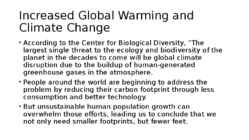
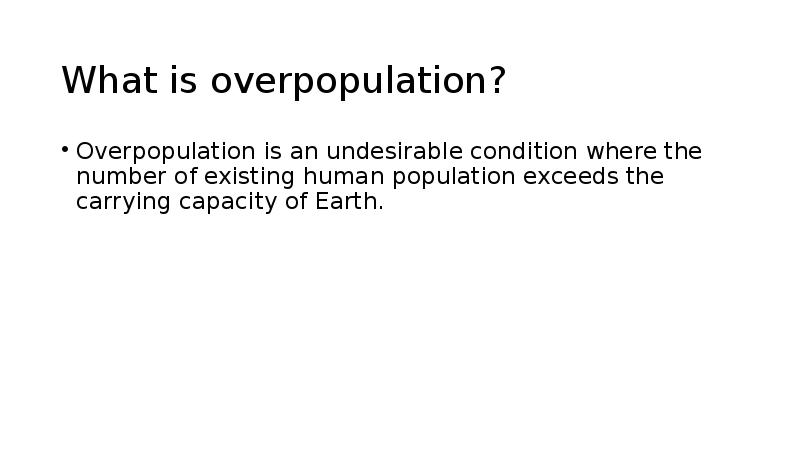
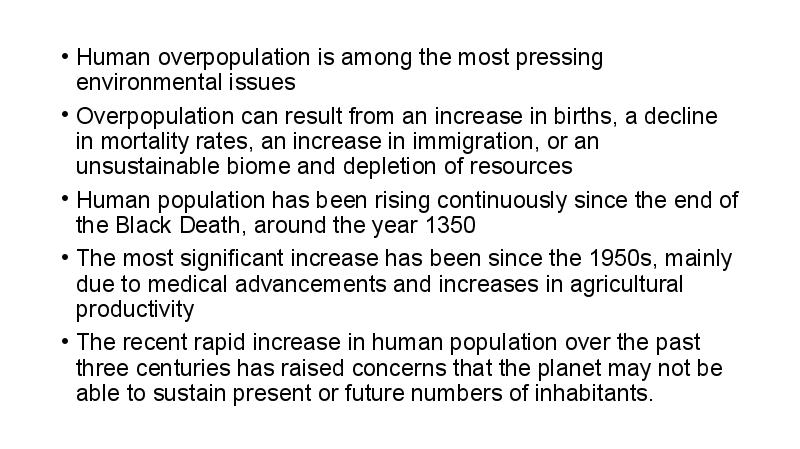
Heavy metals, nitrates and plastic are toxins responsible for pollution. While water pollution is caused by oil spill, acid rain, urban runoff; air pollution is caused by various gases and toxins released by industries and factories and burning of fossil fuels; soil pollution is majorly caused by industrial waste that deprives soil from essential nutrients. FIND OUT 5 WAYS HOW TO STOP POLLUTION. 2. Global Warming: Climate changes like global warming is the result of human practices like emission of Greenhouse gases. Global warming leads to rising temperatures of the oceans and the earth surface causing melting of polar ice caps, rise in sea levels and also flash floods, excessive snow or desertification. FIND OUT 5 WAYS HOW TO STOP GLOBAL WARMING. 3. Overpopulation: The population of the planet is reaching unsustainable levels as it faces shortage of resources like water, fuel and food. Population explosion in less developed and developing countries is
We do not inherit the Earth from our ancestors; we borrow it from our children There is a saying that „we do not inherit the Earth from our ancestors, we borrow it from our children.“ Nowadays people don not think about it and are ruining the planet. There are researches which say that the human life on Earth will go extinct within a century. Eventually the Earth will become uninhabitable. People cannot change the past but their actions affect the future. One of the ways how people are affecting the lives of future generations is increasing pollution. Clean air and water are the most valuable resources, but they are getting more and more polluted. For example the air in China is so polluted that people need to wear masks.
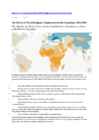
http://www.pewforum.org/2015/04/02/religious-projections-2010-2050/ APRIL 2, 2015 The Future of World Religions: Population Growth Projections, 2010-2050 Why Muslims Are Rising Fastest and the Unaffiliated Are Shrinking as a Share of the World’s Population The religious profile of the world is rapidly changing, driven primarily by differences in fertility rates and the size of youth populations among the world’s major religions, as well as by people switching faiths. Over the next four decades, Christians will remain the largest religious group, but Islam will grow faster than any other major religion. If current trends continue, by 2050 … The number of Muslims will nearly equal the number of Christians around the world. Atheists, agnostics and other people who do not affiliate with any religion – though increasing in countries such as the United States and France – will make up a declining share
profitable to grow due to biofuels, some farmers have shifted their cultivation from rice and wheat cultivation to maize. As a result, the prices of all staple crops, such as rice, wheat and maize have been affected (Rosegrant, 2008). Corn is one of the most widely used food staples in the world. In 2005, the US produced 42% of the world's corn and it is has a variety of uses. About 50% of the field corn grown in the USA is used for animal feed, but smaller volumes, i.e. 10% is used for direct human consumption in corn based meals. Corn is also important in providing cooking oil and margarine in the USA. In addition, corn sweeteners supply more than 56% of the sweeteners market in the US (Soyatech, 2012). Nevertheless, it has been hard to predict how decreased production actually has impacted the food market. Corn's primary utilisation is in animal feed, and even then it is often mixed with other feed types. Corn's higher prices on the first
Acid rain, one of the most important environmental problems of all, cannot be seen. The invisible gases that cause acid rain usually come from automobiles or coal-burning power plants. Acid rain moves easily, affecting locations far beyond those that let out the pollution. As a result, this global pollution issue causes great debates between countries that fight over polluting each other's environments. For years, science studied the true causes of acid rain. Some scientists concluded that human production was primarily responsible, while others cited natural causes as well. Recently, more intensive research has been done so that countries have the information they need to prevent acid rain and its dangerous effects. The levels of acid rain vary from region to region. In Third World nations without pollution restrictions, acid rain tends to be very high. In EasternEurope, China, and the Soviet Union, acid rain levels have also risen greatly
These resources have included basic food supplies, clothing, shelter, fuel, spices, industrial raw materials, and medicine for all those who have lived in the majesty of the forest. However, the inner dynamics of a tropical rainforest is an intricate and fragile system. Everything is so interdependent that upsetting one part can lead to unknown damage or even destruction of the whole. Sadly, it has taken only a century of human intervention to destroy what nature designed to last forever. The scale of human pressures on ecosystems everywhere has increased enormously in the last few decades. Since 1980 the global economy has tripled in size and the world population has increased by 30 percent. Consumption of everything on the planet has risen- at a cost to our ecosystems. In 2001, The World Resources Institute estimated that the demand for rice,
and is currently on the faculty of Oberlin College in Ohio. Reprinted from Ocean Arks International's excellent quarterly tabloid Annals of Earth, Vol. VIII, No. 2, 1990. Subscriptions $10/year from 10 Shanks Pond Road, Falmouth, MA 02540. If today is a typical day on planet Earth, we will lose 116 square miles of rainforest, or about an acre a second. We will lose another 72 square miles to encroaching deserts, as a result of human mismanagement and overpopulation. We will lose 40 to 100 species, and no one knows whether the number is 40 or 100. Today the human population will increase by 250,000. And today we will add 2,700 tons of chlorofluorocarbons to the atmosphere and 15 million tons of carbon. Tonight the Earth will be a little hotter, its waters more acidic, and the fabric of life more threadbare. The truth is that many things on which your future health and prosperity depend are in dire jeopardy:
electricity generation),followed by solar hot water/heating, which contributed 1.3%. Modern technologies, such as geothermal energy, wind power, solar power, and ocean energy together provided some 0.8% of final energy consumption. While there are many large-scale renewable energy projects and production, renewable technologies are also suited to small off-grid applications, sometimes in rural and remote areas, where energy is often crucial in human development.Kenya has the world's highest household solar ownership rate with roughly 30,000 small (20100 watt) solar power systems sold per year. Some renewable energy technologies are criticised for being intermittent or unsightly, yet the market is growing for many forms of renewable energy. Climate change concerns coupled with high oil prices, peak oil and increasing government support are driving increasing renewable energy legislation, incentives and commercialization
 annaabi.ee












Kõik kommentaarid