Sheep senses and social cognition Sheep generally are held in low regard as far as cognition and social skills are concerned. However there is now interesting evidence from studies of their behaviour and brain function that they have highly sophisticated social and emotional recognition skills using faces, voices and smell. They are able to recognize and remember many diferent sheep and humans for several years or more and appear to have some capacity for forming mental images of the faces of absent individuals. The precence of such social cognition abilities in this species
dreaming. When predominant direction of eye movements was up and down, one subject dreamed he had thrown basketballs, looking up the net and shooting, then looking down to pick another ball off the floor. · In contrast, another REM period in which the eye movements were mostly from side to side, produced a dream in which the subject watched two people throwing tomatoes at each other. Dreams as Cognition: Dreams reflect what we know, what we have experienced, remembered, thought about- activities psychologists call 'cognition'. Components of the dream were surely drawn from dreamer's own knowledge, which contains info about flying or tea or car crash etc. Some psychologists have founded: people who remember more of their dreams are more likely to have better and sharper visual mental images in their waking life; perhaps their dreams
norskamine, õhtune kohvijoomine · Päevaseid uinakuid tegid 47,8% uuritavatest. Uurimused (3) · Platseeboefekt usk ilma ravimi/vahendita toob muutuse · Uuritavad, kellel pikem REM-uni, sooritasid teste paremini neist, kel lühem REM-uni. Draganich, C; Erdal, K. (2014). Placebo Sleep Affects Cognitive Functioning. Journal of Experimental Psychology: Learning, Memory, and Cognition. Vol. 40, No. 3, pp 857-864. Hea uni? · Liigu piisavalt · Toitu tervislikkuse põhimõtteid arvestades · Tuuluta tuba · Tee kükke! · Kasuta enesesisendust lõdvestuseks? · Pöördu arsti poole ...kui o mal kä vilja ei el proo kanna vitu ku idagi Kasutatud kirjandus 1. Draganich, C; Erdal, K. (2014). Placebo Sleep Affects
· Psychology is the scientific study of the behavior of the individuals (what we do) and their mental processes (inner thoughts and feelings) · Studies human behavior, inner experiences and circumstances under they occur · Is psychology a study of differences between people or rather a study of similarities? - General tendencies Primary goal · The primary goal of psychology is to improve the understanding of behavior and cognition of our self and other people Why do we do what we do? Why do we think what we think? Why do we feel what we feel? · The aim is to... · Describe behavior what is the nature of this behavior? · Understand and explain behavior - why does it occur? · Predict behavior can we forecast when and under what circumstances it will occur? · Change behavior - how can we change behaviour? For discussion: there is a clear connection between
offlowers, fruits, vegetables, or ornamental plants. 2. Caveat (hoiatus)- a warning or caution; admonition 3. Husbandry (põllundus)- the cultivation and production of edible crops or of animals for food; agriculture; farming. 4. Yield (tootma)- to give forth or produce by a natural process or in return for cultivation 5. Intuitive (vaistlik)- perceived by, resulting from, or involving intuition 6. Cognition (tunnetus)- the act or process of knowing; perception 7. Silt (setted)- earthy matter, fine sand, or the like carried by moving or running water and deposited as a sediment. 8. Unequivocally (ühemõtteliselt)- in a way that is clear and unambiguous 9. Fungi (seened)- a taxonomic kingdom, or in some classification schemes a division of the kingdom Plantae, comprising all the fungus groups and sometimes also the slime molds. 10
Olemise väärtused (Being values ) B - values (metamotives) Tippelamused (peak experience) intensiivne olemise väärtuste tunnetamine Kriteeriumid 1. Kestvus (lühiajaline - sekunditest kuni minutiteni) 2. Intensiivsus 3. Realselt üleelatav seisund 4. Ruumi ja aja transformatsioonid 5. Terviklikkus, teadvustamise teravus 6. Mõju järgnevatele sündmustele spontaansed tippelamused transitiivsed "punktid" eluteel Being cognition (B - cognition) " ... passive mode of perceiving. It involves letting oneself be reached, touched or affected ..." VI Metavajadused ja metapatoloogia: B - values (Metaneeds) Deprivatsioon Metapatoloogia 1. Tõde ebaausus skeptitsism (truth) 2. Headus kurjus egoism (goodness) 3. Ilu inetus vulgaarsus (beaty) 4. Terviklikkus atomism desintegratsioon (unity) 5. Tundlikkus masinlikkus tühjus, tundetus
Olemise väärtused (Being values ) B - values (metamotives) Tippelamused (peak experience) intensiivne olemise väärtuste tunnetamine Kriteeriumid 1. Kestvus (lühiajaline - sekunditest kuni minutiteni) 2. Intensiivsus 3. Realselt üleelatav seisund 4. Ruumi ja aja transformatsioonid 5. Terviklikkus, teadvustamise teravus 6. Mõju järgnevatele sündmustele spontaansed tippelamused transitiivsed "punktid" eluteel Being cognition (B - cognition) " ... passive mode of perceiving. It involves letting oneself be reached, touched or affected ..." VI Metavajadused ja metapatoloogia: B - values (Metaneeds) Deprivatsioon Metapatoloogia 1. Tõde ebaausus skeptitsism (truth) 2. Headus kurjus egoism (goodness) 3. Ilu inetus vulgaarsus (beaty) 4. Terviklikkus atomism desintegratsioon (unity) 5. Tundlikkus masinlikkus tühjus, tundetus
dissimilar, then their correlations with one another appear wholly due to their being all variously saturated with some common fundamental Function (or group of Functions)" Korrelatsioonid g - ga classics: 0.99, mathematics: 0.86, music: 0.72, weight discrimination: 0.44 g - common (general) factor - general intelligence s - specific factors üldine intelligentsus, spetsiifiline intelligentsus Spearman, C. 1923. The nature of `Intelligence' and the principles of cognition. New York: The Macmillan Company. Spearman, C. 1927. The abilities of man. Their nature and measurement. New York: The Macmillan Company. g - vaimne energia (mental energy), füsioloogiline alus, (erinevad neuronite grupid); sünnipärane andekuse üldmäär, konstantne suurus. s - vaimse energia avaldumisvormid, sõltuvad miljööst. "g is essentially characterized by the combination of noegenesis with abstractness" noegenesis - seoste taipamine, tuletamine (vs.
dissimilar, then their correlations with one another appear wholly due to their being all variously saturated with some common fundamental Function (or group of Functions)" Korrelatsioonid g - ga classics: 0.99, mathematics: 0.86, music: 0.72, weight discrimination: 0.44 g - common (general) factor - general intelligence s - specific factors üldine intelligentsus, spetsiifiline intelligentsus Spearman, C. 1923. The nature of `Intelligence' and the principles of cognition. New York: The Macmillan Company. Spearman, C. 1927. The abilities of man. Their nature and measurement. New York: The Macmillan Company. g - vaimne energia (mental energy), füsioloogiline alus, (erinevad neuronite grupid); sünnipärane andekuse üldmäär, konstantne suurus. s - vaimse energia avaldumisvormid, sõltuvad miljööst. "g is essentially characterized by the combination of noegenesis with abstractness" noegenesis - seoste taipamine, tuletamine (vs.
W. Truscott & F. L. Emory, tõlge.). New York: Dover. (Originaalteos publitseeritud 1814) Tekstis: (Laplace, 1814/1951). Artikkel või peatükk kogumikus Viidatakse põhimõttel: Autor (aasta). Artikli pealkiri. Kogumiku toimetaja, Kogumiku pealkiri (artikli lk-d). Ilmumise koht: Kirjastaja. · Massaro, D. (1992). Broadening the domain of the fuzzy logical model of perception. In H. L. Pick, Jr., P. van den Broek, & D. C. Knill (Eds.), Cognition: Conceptual and methodological issues (pp. 51-84). Washington, DC: American Psychological Association. · Bergmann, P. G. (1993). Relativity. In The new encyclopedia Britannica (Vol. 26, pp. 501-508). Chicago: Encyclopedia Britannica. Kui entsüklopeedia märksõnal ei ole autorit, siis algab viide märksõnaga, millele järgneb aasta. Publitseerimata uuringud · Almeida, D. M. (1990). Fathers' participation in family work:
When my stomach hurt, my mother used to read those lines to me: '' Kiirmus-kaarmus Varesele valu Harakale haigus Mustale linnule muu tõbi Meie laps saab varsti terveks.'' And beside human knowledge and cultural heritage, we will lose a knowledge of human cognition and our ability to understand how the mind organizes and processes information. We don't know how our mind works. We only know its thoughts by what comes out of it in a form of a speech. We express ourselves through a language. We must cherish and keep our languages, pass it on to our children. Also, we need to document endangered languages and encourage them to write them down and pass it on. Because, if we don't, we will lose a unique treasure.
outside of the acclaim of the Western art world and yet play a significant role in children's lives (Kindler, 1999). In addition to highlighting the dimension of pictorial choices and their relationship to specific purposes of pictorial behavior, the model proposed by Darras and Kindler recognizes frequent interplay of the gestural , vocal -verbal, and graphic actions in the emergence and development of pictorial systems. This is consistent with Parson's (1998) notion about the nature of cognition in the arts. Parsons argues that the prevailing systems approach to cognition identifies the different arts as each being a different symbol system and "requires thought to stay within the boundaries of a single medium it is dealing with on the assumption that, if it moves from one system to another, it looses its coherence" (p. 106). He expresses concern that such understanding of cognition in the arts "transforms a dimension of difference into a principle of separation" (p.106). The
PubMed. Mai 2008. 2. Krystal AD, Erman M, Zammit GK, Soubrane C, Roth T; ZOLONG Study Group. Long-term efficacy and safety of zolpidem extended-release 12.5 mg, administered 3 to 7 nights per week for 24 weeks, in patients with chronic primary insomnia: a 6- month, randomized, double-blind, placebo-controlled, parallel-group, multicenter study. PubMed. Jaanuar 2008. 3. Boyle J, Trick L, Johnsen S, Roach J, Rubens R. Next-day cognition, psychomotor function, and driving-related skills following nighttime administration of eszopiclone. PubMed. Juuli 2008.
1. Bereft a simple past tense and past participle of bereave, to deprive 2. Cognition the act or process of knowing, preception 3. Derive to receive or obtain from a source or origin, in Chemistry to produce or obtain from another 4. Pitchblende a major ore of uranium and radium 5. Deplorable causing or being a subject for regret; very bad 6. Fission the act of cleaving or splitting into parts 7. Harnessing the combination of straps, bands, and other parts forming the working gear of a draft animal 8
tähelepanu (ei kuule või ei näe ohtu) ning sattuvad liiklusõnnetustesse. Allikad: Frank A. Drews, Monisha Pasupathi, and David L. Strayer ,,Passenger and Cell Phone Conversations in Simulated Driving" University of Utah, 2008 http://www.psych.utah.edu/lab/appliedcognition/publications/passenger.pdf Eva Tammelo ,,Mobiiltelefoniga rooli taga - parem mitte" http://www.epl.ee/artikkel/121824 Applied cognition lab http://www.psych.utah.edu/lab/appliedcognition/ Tune Into Traffic http://www.tuneintotraffic.co.uk/
hour clock. Jet lag is a sudden circadian disruption caused by flying across several time zones in one day. Flying east, you lose hours of the day; flying west extends your day. Jet lag often causes insomnia and decreased alertness. The body adjusts about 1 hour or less per day to time zone changes. Typically, people adjust faster when flying west, probably because lengthening the travel day is more in accordance with our natural free-running circadian cycle. Examine one interaction between cognition and physiology in terms of behavior. Prosopagnosia, also known, as face-blindness is a condition when a person cannot recognize faces although they are able to see the face and understand that it is a face of a person. However, they are able to recognize and identify faces through other sensory stimuli such as auditory, tactile and even other visual stimuli patterns. Prosopagnosia is associated with the fusiform gyrus. The study of prosopagnosia has
2. Gehringer, William L. & Engel, E. (1986). Human Perception & Performance. Journal of Experimental Psychology, 2, 181-185. 3. Gibson, J.J. (1979). The Ecological Approach to Visual Perception. Boston: Houghton Mifflin. 4. Gregory, R.L. (1980) Perception as hypothesis. Philosophical Transaction of the Royal Society of London, 290, 181-197 5. Gross, R. (2005). Psychology. The science of mind and behaviour, 5th ed. London: Hodder Arnold. 6. Neisser, U. (1976). Cognition and Reality. San Fransisco: W.H.Freeman 5
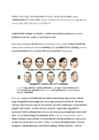
Wilma A. Bainbridge. The Memorability of People: Intrinsic Memorability Across Transformations of a Person’s Face. Journal of Experimental Psychology: Learning, Memory, and Cognition. 2017, Vol. 43, nr. 5. Lk 706–716. Artikkel käsitleb uuringut kus juureldakse millisel määral püsib meeldejäämine stabiilne tundmatu inimese näo miimika ja vaatenurga muutusel. Peale esimest kohtumist jäävad teatud inimesed meelde terveks eluks, teistega võid kohtuda kordi ja kordi, kuid ikka on raskusi mäletamisega. Kui sa kohtuksid kahe inimesega jooniselt, siis on suur tõenäosus, et isik A jääks sulle meelde, kuid isiku B unustaksid. Joonis
lk 110-113 · Wiseman, R (2011)"Out-of-body experiences" Paranormality, Macmillan, Mackays, UK, lk 13-57 Artiklid: · Blackmore, S.J. (1987) ,,Where am I?: Perspectives in imagery, and the out-of-body experience" Journal of Mental Imagery, 11, lk 53-66 · Debner, J. A.; Jacoby, L. L. (1994) ,,Unconscious Perception: Attention, Awareness, and Control" Journal of Experimental Psychology: Learning, Memory, and Cognition, American Psychological Association Inc, 20 (2), 304-317 · Hayden Ebbern, Sean Mulligan ja Barry Beyerstein (1996) "Maria's NDA: Waiting for the other shoe to drop" Skeptical Inquirer, 20(4), lk 27-33 · Klauer, K. C; Musch, J; Naumer, B (2000)Psychological Review, Vol 107(4), Oct 2000, lk 852-884 · Sireteanu R, Oertel V, Mohr H, Linden D, Singer W, (2008). "Graphical illustration and functional neuroimaging of visual hallucinations during prolonged blindfolding: A
Relating to a transitional or initial stage; marginal, insignificant, occupying a position on, or on both sides of a boundary or threshold. Arnold van Gennep (1873-1957): · Separation (from previous status). · Marginal or liminal period (transition). · Reincorporation of those passing into new statuses Victor W Turner (1920-1983): · Liminality as "Betwixt and Between Time". · Liminality is fraught with danger and opportunity. Why? · Anti-Structure: "liberation of human capacities of cognition, affect, volition, creativity, etc., from normative constraints ... a kind of institutional capsule or pocket which contains the germ of future social developments, of societal change" Ndembu of Zambia: Infertility Ritual & Social Structure · Unable to achieve pregnancy woman consults a diviner · Seance ensues, attended by woman's kin and reveals the cause
, Jia H., Mohamed-Ali V., Zachary, J., Martin, J.F., Steptoe A. (2005) Psychological stress activates interleukin-1 gene expression in human mononuclear cells. Brain, Behavior, and Immunity 19: 540546 Butler E.A., Egloff B., Wilhelm F.H., Smith N.C., Erickson E.A & Gross J.J. (2002) The Social Consequences of Expressive Suppression. Emotion 3(1): 48-67 Cohen, D. (1997). Ifs and thens in cultural psychology. In R. S. Wyer Jr. (Ed.), Automaticity of everyday life advances in social cognition p. 121131). Mahwah, NJ, US: Lawrence Erlbaum Associates, Publishers. Davidson R.J (2000) Emotion, Plasticity, Context and Regulation: Perspectives from affective neuroscience. Psychologcal Bulletin 126(6): 890-909 De Kloet E. R., Joels M., & Holsboer F. (2005) Stress and the brain: From adaptation to disease. Nature Reviews Neuroscience, 6: 463475. Dickerson S.S. & Kemeny M.E. (2004)Acute Stressors and Cortisol Responses: A Theoretical Integration and Synthesis of Laboratory Research
järjestus, keel ja kõne (kiirus) - Sõnumi vastuvõtja: sugu, enesehinnang, enesemonitooring - motivatsioon ja sõnumi relevantsus, personaalselt oluline; sõnumi sisule kõrgem tähelepanu <> ebaoluline, irrelevantne sõnum perifeersetele vihjetele tuginemine (nt. allikas); - olukorra mõtestamise, struktureerimise vajadus, komplekssete ülesannete eelistamine (need for cognition) - Võime, võimalus infot analüüsida: segamine, sõnumi kordamine, eelnevad teadmised Konformsus ja mõju käitumisele Tõekspidamiste v käitumise muutumine olukorras, kus seda muutust otseselt ei nõuta Põhjused - informatiivne - soov meeldida - püüd saada kasu, vältida karistusi Grupiga nõustumist mõjutavad - grupi üksmeel - pühendumine grupile - olukorra ebamäärasuse määr - soov olla individualist, teistest erineda
ISIKSUSEPSÜHHOLOOGIA METODOLOOGIA Kirjandus K: Hofstee, W. K. B. (2002). The questionnaire construction of personality: Pragmatics of personality assessment. In H. I .Braun, D. N. Jackson, & D. E. Wiley (Eds., pp. 19-35), The Role Of Constructs in Pyschological and Educational Measurement. New York: Lawrence Erlbaum. S: Schnabel, K. & Asendorpf, J. B. (2010). The self-concept: New insights from implicit measurement procedures. In B. Gawronski & B. K. Payne (Eds.), Handbook of implicit social cognition (pp. 408-425). New York: Guilford Press. Küsimused Hofstee (2002) artikli põhjal: Miks eitused ja tingimuslaused teevad küsimustiku mõistmise keerulisemaks? Miks on problemaatiline omadussõnade kasutamine küsimustikus? Mida tähendab "ülespuhutud-spetsiifiline" (bloated-specific) Millist probleemi näeb Hofstee relatiivsete skaaladega (st nt "madal ekstravertsus" on defineeritud kui "alumine 15%")? Märksõnad loengust: Millistele küsimustele saab teadus vastata
Teise objekti liikumist tajutakse organismi enda liikumisena. Tegevuse sooritamise ja sama tegevuse järgimine aktiveerivad ajus osaliselt samu piirkondi ning närvitakke (peegelneuronid). Seega representeeritakse käitumist ajus osaliselt selle tajutavate tagajärgede kaudu ja vastupidi (ühise kodeerimise teooria, common-coding theory) Ühtset koodi kasutatakse nii enda tegevuse juhtimisel kui teiste tegevuse mõistmisel. Mis on kehastustunnetus (embodied cognition)? Keha mängib tunnetuse kujunemisel ja analüüsimisel märkimisväärset rolli.
tunnetamine. Kriteeriumid: Kestvus (lühiajaline –sekunditest kuni minutiteni). Intensiivsus - Reaalselt üleelatav seisund - Ruumi ja aja transformatsioonid – inimesed ei taju enam aega ega ruumi. Terviklikkus, teadvustamise teravus – teeb inimese avatuks kogemusele. Mõju järgnevatele sündmustele – Spontaansed tippelamused. Transitiivsed ”punktid” eluteel. Being cognition (B - cognition) “ ... passive mode of perceiving. It involves letting oneself be reached, touched or affected ...” VI METAVAJADUSED JA METAPATOLOOGIA. B-VAJADUSED (METANEEDS): Deprivatsioon Metapatoloogia 1. Tõde ebaausus skeptitsism 2. Headus kurjus egoism 3. Ilu inetus vulgaarsus 4. Terviklikkus atomism desintegratsioon 5
Proceedings of the National Academy of Sciences USA, 91, 2016-2020. Tulving, E., & Pearlstone, Z. (1966). Availability versus accessibility of information in memory for words. Journal of Verbal Learning and Verbal Behavior, 5, 381-391. Tulving, E., Schacter, D.L., & Stark, H.A. (1982). Priming effects in word- fragment completion are independent of recognition memory. Journal of Experimental Psychology: Learning, Memory, and Cognition, 8, 336-342. Tulving, E., & Schacter, D. L. (1990). Priming and human memory systems. Science, 247, 301-306. Tulving, E. & Watkins, O.C. (1977). Recognition failure of words with a single meaning. Memory and Cognition, 5, 513-522. Tulving, E. & Wiseman, S. (1975). Relation between recognition and recognition failure of recallable words. Bulletin of the Psychonomic Society, 6, 79-82. Warrington, E. K., & Weiskrantz, L. (1968)
Privaatne ja avalik eneseteadvus “Mäletsemine” (rumination) o Watkins, E., & Moulds, M. (2005). Distinct modes of ruminative self-focus: Impact of abstract versus concrete rumination on problem solving in depression. Emotion, 5, 319-328. Tegevuse identifitseerimine o Wegner, D. M., & Vallacher, R. R. (1986). Action identification. In R. M. Sorrentino & E. T. Higgins (Eds.), Handbook of motivation and cognition: Foundations of social behavior (pp. 550-582). New York: Guilford. o http://www.wjh.harvard.edu/~wegner/actid.htm Mina-kontseptsioon: – mina-skeemid o Markus, H. & Wurf, E. (1987). The dynamic self- concept: A social psychological perspective. Annual Review of Psychology, 38, 299-337. – eesmärgid – eneseteooriad X LOENG Esimesed isiksusepsühholoogia ülevaatateosed (Allport, 1937; Stagner, 1937) Isiksusepsühholoogia erinevus Ameerika psühholoogia peavoolust 1930-ndatel (holism,
68% juhtudest vahemikus ± 5,43 senti. Alla mängides kasutas viiuldaja vaid ühte lahtist keelt, mille juhuslik kõrvalekalle esines vahemikus -1,69 kuni 1,69 senti. Hüpoteesiks oli, et süstemaatilsed helikõrguse kõrvalekalded esinevad suuremal või vähesemal määral iga noodi puhul pidas paika, v.a lahtisel D-keelel. 16 Kasutatud allikmaterjalid Carterette, Edward C.; Kendall, Roger A. 1999. Comparative music perception and cognition. Chapter 2: Pitch: A. Musical pitch and human hearing. - The Psychology of Music. Toim. Diana Deutsch. San Diego, CA, US: Academic Press, lk 730 Denckla, Ben 1997. Intonation Theory. http://xenia.media.mit.edu/~bdenckla/thesis/texts/htthe/node4.html, vaadatud 07.12.2015 Denckla, Ben 1997. The Role of Intonation in Music. http://xenia.media.mit.edu/~bdenckla/thesis/texts/htthe/node3.html, vaadatud 07.12.15. Freienthal, Heli. Olulised mõisted. http://www.lvrkk
Maslow’ vajaduste hierarhia lk 85 Füsioloogilised vajadused; Kaitstuse ja turvalisuse vajadus; Sotsiaalsed vajadused; Tunnustusvajadus; Eneseteostuse ja -arendamise vajadus Alternatiivide hindamismudelid lk 87 Lojaalsuspõhine; tasakaalustav; leksikograafiline; minimalistlik; maksimalistlik; tulemuspõhine Riskid lk 89 Füüsiline; funktsionaalne; sotsiaalne; psühholoogiline; rahaline ABC MUDEL lk 101 Affect – mõju; Behavior – käitumine; Cognition – tunnetus ABC analüüs Ettevõtte tooted, teenused või kliendid reastatakse tähtsuse järjekorras, et korrastada ettevõtte tooteportfelli või kliendisuhteid. Selgitakse välja toodete või klientide kasumlikkuse struktuur. Saame teada, millised tooted on tooteportfellis üleliigsed või millised kliendid on meile üliolulised. Analüüs eeldab müüginäitajate olemasolu toodete lõikes. Esmalt leitakse
«See võib olla oluline just sellistes olukordades, kus me pole päris kindlad, mida sai täpselt öeldud või tehtud. Meie töö näitab, et tõelisi mälestusi saab võimendada ja võltsmälestusi taandada,» ütles Parker. «Mõne uurimuse põhjal töötab selline nipp vaid kindlat tüüpi mälestuste korral, mis sõltuvad parema ja vasaku ajupoolkera vahelistest seostest,» selgitas Parker. Uurimus avaldati ajakirjas Brain and Cognition. (Silmade liigutamine ..., 30.11.2012) 11 MÄLU NÕRGENEMINE TABAB MEHI SAGEDAMINI KUI NAISI Ajakirjas Neurology ilmunud artiklis väidavad teadlased, et vananemisega seotud mäluprobleemid kimbutavad mehi 1,5 korda sagedamini kui naisi. Samas on naiste mälu nõrgenemine oluliselt kiirem. «Naised säilitavad küll meestest parema mälu kõrge eani suurema tõenäosusega, kuid allakäigu alates progresseerub see väga kiirelt,»
Hiina isiksusemudelis ilmnes, et OCEANiga kattus kolm: neurootilisus ja dependability; extraversion ja social potency ning individualism = agreeableness. Kogemusele avatus ei korreleerunud millegagi ning interpersonal relatedness (reflecting harmony, thrift, relational orientation and tradition). Filipiinidel ilmnes temperamentalness ja negatiive valence dimentions. VII PEATÜKK: Motivation (239-283) VIII PEATÜKK: Cognition and Perception (284-338) Taka Masuda ja kunstigaleriide näide – maalide kultuurilised erinevused. Käesolev peatükk käsitleb viise, kuidas põhilised kognitiivsed ja tajulised protsessid kultuurides varieeruvad. Neid käsitletakse selle raamatu kahe peamise teema valguses: 1. On kognitiivseid vahendeid, mis on universaalselt kättesaadavad, kuid ilmneb, et neid ei kasutata alati sama sagedusega, ega samal eesmärgil. 2
Alamklass 1 2 3 4 5 Tippklass 4. Tarbijakäitumine Selle all mõistetakse toodete ostmise ja tarbimisega seotud nähtusi. Tarbijakäitumise mõistmist on vaja turu segmentimisel ja toote positsioonimisel, toodete arendamisel ja uute toodete turule toomisel, hinnakujunduses, kaupade turustamisel, toetuse elluviimisel jp kohtades. Motivatsioon on kogu tarbimiskäitumise alus. Hoiaku ABC mudel: Affect – mõju Behavior – käitumine Cognition – tunnetus Tarbija omaksvõtu kõver Liidertarbijad- 2,5% Varajased järgijad- 13,5% Varajane enamus- 34% Hiline enamus- 34% Mahajääjad 16% Tarbija ostuotsustusprotsess Vajaduse määratlemine Info kogumine Alternatiivide võrdlemine Ostuotsuse langetamine ja ostmine Ostujärgne käitumine Ostuotsustusprotsessi põhitüübid: laiendatud- läbitakse kõik etapid, kogutakse rohkesti infot, on
and Stress. Väga laialdaselt, kuid eeskätt Ida- ja Kesk-Euroopa probleeme käsitleb International Journal of Safety and Ergonomics (Ohutuse ja Ergonoomika Rahvusvaheline Ajakiri), mida antakse välja Varssavis. Mõnisada ajakirja käsitleb lisaks põhiteemale ka ergonoomika aspekte: Accident Analysis and Prevention; Applied Cognitive Psychology; Applied Intelligence; Aviation, Space and Environmental Medicine; Behaviour & Information Technology, Cognition; Environmental Ethics; International Journal of Computer Intergrated Manufacturing; International Design Magazine; JETAI (Journal of Experimental & Theoretical Artificial Intelligence); Journal of Applied Physiology; Journal of Consumer Research; Memory and Cognition; Occupational Medicine. 9. Infouputus töökeskkonna optimeerimisel Töökeskkonna optimeerimisel on tõsiseks probleemiks infouputus. Ettevõtja peab kasutama
struktureerimist ja "vaatlemist". Kujutamise viiisid: Struktuuriline skematiseerimine (jaotatavus jts) Perspektiivi asetamine (kust/kuidas/ jne keel maailma kirjeldab) Tähelepanu jaotamine (figuur foon). Jagame maailma nii, et mingi referent on alati tähelepänu fookuses ja ülejäänu on taust, mille taustal me iseloomustame. Jõudünaamika (põhjuslikud suhted) (The relation of grammar to cognition, ptk Talmy rmtst Toward a Cognitive Semantics) Kognitiivsed ~ tunnetuslikud põhisuhted materjalist, sisust. Valdkonnad, mille suhtes me mõistetama. Nende valdkondade ja nende referendite suhted on tunnetuslikud põhisuhted. (Langacker tema joonistab neid jooniseid ring ringi sees jne. Kui kirjeldad grammatikat grammatika abil siis it's a mess ja asi ei saagi selgeks, Talmy) Inklusioon Identsus Separatsioon
There is no wrong or right choices in that matter, because metaphysically dancer could be not only thinker about the thinking, than to be thinker with thinking body. The issue persists and creates new questions: Who is concidered 21st century dancer? What is dance in its purest form, physical or metaphysical values? 42 Is it possible that injury can be taken as a pioneer for new cognition processes and new thinking? If previous theoretics have noticed the importance of inhibitation in habitudes, can injuries be taken as destroiers of old habits. Therefore perhaps they happen so that an individual could restructure. To understand self is to refer to yourself in regular activities. 43
Mis on peegelneuronid? Kuidas nad osalevad bioloogilise liikumise tajus? Peegelneuronid on närvirakud mis aktiveeruvad nii tegevuse sooritamise kui ka sama tegevuse jälgimise ajal. Peegelneuronite olemasoluga selgitatakse seda miks inimesed on võimelised teiste liikumist tajuma. Mängivad olulist rolli kui üritatakse aru saada teise inimese kavatsustest. Peegelneuronite süsteem aitab imiteerida ja saada aru teiste tegevusest. Mis on kehastustunnetus (embodied cognition)? Traditsioonilise arusaama kohaselt põhjustab inimese käitumise aju. Paljud uurijad peavadkeastustunnetuse all silmas seda, et aju mentaalsed toiminguid mõjutab omakorda keha seisund. Juhtfunktsioonid Tähelepanu Milline on juhtfunktsioonide roll ja kus nad ajus asuvad? Juhtfunktsioonid on täidesaatvad funktsioonid, frontaalsagara funktsioonid (kas aktiveerida või pidurdada), kognitiivne kontroll ja eneseregulatsioon, töömälu, tähelepanu (millal
humanity, sacred and secular at the same time. As the fundamental axis of the work, the struggle between good and evil is recognisable, personified in the images of God and Satan: “Do not follow the wicked but the eternal godly laws.” The oratorio is filled with absorbing polyphony: all is connected through the leitmotif of Job reflecting his mental anguish. With this the idea is accentuated: only through suffering is the human being able to rise to the cognition of real happiness. With his oratorio Kapp followed the grand line of Tobias. The chosen theme expressed, to a certain extent, Kapp’s own 1 Kakskümmend aastat Eesti muusikat: 1918-1938 (Twenty Years of Estonian Music: 1918-1938), ed. Karl Leichter (Tallinn: Tallinna Eesti Kirjastus-Ühisus, 1938) 70-72. suffering in Astrakhan, where he witnessed the communist deprecations. Having lost all he owned he was lucky to return to Estonia in 1920. His own hardships are reflected in
Neid kimbutab depressioon. Kuidas ära tunda madalat enesehinnangut? 1. Kuidas ta esitleb ennast? 2. Millised tunduvad olevat ta emotsioonid? 3. Vihjed jutust 4. Kuidas ta suhtleb teiste inimestega? 5. Kuidas nõustub enda kohta käivate negatiivsete hinnangutega? 6. Milline on sotsiaalne mõju? 7. Ei tunne huvi ülesannete vastu 8. Võrdlevad ennast sageli teistega Kuidas sotsiaalset enesehinnangut tõsta? 1. Ennast teeniv tunnetus (self-serving cognition) teatud puhkudel hakkavad inimesed moonutama oma taju sedasi, et see teenib enesehinnangu tõstmise eesmärki. Arvatakse, et positiivsed sündmused on seotud nende isikuomadustega, negatiivsed tulevad keskkonnast. 2. Enda abituks muutmine (self-handicapping) inimesed ise teadlikult või mitteteadlikult kahjustavad või takistavad oma sooritust, et hiljem oleks võimalik välja vabandada tõenäolist läbikukkumist. Nt viivitamine. Inimesed
Intelligence has dividual Differences, 42, 441–451. three facets. In: Guilford, J. P. (Ed.). Leino, M. (2000). Andekad probleem- Cognitive psychology with a frame of sed lapsed. Haridus, 2, 39–42. reference. San Diego, 16–25. Lens, W. & Rand, P (2000). Moti- Heinla E. (2008). Loovuse areng. Rmt: vation and cognition: Their role in E. Kikas (Toim.). Õppimine ja õpetami- development of giftedness. In: Heller, ne koolieelses eas. Tartu: Tartu Ülikooli K. A., Mönks, F. J., Sternberg, R. J. & Kirjastus, 238–246. Subotnik, R. F. (Eds.). International Heinla, E. (2002). Lapse loova mõtle- Handbook of Giftedness and Talent. Ox-
järgi sotsiaalses suhtluses toimitakse. Soovituslikku lugemist: Berry, John; Ype Poortinga, Marshall Segall, Pierre Dasen (2002). Cross-cultural psychology: Research and applications (2nd ed.). Cambridge University Press. D'Andrade, Roy; Strauss, Claudia 1992. Human Motives and Cultural Models. Cambridge University Press. Lonner, W. J., & Malpass, R. 1994. Psychology and culture. Boston: Allyn & Bacon. Shore, Bradd 1996. Culture in Mind: Cognition, Culture, and the Problem of Meaning. Oxford University Press. Masing, Uku 2004. Keelest ja meelest. Taevapõdra rahvaste meelest, ehk juttu boreaalsest hoiakust. Ilmunud Tartu : Ilmamaa. Matsumoto, David, & Juang, Linda 2004. Culture and psychology: People around the world (3rd ed.). Wadsworth. Shweder, Richard A. 1991. Thinking through cultures : expeditions in cultural psychology. Harvard University Press. Tulviste, Peeter 1978
a vigorous competitor. They reject the idea that there are particular conver- sational maxims of Grice's sort. Rather, they maintain, implicatures are the product of all-purpose cognitive processing that aims at efficiency of infor- mation transfer more generally. "Utterances raise expectations of relevance not because speakers are expected to obey a Co-operative Principle and maxims or some other communicative convention, but because the search for relevance is a basic feature of human cognition, which communicators may exploit" (Wilson and Sperber 2004: 608). "Relevance" is understood as a favorable balance of "positive cognitive effects" over processing time and effort; a positive cognitive effect is (roughly) an improvement in the hearer's representation of the world, such as acquisition of a true and useful belief. In general, we are always seeking to improve our cognitive condition in a cost- and time-efficient way.
Terminology, 4 (2), 275–302. Richard Boyd 1979. Metaphor and theory change. – Andrew Ortony (toim.), Metaphor and thought. Cambridge: Cambridge University Press, 356–408. Robert Boyd ja Peter J. Richerson 1992. Punishment allows the evolution of cooperation (or anything else) in sizable groups. Ethology and Sociobiology, 13 (3), 171–195. Robert Boyd ja Peter J. Richerson 2005. The Origin and Evolution of Cultures. Evolution and cognition. Oxford: Oxford University Press. Kirjandus 259 M. Teresa Cabré 1999a. La terminología: representación y comu- nicación : elementos para una teoría de base comunicativa y otros artículos. Girona: Documenta Universitaria. Maria Teresa Cabré 1999b. Terminology: Theory, Methods, and Applications. Amsterdam: John Benjamins. Deborah Cameron 1995. Verbal hygiene. London: Routledge. Stuart Campbell 2001
, Carrington, P. I., 8{ Carnevale, P. J. D. (1984). Physical attractiveness and self- esteem: Attributions for praise from an other-sex evaluator. Personality and Social Psy- chology Bulletin, 10, 43-50. Manis, M., Cornell, S. D., 8{ Moore, J. C. (1974), Transmission of attitude relevant informa- tion through a communication chain. Journal of Personality and Social Psychology, 30, 81-94· REFERENCES Markus, H., 8z Kitayama, S. (1991). Culture and the self: Implications of cognition, emo- tion, and motivation. Psychological Bulletin, 98, 224-253. Mather, M., Shafir, E., 8zJohnson M. K. (2000). Misremembrance of options past: Source monitoring and choice. Psychological Science, ll, 132-138. Mauro, R. (1984). The constable's new clothes: Effects of uniforms on perceptions and problems of police officers. Journal of Applied Social Psychology, 14, 42-56. Mauss, M. (1954). The gift. (I. G. Cunnison, Trans.). London: Cohen and West. Mazis, M. B. (1975)
"The irony of the whole situation is that when I switched back to chicken and sh, I was far leaner and felt more powerful. I mean, I was in better shape in my 40's as a meat eater than I ever was on a strictly plant-based diet.... When I did Ironman in '94, I felt like my strength, recovery, and muscle endurance was better than ever." Just because you don't want kids now, there is no reason to create hormonal issues that a ect everything from cognition to sexual function. I've seen too many lives disrupted by diet-induced hormonal problems. Think ahead. For my personal story, see "Sex Machine I: Adventures in Tripling Testosterone." Good luck and do your homework. It can be a confusing jungle out there, but there are ways to simplify. It's my hope that the ve-step progression in the last chapter helps you improve yourself and the world around you, one conscious meal at a time. Small changes matter. TOOLS AND TRICKS
 annaabi.ee