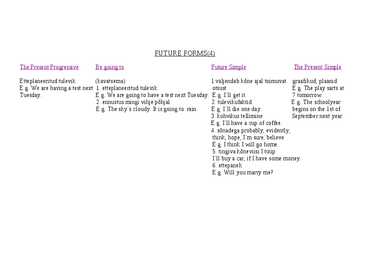
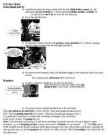
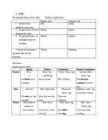
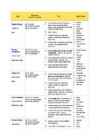
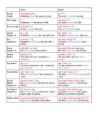
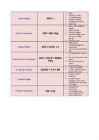
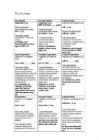
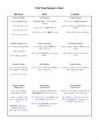
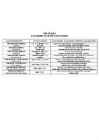
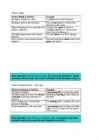
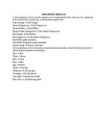
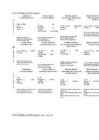
FUTURE FORMS(4) The Present Progressive Be going to Future Simple The Present Simple Etteplaneeritud tulevik (kavatsema) 1.väljendab kõne ajal toimuvat graafikud, plaanid E.g. We are having a test next 1. etteplaneeritud tulevik otsust E.g. The play sarts at Tuesday. E.g. We are going to have a test next Tuesday. E.g. I´ll get it. 7 tomorrow. 2. ennustus mingi vihje põhjal 2. tulevikufaktid E.g. The schoolyear E.g. The sky´s cloudy. It is going to rain. E.g. I´ll die one day. begins on the 1st of 3. kohvikus tel...
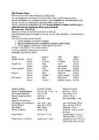
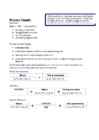
The Future Simple Lihttulevik Moodustamine: Jaatav lause Eitav lause Ksiv lause will + I pv will + not + I pv will + I pv I will work hard tomorrow. I will not work hard tomorrow. Will I work hard tomorrow? You will work hard tomorrow. You will not work hard tomorrow. Will you work hard tomorrow? He/she/It will work hard tomorrow. He/She/It will not work hard tomorrow. Will he/she/it work hard tomorrow? We will work hard tomorrow. We will not work hard tomorrow. Will we work hard tomorrow? You will work hard tomorrow. You will not work hard tomorrow. Will you work hard tomorrow? They will work hard tomorrow. They will not work hard tomorrow. Will they work hard tomorrow? NB! Lihttulevik moodustatakse abitegusna ja phitegusna ma-tegevusnime (I pv) abil. (abitegusnadeks on SHALL (1.prdes) ja WILL (2. ja 3.prdes) ...
docstxt/1319115192148303.txt
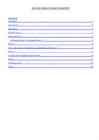
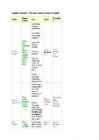
Ways of expressing the Future Table of Contents Future Simple ...................................................................... 2 Be going to ........................................................................... 3 Present Continuous .............................................................. 3 Present Simple ..................................................................... 4 Future Continuous ............................................................... 4 Future Perfect....................................................................... 6 Other ways of referring to the future ..................................... 7 Other future references......................................................... 8 Future Simple In Future Simple we use the modal verb will + the verb. It is the same in all persons. I will work I’ll work ...
Future Forms Future Forms · 1) Future Simple will work · 2) Be going to am/is/are going to work · 3) Present Continuous am/is/are working · 4) Present Simple start(s) Future Forms · 5) Future Continuous will be working · 6) Future Perfect will have worked · 7) Future Perfect Continuous will have been working Future Simple · We do our morning exercises and think, "I think we will have a nice day " · Prediction (ennustused kõhutunde põhjal) · verbs think, believe, guess, expect, hope etc · expressions be sure, be afraid etc · adverbs probably, perhaps, certainly Future Simple · You see your little brother carrying a very heavy suitcase and you think, "I will help him carry the suitcase." · on-the-spot decision (hetkeotsused) Future Simple "Will you help me if I forget my moves?" "Don't worry! I will ta...
Grammar English Future simpleWe use future simple: a) in predictions about the future usually with the verbs think, believe, expect, etc.., the expressions be sure, be afraid, etc.., and the adverbs probably, perhaps, certainly.., b) for on-the-spot decisions c) for promisses, threats, warnings, requests, hopes and offers. d) for actions/ events/ situations which will definitely happen on the future and which we cannot control.Be going to We use be going to: a) for plans, intentions or ambitions we have for the future. b) for actions we have already decided to do in the near future . C) in predictions when there is evidence that something will happen in the near future.Future continious. A) for an action ehich will be in progress at a started future time. B) for an actions ehich will definitely happen in the future as the result of a routine or arrangement. C) when we ask politely about someone's plans for the near future. Future p...
tense Affirmative/Negative/Question Use Signal Words always, every ..., action in the present Simple Present A: He speaks. never, normally, N: He does not speak. taking place once, never or often, seldom, Q: Does he speak? several times sometimes, usually if sentences type I facts (If I talk, ...) ...
INGLISE KEELE KORDAMINE TIME CLAUSES Present Simple · Permanent states, facts (Tom works..) · Repeated and habitual actions, routines (She usually goes..) · Laws of nature and general truths (The sun sets in the west) · Timetables and programmes · Sporting commentaries, rewiews (Beckham wins the ball, crosses and Owen scores) · Feelings and emotions (I love Tallinn..) TIME EXPRESSIONS USED WITH PRESENT SIMPLE: usually, often, always, every day/week etc, in the morning/evening etc, at night/the weekend, on Fridays etc. Present Continuous · Actions taking place at or arount the moment of speaking (The kids are watching TV..) · Fixed arrangements in the near future (I'm going to the dentist tomorrow) · Currently changing ang developing situations (The number of burgularies is increasing) · Wi...
Get/ Have something TENSE ACTIVE PASSIVE WHEN? done Present Simple Am/is/are + Every day, year, often, I pv + do/does Have/ get + sth+ III pv Lihtolevik III pv usually, always Past Simple Yesterday, last year, II pv(-ed)+ did Was/ were + III pv Had/got + sth + III pv Lihtminevik ...
FUTURE FORMS Future Simple (will +I) a) in predictions about the future usually with the verbs think, believe, expect, etc., the expressions be sure be afraid, etc., and the adverbs probably perhaps, certainly, etc I'm afraid we won't be on time for the meeting. b) for on-the-spot decisions. c) for promises (usually with the verbs promise, swear, guarantee, etc.), threats, warnings, requests, hopes (usually with the verb hope) and offers. d) for actions/events/situations which will definitely happen in the future and which we cannot control. The temperature will reach 40°C tomorrow. Be going to a) for plans, intentions or ambitions we have for the future. ...
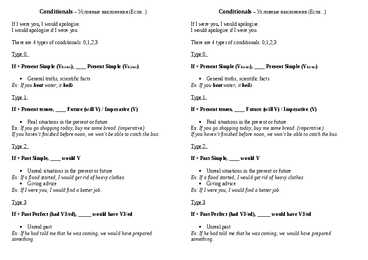
Conditionals (...) Conditionals (...) If I were you, I would apologise. If I were you, I would apologise. I would apologise if I were you. I would apologise if I were you. There are 4 types of conditionals: 0,1,2,3 There are 4 types of conditionals: 0,1,2,3 Type 0. Type 0. If + Present Simple (V1(s/es)), ____ Present Simple (V1(s/es)) If + Present Simple (V1(s/es)), ____ Present Simple (V1(s/es)) · General truths, scientific facts · General truths, scientific facts Ex: If you heat water, it boils. Ex: If you heat water, it boils. Type 1. ...
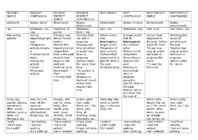
PRESENT PRESENT PRESENT PRESENT PAST SIMPLE PAST PAST PERFECT PAST PERFECT SIMPLE CONTINIOUS PERFECT PERFECT CONTINUOUS SIMPLE CONTINUOUS SIMPLE CONTINUOUS Lihtolevik Kestev olevik Täisminevik Kestev Lihtminevik Kestev minevik Enneminevik Kestev täisminevik enneminevik I pv Am/is/are, I pv, Has/have, III Has/have, II pv, -ed Was/were, -ing Had, III pv Had, been, -ing -ing pv/-ed been, -ing *Recurring *Action *(Giving new *Acti...
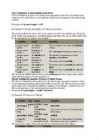
First Conditional: A real possibility in the future A First Conditional sentence is for future actions dependent on the result of another future action or event, where there is a reasonable possibility of the conditions for the action being satisfied. Formation: if + present simple, + will For example: If she gets good grades, she will go to university. We are talking about the future, but we use a present tense for the condition and will for the result. In this case, the person is sure about going to university. We can use other modal verbs in the result part of the sentence. For example: I Condition Result Possibility F she gets good she will go to If the condition is met, then she definitely If grades, university. will go he gets good he may go to If He is not sure about g...
TENSE FORMS Active Passive Present Simple He studies art. Art is studied. Present Continuous He is studying art Art is being studied. Past Simple He studied art. Art was studied. Past Continuous He was studying art. Art was being studied. Future Simple He will study art. Art will be studied. Future Continuous He will be studying art. Future Perfect He will have studied art. Art will have been studied. Future Perfect Continuous He will have been studying art. Present Perfect He has s...
7. Verb: The principal forms of the verbs: Verbil on 4 põhivormi: Regular verb Irregular verb 1. the base form Talk Speak üldoleviku tüvivorm 2. the past form/ -ed form Talked Spoke üldmineviku vorm 3. the past participle (-ed Talked Spoken participle) mineviku kesksõna 4. the present participle (- Talking Speaking ing participle) oleviku kesksõna The tenses: Expressing the future: Simple Perfect Continuous Perfect Continuous Present Base Have / has + to be + base+ ing has/ have been +s + pariticiple base+ -ing He drinks tea at ...
CONDITIONALS ZERO CONDITIONAL If you don't water flowers, they die. If you have a headache, stop watching TV. If clause: Main clause: PRESENT SIMPLE PRESENT SIMPLE or IMPERATIVE With zero conditional we express a general truth or we give advice. FIRST CONDITIONAL If the weather is nice, we will go for a walk. If you don't apologize, she will never trust you again. If clause: Main clause: PRESENT SIMPLE FUTURE SIMPLE The first conditional refers to the present and future. It expresses a possible condition and its probable result in the future. SECOND CONDITIONAL Jack wants to buy a house but he can't do this because he doesn't have any money. If I had a lo t o f m o ne y, I would buy a b ig h o us e . SECOND CONDITIONAL Susan wants to phone...
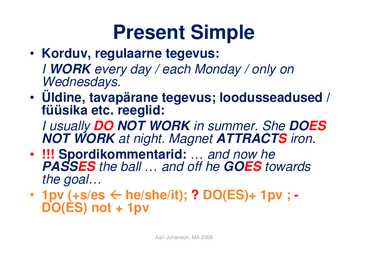
Present Simple · Korduv, regulaarne tegevus: I WORK every day / each Monday / only on Wednesdays. · Üldine, tavapärane tegevus; loodusseadused / füüsika etc. reeglid: I usually DO NOT WORK in summer. She DOES NOT WORK at night. Magnet ATTRACTS iron. · !!! Spordikommentarid: ... and now he PASSES the ball ... and off he GOES towards the goal... · 1pv (+s/es Å he/she/it); ? DO(ES)+ 1pv ; - DO(ES) not + 1pv Aari Juhanson, MA 2008 Present Progressive · Hetkel toimuv, pooleliolev tegevus: S/he IS TALKing on the phone now. I AM READing an interesting book. · Ajutine, regulaarsele ja tavapärasele vastanduv tegevus (tulevikku viitav): This summer they ARE not GROWing cucumbers as usual. They'RE GROWing tomatoes instead. · !!! Halvakspanu väljendus harjumuspärase tegevuse kohta: He IS always COMPLAINing! · BE (am/is/are) + 1pv-ing Aari Juhanson, MA 2008 ...
Verbs! Verb forms Review of tenses Chapter 12, Pg 215 1 Timeline Draw a timeline of your life. List 810 events on the time line. Make sure you list your future graduation date! Moved to Cali 2005 Was Born Traveled to Europe Husband 1978 School graduates @ Oxford 1999 Started Got married School 1983 2008 2 The Six English Verb Tenses Three Simple Tenses Simple continuous Present You walk. You are walking I run. I am running. Past You Walked You w...
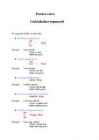
Passive voice Umbisikuline tegumood Kui tegija pole oluline või pole teada. The Present Simple Passive am is + III pv are Examples: I am watched. A book is read. Marks are given. The Past Simple Passive was were + III pv Examples: I was watched. A book was read. Marks were given. The Future Simple Passive will be + III pv Examples: I will be watched. A book will be read. Marks will be given. The Future Simple Passive in the Past would be + III pv Examples: I would be watched. A book would be read. Marks would be given. ...
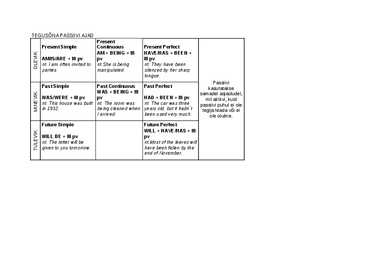
TEGUSÕNA PASSIIVI AJAD Present Present Simple Continuous Present Perfect AM + BEING + III HAVE/HAS + BEEN + OLEVIK AM/IS/ARE + III pv pv III pv nt. I am often invited to nt.She is being nt. They have been parties. manipulated. silenced by her sharp tongue. Passiivi Past Simple Past Continuous Past Perfect kasutatakse WAS + BEING + III samadel asjaoludel, MINEVIK WAS/WERE + III pv pv HAD + BEEN + III pv mil akti...
English tenses – worksheet / test http://first-english.org Name: …......................................... class: …............... date: …......................... Put the verb into the right tenses: Solution sheet simple present + : We talk to our parents. simple present - (negative): We don't talk to our parents. simple present ? (question): Do we talk to our parents? present perfect + : We have talked to our parents. present perfect - (negative): We haven't talked to our parents. present perfect ? (question): Have we talked to our parents? simple past + : We talked to our parents. simple past - (negative) : We didn't talk to our paren...
Conditionals Sentences with if are used to express possibilities. 0 Zero conditional If-clause present (past) simple Main clause present (past) simple Sometimes sentences with if express certainty rather than possibility. The zero conditional is used to talk about sth. that is always true (such as a scientific fact), or that was always true in the past. In this type of conditional we can use when instead of if. E.g., If/When you mix blue and red, you get purple. If/When you don't water flowers, they die. (present simple in both parts of the sentence) If/When I asked her to come with us, she always said no. (past simple in both parts of the sentence) 1 First conditional If-clause present simple; Main clause future tense (or: can, must, may, etc., + bare infinitive) Used to talk about the consequences of a possible action (a real or very probable situation in the present or ...
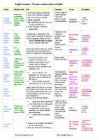
English Grammar - The most common tenses in English Tense Signal words Use Estonian Form Examples · something happens repeatedly *korduv tegevus every day · how often something happens *püsiv olukord sometimes, *tulevikus · one action follows another I work Present twice a week toimuv, seotud · things in general infinitive he works Simple always, often sõiduplaanidega · after the following verbs (to love, ...
Affirmative tense Use Signal Words /Negative/Question · always · action in the present taking place Simple Present A: He speaks. · every ... once, never or several times N: He does not speak. tegevus, mis toimub ühe korra, mitte · never Lihtolevik Q: Does he speak? · normally kunagi või mitu korda · ...
Aktiiv Passiiv Present Tegusõna algvorm be + 3.v Simple Somebody cleans this room every day. This room is cleaned every day. Past Simple 2.v was/were + 3.v Somebody built this house in 1895. This house was built in 1895. Future Simple will/shall + 1.v will/shall + be + 3.v People will forget this soon. This will be forgotten soon. Present be + -ing be + being + 3.v Progressive Somebody is cleaning the room right now. The room is being cleaned right now. Past was/were + -ing was/were + being + 3.v Progressive Somebody was cleaning the room when I The room was being cleaned when I ...
· Plans · Promises, threat · Formal language Future simple Will + I · Weather forecast · Conditional sentence · Expecting · Action what definitely happen · Polite (asking) · Waiting progress Future Continuous Will + BE +ing · Describe activity what will cover all future activity · Rele...
TENSES (Table) Past Simple Present Simple Future Simple Tegusõna 2. pv Tegusõna 1. pv Tegusõna on esitatud kujul [NB! He/She/It _____(e)s] Küsimuse/eituse will + 1. pv moodustamiseks kasut. Küsimuse/eituse did + 1. pv moodustamiseks kasut. Eituste moodustamisel do / does + 1. pv will not = won't Tunnused lauses: Lihtminevik. Keegi tegi Tunnused lauses: Tunnused lauses: midagi. Jutt käib tavalisest, Lihttulevik. Ennustused. yesterday, last harjumuspärasest Lubadused. Hetkeotsused (summer), (five years) tegevusest. (rääkimise hetkel ago, in 1987, etc. always, sometimes, sündivad). usually, often, e...
FUTURE SIMPLE BE GOING TO Will + infinitive (will go) Am/is/are going to + infinitive (is going to rain) 1.A decision at the moment of 1.Future plans made before the speaking: moment of speaking: A: 'I'm cold'. A: 'We've run out of milk.' B: 'I'll close the window'. B: 'I know, I'm going to buy some.' 2.Prediction based on opinion: 2.Prediction based on present I think the Conservatives will win the evidence: next election. Look at those boys playing football! 3.A future fact: They're going to break the window. He will be ten next year. 4.Promises / requests / refusal / willingness: I'll help you with your homework. Will you give me a hand? 5.In the same way as the future...
FUTURE TENSES FUTURE SIMPLE (WILL/SHALL) Form: will/shall + algvorm USE: 1)Predicting a future happening or situations 2)Shalll can be used with i and we 3)Descisions to do smthing at the time of speakin (offering to o / agreeing to do smthing/ promising to do smth) Negative: I can see you' re busy, so I WON't BE GOING TO Form: am/is/are going to + algvorm Use: 1) Descisions to do smthing, intentions. I'm going to buy a new car 2) Predictions about the future, which are based on the situation now. PRESENT SIMPLE ( I do) WITH A FUTURE MEANING Use: 1)Talking about timetables, programmes: My train leaves at 11.30. 2) Talking about people if their plans are fixed like a timetable. PRESENT CONTINUOUS (I am doing) WITH A FUTURE MEANING Use: 1)Talking about descisions and arrangements (sbdy has decied and arranged to do smthing). He is playing squash on Monday afternoon 2) You can use present contiuous for an action just before you b...
FUTURE FORMS FUTURE SIMPLE WILL + OLEVIK Kasutan, kui.. · Ennustus tulevikust, põhineb arvamusel, tundel, uskumusel. Sõnad: think, believe, expect, be sure, be afraid, probably, certainly, perhaps Nt: I think Debbie will become a great artist some day. She is afraid her son will fail his exams. · On-the-spot otsus (rääkimise ajal tehtud otsus) Nt: I will buy the blue jacket, not the yellow one. · Lubadused, hoiatused, ähvardused, palve, lootused, pakkumised Nt: I will never speak to you again! Will you give me a hand with the washing-up? · Tegevused/sündmused, mis KINDLASTI toimuvad tulevikus, me ei saa neid kontrollida Nt: Valentine's Day will fall on a Saturday this year. BE GOING TO Kasutan, kui... · plaanid tulevikuks Nt: I am going to travel around the world one day. · otsused, mis on juba LÄHITULEVIKUKS tehtud ...
Future Tenses Will-future and going to-future Andrea Terasväli Future forms Will-future Going to- Simple Present Future Future future presen progressi progressi perfect t ve ve • • Planned Future Planned Action Sth. Will Prediction, action in action action in will already assumptio the future is fixed the near definitely have n (assur future happen happene • logical ed/de (it d before • conseque ffinite) usually a certain spontaneo nce (sth. happens) time in us action Is goint to the happen) future Form Will-future Goi...
Inglise keeles Eesti keeles + -/? Usage Näited 1. Present Simple Lihtolevik I ajavorm Do, don't, does, doesn't A permanent state, a generally Every day, always, often, (He, she, it + -s) known fact, usual or repeated usually, sometimes, rarely, actions, timetables, sport never, on Monday, in the commentaries, other events morning. Facts. ...
englisch-hilfen.de LEARNING ENGLISH ONLINE Examples Examples Examples Tense Signal words Use Form affirmative negative interrogative every day something happens repeatedly sometimes how often something happens always I work. I don't work. Do I work? one action follows another often Infinitive He works. He doesn't work. Does he work? Sim...
Verb Tense Summary Chart PRESENT PAST FUTURE Present Simple Past Simple Future Simple I study Englishevery day. Two years ago, I studied English in I am going to study Englishnext year. England. The bus leav e s at 8. If you are having proble mwill help ...
The Passive Voice Passive voice is used, when the focus is on the action. It is not important or not known, hovewer, who or what is performing the action. Passiivi kasutatakse siis, kui tegevust teostav isik on teadmata või tema mainimine ei ole oluline, või siis, kui tähelepanu on pööratud sellele, mida tehakse. Passiivi ajavormid moodustatakse abiverbi be pöördelistest vormidest vastavas ajas ja põhiverbi mineviku kesksõnast (III pv-past participle). BE vastav aeg+ Verbi III pv Tegevuse sooritaja näitamiseks kasutatakse eessõna by. Kui aktiivlause aluseks on asesõna (I, you, he, we, you, they, somebody...), siis jäetakse by- fraas ära. Aktiivlause muutmine passiivlauseks: 1. Leiame sihitise ja muudame ta aluseks. 2. Määrame öeldise ajavormi ja asendame ta passiivi vastava ajaga 3. Leiame aluse ja muudame ta eessõna by abil sihitiseks. Example: Jane baked a cake.-active sentence A cake was baked by Jane.-passive senten...
INGLISE KEELE EKSAMI KONSPEKT Sisukord Sisukord ......................................................................................................................................... 1 Ajavormid ...........................................................................................
English Grammar - The most common tenses in English Signal Example Tense Use Form words s something happens repeatedly how often something happens every one action day follows sometim another es I work always infinitive Present things in he/she/it he works often Simple general + s I go usually he goes seldom ...
Present Simple : · Igapäevased, tavalised, alalised asjad, harjumused. · Loodusseadused · Ajaplaanid · Spordikommentaarid Kasutatakse: if, always, usually, every day. Present Continuous : · Praegu toimuv tegevus. · Plaanipärased, korraldatud tegevused. · Pahameel alati unustad midagi teha vms. Kasutatakse: now, at the moment, these days, tonight, still. Present Perfect: · Tähtis on tegevus, mitte aeg. · Midagi, mis algas minevikus ja kestab siia maani we have been friends for twenty years. · Lõpetatud tegevus minevikus, aega pole antud. Kasutatakse: already, yet, just, always, ever, never, so far. Present Perfect Continuous: · Pikk tegevus, aeg on väga tähtis ja alati märgitud. · Ärritatud millegi üle, mida keegi minevikus pikka aega tegi. Past Simple: · Midagi minevikus toimunud. · Mitujärjestikust tegevust minevikus. · Midagi, mida vanasti tehti. · Rääkides kel...
PRESENT PAST TENSES FUTURE TENSES TENSES minevik tulevik olevik Present Simple Past Simple Future Simple lihtolevik Lihtminevik Lihttulevik I You + I põhivorm + II pv We ? , - Do + I pv. ?, - Did + I pv Will + I põhivorm They He + I põhivorm + S Tegevus tulevikus, mis ei She ?,- Does + I pv Lõpetatud tegevus ole ettekavatsetud It (yesterday, last week) (tomorrow, next week, next year) Korduv tegevus, faktid (always, often, usually, every day, normally) Present Continuous Past Continuous GOING-TO Future Kestev olevik Kestev minevik ...
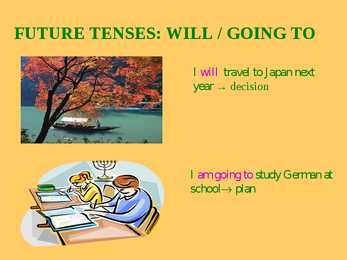
FUTURE TENSES: WILL / GOING TO I will travel to Japan next year decision I am going to study German at school plan WILL/GOING TO The Simple Future has two different forms in English: "will" and "be going to." Although the two forms can sometimes be used interchangeably, they often express two very different meanings as mentioned before. I will probably go to Italy next Summer I am going to fly to Italy next Saturday Future Tense: Will Form Affirmative: I will travel to Madrid in October Interrogative : Will you travel by bus? Negative : I will not travel - won't Will you travel by train or by bus? I won't travel by bus I will probably travel by train Future Tense: Uses of ...
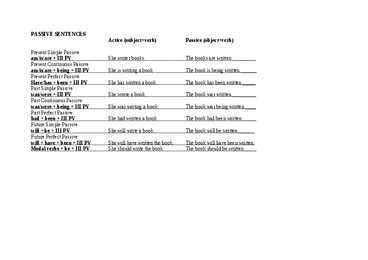
PASSIVE SENTENCES Active (subject+verb) Passive (object+verb) Present Simple Passive am/is/are + III PV She writes books. The books are written _________ Present Continuous Passive am/is/are + being + III PV She is writing a book. The book is being written.______ Present Perfect Passive Have/has + been + III PV She has written a book. The book has been written._____ Past Simple Passive was/were + III PV She wrote a book. The book was written._________ Past Continuous Passive was/were + being + III PV She was writing a book. The book was being written.____ Past Perfect Passive had + been + III PV She had written a book. The book had been written._____ Future Simple Passive will + be + III PV She will write a book. The book will be written.______ Future Perfe...
AJAVORMID JA NENDE MOODUSTAMINE AJAVORMI NIMETUS MOODUSTAMINE KASUTAMINE, SAGEDAMINI ESINEVAD AJAMÄÄRUSED THE PRESENT I pv; do/does + I Tegevus toimub korduvalt, on harjumuspärane SIMPLE live, goes twice a week, every day, usually, often, sometimes, always THE PAST (+) II pv; did + I Tegevus toimub minevikus SIMPLE lived, went yesterday, last week, two years ago, in 1996 THE FUTURE (shall)/will + I Tegevus toimub tulevikus, on üksteisele järgnev SIMPLE pv tomorrow, next week, soon, later, in 2025 be going to + I pv THE FUTURE IN (shou...
THE TENSES AJAVORMID JA NENDE KASUTAMINE AJAVORMI NIMETUS MOODUSTAMINE KASUTAMINE; SAGEDAMINI ESINEVAD AJAMÄÄRUSED THE PRESENT SIMPLE I pv. (+ s); do/does + I pv. Tegevus toimub korduvalt, on harjumuspärane. püsiv olukord, ajagraafikutega seotud tulevik Lihtolevik live, goes every day, usually, often, sometimes, always THE PAST SIMPLE II pv.; did + I pv. Tegevus toimub minevikus. Lihtminevik lived, went yesterday, last week two years ago, in 1998 THE FUTURE SIMPLE be going to/ will + I pv. Tegevus toimub tulevikus. Lihttulevik will go/ won´t tomorrow, next week, soon, later, in 2012 TH...
Present Simple. Present Simple is used for... Example Permanent situations or states Jim lives in the south of England Permanent truths or laws of nature The sun sets around 5 o'clock in the afternoon in the winter Repeated/habitual actions especially with George always plays football on always, usually etc. Saturday afternoons. (= He does that every Saturday Afternoon.) Timetables/programmes with a future The train leaves at 10.05 on Tuesday meaning. Reviews/sports commentaries/dramatic The basketball player shoots and the ball narrative goes in the basket. Time expressions used with present simple: Every day/week/month/year, usually, sometimes, always, rarely, never, often, on Monday, in the morning, evening, etc. Present Continuous (to be + verb -ing)...
CONDITIONALS 0 or 1? TYPE 0 ZERO CONDITIONAL In 'zero' conditional sentences, the tense in both parts of the sentence is the simple 'IF' CLAUSE (CONDITION present: ZERO CONDITIONAL (TYPE 0) 'IF' CLAUSE MAIN CLAUSE (CONDITION) (RESULT) If + simple present If + simple present If you heat ice, it melts. If it rains, you get wet TYPE 0 'IF' CLAUSE MAIN CLAUSE (CONDITION) (RESULT) If + simple present If + simple present If plants don't get they die. enough water, If you mix red and blue, you get purple Make sentences (type 0) Heat water/ boil Mix yellow and red/get orange Conditional Type 1 · First Conditional: real possibility · We are talking about the future. We are thinking about a particular condition or situation in the future, and the result of this condition. There is a real possibility that this conditi...
Present Simple and Continuous Table of Contents Present Simple ..................................................................... 2 The spelling of endings in the Present Simple ....................... 2 When to use the Present Simple ........................................... 3 The verb 'be' ......................................................................... 4 Present Continuous.............................................................. 5 The spelling of endings in the Present Continuous................ 5 When to use the Present Continuous.................................... 6 State verbs and event (action or dynamic) verbs ................... 7 Present Simple In the Present Simple we use the verb without an ending. I work you live we think they dance NB! In the third person singular (he, she, it, Mary, my friend, etc....
REPORTED SPEECH 2. Kui saatelause verb on oleviku aegades, siis ei muutu kaudse kõne verbi aeg. Kui saatelause verb on minevikus, toimub väit- ja küsilausetes aegade nihe: Prsent Simple Past Simple Present Progressive Past Progressive Present Perfect Past Perfect Present Perfect Progressive Past Perfect Progressive Past Simple Past Perfect Past Progressive Past Perfect Progressive Past Perfect jääb muutmata Past Perfect Progressive jääb muutmata Future Simple Future in the Past 3. Kui saatelause verb on minevikus, asendatakse kaudses kõnes mõned lähedust väljendavad sõnad kaugust väljendavate sõnadega: This that These those Here there Now then Ago before Today that day Tomorrow the next day Yesterday the day before Last night the previous night Next week the following week Aegade nihet ei toimu kui 1. Lause väljendab üldtuntud tõde He said, ´The sun is...
The Present Simple is the most basic tense in the English language. It is an interesting tense because it can be used Present Simple to express the future. Generally, though, we use it to Basic form describe the present activities or to talk about routines or Subject + Verb + -s (present form) John lives in New York. We play football every day. You are really kind. The meeting starts at 3 PM. Use the Present Simple: with state verbs. to talk about situations in life that last a relatively long time. when an event is certain to happen in the future. to talk about events that we can't change (for example, an official meeting or a train departure). The Present Simple is also used in narration...
TEGUSÕNA AKTIIVI AJAD Lihtolevik Kestev olevik Perfekti olevik Perfekti kestev O [ ma töötan (igal suvel) ] [ ma töötan (praegu) ] [ ma olen (siin) töötanud (alates [ (täna) olen ma (jub 1987. a.) ] töötanud ] O L I, you, we, they I am E work working I, you, we, they have worked I, you, we they have bee V He, she, it He, she, it is He, she, it has He, she, it has b I works working worked ...
INGLISE KEEL Sisukord Sisukord.................................................................................................................................. 2 Ajavormid Tense vorms.......................................................................................................3 Lihtolevik The present simple..................................................................................... 3 Lihtminevik The past simple....................................................................................... 3 Lihttulevik The future simple...................................................................................... 3 Kestev olevik The present continuous......................................................................... 3 Kestev minevik The past continuous...................................................................
 annaabi.ee