 50 punkti
Autor soovib selle materjali allalaadimise eest saada 50 punkti.
50 punkti
Autor soovib selle materjali allalaadimise eest saada 50 punkti.
 ~ 8 lehte
Lehekülgede arv dokumendis
~ 8 lehte
Lehekülgede arv dokumendis
 2011-12-12
Kuupäev, millal dokument üles laeti
2011-12-12
Kuupäev, millal dokument üles laeti
 77 laadimist
Kokku alla laetud
77 laadimist
Kokku alla laetud
 0 arvamust
Teiste kasutajate poolt lisatud kommentaarid
0 arvamust
Teiste kasutajate poolt lisatud kommentaarid
 Jyrxx
Õppematerjali autor
Jyrxx
Õppematerjali autor
[was/were + going to + VERB] I knew you were going to go to the party. I told you he was going to come to the party. I already told Mark that when he arrived, we would go out for dinner. Active= I knew John would finish the work by 5:00 PM. Passive= I knew the work would be finished by 5:00 PM. 17. Gerunds See on nimisõna, mis on tuletatud teguseõnast ning lõppu käib -ing. Reading helps you learn English. He enjoys not working. 18. Infinitives See on tegusõna to vorm. Näiteks: sõnast learn tekib to learn 19. Phrasal Verb See on tegusõna + eessõna või määrsõna, mis loob esimesest lausest teise tähenduse, kasutades sama tegusõna. I ran into my teacher at the movies last night. He ran away when he was 15. 20. Negative question Negatiivsed küsimused sisaldavad enamasti emotsioone ning kõlavad teatud situatsioonides ebaviisakalt. Didn't she like the film? Yes, she did. Aren't they reading now? Yes, they are. Isn't he a student
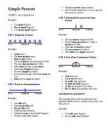
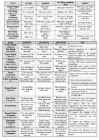
Windows are not made of wood. Simple Present · · New York is a small city. It is not important that this fact is untrue. [VERB] + s/es in third person USE 3 Scheduled Events in the Near Examples: Future · You speak English. · Do you speak English? · You do not speak English. USE 1 Repeated Actions Examples: · The train leaves tonight at 6 PM. · The bus does not arrive at 11 AM, it arrives at 11 PM. ·
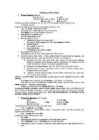
TENSES. ACTIVE VOICE. 1. Present Simple (üldolevik) I (he, she, it s) he works Eitav,küsiv do (I, you, we, they) he does not work does (he, she, it) does he work? Verbidele, mis lõpevad infinitiivis ss, -sh, -ch, -x või o, lisatakse ainsuse 3. pöördes es he touches, she goes Verbidel, mis lõpevad y-ga, mille ees on konsonant, muutub y->ies carry - he carries Vrdl: play he plays 1. Harjumuspärane, korduv tegevus või seisund olevikus. Tom drinks tea every day. He lives in Brussels. 2. Üldtuntud tõed, loodusseadused The earth goes round the sun. 3. Tulevikus toimuv tegevus a) Sõiduplaanid, planeeritud programmid. The train for Tallinn leaves at 10. The course begins on Monday. b) Tingimuslausetes
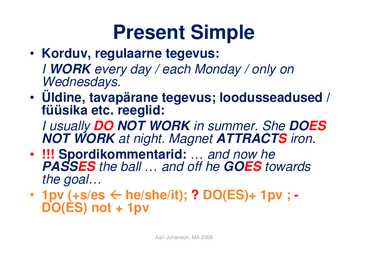
Watch out! This cake is going to FALL soon. Look at these clouds. It's going to RAIN tonight. · Ettekavatsetud, planeeritud tegevus: I am going to DO some shopping, would you like something. No, thanks, I'm fine. I'm going to PREPARE some lasagna instead. What job is he going to APPLY for? They are going to BUILD a new school next year. · BE (am/is/are) GOING TO + 1pv Aari Juhanson, MA 2008 Future Simple Oleviku ajad · Kindel planeeritud tegevus (plaan, leping vmt): He's getting a dog for his birthday. (he knows) I'm going to the dentist tomorrow. (appointment) · Kindel, täpne, konkreetne planeeritud tegevus: Our plane leaves 6:25. The party starts at 5 p.m. COMPARE! I'm having a party. I'm going to have a party. She's getting her hair done. She's going to get her hair done. What are you doing tomorrow? What are you going to do tomorrow?
I/we will ask I/we will not ask Will I ask? He/she/it will go He/she/it will not go Will he/she/it go? You/they will make You/they will not make Will we/you/they make? Pane tähele! Üldtuleviku moodustamiseks kasutatakse abiverbe will/shall. Traditsiooniliselt esineb shall ainsuse ja mitmuse 1. pöördes ( I, we ). Kaasaegses inglise keeles kasutatakse will kõigis pööretes ning shall, et küsida kellegi arvamust, kuid tendents on kasutada abiverbi will kõigis pööretes. Will/shalltuleviku asemel saab kasutada mitmetel juhtudel going totulevikku. Üldtulevik väljendab: · Ühekordset, korduvat või harjumuspärast tegevust tulevikus. I will meet John in the station. My birthday will come again. · Tegevust või situatsiooni, mis kestab tulevikus.
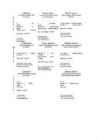
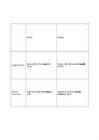
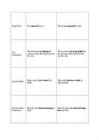
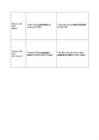
Get/ Have something TENSE ACTIVE PASSIVE WHEN? done Present Simple Am/is/are + Every day, year, often, I pv + do/does Have/ get + sth+ III pv Lihtolevik III pv usually, always Past Simple Yesterday, last year, II pv(-ed)+ did Was/ were + III pv Had/got + sth + III pv Lihtminevik last week Present
Tests Superstar 1 Luke Prodromou Test 1 Name____________________ Class_______ Use your English 1 Complete these sentences using the correct form (present simple or present continuous) of the verb in brackets. _ 1 She is in a band and she _________________________________ (record) a CD at the moment. _ 2 She is an actress and often _________________________________ (appear) on television. _ 3 At the moment she _________________________________ (have) a rest because she is tired. _ 4 Mike is a doctor and he _________________________________ (live) in Manchester. _ 5 I _________________________________ (start) work at 8.30 every morning. _ 6 He is a good cook but she _________________________________ (prefer) to eat out. _ 7 English tests _________________________________ (get) more and more interesting. _ 8 They _________________________________ (have) a party because it's her birthday. _ 9 I sometimes ____________
Verbs! Verb forms Review of tenses Chapter 12, Pg 215 1 Timeline Draw a timeline of your life. List 810 events on the time line. Make sure you list your future graduation date! Moved to Cali 2005 Was Born Traveled to Europe Husband 1978 School graduates @ Oxford 1999 Started Got married School 1983 2008 2 The Six English Verb Tenses Three Simple Tenses Simple continuous Present You walk. You are walking I run. I am running. Past You Walked You were walking. I ran.
 annaabi.ee











Kõik kommentaarid