 50 punkti
Autor soovib selle materjali allalaadimise eest saada 50 punkti.
50 punkti
Autor soovib selle materjali allalaadimise eest saada 50 punkti.
 ~ 16 lehte
Lehekülgede arv dokumendis
~ 16 lehte
Lehekülgede arv dokumendis
 2016-05-11
Kuupäev, millal dokument üles laeti
2016-05-11
Kuupäev, millal dokument üles laeti
 1 laadimist
Kokku alla laetud
1 laadimist
Kokku alla laetud
 0 arvamust
Teiste kasutajate poolt lisatud kommentaarid
0 arvamust
Teiste kasutajate poolt lisatud kommentaarid
 sissumush
Õppematerjali autor
sissumush
Õppematerjali autor
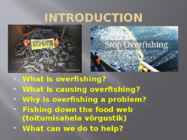
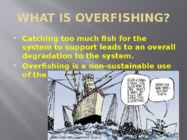
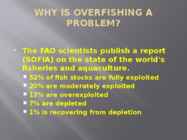
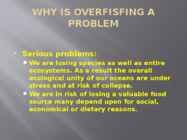
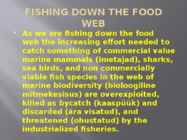
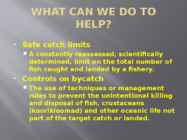
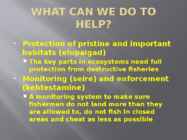
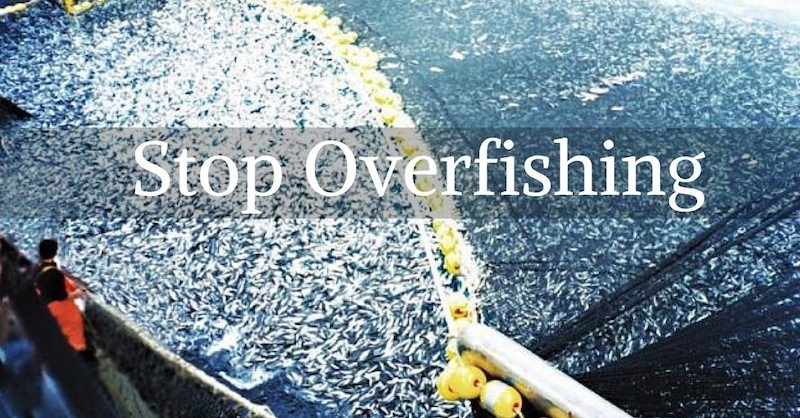
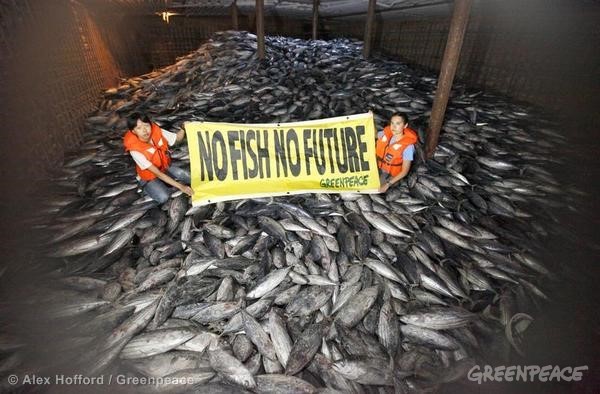
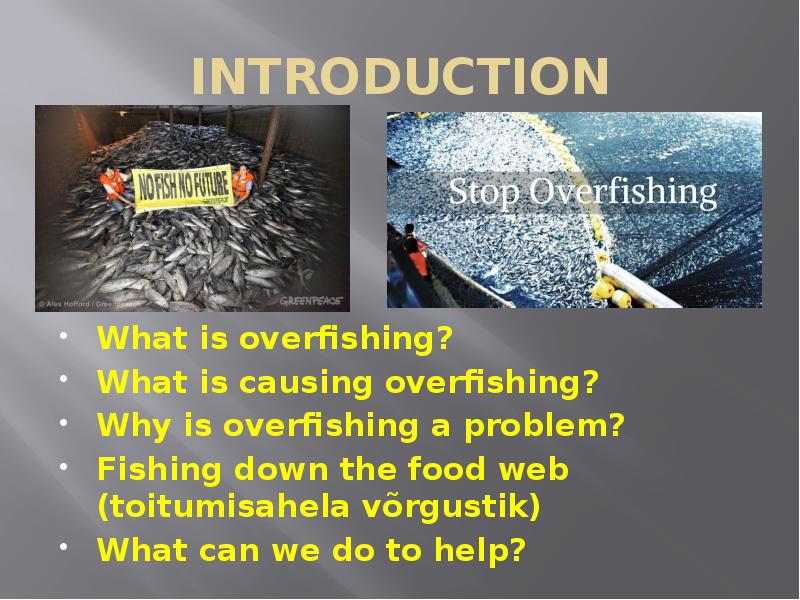
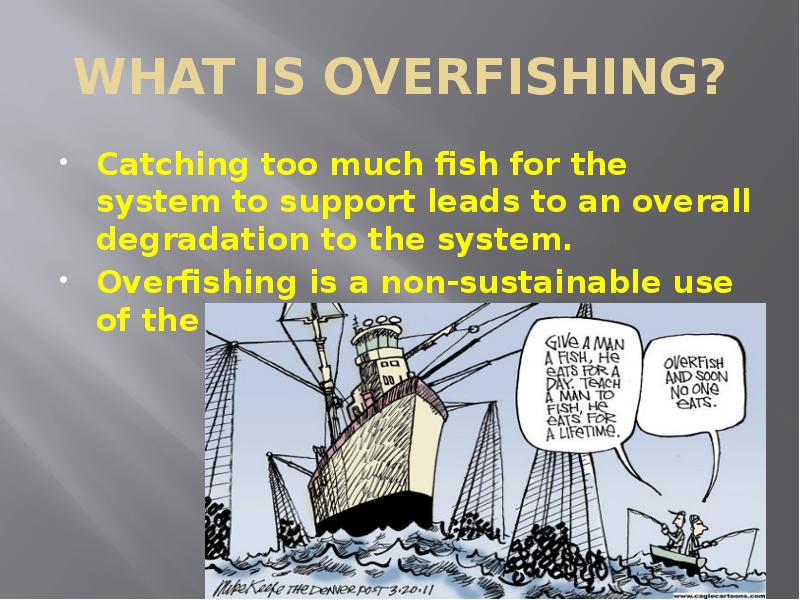
Good afternoon. My name is Siiri Paurson. And I will be speaking today about OVERFISHING. I will be speaking for about 10 minutes. I’ll be pleased to answer any questions you may have at the end of the presentation. INTRODUCTION: What is overfishing? What is causing overfishing? Why is overfishing a problem? Fishing down the food web. What can we do to help? WHAT IS OVERFISHING?: Overfishing can be defined in a number of ways. However, everything comes down to one simple point: Catching too much fish for the system to support leads to an overall degradation (degrödašon) to the system. Overfishing is a non-sustainable use of the oceans. WHAT IS CAUSING OVERFISHING?: Worldwide, fishing fleets are two to three times as large as needed to take present day catches of fish and other marine species (spiišis) and as what our oceans can sustainably support
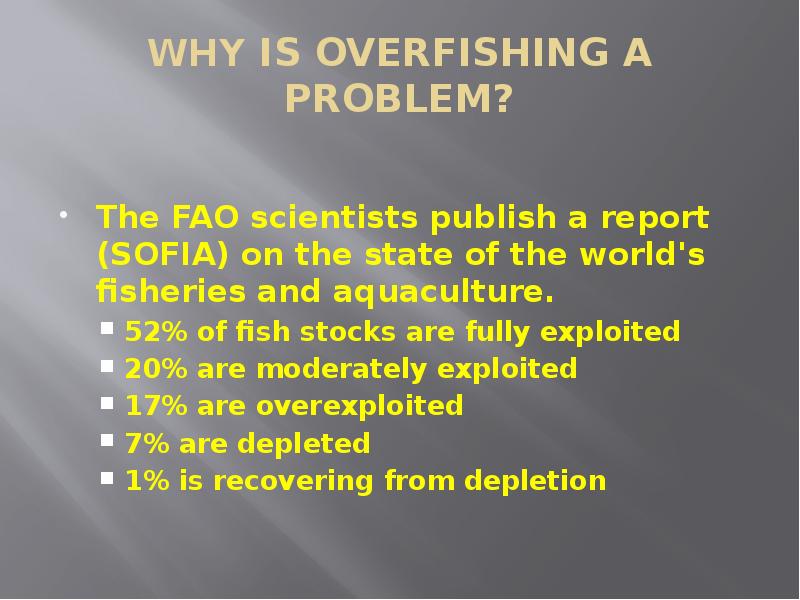
Fishery resources Capture fisheries resources are highly diverse. FAO landing statistics refer to about 2 500 species or group of species most of which are finfish. By far the most numerous fish species, and those most important to aquaculture and fisheries, are teleosts, or bony fish, which in the sea extend from small "grazing" species such as anchovy to large active predatory fish such as tuna. A similarly wide range is also found in freshwater, with the most important species from a production point of view belonging to the carp family. These account for over half the total of inland waters fisheries production. Marine capture fisheries resources are usually considered close to full exploitation worldwide with about half of them fully exploited, one quarter over exploited, depleted or
As the world’s population continues to grow, so does the amount of garbage that people produce. On-the-go lifestyles require easily disposable products, such as soda cans or bottles of water, but the accumulation of these products has led to increasing amounts of plastic pollution around the world. As plastic is composed of major toxic pollutants, it has the potential to cause great harm to the environment in the form of air, water and land pollution. If overfishing continues, if pollution continues, many of the species of today will disappear off. Put simply, plastic pollution is when plastic has gathered in an area and has begun to negatively impact the natural environment and create problems for plants, wildlife and even human population. Often this includes killing plant life and posing dangers to local animals. Plastic is an incredibly useful material,
normal. • The 2012 update of the IUCN Red List of Threatened Species shows that of the 63,837 species examined worldwide, 19,817 are threatened with extinction - nearly a third of the total. • If present trends continue, scientists warn that within a few decades, at least half of all plant and animal species on Earth will be extinct, as a result of climate change, habitat loss, pollution, acidifying oceans, invasive species, over- exploitation of natural resources, overfishing, poaching and human overpopulation. Lower Life Expectancy in the Fastest Growing Countries • According to a Harvard study, "Over the next forty years, nearly all (97%) of the 2.3 billion projected increase will be in the less developed regions, with nearly half (49%) in Africa." Already strained with relentless population explosion, many developing countries, such as in Sub Saharan Africa and Southern Asia, will experience a degradation of their quality and
Each net is fished from an outrigger boom, one on each side of the vessel (Figure 14), and towed from here on a single warp (a) shackled to a three chain bridle (b) attached directly to the beam (c) which holds open the mouth of the trawl. The beam, 9-12 m in length, is constructed from heavy steel tube and supported on each side by rugged steel trawlheads (d) which slide over the sea bottom. Ahead of each groundrope several tons of tickler chains (e) or chain mats (f) are used to disturb fish, causing them to rise up and be taken by the trawl following immediately behind. Towing speeds are generally higher than otter trawling, reaching 6 or 7 knots on clean ground with ticklers, whereas on rough ground stone mats are towed at around 4 knots. Beamers usually operate on the continental shelf (200 m) with warp length/water depth ratios of between 2.5:1 to 3:1. Some larger vessels use a double wire system (z) to facilitate the hauling procedure.
slowly good idea is to are and who hired them and finally we can destroying our use more fine or even put to jail these criminals. planet with public Our world is facing a problem that unawereness. transport directly affects our living standards. It is We just don't instead of water pollution. Water pollution causes the death of many species of fish and water plants that grow in rivers or lakes. This problem has dramatically increased in the last years and fortunately the governments have already started to realise that this is a problem we can solve and they have started solving it. But how do they do it? First of all, they take tests from the swimming live without crocodile leather and mink fur. polluted rivers again, which Also sea turtle shells are being used to make
Environmental problems Nimi Klass Biodiversity The variety of life on Earth, its biological diversity, is commonly referred to as biodiversity. The number of species of plants, animals, and microorganisms, the enormous diversity of genes in these species, the different ecosystems on the planet, such as deserts, rainforests and coral reefs are all part of a biologically diverse Earth. Appropriate conservation and sustainable development strategies attempt to recognize this as being integral to any approach. In some way or form, almost all cultures have recognized the importance of nature and its biological diversity for their societies and have therefore understood the need to maintain it. Yet, power, greed and politics have affected the precarious balance. Why Is Biodiversity Important? Who Cares? · Why is Biodiversity important? Does it really matter if there aren't so many species? · Biodiversity boosts ecosyst
biological control. This technique demands utmost caution and thorough study, as it could go all wrong, if not managed properly. It is very difficult to pick a side in the debate regarding intensive farming. While it is true that agricultural intensification is necessary to meet the ever-increasing population growth, it is also true that intensive use of chemical fertilizers will largely affect the health of human beings, plants, fish, honey bees, frogs, birds, and livestock. There is a tug-of-war between the animal rights activists and farmers of intensive farming. However, the debate is still ongoing, but we hope to see some new inventions or improvements in the near future. Read more at Buzzle: http://www.buzzle.com/articles/advantages-and-disadvantages-for-intensive- farming.html
 annaabi.ee

















Kõik kommentaarid