The Parliament of Estonia is called Riigikogu and it is elected by people for a four year term. The election is universal, uniform and direct. Voting is secret. The Riigikogu is comprised of one hundred and one members. The Riigikogu has three main functions: legislation, reviewing the activities of the executive power, representation. The members of the Riigikogu have the rights to form factions. The Executive. The Executive of Estonia consists of the body of the Prime Minister and cabinet of ministers. The highest Executive of Estonia is the Prime Minister of the country. The majority of ministers are the head of a ministry. (Ministers for Education, Justice, Defence, Enviroment, Culture,Economic Affairs, Agriculture, Finance, Internal Affairs, Social Affairs, Transportion and Communications, Foreign Affairs, Regional Affairs.) The Judiciary. The 1992 constitution established a court system consisting of three levels of courts: county,
Now, since 20 January 2017, Donald Trump is the USA president. We do not know what is going to happen and what will he really do, but we do know, that people are afraid of his promises and they are fighting against it. I hope that people would not give up for their hopefulness and they would not let him control their lives. Since 23rd November 2016, there is new government in Estonia, that is being led by Prime Minister Jüri Ratas. The government consists of the prime minister and 14 ministers. Before the change, there was an enormous crisis in the main Party, Reform Party. They were arguing a lot and the previous leader Taavi Rõivas did not control the Party and also he could not control the government. That is the reason why Taavi Rõivas was forced to resign from the government and he stepped down as the chairman of the party. The new government left the Reform Party opposition of coalition. The new government turned new page, but
the state. The Riigikogu elects and appoints several high officials of the state, including the President of the Republic. The Parliament of Estonia is elected by people for a four year term by proportional representation. The Government of Estonia is formed by the Prime Minister of Estonia, nominated by the president and approved by the parliament. The government exercises executive power pursuant to the Constitution of Estonia and the laws of the Republic of Estonia and consists of 12 ministers, including the prime minister. The prime minister also has the right to appoint other minister. he prime minister has the right to appoint a maximum of 3 such ministers, as the limit of ministers in one government is 15. It is also known as the cabinet. The cabinet carries out the country's domestic and foreign policy, shaped by parliament; it directs and co- ordinates the work of government institutions and bears full responsibility for everything
people. Dairy products are more common in the west while sheep and cattle are reared in the hilly areas of the north and south west. In the south and east, arable farming, pigs, poultry and horticulture dominate. Government The party which wins the most seats in the General Election forms the government. The leader of the winning party becomes Prime Minister. As leaders of their political parties and leaders of the country, Prime Ministers are powerful and important people. They are powerful because they have the majority support in Parliamenr and th ey can choose their own ministers and government.The PM chooses a committee of minister s called the Cabinet. This is made up of a selection of senior MPs from the House of Commons and some members of the House of Lords. Each member of the Cabinet is a minister responsible for a government department: for example, the Secretary of State for Education and Science is responsible for
meeting with the Prime Minister. By tradition, the latter informs the Sovereign, who is head of state, about important affairs of state and government business, and asks the sovereign for his or her opinion. With over 60 years of experience, the current Queen Elizabeth II has acquired great experience in managing affairs of state, and an unparalleled experience of international relations, and now acts as an experienced adviser, well liked by her Prime Ministers, of all political persuasions . The House of Lords This is the "Upper House" of the British Parliament . It consists of about 750 members (a variable number ) most of whom are Life Peers (i.e. not hereditary lords), or people who have been ennobled for services rendered to the nation. These Life Peers are mostly former members of the House of Commons, or former senior officials, judges, or former business
society and of the state" The first secretary President of Cuba Raul Castro Government February 24, 2008 Lot of duties Elected by National Assembly of People's Power For five years The National Assembly of People's Power Legislative parliament of the Republic of Cuba Supreme body of State power 614, 31 Council ministers For 5 years Twice a year Recent 20 january 2008 The Supreme Court of Cuba Highest judicial branch of government controlls provincial courts Thank you for listening!
Estonia is a parliamentary republic. The head of state is the president. The president power is fairly limited. His functions are mainly ceremonial. He represents the country abroad. The executive power is exerted by the government which runs the state. The head of the government is the prime minister. The legislative power belongs to the parliament which is the law-making body. The laws must be promulgated by the president. The government consists of ministers. The number of which is about of dozen. Every ministry is headed by a minister. The Estonian judiciary is completely independent, it is governed by the chief justice of the supreme court. The minister of interior is marko pomerants, -||- of finance is Jürgen Ligi, -||- of justice is Rein Lang, -||- of Social Affairs is Anno Pevkur, -||- of Culture is Laine jänes, -||- of Foreign Affairs is Urmas Paet.
Founded in 1958 the Commission's main objective: the smooth functioning and development of the single market The Commission represents the common interests of the Community 27 Commissioners who will be appointed for a term of five years President of the European Commission Jean-Claude Juncker Estonian Commissioner Andrus Ansip Council of the European Union Location is Brussels (Belgium) Founded in 1958 At meetings of the Council ministers of EU Member States will meet with the aim of discussing, amending and adopting legislation and coordinating policies. discussions and voting European Parliament Location: Strasbourg (France), Brussels (Belgium), Luxembourg Founded in 1952 Tasks: legislative, supervisory and budgetary responsibilities 751 members will be elected for 5 years President: Antonio Tajani Parliament has three main roles: - Legislative - Supervision - Budgetary
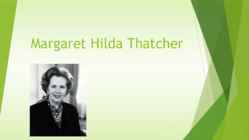
Kui tahate, et midagi ära tehtaks, paluge naist.“ „Ära järgne massile. Lase massil järgneda sulle.“ “You turn if you want to. The lady’s not for turning.” Kasutatud kirjandus http://www.bbc.co.uk/history/people/margaret_thatcher http://blog.iese.edu/leggett/2012/11/09/profile-of-a-conviction-speaker-ma rgaret-thatcher1 / https:// www.gov.uk/government/history/past-prime-ministers/margaret-thatcher Margaret Thatcher „Downing Streeti aastad“, Kupar 1995 TÄNAME KUULAMAST!
It is called Riigikogu. The parliament determines the income and expenses of Estonia as well as presents statements and declarations to the people of Estonia. It also has the right to accept new laws and ratify national treaties. It also elects the President and appoints other high officials. The President of Estonia is elected for five years and can be elected for maximum two terms in a row. Estonia also has a government that consists of the Prime Minister and other ministers; currently it has 13 ministers in addition to the Prime Minister. The government is responsible for dealing with Estonian domestic and foreign policy. The supreme political authority is vested in the people of Estonia. As for the technological factors, Estonia is the country that has the most start-ups per person and the Internet is rather accessible as well - in the 1st quarter of 2014, 83% of households in Estonia had access to the Internet at home. You can also find free Wi-Fi almost
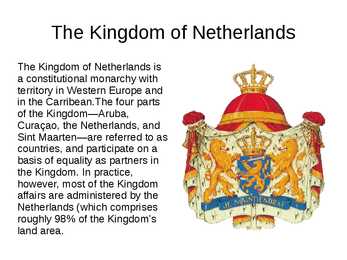
sea level. Economy and natural rsources GDP (2011): $705.7 billion. GDP growth (2011 est.): 1.6%. GDP per capita (2011): $ 42,300. Natural resources: Natural gas, petroleum, fertile soil. Agriculture (2% of GDP) Industry (24% of GDP) services (74% of GDP) Politics The Kingdom of Netherlands is a Parliamentary democracy under a constitutional monarch.The monarch is the head of state, at present queen Beatrix. In practice the executive power is formed by the council of Ministers. Intresting facts One quarter of the country is below sea level with only 0.008% of the world's area, the Netherlands is the world's third largest agricultural exporter the Netherlands has at least 15,000 km of cycle tracks the Netherlands still has about 1,000 traditional working windmills the Dutch are the tallest people in Europe the Netherlands always has a coalition government
Sydney, Melbourn, Adelaide, Perth, Darwin, Brisbane, Canberra(capital of Australia) Australia's politics The federal government is separated into three branches: The legislature: the bicameral Parliament, comprising the Queen (represented by the Governor-General), the Senate, and the House of Representatives; The executive: the Federal Executive Council, in practice the Governor-General as advised by the Prime Minister and Ministers of State The judiciary: the High Court of Australia and other federal courts, whose judges are appointed by the Governor-General on advice of the Council. Australia's day Australia Day, 26 January, is the anniversary of the arrival of the First Fleet of 11 convict ships from Great Britain in 1788 On Australia Day Australians come together as a nation to celebrate what's great about Australia and being Australian. Sources
an editor in newspaper "Teataja". Päts had to escape from Estonia, because he was found guilty for rebellious activity. Päts lived in Finland and Switzerland and returned to Estonia in 1909, when he had to serve nine months in St. Petersburg's prison. Päts was a member of the Salvation Committee that issued the Estonian Declaration of Independence on 24 February 1918. On the same day Päts was appointed Chairman of the Council of Ministers and Minister of the Interior of Republic of Estonia. From 1920 to 1933 he was the State Elder of Estonia five times. On March 12th, 1934 Päts made with Johan Laidoner coup d'état to ensure their power, as Vaps movement threatened it. Vaps were put in to prison and were found guilty in planning coup d'état. From 1934 to 1937 he was the prime minister in duties of state elder. From 1937 to 1938 he was the State Elder of Estonia.
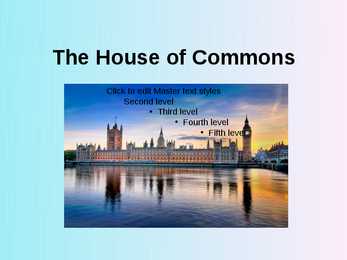
Honourable the Commons of the United Kingdom of Great Britain and Northern Ireland in Parliament assembled. Role The House of Commons main purpose is to make laws by passing Acts of Parliament, as well as to discuss current political issues The House of Commons scrutinises the Government through "Question time", during which members have the opportunity to ask questions of the prime minister and of other cabinet ministers Members and elections Since 1950 each Member of Parliament represents a single constituency The Commissions conduct general reviews of electoral boundaries once every 8 to 12 years, as well as a number of interim reviews Currently the United Kingdom is divided into 650 constituencies, with 533 in England, 40 in Wales, 59 in Scotland, and 18 in Northern Ireland. General elections occur whenever Parliament is dissolver by the Sovereign
2002 January 1: euro coins and notes enter circulation in the 12 participating member states: Austria, Belgium, Finland, France, Germany, Greece, Ireland, Italy, Luxembourg, the Netherlands, Portugal and Spain. 2004 May: European Union’s biggest enlargement ever as 10 new countries join - Cyprus, the Czech Republic, Estonia, Hungary, Latvia, Lithuania, Malta, Poland, the Slovak Republic, and Slovenia. October: the Heads of State and Government and EU foreign ministers sign the Treaty establishing a Constitution for Europe Four parts – Simplification – Constitutional style – No pillar structure.- lisbon treaty 2009 2007 January: Bulgaria and Romania join the EU, bringing membership to 27. 1981 – Greece (Colonels’ regime 1967-74) 1986 – Portugal and Spain (Franco’s regime 1939-75) 1990 – East Germany 1995 – Austria, Finland, Sweden I loeng
John puts down words of advice and wisdom for his son and tells him about the life of a minister and a preacher. John starts his letter with reminding the conversation he had had with his son the night before that he might be gone someday. He talks about death and how dying people have asked him what death is like. He has always said that it is like going home. John starts looking back on his life, reminding his parents and grandparents. His father and grandfather were ministers too and ment a lot to him. John talks about a trip he and his father took to find Johns grandfathers grave who had been an itinerant preacher. It had been a rough journey, which lasted for week. They had very little to eat and nowhere to sleep. It had been a bonding experience for them. John Ames is amazed by the fact that everywhere he goes people seem to know that he is a reverend, even strangers. Mr. Ames thinks about the
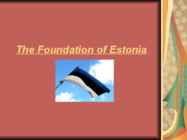
after the collapse of the USSR. Estonia is a parliamentary republic with a president as chief of state and with a government headed by a prime minister. The Riigikogu, a unicameral legislative body, is the highest organ of state authority. It initiates and approves legislation sponsored by the prime minister. The prime minister has full responsibility and control over his cabinet. Prime Minister of the Republic of Estonia Konstantin Päts The first of Prime ministers. Prime Minister of the Republic of Estonia Andrus Ansip since 12 April 2005 The Estonian Declaration of Independence, also known as the Manifesto to the Peoples of Estonia is the founding act of the Republic of Estonia from 1918. It is celebrated on 24 February, the National Day or Estonian Independence Day. Day of Restoration of Independence is celebrated on 20th of August. It was The history of Estonia.
endless support and final push for her to become the prime minister, she had inside her. Margaret herself candidated for the position just for the fun of it, to shuffle thing up a little. But one day, as they sat down, he told her that it is not how it's going to go, that he will make sure the next Prime Minister will be her. With voice coaching, her voice developed more authority, as well her looks, her strong personality got even stronger. Grown respect from colleagues and ministers was conspicuous. Her authority grew among people. This was the breaking point in history, as she won the Prime Minister position she deserved. Life had taught Margaret to be tough, that no one is going to stand up for her, but herself. It was her strong will, what finally got her in the end. She did not care for anyone else's thoughts but hers. It was clear to everyone, that it's either her way or the highway. Highway it was and she was left alone.
services and goods. Parliament also has joint power with the Council over the annual budget of the European Union. Jerzy Buzek is the President of the European Parliament The Council is the EU's main decision-making body. Like the European Parliament, the Council was set up by the founding treaties in the 1950s. It represents the member states, and its meetings are attended by one minister from each of the EU's national governments. Which ministers attend which meeting depends on what subjects are on the agenda. Javier Solana gives EU diplomacy a face as High Representative for the Common Foreign and Security Policy The Commission is independent of national governments. Its job is to represent and uphold the interests of the EU as a whole. It drafts proposals for new European laws, which it presents to the European Parliament and the Council. It is also the EU's executive arm in other words, it is responsible for
one HighHeel and one Low. When Gulliver started learning about the Lilliputians government he noticed that their government officials were chosen by rope dancing. To Gulliver and the reader these practices seem ridiculous and idiotic, but to the Lilliputians they see these practices as normal. Swift uses this scene to satire the British government at this time. The British government also elected their ministers in a same foolish manner. Throughout the first book in Gulliver's Travels, Swift uses satire to demonstrate British politics by using the Lilliputians as a tool to mock and at the same time educate England and its politics. Through Gulliver's eyes, Swift demonstrates the way British people lived in the eighteenth century. From each experience we grasp a stronger understanding of the faults of their government and people who ran them
their political affiliation. Politics, elections, new laws, different kinds of reforms are constant part of our lives and that is why it is vital for also young people to be well-educated about those subjects. At present, the youngsters spend most of their free time staring at computer screen or just loitering outside without any particular purpose. They do not watch news or read newspapers. And it is bad to see that very few of them know what is the situation is Estonia or who are the ministers of our government or which parties form the coalition in the parliament. It gets much worse. Too many children do not even know who are Angela Merkel and Nicolas Sarkozy or where the headquarters of European Union is located. Even if such people opt to go to election some day, they will probably make their decision based on which party's name they have heard the most or who had the most beautiful advertisement on the
http://www.antoniocordella.com/media/JSIS.pdf 9. Leidke täistekstilisi digiteeritud raamatuid Balti riikide kohta, mis on ilmunud alates 2003 aastast. Esitage ühe kirje. Kuidas otsingu läbi viite? Google books: advanced book search, ,,full view only", ,,books", subject" Baltic states", date ,,2003-2013" Rausmussen, J B (2010). Travel Guide: Traces of the Cold War Period ; the Countries Around The Baltic Sea. Copenhagen : Nordic Council of Ministers. Viige infootsingud läbi metaotsisüsteemis Dogpile (www.dogpile.com). 10. Leidke mustvalgeid pilte india elevandist (indian elephant). Esitage ühe pildi aadress. Kuidas otsingu läbi viite? Image ,,indian elephant black and white" http://fineartamerica.com/images-medium/1-elephant-walk-black-and-white-joseph-g- holland.jpg Praktiline töö nr 3
executive and judicial. The legislative power is in the hands of parliament, or, as we call it in Estonia: the Riigikogu (or State Assembly). The parliament consists of 101 seats and members are elected by popular vote to serve four-year terms. The Government of Estonia or the executive branch is formed by the Prime Minister, nominated by the president and approved by the parliament. The government consists of 12 ministers, including the prime minister himself. The prime minister has the right to appoint other ministers, whom he will assign with a subject to deal with and who will not have a ministry to control, becoming a 'minister without a portfolio'. The prime minister has the right to appoint a maximum of 3 such ministers, as the limit of ministers in one government is 15. The supreme judicial power is vested in the Supreme Court or Riigikogus, with 19 justices
British public. The members are called MPs (Members of Parlament). Each MP represents one of the 659 areas in the UK and is a member of a political party. The House of Commons is the most important place for discussing policies and making laws. The party which wins the most seats in the General Election forms the government. The leader of the winning party becomes Prime Minister, his first job is to choose his Cabinet, consisting of the most important ministers in the government. Each member of the Cabinet is a minister responsible for a government department. The Cabinet meets at the Prime Minister's house 10 Downing Street. Cabinet ministers are responsible to Parlament and may all be questionised and held accountable for governmet actions and decisions. Even the Prime Minister must answer questions every Tuesday and Thursday in the House of Commons. The UK is the fourth largest economy in the World and the second largest in Europe
personal correspondence. b. Why is it difficult to translate an expressive text? - Because of the used dialect may get lost in the translation. c. What constitutes the personal component in an expressive text? - original metaphors, unusual collocations d. What is at the heart of the expressive (‘väljenduslik’) function of language? - The personal components e. Explain the nature of ‘Authoritative statements’. - academic/philosophical/etc statements by ministers, legal documents, acknowledged authorities 3. Informative function a. What is the difference between informative and expressive texts for translation? - b. Bring out the four main qualities an informative text attempts to have (don’t just copy word-for-word, make sense of them). - c. Name some typical informative texts. - d. Why are informative texts especially important to translators? (two main reasons).. - 4. Vocative function a
dominance in the Battle of Waterloo, Belgium, in 1783. Captain James Cook, a navigator and explorer, changed the map of the world and established footholds for British expansion and empire building during the 18th and 19th centuries. Britain exported coal, cloth, guns and other manufactured products. Imports included cotton, sugar, tobacco and tea. The Victorian Age (1837-1901): This period was dominated by three men her Prince Consort, Albert of Saxe-Coburg, and two outstanding prime ministers, William Gladstone and Benjamin Disraeli. By the end of her reign the nation was the most powerful in the world. Victoria gave birth to nine children during her 20- 4 year marriage to Albert. Prince Albert's death in 1861 left Victoria inconsolable and she withdrew from most public appearances for years. 1853-1856 the Crimean War, which took place in Russia. The war was won by the British.
They are published within 48 hours of the day the cover. The mace in Parliament is the symbol of royal authority and without it neither House can meet or pass laws. On each day that the House is sitting the mace is carried to the House. It is placed on the table of the House, except when the House is in committee, when it rests on two brackets underneath the table. 22. The Question Time. An hour when MPs are allowed to ask questions of the government ministers. The questions and answers, however, are not spontaneous. Questions to ministers have to be submitted two days in advance, so that ministers have time to prepare their answers. In this way, the government can usually avoid major embarrassment. The trick, though, is to ask an unexpected supplementary question relating to the minister’s answer. 23. Government. Political Parties. Government has two meanings
Ottawa, Ontario, is the nation's capital. Government The form of a government is a Federal Republic. Each province has its own government. The territories are self governing, but the federal government plays a large role in their administration. The cabinet system of Canada unites the legislative and executive branches of the government. The prime minister and the members of the cabinet are usually members of the House of Commons. Ministers are responsible for all their actions to the house. The head of the state is prime minister. Symbols The Canadian flag has a red maple leaf in the centre of the flag. The national animal is beaver. The most famous sport in Canada is ice hockey. It was also invented in Canada.
kontrollile, mis muutis sõdade puhkemise liikmesriikide vahel tulevikus materiaalselt samahästi kui võimatuks. 3)Tootmine antud sektoris muutus tõhusamaks, tõukas tagant Euroopa tööstuslikku arengut. Lepingu eesmärgiks oli kiirendada majanduslikku arengut, tööturu laienemist ning elukvaliteedi tõusu liikmesriikides söe ja terase ühisturu loomisega. Loodi riikideülesed insitutsioonid: Ülemamet (High Authority) Ministrite Nõukogu (Council of Ministers) Euroopa Assamblee (Common Assembly) Euroopa Kohus (Court of Justice) 1.2. Rooma lepingud = Euroopa Majandusühenduse ja Euroopa Aatomienergiaühenduse asutamisleping Leping sõlmiti aastal 1957, jõustus1958. Lepingu sõlminud riigid: Saksamaa, Prantsusmaa, Holland, Itaalia, Belgia, Luksemburg. ESTÜ muutus EMÜks. Lepingu eesmärgid: * Ühisturu loomine · Vabakaubanduspiirkonna loomine · Ühise tollitariifi sisseseadmine mitte-liikmesriikidele
Examples of decisions Commission orgers Estonia to recver incompatible aid from national air carrier Estonian air Enforcing EU law - Primary – treaties - Secondary – regulations, directives, decisions - Commission mnitors he application of union law - Commission may take action - Commission can open formal infringement proceedings Foreign policy - First steps 1970 – European Political Cooperation – binding foreign ministers - Under Maastricht the EU agreed to define and implement a Common Foreign and Security Policy Security & Defence Policy - Failure of the European Defence Community - Because of Cold War a change between US and EU - 1999 European Security and Defence policy set the headline goal - 2003 – European Security Strategy Following the Treaty of Rome Overoptimistic plans: - European Defence Community EDC – 1952 – a plan to create a common European
Why is the Clock Tower called Big Ben? Why not Who can visit the Clock Tower climbing its 334 limestone stairs? Only UK residents Destination 3: London Eye What is the name of the bridge that you have to cross to reach London Eye from Westminster Palace? Westministers bridge When was London Eye opened? March 2000 What was London Eye called in 2000? Millennium wheel How much does renting a private capsule cost? 550£ Destination 4: 10 Downing Street Since when have Prime Ministers lived at 10 Downing Street? 1735 What is the name of the current Prime Minister, which political party does he represent and how old is he? David Cameron, 50 years old, representing conservative You pass Cleopatra's Needle on your way to your next destination. What is it and why was it erected? Ancient Egyptian obelisks, Destination 5: St Paul's Cathedral Take a virtual tour and "climb" the top to enjoy a view of London: http://www.sphericalimages.com/stpauls/virtual_tour.htm
what was the new name? During World War I, George V changed the name of the royal family from Saxe- Coburg to Windsor. The name Saxe-Coburg was German, and Britain was at war with German. 16. What are the roles of the monarch? Explain Summoning,proroguing and dissolving Parliament,giving Royal Assent to legislation- when a bill has been passed by Parliament, it goes to her for Royal Assent before coming a law.She appoints the Prime Minister and other government ministers,judges,officers in the armed forcex,governors,diplomats,bishops .Shes the Head of the established Church of England,Head of the Navy,Army and Air Force. 17. What are the advantages and disadvantages of constitutional monarchy? In advantages of monarchy they don't have to elect new person for a new term which reduce a heavy amount of expenditures in election. The king or queen represents a historical authority. Disadvantages are that a single person rules in a
its president and take place at least twice every six months. The headquarters of the Council of the European Union is in Brussels. The current president of the European Council is Herman Van Rompuy. Council of the European Union It is part of the essentially bicameral EU legislature, representing the executives of EU member states, the other legislative body being the European Parliament. The Council is composed of several configurations of twenty-eight (28) ministers. The exact membership of the configuration depends upon the topic; for example, when discussing agricultural policy the Council is formed by the twenty-eight national ministers whose portfolio include this policy area. The Presidency of the Council rotates every six months among the governments of EU member states, with the relevant ministers of the respective country holding the Presidency at any given time ensuring the smooth running of the meetings and setting the daily agenda. The
of Governor-General, which are granted by the Queen on the advice of the Prime Minister, when there is a vacancy in the office of Governor-General, several of the duties of the said office are exercised by a caretaker, known as the Administrator of the Government. As of 2010, the Governor-General is Sir Anand Satyanand.The Governor-General's powers are primarily symbolic and formal in nature. The Governor-General formally has the power to appoint and dismiss Prime Ministers and to dissolve Parliament; and also formally signs legislation into law after passage by Parliament. The Governor-General chairs the Executive Council, which is a formal committee consisting of all ministers of the Crown. Members of the Executive Council are required to be Members of Parliament, and most are also in Cabinet. Energy In 2008, oil, gas and coal generated approximately sixty-nine percent of New Zealand's gross
Jannsen, it was officially adopted after War of Inependence in 1920; THE COAT OF ARMS: lions were first used as Estonia's heraldic emblem in the 13th century, a similar motif was later used on the coat of arms of the Province of Estonia under Swedish rule. Estonia changed hands but the three lions remained, in 1925 they were adopted officially. The present coat of arms is a golden shield charged with three blue lions with golden oak branch on each side. Ministers: * Andrus Ansip Peaminister represents the government to approve the state budget, represents Estonia in the European Council, directs the activity of the government *Tõnis Lukas - Haridus- ja teadusminister sets aims for the development of vocational education and training in Estonia, guarantees the expedient and effective development and education *Rein Lang Justiitsminister decreases and prevents corruption in private and public sector,
· Used Saxon institutions to great advantage · Demanded from each freeman a personal oath of loyalty · Took precedence over feudal oaths vassals paid their lords · Result: strengthening ties of loyalty to the king · Continued to collect the only non-feudal tax in Western Europe · Based on the Danegeld · Allowed the Church to set up its own independent court system · Kept tight control of the elections bishops, archbishops and abbots · Saw them as his ministers · Entrusted them with much local power and responsibility · Used the Anglo-Saxon officials, earls and sheriffs to look after the king's interests The angevin empire · Henry II came to throne in 1155 (up to 1189) · One of England's greatest monarchs · Before him: feudal anarchy, civil wars · As a feudal ruler, had to deal with the privileges and obligations of his noble vassals
This genuine, but obsessive mourning kept her occupied for the rest of her life and played an important role in the evolution of what would become the Victorian mentality. [6] She had lost a devoted husband and her principal trusted adviser in affairs of state. For the rest of her reign she wore black. Widowhood Until the late 1860s she rarely appeared in public; although she never neglected her official Correspondence, and continued to give audiences to her ministers and official visitors, she was reluctant to resume a full public life. [7] Victoria's isolation from the public greatly diminished the popularity of the monarchy, and even encouraged the growth of the republican movement. Although she did perform her official duties, she did not actively participate in the government, remaining secluded in her royal residences, Balmoral in Scotland or her residence at Osborne in the Isle of Wight.
The legislative and judicial branches, as a whole, are not normally considered part of the government in this sense. Elizabeth II as Queen of Canada is the head of state and repository of executive power, which she normally does not exercise herself. The term The Crown is usually used to represent the power of the monarchy. Government ministers are ministers of the Crown. Criminal prosecutions are made by Crown prosecutors in the name of the monarch. Since the monarch does not reside in Canada, she appoints a governor general to represent her and exercise her powers. The person who fills this role is selected on the advice of the prime minister. "Advice" in this sense is a choice without options since it would cause a major political crisis if the prime minister's advice were not followed. This convention protects the monarchy
regional Anglican churches in full communion with it. Full participation in the sacramental life of each church is available to all communicant Anglicans. The Kirk = the Church of Scotland is Presbyterian in its structure, governed by a system of local, regional and national 'courts' or councils. 'Presbyterian' government refers to the sharing of authority in the church by an equal number of 'elders' (elected from the membership of the church) and ministers. Evangelical = low church The Low Church movement can trace its roots back to the early 18th century but is primarily associated with the opposition to the Anglo-Catholic movement of the later 19th century. Low Church placed great emphasis on preaching, personal piety and the authority of scripture and gave much less importance to the orders of priesthood and episcopacy. Anglo-Catholic = high church High Church is the older of the two terms and was first
The motto means that, via the EU, Europeans are united in working together for peace and prosperity, and that the many different cultures, traditions and languages in Europe are a positive asset for the continent Estonia in EU In May 2004 Estonia joined with European Union. It's union's one of the smallest member. As a member Estonia have an chance and liability to partake in EU politic reshaping and law making. Estonia's EU directional politics noticeable, when public servants and ministers talk publicly about EU, in different strategy documents etc. To promote Estonian odds and for protection in European Union is necessary to have effective domestic coordination system what handle with questions about EU. Estonian government and central bank has set them sights on joining euro zone at firs chance. It happens as soon as Estonia comply needful conditions. Good and bad aspects of EU Pro or con European Union usually depends who you are- proprietor, average person,
Politsei- ja piirivalveamet - Siseministeerium Terviseamet – Sotsiaalministeerium Muinsuskaitseamet – Kultuuriministeerium 11. Milline on värskeim uudis EL-i kohta Vabariigi Valitsuse koduleheküljel? Reede, 6. veebruar 2015, Riias toimub ELi energeetikaministrite kohtumine ja konverents energialiidu loomise teemal. Loe lähemalt: https://eu2015.lv/events/political-meetings/the-energy-union- conference-of-the-eu-energy-ministers-2015-02-06 Loe palun läbi Juhan Kivirähk´i 2002. a.“ Sirbis“ ilmunud artikkel „Kõige raskem on inimese jaoks demokraatlik ühiskond“ ja vasta küsimustele. *Võrdle artiklis peegeldatavat 10 aasta tagust Eesti ühiskonda ja tänapäeva. Mida leiad sarnast, mida erinevat—üldsuse poliitikasse suhtumises, elanike kodanikuhariduses (arusaamine oma õigustest, kohustustest ja vabadustest, ühiskonnas kaasarääkimise võimalustest),
first 200 years of British rule, Jamaica became one of the world's leading sugar- exporting, slave-dependent nations, producing more than 77 000 tons of sugar annually between 1820 and 1824. The population in 1834 was 371 070 of whom 15 000 were white, 5 000 free black, 40 000 coloured or mixed race, and 311 070 slaves. Strong economic growth, averaging approximately 6% per annum, marked the first ten years of independence under conservative goverments which were led successively by Prime Ministers Alexander Bustamante, Donald Sangster and Hugh Shearer. The growth was fueled by strong investments in bauxite/alumina, tourism, manufacturing industry and, to a lesser extent, the agricultural sector. Economix deterioration continued into the mid-1980s; The first and third largest alumina producers, Alpart and Alcoa, Henry Morgan was a famous closed and there was a significant
challenge to the EU as it will involve critical policies and issues such as migration, asylum and drug-smuggling. TURKEY'S PARTICIPATION IN THE EU INSTIUTIONS The participation of Turkey in the EU institutions will affect dramatically the allocation of power and influence on decision-making, policy formulation and the dynamics of the broader European political arena. As a large member state, Turkey will have a powerful voice in the European Parliament and the Council of Ministers where decisions are mostly made by qualified majority. This shift of power from the Western Christian capitals to the eastern Islamic frontier is already causing skepticism and reactions in some countries (Joseph, J.S., 2006). TURKEY AND CYPRUS Turkey has unresolved issues and unstable relations or no relations at all with some EU member states. Greece and Cyprus are cases in point. In recent years, Greek- Turkish relations have improved considerably and Greece's policy towards Turkish
These two chapters highlight the kinds of commentary Swift makes throughout the novel. By describing a society that chooses its highest officials with silly competitions like seeing who can jump the highest on a tightrope, Swift is poking fun at the way officials are chosen in England. He is also commenting on the disturbing trend of politicians who are willing to do whatever it takes to gain favour in the courtincluding humiliating themselves. The danger of ambition is also figured here; jumping badly can lead to death. Having Gulliver stand with his legs apart so that the Lilliputian armies can walk through is also a ridiculous idea. It is a comment on the pomp and circumstance of English armies. To Swift it seems that armies are often more concerned with looking impressive than with being impressive. This scene might also be an allusion to the Colossus of Rhodes, described in Julius Caesar by Shakespeare as a largerthanlife ...
Two other institutions play vital roles: the Court of Justice of the EU upholds the rule of European law the Court of Auditors checks the financing of the EU's activities. The powers and responsibilities of all of these institutions are laid down in the Treaties, which are the foundation of everything the EU does. They also lay down the rules and procedures that the EU institutions must follow. The Treaties are agreed by the presidents and/or prime ministers of all the EU countries, and ratified by their parliaments. The EU has a number of other institutions and interinstitutional bodies that play specialised roles: the European Central Bank is responsible for European monetary policy the European External Action Service (EEAS) assists the High Representative of the Union for Foreign Affairs and Security Policy, currently Catherine Ashton. She chairs the Foreign Affairs Council and conducts the common foreign and security policy, also ensuring the
sweets, excluding hishimochi. Third platform The third tier holds five male musicians gonin bayashi (?). Each holds a musical instrument except the singer, who holds a fan. Left to right, from viewer's perspective, they are the: 1.Small drum Taiko, seated, 2.Large drum tsuzumi, standing, 3.Hand drum Kotsuzumi, standing, 4.Flute Fue or Yokobue seated, 5.Singer Utaikata, holding a folding fan sensu, seated. Fourth platform Two ministers (daijin) may be displayed on the fourth tier: the Minister of the Right and the Minister of the Left . The Minister of the Right is depicted as a young person, while the Minister of the Left is much older. Also, because the dolls are placed in positions relative to each other, the Minister of the Right will be on the viewer's left and the Minister of the Left will be on the viewer's right. Both are sometimes equipped with bows and arrows.
As a federation, Canada is made up of ten provinces and three territories. Its national problems are resolved through its central government in Ottawa. Each province has its own government. The territories are self-governing. The Cabinet system of Canada unites the legislative and executive branches of the Government. The Prime Minister and the members of the Cabinet are usually members of the House of Commons. Sometimes a senator may be in the Cabinet. Ministers are resposible for all their actions to the House, which is elected by the people. The Prime Minister directs the government. The Parliament is the national legislature of Canada. It has two houses, an upper house called the Senate, and a lower, more powerful house, is called the House of Commons. The Senate has 104 members. Senators are appointed by the governor generally on Prime Minister's recommendation. The Speaker is the Senate's presiding officer. A new Prime
muutis sõdade puhkemise liikmesriikide vahel tulevikus materiaalselt samahästi kui võimatuks. · Tootmine antud sektoris muutus tõhusamaks, tõukas tagant Euroopa tööstuslikku arengut. 5. ESTÜ lepingu peamised eesmärgid · Kiirendada majandusliku arengut, tööturu laienemist ning elukvaliteedi tõusu liikmesriikides söe ja terase ühisturu loomisega 6. ESTÜ institutsioonid · Ülemamet (High Authority) · Ministrite Nõukogu (Council of Ministers) · Euroopa Assamblee (Common Assembly) · Euroopa Kohus (Council of Justice) 7. ESTÜ-ga ühinenud riigid · Belgia, Holland, Luksemburg, Itaalia, Prantsusmaa, Saksamaa 8. Riikideülesuse (supranational & supranationalism) põhimõte · Tugineb föderalistlikule teooriale, mille kohaselt integratsiooni lõpptulemusena tuleks luua ühtne föderatiivne riik ja kaotada rahvuste vahelised piirid.
streets / roads We use at before an address and in or on before the name of a road: They’ve opened an office at 28 Lees Road. (exact address) The church is in / on Park Road. We sometimes use on instead of in when we talk about long streets or roads: The town is on the Pacific Highway. We can use at instead of in when we use a street name to refer to an institution in that street: There was an important meeting of ministers at Downing Street today. Notice that we say ‘on Wall Street’ to mean the financial institution. Prepositions of Place with the words ‘corner’, ‘front’ and ‘back’ CORNER • in the corner of a /the room • at / on the corner of a /the street There was a TV-set in the corner of the room. The bank is on the corner of the street. FRONT / BACK • in the front / back of a /the car • in front of the computer
adopted officially. The current coat of arms is a golden shield charged with three blue lions with a golden oak branch on each side. The small coat of arms is identical but without oak branches. Parliament, government and president. Estonia is a constitutional democracy, with a president elected by its unicameral parliament (elections are held every four years). The government or the executive branch is formed by the prime minister, nominated by the president, and a total of 14 ministers. The government is appointed by the president after approval by the parliament. The legislative power lies with the unicameral parliament, the Riigikogu or State Assembly, which consists of 101 seats. Members are elected by popular vote to serve four-year terms. The supreme judiciary court is the National Court or Riigikohus, with 19 justices whose chairman is appointed by the parliament for life on nomination by the president.
 annaabi.ee