 5 punkti
Autor soovib selle materjali allalaadimise eest saada 5 punkti.
5 punkti
Autor soovib selle materjali allalaadimise eest saada 5 punkti.
 ~ 1 leht
Lehekülgede arv dokumendis
~ 1 leht
Lehekülgede arv dokumendis
 2010-11-01
Kuupäev, millal dokument üles laeti
2010-11-01
Kuupäev, millal dokument üles laeti
 7 laadimist
Kokku alla laetud
7 laadimist
Kokku alla laetud
 0 arvamust
Teiste kasutajate poolt lisatud kommentaarid
0 arvamust
Teiste kasutajate poolt lisatud kommentaarid
 bassbass
Õppematerjali autor
bassbass
Õppematerjali autor
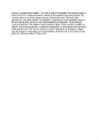
Estonian state system The Resolution of the National Independence of Estonia was adopted on August 20, 1991. The Constitution of Estonia is the fundamental law of the Republic of Estonia and it was adopted in June 1992. Estonia is a Democratic Parliamentary Republic where the supreme power is vested in the people. The head of State of Estonia is the President of the Republic who can be elected for two five-year terms. The Legislature. The Parliament of Estonia is called Riigikogu and it is elected by people for a four year term. The election is universal, uniform and direct. Voting is secret. The Riigikogu is comprised of one hundred and one members. The Riigikogu has three main functions: legislation, reviewing the activities of the executive power, representation. The members of the Riigikogu have the rights to form factions. The Executive. The Executive of Estonia consists of the body of the Prime Minister and cabinet of ministers.
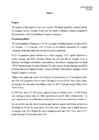
TAAB11 Report Purpose The purpose of this report is to give an overview of Estonian population, political factors, technological factors, economic factors and the trends in Estonian economy compared to Germany and to briefly discuss Estonian business environment. Estonian population The total population of Estonia is 1 313 271 according to Statistics Estonia, of which 69.1% are Estonians, 25.1% Russians, 4.9% of which are of different nationalities for example Ukrainians, Belarusians and Finns. Rest are of unknown nationality. 68.5% of population speaks Estonian as a mother language, 29.6% speaks Russian as a mother language and 0.6% Ukrainian. Estonia has only one official language which is Estonian. According to information by the Institute of the Estonian Language there are about 75% of Estonian people who speak Estonian
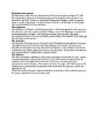
the flag was seen again on the tower of Pikk Hermann in Tallinn; THE ANTHEM was composed in 1848 by Friedrich Pacius and the estonian language words were written by Johann Voldemar Jannsen, it was officially adopted after War of Inependence in 1920; THE COAT OF ARMS: lions were first used as Estonia's heraldic emblem in the 13th century, a similar motif was later used on the coat of arms of the Province of Estonia under Swedish rule. Estonia changed hands but the three lions remained, in 1925 they were adopted officially. The present coat of arms is a golden shield charged with three blue lions with golden oak branch on each side. Ministers: * Andrus Ansip Peaminister represents the government to approve the state budget, represents Estonia in the European Council, directs the activity of the government *Tõnis Lukas - Haridus- ja teadusminister sets aims for the development of vocational
It must be considered not only whether law making powers are granted to elected persons, but also whether the balance of power between institutions within the European Union promotes the ideals of democracy. Firstly,the democratic nature of the European Union must be measured by the extent to which its institutions (particularly those with executive and legislative power) are elected bodies of persons. The European Union is governed by seven institutions; the European Parliament, the European Council, the Council of the European Union (the Council), the European Commission, the Court of Justice of the European Union, the European Central Bank and the Court of Auditors.The first four of these hold the executive and legislative power of the European Union. Of these four institutions, the only one directly elected is the European Parliament whose 736 members are elected every 5 years; each citizen in each member state having the right to vote
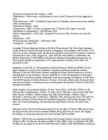
Kerli Uue 10.r The Republic of Estonia Estonia is a democratic parliamentary republic divided into 15 counties. The capital and largest city is Tallinn. Estonia's neighbours are Latvia, Russia and Finland. The parliment is named ,,The Riigikogu." The Estonian parliament has 101 members and influences the governing of the state primarily by determining the income and the expenses of the state. The Riigikogu elects and appoints several high officials of the state, including the President of the Republic. The Parliament of Estonia is elected by people for a four year term by proportional representation. The Government of Estonia is formed by the Prime Minister of Estonia, nominated by the president and approved by the parliament
must take into account national sovereignty as well as global needs. The organization won the 2001 Nobel Peace Prize, and a number of its officers and agencies have also been awarded the prize. Other evaluations of the UN's effectiveness have been mixed. Some commentators believe the organization to be an important force for peace and human development, while others have called the organization ineffective, corrupt, or biased. 2. General knowledge on your delegation COUNTRY: Syrian Arab Republic POPULATION: Over 13 million LANGUAGE: Arabic (official); French; English RELIGION: Islam, Christianity, Druze, Judaism, Baha'i Syrian Arab Republic, more commonly known as Syria. The fertile land of Syria lies at the crossroads of great trade routes between the East and West. It is also the site of many holy places in Judaism, Christianity, and Islam. Because of these advantages, it has been invaded, conquered, and occupied by many different peoples over its long history
the EU and its member countries. European Union law is applied by the courts of member states and where the laws of member states provide for lesser rights European Union law can be enforced by the courts of member states. European Union institutions The European Union is governed by seven(7) institutions. Article 13 of the Treaty on European Union lists them in the following order: 1) the European Parliament 2) the European Council 3) the Council of the European Union (simply called "Council") 4) the European Commission 5) the Court of Justice of the European Union 6) the European Central Bank 7) the Court of Auditors Most EU institutions were created with the establishment of the European Coal and Steel Community (ECSC) in the 1950s. Much change since then has been in the context the shifting of the power balance away from the Council and towards the Parliament.
Tallinn English College Topic Estonia Tallinn 2008 1. Introduction Estonia is a small country about the size of Switzerland, or New Hampshire and Massachussetts combined. Estonia is named after the people called "Ests" who lived in the region in the 1 st century AD. The Republic of Estonia is one of the three countries commonly known as the "Baltic States". The other Baltic States are Latvia and Lithuania. 2. Geographical position Estonia is situated in northeastern Europe. Estonia is bounded on the north by the Gulf of Finland, on the east by Russia, on the south by Latvia and on the west by the Baltic Sea. In the north it borders on Finland. The coastline of the Baltic Sea in Estonia is characterized by numerous gulfs and bays, the biggest of them
 annaabi.ee






Kõik kommentaarid