Introduction The great French Revolution has been regarded to as one of the most influential events in modern Western history, and therefore there are various interpretations to explain how the Revolution evolved and what it was like. It is important to focus on very different kinds of historical evidence and sources to get a clear picture of the Revolution. Therefore, one must not forget to look not only at the written sources but also at the more cultural and artistic interpretations. One of the best examples of cultural and political distribution of the Revolutionary ideas was Jacques-Louis David, who, with his paintings, perpetuated The French Revolution from the Republican point of view. His art was mostly tightly connected to the main figures, events and ideas of the French Revolution. David had more than 5 pieces of art that captured the essence of the Revolution. His paintings represented political ethics, current ideals and fou...
Old English ( 450-1100 AD) The invading Germanic tribes spoke similar languages, which in Britain developed into what we now call Old English. Old English did not sound or look like English today. Native English speakers now would have great difficulty understanding Old English. Old English was spoken until around 1100. Middle English (1100-1500) In 1066 William the Conqueror, the Duke of Normandy invaded England. The new conquerors brought with them a kind of French and there was a period where the lower classes spoke English and the upper classes spoke French. In the 14th century English became dominant in Britain again, but with many French words added. Modern English Early Modern English (1500-1800) Towards the end of Middle English the change in pronunciation started, with vowels being pronounced shorter and shorter. From the 16th century the British had contact with many peoples from around the world and many new words and phras...
King William I When William died his lands were divided between his eldest two sons. Robert inherited Normandy, while William became king of England. Died from injuries EDWARD V He and his brother Richard were murdered in the Tower of London Alfred the Great - King of Wessex (part of England). All British modern British monarchs trace from the Wessex line. William I, the Conqueror. Founder of the modern British state. Henry II - added Ireland the British possessions John I - signed Magna Carta, the beginigs of the British constitution Edward I - conquered Wales Edward III - started 100 years war Henry V - Last great warrior king Henry VIII - Broke England away from Catholic church. Elizabeth I - laid the seeds of the British Empire, and tons of other stuff James I - Was King James VI of Scotland, inherited throne from Elizabeth I, united England and Scotland Charles I - Overthrown by Parliament and executed. Replaced by a re...
France Hanna Kristiina Käerdi Location and neighbors General info Capital: Paris Area: 640 679 km2 Population: 66 616 416 National language: French President: François Hollande Prime minister: Manuel Valls Currency: euro (franc) Largest cities Paris famos for Louvre and Eiffel tower Population: 2 125 246 Largest cities Marseille poplation: 850 600 University of marseille est 1409 Largest cities Lyon population 445,452 The city is known for its historical and architectural landmarks Flag Tricolour Blue White Red Symbols National emblem: The National Anthem: La Marseillaise The official motto: Liberté, Egalité, Fraternité (Liberty, Equality, Fraternity) Nature Forests Nature Mountains Nature Rivers The longest river of France: The Rhine Nature Lakes Largest lake of france is Lac du Bourget (Lake Bourget) Famous people Coco Chanel Famous people Marie Antoinette Famo...
Queens Slideshow Alar Nort, Kevin Uueni, Mihkel Vaarmaa Nissi Põhikool 2015 History • Queens was settled in 1635 by dutch and english settlers. • Queens played a minor role in the American Revolution, as compared to Brooklyn, where the Battle of Long Island was largely fought. • It is believed that the county was named after Catherine of Braganza • From 1683 until 1784, Queens County consisted of five towns: Flushing, Hempstead, Jamaica, Newtown, and Oyster Bay. • The New York City Borough of Queens was authorized on May 4, 1897. Geography • Queens is located on the far western portion of Long Island and includes a few smaller islands. • Queens County has a total area of 460 km2, of which 280 km2 is land and 180 km2 is water. • Brooklyn, the only other New York City borough on Long Island, li...
The Romantic movement in American literature Romanticism in literature · Romantic · Romanticism is an artistic, literary, and intellectual movement · Influenced by : - Enlightenment - elevated medievalism · In America 1820 Characteristic features · Intuition, instincts, imagination, feelings · Folk art, nature, heroism · Protest against reality · Emphasis on women and children · Dreams · Symbolism and myths Events & Dates · The American Revolution (1776 -1783) · The French Revolution (1789 1799) · The Industrial Revolution · Civil war (1861 1865) · Colonies, communes · Ralph Waldo Emerson (1803 1882) · Henry David Thoreau (1817 1862) Famous writers · Small literary world, writers knew each other · Washington Irving (1783 -1859) · James Fenimore Cooper (1789 -1851) · Nathaniel Hawthorne (1819 1891) · Herman Melville (1819 -1891) ...
The history of the English Language Kristin Klaus, 10a Short history · Started with the arrival of three Germanic tribes who invaded Britain during the 5th century AD · The tribes: the Angles, the Saxons, the Jutes · At that time the inhabitants spoke a Celtic language · The invadors pushed them west and north Germanic invaders entered Britain on the east and south coasts in the 5th century. Old English · 450-1100 AD · The Germanic tribes spoke similar languages which developed into Old English · Did not sound or look like English today · About half of the most commonly used English words have Old English roots · Be, strong, water Part of Beowulf, a poem written in Old English. Middle English · 1100-1500 · In 1066 William the Conqueror, the Duke of Normandy (part of modern France), invaded and conquered England · The new conquerors (called the Normans) brought with them a kind of French, which became the la...
THE PALACE OF VERSAILLES Versailles is one of the largest royal palaces ever built. This huge and magnificent palace started as a hunting lodge that was built for King Louis XIII in 1624. The small lodge was the beginning of an extremely huge palace that would cost the French government more then they could imagine. It is located in the city of Versailles, in northern France, 16 km southwest of Paris. In order for Louis to have such a wonderful place he hired an architect named Louis Le Vau and a painter named Charles Le Brun. These two men made plans to build a palace that would, including gardens, cover a total of 37,000 acres. When this was completed, the king, decided it was not enough. Jules Hardouin-Mansart was hired to redesign parts of the palace. Louis Le Vau He designed and built the beautiful Hal...
USA ajaloo konspekt (algus-Mayflower Compact) 1. Name the regions of the USA New England, Middle Atlantic, South, Midwest, Southwest, West. 2. Name the states that make up each region. NE: Maine, New Hampshire, Vermont, Massachutsess, Rhode Island, Connecticut. MA: New York, Pennsylvania, New Jersey, Maryland, Delaware. S: Virginia, North Carolina, South Carolina, Georgia, Florida, Alabama, Mississippi, Louisiana, Missouri, Arkansas, Kentucky, Tennessee, West Virginia. MW: North Dakota, South Dakota, Nebraska, Illinois, Michigan, Kansas, Minnesota, Iowa, Indiana, Wisconsin, Ohio. SW: Arizona, New Mexico, Texas, Oklahoma. W: Washington, Oregon, California, Hawaii, Alaska, Montana, Idaho, Nevada, Colorado, Wyoming, Utah. 3. Compare the geography and population / settlement and cultural background in the following regions: (any two of the 6 regions) Ne...
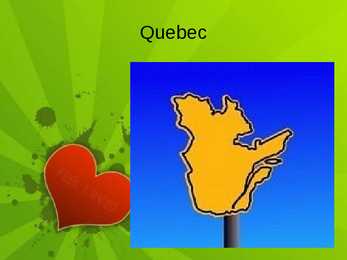
Quebec Quebec Province in east-central Canada. The only Canadian province with a predominantly French- speaking population. Largest province by area. second-largest administrative division. Bordes West by the province of Ontario, James Bay and Hudson Bay. North by Hudson Strait and Ungava Bay. East by the Gulf of Saint Lawrence, Newfoundland and Labrador and New Brunswick. South the U.S.A. Geography 90% of Quebec's territory lies within the Canadian Shield The Eastern Canadian forests cover the Appalachian Mountains Climate Most of central Quebec has a subarctic climate. Winters are long, very cold, and snowy. Summers are warm but very short. History At the time of first European contact and later colonization,...
30,00010,000 BC Prehistoric hunters cross over into Canada from Asia circa 1000 AD Leif Ericsson leads a Viking expedition to the New World 1451 The Iroquois Confederacy is formed 1497 John Cabot reaches Newfoundland (or perhaps Cape Breton) 1534 Jacques Cartier first explores the St. Lawrence region 1608 Samuel de Champlain establishes a French colony at Québec City 1670 Hudson's Bay Company is formed 1755 Expulsion of the Acadians 1759 Battle of the Plains of Abraham: Québec City is captured 1763 New France is formally ceded to Britain; Pontiac Rebellion erupts 1783 Loyalist refugees begin arriving after the American Revolution 181214 War of 1812: U.S. invades Canada 183738 Rebellions against British rule in Upper and Lower Canada 1848 Responsible government is won, first in Nova Scotia, then in Canada 1867 Confederation (first four provinces: Québec, Ontario, N.S., and N.B.) 1870 Red River Resistance; province of Man...
TARTU ÜLIKOOL ÕIGUSTEADUSKOND Eraõiguse Instituut ,,INIMESE JA KODANIKU ÕIGUSTE DEKLARATSIOON, 1789" Allika analüüs Õppejõud: Tallinn 2011 SISUKORD SISUKORD.................................................................................................2 1. ANALÜÜS...............................................................................................4 1.1 Allika liik...............................................................................................4 2. KODANIKE ÕIGUSTE AJALOOST...............................................................5 3. ELUOLU ENNE DEKLARATSIOONI.............................................................6 3.1 Talupojad...............................................................................................6 3.2 Linnaelanikud........
Eiffel tower The Eiffel Tower is an iron tower built beside the Seine River in Paris. The tower has become a global icon of France and is one of the most recognizable structures in the world. The structure was built between 1887 and 1889 for universal Exhibition of the French Revolution. The construction was only meant to last for the duration of the Exposition. The man behind the Eiffel Tower was Gustave Eiffel, known from his revolutionary bridge building techniques. The structure took more than two years to complete. Each one of the about 12,000 iron pieces were designed separately to give them exactly the shape needed. All pieces were prefabricated and fit together using approx. 7 million nails. Inaugurate March 31, 1889, the Eiffel Tower would be the tallest structure in the world until the completion of the Chrysler Building in 1930.Eiffel Tower is 99...
William Makepeace Thackeray By: Liis Raudmann Biography Born in July 18th, 1811 English novelist Father- Richmond Thackeray worked in British East India Company In 1815 William was sent to England 20th August 1836 William married Isabella Gethin Shawe Died on 23 December 1863 Education 1817 attends school on Chiswick Mall 1822-1828 in Charterhouse 1828-Camberidge 1829-1830-Trinity 1831-1833-studies law in Middle Temple, London 1834-1835-studies art in Paris Stepping Into World Went to German After returning lived of young indulgent man Thackeray inherited £ 20,000 from his father In 1832, Thackeray met William Maginn Bad times with his wife Thackeray worked as a freelance journalist for about 10 years Works Contributions to Punch, 1843-1854 The Book of Snobs Miss Tickletoby's Lectures on English History Papers by the Fat Contributor The...
1. Marie-Antoinette 2. She was born in Vienna, Austria, in 1755 She was the 15th child of Holy Roman Empress Maria Theresa and Emperor Francis I. Marie Antoinette married the future French king Louis XVI when she was just 15 years old. The young couple soon came to symbolize all of the excesses of the reviled French monarchy, and Marie Antoinette herself became the target of a great deal of vicious gossip. 3. She was hated for many things like: beauty, spending money, The Diamond Necklace incident People called her "L'Autrichienne" She was hated for her beauty and because of her eccentric personality, also because she was born in Austria. French people started to call her "L'Autrichienne" (which literally means the Austrian (woman), but also suggests the French word "chienne", meaning bitch) Also France financial crisis was blamed on her lavish spending. It is known that she lived golden life: she bought tons of clothes, diamo...
Why did Russian civil war breake out in 1918? The Russian Civil War was to tear Russia apart for three years, between 1918 and 1921. The civil war occurred because after November 1917, many groups had formed that opposed Lenin's Bolsheviks. These groups included monarchists, militarists, and, for a short time, foreign nations. Collectively, they were known as the Whites while the Bolsheviks were known as the Reds. But why did it really breake out? There were three reasons why Civil War broke out in Russia in 1918.The first reason was that there was bound to be a challenge to the Bolsheviks, who had seized power by a surprise coup. After 1918, their political opponents tried to reverse it. The Bolsheviks had many enemies. One group who wanted to destroy the Bolsheviks were the Social Revolutionaries. At first, they had supported the November Revolution. Elections had been held in November 1917 for a new government, ...
William Shakespeare (1564-1616) playwright, actor, poet 37 plays, over 400 screen adaptions Lord Chamberlain's Men, King's Men, The Globe Early life: John Shakespeare, Mary Arden, 2 sis', 3 bros; married Anne Hathaway 3 children Life in London: 1599 built Globe, 1623 first compilation Forms: classical & history plays, comedies+tragedies, poetry Style: metaphors, rhetorical phrases, free flow of words, unrhymed iambic pentameter; deviations Renaissance (end of 14th century) Italy, reaches rest of Europe Elizabethan era (16th II h - 17th I h) Theatre: combined medieval theatre, morality plays & Roman drama to create Elizabethan tragedy Poetry: Italian influences, sonnet (English: cddc ee) Rulers of England: Henry VII (brings prosperity, repairs economic situation; made alliances); Henry VIII (beginning of English reformation; killed "traitors"; 6 marriages); Mary I (Catholic); Elizabeth I (The Virgin Queen restores order; Religiou...
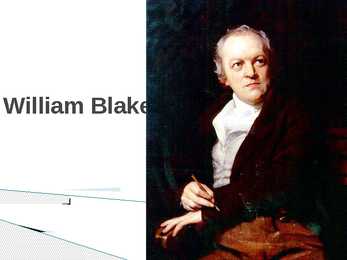
William Blake William Blake was borned in 1757 and died in 1827. He was an English poet, painter, and printmaker. He was the third of seven children. The Bible was an early and profound influence on Blake. At the age of 21, he was to become a professional engraver. After two years, Basire sent his apprentice to copy images from the Gothic churches in London His experiences in Westminster Abbey helped form his artistic style and ideas. Later life and career Blake's marriage to Catherine remained a close and devoted one until his death. Blake taught Catherine to write, and she helped him to colour his printed poems. William and Catherine's first daughter and last child might be Thel described in The Book of Thel who was conceived as dead. Politics Blake was not active in any well-established political party Blake was both concerned about senseless wars of kingdoms, and the blighting effects of the industrial revolution. Much of hi...
DEFINITE ARTICLE (THE) THE IS USED BEFORE: · nouns which are unique (the moon) · names of: o cinemas (the Opera) o hoteles (the Hilton) o theaters (the Palladium) o museums (the Louvre), o newspapers/magazines (the European but: Newseek) o ships (the Titanic), o galleries (the Tate Gallery) o rivers (the Thames) o seas (the Black Sea) o groups of islands/states (the USA) o mountain ranges (the Alps) o deserts (the Negev Desert) o oceans o canals o names or nouns with ''of'' (the Queen of Spain) · musical intruments (the piano) · dances (the samba) · names of families (the Browns) · nationalities ending in sh, -ch or ese (the Welsh). Othe plural nationalities are used with or without ''the'' (the Australians or Australians) · titles (the King, the Profess...
Early History The first inhabitants of Canada were native Indian people who were called as Inuits. They are believed to be in Canada since about 10000 BC. The Inuits came to Canada from Asia crossing the Bering land bridge. The earliest discoveries in Canada were made by the Vikings. In AD 985 Vikings sailing from Iceland to Greenland were blown westward off their course and the Vikings sighted the coast of Labrador peninsula. The report of forested areas encouraged further exploration because the colonies in Greenland which belonged to the Vikings lacked lumber. In AD 1000 Leif Ericson became the first European to land in North America. The first colony was established what was described as Vinland by the Vikings. It was located on the northernmost tip of todays Newfoundland. There has also been a theory that the Vikings penetrated Hudson Bay and reached the Great Lakes region but recent investigations have...
Creole Culture Report Table of contents INTRODUCTION.........................................................................................................................................................2 FAMILY LIFE..............................................................................................................................................................3 HISTORICAL CREOLE GENDER ROLE...............................................................................................................4 CREOLE CUSTOMS.......................................................................................................................................................5 CREOLE CULTURE...................................................................................................................................................5 PEOPLE.......................
Britain History Pre-Norman Britain The Iberians brought their metal-working skills and the first real civilization to Britain in the third millennium B.C and were overrun by various Celtic invasions that began in the 8th century. The Celts introduced their tribal organization and an early form of agriculture before they were forced westward by the Roman invasion. Forms of Celtic language are still spoken in Britain. Romans (with Julius Caesar in the head of them) first tried to occupy Britain in 55 B.C., but there was a rebellion in Gaul so they had to leave to fight against it. Next time they came in 43 A.D. and their leader was Emperor Claudius. Romans brought a lot with them. Their brought paved roads, the sites of important cities, the seeds of Christianity, the Roman law, Roman baths, language and advanced civilization. They also built Hadrian's Wall in 122 A.D. Romans occupied...
16th century (Tudors) 1. Henry VII - avoided wars, careful with money, didnt have expensive parties, was a rather shadowy figure 2. Henry VIII- brilliant scholar, excellent knight, good-looking, ambitious, self- centered, loved expensive clothes and parties. Wasted his fathers money very quickly and had 6 wives. His first wife couldnt give birth to a baby boy and they only had a daughter. His next wife only gave birth to a girl too. His next wife gave birth to a boy but died after the labor. He didnt like his 4th wife so he sent her back. His fifth wife was young and beautiful but had many lovers and Henry didnt like it so she was sent to the Tower and was beheaded. HIs 6th wife survived. 3. Edward- was sickly and ruled only for a few years and then he died 4. Mary Tudor/Bloody Mary- was catholic and killed many protesntants. Ruled only f...
Test on Romantic Poetry and Prose 1. Approximate dates of romanticism: in the second half of the 18th century. Major events on world history at that time: · Industrial revolution · In America the Declaration of Independence, July 4, 1776 · The French Revolution, 1789 · The King of England was George III, after him George IV and then Queen Victoria Outcomes: · Revolution did not bring welfare · Lives of the lower-classes worsened · Extended the distance between the lower and upper class · The rich got richer, the poor got poorer 2. Romanticism is a reaction against classicism, science and atomic (aesthetic ideal of order and unity) worldview. Romantic ideal is the organic world. Romanticism: · Returns to nature and belief in the goodness of mankind · Exaltation of the senses and emotion overcome reason and intellect i...
BRITISH HISTORY 17TH-19TH CENTURY SEVENTEENTH-CENTURY ☄ When James I became the first English king of the Stuart dynasty, he was already king of Scotland, so the crowns of these two countries were united. ☄ The kind of Middle English spoken in lowland Scotland had developed into a written language known as Scots ☄ The Scottish Protestant church adopted English rather than Scots bibles ☄ Religion and politics are inextricably linked ☄ Some people tried to kill the king because he wasn't Catholic enough and another king had been killed, partly because he seemed too Catholic ☄ Anger grew in the country at the way that the Stuart monarchs raised money ☄ Puritanism- ideological Protestantism ☄ Some of them thought the luxurious lifestyle of the king and his followers was immoral. They were also fiercely anti-Catholic and suspicious of the apparent sympathy t...
1. The Jacobean masque Elizabethan one nation culture, now cultural polarisation between the new courtly culture and the rest of the country. Court in cultural isolation. Ben Jonson. King and courtiers were close to universally recognised ideal types (conflict with the reality). Mysticism. Emergence of perspective view, stage machinery, artificial light, revolution. The stage cast the monarch in the focal point (the lines of perspective of the stage met there. Inigo Jones. Masque an educative vehicle, towards classical antiquity and architecture. Tide towards absolute monarchy. Masque – linked poetry and moral philosophy into art. Music, dance, poetry, lavish illusionistic scenic display to express the doctrines of divine kingship. Great impact. Like gods come down to earth. 2. The Caroline masque Charles decided on subject matter, and acted and danced in masques. Now the regal divinity even more obvious. Ben Jonson. Divine m...
Filmikunsti ajalugu 31.01.12 The age of pioneers: the early history of film How the horses helped to ivent the cinema. Cinema was invented by accident. 1872, west coast: leland standford, party, rich people, end of the 19 century, bored. Stanfrod talks friends about horses: problem: question is, what happens with the hooves while its moving, running. Bet, with eyes, can't settle this. Cannot ever see if the hooves touch the ground. Stanford has enough money, hires most famous photographer. Eadwerd muybridge, comes to usa. Tells him to settle this with photography. That time with photography you cannot get any informatio either. Started to install boxes, in each box, there was a camera. Does the hooves touch the ground or not? Fast shutter, can freeze the moment. Makes fast shutters, to record this. Finds solution, hooves are touching. The prerequisites for cinema: camera(edison and dickson), film stock that is flexible and stable to ru...
CANADA REVISION QUESTIONS 2010 1. The main physiographic regions of Canada. Canada may be divided into seven physiographic regions: Arctic Lowlands, Cordilleran Region, Interior Plains, Hudson Bay Lowlands, Canadian Shield (Forest Lands), St Lawrence Lowlands and Appalachian Region. Divisions are based on each area's relatively similar physical geography and landforms. Physiographic regionalization is defined here as the process by which regions with relatively homogeneous physical geography are determined 2. Who are the native people of Canada? Into which three groups can they be divided? Canada's constitution specifies three categories of aboriginal peoples: Indian (First Nations), Métis, Inuit. According to Canadian census 2011, 1.4 mln people of Aboriginal origin (4.3%): 852,000 First Nation...
Eli Whitney Whitney was born in Westborough, Massachusetts, on December 8, 1765, the eldest child of Eli Whitney Sr., a prosperous farmer. At age fourteen he operated a profitable nail manufacturing operation in his father's workshop during the Revolutionary War.[2] Because his stepmother opposed his wish to attend college, Whitney worked as a farm laborer and schoolteacher to save money. He prepared for Yale at Leicester Academy (now Becker College) and under the tutelage of Rev.Elizur Goodrich of Durham, Connecticut he entered the Class of 1789. Whitney expected to study law but, finding himself short of funds, accepted an offer to go to South Carolina as a private tutor. Instead of reaching his destination, he was convinced to visit Georgia. Georgia was a magnet for New Englanders seeking their fortunes. He invented the cotton gin, which was the beginning of his success. After he f...
Artikkel Artikkel puudub Määrav artikkel Isikunimed: Perekonnanimed mitmuses: Veiko the Tamms Tom Smith the Talvistes Riiginimed, kontinendid: Riigi või piirkonna nimed, mis on mitmuses Estonia või kus on täiendina pärisnimi, kingdom, France state või republic: Asia the United Kingdom = the UK Europe the United States of America = the USA = the US the Republic of Estonia the Estonian Republic the United Arab Emirates ...
HISTORY TEST 5 invasions to Britain until 1066 1) The Celts o Gaels in 600BC; Cymry(Britons) in 300BC o From present-day Austria, Switzerland o The Celtic language survives in the names of many places in England- Dover, Kent, Thames o The Celts are best known for their art- many bronze objects with elaborate designs; brooches; pins; mirrors; Celtic stone crosses o The Celts had 3 social orders: warriors, druids(priests) ordinary people 2) The Romans o (55 BC-Caesar) 43 AD- 410 AD- Claudius o From present-day Italy o Southern Britain became Britannia and was ruled by a roman governor o The Romans built over 20 towns: Colchester, Londinium, Winchester etc. They were good engineers and built roads and villas that had central heating, glass windows and mosaic floors ...
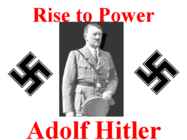
Rise to Power Adolf Hitler Objectives: • The objective of this presentation is to give students an understanding of Adolf Hitler’s early, pre-adult years. • Students will also become familiar with how this seemingly unimportant Austrian rose to power in post World War I Germany. Overall Purpose: The overall purpose of this presentation is to explain how this little boy on the left became the man on the right who was ultimately responsible for the death of about 50 million people all over the world!! Birth • Adolf Hitler was born on April 20, 1889 in Braunau, Austria. • Adolf was 1 of 6 children - 3 of who died at early ages Parents Alois Schickelgruber Hitler was a customs official who was illegitimate by birth. His father, Adolf’s grandfather, may have been Jewish. He died when Adolf was ...
Describe the main ideas of the European Enlightenment? Enlightenment as a term took into use germans philosopher Immanuel Kant in one of his articles,in 1784,but enlightenment as a way of thinking was established even earlier.The Enlightenment was a period after the Renaissance where philosophers and scientists began to question previous ideas, which explains the motto of the enlightenment, "Dare to know", created by Kant.With this kind of terminology,enlighteners wanted to express human race exit from the mental blindness.Maiden enlightenment philosophers lived on the 17th century,its glory continued till the 19th century.The powerful Enlightenment ideas of the eighteenth century, concerning reason and natural law, spread widely throughout Europe and its colonies and gave hope to many people for future progress and reform. Sience development was the main reasons and it gave the push to enlightenment.It put hesitate in old belives a...
Prantsuse revolutsioon ja Euroopa Jaanika Saska Põltsamaa Ühisgümnaasium 10a Revolutsiooni vastukajad Saksa haritlased olid Bastille' vallutamise teatest vaimustatud Rahvuskogu tegevuses nähti valgustusideede elluviimist poliitikas Poolehoidu avaldati revolutsioonile maades, mis olid võõravõimu all Venemaa suhtus algul rahulikult kuna nägi selles üksnes ,,näljase rahvahulga'' väljaastumist Pärast kuningas Louis XVI hukkamist ja jakobiinide terrorireziimi kehtestamist hakkas esialgne vaimustus vaibuma Prantsusmaa sündmustes hakati tajuma otsest ohtu feodaalkorrale Euroopas Saksa valitsejates tekitas õudust loosung - vabadus, võrdsus, vendlus Euroopa valitsejaperekondade veresidemed aitasid kaasa Prantsusmaa vastase ühisrinde tekkimisele Kuningas Louis XVI Revolutsioonisõdade algus Euroopa riigid otsustasid sündmustesse sõjaliselt sekkuda Eesmärgiks oli revolutsiooni hävitami...
Prantsuse revolutsioon ja Euroopa Jaanika Saska Põltsamaa Ühisgümnaasium 10a Revolutsiooni vastukajad Saksa haritlased olid Bastille' vallutamise teatest vaimustatud Rahvuskogu tegevuses nähti valgustusideede elluviimist poliitikas Poolehoidu avaldati revolutsioonile maades, mis olid võõravõimu all Venemaa suhtus algul rahulikult kuna nägi selles üksnes ,,näljase rahvahulga'' väljaastumist Pärast kuningas Louis XVI hukkamist ja jakobiinide terrorireziimi kehtestamist hakkas esialgne vaimustus vaibuma Prantsusmaa sündmustes hakati tajuma otsest ohtu feodaalkorrale Euroopas Saksa valitsejates tekitas õudust loosung - vabadus, võrdsus, vendlus Euroopa valitsejaperekondade veresidemed aitasid kaasa Prantsusmaa vastase ühisrinde tekkimisele Kuningas Louis XVI Revolutsioonisõdade algus Euroopa riigid otsustasid sündmustesse sõjaliselt sekkuda Eesmärgiks oli revolutsiooni hävitami...
Teaduslik revolutsioon 15431600 I One of the most important developments in the western intellectual tradition was the Scientific Revolution. The Scientific Revolution was nothing less than a revolution in the way the individual perceives [ tajub ] the world. As such, this revolution was primarily an epistemological revolution it changed man's thought process. It was an intellectual revolution a revolution in human knowledge. Even more than Renaissance scholars who discovered man and Nature, the scientific revolutionaries attempted to understand and explain man and the natural world. Thinkers such as the Polish astronomer Nicholas Copernicus(14731543), the French philosopher René Descartes(15961650) and the British mathematician Isaac Newton(16421727) overturned the...
25/11/2012 22:54 The World According to Student Bloopers Richard Lederer St. Paul's School One of the fringe benefits of being an English or History teacher is receiving the occasional jewel of a student blooper in an essay. I have pasted together the following "history" of the world from certifiably genuine student bloopers collected by teachers throughout the United States, from eight grade through college level. Read carefully, and you will learn a lot. The inhabitants of Egypt were called mummies. They lived in the Sarah Dessert and traveled by Camelot. The climate of the Sarah is such that the inhabitants have to live elsewhere, so certain areas of the dessert are cul- tivated by irritation. The Egyptians built the Pyramids in the shape of a huge triangular cube. The Pramids are a range of mountains between France and Spain. The Bible is full of interesting caricatures. In the first book of the Bible, Guinesses, Adam a...
History of Great Britain Prehistory (55BC) no written records 6th 3rd c. BC the Celts came to British isles hill figures, hill forts, stone circles ( Stonehenge ) RomanBritain (55BC 400AD) Julius Caesar, named the country Albion Hadrian's Wall, villas, roads, the town of Bath The AngloSaxon, Danish and Norman invasions Germanic tribes settled and stayed Anglia Christianity was brought, religion became important, churches were built 8th century = raids by the Vikings and the Danes 1016 1042 : Under Danish rule ( York was the capital ) 1042 : local AngloSaxons regain their rule 1066 : Normans arrive ( the Norman conquest ) Medieval Britain (106615th c.) the Battle of Hastings William the Conqueror a new AngloNorman state the feudal system introduced the rule of the king and church strengthened centralised country, military rule Scotland, Wales and Ire...
Stonehenge One of the best known ancient wonders of the world, 5000 years old Megalith monument, built by western mediterraneans during 3000-1600 BC Circular structure, large standing stones, aligned with rising sun at teh solstice Attlers and bones were sued to dig pits that hold the stones The Celts in Britain and their legacy 700-200 BC celts invade Britain Gaels or Goehls(Ireland and Scotland),Cymri(Wales) and Brythons(gave name to Brittany) Fierce fighters,superb horsemen.Most of them farmers, lived in thatched houses Good at art, craftmanship, used iron Divided into tribes, ruled by kings, only in face of danger would they choose a single leader Legacy- hill-forts, farms, churches, field system, woodland, pasture, weapons, iron objects, langugae, culture Caesar in Britain The great Roman Emperor Firts came 55 BC to gather information, celts ...
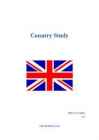
Country Study Mari-Liis Luukas 11c The British Isles Administrative / d'mnstrtv / haldus- Self-governing / self'gvn / isemajandav, iseseisev Legislative assembly/ 'ledsltv 'sembl/ seadusandlik kogu The British Isles is the name of a group of islands washed by the North Sea in the east and the ...
N. A. Vavilov ASPECTS OF BRITISH HISTORY Н. А. Вавилов КРАТКАЯ ИСТОРИЯ ВЕЛИКОБРИТАНИИ Учебное пособие на английском языке Москва Институт международного права и экономики имени А. С. Грибоедова 2008 2 УТВЕРЖДЕНО кафедрой лингвистики и переводоведения Вавилов Н.А. Краткая история Великобритании: Учебное пособие на английском языке. – 2-е изд., пересмотр. и испр. – М.: ИМПЭ им. А.С. Грибоедова, 2008. – 88 с. Пособие содержит краткий очерк важнейших событий в истории Великобритании – от первых документально засвидетельствованных вторжений на остров (кельтов, римлян и англосаксов) до создания и распада Британск...
khTallinn English College The United Kingdom Topic Mari-Liis Pakats Tallinn 2008 2 Table of Contents Introduction..................................................................................................................4 Geographical Position .................................................................................................4 History .........................................................................................................................4 Government..................................................................................................................5 Queen Victoria.............................................................................................................5 Relief...............................................................................................................................
The Renaissance 1500 1650: background 1. What does the word ,,renaissance mean? Characterize briefly the period called the Renaissance. "The rebirth" from French Renaissance, meaning "rebirth"; Italian: Rinascimento, from re- "again" and nascere "be born") Rebirth of scholarship based on classical learning and philosophy. The Renaissance was a cultural movement that spanned roughly the 14th to the 17th century, beginning in Italy in the late Middle Ages and later spreading to the rest of Europe. It encompassed a revival of learning based on classical sources, the development of linear perspective in painting, and gradual but widespread educational reform. (wikipedia)Bridge between Medieval Ages and Modern Era. 2. Where did the Renaissance start and why? In the opening years of the 14th century, there began to develop in Italy and increasing interest in the manuscripts that had surviv...
Russian philology The meaning of the word "philology" is "love for word". This is love that unites teachers and researchers of modern and Classical languages and literature, interpreters and diplomats, journalists and publishers, writers and poets. Russian philologis are highly demanded in various spheres of scholarly research and education, in the mass media, in civil service at the Ministry of Foreign Affairs, in archives, libraries, museums, in travel agencies, as well as Russian and international companies. Curriculum within in philological faculty includes courses of Russian and European languages and literature, courses of Linguistics and Theory of Literature for students to familiarize themselves with various schools and trends of Russian and foreign philology. The core curriculum also includes a number of Liberal Arts courses (Philosophy, History, Psychology, Pedagogy), as well as courses of basic mathematics and compute...
1 The Medium Is the Message In a culture like ours, long accustomed to splitting and dividing all things as a means of control, it is sometimes a bit of a shock to be reminded that, in operational and practical fact,, the medium is the message. This is merely to say that the personal and social consequences of any medium-that is, of any extension of ourselves-result from the new scale that is introduced into our affairs by each extension of ourselves, or by any new technology. Thus, with automation, for example, the new patterns of human association tend to eliminate jobs, it is true. That is the negative result. Positively, automation creates roles for people, which is to say depth of involvement in their work and human association that our preceding mechanical technology had destroyed. Many people would be disposed to say that it was not the machine, but what one did with the machine, that was its meaning or message. In terms of the ...
Topic Canada Tallinn English College 2006 1. Introduction If you had to use two words to describe Canada, they might be large and diverse. Canada is the second largest country in the world with a territory of about 10 million square kilometers and it is bordered by three oceans: the Arctic, the Pacific and the Atlantic Oceans. The population of Canada is about 31 million people. About 77% of the people live in cities which lie in a band about 100 miles wide above the border of the United States. The capital of Canada is Ottawa. Other large cities are Montreal, Toronto, Vancouver, Winnipeg and Quebec. 2. Geographical position Canada is a huge country in the continent of North America. It is bordered with the Atlantic Ocean in the east, the Pacific Ocean in the west, the United States of America in the south and the Arctic Ocean in the north. Canada is a vast ...
Report of SCOTLAND Maiki Joakit 10. klass 2008 Etymology Scotland is from the Latin Scoti, the term applied to Gaels. The Late Latin word Scotia (land of the Gaels) was initially used to refer to Ireland. By the 11th century at the latest, Scotia was being used to refer to (Gaelic-speaking) Scotland north of the river Forth, alongside Albania or Albany, both derived from the Gaelic Alba. The use of the words Scots and Scotland to encompass all of what is now Scotland became common in the Late Middle Ages. History Repeated glaciations, which covered the entire land-mass of modern Scotland, have destroyed any traces of human habitation that may have existed before the Mesolithic period. It is believed that the first post-glacial groups of hunter-gatherers arrived in Scotland around 12,800 years ago, as the ice sheet retreated after the last glaciation. Groups of settlers began building the first known permanen...
Tallinna Mustamäe Humanitargümnaasium Valeria Jefremenkova ENGLISH AS A GLOBAL LANGUAGE INGLISE KEEL KUI ÜLEMAAILMNE KEEL Research work Supervisor: Jevgenija Kozlova Tallinn 2016 1 Table of Contents СONTENT…………………………………………………………………………………...2 INTRODUCTION…………………………………………………………………………...3 CHAPTER I……………………………………………………………………………….....5 1.1. A Brief History of the English Language…………………………………………...…..5 1.2. Origins of English as the Global Language……………………………………..……....6 1.3. Necessity of a Global Language...……………………………………………………....8 1.4. Criticism of a Global Language………………………………………………………....9 1.5. The Role of English Today……………………………………………………………..10 1.6. English Speaking Countries…………………………………………………………….11 1.7. Perspectives of English………………………………………………………………....13 CHAPTER I...
British kings and queens Kings King Henry VIII King Henry VIII is arguably the most well-known king of England. Famous for beheading his wives, of which he had six, King Henry VIII also had several children. King James I King James I was already King of Scotland when he got the English crown. King James I was the first ruler to call himself King of Great Britain, as he ruled England, Scotland and Wales. King James was the first King of Great Britain. King William I, the Conqueror King William I, otherwise known as William the Conqueror was born in France on 1028. He became friendly with the current English King, Edward the Confessor. He invaded and attacked England on Edward's death, as he was promised the English crown, but then denied it by the Saxon Harold. King George VI King George VI did not expect to become king, he was the shy brother of Edward VIII who only took the thrown when Edward...
History exam *Stonehenge - is a monument located in England. It is one of the most famous prehistoric sites in the world and is composed of earthworks surrounding a circular setting of large standing stones. The surrounding circular, earth bank and ditch, have been dated to about 3100 BC. Stonehenge was produced by a culture with no written language. Many aspects of Stonehenge remain subject to debate. There is little or no direct evidence for the construction techniques used by the Stonehenge builders. *The Celts in Britain and their legacy The Cets lived in Britain in The Iron Age. They were warring tribes who were battleful amongst themselves as well as inter-tribal war. They were not centrally governed. The Celts brought iron working, iron ploughs and metal swords, horses, wheels and chariots - all these things gave them an instant superiority over the native tribes. The Celts built a number ...
 annaabi.ee