 10 punkti
Autor soovib selle materjali allalaadimise eest saada 10 punkti.
10 punkti
Autor soovib selle materjali allalaadimise eest saada 10 punkti.
 ~ 14 lehte
Lehekülgede arv dokumendis
~ 14 lehte
Lehekülgede arv dokumendis
 2010-01-30
Kuupäev, millal dokument üles laeti
2010-01-30
Kuupäev, millal dokument üles laeti
 15 laadimist
Kokku alla laetud
15 laadimist
Kokku alla laetud
 0 arvamust
Teiste kasutajate poolt lisatud kommentaarid
0 arvamust
Teiste kasutajate poolt lisatud kommentaarid
 iKristin
Õppematerjali autor
iKristin
Õppematerjali autor
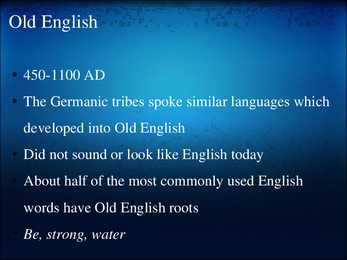
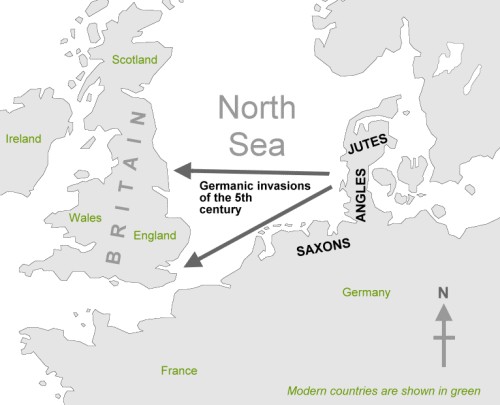
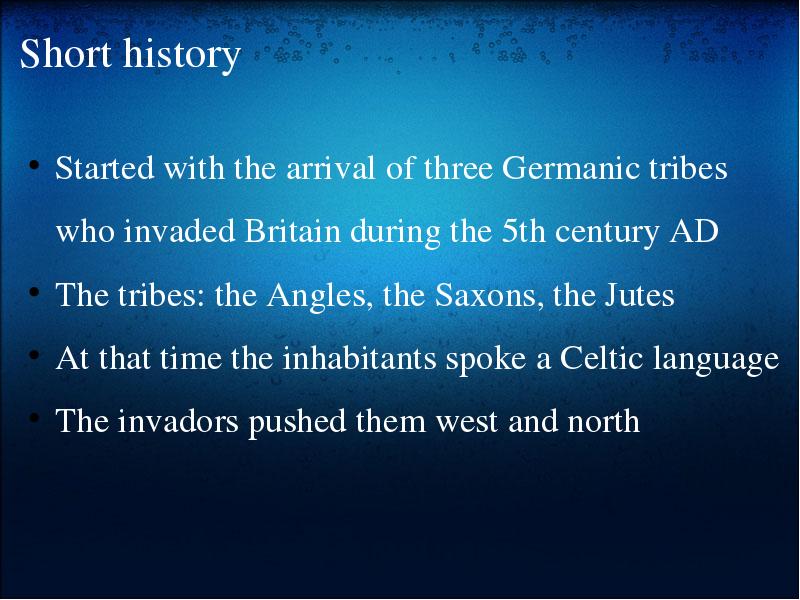
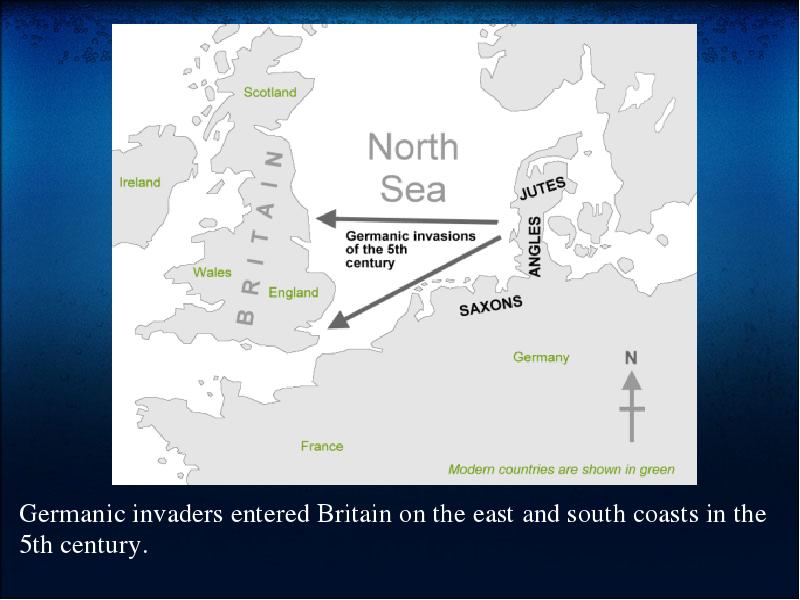
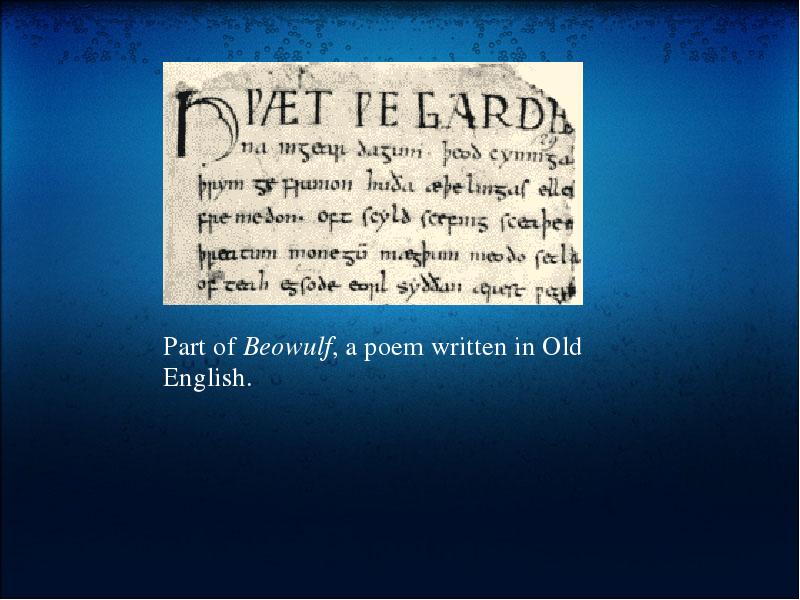
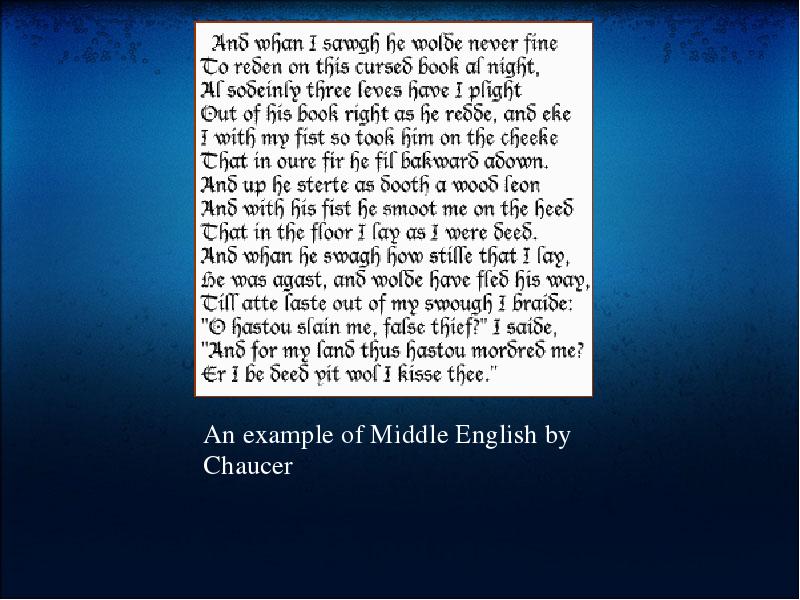
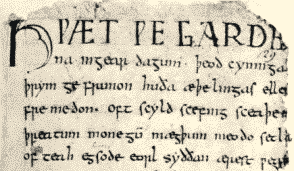
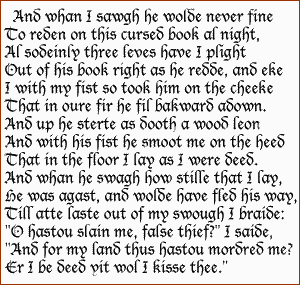
Old English ( 450-1100 AD) The invading Germanic tribes spoke similar languages, which in Britain developed into what we now call Old English. Old English did not sound or look like English today. Native English speakers now would have great difficulty understanding Old English. Old English was spoken until around 1100. Middle English (1100-1500) In 1066 William the Conqueror, the Duke of Normandy invaded England. The new conquerors brought with them a kind of French and there was a period where the lower classes spoke English and the upper classes spoke French. In the 14th century English became dominant in Britain again, but with many French words added. Modern English Early Modern English (1500-1800) Towards the end of Middle English the change in pronunciation started, with vowels being pronounced shorter and shorter
Tallinna Mustamäe Humanitargümnaasium Valeria Jefremenkova ENGLISH AS A GLOBAL LANGUAGE INGLISE KEEL KUI ÜLEMAAILMNE KEEL Research work Supervisor: Jevgenija Kozlova Tallinn 2016 1 Table of Contents СONTENT…………………………………………………………………………………...2 INTRODUCTION…………………………………………………………………………...3
материала, закрепление словаря и развитие навыков ведения беседы по тематике пособия. Пособие предназначено для студентов гуманитарных специальностей. Подготовлено на факультете лингвистики. The book contains an overview of the most important events in British history – from the first documented invasions of the island to the formation and fall of the British colonial empire. A series of exercises will help to remember the subject matter, practise the vocabulary and contribute to skills work. The book is intended for the Humanities students. Вавилов Н.А., 2008 3 4 Contents 5 ПРЕДИСЛОВИЕ
Suppletion Present in languages of different families. Present in Old, Middle and Modern English, though the general tendency is towards more regularity/iconicity so the number of suppletive forms has decreased.In the text: goon to go wenden - to turn Gan was suppletive in Old English, past form: eode.Eode was supplanted by went (past form of wenden) at the end of the Middle English period.To wend has survived in Modern English in phrases such as to wend one's way, we wended homewards (ironic usage). Thus: suppletivity- suppletion different parts of one and the same paradigm come from what were originally different paradigms (different words with close meanings or words in different but close dialects).Suppletion embraces verbs, adjectives, nouns. Be was/were been (Old English beon/wesan) (am, art, is, are); in Old English some suppletive
3. The Roman conquest Julius Caesar's first raid was in 55 BC but the romans left. Ad 43- the Romans came to stay. The army established Roman rule in the south and SW of the country. The Romans started to introduce their laws to a new province of the Roman Empire and started to build good roads. Officials were appointed (governors, procurators to collect taxes, look after the estates and mines and se that the gold, silver, iron and lead were exported back to Rome). Introduced schools,a new language Latin, large farms (villas), baths. In AD 410 they had to leave . roman occupation lasted nearly 400 years. They left behind very little. Roman province of Britannia covered most of present-day England and Wales. 4. Latin influence on English *The influence of Latin is noticeable also in the names of European cities: the Latin noun colonia (settlement, colony) may be found in numerous place-names: Lincoln, Colchester, Cologne ; from
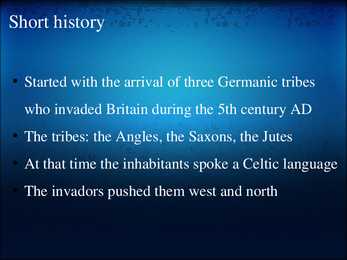
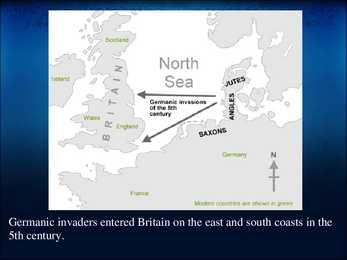
Finally most were driven into the mountains in the far west, which the Saxons called ,,Wales". Some were driven into Cornwall, where they later accepted the rule of Saxon lords and northward to Strathclyde. Further north lived the Picts and Scots. Some Celts crossed the sea & settled in the north-west of France called Brittany after the Celtic tribes of Britons. The Celts who stayed behind became mostly slaves. Hardly anything is left of the Celtic language or culture in England, except for some names of some rivers (Thames, Avon, Severn) and two large cities London & Leeds. The new conquerors were warlike and illiterate. Disliked towns, preferred to live in small cillages. They destroyed the Roman towns & villas. Beautiful buildings, roads were neglected or broken up. The first settlements were groups of 3 or 4 family farms. Houses were all made of wood & had sloping thatched roofs. Around the settlement was a fence
History of English literature Periods: 1. Anglo-saxon or early literature (499 - 1066) 2. Second or Norman or late Medieval period (1066 - 13/14 century) 3. Renaissance or Modern period (13-14 century present) Anglo-Saxon period · All of the literature had its roots in folklore · Texts were orally transmitted, the anglosaxons had no written language · Two types of singers: 1) scop (attached to the royal court, wrote poetry and songs, performed them); 2) gleeman (travelled, mostly sang other peoples' songs, not their own songs; performers of scop songs) · The oldest known song Widsith (The Far Traveller/Wonderer); tells of a gleeman who travels in Europe, of his love of noble deeds, speaks of the shortness of life http://en.wikipedia.org/wiki/Widsith · The other known song Deor's Lament
HISTORY TEST 5 invasions to Britain until 1066 1) The Celts o Gaels in 600BC; Cymry(Britons) in 300BC o From present-day Austria, Switzerland o The Celtic language survives in the names of many places in England- Dover, Kent, Thames o The Celts are best known for their art- many bronze objects with elaborate designs; brooches; pins; mirrors; Celtic stone crosses o The Celts had 3 social orders: warriors, druids(priests) ordinary people 2) The Romans o (55 BC-Caesar) 43 AD- 410 AD- Claudius o From present-day Italy o Southern Britain became Britannia and was ruled by a roman governor
 annaabi.ee








Kõik kommentaarid