Leidsid 33 sarnast õppematerjali, mis on seotud failiga "EU internal Market law. Mid term evaluation assignment". Need materjalid aitavad sul teemat sügavamalt mõista.
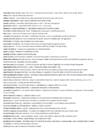
member, strict, case, measure, goods, court, import, states, tfeu, dogs, bull, other, restriction, market, there, adopt, refer, able, legal, breeds, articles, export, fact, rule, danger, measures, effect, ruling, reference, bulls, direct, dangerous, selling, within, provision, study, parliament, between, order, protect, having, value, treaty, part1. Can the PB&R company successfully claim any violation of the EU law related rights? Examination 1. Can we say that an animal (a dog) is a good? – Yes. According to Article 13 TFEU dogs do belong to a “goods” category so as it is described in CJEU case law that a good is a product which can be valued in money and which is capable of forming the subject of commercial transactions. Therefore PB&R company and its business is selling dogs, or shall I say goods not just on a local fields, but the movement of goods is linked to abroad EU countries by making a profit of it I shall conclude that it involves a “movement of goods within the EU Member States” (Articles 26 and 37). 2. Is there a restriction of trade in goods? a. Can we name an animal, or to be more exact a dog as a “good” – yes, in accordance of Article 13 TFEU: “In formulating and implementing the
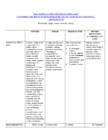
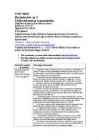
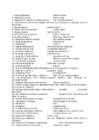
EU Internal Market Group Work I: History and Purpose of the Internal Market Please connect terms (numbers) with correct description (letter), for example 17 M 1 Common Market A ... is characterized by free movement of goods between the participating countries, but autonomous external trade policies in relation to non-participants. 2 Comparative B A top-down approach to integration that can be best Advantage explained by market failure.
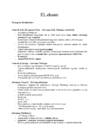
Netherlands, Luxembourg and West Germany (total of 6 countries). European Economic Community (EEC) was created with the Treaty of Rome (1958), establishing a customs union (tolliliit). The European Union (EU) was created by the Maastricht Treaty which came into effect on November 1st 1993. Introduction The European Union (EU) is an economic and political union.EU policies aim to ensure the free movement of people, goods, services, and capital, enact legislation in justice and home affairs, and maintain common policies on trade, agriculture, fisheries, and regional development. Within the Schengen Area, passport controls have been abolished.The monetary union was established in 1999 and came into full force in 2002. It is currently composed of 18 member states that use the euro as their legal tender. At the moment there are 28 member states in the EU. To become a member, a country must
stitutes a further milestone in the development of tax legislation. Licenses and permits - Georgia has dramatically reduced licensing and permitting requirements to ease constraints on business. The total number of licenses and permits was cut by 84% in re- forms that eliminated 756 licenses and permits and streamlined procedures. Currently, licenses and permits are only used in the production of highly risky goods and services, also usage of natural resources and specific activities. The procedures of issuing licenses and permits were significantly simplified to the "one-stop shop" and "silence is consent" principles. Customs Reform - From January 1, 2011 the new Tax Code of Georgia took effect which also includes the provisions regulating customs. Tax Code established business friendly customs pro- cedures. Customs Tariffs Reform significantly eased and sharply reduced the costs connected to
also whether the balance of power between institutions within the European Union promotes the ideals of democracy. Firstly,the democratic nature of the European Union must be measured by the extent to which its institutions (particularly those with executive and legislative power) are elected bodies of persons. The European Union is governed by seven institutions; the European Parliament, the European Council, the Council of the European Union (the Council), the European Commission, the Court of Justice of the European Union, the European Central Bank and the Court of Auditors.The first four of these hold the executive and legislative power of the European Union. Of these four institutions, the only one directly elected is the European Parliament whose 736 members are elected every 5 years; each citizen in each member state having the right to vote. Seats are subsequently assigned to member-states in accordance with
11.02.09 INGLISE KEEL Palju aega läheb. 10 nädalat aint. One of the ESP courses. What we are going to do, what is needed: · What we do - 1 test, on words. · 2 Essays, that means that we have to look into academic writing · Homereading we read a case from European Court of Justice thingy. · Oral thing. · 90% you have to attend · Have to prepare for class and take part of it etc What we learn: Terms Expressions / collocations (nt obey/abide by the law) Explaining AWOL absence without a leave Legal English can be divided into 3 levels. We learn the first one, which is needed for the other two! You have to know the vocabulary etc. Second level has to do with legal contracts..
Public International Law is a system of law, different from domestic law. Why is this system unique? Usually law regulates relations between people, people and the state etc, PIL regulates relations between states. Thats why PIL is important for international relation students. PIL influences the life of everybody, it doesn't regulate people directly but indirectly (through the decisions of the states), because it's everywhere. It's like air. E.g. when you want to send a letter to Brazil, you put a stamp from your own country and send it from your post office and the letter gets delivered. Why is this so easy, because there are certain international conventions that regulate postal services
outlook on the future. Population of Western Ukraine largely supports politics paying EU card (Yusteshenko, Tymoshenko), while industrial Eastern regions support Yanukovych as Politian closely associated with better relation / integration with Russia. 1.1.2. Post-Independent Ukraine. Economy and politics 1990-s When Ukraine became independent in 1991, there were expectations that it would in the near future become a wealthy free market democracy and a full member of the European and Euro-Atlantic communities. Ukraine never fulfilled those expectations. Instead, it is seen as an underachiever, sometimes as a sick man of Europe, and perhaps even as a potentially failed state thanks to its geopolitical situation, historical burdens, and the mistakes made in institutional development and policy. Economically, Ukraine has grown along with the region. As such, growth rates have not been
1. UN as a world organization The United Nations officially came into existence on 24 October 1945, when the UN Charter had been ratified by a majority of the original 51 Member States. The day is now celebrated each year around the world as United Nations Day. The purpose of the United Nations is to bring all nations of the world together to work for peace and development, based on the principles of justice, human dignity and the well-being of all people. It affords the opportunity for countries to balance global interdependence and national interests when addressing international problems. There are currently 192 Members of the United Nations.
Customs are not made by governments and they are not written down. Sometimes we can break these rules without any penalty, but if we keep breaking the rules or break an important one, other society members may criticize us or act violently toward us. And some prescriptive laws are made by governments. When governments make laws they use a system of courts backed by the power of the police to enforce these laws. 2. Sources of law (general) Precedent – a decision about a particular legal case that makes it likely that other similar cases will be decided in the same way Solve a dispute – to find a solution to a disagreement; to adjudicate Judiciary – a country’s body of judges Government – system by which a state or community is controlled Judge – a person who is in charge of a trial in a court and makes decisions on legal matters Civil code – a collection of laws designed to deal with different areas of private law
1.Common law A common law legal system is a system of law characterized by case law which is law developed by judges through decisions of courts and similar tribunals a common law system is based on legal precedents. The roots of the common law legal systems can be traced back to the first common law system created in England during the Middle Ages. Today, most countries that once had ties to England, including the United States, Australia, New Zealand, and Hong Kong, to name a few, operate under common law. Aside from Great Britain, the majority of the countries in Europe operate under a version of civil law modeled after the Roman legal system created centuries ago In a common law system, the law is created by precedents set after judges decide actual cases. When a judge hears a case that has a new issue in it, the judge makes a decision regarding the issue in the case.
1978 European Council establishes the European Monetary System based on a European currency unit (the ECU) and the Exchange Rate Mechanism (ERM). The Ecu has some characteristics of a real currency and is used in travellers’ cheques and bank deposits. ERM gives national currencies a central exchange rate against the Ecu. All the community’s members apart from the UK join the ERM. 1975 Launch of European Monetary System June 1979 – First election of the EP 1981 January: Greece becomes 10th member of the European Community. 1984 February: draft Treaty on the establishment of the European Union passed by the European Parliament. 1985 European Council in Luxembourg agrees to amend the Treaty of Rome and to revitalise integration by drawing up a Single European Act – bigger EU Schengen Agreement 1986 1 January: Spain and Portugal join the Community. February: Single European Act signed, aiming to create a Single Market by 1992, and reforming the legislative process to speed this up
non-contentious responsible for to decide whether preferred term for a matters usually assuring the law is or not to instigate practising lawyer in concerned with followed and carried (põhjustama, certain jurisdictions estates, deeds, powers- out in every case. kaasa tooma) legal of-attorney, and Judges also read proceedings foreign and through court to appear in court international business. documents and may A notary's main research legal issues. functions are to administer oaths and affirmations, take affidavits and statutory
Single European Act: harmonisation of health and safety conditions at work; possibility for social partners at European level to negotiate collective agreements + Community policy for economic and social cohesion. Maastricht treaty: promotion of high level of employment and social protection was officially introduced as one of tasks conferred to the European Community. Amsterdam treaty: encourages cooperation between Member states in order to combat social exclusion. European Council – Lisbon: aimed to make the EU the most competitive economy in the world and achieving full employment by 2010. Treaty of Nice: adopted European social policy agenda up to 2005, converting the political commitments made at Lisbon into concrete action. Treaty of Lisbon: emphasizes EU’s social objectives, among which full employment (social employment policy),
The course supports the other Traderun courses, especially the course related to EU cooperation with Russia and Eastern Partnership Countries. 3 1. LEGALIZATION OF A COMPANY WITH A FOREIGN OWNER IN RUSSIA Today the investment attractiveness of Russia is very high. In addition to the dynamic pace of development of the economy, Russia offers to foreign investors increasing every year the market of goods and services to consumer and business. Most often, this together with the high rate of return on invested capital is a crucial factor in the decision to enter the Russian market. One possible way to full implementation of business activities on the territory of the Russian Federation - is the creation of a legal entity. An enterprise with foreign capital - is created on the territory of the Russian business- organization whose founders are foreign citizens or organizations
nation (riik) - country with its own goverment citizen (kodanik) - person native of a country; realationship between country and a person stranger (välismaalne) - person who is unfamiliar, from another country penalty (karistus) - punishment fixed by law, as for a crime or from any soical groups goverment (valitsus) - organization which controlls a stre or community System of Courts (kohtusüsteem) - organization applying law in the name of states to commit a crime (kuritegu läbi viima) - breaking a law, usually given out by the goverment fine (trahv) - certain sum of money person pays for breaking a law corruption (korruptsioon) - dishonest or unethincal conduct by a person entrusted with a position of authority suspension (kõrvaldamine) - form of punisment that people recieve for violating rules and regulations Civil Action (tsiviilhagi) - lawsuit between two private parties
- Integration in all aspects of economy - Creation of a single market - Marginalization of federal idea The creation of EEC - Spaak report - Treaties of Rome (1958) 4 goals: - Single market within 12 years - Elimination of custom duties and tariffs - Extablisment of common agriculture, trade, transpoer, competition policy - Creation of European Social Fund and European Investment Bank Single market - Free trade area for goods - Common policies on product regulation and freedom of movement of the factors of production - A Common Market is a first stage towards a signle market Merger of Institutions - 1965 - Elimination of Commission and council of Euratom and the High Authority and Council of ECSC Single European Act - 1986 - First relevant amendments of the treatiers after rome - Main task: making the single market possible - More powers to EP
March 1957 Treaties of Rom , European Economic Community and European Atomic Energy Community memorandum of association were signed. These were sundry organisations. But they had one name- European Community. As the authorisations broaden, it become European Union in 1993. The European Union was formally established when the Maastricht Treaty came into force. In 1985, the Schengen Agreement led the way toward the creation of open borders without passport controls between most member states and some non-member states. 1957 Belgium , Netherlands, Luksembourg, Italy, Federal Republic of Germany and France 1973 Great Britain, Ireland and Denmark 1981 Greece 1986 Spain and Portugal 1990 Rest of Germany 1995 Austria, Finland and Sweden 2004 Estonia, Latvia, Lithuania, Poland, Hungary,
Without prejudice to Article 10 of Directive 89/391/EEC, workers shall receive information on all aspects of safety and health relating to their workstation, in particular information on such measures applicable to workstations as are implemented under Articles 3, 7 and 9. In all cases, workers or their representatives shall be informed of any health and safety measure taken in compliance with this Directive. 2. Without prejudice to Article 12 of Directive 89/391/EEC, every worker shall also receive training in use of the workstation before commencing this type of work and whenever the organization of the workstation is substantially modified. The employer must plan the worker's activities in such a way that
9th of May 2014 Word Count: 8,800 `Submitted in partial fulfilment of the requirements for the degree of B.A. International Relations` Table of Contents Abstract 3 Introduction 4 Chapter 1: Citizenship, Children`s Rights and Participation: from the UN to the UK 6 Chapter 2: Citizenship Education in Wales………………………………………………14 Active Citizenship in Cadle Primary School: A Case Study 20 Conclusion 29 Bibliography 32 Appendices Appendix 1: The United Convention of the Rights of the Child Appendix 2: Interview with Jamie Richards, the Head Teacher of Cadle Primary School 2 Abstract: Children inherently have had a rather tenuous relationship with citizenship. Similarly to how
Archbishop In Christianity, an archbishop is a bishop of higher rank or office. Like popes, patriarchs, metropolitans, cardinal bishops, diocesan bishops, and suffragan bishops, archbishops are in the highest of the three traditional orders of bishops, priests, also called presbyters, and deacons. An archbishop may be granted the title, or ordained as chief pastor of a metropolitan see or another episcopal see to which the title of archbishop is attached. Bishop is an ordained or consecrated member of the Christian clergy who is generally entrusted with a position of authority and oversight. Some Protestant churches including the Lutheran and Methodist churches have bishops serving similar functions as well, though not always understood to be within apostolic succession in the same way. One who has been ordained deacon, priest, and then bishop is understood to hold the fullness of the (ministerial)
· March 1995 Estonia submits the first Individual Partnership for Peace (IPP) to NATO. It contains priority areas of cooperation with NATO and future cooperation events, altogether in 23 subject fields. · March 1997 beginning of involvement of Estonia in peacekeeping mission in SFOR (Stabilisation Force) in Bosnia Herzegovina (ESTPLA) · April 1999 Washington summit. Czech Republic, Hungary and Poland join NATO. Estonia is recognised as a potential member state and MAP (Membership Action Plan) is presented. · November 1999 beginning of participation of Estonia in KFOR (Kosovo Force) in Kosovo (ESTPLA). · 29.03.2004 Estonia becomes a full member of NATO. · March 2005 Istanbul summit. Estonia takes part as a full member for the first time. The goals are set up for the use of forces (8% of forces of member states participate in international operations and 40% of forces are rapidly deployable). · 17
University of Tartu Faculty of Social Sciences and Education Institute of Government and Politics Marie Allikmaa The strategies of creating a dominant party the case of United Russia Tartu 2011 After the collapse of USSR in 1991, many observers expected Russia to develop into a competitive party system. Yet, the reality quickly challenged this view. The developments of party politics in post-Soviet Russia have accurately been described in terms of a pendulum effect, as in the 2000s, Russia's party system did finally begin to take for, but with a remarkable twist.
behaviour 30. oht ühiskonna heaolule ja korrale danger to the well-being and order of society 31. leidma süüdi olevat (milleski) find guilty of (a crime) 32. riigivastane süütegu offence against the state 33. rahatrahv fine 34. vangistus imprisonment 35. juriidilised kohustused legal obligations 36. vaidlusi lahendama (kohtus) settle disputes in a court of law 37. kinnisvara võõrandama transfer real estate 38. testamenti tegema make a will 39. äriühingut asutama set up/ establish/ found/ form/ start a company 40. riskeerima tehingute tegemisega risk making transactions 41. õigusnõustamist taotlema seek legal advice 42. tavalised inimesed ordinary people 43. juriidilisi vahendeid kasutama use legal means 44
may be ethnic or racial or geographical, based on gender, or due to shared beliefs, values, and activities. 2. Culture- beliefs, behaviors, objects, and other characteristics common to the members of a particular group or society. 3. A unitary state- a state governed as one single power in which the central government is ultimately supreme and any administrative divisions (subnational units) exercise only powers that their central government chooses to delegate. The majority of states in the world have a unitary system of government. 4. A federal state-- a political entity characterized by a union of partially self- governing states or regions under a central (federal) government. 5. A multinational state- A multinational state is a sovereign state which is viewed as comprising two or more nations. Such a state contrasts with a nation-state where a single nation comprises the bulk of the population. 6
are simply much more important than low costs and speed. This low-cost and speed imperative is directly related to the main battle-cry of NPM, efficiency, which is invariably defined much too narrowly in NPM perhaps, this misunderstanding is even defining, and systemic to, NPM. Efficiency is a relative concept that is based on context and appropriateness: it is efficient to achieve a certain effect with a minimum of resources. But this effect, in the case of the state, is denoted by several auxiliary but necessary conditions such as the ones mentioned above; it is never profit maximization. (It could be argued that most activities carried out by the public sector are there precisely because no direct profit or gain can be made.) If you go for savings and neglect context and even the actual goals, you will not be efficient but rather the ultimate wastrel. (Not for nothing are wastrels and
EU is expanding its power and partners can eliminate its shortages and make corrections in their infrastructure and political field. 2. of the ENP is the conditionality for the EU's benefit, partner country's benefit, for mutual benefit, or business benefit? Bring at least three (3) specific examples. The EU offers financial assistance to countries within the European Neighbourhood, so long as they meet the strict conditions of government reform, economic reform and other issues surrounding positive transformation. This clearly shows that what EU is doing, it is creating better environment around the EU to larger the safety net and also creating good democratic atmosphere. There are also many interest that the partnership countries have, but as the program is created by the EU, it states that we have more interest in those countries than they have. 1
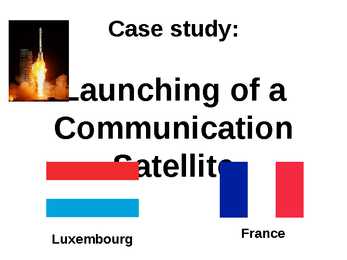
The facts: · Luxtra, a Luxembourgian broadcasting company, intends to launch a communication satellite · Type : Medium-power satellite using the Ku band · Purpose : To broadcast Luxembourgian TV channels throughout the EU · Engages help from France: Ø Launching of satellite with Ariane V Ø Launch pad in Kourou, French Guiana I) Responsibilities for outer space activities 1) Outer Space Treaty (Treaty on principles governing the activities of states in the exploration and use of outer space, including the moon and other celestial bodies) Who are the launching states? Luxembourg state who is funding the launch - state to which the satellite belongs France - state who is launching the satellite - state whose territory is used to launch (French Guiana) - state whose facilities are used to launch (Ariane V) Who should be liable for damages
(Verplaetse, 2008). Since 9/11 and the following fight against terrorism it became clear that the Bush administration thought of torture as something justifiable while it goes against all possible agreed upon treaties and conventions. One could indeed possibly think of situations that could serve as an exception to the prohibition of torture but these hypothetical situations can hardly relate to real situations. The ticking bomb argument looks at the hypothetical case where a leader of a state is asked to give their permission to torture a captured rebel leader because he (probably) knows the locations of a few explosives that are spread around the city in different apartment buildings. In case they are not found within 24 hours, they will explode and many will be left dead (Walzer, 1973). Is it justified to torture this person to find out where the bomb is? This essay will look in to how it has according to the thinkers in the strand of
In my opinion at one point of view, the EU is more interested because we have made more trade- offs. On the other hand as the EU is by far the biggest investor in Russia and the most important market for Russian exports, it is very clear, that the benefits, that Russia gets by preserving good relations with the EU, are their main interest. This means that both are equal partners. 2. What is the amount of yearly trade between EU and Russia? Which are the main groups of goods that are imported and exported? Which EU countries are the biggest trade partners for Russia regarding trade? EU services exports to Russia 2010: 22.6 billion EU services imports from Russia 2010: 14.2 billion The EU is Russia's largest trading partner by far with the EU accounting for 52.3% of all foreign Russian trade in 2008 and 75% of foreign direct investment (FDI) stocks in Russia also come from the EU. The EU exported 105 billion of goods to Russia in 2008 and Russia exported
After the American Revolutionary War they had to settle in Quebec and modern-day Ontario, because of offer of free land and also because they were repressed. The leading loyalists' properties were often confiscated and driven out of towns, so some of them sought refuge in Canada. United Empire Loyalists remained loyal to Britain after the American Revolution, migrated from the US to Upper and Lower Canada. Late Loyalists who left the United States substantially later -- mainly to gain land and to escape growing racial intolerance. 12. What was meant by the terms `Upper Canada' and `Lower Canada'? After the American Revolutionary War ended, a large group of loyalists to the British Crown immigrated into French-speaking Canada. In 1791, with this large English-speaking aggregation now living in French-speaking Canada, the British Parliament made its move. In a Constitutional Act, it split its Province of Quebec into Upper
IMPORTATION, ARE CALCULATED .........................................................8 9. REFUND CLAIMS ............................................................................................8 10. CASES OF DOUBT OR DIFFICULTY...........................................................9 2 1. INTRODUCTION When goods are imported into Ireland, from a country outside the European Community (EC) they are normally liable to import charges (Customs Duty, Anti- Dumping, Countervailing and Excise Duties where applicable plus VAT) at the point of importation. Paragraph 8 below sets out how these charges are calculated. However, in certain cases relief from import charges arises because 1. the amount of import charges is below a de minimus limit 2. the item being imported is of negligible value; or
back-reference In grammatical analysis, the term reference is often used to state a relationship of identity which exists between grammatical units, e.g. a pronoun 'refers' to a noun or noun phrase. When the reference is to an earlier part of the discourse, it may be called a 'back-reference' (or anaphora); collective noun Collective noun is the name we give to a group of nouns to refer to them as one entity. A crew of sailors. A flock of birds. A range of mountains. conjunction any member of a small class of words distinguished in manylanguages by their function as connecto rs between words, phrases,clauses, or sentences, as and, because, but, however. content words Content words are words that have meaning. They can be compared to grammatical words, which are structural. Nouns, main verbs, adjectives and adverbs are usually content words. Auxiliary verbs, pronouns, articles, and prepositions are usually grammatical words. Example ‘We flew over the mountains at dawn'.
 annaabi.ee