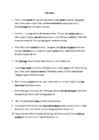
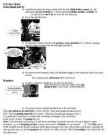
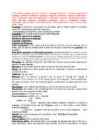
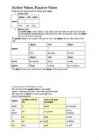
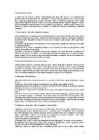
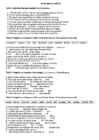
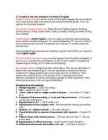
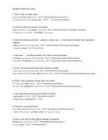
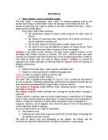
Verb forms 1. When I (turn) turned the radio on earlier today, I (hear) heard a song that was popular when I was in basic school. I (hear, not) had not heard the song in years, and it (bring) brought back many great memories. 2. Last week, I (run) ran into an old classmate of mine. We (see, not) had not seen each other in years. I (enjoy) enjoyed talking to her so much that I (ask) asked her, if she’d like to meet me tomorrow. We are getting together tomorrow evening. 3. When Mary (enter) entered the room, I (recognize, not) did not recognize her because she (lose) had lost so much weight and (grow) grown a long, healthy and beautiful hair. He looked totally different! 4. I like listening (listen) to music when I am sad, it really comforts me. 5. I (visit) have visited so many beautiful places since I (come) came to UK. Before moving here, I (hear, n...
FUTURE FORMS Future Simple (will +I) a) in predictions about the future usually with the verbs think, believe, expect, etc., the expressions be sure be afraid, etc., and the adverbs probably perhaps, certainly, etc I'm afraid we won't be on time for the meeting. b) for on-the-spot decisions. c) for promises (usually with the verbs promise, swear, guarantee, etc.), threats, warnings, requests, hopes (usually with the verb hope) and offers. d) for actions/events/situations which will definitely happen in the future and which we cannot control. The temperature will reach 40°C tomorrow. Be going to a) for plans, intentions or ambitions we have for the future. ...
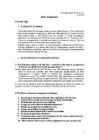
1. Be ready to explain the terms (lecture 1): language, linguistics, synchronic approach to language, diachronic approach to language, linguistic competence, linguistic performance, what is grammar?, prescriptive grammar vs. descriptive grammar; phonology, phonetics, phone, allophone, phoneme; morphology, morphemes (types of morphemes), morphs, allomorphs, types of affixes, derivational affixes, inflectional affixes; open vs closed class words; syntax. Language: a systematic, conventional use of sounds, signs or written symbols in a human society for communication and self-expression. - human language at all levels is rule- or principle-governed. Linguistics: the scientific study of human natural language Synchronic approach to language: Diachronic approach to language: Linguistic competence: Linguistic performance: What is grammar?: "The sounds and sound patterns, the basic units of meaning, such as words, and the rules to combine them...
Active Voice, Passive Voice There are two special forms for verbs called voice: 1. Active voice subject verb object active > Cats eat fish. 2. Passive voice The active voice is the "normal" voice. This is the voice that we use most of the time. You are probably already familiar with the active voice. In the active voice, the object receives the action of the verb: The passive voice is less usual. In the passive voice, the subject receives the action of the verb: subject verb object passive < Fish are eaten by cats. subject verb object active Everybody drinks water. passive Water ...
English structure revision for the exam 1. Terms Language → A systematic, conventional (tavakohane) use of sounds, signs or written symbols in a human society for communication and self-expression. Human language at all levels is rule- or principle- governed (valitsema) meaning that language corresponds to the grammar. Natural language is usually spoken, while language can also be encoded into symbols (such as letters, morse etc) For example: Estonian, English. Linguistics → The scientific study of human natural language. Broadly, there are three aspects to the study which are Pragmatics (studies the use of language → interested in the gap between the sentence’s meaning and the speaker’s meaning). Semantics (concerned with the meaning of the language aspects and the way they change, also how objects and language and thinking and language are related). ...
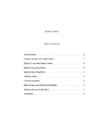
Present Simple and Continuous Table of Contents Present Simple ..................................................................... 2 The spelling of endings in the Present Simple ....................... 2 When to use the Present Simple ........................................... 3 The verb 'be' ......................................................................... 4 Present Continuous.............................................................. 5 The spelling of endings in the Present Continuous................ 5 When to use the Present Continuous.................................... 6 State verbs and event (action or dynamic) verbs ................... 7 Present Simple In the Present Simple we use the verb without an ending. I work you live we think they dance NB! In the third person singular (he, she, it, Mary, my friend, etc....
1. Basic Phrases ¡Buenos días! ¡Buenas tardes! ¡Buenas noches! bway-nohs dee-ahs bway-nahs tard-ays bway-nahs noh-chays Hello! / Good morning! Good afternoon! Good evening! / Good night! ¡Hola! / ¡Chao! Adiós. Por favor. oh-lah / chow ah-dee-ohs por fah-bor Hi! / Bye! Good bye. Please. Hasta la vista / Hasta luego. Hasta pronto. Hasta mañana. ah-stah lah vees-tah / ah-stah ah-stah prohn-toh ah-stah mahn-yahn-ah loo-ay-go See you soon. See you tomorrow. See you / See you later. (Muchas) Gracias. De nada. Bienvenidos (moo-chah...
Past Simple and Continuous Table of Contents Past Simple .......................................................................... 2 The spelling of endings in the Past Simple ............................ 3 When to use the Past Simple ................................................ 3 Past Continuous .................................................................. 4 When to use the Past Continuous......................................... 4 Used to & would................................................................... 5 Unfulfilled past events.......................................................... 5 Past Simple Regular Past Simple forms end in -ed. I worked he danced we apologized Some verbs have an irregular past form. I left he wrote The Past Simple is the same in all persons except in the past tense...
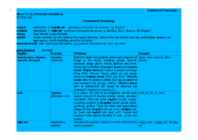
1 Grammatical Terminology PRACTICAL ENGLISH GRAMMAR FLGR.01.042 Grammatical Terminology analytic analüütiline (= uninflected - grammar is focused in the sentence , e.g. English) synthetic sünteetiline (= inflected - grammar is focused in the word, e.g. Estonian, Latin, Russian, Old English) ending lõpp (käände- ja pöördelõpud) marker tunnus (mitmuse, oleviku, lihtmineviku, tingiva kõneviisi, käskiva kõneviisi, kaudse kõneviisi, umbisikulise tegumoe, ma- tegevusnime, oleviku kesksõna, mineviku kesksõna) derivational affix liide, tuletusliide, tuletusafiks (e.g. postwar, anti-American, wiser, greenish) parts of speech sõnaliigid English Estonian ...
· · Past tenses Past Simple is used for: Past actions which happened one immediately after the other. E.g. She stood up, went up to her and grabbed her wrists. Completed actions or events, which happened at a stated past time. E.g. I went to the cinema last night. Past habits or states. E.g. my grandfather always wore a hat. Complete actions not connected to the present with a stated or implied time reference. E.g. Beethoven created wonderful classical pieces. Time expressions used with Past Simple: yesterday, last week/month etc, ago, then, just, now, when, in 1991, etc Past continuous is used for: Actions in the middle of happening at a stated past time. E.g. She was flying to Paris this time last Monday. A past action in progress interrupted by another past action. The longer action is in the Past Continuous, the shorter action is in the past Simple. E.g. I ...
CHARACTERISTIC FEATURES OF OLD ENGLISH - 15 monophtongs, (7 long, 7 short, 1 central), 4 diphtongs, 17 consonants. Free variaton of R, and it was pronounced everywhere. Very much Germanic in character. Quite some special consonants that no longer exist. About morphology: synthetic with numerous aglutinating tendencies. System of tenses Germanic, but with a reduction of tenses. Paradigmatic leveling; Stress shift; Word order; Loan words (Old Norse, Old French). Dual pronouns. Determiners - no separate definite article. Strong and weak verbs. Word order relatively free with tendencies towards SVO. SVO, SOV, VSO most common. Adposition and podposition were both possible (eesliide ja tagaliide). About syntax: clauses were joined much simpler than nowadays, using and, then etc. Because of case syncretion the word order in a sentence became much more important to be able to tell the difference between words. FIRST CONSONANT SHIFT (GRIMM'S L...
Modal Verbs Table of Contents Introduction ......................................................................... 2 Characteristics of Modal Verbs ............................................. 2 When to use the Modal Verbs ............................................... 3 Expressing permission.......................................................... 3 Expressing obligation ........................................................... 3 Making offers........................................................................ 5 Making requests ................................................................... 6 Expressing possibility/probability......................................... 7 Asking about possibilities ..................................................... 7 Infinitives ............................................................................. 8 In...
Verbs! Verb forms Review of tenses Chapter 12, Pg 215 1 Timeline Draw a timeline of your life. List 810 events on the time line. Make sure you list your future graduation date! Moved to Cali 2005 Was Born Traveled to Europe Husband 1978 School graduates @ Oxford 1999 Started Got married School 1983 2008 2 The Six English Verb Tenses Three Simple Tenses Simple continuous Present You walk. You are walking I run. I am running. Past You Walked You w...
Reported speech is often also called indirect speech. When we use reported speech, we are usually talking about the past (because obviously the person who spoke originally spoke in the past). The verbs therefore usually have to be in the past too. For example: "I'm going to the cinema". He said he was going to the cinema. Basic tense chart The tenses generally move backwards in this way (the tense on the left changes to the tense on the right): present simple past simple I'm a teacher. He said he was a teacher past continuous. present continuous He said he was having lunch with his I'm having lunch with my parents. parents. p...
Active Present Past Future Simple I work II (-ed) Will + I usually Don’t work Didn’t work Will not work Continuous am/is/are + V-ing Was/were + V-ing Will+be+V-ing Продолжитель. Isn’t working now Wasn’t working Won’t be working Perfect Have/has + III Had + III ...
INGLISE KEELE PÕHITÕED C.K 2017 A – AN – SOME Singular: a or an Use some for things you can't count ◦ *a banana *a car *a monkey *a football ◦ *some milk *some water *some coffee ◦ *an egg*an accident *an umbrella *an *some sugar eagle ◦ *some tea *some juice*some money *some butter Plural: some Exercises: 1. http://www.english-4u.de/a_an_some_ex1.htm ◦ *some bananas *some cats *some monkeys *some 2. http://www.english-4u.de/a_an_some_ex3.htm balls ◦ *some eggs*some oranges *some umbrellas *some 3. http://www.english-4u.de/a_an_some_ex6.htm eagles We us the ...
English lexicology 1. Size of English vocabulary Vocabulary is a sum total of words used in a language by speakers or for dictionary-making. Active and passive vocabulary. The Old English vocabulary was homogenous. There were about 50 000 – 60 000 words, 1/3 of which have survived. o About 450 loans from Latin o About 2000 from the Viking invasions. The Middle-English vocabulary became a heterogeneous hybrid of Germanic and Romanic languages. 100 000 to 125 000 words. o About 10 000 loans from Norman French, 75% are still in use o Continuing Latin influence Early Modern English. 200 000 – 250 000 words o English becomes a pluricentric language. o Polyglot. Cosmopolitan language Modern English. 500 000 words o At present at least 1 billion lexical units 2....
7. Verb: The principal forms of the verbs: Verbil on 4 põhivormi: Regular verb Irregular verb 1. the base form Talk Speak üldoleviku tüvivorm 2. the past form/ -ed form Talked Spoke üldmineviku vorm 3. the past participle (-ed Talked Spoken participle) mineviku kesksõna 4. the present participle (- Talking Speaking ing participle) oleviku kesksõna The tenses: Expressing the future: Simple Perfect Continuous Perfect Continuous Present Base Have / has + to be + base+ ing has/ have been +s + pariticiple base+ -ing He drinks tea at ...
Grammar point Made by Nikolai Hodosevich Conditional mood The conditional mood is the form of the verb used in conditional sentences to refer to a hypothetical state of affairs. Conditional verb forms can also have temporal uses, often for expressing "future in the past" tense. Condition sentences are often entered with conjunction IF Real events Structure: Additional clause Present Indefinite Main clause Future Indefinite If I have a lot of money, I will buy a car , Almost unreal events *In additional and main clauses usually use Subjunctive I and II *When you translate into Russian these sentences, you should use conjunction * This type of unreal conditional sentence use, when speaker wants to underline small probability of condition realization Almost unreal events Structure: Additional claus...
FUTURE FORMS FUTURE SIMPLE WILL + OLEVIK Kasutan, kui.. · Ennustus tulevikust, põhineb arvamusel, tundel, uskumusel. Sõnad: think, believe, expect, be sure, be afraid, probably, certainly, perhaps Nt: I think Debbie will become a great artist some day. She is afraid her son will fail his exams. · On-the-spot otsus (rääkimise ajal tehtud otsus) Nt: I will buy the blue jacket, not the yellow one. · Lubadused, hoiatused, ähvardused, palve, lootused, pakkumised Nt: I will never speak to you again! Will you give me a hand with the washing-up? · Tegevused/sündmused, mis KINDLASTI toimuvad tulevikus, me ei saa neid kontrollida Nt: Valentine's Day will fall on a Saturday this year. BE GOING TO Kasutan, kui... · plaanid tulevikuks Nt: I am going to travel around the world one day. · otsused, mis on juba LÄHITULEVIKUKS tehtud ...
Review questions English lexicology Size of English vocabulary. Average speaker 45,000-60,000 words, a total of about 200,000. Core and periphery. English has been heavily influenced by other languages. 31.8 % comes from Old English, 45% comes from French, 16,7% comes from Latin, 4,2% other germanic languages and 2,3 other languages. The very core is mono-syllabic (93 of the first 100 words and the other seven are two-syllabic). The core vocabulary is predominantly germanic. Native and foreign element. Native words belong to very important semantic group (modal verbs-shall, will, can, may; pronouns- I, you, he, my, his; preps- in, out, under; numerals and conjunctions::but, till, as. Native words are head, arms, back; mother, brother, son, wife; snow, rain, wind, sun; cat, sheep, cow; old, young, cold, hot, dark; do, make, go, come, see. Many native words have developed many meanings (nt, hand, man, head). Most native words have become ...
1. Nouns: how is the plural formed? The plural form of most nouns is created simply by adding the letter s: · more than one snake / snakes · more than one ski / skis · more than one Barrymore / Barrymores Words that end in -ch, x, s or s-like sounds, however, will require an -es for the plural: · more than one witch / witches · more than one box / boxes · more than one gas / gases · more than one bus / buses · more than one kiss / kisses · more than one Jones / Joneses BUT! Photos, kilos, pianos, zeros, studios, radios. When the word ends in the letter -y: · country / countries · family / families · story / stories Nouns ending in -f: (should be learned by heart) · calf / calves · elf / elves · half / halves · knife / knives · life /...
INGLISE KEELE EKSAMI KONSPEKT Sisukord Sisukord ......................................................................................................................................... 1 Ajavormid ...........................................................................................
NON-Continuous Verbs Verbs It is important to understand that English verbs are divided into three groups: Normal Verbs, NON-Continuous Verbs and Mixed verbs. Today we're going to talk about NON-Continuous verbs. These Verbs are usually things you cannot see somebody doing. Non-Continuos Verbs include: Abstract Verbs. Possession Verbs. Communication Verbs. Sense Verbs. Emotion Verbs. Abstract Verbs examples: Click to edit Master text styles · I now realize that using the Second level internet is more useful. Third level Fourth level He loves her. · Fifth le...
First Conditional: A real possibility in the future A First Conditional sentence is for future actions dependent on the result of another future action or event, where there is a reasonable possibility of the conditions for the action being satisfied. Formation: if + present simple, + will For example: If she gets good grades, she will go to university. We are talking about the future, but we use a present tense for the condition and will for the result. In this case, the person is sure about going to university. We can use other modal verbs in the result part of the sentence. For example: I Condition Result Possibility F she gets good she will go to If the condition is met, then she definitely If grades, university. will go he gets good he may go to If He is not sure about g...
GRAMMAR REVISION I. TEGUSÕNA BE PÖÖRAMINE (VERB BE) OLEMA! BE VORMID ON: AM, IS, ARE (olevik), WAS, WERE (minevik). Olevik Minevik I am mina olen I was mina olin You are sina oled You were sina olid He is tema (m.) on ainsus He/ She/ It was tema/ see oli She is tema (n.) on It is see on We are meie oleme mitmus We were me olime You are teie olete You were te olite They are nemad on They were nemad olid II. LÜHENDID (SHORT FORMS) I am = I ´ m I (you/ they) have = I ´ ve You are = You ´ re she (he/ it) has = she ´ s He is = he ´ s is not = isn ´ t I will = I ´ll She is = she ´ s are not = aren ´ t will not = won ´t It is = ...
Leixcology revision questions 1) Composition of english vocabulary Vobabulary is the sum of a total of words used in a language by speekers or used in a dictionary. English vocabulary cosists of six units: Simple words- fall Complex words- prefall Phrasal word- face up to Compound word- face lift Multiword expression- face the music Shortened forms- prefab (prefabely?) 2) Core and pherifery English has been heavily influenced by other languages. 31.8 % comes from old english, 45% comes from french, 16,7% comes from latin, 4,2% other germanic languages and 2,3 other languages. The very core is mono-syllabic (93 of the first 100 words nad the other seven are two-syllabic). The core vocabulary is predominantly germanic. 3) Native and foreign elements Native vocabulary: INDO-EUROPEAN- mother, foot, heart, father, sea, night etc GERMANIC- friend, bidge, ship, life, heaven OLD-ENGLISH- bad, bird, woman, lady and gospel LATIN- ch...
The Passive Voice Table of Contents The Passive Voice................................................................................. 2 Tenses in the Passive Voice ................................................................ 2 Modal Verbs and Future in the Passive Voice ................................. 3 The Passive with ’get/have’ ................................................................ 4 When to use the Passive ..................................................................... 5 Verbs with two objects ........................................................................ 5 The Passive with ’by/with’ .................................................................. 6 Talking about what other people say ................................................ 6 The Passive Voice The subject is the starting point of the sentence, the thing we are talking...
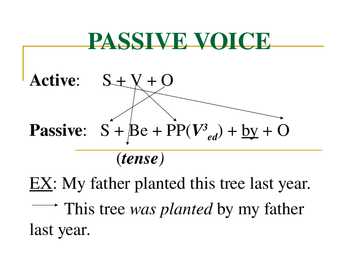
PASSIVE VOICE Active: S + V + O Passive: S + Be + PP(V3ed) + by + O (tense) EX: My father planted this tree last year. This tree was planted by my father last year. TABLE OF ENGLISH TENSES IN PASSIVE VOICE The Simple Present Tense Active: S + V(s/es) + O Passive: S + am/is/are + PP + by + O EX: He reads books every day. Books are read (by him) every day. TABLE OF ENGLISH TENSES IN PASSIVE VOICE The Present Continuous Tense Active: S + am/is/are + Ving + O Passive: S + am/is/are + being +PP + by + O EX: He is writing a novel at the moment. A novel is being written (by him) at the moment. TABLE OF ENGLISH TENSES IN PASSIVE VOICE The Present Perfect Tense Active: S + Has/Have + V3ed + O Passive: S + has/have + been +PP + by + O EX: He has just finished a novel. A novel has just been finished (by him). TABLE OF ENGLISH TENSES ...
Test 15 1 Translate. 1 Maakera kliima on muutunud. The climate of the Earth has changed. 2 Põlisameeriklaste suguharud vahetasid kaupu. Nateive American tribes exchanged goods. 3 Nende põhilised vaated olid sarnased. Their basic views were similar. 4 Nad austasid kõiki eluvorme. They respected every form of life. 5 Valged asukad liikusid läände. The white settlers moved westward. 6 Tänapäeval elavad paljud põlisameeriklased reservaatides. Today lots of Native Americans live in reservations. 7 kellegisse armuma fall in love with sb 8 kellestki / millestki erinema differ from sb/sth 2 Write the missing forms. Noun Adjective Verb Adverb 1 attraction attractive attract attractively 2 danger dangerous X dangerously 3 difference different differ differently 4 happiness ...
LEXICOLOGY 1. Size of English vocabulary 1) Old English – 50,000 to 60,000 words Vocabulary of Shakespeare OE – homogeneous; 1/3 of the vocabulary has survived • 884,647 words of running text About 450 Latin loans (Amosova) • 29,000 different words (incl. work, working, Viking invasions added 2,000 worked, which are counted here as separate 2) Middle English – 100,000 – 125,000 words) English becomes heterogeneous (Norman French, • 21,000 words English, Latin), hybrid of Germanic and Romance languages Norman French influence – about 10,000 words, 75 % are still in use (Baugh) Latin influence continues 3) Early Modern English – 200,000 – 250,000 English becomes a polycentric language; polyglot, cosmopolitan lang...
Ways of expressing the Future Table of Contents Future Simple ...................................................................... 2 Be going to ........................................................................... 3 Present Continuous .............................................................. 3 Present Simple ..................................................................... 4 Future Continuous ............................................................... 4 Future Perfect....................................................................... 6 Other ways of referring to the future ..................................... 7 Other future references......................................................... 8 Future Simple In Future Simple we use the modal verb will + the verb. It is the same in all persons. I will work I’ll work ...
Book 1 BASIC ENGLISH BASIC ENGLISH GRAMMAR GRAMMAR BASIC ENGLISH GRAMMAR Book 1 Book 1 Younger students at beginning to intermediate levels will greatly benefit from this step-by-step approach to English grammar basics. This is the ideal supplement to your language arts program whether your students are native English speakers or beginning English language learners. Skill-specific lessons make it easy to locate and prescribe instant reinforc...
CITATION FORM The citation form of the lexeme is the form that is employed to refer to the lexeme; it is also the form that is used for the alphabetical listing of lexemes in a conventional dictionary. In English, the citation form of a noun is the singular: e.g., mouse rather than mice. For multi-word lexemes which contain possessive adjectives or reflexive pronouns, the citation form uses a form of the indefinite pronoun one: e.g., do one's best, perjure oneself. In many languages, the citation form of a verb is the infinitive: French aller, German gehen, Spanish ir. In English it usually is the full infinitive (to go) although alphabetized without 'to' (go); the present tense is used for some defective verbs (shall, can, and must have only the one form). In Latin, Ancient Greek, and Modern Greek (which has no infinitive), however, the first person singular present tense is normally used, though occasionally the infinitive may also ...
Inglise keele kontrolltöö 7. klassile Õpik: I love English 4 Kokkuvõte aasta jooksul õpitust. Koostaja: Gea Gutmann Viljandi Maagümnaasium Juhendaja: Toomas Rähn Final Test Form 7 Name................. 1. Use the right tense. (15 p) 1) Look! She....................................(carry) a heavy bag. 2) Mrs. Brown...................................(play) the piano at the concert next week. 3) Mary is a good girl. My mother............................(meet) her every day since she and her father moved here. 4) Yesterday at two o`clock Tom ..............................(sing) and his sister ........................... (draw) a pictuture in the living room. 5) The wind ........................(be) very strong some days ago. 6) Where are the children? They .........................................
Phonology. Mid-term 2. Syllable - is a phonological unit consisting of one or more phonemes. In phonetics a syllable is a unit which consists of a centre, that has little or no obstruction to airflow; it is comparatively louder than other sounds. In phonology syllables are the possible combinations of phonemes. The syllable consists of - onset, nucleus, coda. (every syllable has a nucleus: vowel, syllabic l, or m, n). Rhyme/rime nucleus + coda; the nucleus and the coda constitute a sub-syllabic unit rhyme. Words rhyme, when their nucleus and coda are identical. (E.g 'cr-o-wn', 'd-o-wn'). The hierarchical structure of the syllable: Onset the beginning of the syllable Nucleus/peak the open part of a syllable, generally a vowel. Coda a consonant sound which ends the syllable. Open syllable - has no coda Closed syllable - has a coda! Texts: [t-e-k-s-t-s]- (Consonant, Vowel, Consonant, Consonant, Consonant, Consonant). Stron...
1.Lexicology as a science L. studies the voc of lg as a system. Word-learning, lexis-logos. The task of L is to establish the general features of modern Engl voc. Theoretical L. gives a complete picture of voc. Practical value lies in using and appretiating the lg more conciously. There is diachronic (historical) L that studies origin and development; syncronic studies voc at a given historical period. There are general L (studies words disregarding particular features of any particular lg); special L (studies specific features of a separate lg, there is Engl that bases on general L); contrastive (compares vocabularys in different languages). 2. Connection of L with other linguistic disciplines a) the word performes a certain grammatical function (nt, he always misses the class, how many misses are there; the girl powders her nose, soliders face powder)In speech words are combined according to grammatical rules. The plural of nouns m...
Entertainment and Art Task 1. Underline the most suitable word or phrase. a) I like this book, and I've read six capitals/chapters/prefaces already. b) It's not a proper drawing, only a rough/plan/sketch. c) The play is very long but there are three breaks/intervals/rests. d) At the cinema I don't like sitting too near the film/screen/stage. e) We heard a piece by Mozart performed by a German band/group/orchestra. f) Her second book was very popular and became a best buy/seller/volume. g) I like the painting but I can't stand its ugly border/frame/square. h) Robert's new book will be broadcast/published/typed in August. i) I liked the acting, and the costumes/dressing/outfits were good too. j) The best act/place/scene in the film is when Jack meets Kate. Task 2. Complete each sentence with a word from the box. Use each word once only. Announcer composre critic editor playwrigh...
1) Standard and non-standard varieties of English Standard varieties of English are the varieties of the English language that are considered to be a norm and are spoken and written by the minority (educated people). This is the optimum for educational purposes. The standard varieties of English are: BrEng (British), EngEng (English), NAmEng (North-America), USEng (United States), CanEng (Canada), AusEng (Australia), NZEng (New Zealand). Standard English (British English) is the most widely accepted and understood among native speakers, learned by foreigners. It is used in broadcasting, TV, news etc. It doesn't concern pronounciation (accent), but grammar and vocabulary. It includes formal and informal styles. British Standard English grammar and vocabulary, together with the RP accent should be called English English. RP (Received Pronounciation) is an accent that originates from South-East of England. A social accent, associated o...
Golden Grammar rules 1. Don't use an with own. Sue needs her own room. (NOT Sue needs an own room.) I'd like a phone line of my own. (NOT ... an own phone line.) 2. Use or rather to correct yourself. She's German or rather, Austrian. (NOT She's German or better, Austrian.) I'll see you on Friday or rather, Saturday. 3. Use the simple present play(s), rain(s) etc to talk about habits and repeated actions. I play tennis every Saturday. (NOT I am playing tennis every Saturday.) It usually rains a lot in November. 4. Use will ..., not the present, for offers and promises. I'll cook you supper this evening. (NOT I cook you supper this evening.) I promise I'll phone you tomorrow. (NOT I promise I phone you tomorrow.) 5. Don't drop prepositions with passive verbs. I don't like to be shouted at. (NOT I don't like to be shouted.) This needs to be thought about some more. (NOT This needs to be thought some more.) 6. Don'...
Accessible- easy for anyone to obtain and use Admittedly- used for saying that you admit something is true, especially when this makes your main idea weaker Affordable- cheap enough for ordinary people to afford Agricultural- relating to farming Alcoves- a small area in a room that is created by building part of one wall further back than the rest of the wall Ample- enough, and often more than you need Attic- the room in a house under the roof Bedsit- a room that you rent that is used for both living and sleeping in Brick pillars- Bungalow- a house that is all on one level Caravan- BRITISH a vehicle that people can live and travel in on holiday. Caravans are usually towed (=pulled) by a car. The American word is trailer Carpenter- someone whose job is to make things from wood, or to repair things that are made of wood Cellar- a room under a building, below the level of the ground, usually used for storing things Compatible-...
Sissejuhatus germaani filoloogiasse Mõisted: ablaut (kvalitatiivne ja kvantitatiivne) – ablauti mõiste leiutas Jakob Grimm; morfoloogiline vokaalivaheldus tugevates tegusõnades germaani keeltes ja tüvedes ja juurtes indoeuroopa keeltes; kvalitatiivne ablaut – kolmeastmeline vokaalimuutus: 1) e-aste (täisaste), nt IE ped – pedestrian, 2) o-aste, nt IE pod – podium, 3) nullaste - ø kvantitatiivne ablaut – täishääliku pikkus muutub, nt võivad esineda pikk e ja pikk o afrikaat – häälikud ch, j; vastavad ühele foneemile analüütiline keel – keel, milles sõnadele liitub vähe morfoloogilisi elemente, kasutab liidete asemel spetsiifilisi grammatilisi sõnu või partikleid, et väljendada süntaktilisi suhteid. Sõnajärg lauses range Boy ate soup- vaid 1 võimalus! artikkel – abisõna, mis määrab nimisõna soo või arvu. Skandinaavia keeltes võib olla liikuv artikkel. En bil – üks auto; bilen – konkreetne auto. aspiratsioon – h-häälik, mis tekib vahel...
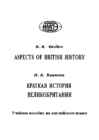
N. A. Vavilov ASPECTS OF BRITISH HISTORY Н. А. Вавилов КРАТКАЯ ИСТОРИЯ ВЕЛИКОБРИТАНИИ Учебное пособие на английском языке Москва Институт международного права и экономики имени А. С. Грибоедова 2008 2 УТВЕРЖДЕНО кафедрой лингвистики и переводоведения Вавилов Н.А. Краткая история Великобритании: Учебное пособие на английском языке. – 2-е изд., пересмотр. и испр. – М.: ИМПЭ им. А.С. Грибоедова, 2008. – 88 с. Пособие содержит краткий очерк важнейших событий в истории Великобритании – от первых документально засвидетельствованных вторжений на остров (кельтов, римлян и англосаксов) до создания и распада Британск...
LEL 2E Notes on Vocabulary One of the key facts about the lexicon of any language is that it reflects in various ways the physical and cultural environment in which the language is spoken. A people unfamiliar with, say, horses is unlikely to have a word for `horse'; similarly with ploughs, printing presses, and internet porn sites. For the most part this is trivial it's hard to imagine how it could be otherwise, given the general nature of human language. People tend to make a great deal of the alleged fact (see Pullum 1989) that "the Eskimos have lots of words for snow", but it doesn't take much thought to realise that any language spoken in a given physical and cultural environment is likely to have efficient ways of referring to distinctions that are important in that environment. That doesn't mean that you can read very much into individual words and individual facts about the lexicon of a given language (this topic has already c...
STYLISTICS 1. Style, stylistics, a survey of stylistic studies The term ,,style" is polysemantic. Latin ,,stilus"--a writing instrument used by the ancients for writing on waxed tablets. Soon, the meaning was extended to denote the manner of expressing one's ideas in written or oral form. Jonathan Swift said: ,, Style is proper words in proper places" Present day--half a dozen meanings: · the characteristic manner in which a writer expresses his ideas (Style of Byron) · the manner of expressing ideas characteristic of a literary movement or period (symbolism, romanticism) · the use of lg. typical of a literary genre (comedy, drama, novel) · the selective use of lg that depends on spheres of human activity. These are called functional styles or registers (fiction, newspaper) Stylist...
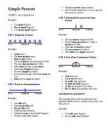
Windows are not made of wood. Simple Present · · New York is a small city. It is not important that this fact is untrue. [VERB] + s/es in third person USE 3 Scheduled Events in the Near Examples: Future · You speak English. · Do you speak English? · You do not speak English. USE 1 Repeated Actions Examples: · The train leaves tonight at 6 PM. · The bus does not arrive at 11 AM, it arrives at 11 PM. ...
ELT Methodology (FLGR.01.041) 27.12.2012 Home Assignments. I Youtube clips: · A vision of K-12 students I personally think that Estonian learners are also digital learners. They spend more time at the computers or laptops or iPads etc. than read books or move outside. And another thing is that teachers are less capable in using technological appliances. But the latter mentioned fact is an advantage for us teachers as well. It gives us an opportunity to provide our students to experience success. They can help and assist us if we need some technological help. Another thing is that in schools, in classes generally students are not allowed to use their appliances, so it means they have to communicate verbally as well. I think that teachers ...
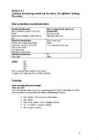
MODULE 1 Greeting. Introducing oneself and the others. The alphabet. Spelling. The tenses. How to introduce yourself and others Formal introductions How to respond and reply to an May I introduce myself? I am John introduction Smith. How do you do. Allow me to introduce John Smith to Pleased to meet you. you. Standard introduction Nice to meet you. I'd like you to meet John Smith. Hello. I want you to meet John Smith. I'm so pleased to meet you. This is Jane Smith. I'm Jane Smith. My name's John Smith. Informal introduction Hi. John. Jane. Hello. Titles: Mr Mrs Miss Ms Ms is a modern form of address for women. It replaces the traditional forms of Mrs and Miss. Greetings Good morning/afternoon/evening...
Performing the presentation Introducing yourself and your talk Greeting, name, position, opening formalities Good morning, ladies and gentlemen. Good afternoon, everyone. Good morning. My name's (...). I'm the new Finance Manager. Good morning. Let me start by saying just a few words about my own background. I started out in... Welcome to Standard Electronics. I know I've met some of you, but just for the benefit of those I haven't, my name's (...). It's very nice to see you all here today. I'm very pleased to be here. I'm glad you could all make it. Thanks for inviting me. Thank you (all) for coming. Title/Subject I'd like to talk (to you) today about ... I'm going to present the recent ... explain our position on ... introduce ... brief you on ... inform you about ... ...
CHAPTER 1 GETTING TO KNOW THE TOEFL WHAT IS THE TOEFL? The TOEFL is a comprehensive English language examination required by more than 3,000 colleges and universities in the United States, Canada, and other parts of the world. In addition, foreign born professionals frequently need a TOEFL score for certification to practice their profession in the United States or Canada. The TOEFL is a timed test that consists of the three sections listed here. THE TOEFL Section 1 Listening Comprehension 50 questions 35 minutes Part A Statements 20 questions Part B Short Dialogs 15 questions ...
 annaabi.ee