 10 punkti
Autor soovib selle materjali allalaadimise eest saada 10 punkti.
10 punkti
Autor soovib selle materjali allalaadimise eest saada 10 punkti.
 ~ 12 lehte
Lehekülgede arv dokumendis
~ 12 lehte
Lehekülgede arv dokumendis
 2013-01-27
Kuupäev, millal dokument üles laeti
2013-01-27
Kuupäev, millal dokument üles laeti
 5 laadimist
Kokku alla laetud
5 laadimist
Kokku alla laetud
 0 arvamust
Teiste kasutajate poolt lisatud kommentaarid
0 arvamust
Teiste kasutajate poolt lisatud kommentaarid
 gdjgdg gdjdg
Õppematerjali autor
gdjgdg gdjdg
Õppematerjali autor
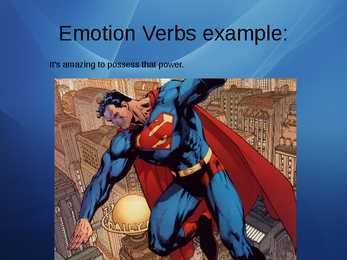
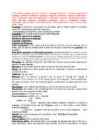
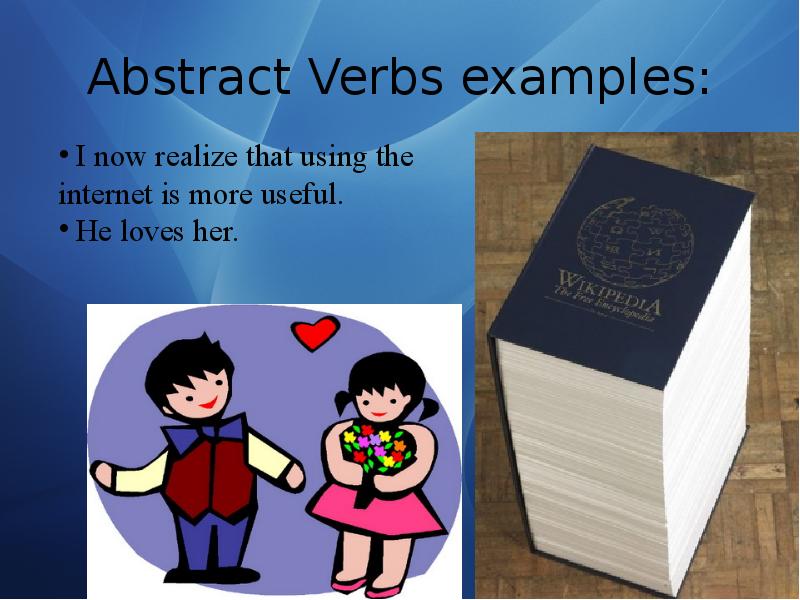
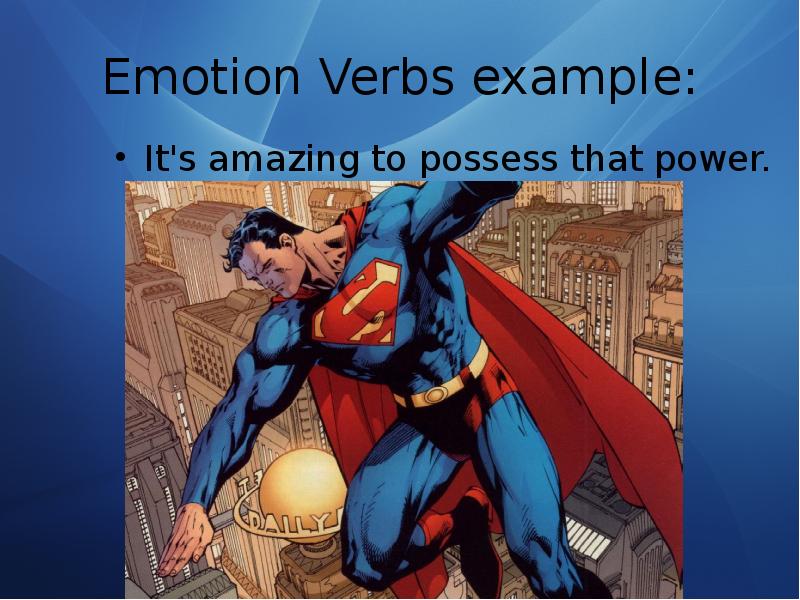
Types of Verbs Group I Normal Verbs Most verbs are "Normal Verbs." These verbs are usually physical actions which you can see somebody doing. These verbs can be used in all tenses. Normal Verbs to run, to walk, to eat, to fly, to go, to say, to touch, etc. Examples: · I eat dinner every day. · I am eating dinner now. Group II Non-Continuous Verbs The second group, called "Non-Continuous Verbs," is smaller. These verbs are usually things you cannot see somebody doing. These verbs are rarely used in continuous tenses. They include: Abstract Verbs to be, to want, to cost, to seem, to need, to care, to contain, to owe, to exist... Possession Verbs to possess, to own, to belong... Emotion Verbs to like, to love, to hate, to dislike, to fear, to envy, to mind... Examples: · He is needing help now. Not Correct · He needs help now. Correct · He is wanting a drink now. Not Correct
consider, considers, considered Open vs. Closed class words: In linguistics, a closed class (or closed word class) is a word class to which no new items can normally be added, and that usually contains a relatively small number of items. Typical closed classes found in many languages are adpositions (prepositions and postpositions), determiners, conjunctions, and pronouns.[1] Contrastingly, an open class offers possibilities for expansion. Typical open classes such as nouns and verbs can and do get new words often, through the usual means such as compounding,derivation, coining, borrowing, etc. [2] Syntax: studies how words group together to make phrases and sentences. Sentences are not simply random strings of words; they conform to specific patterns determined by the syntactic rules of the language. The syntactic rules in a grammar must account for the grammaticality of sentences, word
All rights reserved. No part of this book may be reproduced in any form or by any means, electronic or mechanical, including photocopying, recording, or by any information storage and retrieval system, without the written permission of the publisher. ISBN 1-59905-201-6 Printed in the United States of America 13 12 11 10 09 08 07 9 8 7 6 5 4 3 2 1 Introduction Grammar is a very old field of study. Did you know that the sentence was first divided into subject and verb by Plato, the famed philosopher from ancient Greece? That was about 2,400 years ago! Ever since then, students all over the world have found it worthwhile to study the structure of words and sentences. Why? Because skill in speaking and writing is the hallmark of all educated people. Lesson by lesson, this book provides basic instruction in the eight parts of speech--nouns, pronouns, verbs, adjectives, adverbs, prepositions, conjunctions, and
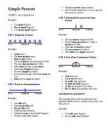
· Cats like milk. still, just, etc. · Birds do not like milk. · Do pigs like milk? Examples: · California is in America. · California is not in the United Kingdom. · You only speak English. · Windows are made of glass. · Do you only speak English? I am not reading any books right now. Present Continuous · · Are you working on any special projects at work? [am/is/are + present participle] · Aren't you teaching at the university now? Examples: USE 3 Near Future · You are watching TV. · Are you watching TV? · You are not watching TV.
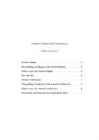
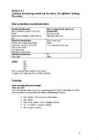
Present Simple and Continuous Table of Contents Present Simple ..................................................................... 2 The spelling of endings in the Present Simple ....................... 2 When to use the Present Simple ........................................... 3 The verb 'be' ......................................................................... 4 Present Continuous.............................................................. 5 The spelling of endings in the Present Continuous................ 5 When to use the Present Continuous.................................... 6 State verbs and event (action or dynamic) verbs ................... 7 Present Simple In the Present Simple we use the verb without an ending. I work you live we think they dance NB
influenced the present 3 Past Perfect A: He had spoken. · action taking place before a until that day, N: He had not spoken. certain time in the past Q: Had he spoken? · sometimes interchangeable with past perfect continuous · putting emphasis only on the fact (not the duration) Past Perfect A: He had been · action taking place before a Continuous speaking. certain time in the past N: He had not been speaking. · sometimes interchangeable Q: Had he been with past perfect simple speaking
grammatical shape of the word, the meaning of the word stays the same. For example: consider, considered, considers. Open class words (content words) → These are the word classes that take in new words, for example by adding affixes to them or borrowing words from other languages. In English these words are most commonly nouns, verbs (not auxiliaries), adjectives and adverbs. Closed class words (function words) → These are words that do not take in any new words. In English the word classes are prepositions, pronouns, determiners and conjunctions. Syntax is the study of how sentences are formed in a language. For example what is the word order ( in English it’s usually subject, verb object) or how words relate to
Concrete nouns refer to physical entities that can be observed and measured (cat, garage, soldier). Abstract nouns refer to abstractions that cannot be observed and measured (competition, conscience). verb tegusõna, In a clause, the verb is an obligatory and the most walk, put, do, be, must pöördsõna, verb central element. It denotes actions, events, processes and states. Verbs are either regular (cough, coughs, coughing, coughed) or irregular (speak, speaks, spoke, speaking, spoken). There are three main grammatical
 annaabi.ee
























Kõik kommentaarid