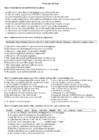
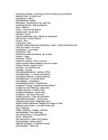
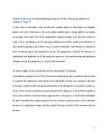
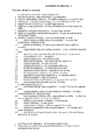
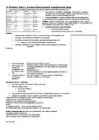
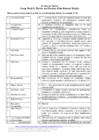
Crime and the Law Task 1. Underline the most suitable word or phrase. a) Sally didn't realise that she had broken/countered/denied the law. b) The police have banned/cancelled/refused parking in this street. c) I must remember to get a/an agreement/licence/permission for my television. d) The president admitted that there had been a breakdown of law and crime/government/order. e) Jim's parents wouldn't agree/allow/let him go to the demonstration. f) Jake was arrested because he had entered the country falsely/illegally/wrongly. g) Talking to other students is against the law/orders/rules of the examination. h) The two men were arrested before they could commit/make/perform any more crimes. i) I had to take the company to court/justice/law to get the money they owed me. j) Smoking is compulsory/prohibited/refused near the petrol tanks. Task 2. Match word in the box with a su...
Analysis Direction Fiction 20.02.2012 Monday Student: Regina Verner Instructor: Arvo Iho Baltic FIlm and Media School Film ''Down by the law''by Jim JArmuch is a black and white comedy/drama/crime. His main idea about the film was to create and develop a style to follow realistic and imperfect characters through familiar environments. The scene begins with a long shot, panoramic view of a city/town called New Orleans, feeling of a ol...
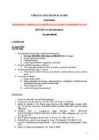
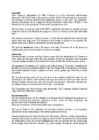
TALLINN UNIVERSITY The Law School Law The European Union Law The EU institutions Lecturer: Matti Kauppi Student: Viktoria Gratšjova Tallinn, 2014 The institutions of the European Union form a complex and unique polity and, in determining whether or not this structure and the law making powers granted to each respective institution are inherently undemocratic, it is vital to define what is meant by the term ‘democratic’. In his Gettysburg address Abraham Lincoln referred to a government which was ‘of the people, by the people, for the people’and it is by this criterion that democracy is often judged. These principles are reflected in having equal access to power and in being equal before the law. It must be considered not only whether law making powers are granted to elected persons, but also whether the balance of power between institutions within the...
Should mercy killing be punished? Mercy killing, also known as euthanasia, refers to the practice of intentionally ending a life in order to relieve pain and suffering. This type of killing is legal in some countries, but should it be punished instead? Although, it is still a type of killing, it is for a good cause. There are people who suffer and want to rather die than to endure agonies, euthanasia is an answer for them. Thus, mercy killing is very humane and reasonable thing to do and does not deserve punishment. The negative aspect of euthanasia is that it is still a form of killing. One should not be in judge over others life, even when it is for a good cause. The fact that euthanasia could be misused is not less important. In conclusion, although mercy killing is a form of taking someone’s life, it should not be punishable when it is for greater good. Is the purpose of la...
Michael Buffer has presumably profited than any other person on Earth by venturing inside a boxing ring -- and never throwing a left hook. Cradle is no weakling. Be that as it may, his manicured hands, splendidly coiffed hair, and glimmering white teeth authenticate a real existence dependent on an option that is other than his clench hands. He goes to each battle wearing a tuxedo. What's more, when he's inside the ring, he does what radical guardians tell their youngsters when confronting a battle. He utilizes his mouth. So before the clench hands begin flying, he lets out the one cry that procures him his living. It's a cry that he can do like nobody else -- by not just by goodness of his brilliant lungs and throat, however by law. What's more, it goes: "We should Get Ready to Ruuummmmmmbbbbllllle!" With those five words, Buffer and his sibling have built up a domain that is made millions. Discount permitting incomes...
Law-makers breaking the law: torture as a justified interrogation technique? 1 Introduction It was Jeremy Bentham who thought of a famous method to give ethics a rational basis. He was fed up with the penal laws where offenders met corporate punishment and together with Cesario Beccaria he stood up to torture, corporal punishment, and the death penalty. He resisted against irrational moral emotions as the instigation for ethical conduct, saying only reasonable grounds could justify the moral decisions of individuals and legislators. And now his theory of is the one that is known for justifying torture (Verplaetse, 2008). Since 9/11 and the following fight against terrorism it became clear that the Bush administration thought of torture as something justifiable while it goes against all possible agreed upon treaties and conventions. One could indeed possibly think ...
The aim of the experiment To determine the molar mass of carbon dioxide in three different ways; 1) using the Ideal Gas Law equation, 2) using the molar volume of a gas at NTP, 3) using the relative density to air Equipment CO2 tank, a flask with a rubber stopper (300 cm 3), technical balance, measuring cylinder (250 cm3), thermometer, barometer. Method 1. Determine the mass (m1= mflask+stopper+air) of the dry flask with a rubber stopper by weighing on a technical balance. Draw a line on the flask at the bottom edge of the stopper in order to measure the volume of the flask in step 5. 2. Fill the flask with carbon dioxide gas. Direct the gas from the CO 2 tank into the flask for about 7-8 minutes. The tip of the hose has to be in the bottom but not very closely against the bottom. Otherwise it may happen that all of the CO 2 will exit from other branches of the hose bundle. 3. Seal the flask q...
University of Tartu Faculty of Social Sciences and Education Institute of Government and Politics Marie Allikmaa The strategies of creating a dominant party the case of United Russia Tartu 2011 After the collapse of USSR in 1991, many observers expected Russia to develop into a competitive party system. Yet, the reality quickly challenged this view. The developments of party politics in post-Soviet Russia have accurately been described in terms of a pendulum effect, as in the 2000s, Russia's party system did finally begin to take for, but with a remarkable twist. Following the break of one-party rule, Russia's party system became strongly fragmented - during the 1995 parliamentary elections, 43 parties competed for popular votes (McFault 1996: 90). In the 21st century, the pendulum has moved back, ...
1.Common law A common law legal system is a system of law characterized by case law which is law developed by judges through decisions of courts and similar tribunals a common law system is based on legal precedents. The roots of the common law legal systems can be traced back to the first common law system created in England during the Middle Ages. Today, most countries that once had ties to England, including the United States, Australia, New Zealand, and Hong Kong, to name a few, operate under common law. Aside from Great Britain, the majority of the countries in Europe operate under a version of civil law modeled after the Roman legal system created centuries ago In a common law system, the law is created by precedents set after judges decide actual cases. When a judge hears a case that has a new issue in it, the judge makes a decision regarding the issue in the case. That decision then becomes a precedent that must be followed by o...
TOPICS For the PRELIM Year 1 Put down 10-12 relevant terms and retell about: 1. Prescriptive and descriptive law Prescriptive law – prescribe how people ought to behave Descriptive law – describes the way people or natural phenomena behave Break the law – do something illegal Penalty – punishment Government – system by which a state or community is controlled Law – the system of rules System of courts – all judicial institutions Enforce – to make people obey the law Authority – a group of people with official responsibility for a particular area of activity /the moral or legal right or ability to control Prescribe – to tell someone what they must have or do, or to make a rule of something Impose The word law can have several meanings, it can be divided into prescriptive and descriptive law. Descriptive law – describes the way people or natural phenomena behave, e. g. law of gravity Prescriptive law – prescribe how people...
11.02.09 INGLISE KEEL Palju aega läheb. 10 nädalat aint. One of the ESP courses. What we are going to do, what is needed: · What we do - 1 test, on words. · 2 Essays, that means that we have to look into academic writing · Homereading we read a case from European Court of Justice thingy. · Oral thing. · 90% you have to attend · Have to prepare for class and take part of it etc What we learn: Terms Expressions / collocations (nt obey/abide by the law) Explaining AWOL absence without a leave Legal English can be divided into 3 levels. We learn the first one, which is needed for the other two! You have to know the vocabulary etc. Second level has to do with legal contracts... The third level both 1 and 2 and explaining... We learn the vocabulary + explaining. Process of law-making draft law/bill (seaduseelnõu) is developed draft is sent to the parl...
descriptive law (kirjeldav õigus) - laws which simply describe how people or even natural phenomenas usually behave nation (riik) - country with its own goverment citizen (kodanik) - person native of a country; realationship between country and a person stranger (välismaalne) - person who is unfamiliar, from another country penalty (karistus) - punishment fixed by law, as for a crime or from any soical groups goverment (valitsus) - organization which controlls a stre or community System of Courts (kohtusüsteem) - organization applying law in the name of states to commit a crime (kuritegu läbi viima) - breaking a law, usually given out by the goverment fine (trahv) - certain sum of money person pays for breaking a law corruption (korruptsioon) - dishonest or unethincal conduct by a person entrusted with a position of authority suspension (kõrvaldamine) - form of punisment that people recieve for violating rules and regulations Civil Acti...
advokaatide juhedaja - instructing solicitors for prosecution and defence alaealiste kohus - Juvenile court armuandmine - Mercy edasikaebamine - Appeal haldusõigus - Administrative law/ public law juriidilisele kaitsele - Judicial protection kaitse - Defence kaitsja - Councel for the defence kannatav pool - Injured party karistama - Punish karistust andma/täide viima - Meting out punishment karm karistus a harsh sentence kautsjon - Bail kirjalik laim - Libel kirjutatud seadus/parlamendi aktidel põhinev seadus - Statute law/statutory law kohtu asja võitma win a case kohtuametnik - Court officer kohtuistung - Trila kohtulikule arutamisele minema go on treial kohtunik - Judge kohtuotsus - Verdict kohtuotsust määrama - Passes sentences kohtus tunnistust andma appear in court as a witness kohtusse ilmuma appear in court kooskõlas - In conformity with kriminaal - Criminal kriminaalhooldusametnik - probation Office kriminaaljuurdlus ...
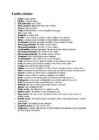
Family relations · Father: a male parent · Mother: a female parent · Dad (informal): one's father · Mum, mummy, mom (informal): one's mother · Parent: father or mother · Child (Plural Children): a son or daughter of any age · Son: a male child · Daughter: a female child · Brother: a man or boy in relation to other children of his parents · Sister: a woman or girl in relation to other children of her parents · Grandfather (Informal grandpa): the father of one's father or mother · Paternal grandfather: the father of one's father · Maternal grandfather: the father of one's mother · Grandmother (Informal grandma): the mother of one's father or mother · Paternal grandmother: the mother of one's father · Maternal grandmother: the mother of one's mother · Grandson: a boy child of one's son or daughter · Granddaughter: a girl child of one's son or daughter · Uncle: the ...
VÕRDLEVA ÕIGUSTEADUSE ALUSED SEMINARID SEMINARIDE LÄBIMINE ON KOHUSTUSLIK EKSAMILE PÄÄSEMISE EELDUS 2013/2014 õa kevadsemester (Avatud ülikool) I SEMINAR 21. märts 2014 kl 8.30-10.00 1. Kontinentaal-Euroopa õiguse ajalooline kujunemine. a. Euroopa ülikoolide ühtne õigus ja ülikoolide töö eesmärgid. b. Rooma õiguse retseptsioon. c. Kodifikatsioonid. d. Loomuõiguskoolkond vs ajalooline koolkond. 2. Kontinentaal-Euroopa õiguse struktuur. a. Eesti õigusperekondliku kuuluvuse analüüs ajaloolises läbilõikes. 3. Kontinentaal-Euroopa õiguse süsteem. a. Eesti õiguse süsteemi diakrooniline käsitlus (seadusandluse ja kohtusüsteemi näitel) 4. Ius commune allikad: a. Õiguse allika mõiste. b. nende ajalooline kujunem...
Tax policy After regaining independence in 1990, Lithuania is a fully functional parliamentary democracy. The chief of state is the president, and the head of the government is the premier. The president is directly elected by the people and serves a 5-year term. The parliament, known as the Seimas, has 141 members who are elected for 4-year terms. Of these, 71 are directly elected by the people and 70 are elected by proportional vote. The tax burden, at some one-third of the GDP is moderate by international standards and will further be reduced as the liberalization progresses. These are mainly income and value-added taxes . Tax revenues come from a variety of sources. Goods that are imported into Lithuania face import duties that range from 10 to 100 percent (but average 15 percent on most goods). The highest tariffs are on tobacco, automobiles, jewelry, and gasoline. The personal income tax level is 33 percent with rates of betwee...
EU Internal Market Law Mid-term online evaluation assignment for Distance Learning Students The Assignment: Hypothetical Case In the Member State A several NGOs, uniting parents concerned with safety of children and young adults, ordered a study of dog attacks on people (and especially children) resulting in deaths or maiming. The aim of the study was to identify, if possible, the dog breeds of potentially enhanced danger for people. The study’s results showed that pit bulls and their close mixes as well as Rottweilers and their close mixes were jointly responsible for over 70% of attacks. The authors of the study explained the statistics by popularity, big size and powerfulness of the named breeds and their ability to do a lot of damage. Besides, about the pit bull attacks the absence of warning from a dog played a significant role, because due to the custom of docking (cutting short) pit bulls’ tails warning signals could n...
Introduction and history of the European Union History The European Union is set up with the aim of ending the frequent and bloody wars between neighbours, which culminated in the Second World War. The idea is that countries who trade with one another become economically interdependent and so more likely avoid conflict.The ancestor of the European Union is the European Coal and Steel Community (ECSC) which was created with the Treaty of Paris (1951) and was signed by France, Italy, Belgium, Netherlands, Luxembourg and West Germany (total of 6 countries). European Economic Community (EEC) was created with the Treaty of Rome (1958), establishing a customs union (tolliliit). The European Union (EU) was created by the Maastricht Treaty which came into effect on November 1st 1993. Introduction The European Union (EU) is an economic and political union.EU policies aim to ensure the free movement of people, goods, services, and capital, enact...
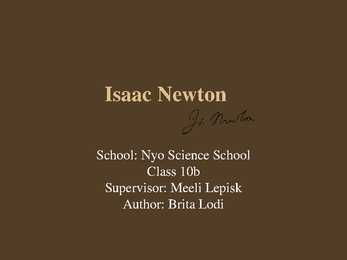
Isaac Newton School: Nyo Science School Class 10b Supervisor: Meeli Lepisk Author: Brita Lodi Sir Isaac Newton 16431727 · 25 December 1642(4 January 1643, New Style) , in England · Died 20 March 1727 (aged 84) Sir Isaac Newton 16431727 He is the greatest and most influential scientist who ever lived · Physicist · Mathematican · Astronomer · Natural philosopher · Alchemist · Theologian Early life · He was more interested in making mechanical devices than in studying. · Sundial · Educated at The King's School, Grantham. · In June 1661, he was admitted to Trinity College, Cambridge As a students, we know him because.. · He was the first person who invent the 3 laws of motion · Theory of gravitation · Newtonian fluid, nonNewtonian fluid · Newton's theory of color · He invented the early telescope in 1671 Newtons laws in latin ...
1. What is the object of philosophical study? The object of philosophical study is being itself on an abstract level. Everything and nothing can be or exist. Things like colour, nature, material things like a table just are, but the meaning of being in be-ing in itself is unclear. Non Material things can also be or exist. If something is, then it is a being. But what exactly is this IS that we can see or on the opposite can not see? Therefore this is one of the fundamental questions of philosophy. 2. Can you reject solipsism? Solipsism (solus ipse) means nothing exists, therefore everything is an illusion outside of our own minds. I think that it is true that we know WE as in myself exists. But i can not for certain say that the person reading this exists although it might seems like it to me. I think that you really can’t reject solipsism on the whole because you do know that you exists, but can you for certain say t...
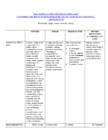
https://quizlet.com/388172484/inka-test-flash-cards/? i=25w06u&x=1jqY&fbclid=IwAR1qQksMLyeDlPJwkOTW_Fq18r1xJUkZrlbt6nX49ZocC _ojSaZoykYBJXk Prosecutor, judge, sworn advocate, notary NOTARY JUDGE PROSECUTOR SWORN ADVOCATE/ ATTORNEY-AT- LAW WHAT DO THEY A notary public of the A judge presides over The prosecutor has Attorney at law or DO? common law is a a courtroom, hearing three main tasks: attorney-at-law, public...
The British Parliament The Parliament of the United Kingdom of Great Britain and Northern Ireland, commonly known as the British Parliament,Westminster Parliament or simply "Westminster". The British constitution has envolved over many centuries and unlike many other nations, the UK has no single constitutional documents. But Britain does, however, have certain important constitutional documents, including Magna Carta, Bill of Rights and Reform Act. It is formed partly by statue law, partly by common law and partly by conventions. Fundamental law doesn´t exist in the United Kingdom. There can be distinguish three separate organs: the legislature, the executive and the judiciary. Parliament, the law-making body, consists of three elements: the Monarchy, the House of Commons and the House of Lords. They meet together only on occasions of ceremonial significance, such as the state opening of Parli...
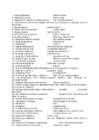
1. reegleid järgima observe rules 2. reegleid rikkuma break rules 3. vägivaldselt käituma (kellegi suhtes) act violently towards 4. vastuvõetava käitumise reegleid kehtestama establish acceptable rules of behaviour 5. õigusi kaitsma protect rights 6. õigusi maksma panema assert rights 7. õigusi piirama restrict rights 8. kohustusi peale panema impose duties on 9. seadust järgima obey law, observe law 10. seaduskuulekad inimesed law-abiding people 11. seadust jõustama enforce law 12. alaealised minors 13. õiguskaitseorganid law enforcement agencies 14. süütegusid uurima investigate offences 15. karistust määrama impose punishment on 16. kuritegu soori...
1. Can the PB&R company successfully claim any violation of the EU law related rights? Examination 1. Can we say that an animal (a dog) is a good? – Yes. According to Article 13 TFEU dogs do belong to a “goods” category so as it is described in CJEU case law that a good is a product which can be valued in money and which is capable of forming the subject of commercial transactions. Therefore PB&R company and its business is selling dogs, or shall I say goods not just on a local fields, but the movement of goods is linked to abroad EU countries by making a profit of it I shall conclude that it involves a “movement of goods within the EU Member States” (Articles 26 and 37). 2. Is there a restriction of trade in goods? a. Can we name an animal, or to be more exact a dog as a “good” – yes, in accordance of Article 13 TFEU: “In formulating and implementing the ...
Scotlan History The history of Scotland begins around 10,000 years ago, when humans first began to inhabit Scotland after the end of the Devensian glaciation, the last ice age. Of the Stone Age, Bronze Age, and Iron Age civilization that existed in the country, many artifacts remain, but few written records were left behind.People lived in Scotland for at least 8,500 years before recorded history dealt with Britain. The written history of Scotland largely begins with the arrival of the Roman Empire in Britain, when the Romans occupied what is now England and Wales, administering it as a Roman province called Britannia. To the north was territory not governed by the Romans -- Caledonia, by name. Its people were the Picts. From a classical historical viewpoint Scotland seemed a peripheral country, slow to gain advances filtering out from the Mediterranean fount of civilisation, but as knowledge of the past incr...
Public International Law is a system of law, different from domestic law. Why is this system unique? Usually law regulates relations between people, people and the state etc, PIL regulates relations between states. Thats why PIL is important for international relation students. PIL influences the life of everybody, it doesn't regulate people directly but indirectly (through the decisions of the states), because it's everywhere. It's like air. E.g. when you want to send a letter to Brazil, you put a stamp from your own country and send it from your post office and the letter gets delivered. Why is this so easy, because there are certain international conventions that regulate postal services. E.g. traffic signs are almost the same everywhere, why? Because of certain int conventions that require the states to have more or less unified traffic signs. States apply international regulations to national regulations and they ...
neÄlle Töö 1. osa = tõlge EST ing.k. Töö 2. osa = mõistete selgitamine = vt harjutused õpikust Sõnad/tõlked * U6 1. citizenship kodakondsus 2. state riik 3. lawful relationship- seaduslik suhe 4. determines mutual rights and obligations määrab vastastikused õigused ja kohustused 5. questions of citizenship are first of all regulated by kodakondsuse küsimused on eelkõige reguleeritud ... abil/kaudu/alusel 6. the Constitution of the Republic of Estonia EV PS 7. the Citizenship act kodakondusseadus 8. according to § 8 - § 8 alusel/järgi 9. right to õigus millelegi 10. shall be acquired by birth omandatakse sünniga 11. proceeds from the principle tuleneb ... printsiibist 12. any child found in Estonia iga Eestist leitud laps ...
Units 12-18 1. system of pandects pandektiline süsteem 2. general provisions üldosa 3. law of property asjaõigus 4. family law perekonnaõigus 5. law of sucession pärimisõigus 6. law of obligations võlaõigus 7. General Part of the Civil Code Act TsÜS 8. Law of Property Act AÕS 9. Family Law Act perekonnaseadus 10. Law of Succession Act PäRS 11. Law of Obligations Act VÕS 12. persons and transactions isikud ja tehingud 13. natural persons 14. legal persons 15. passive legal capacity õigusvõime 16. active legal capacity (an ability to independently asume civil rights and incur civil obligations) teovõime 17. live birth elussünd 18. bequeath property pärandama 19. mental state vaimne seisund 20. restricted active legal capacity piiratud teovõime 21. mental illness vaimehaigus 22. mental disability nõdrameelsus 23. mental disorder psüühiline häire (sickness ...
What is the law of diminishing returns? Why this proposition is called a "law"? It states that, at some point- when we add more variable input to a fixed input- our marginal product will start to decrease as the newly added variable input is being added to an already increasingly scares input. This can be explained by citing an example, if we add more workers to a job, such as assembling a car. At some point, adding more workers would cause problems, as they would be getting in each other's way, or workers wold often find themselves waiting for access to specific part or tool required for the job. This proposition is called a law because it is standardized and applicable on all the production processes. Any manufacturing and production company can use this proposition (or Law) to their betterment. Is Tony right in his analysis of the situation? Explain. According to my point of view, Tony's decision of increasing the price a g...
TARTU ÜLIKOOL ÕIGUSTEADUSKOND Eraõiguse osakond Kristjan Joosep Jalakas KARISTUSÕIGUS ISLAMI ÕIGUSKULTUURIS Referaat Õppejõud Lektor Maie Ruus, PhD Lea Leppik Tartu 2019 Sisukord SISSEJUHATUS.........................................................................................................................3 1ISLAMI ÕIGUSE OLEMUS....................................................................................................4 1.1Islami õigussüsteem ja šariaat............................................................................................4 1.2Islami karistusõigus............................................................................................................4 2ISLAMI KARISTUSÕIGUSE AJALUGU JA ARENG...................
Tallinna Mustamäe Gümnaasium G3K Hillary Diane Rodham Clinton Report Jaana-Kristiina Jõgevest Tallinn 2010 Introduction Hillary Diane Rodham Clinton (born October 26, 1947) is the 67 th United States Secretary of State, serving in the administration of President Barack Obama. She was a United States Senator of New York from 2001 to 2009. In the 2008 election, Clinton was leading candidate for the Democratic presidential nomination. A native of Illinois, Hillary Rodham attracted national attention in 1969 for her remarks as the first student commencement speaker at Wellesley College. She embarked on a career in law after graduating from Yale Law School in 1973. Following a stint as a Congressional legal counsel, she moved to Arkansas in 1974 and married Bill Clinton in 1975. Rodham cofounded the Arkansas Advocates for Children and Families in 1977,...
Essential Vocabulary - I The role of law in society 1. juriidilised kohustused – legal obligations 2. kannatanud pool, kahjukannataja – injured party 3. vaidlusi lahendama (kohtus) – to settle a dispute in a court of law 4. riskeerima tehingute tegemisega – to risk making transactions 5. õigusnõustamist otsima – to seek legal advice 6. tagama, et leping kehtiks – to ensure that the contract would be valid 7. õiguslikke vahendeid kasutama – to use legal means 8. harjuma õiguslikke vahendeid kasutama – to get accustomed to using legal means 9. omama teadmisi millestki – to have knowledge of smth 10. ette kirjutama, ettekirjutus, ettekirjutav – to prescribe, prescription, prescriptional 11. karistust kandma – to serve punishment (ka to suffer a penalty) 12. vägivaldselt käituma (kellegi suhtes) – to act violently towards smb 13. a...
Investor's Handbook A Legal Guide to Business in Georgia · Start Up · Privatization · Labor Legislation February 2011 1st Edition 1 CYAN MAGENTA YELLOW BLACK 1 This brochure is a publication by the Georgian National Investment Agency (GNIA) and was prepared by Georgian law firm Mgaloblishvili, Kipiani, Dzidziguri (MKD). The Brochure is intended to be a general guidance on start up, privatization and labor relations. It is thus not expected to be a substitute for detailed research or exercise of professional judgment on above mentioned topics. Companies and individuals operating in Georgia or planning to operate, are strongly advised to obtain current and detailed information from experienced professionals. None of the organizations mentioned above, nor their members, employees o...
Smacking children Parents all over the world use smacking in the purpose of discipline, even though in reality it is child abuse. Children's behaviour needs to be controlled but they shouldn't be suffering. Firstly it seems to me that parents who continuously beat their children don't care about them. Although few slight slaps for punishment are enough parents still beat them hard. Parents should be the ones who protect children not the ones who children have to be afraid of. In addition some parents equate smacking with discipline although these two are not the same. Teaching is discipline, smacking is punishment. Parents who don't smack their children still discipline them. They are just using ways that don't involve pain. Moreover the law is against all kinds of physical punishments. Some parents still keep beating their children. They think that it's their own business how they raise their kids but law is for everybody. It ...
Tallinn Järveotsa Gymnasium MARGARET THATCHER Maria Ignatenko Form 11.B Tallinn 2008 Margaret Thatcher (1925-...) General Data Margaret Hilda Thatcher was born on the 13th of October, 1925 in London. She is a British politician who served as Prime Minister of the United Kingdom and Leader of the Conservative Party. Margaret is the first woman who has ever held these posts. Childhood and Education Margaret Hilda Roberts was born on the 13th of October, 1925 in Grantham in Lincolnshire, England. Her parents were Alfred Roberts and Beatrice Stephenson Roberts. Thatcher spent her childhood in the town of Grantham in Lincolnshire. The Roberts family ran a grocery business, bringing up their two daughters in a flat over the shop. Her father was active in local politics a...
Describe the British Parliament Works in a large building called the Palace of Westminster aka The Houses of Parliament. There are offices, committee rooms, restaurants, bars, libraries and even some places of residence. Two large rooms: The House of Lords meet in one and the House of Commons in the other. The British Parliament is divided into two houses, but the House of Commons is obviously more important and only they are considered to be the MPs. In the House of Commons there are just two rows of benches facing each other. On the left sit the members of the governing party and on the right sit the opposition. The Speaker sits between them and controls the action. The arrangement of the benches encourages confrontation between the government and the opposition. There is no place for somebody who isn't neither in the opposition nor in the government side. Usually peeps like this sit in the opposition furthest from the Speaker. || The...
1 Basic law, constitutional engineering · The Basic Law (= constitution) drawn up by West German politicians under Allied supervision 48-9 · Key Themes of Constitutional Engineering: Protecting the constitution Preventing abuse of human rights Ensuring stable government Effective leadership but no over-concentration of power · Compare turbulence of German politics 1918-45, and stability since In part about design of constitution, in part about Germans becoming democrats Solutions Concept of the Rechtstaat, a state based on the rule of law ...
Social Problems Crime In the sociological field, crime is the breach of a rule or law for which some governing authority or force may ultimately prescribe a punishment. The word crime originates from the Latin crimen. When society deems informal relationships and sanctions insufficient to create and maintain a desired social order, there may result more formalized systems of social control imposed by a government, or more broadly, by a State. With the institutional and legal machinery at their disposal, agents of the State can compel individuals to conform to behavioural codes and punish those that do not. Various mechanisms are employed to regulate behaviour, including rules codified into laws, policing people to ensure they comply with those laws, and other policies and practices designed to prevent crime. In addition are remedies and sanctions, and collectively these constitute a crimi...
EU Internal Market Group Work I: History and Purpose of the Internal Market Please connect terms (numbers) with correct description (letter), for example 17 M 1 Common Market A ... is characterized by free movement of goods between the participating countries, but autonomous external trade policies in relation to non-participants. 2 Comparative B A top-down approach to integration that can be best Advantage explained by market failure. 3 Customs Union C Allows for specialization, specialization leads to ...
· Hobbes leviathan · Locke second treatise of government · Rousseau - social contract · Montesquieu - The Spirit of the Laws · Kant idea for a universal history from a cosmopolitan point of view · Hegel - philosophy of right Key dates 1603 Shakespear's King Lear , Death of the Queen Elizabeth 1. 1618-48 The Thirty Year's War 1649 Execution of Charels 1 of England, Establishment of Oliver Cromwell's Prodecorate 1651 Hobbes' Leviathan(1588-1679) 1660 The Restoration of Charels 2. as king of England 1688 The Glorious Revolution of Willim and Mary in England 1689 John Locke publishes Two Treatises of Goverment 1707 formation of the British Parliament Social Contract philosophy: The reasons for entering a social contract and the responsibilities of the goverment *Hobbes: To preserve one's safety *Locke: To preserve one's safety and property *Rosseau: To preserve one's safety, property and freedom, but to...
Anglo-norman period (1066-1300) The normans · The name derives from "the Northmen" · Descendants of the Vikings · Seized the north-western part of France · The area known as Normandy · Adopted French customs and Christianity · Norman-French (their version of French). 1066 · Edward the Confessor dies in January · Harold Godwinson crowned as king in Westminster Abbey on the same day · Another candidate for the throne William, Duke of Normandy · Gathered an army · Invasion delayed (bad weather) · Harald, king of Norway, invades England from the North · A battle at Stamford Bridge · Harald's army defeated, leaders killed · The end of the Viking Age · The Normans land in Britain (a few days after Stamford Bridge) · The Battle of Hastings · Harold defeated ...
Tallinna tehnikaülikool, Tartu kolledž Maastikudisani õppetool FREDERICK LAW OLMSTED Referaat Tartu 2012 Elulugu Frederick Law Olmsted sündis 26. aprillil 1822 ning suri 28. augustil 1903. Ta oli Ameerika kirjanik, ühiskonna kriitik ning administraator ja maastiku kujundaja. Rahvas peab teda Ameerika maastikuarhitektuuri isaks, kuigi paljud teadlased on andnud selle tiitli Andrew Jackson Downing’le. Olmsted oli kuulus linna parkide kujundaja, projekteerides koos oma vanem partneri Calvert Vauxi’ga nii Central pargi, Prospect pargi New Yorgi linnas. (Viide 1. http://www.saylor.org/site/wp-content/uploads/2011/08/HIST361-7.4.5-Frederick-Law- Olmsted.pdf) Joonis 1 Tema isa, John Olmsted oli jõukas kaupmees, kes huvitus elavast loodusest, inimestest ja kohtadest. Ka Frederick Law ja tema noorem vend, John Hull tundsid selle vastu huvi. Tema ema, Charlotte Law (Hull) Olmsted suri kui ta oli va...
Tallinna Tehnikaülikool Hüdro- ja aeromehaanika EMH5020 Kodutöö Üliõpilane: Kood: XXX Rühm: MATB-64 Juhendaja: Feliks Kaplanski Kuupäev: 27.04.2012 Tallinn 2012 1. What means vorticity? Derive vorticity transport equation in the plane and in the axisymmetric cases? 1.1 Vorticity is equal to the curl of the flow velocity. Vorticity is the tendency for elements of the fluid to "spin." Mathematically, vorticity is a vector field and is defined as the curl of the velocity field. w = curl (u ) = × u 1.2 Vorticity transport equation on the plane From the Navier-Stokes equation u 1 + u ( u ) = - p + g + v 2 u t We derive equation for two dimentional c...
Barack Obama 44th President of the United States Early life Obama was borned on August 4, 1961 and he´s the first president who´s borned in Honolulu, Hawaii. He had problems with alcohol, marijuana and cocaine. Schools He has studied in Columbia University in New York. He studied political science there. He also got a doctorate in law, as he was in Harvard. Career Before becomin a politic he worked as a civil rights lawyer. Also in Chicago University, he read lectures on constitutional law. President He was selected as a president in 4th November in 2008. He´s the first mulatto president in the United States. Life In 1991 he married with Michelle Robinson, they have two children Malia and Sasha. He was also selected by Time, Person of the year.
CHARACTERISTIC FEATURES OF OLD ENGLISH - 15 monophtongs, (7 long, 7 short, 1 central), 4 diphtongs, 17 consonants. Free variaton of R, and it was pronounced everywhere. Very much Germanic in character. Quite some special consonants that no longer exist. About morphology: synthetic with numerous aglutinating tendencies. System of tenses Germanic, but with a reduction of tenses. Paradigmatic leveling; Stress shift; Word order; Loan words (Old Norse, Old French). Dual pronouns. Determiners - no separate definite article. Strong and weak verbs. Word order relatively free with tendencies towards SVO. SVO, SOV, VSO most common. Adposition and podposition were both possible (eesliide ja tagaliide). About syntax: clauses were joined much simpler than nowadays, using and, then etc. Because of case syncretion the word order in a sentence became much more important to be able to tell the difference between words. FIRST CONSONANT SHIFT (GRIMM'S L...
TRADERUN MOODUL TRADERUN MODULE BUSINESS PECULIARITIES IN THE EU, RUSSIA AND EASTERN PARTNERSHIP COUNTRIES ÄRI ERIPÄRAD EUROOPA LIIDUS, VENEMAAL JA IDAPARTNERLUSRIIKIDES Lecturers: Ryhor Nizhnikau (responsible) Giorgi Gaganidze, Sergei Proskura, Andres Assor P2EC.00.202 (UT code), RIE 7044 (TLU code) Reading materials: Business peculiarities in Russia Lugemismatejal: Äri eripärad Venemaal Created by Sergei Proskura Tartu 2013 TABLE OF CONTENTS INTRODUCTION ....................................................................................................................................... 3 1. LEGALIZATION OF A COMPANY WITH A FOREIGN OWNER IN RUSSIA ....................................... 4 1.1. Laws ....
Why do we need morality? As an English philosopher Thomas Hobbes (1588-1679) said, all humans are made equal in mental and physical abilities. This does not mean that all of us are equally strong, smart or beautiful, but that everyone has the ability to damage or kill the other. The main goals, we all want to achieve, are having a shelter, security, power, wealth and enough food. This means that people are constantly competing with each other and that makes all of us (who desire the same things) enemies. Hobbes names the insecurity and fear people feel towards each other a "state of nature". In this state there are no moral rules or enforced laws, also no justice or injustice. People, being violent and arbitrary, will only follow their own interest. So without laws and boundaries, people would be in constant war - every man for himself. In this kind of society there is no time for cultural or industrial develo...
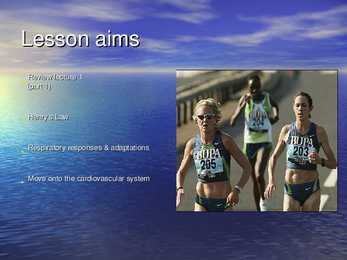
Lesson aims Review lecture 1 Review lecture 1 · (part 1) (part 1) Henry's Law · Respiratory responses & adaptations · Move onto the cardiovascular system · Lecture 1 recall task 1) Identify the route that air takes from the atmosphere to the blood (e.g., air enters through the mouth and then...). 2) Explain the mechanism of how air is drawn into the body with reference to Boyle's law and diffusion. 3) With reference to Dalton's law explain why training at altitude can be problematic for athletes. Henry's Law · When a mixture of gases is in contact with a liquid, each gas will dissolve in the liquid in proportion to its partial pressure. · Greater concentration of gas, the more and faster that gas will go into solution in the liquid. · How much gas dissolves in liquid depends on: solubility of the gas in the liquid temperature of the liquid. Did You Know...? Th...
Homework William Jefferson "Bill" Clinton was born on August 19, 1946. He is an American politician who served as 42nd President of the United States from 1993 to 2001. Inagurated at age 46, Bill was the third-youngstes president. Born and raised in Arkansas, Bill became both a student leader and a skilled musician. He met and later married Hillary Rodham Clinton, who has served as the United States Secretary of State since 2009 and was a Senetor of New York from 2001 to 2009. They both recived a law degree from Yale Law School. As a Governor of Arkansas, Bill overhauled the state's education system. Clinton was elected president in 1992, defeating president George H. W. Bush. In 2004, he released his autobiography ,,My Life". Clinton left office with the highest end-of-office approval rating of any U.S. president since World War II.
Estonian state system The Resolution of the National Independence of Estonia was adopted on August 20, 1991. The Constitution of Estonia is the fundamental law of the Republic of Estonia and it was adopted in June 1992. Estonia is a Democratic Parliamentary Republic where the supreme power is vested in the people. The head of State of Estonia is the President of the Republic who can be elected for two five-year terms. The Legislature. The Parliament of Estonia is called Riigikogu and it is elected by people for a four year term. The election is universal, uniform and direct. Voting is secret. The Riigikogu is comprised of one hundred and one members. The Riigikogu has three main functions: legislation, reviewing the activities of the executive power, representation. The members of the Riigikogu have the rights to form factions. The Executive. The Executive of Estonia consists of the body of the Prime Minister and cabinet of ministers. ...
 annaabi.ee