 50 punkti
Autor soovib selle materjali allalaadimise eest saada 50 punkti.
50 punkti
Autor soovib selle materjali allalaadimise eest saada 50 punkti.
 ~ 1 leht
Lehekülgede arv dokumendis
~ 1 leht
Lehekülgede arv dokumendis
 2013-03-20
Kuupäev, millal dokument üles laeti
2013-03-20
Kuupäev, millal dokument üles laeti
 3 laadimist
Kokku alla laetud
3 laadimist
Kokku alla laetud
 0 arvamust
Teiste kasutajate poolt lisatud kommentaarid
0 arvamust
Teiste kasutajate poolt lisatud kommentaarid
 junglette
Õppematerjali autor
junglette
Õppematerjali autor
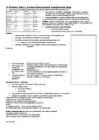
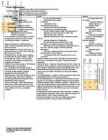
what are `territorial politics' The multi-level politics of federal, regionalised, devolved states Distribution of power between central and regional government Party competition across levels of government `Regions' as spheres for autonomous action South Africa Mexico Germany · 9 provinces · 31 states plus federal district · Developed democracy · `Cooperative' federalism · Predominant role for federal 16 Laender German influence, ANC government · Cooperative federalism preference
1. UN as a world organization The United Nations officially came into existence on 24 October 1945, when the UN Charter had been ratified by a majority of the original 51 Member States. The day is now celebrated each year around the world as United Nations Day. The purpose of the United Nations is to bring all nations of the world together to work for peace and development, based on the principles of justice, human dignity and the well-being of all people. It affords the opportunity for countries to balance global interdependence and national interests when addressing international problems. There are currently 192 Members of the United Nations. The Aims of the United Nations: -To keep peace throughout the world. -To develop friendly relations between nations. -To work together to help people live better lives, to eliminate poverty, disease and illiteracy in the world, to stop environmental destruction and to encourage respect for each other's rights and freedoms. -To be a centre fo
Established church The Church of England is the established church, which means that: 1.)the Monarch is the Supreme Governor of the church, 2.)the Church performs a number of official functions, 3.)Church and State are linked. To disestablish Disestablishmentarianism refers to campaigns to sever links between church and state, particularly in relation to the Church of England as an established church. It was initially a movement in the United Kingdom in the 18th century. The established churches in Wales and Ireland could not count on even nominal adherence by a majority of the population of those countries. In Ireland, the predominantly Roman Catholic population campaigned against the position of the established Anglican Church of Ireland - eventually disestablished in Ireland from 1 January 1871. A broad church The Church of England is a broad church, representing a wide spectrum of theological thought and practice The Church of England is a broad church, represent
RUNNING HEAD: RUSSIA Russia Throughout the History U.S Government Table of Contents 1. Introduction 2. History of Russia 3. Russia nowadays 4. Important people in Russia throughout the history 5. Conclusion 6. References Introduction- Russia Throughout the History Russia is a one of the biggest countries is the world. The first clues about Russian history are from as early as the 9th century. Russia has suffered through rough times in war, mad leaders and tough life amongst the locals. Over times the country has had several different names and political systems. They have been an empire ruled by a czar, a communist nation, and a democratic federation. Nowadays the country's official name is the Russian Federation ("Basic facts about,"). The head of the executive branch in Russia is the president who works with the prime
1. The Queen’s official title. Elizabeth the Second, by the Grace of God, of the United Kingdom of Great Britain and Northern Ireland and of Her other Realms and Territories Queen, Head of the Commonwealth, Defender of the Faith. 2. The Queen’s working day. Starts after breakfast. Reads the newspapers which are prepared by the Press Secretary, and a report on the previous day’s proceedings in the Parliament and the letters she receives. Also phone calls. Once a month she attends the Privy Council in order to give Royal Assent to various items of government legislation. Discusses domestic matters with the Master of the Household. Towards the end of the day, there is always another pile of official papers and reports waiting to be read or acted upon. The business on constitutional monarchy never ends. 3. Who is the present heir to the throne? Speak about his education. Who are the 2nd and 3rd in line? Pre
Report of SCOTLAND Maiki Joakit 10. klass 2008 Etymology Scotland is from the Latin Scoti, the term applied to Gaels. The Late Latin word Scotia (land of the Gaels) was initially used to refer to Ireland. By the 11th century at the latest, Scotia was being used to refer to (Gaelic-speaking) Scotland north of the river Forth, alongside Albania or Albany, both derived from the Gaelic Alba. The use of the words Scots and Scotland to encompass all of what is now Scotland became common in the Late Middle Ages. History Repeated glaciations, which covered the entire land-mass of modern Scotland, have destroyed any traces of human habitation that may have existed before the Mesolithic period. It is believed that the first post-glacial groups of hunter-gatherers arrived in Scotland around 12,800 years ago, as the ice sheet retreated after the last glaciation. Groups of settlers began building the first known permanent houses on Scottish soil around 9,500 years ago,
TOPICS For the PRELIM Year 1 Put down 10-12 relevant terms and retell about: 1. Prescriptive and descriptive law Prescriptive law – prescribe how people ought to behave Descriptive law – describes the way people or natural phenomena behave Break the law – do something illegal Penalty – punishment Government – system by which a state or community is controlled Law – the system of rules System of courts – all judicial institutions Enforce – to make people obey the law Authority – a group of people with official responsibility for a particular area of activity /the moral or legal right or ability to control Prescribe – to tell someone what they must have or do, or to make a rule of something Impose The word law can have several meanings, it can be divided into prescriptive and descriptive law. Descriptive law – describes the way people or natural phenomena behave, e. g. law of gravity Prescriptive law – prescribe how people ought to behave e.g. spee
Establishing the European Communities'. It is this that is generally contracted to `EC Treaty' ; The Treaties of Rome are two of the treaties of the European Union signed on March 25, 1957. Both treaties were signed by The Six: Belgium, France, Italy, Luxembourg, the Netherlands and West Germany. Community law - Law of the member states of the European Union, as adopted by the Council of Ministers. THE FEDERAL REPUBLIC OF GERMANY SAKSAMAA LIITVABARIIK 1. Name and nr of the case - 120/78; Cassis de Dijon case (1979) 2. The parties - ReweZentral AG (HAVING ITS REGISTERED OFFICE IN COLOGNE) v Bundesmonopolverwaltung für Branntwein ( FEDERAL MONOPOLY ADMINISTRATION FOR SPIRITS ). 3. Relevant problems and events (no details!) An importer was prohibited by the German authorities from importing Cassis de Dijon, a French liqueur, into Germany, on the grounds that its alchoholic strength was too low.
 annaabi.ee








Kõik kommentaarid