 50 punkti
Autor soovib selle materjali allalaadimise eest saada 50 punkti.
50 punkti
Autor soovib selle materjali allalaadimise eest saada 50 punkti.
 ~ 2 lehte
Lehekülgede arv dokumendis
~ 2 lehte
Lehekülgede arv dokumendis
 2010-10-22
Kuupäev, millal dokument üles laeti
2010-10-22
Kuupäev, millal dokument üles laeti
 21 laadimist
Kokku alla laetud
21 laadimist
Kokku alla laetud
 0 arvamust
Teiste kasutajate poolt lisatud kommentaarid
0 arvamust
Teiste kasutajate poolt lisatud kommentaarid
 madlaa
Õppematerjali autor
madlaa
Õppematerjali autor
TRADERUN MOODUL TRADERUN MODULE BUSINESS PECULIARITIES IN THE EU, RUSSIA AND EASTERN PARTNERSHIP COUNTRIES ÄRI ERIPÄRAD EUROOPA LIIDUS, VENEMAAL JA IDAPARTNERLUSRIIKIDES Lecturers: Ryhor Nizhnikau (responsible) Giorgi Gaganidze, Sergei Proskura, Andres Assor P2EC.00.202 (UT code), RIE 7044 (TLU code) Reading materials: Business peculiarities in Russia Lugemismatejal: Äri eripärad Venemaal Created by Sergei Proskura Tartu 2013 TABLE OF CONTENTS INTRODUCTION ....................................................................................................................................... 3 1. LEGALIZATION OF A COMPANY WITH A FOREIGN OWNER IN RUSSIA ....................................... 4 1.1. Laws ...............................................
Investor's Handbook A Legal Guide to Business in Georgia · Start Up · Privatization · Labor Legislation February 2011 1st Edition 1 CYAN MAGENTA YELLOW BLACK 1 This brochure is a publication by the Georgian National Investment Agency (GNIA) and was prepared by Georgian law firm Mgaloblishvili, Kipiani, Dzidziguri (MKD). The Brochure is intended to be a general guidance on start up, privatization and labor relations. It is thus not expected to be a substitute for detailed research or exercise of professional judgment on above mentioned topics. Companies and individuals operating in Georgia or planning to operate, are strongly advised to obtain current and detailed information from experienced professionals. None of the organizations mentioned above, nor their members, employees or agents accept liability for the consequences
Hungary, Slovakia and Poland in the west, and Belarus in the north. The country is rich in mineral resources: iron ore, coal, manganese, natural gas (shale costly and dangerous to extract), oil, sulfur, graphite, titanium, magnesium, kaolin, nickel, mercury, timber and others. It's commonly known that Ukraine is politically divided between its Western and Eastern regions. Ukraine's geography and history have played an important role in the country's current political crisis. Western parts of the country at times belonged to Poland, Austro- Hungary, and Czechoslovakia, while eastern and southern parts belonged to Russian Empire. Only after World War II did Ukraine attain its present borders as a republic within the Soviet Union. That history partly explains Ukraine's voting patterns, political sympathies, and outlook on the future. Population of Western Ukraine largely supports politics paying EU card (Yusteshenko,
Maastricht treaty: promotion of high level of employment and social protection was officially introduced as one of tasks conferred to the European Community. Amsterdam treaty: encourages cooperation between Member states in order to combat social exclusion. European Council – Lisbon: aimed to make the EU the most competitive economy in the world and achieving full employment by 2010. Treaty of Nice: adopted European social policy agenda up to 2005, converting the political commitments made at Lisbon into concrete action. Treaty of Lisbon: emphasizes EU’s social objectives, among which full employment (social employment policy), solidarity between generations and protection of the rights of the child are mentioned + Charter of Fundamental rights as having the same binding force as the treaties: recognizes the so-called “solidarity rights” such as
goals of the United States, Israel and Iraq. -Syria and Iran are the two parties most responsible for spoiling U.S.- backed peace efforts between the Arabs and Israel in order to promote their own Arab and Islamic interests. For the United States, they were also the most troublesome countries during the U.S. intervention in Iraq because they aided, abetted or armed insurgents. -The two regimes share common traits. They are both authoritarian and defiantly independent, even at a political or economic cost. Iran is predominantly Shiite. Although Syria is predominantly Sunni Muslim, its ruling family is Alawite, a Shiite sect. -At the same time, they are odd political bedfellows. Syria’s Baa’thist ideology is strictly secular and socialist. Iran’s ideology is rigidly religious and, in principle, opposed to atheist communism and its offshoots. Yet their common strategic goals have held the alliance together for three decades, despite repeated attempts to rend them apart.
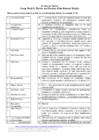
1 Monetary Union J Introduction of single currency between the participating 0 countries is a distinctive feature of ... 11 Non-discrimination K Portugal is relatively better at producing wine than wheat: so, Portugal is said to have a ... in the production of wine. 1 Political Union L Positive integration. 2 1 Regulatory M Ricardo. 3 Competition 1 Speak Report N Test of restrictions to fundamental freedoms which in the 4 first line examines whether a measure is liable to hinder of
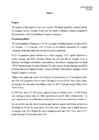
ERLE MAIDO TAAB11 Report Purpose The purpose of this report is to give an overview of Estonian population, political factors, technological factors, economic factors and the trends in Estonian economy compared to Germany and to briefly discuss Estonian business environment. Estonian population The total population of Estonia is 1 313 271 according to Statistics Estonia, of which 69.1% are Estonians, 25.1% Russians, 4.9% of which are of different nationalities for example Ukrainians, Belarusians and Finns. Rest are of unknown nationality. 68.5% of population speaks Estonian as a mother language, 29
European Union Research Compose: x X School 2009/10 What is European Union? The European Union (EU) is an economic and political partnership between 27 democratic European countries. EU population is almost a half milliard European union stands for caring and fair community. All EU members are devoted to peace, democracy, human rights respecting and working together to spread these values all the world. History The beginning of EU might consider the year 1951, when European Coal and Steel Community (ECSC) was constitute. Six countries joined with it for peace: Belgium, Netherlands, Luxembourg, Italy, France and Germany
 annaabi.ee








Kõik kommentaarid