 10 punkti
Autor soovib selle materjali allalaadimise eest saada 10 punkti.
10 punkti
Autor soovib selle materjali allalaadimise eest saada 10 punkti.
 ~ 3 lehte
Lehekülgede arv dokumendis
~ 3 lehte
Lehekülgede arv dokumendis
 2012-08-29
Kuupäev, millal dokument üles laeti
2012-08-29
Kuupäev, millal dokument üles laeti
 13 laadimist
Kokku alla laetud
13 laadimist
Kokku alla laetud
 0 arvamust
Teiste kasutajate poolt lisatud kommentaarid
0 arvamust
Teiste kasutajate poolt lisatud kommentaarid
 kaja94
Õppematerjali autor
kaja94
Õppematerjali autor
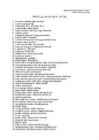
14. a thin layer- õhuke kiht 15. added to taste- maitse järgi lisatud 16. an ashtray- tuhatoos 17. approximately- ligikaudu 18. at right angles- täisnurga all 19. at the correct serving temperature- õigel serveerimistemperatuuril 20. at the top right-hand corner- üleval paremas nurgas 21. breakages are frequent- purunemised on sagedased 22. by means of a spirit lamp- piirituslambi abil 23. cloth on the palm- rätt peopesal 24. coarsely ground coffee- jämedalt jahvatatud kohv 25. coffee grounds infuse with the liquid- kohvipuru seguneb vedelikuga 26. coffee spoon resting in the saucer- teelusikas lebab alustaldrikul 27. coming into contact with coffee- kohviga kokku puutuma 28. correct accompaniments- õiged lisandid 29. cutlery- söögiriistad 30. even spacing- ühtlaste vahedega 31. fairly simple- küllaltki lihtne 32. finely ground coffee- peeneks jahvatatud kohv 33. freshly drawn water- kraanist äsja lastud vesi 34. garnish- garneering 35
ITALY NATIONAL KITCHEN J Sisukord ITALY KITCHEN...............................................................................................................................3 Antiquity.....................................................................................................................................4 Middle Ages................................................................................................................................4 Early modern era.........................................................................................................................5 Some of the regional cuisines .........................................................................................................6 Veneto..........................................................................................................................................6 Lombardy....................................................
Brazil's national drinks Caipirinha Caipirinha is Brazil's national cocktail, made with cachaça, sugar and lime. Cachaça is Brazil's most common distilled alcoholic beverage. While both rum and cachaça are made from sugarcane-derived products, most rum is made from molasses. Specifically with cachaça, the alcohol results from the fermentation of sugarcane juice that is afterwards distilled. The caipirinha is a national cocktail of Brazil, and is enjoyed in restaurants, bars, and many households throughout the country. Once almost unknown outside Brazil, the drink has become more popular and more widely available in recent years, in large part due to the rising availability of first-rate brands of cachaça outside Brazil. The International Bartenders Association has designated it as one of their Official Cocktails. Caipirinha's are easy to make. All you need is a little cachaca, a lime or tow and some cane sugar (plain sugar will be fine as well). Make this drink in a lowball glas
SISUKORD ENERGY STORY................................................................................................................4 USES OF ENERGY............................................................................................................. 4 2.1 Uses of energy in homes...............................................................................................5 2.2 Types of energy used in homes.................................................................................... 6 2.3 Energy use in different types of homes........................................................................ 6 2.4 Commercial Energy Use...............................................................................................9 2.5 Industrial and Manufacturing Energy Use..................................................................11 2.6 Transportation Energy Use.........................................................................................12 RENE
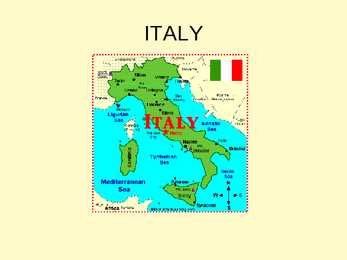
ITALY Pizza When we think of Italian cuisine, the first thought that comes to mind is Pizza. Yes, Italian Pizza is renowned the world over. 1 tsp yeast (fresh or dried) 6 tbsp lukewarm water ½ tsp sugar 1 tbsp olive oil 1 cup plain flour 1 tsp salt Mix together the yeast, water and sugar in a clean and dry bowl. If you are using dried yeast, sprinkle over the water and sugar solution and mix till dissolved. Leave this bowl in a warm place until a froth forms on the top. Then stir in the olive oil. In the meanwhile, sift together the flour and salt in a large bowl, mix these two dry ingredients well. Now, if your yeast mix is ready, make a well in the centre of the flour salt mix and pour the mixture in. Preferably with the hands, mix together and knead to make smooth dough. Remember to knead for at least five minutes, or until the dough is elastic and smooth to touch. Wrap this dough in a greased plastic sheet and leave in a warm place for at least an hour. T
1 Caffeine 2 3 Caffeine (C8H10N4O2) is the common name for trimethylxanthine (systematic name is 1,3,7- 4 trimethylxanthine or 3,7-dihydro-1,3,7-trimethyl-1H-purine-2,6-dione). The chemical is also 5 known as coffeine, theine, mateine, guaranine, or methyltheobromine. Caffeine is naturally 6 produced by several plants, including coffee beans, guarana, yerba maté, cacao beans, and tea. 7 For the plants, caffeine acts as a natural pesticide. It paralyzes and kills insects that attempt to 8 feed on the plants. The molecule was first isolated by the German chemist Friedrich Ferdinand 9 Runge in 1819. 10 When purified, caffeine is an intensely bitter white powder. It is added to colas and other soft 11 drinks to impart a pleasing bitter note. However, caffeine is also an addictive stimulant. In 12 humans, it stimulates the central nervous system, heart rate, and respiration, has psychotropic 13 (mood altering) p
Handbook of Meat Processing Handbook of Meat Processing Fidel Toldrá EDITOR A John Wiley & Sons, Inc., Publication Edition first published 2010 © 2010 Blackwell Publishing Blackwell Publishing was acquired by John Wiley & Sons in February 2007. Blackwell’s publishing program has been merged with Wiley’s global Scientific, Technical, and Medical business to form Wiley-Blackwell. Editorial Office 2121 State Avenue, Ames, Iowa 50014-8300, USA For details of our global editorial offices, for customer services, and for information about how to apply for permission to reuse the copyright material in this book, please see our website at www.wiley.com/ wiley-blackwell. Authorization to photocopy items for internal or personal use, or the internal or personal use of specific clients, is granted by Blackwell Publishing, provided that the base fee is paid directly to the Copyright Clearance Center, 222 Rosewood Drive, Danvers, MA 01923. F
HOMES Almost 63% of British people own their own homes. There are about 25 million homes in the UK, of which seven out of 10 are owner-occupied. Most live in terraced houses and tower blocks located mainly in town centres, semidetached houses in districts nearer to town centres, or detached houses which usually lie in expensive suburbs, closer to the countryside than the centre. Many people live in rented accommodation, including council flats and houses built and owned by the local government. Modern council housing estates may be a mixture of different buildings, providing a variety of facilities for their inhabitants, such as play areas for children, a community centre, etc. Since the 1980s, council tenants have been allowed to buy their own homes very cheap if they have lived in them for more than two years. Since the early 1990s, building new houses and flats has been very slow. But today the number of new homes b
 annaabi.ee






Kõik kommentaarid