HOUSE AND HOME tööleht (0)
HOMES
HOMES
Almost 63% of British people own their own homes. There are about 25 million homes in the UK, of
which seven out of 10 are owner-occupied. Most live in terraced houses and tower blocks located mainly in
town centres, semidetached houses in districts nearer to town centres, or detached houses which usually lie in
expensive suburbs, closer to the countryside than the centre.
Many people live in rented accommodation, including council flats and houses built and owned by the
local government. Modern council housing estates may be a mixture of different buildings, providing a variety
of facilities for their inhabitants, such as play areas for children, a community centre, etc. Since the 1980s,
council tenants have been allowed to buy their own homes very cheap if they have lived in them for more than
two years. Since the early 1990s, building new houses and flats has been very slow. But today the number of
new homes built soars to an 11 year high. Over 170,000 new homes were built in 2019. However, three million
new council homes must be built in England over 20 years to solve the "housing crisis". Finding cheap housing
for rent is a real problem for the poor and unemployed. Huge increase in house prices have placed additional
pressure on the renting sector as young people simply cannot afford to buy.
In any case, flats are generally not very popular with the British, especially compared to the rest of
Europe, though they are acceptable to many people in the centre of big cities. People prefer housing in the
suburbs, and a garden of any size is considered essential.
There is a growing tendency to move away from the hustle and noise of big cities, and large areas in the
countryside are now being swallowed up by ‘urban sprawl’. The saying ‘An Englishman’s home is his castle’ is
well-known and it illustrates the desire for privacy. A large detached house not only ensures privacy, it is also a
status symbol. When surrounded by garden, it gives the required feeling of rural life.
Many Londoners, if they can afford it, move to expensive riverside apartment blocks, which continue to
grow in popularity. Many of the former derelict warehouses in the Docklands have been converted into modern
flats. This is the growing trend; Newcastle, Manchester, Glasgow, Cardiff, Swansea – they all have dockland
flats.
In the countryside, visitors are always attracted by old farmhouses and thatched cottages. Thatching,
using straw, reeds or grasses, is an old tradition in roof-making and dates back to the Bronze Age. In ancient
times, a thatched roof was the best option because it was cheap and lightweight. It was at its most popular in the
late 18th century. Other materials were later introduced, but many house owners today recognize the value of
keeping their cottages thatched: they are traditional, picturesque and eco-friendly. Modern thatch is fire-proof
and wire netting is often used to protect it from birds and rodents.
Elderly people who have lost their spouse or never married prefer to live alone in their own homes as long as
they can cope. Families often live nearby and can help. There are also local services (cleaning, ‘meals-on-
wheels’, day centres with activities, etc.) and voluntary organisations, such as Age Concern or Help the Aged
who support them. When people become too frail, they usually move care homes.
Exercise 1. Find the corresponding English word from the text. Answer the questions in full sentences.
Omavalitsuse korter/maja
Council flat/house
Kaubaladu
warehouse
Elamurajoon
district
Õlg-(pilli)roogkatus
thatched
Segu
mixture
Väike maamaja, suvila
cottage
Võimalused
facilities
Pilliroog
reeds
Rahvamaja
Community centre
Tulekindel
Fire-proof
Üürnik
tenant
Näriline
rodents
Elamispind
housing
Abikaasa
spouse
Põhiline
essential
Toime tulema
To cope
Tõuklemine, kiirustamine
hustle
Eakas, vanur
an elderly person
Korrapäratult laiuv linnamaastik
Urban sprawl
Elujõuetu
Frail
Mahajäetud, peremeheta
derelict
Hooldekodu
Care home
1. In what kind of facilities do people live in towns/in suburbs/in the country?
People live in terraced houses or tower blocks in the town centres or semidetached houses near town
centres. In the suburbs, people usually live in detached houses and larger detached houses in the
countryside.
2. Are these facilities rented or owned?
Most of the facilities are owned, only three out of ten in Britain are renting.
3. Why is the construction sector under great building pressure?
The construction sector is under great building pressure because of the housing crisis. Huge increase in
the housing prices has made it nearly impossible for young or poor people to buy homes or even rent
them.
4. Why do people prefer a detached house in the country?
People prefer a detached house in the countryside to get away from the hustle and noise of the big cities.
It is also seen to be essential to have a garden, privacy and the feeling of rural life. A larger detached
house is also seen as a status symbol.
5. What is the growing trend in the present-day cities?
The growing trend in present-day cities is to live in expensive dockland flats that have been converted
into modern living spaces.
6. Since when have people thatched the roofs of their cottages? Why is it still popular?
People have thatched the roofs of their cottages since the Bronze Age and it continues to be popular
because it’s traditional, picturesque and eco-friendly.
7. What kinds of services are offered to elderly people who live on their own?
There are cleaning and meal services and day centres with different activities offered to elderly people,
besides, there are different voluntary organisations to help them.
8. Why don’t people want to move into nursing homes?
I think people don’t want to move into nursing homes and live on their own until they can cope because
it makes them feel independent and in control of their life. Many older people are also quite attached to
their houses as they have lived there their whole life or at least many years. I don’t know about the
situation in Britain but in Estonia, nursing homes are also quite expensive, so it can be difficult for
people to afford them.
For most British people having their own garden is a must. Smaller houses usually have both a front and
back garden with a neat lawn and flowerbeds. It is not unusual for an Englishman’s garden to cover only 3 or 4
sq m in front of the house. It is also possible to grow flowers and vegetables on an allotment – a piece of land
rented for a low price from the local council. Another alternative is flower-boxes, attached to the windows or
hanging flower-pots.
Britain has many homeless people (280,000 as of 2019) who have to or choose to sleep outdoors or in
temporary hostels. They also have their own magazine, the Big Issue, which talks about the problems of living
in the streets. The Big Issue magazine currently sells over 83,000 copies in the UK every week. Vendors buy
The Big Issue magazine for £1.25 and sell it for £2.50, meaning each seller is a micro-entrepreneur who is
working, not begging. Therefore it is vitally important that buyers take their copy of the magazine when they
pay for it.
The British people have little deep-rooted attachment to their house as an object, or to the land on which
it stands. It is the abstract idea of ‘home’, which is important, not the building. This will be sold when the time
and price is right and its occupiers will move into some other house which they will then turn into ‘home’ – a
home they will love just as much as they did the previous one. There is one exception to the rule that ‘homes’
are more important than ‘houses’. This is among aristocracy. Many of these families own fine old country
houses, often with a great deal of land attached, in which they have lived for hundreds of years. They have a
great emotional investment in their houses and are prepared to try very hard to stay in them. This can be very
difficult in modern times, partly because of death duties (very high taxes which the inheritor of a large property
has to pay). So, in order to stay in their houses, many aristocrats live lives, which are physically less
comfortable than those of most other people (they may not, for example, have central heating). Many have also
turned their houses and land into tourist attractions. These are popular not only with foreign tourists.
Another idea the British have is their idea of
domestic comfort. The important thing is to feel
cosy – that is, to create an atmosphere, which seems
warm, even if it isn’t really warm. It is much more
important than aesthetic side, which is why the
British also have a reputation for bad taste. Most
people would rather buy several items of cheap,
mass-produced furniture, with chairs and sofas
covered with synthetic material, than one more
beautiful and more physically comfortable item. So,
if you want to be cosy, you have to fill the room up.
It is very desirable also to have a real fire. It is the
perfect traditional symbol of warmth because it is
what most people used in the past to keep warm.
Many houses have an imitation of open fire,
complete with plastic coal, which glows red when
switched on. Bad taste? So what!
How do the British people use the various rooms in their houses? In a house with two floors, the rooms
upstairs are the ones used as bedrooms. The toilet (often separate) and bathroom are also usually upstairs. The
living room and kitchen are downstairs. The latter is usually small, but those who have more space, often afford
a ‘farmhouse kitchen’, big enough for the family to eat in. Class divisions are sometimes involved in the use for
rooms. With living rooms, for example, the terms ‘sitting room’ and ‘drawing room’ are considered as upper-
middle class, while ‘lounge’ is considered as lower class.
Exercise 2. Find the corresponding English word from the text. Answer the questions in full sentences.
(häda)vajalikkus
must
Sissejuurdunud
Deep-rooted
Korralik, puhas, hoolitsetud
neat
Kiindumus, meeldumus
attachment
Rendiaiamaa
Allotment
Siduma millegi külge
To attach
Ajutine võõrastemaja
Temporary hostel
Pärandimaks
Death duty
Probleem, teema
Issue
Üksikese
Item
Kaubitseja, müütaja
Vendor
Ühes, koos
Complete with
Pisiettevõtja
Micro-entrepreneur
Viimati mainitu
latter
1. How do the English express their desire for gardens?
The English’ desire for gardens is expressed through having both front and back gardens with neat lawn and
flowerbeds and if they happen to not have a garden, it’s not uncommon to have an allotment.
2. What is an allotment?
An allotment is a piece of land rented for a small amount of money from the local council.
3. Where do the homeless people find shelter?
The homeless people often find shelter just on the streets or in temporary hostels.
4. What is the Big Issue? Why is the magazine so important for the unemployed people?
The Big Issue is a magazine that focuses on the problems of living in the street. The magazine is very
important to unemployed people because it provides them with work - they buy it for 1.25£ and sell it for
2.5£.
5. Are people closely tied to the house they own? What exception is there?
People are generally more attached to the feeling of home than the literal house. There’s an exception of
aristocratic houses and families for whom the land they own is closely tied to their family tree and history,
so for them, the house and land are often very important to keep and they are willing to sacrifice some
luxuries to live in them.
6. After having inherited an aristocratic house, which problems do they face?
After inheriting an aristocratic house, people face the problems of death duties, high maintenance costs and
often not as comfortable life as in a modern house.
7. How do the British create the atmosphere of cosiness?
The British create an atmosphere of cosiness by trying to create warmness. This often means that they’d
prefer to buy a lot of cheap items to fill up the room instead of a few good quality ones. A real fire or an
imitation is also very desirable.
8. What does a typical British house consist of?
A typical British house consists of two floors. The rooms upstairs are used as bedrooms and the bathroom(s)
and toilet are also located on the second floor. On the first floor, there’s usually a kitchen and a living room.
9. What is the difference between a living room, sitting room and lounge?
The difference between the living room, sitting room and lounge is mostly a class difference – the sitting
room is considered upper-middle-class and means it’s separated from the dining room, lounge, on the other
hand, is considered to be lower class and informal. Living room means that the dining room and sitting
room are in one room.
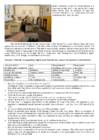
Exercise 3. Look at the room picture above. Using the sentence structure there is/there are make 10
sentences, e.g. There is a fireplace in the living room. Remember! You say there is if the next word is
singular and there are if the next word is in the plural:
There is a chair and two tables in the room. BUT: There are two tables and one chair in the room.
Before you start, translate the following prepositions:
Peal, peale
On top of
Kõrval next
All, alla
Under
Taga behind
Sees, sisse
Inside
Vahel between
Kohal
Above
Ees, akna ees in front of
Ääres
Besides
Ümber around
Vastu
Against
Keskel in the middle of
Vastas
across
Lähedal near
1. There are three chairs around the table.
2. There are five pictures on the walls.
3. There is a coffee table in the middle of the living room.
4. There are two armchairs in the living room.
5. There are two lamps next to the window.
6. There is a carpet under the coffee table.
7. There is a cupboard in the corner of the living room.
8. There is a sofa next to the window.
9. There is a plant between the armchairs.
10. There is a vase on top of the cupboard.
Exercise 4. Learn the following words by heart.
A HOUSE
block of flats
korterelamu
French windows/doors
klaasuksed, rõduuksed
high-rise building/flats
kõrghoone
door
uks
bungalow
ühekordne eramu
wall
sein
detached house
üksikelamu
floor
põrand, korrus
semi-detached house
kahepere elamu
ceiling
lagi
single/one-family house
ühepereelamu
toilet, loo, lavatory
vets
terraced / town house (AE)
ridaelamu
entrance hall/corridor
esik, koridor
villa
villa
balcony
rõdu
cottage
maamaja, suvila
patio
lahtine rõdu, terrass
penthouse
katuselamu/korter
attic
pööning
log house
palkmaja
cellar
kelder
skyscraper
pilvelõhkuja
roof
katus
hotel
hotell
tiled roof
kivikatus
hostel
ühiselamu
thatched roof
õlg/rookatus
central heating
keskküte
pitched roof
viilkatus
studio flat
kööktoaga korter
driveway
sissesõidutee
living/sitting room/lounge
elutuba
fence
aed, tara
bedroom
magamistuba
suburb
eeslinn
bathroom
vannituba
five-storey building
viiekorruseline ehitus
dining room
söögituba
on the outskirts
äärelinnas
fitted kitchen
sisseehitatud mööbliga köök
in the suburbs
eeslinnas, äärelinnas
window
aken
residential area
elamurajoon
double/triple glazing
kahe-/kolmekordsed aknad
security system
turvasüsteem
COLOURS AND ROOMS
Exercise 5. Read the text and circle the words that are mentioned in connection with each colour. Then
fill in the table with these words.
Red
Competitive, romantic, active, excited
Orange
Conservative, talkative, adventurous, enthusiastic
Yellow
Shy, reliable, cheerful, generous, impatient, creative
Blue
Calm, confident, stressed, relaxed, peaceful
Green
Soothing, peaceful, refreshed, depressed
White
Cheerful, isolated, withdrawn, cautious, nervous
Konkurentsivõimeline
Competitive
Loominguline
Creative
Romantiline
Romantic
Rahulik
Calm
Elevil, erutatud
Excited
Enesekindel
Confident
Jutukas
Talkative
Lõõgastunud
Relaxed
Seiklushimuline, julge
Adventurous
Rahulik, leplik
Peaceful
Arg
Shy
Värske, kosutatud
Refreshed
Usaldusväärne
Reliable
Rõhutud, vaevatud
Depressed
Rõõmus, ergas, lustakas
Cheerful
Eraklik, üksildane
Isolated
Suuremeelne, helde
Generous
Kinnine, tõrjuv
withdrawn
Kannatamatu
impatient
Rahustav
Soothing
What colour are the rooms in your house painted? Would it surprise you to learn that the colours around
you can affect how you feel? Well, it’s true; colour can drastically affect your mood. So it makes sense to
surround yourself with colours that you like and ones that will put you into a positive frame of mind.
Red, for example, is a strong colour, so too much of it in a room can be overwhelming. But, in some
small amounts, red is energising and can make us feel active and excited. Red is best used outside or in a room
where we spend a short amount of time each day.
Orange can make us feel enthusiastic and talkative. Extroverts usually prefer this colour because it
makes them adventurous. Orange stimulates our appetite, too, so it would be perfect for the kitchen or dining
room.
Yellow is an uplifting colour and can make us feel cheerful and happy. However, it is the colour that
should be used sparingly because too much can make us feel impatient.
Blue is the colour that is the most universally preferred, and blue room instil peacefulness so it is a good
choice for studies or doctors’ waiting room. Blue can also help us feel calm and confident, but it suppresses our
appetites so it’s only good choice for the kitchen if you are on a diet.
Green is often used in hospitals because of its soothing properties. It has the power to make us feel
relaxed and refreshed. Therefore, don’t paint your work area green because you won’t get much work done.
Green is a good choice for bedrooms.
White is often used in doctors’ offices because it gives us an impression of cleanliness. However, it does
nothing to relax us – we just feel cautious and nervous. It can also make us feel isolated and withdrawn.
Therefore, we should think carefully about our colour schemes when the time comes to redecorate
because different colours can affect how we feel in a number of ways. That said, though, we should rely on our
own taste and surround ourselves with the colours we like and feel comfortable with. Use your favourite
colours to create a colour scheme you know you can live with.
Exercise 6. Using the vocabulary on the previous page and the text above about the colour psychology,
answer the following questions:
o Will you describe your ideal/present home, please.
Frankly, I find my present home to be quite close to my ideal home. It’s a small one-bedroom apartment
with a little kitchen and a tiny garden. I love having my tiny garden, sitting there and drinking coffee in
the morning makes me feel ready for the day. The apartment is located straight in the old town, so it has
a nice historic feeling to it while still being quite modern. I think a big part of the reason why it feels
like a home to me, is that I renovated it by myself and so everything is how I like it to be. The entrance
hall has a lovely old chess floor and light purple walls, there’s also a big window facing the garden. I
truly love this window, not only because I can enjoy the view of my garden but also because it has a
window sill wide enough to be a sofa. The walls in the living room are the same light purple colour like
in the entrance hall and they are complemented by a classic wooden floor. Most of the furniture in the
apartment is in a classic mid-century style and a colour play between blue and classic wood, except for
the new and fresh white kitchen. Like the British, I’m most importantly seeking for warmness but for
me, it comes with things that have stories or emotions attached to them. For example, I have prints from
my favourite Estonian artists that were gifted to me by my friend’s grandparents, so seeing those on my
walls makes me always feel warm and appreciate the people in my life. Or poetry books and vases from
my grandma’s countryside cottage make me forget that I’m in the middle of a big city and thousands of
people, they are like a warm hug from the forest.
2.What is a must in your future ideal home?
In my ideal future home, I’d love to have a rooftop terrace or a patio with a lot of plants and flowers.
3.What colour would you paint different rooms in your home and why?
I would paint the kitchen light beige or completely white, either to make it a little bit warmer and
stimulate the appetite or to make it clean and fresh. The walls of the living room would be perfect in
light blue or purple so that it would feel calm and soothing but also motivating because usually, I spend
most of my time at home in the living room. I enjoy having a white bathroom and toilet, it feels clean
and minimalistic.
CHILD SAFETY AT HOME
We all know to keep children away from hot stoves, irons and sharp objects but there is a lot more
concerning child safety. For example, a million children in Britain every year require hospital treatment for
accidents that happen at home. And most of these accidents could have been prevented if parents had been
more careful. Falling, burns, drowning, choking and poisoning are the main causes of injuries at home and
small children are the most at risk. Parents can prevent children from falling down the stairs by fitting safety
gates at the top and bottom. They can use rubber mats to prevent children slipping on floors, especially in the
bathroom. However, children should never be left alone in the bath. A child may drown in only two inches of
water. In fact, the bathroom is one of the most dangerous rooms in the house. But the most dangerous room is
certainly the kitchen. This is where there are the most hidden dangers. Parents should never allow children to
play alone in the kitchen. Also, they should keep all appliance cords, knife blocks and hot foods out of reach
and put safety catches on all cupboards and drawers, especially where cleaning items and medicines are kept.
Exercise 7. Based on the text above, bring out 5 dangers that children can face at home and what should
parents do to prevent them. To get some additional ideas, you can also use the Internet, but never use
copy-paste!
o They might fall down the stairs, so parents should fit safety gates at the top and bottom.
o They might slip on floors, parents should use rubber mats to prevent it.
o They might drown in the bathtub, parents should never leave them alone there.
o They might accidentally drink or eat medicines or cleaning products, parents should put safety catches
on those cupboards and drawers.
o They could burn themselves with hot water, parents should never allow children to play alone in the
kitchen.
HOUSEHOLD CHORES
A man is the designated spider killer. And fly swatter. And roach squasher. In fact, if any insect makes
the unfortunate decision to wander into the house, it's a man’s responsibility to promptly terminate it. A
woman will stand in the kitchen inches away from a bug and still call her husband from across the
house to come deal with it. But, then again, she has the responsibility to shop for the insect repellent and
flyswatter.
A man takes out the trash. A woman does most of the cooking.
A man builds the crib, but a woman feeds the baby, bathes it and puts the baby down to sleep.
A man is busy in the garage and around the house, repairing the car and mowing the lawn, a woman is
busy in the house: washing the dishes, and windows, mopping the floors, vacuuming the carpets,
dusting the furniture, making the beds, doing the laundry, folding the laundry, scrubbing the toilet,
cleaning out the refrigerator, etc.
A man is sitting on a couch, switching channels with the remote control; a woman feeds the cat, gives
it a flea bath and cleans out the litter box.
In the beginning, when first dating, couples generally do everything together: shop, cook, clean, and walk
the dog. But shortly after saying their vows, or even before that, they fall into more familiar, even stereotypical,
roles. Part of this has to do with our role models: our parents, but another part has to do with practicality. We
naturally tend to do things we're good at. Splitting tasks helps to prevent the war in the family. You don't have
to do the same chores, but you should sweat equally
Exercise 8. According to the text finish the chart with household chores. Don’t use –ing forms!
Dust the furniture
Mööblilt tolmu pühkima
Plant and water the flowers
Lilli istutama ja kastma
Prune the bushes/hedge
Põõsaid/hekki pügama/kärpima
Clear the table
Lauda koristama
Take out the trash
Prügi välja viima
Do the cooking
Süüa tegema
Mow the lawn
Muru niitma
Wash the dishes
Nõusid pesema
Mop the floors
Põrandaid pesema
Make the beds
Voodit tegema
Do the laundry
Pesu pesema
Fold the laundry
Pesu kokku panema
Clean out the refrigerator
Külmkappi puhastama
Feed the cat
Kassi toitma
Give the cat a flea bath
Kassile kirbuvanni tegema
Clean out the litter box
Liivakasti puhastama
Exercise 8. Answer the following questions.
1. How are household chores split in your family, i.e. do you sweat equally?
I live alone, so I do all the chores by myself.
2. Which household chores do you consider men’s and which women’s responsibility? Use the following
sentence constructions: To my mind men’s chores include …; In my opinion …. are women’s
responsibility.
To my mind, men’s chores include taking out the trash, mowing the lawn, pruning the bushes and
hedge. In my opinion, doing the laundry, feeding the cat, doing the cooking and mopping the floors are
women’s responsibility.
3. Which household chores do you like/don’t mind/hate?
I like feeding my cat, planting and watering the flowers, doing the cooking and giving my cat bath. I
don’t mind washing the dishes, mopping the floors, taking out the trash, cleaning the table and making
the bed. I hate cleaning out the litter box, doing the laundry and cleaning out the refrigerator.
EXERCISE FOR THE PREPARATION OF THE SPEAKING TEST AT THE EXAMINATION
Describe, compare and contrast the following pictures.
Selles ülesandes tuleb teil kirjeldada, võrrelda ja kõrvutada/vastandada kahte pilti. Teil tuleb rääkida
nendest piltidest 2 minutit. Enne rääkima asumist on teil 1 minut ettevalmistuseks, kuid te ei tohi märkmeid.
Antud ülesanne koosneb neljast osast. Proovi jaotada aega nii, et jõuaksid käsitleda 2 minuti jooksul kõiki
osasid. Teil tuleb:
1) kirjeldada, keda või mida te piltidel näete
2) võrrelda kahte fotot (s.t. te peate ütlema, mis on nendel piltidel sarnast)
3) vastandada neid pilte (ütlema, mille poolest need pildid erinevad)
4) vastama piltide all olevale küsimusele.
Kirjeldamisel võid kasutada järgnevaid väljendeid:
These two photos/pictures are black-and-white/coloured photos.
The first photo/picture shows ... the other photo/picture shows...
In the photo/the picture on the left..... in the photo/the picture on the right.....
In the foreground/background you can see/there is...
In the middle/centre there is/are ...
At the top/At the bottom there is/are ...
On the left/right there is/are ...
Behind/In front of... you can see ...
Between... there is ...
Kui sa räägid inimeste tegemistest pildil, kasuta present progressive (kestev olevik) ajavormi:
The woman is watching TV, the man is listening to the radio.
Räägime sarnasustest:
The most striking/obvious similarity is that ......
Is similar to
The first picture is similar to the other.
Both
Both pictures are about being a parent.
Similarly
In the same way
Likewise
Räägime erinevustest:
The main/greatest/most important/most significant difference between the pictures is that......
In the first picture, ..... whereas/while/but in the second one .....
On one hand ..... on the other hand...(ühelt poolt, teiselt poolt)
Neither picture (mitte kumbki piltidest)
In contrast
Unlike
While
Vasta piltide all olevale küsimusele
I think …..
Ülesande teises pooles tuleb vastata küsimustele. Eksamil õpilane neid küsimusi ei näe.
NB! Viimane küsimus antud ülesandes eeldab vastamist kaudse küsimusega
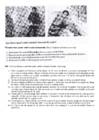
1) These two photos are black-and-white photos. In the photo on the left, a woman is vacuuming the floor
and a man is ironing clothes. There’s a basket with laundry under the ironing board. In the photo on the
right, there’s a woman and a child, presumably a mother and a son. The son is washing the dishes and
the mom is happily watching him.
2) The most obvious similarity is that in both of those photos people are doing household chores.
3) The most significant difference between these photos is that on the first one both of the people are doing
the chores, while on the second one only the son is washing dishes.
4.1. As a child, I truly enjoyed peeling the potatoes because we would do it together with my grandma and
she had a special spot where the sink was lower and I could reach the potatoes comfortably, so it made
me feel special and part of the team.
4.2. I think parents can encourage their children to be more involved in the housework by making it look
enjoyable. If the parents seem to not enjoy it themselves, the children will also pick up the same
attitude and feel like it’s a punishment.
4.3. I think probably robots will do most of the housework in the future because people are the most eager
to find solutions to the things they don’t enjoy doing and housework is most definitely one of them.
4.4. I’d like to ask the people in the pictures how have they managed to split the household chores so
peacefully.
Tööleht teemal house and home, sõnavara, teksti lugemine ja selle põhjal küsimustele vastamine
Sarnased õppematerjalid
![Housing]()
11
pptx
Housing
Housing
Aleksander Andrejev
AT112
�The Contents
Houses, not flats
Private property and public property
The importance of ,,home"
Individuality and conformity
Interiors: the importance of cosiness
Owning and renting
Homelessness
The future
�Houses, not flats
Detached house not only ensures privacy, it is also a status symbol.
Even a modest detached house, surrounded by garden, gives the
rerequired suggestion of rural life.
Most people would be happy to live in a cottage, and if this is a
thatched cottage so much the better.
Most people try to avoid living in blocks of flats.
Flats, they feel, provide the least amount of privacy.
The people who live in flats are those who cannot afford to live
anywhere else.
The dislike of living in flats is very strong despite of that they are
very comfortable.
![FAMILY tööleht]()
14
docx
FAMILY tööleht
Pärima, päranduseks saama inherit
Lahkunud, surnud deceased
Vara 2x Property, asset
Tõenäolisemalt More likely
X,Y AND Z GENERATIONS
Generation X, born between 1965 and 1980
Generation Y, born between 1981 and 2000
Generation Z, born since 2001.
There are enormous changes in family life comparing these three generations, from baby names to the cost
of a family home and the age at which a mother typically has her first child.
· A family home cost around £11,000 in 1974, compared to an average house price of around £260,000
today.
· For Generation X, two-thirds of youngsters had a mother who did not have a job and was at home full-
time. But Generation Z babies have had a fundamentally different childhood. Just a third of today’s
mothers said that they are full-time stay-at-home parents.
![Steve Krug-Dont Make Me Think 2014]()
215
docx
Steve Krug-Dont Make Me Think 2014
keyboard. And we were sitting down, often at a desk, when we did.
Now we use tiny computers that we carry around with us all the time,
with stilland video cameras, magical maps that know exactly where we
are, and our entire libraries of books and music built in. And are always
�connected to the Internet. Oh, and they’re phones, too.
Heck, I can use my “phone” to
…book a restaurant reservation in seconds
�…adjust the heat in my house from anywhere
� …or deposit a check without going to an ATM
It’s no flying car (which, come to think of it, we were promised we’d
have by now), but it’s pretty impressive.
TheWebitself kept improving.Even when I’m using my desktop
computer to do all the things I’ve always done on theWeb(buying stuff,
making travel plans, connecting with friends, reading the news, and
settling bar bets), the sites I use tend to be much more powerful and
useful than their predecessors.
![All Our Kin]()
95
pdf
All Our Kin
ZapadoCi',," Home Base 11
Z. Black Urban Poor ZZ
7715 /03 Stereotypes Versus Reality ZZ
![ENGLISH TOPICS - palju teemasid inglise keele riigieksami kordamiseks]()
17
pdf
ENGLISH TOPICS - palju teemasid inglise keele riigieksami kordamiseks
taste. What can compare with fresh pees or new potatoes just boiled and served with
butter? Why drown spring lamb in wine or cream and spices, when with just one or two
herbs it is absolutely delicious?
If you ask foreigners to name some typically English dishes, they will probably say
"Fish and chips" then stop. It is disappointing, but true that, there is no tradition in England
of eating in restaurants, because the food doesn't lend itself to such preparation. English
cooking is found at home. So it is difficult to a good English restaurant with a reasonable
prices.
In most cities in Britain you'll find Indian, Chinese, French and Italian restaurants. In
London you'll also find Indonesian, Mexican, Greek... Cynics will say that this is because
English have no "cuisine" themselves, but this is not quite the true.
Vocabulary:
to criticize -
tasteless
overcooked -
ingredient -
to invent -
sauces -
to disguise -
spice
herb -
delicious -
disappointing -
to lend
cuisine
![THE CAPITALIST NIGER]()
104
pdf
THE CAPITALIST NIGER
nobody else.
You want your children to have good grades in school? Then practice Capitalist Niggerism because then
you will not blame the teachers for failing your children or blame the nationwide testing services for
using non-black questions in their testing. You will be in control because you will totally understand that
everything that happens to your child at school is a result of the learning environment you have
provided him or her at home.
You want to succeed in creating wealth, join Wall Street. Don’t make excuses that Blacks don’t know
how to invest their money. Go after the Caucasians. Use their guilt to your advantage.
Another important point which I raised in this book concern the long study I have conducted regarding
the economic behaviour of East Indians and Pakistanis. It is an economic doctrine I have christened the
“Spider Web Doctrine,” because I believe we all understand how spiders behave
![A Modern Answer to the Commune]()
4
doc
A Modern Answer to the Commune
A Modern Answer to the Commune
By: Penelope Green
Johanna Bronk wants to make communal vegetarian meals and keep chickens. Mariel
Berger hopes for social, artistic and political collaborations. Harmony Hazard is into hula
hooping, book groups and anarchism.
Oh, to be a young city-dweller in search of a house share. Finding a roommate has never
been easy, but for some, the endeavor has lately assumed all the urgency, emotion and
extreme specificity of shopping for a life partner.
Last month, just in time for leases to turn over, the housing portion of Craigslist, the
uber-community bulletin board and road map to the 20-something's psyche, featured
dozens of impassioned tone poems, vivid personal biographies and ideological wish lists.
![Advantages and disadvantages of television]()
2
doc
Advantages and disadvantages of television
of the next day. It means that contemporary people for various reasons depend upon television. They watch
everything from news and sports reports to dramas, educational and entertainment programmes. Today some people
become TV addicts and feel - unhappy if they fail to find another way of passing leisure time. Free time is regulated
by television. TV occupies our free time. Instead of going to the theatre or reading books people watch TV. People
rush home, gulp food to be in time to watch their favourite programmes. Very often programmes are bad, as TV
cannot keep pace with demand. People have stopped reading books and depend on TV pictures. Spoken words
become more important that the written ones. TV cuts people from the real world. The virtual world becomes more
important. TV is absolutely irrelevant to real living. No surprise that television is often called "chewing gum for men's
brains
Meedia
Kommentaarid (0)
 50 punkti
Autor soovib selle materjali allalaadimise eest saada 50 punkti.
50 punkti
Autor soovib selle materjali allalaadimise eest saada 50 punkti.
 ~ 9 lehte
Lehekülgede arv dokumendis
~ 9 lehte
Lehekülgede arv dokumendis
 2021-11-13
Kuupäev, millal dokument üles laeti
2021-11-13
Kuupäev, millal dokument üles laeti
 2 laadimist
Kokku alla laetud
2 laadimist
Kokku alla laetud
 0 arvamust
Teiste kasutajate poolt lisatud kommentaarid
0 arvamust
Teiste kasutajate poolt lisatud kommentaarid
 katrinkais
Õppematerjali autor
katrinkais
Õppematerjali autor
 annaabi.ee












Kõik kommentaarid