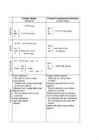
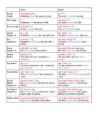
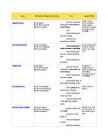
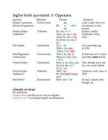
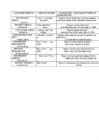
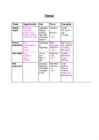
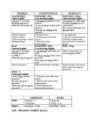
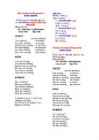
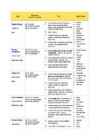
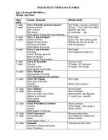
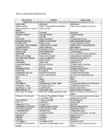
Inglise keeles Eesti keeles + -/? Usage Näited 1. Present Simple Lihtolevik I ajavorm Do, don't, does, doesn't A permanent state, a generally Every day, always, often, (He, she, it + -s) known fact, usual or repeated usually, sometimes, rarely, actions, timetables, sport never, on Monday, in the commentaries, other events morning. Facts. ...
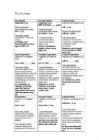
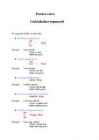
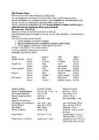
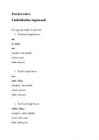
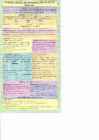
Ing Present Simple Present Progressive/Continuous (lihtolevik) (kestev olevik) I vorm (play) am JAATAV he is I vorm+ing (playing) she I vorm+s (plays) are it do not I vorm (don't play) am EITAV he is not I vorm+ing she does not I vorm are (not playing) it (doesn't play) Do I vorm (Do ... play ... ?) KÜSILAUSE ...
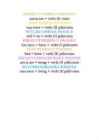
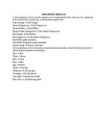
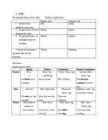
PRESENT SIMPLE PASSIVES am/is/are + verbi III vorm PAST SIMPLE PASSIVE was/were + verbi III põhivõrm FUTURE SIMPLE PASSICE will + be + verbi III põhivorm PRESENT PERFECT PASSIVE has/have + been + verbi II põhivorm PAST PERFECT PASSIVE had + been + verbi III põhivorm PRESENT PROGRESSIVE PASSIVE am/is/are + being + verbi III põhivorm PAST PROGRESSIVE PASSIVE was/were + being + verbi III põhivorm
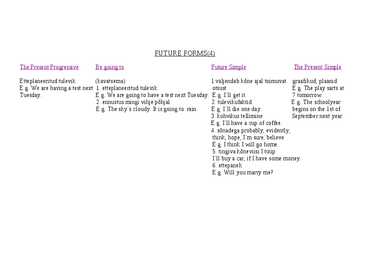
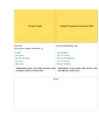
FUTURE FORMS(4) The Present Progressive Be going to Future Simple The Present Simple Etteplaneeritud tulevik (kavatsema) 1.väljendab kõne ajal toimuvat graafikud, plaanid E.g. We are having a test next 1. etteplaneeritud tulevik otsust E.g. The play sarts at Tuesday. E.g. We are going to have a test next Tuesday. E.g. I´ll get it. 7 tomorrow. 2. ennustus mingi vihje põhjal 2. tulevikufaktid E.g. The schoolyear E.g. The sky´s cloudy. It is going to rain. E.g. I´ll die one day. begins on the 1st of 3. kohvikus tel...
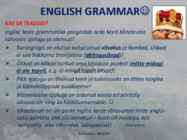
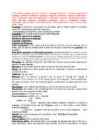
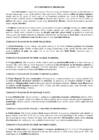
ENGLISH GRAMMAR KAS SA TEADSID? Inglise keele grammatika peegeldab seda keelt kõnelevate rahvaste ajalugu ja olemust! Kuningriigis on olulisel kohal olnud viisakus ja kombed. Ülikud ei saa hakkama teenijateta (abitegusõnad)! Ülikud on kõikjal tuntud oma kitsiduse poolest (mitte midagi ei ole topelt, e.g. ei mingit topelt eitust)! Pikk ajalugu on lihvinud keelt ja tulemuseks on lihtne loogika ja käändelõppude puudumine! Mitmekesine ajalugu on aidanud kaasa eri päritolu sõnavarale ning ka hääldusmuredele. Väidetavalt on üle poole inglise keele sõnavarast mitte anglo- saksi päritolu, ehk siis laenatud – kontrolli hoolega, kas ‘sympathy’ ikka tähendab ‘sümpaatiat! kaastunne Aari Juhanson, MA 2009 Tenses – Tegusõna ajad • Olevik (Present) • Minevik (Past) • Tulevik (Future) • Kaudne tulevik (Future-in-the-Past) ...
English tenses – worksheet / test http://first-english.org Name: …......................................... class: …............... date: …......................... Put the verb into the right tenses: Solution sheet simple present + : We talk to our parents. simple present - (negative): We don't talk to our parents. simple present ? (question): Do we talk to our parents? present perfect + : We have talked to our parents. present perfect - (negative): We haven't talked to our parents. present perfect ? (question): Have we talked to our parents? simple past + : We talked to our parents. simple past - (negative) : We didn't talk to our paren...
Aktiiv Passiiv Present Tegusõna algvorm be + 3.v Simple Somebody cleans this room every day. This room is cleaned every day. Past Simple 2.v was/were + 3.v Somebody built this house in 1895. This house was built in 1895. Future Simple will/shall + 1.v will/shall + be + 3.v People will forget this soon. This will be forgotten soon. Present be + -ing be + being + 3.v Progressive Somebody is cleaning the room right now. The room is being cleaned right now. Past was/were + -ing was/were + being + 3.v Progressive Somebody was cleaning the room when I The room was being cleaned when I ...
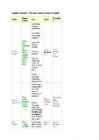
TENSES (Table) Past Simple Present Simple Future Simple Tegusõna 2. pv Tegusõna 1. pv Tegusõna on esitatud kujul [NB! He/She/It _____(e)s] Küsimuse/eituse will + 1. pv moodustamiseks kasut. Küsimuse/eituse did + 1. pv moodustamiseks kasut. Eituste moodustamisel do / does + 1. pv will not = won't Tunnused lauses: Lihtminevik. Keegi tegi Tunnused lauses: Tunnused lauses: midagi. Jutt käib tavalisest, Lihttulevik. Ennustused. yesterday, last harjumuspärasest Lubadused. Hetkeotsused (summer), (five years) tegevusest. (rääkimise hetkel ago, in 1987, etc. always, sometimes, sündivad). usually, often, e...
REPORTED SPEECH 2. Kui saatelause verb on oleviku aegades, siis ei muutu kaudse kõne verbi aeg. Kui saatelause verb on minevikus, toimub väit- ja küsilausetes aegade nihe: Prsent Simple Past Simple Present Progressive Past Progressive Present Perfect Past Perfect Present Perfect Progressive Past Perfect Progressive Past Simple Past Perfect Past Progressive Past Perfect Progressive Past Perfect jääb muutmata Past Perfect Progressive jääb muutmata Future Simple Future in the Past 3. Kui saatelause verb on minevikus, asendatakse kaudses kõnes mõned lähedust väljendavad sõnad kaugust väljendavate sõnadega: This that These those Here there Now then Ago before Today that day Tomorrow the next day Yesterday the day before Last night the previous night Next week the following week Aegade nihet ei toimu kui 1. Lause väljendab üldtuntud tõde He said, ´The sun is...
Simple Present Present Progressive/Continious (99%) infinitive form of 'be' and verb + ing (3rd person singular: infinitive + 's') I speak I am speaking you speak you are speaking he / she / it speaks he / she / it is speaking we speak we are speaking they speak they are speaking Signal words: always, every, often, normally, usually, Signal words: at the moment, at this moment, today, sometimes, seldom, never, first, then now, right now, Listen!, Look! Rules · in general (regularly, often, never) · right now e...
tense Affirmative/Negative/Question Use Signal Words always, every ..., action in the present Simple Present A: He speaks. never, normally, N: He does not speak. taking place once, never or often, seldom, Q: Does he speak? several times sometimes, usually if sentences type I facts (If I talk, ...) ...
englisch-hilfen.de LEARNING ENGLISH ONLINE Examples Examples Examples Tense Signal words Use Form affirmative negative interrogative every day something happens repeatedly sometimes how often something happens always I work. I don't work. Do I work? one action follows another often Infinitive He works. He doesn't work. Does he work? Sim...
English Grammar - The most common tenses in English Signal Example Tense Use Form words s something happens repeatedly how often something happens every one action day follows sometim another es I work always infinitive Present things in he/she/it he works often Simple general + s I go usually he goes seldom ...
Inglise keele ajavormid: 5. Õppeaasta Ajavorm Tähendus Vormid Abisõnad Present Continuous Kestev olevik am Look! Listen! Now! At (Present Progressive) BE is +ING the moment. At the are present. Present Simple Üldolevik He, she, it + S Always, usually (Indefinite) They, we, you, I (s) Sometimes, every ?does (he, she, it) (s) often Do (they, we, you, I) (s) Past Simple Lihtminevik II pv/ -ed Last, yesterday, ago ?Did + I pv (ed) In 1950 -Didn´t +I pv (ed) P...
AJAVORMI NIMETUS MOODUSTAMINE KASUTAMINE ; SAGEDAMINI ESINEVAD AJAMÄÄRUSED THE PRESENT I pv ( +s ); do/does Tegevus toimub korduvalt, on harjumuspärane. ev SMPLE live, goes every day, usually, often, somtimes, always,never Lihtolevik THE PAST SIMPLE II pv; did ,lived, Tegevus toimus minevikus. Lihtminevik went yesterday, last week, two years ago, in 1998 THE FUTURE SMPLE ( shall ) / will +I pv. Tegevus toimub tulevikus. Lihttulevik will go tomorrow, next week, soon, later, In 2050 THE FUTURE IN THE ( should ) / would +I Kaudses kõnes tuleviku asemel, kui pealause on PAST pv minevikus. Kaudne tulevik ...
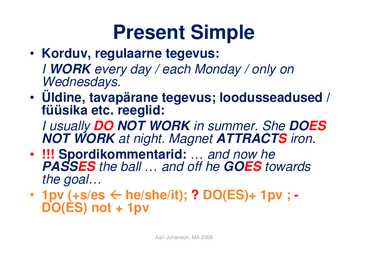
Present Simple · Korduv, regulaarne tegevus: I WORK every day / each Monday / only on Wednesdays. · Üldine, tavapärane tegevus; loodusseadused / füüsika etc. reeglid: I usually DO NOT WORK in summer. She DOES NOT WORK at night. Magnet ATTRACTS iron. · !!! Spordikommentarid: ... and now he PASSES the ball ... and off he GOES towards the goal... · 1pv (+s/es Å he/she/it); ? DO(ES)+ 1pv ; - DO(ES) not + 1pv Aari Juhanson, MA 2008 Present Progressive · Hetkel toimuv, pooleliolev tegevus: S/he IS TALKing on the phone now. I AM READing an interesting book. · Ajutine, regulaarsele ja tavapärasele vastanduv tegevus (tulevikku viitav): This summer they ARE not GROWing cucumbers as usual. They'RE GROWing tomatoes instead. · !!! Halvakspanu väljendus harjumuspärase tegevuse kohta: He IS always COMPLAINing! · BE (am/is/are) + 1pv-ing Aari Juhanson, MA 2008 ...
Tense Tense Signal words Use Form Examples Present Every day, Sometimes, Infinitive, I work simple sometimes, happens The workes always, often, repeatly, He/she/it I go usually, seldom, how often + -s She goes never, first...then. something (1.pv.) happens. Present Now Something To be Iam working progressive At the moment is (am/is/are) He's working Look! happening infinitive + I'm going Listen! (- ing) He's going Past simple Last Action Impulsive + I worked Yesterday took ...
Passive voice Umbisikuline tegumood Kui tegija pole oluline või pole teada. The Present Simple Passive am is + III pv are Examples: I am watched. A book is read. Marks are given. The Past Simple Passive was were + III pv Examples: I was watched. A book was read. Marks were given. The Future Simple Passive will be + III pv Examples: I will be watched. A book will be read. Marks will be given. The Future Simple Passive in the Past would be + III pv Examples: I would be watched. A book would be read. Marks would be given. ...
Reported Speech (in other words Indirect Speech) If we report what another person has said, we usually do not use the speaker's exact words (direct speech), but reported (indirect) speech. Therefore, you need to learn how to transform direct speech into reported speech. We use reported speech when we are saying what other people say, think or believe. - Example: If this verb is in the present tense (says), it's easy. We just put 'she says' and then the sentence. When we are reporting things in the present, future or present perfect we don't change the tense. : direct speech: "I like ice cream" reported speech: She says she likes ice cream - But, if the reporting verb is in the past tense (said), then usually we change the tenses in the reported speech: direct speech: "I like ice cream" reported speech: She said she liked ice cream. ......... · When there are Changing tenses: present changes to past:::: am/is --- was are -...
INGLISE KEELE PÕHITÕED C.K 2017 A – AN – SOME Singular: a or an Use some for things you can't count ◦ *a banana *a car *a monkey *a football ◦ *some milk *some water *some coffee ◦ *an egg*an accident *an umbrella *an *some sugar eagle ◦ *some tea *some juice*some money *some butter Plural: some Exercises: 1. http://www.english-4u.de/a_an_some_ex1.htm ◦ *some bananas *some cats *some monkeys *some 2. http://www.english-4u.de/a_an_some_ex3.htm balls ◦ *some eggs*some oranges *some umbrellas *some 3. http://www.english-4u.de/a_an_some_ex6.htm eagles We us the ...
SIMPLE CONTINUOUS PERFECT I (-s) DO/DOES AM/IS/ARE + ING HAVE/HAS + III pv. I learn English I am learning English I have learned English. I get up at 7 every day. I'm reading a good book at the I've learned 10 words today. He doesn't get up at 7. moment. He hasn't learned any new What time do you get up? He isn't reading anything at the words today. moment. How many words have you What are you reading at the learned today? moment? 1 Korduv tegevus. 1 Praegu toimuv. 1 Äsja lõppenud 2 Püsiv olukord. 2 Praeguse perioodi vältel 2 Täna/sel nädalal toimunud 3 Tulevikus toimuv, seotud toimuv. ...
The Passive Voice Passive voice is used, when the focus is on the action. It is not important or not known, hovewer, who or what is performing the action. Passiivi kasutatakse siis, kui tegevust teostav isik on teadmata või tema mainimine ei ole oluline, või siis, kui tähelepanu on pööratud sellele, mida tehakse. Passiivi ajavormid moodustatakse abiverbi be pöördelistest vormidest vastavas ajas ja põhiverbi mineviku kesksõnast (III pv-past participle). BE vastav aeg+ Verbi III pv Tegevuse sooritaja näitamiseks kasutatakse eessõna by. Kui aktiivlause aluseks on asesõna (I, you, he, we, you, they, somebody...), siis jäetakse by- fraas ära. Aktiivlause muutmine passiivlauseks: 1. Leiame sihitise ja muudame ta aluseks. 2. Määrame öeldise ajavormi ja asendame ta passiivi vastava ajaga 3. Leiame aluse ja muudame ta eessõna by abil sihitiseks. Example: Jane baked a cake.-active sentence A cake was baked by Jane.-passive senten...
7. Verb: The principal forms of the verbs: Verbil on 4 põhivormi: Regular verb Irregular verb 1. the base form Talk Speak üldoleviku tüvivorm 2. the past form/ -ed form Talked Spoke üldmineviku vorm 3. the past participle (-ed Talked Spoken participle) mineviku kesksõna 4. the present participle (- Talking Speaking ing participle) oleviku kesksõna The tenses: Expressing the future: Simple Perfect Continuous Perfect Continuous Present Base Have / has + to be + base+ ing has/ have been +s + pariticiple base+ -ing He drinks tea at ...
1. Be ready to explain the terms (lecture 1): language, linguistics, synchronic approach to language, diachronic approach to language, linguistic competence, linguistic performance, what is grammar?, prescriptive grammar vs. descriptive grammar; phonology, phonetics, phone, allophone, phoneme; morphology, morphemes (types of morphemes), morphs, allomorphs, types of affixes, derivational affixes, inflectional affixes; open vs closed class words; syntax. Language: a systematic, conventional use of sounds, signs or written symbols in a human society for communication and self-expression. - human language at all levels is rule- or principle-governed. Linguistics: the scientific study of human natural language Synchronic approach to language: Diachronic approach to language: Linguistic competence: Linguistic performance: What is grammar?: "The sounds and sound patterns, the basic units of meaning, such as words, and the rules to combine them...
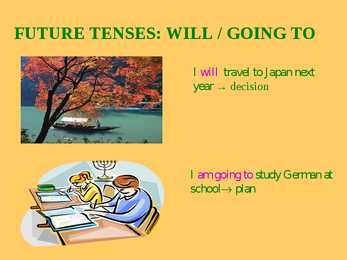
FUTURE TENSES: WILL / GOING TO I will travel to Japan next year decision I am going to study German at school plan WILL/GOING TO The Simple Future has two different forms in English: "will" and "be going to." Although the two forms can sometimes be used interchangeably, they often express two very different meanings as mentioned before. I will probably go to Italy next Summer I am going to fly to Italy next Saturday Future Tense: Will Form Affirmative: I will travel to Madrid in October Interrogative : Will you travel by bus? Negative : I will not travel - won't Will you travel by train or by bus? I won't travel by bus I will probably travel by train Future Tense: Uses of ...
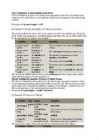
PRESENT SIMPLE (lihtolevik) Form: 1st form (+s) Use: 1. Things in general. Nurses look after patients in hospitals. 2. Things that happen all the time or repeatedly. She usually goes away at weekends. 3. Laws of nature (things that are true in general). The sun rises in the east. 4. Timetable events. The train leaves at 6.50 p.m. Negative form: I don't (do not) normally eat my lunch here. He doesn't (does not) like this film at all. Question form: Do you live here? How often does it rain around here? Signal words: always, every day/month, never, normally, often, seldom, sometimes, usually etc. PRESENT CONTINUOUS/PROGRESSIVE (kestev olevik) Form: am/is/are + ing Use: 1. Unfinished actions happening at or around the time of speaking. Listen! Somebody is crying. They are building a new bridge in our town....
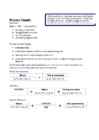
Ing Present Simple Present Progressive/Continuous (lihtolevik) (kestev olevik) I vorm (play) am JAATAV he is I vorm+ing (playing) she I vorm+s (plays) are it do not I vorm (don't play) am EITAV he is not I vorm+ing she does not I vorm are (not playing) it (doesn't play) Do I vorm (Do ... play ... ?) KÜSILAUSE ...
Ing Present Simple Present Progressive/Continuous (lihtolevik) (kestev olevik) I vorm (play) am JAATAV he is I vorm+ing (playing) she I vorm+s (plays) are it do not I vorm (don't play) am EITAV he is not I vorm+ing she does not I vorm are (not playing) it (doesn't play) Do I vorm (Do ... play ... ?) KÜSILAUSE ...
Past Continuous ( Progressive ) -ing vorm Kestev minevik PR talk talking play playing Kestev minevik väljendab tegevust, · Kui sõna lõpeb e- ga mis oli toimumas mingil kindlal ajal Come coming minevikus. Take taking Moodustamine : · Kui sõna lõpeb t- ga "be" minevikus + põhitehusõna / was; were / -ing vorm Sit sitting Put putting JAATAV · Kui sõna lõpeb ie- ga (ma olin töötamas) Lie lying I was working - ma töötasin Die dying You were working - sa töötasid She/he/it was working - ta/ see töötas We were working - me töötasime Present Continuous (Progressive) You were workin...
Passive voice Umbisikuline tegumood Kui tegija pole oluline või pole teada. · The Present Simple Passive am is + III pv are Examples: I am watched. A book is read. Marks are given. · The Past Simple Passive was were + III pv Examples: I was watched. A book was read. Marks were given. · The Future Simple Passive will be + III pv Examples: I will be watched. A book will be read. Marks will be given. · The Future Simple Passive in the Past would be + III pv Examples: I would be watched. A book would be read. Marks would be given. · The Present Progressive Passive am is + being + III pv are Examples: I am being watched. A book is being read. Marks are being given. · The Past Progressive Passive was were + being + III pv Examples: I was being watched. A book was being read. Marks were being given. · The Present Perfect Passive have has been +...
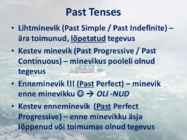
Past Tenses • Lihtminevik (Past Simple / Past Indefinite) – ära toimunud, lõpetatud tegevus • Kestev minevik (Past Progressive / Past Continuous) – minevikus pooleli olnud tegevus • Enneminevik !!! (Past Perfect) – minevik enne minevikku OLI -NUD • Kestev enneminevik (Past Perfect Progressive) – enne minevikku äsja lõppenud või toimumas olnud tegevus Created by Aari Juhanson, MA 2009 Past Simple • Ära toimunud (regulaarne) tegevus: I WORKED yesterday. S/he didn’t WORK last Monday. • Lõpetatud tegevus: I already CALLED them today. (I’m not going to call again!) Which countries did you VISIT? (You’re back …) BUT: Which countries have you VISITED so far? (You’re not back yet or you travel regularly …) • Jutustused, mineviku sündmuste kirjeldus: Once upon a time there LIVED a Garfield who HAD many friends. The first one WAS Odie, … • 2pv; ?/-...
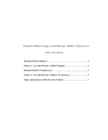
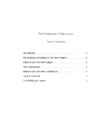
Present Perfect Simple and Present Perfect Continuous Table of Contents Present Perfect Simple.............................................................................2 When to use the Present Perfect Simple ...........................................2 Present Perfect Continuous ...................................................................3 When to use the Present Perfect Continuous..................................4 Time expressions with Present Perfect...............................................5 Present Perfect Simple The Present Perfect is the present tense of have + a past participle I have washed / I’ve washed you have written /you’ve written he/she/it has worked /he’s/she’s/it’s worked we have forgotten /we’ve forgotten they have gone /they’ve gone Negative I/y...
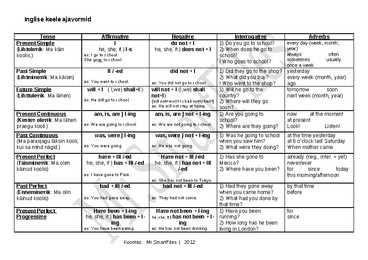
Inglise keele ajavormid Tense Affirmative Negative Interrogative Adverbs Present Simple I do not + I 1) Do you go to school? every day (week, month, (Lihtolevik: Ma käin he, she, it } I-s he, she, it } does not + I 2) When does he go to year) koolis.) ex: I go to school. school? always often She goes to school. ! Who goes to school? sometimes usually once a week Past Simple ...
Simple Continuous/Progressive Perfect Perfect Continuous Present Tegusõna algvorm be + -ing have/has + 3.v have/has been + -ing I work. He works. I am working. I have worked. I have been working. Past 2.v was/were + -ing had + 3.v had been + -ing I worked. I was working. I had worked. I had been working. Future will + 1.v will be + -ing will have + 3.v will have been + -ing I will work. I will be working. I will have worked. I will have been working. Future in the Past would + 1.v would be + -ing would have + 3.v ...
The Present Simple is the most basic tense in the English language. It is an interesting tense because it can be used Present Simple to express the future. Generally, though, we use it to Basic form describe the present activities or to talk about routines or Subject + Verb + -s (present form) John lives in New York. We play football every day. You are really kind. The meeting starts at 3 PM. Use the Present Simple: with state verbs. to talk about situations in life that last a relatively long time. when an event is certain to happen in the future. to talk about events that we can't change (for example, an official meeting or a train departure). The Present Simple is also used in narration...
We can report people's words by using direct speech or direct speech reported speech. speech `I'm tired!', Helen said. Helen said (that) she was tired. The main verb of the sentence is usually past ( Tom said that... / I told her that...) and the rest of the sentence is usually past too. Sequence of tenses if the verb in the main sentence is in the past tense the other verbs are usually in one of the past tense too. Present Simple Past Simple I'm a teacher. He said (that) he was a teacher Present Progressive Past Progressive I'm having lunch with my He said (that) he was having parents. lunch with his parents. Past Simple Past Perfect He said (that) he had bought a I bought a new car. new car. Future Simple ...
First Conditional: A real possibility in the future A First Conditional sentence is for future actions dependent on the result of another future action or event, where there is a reasonable possibility of the conditions for the action being satisfied. Formation: if + present simple, + will For example: If she gets good grades, she will go to university. We are talking about the future, but we use a present tense for the condition and will for the result. In this case, the person is sure about going to university. We can use other modal verbs in the result part of the sentence. For example: I Condition Result Possibility F she gets good she will go to If the condition is met, then she definitely If grades, university. will go he gets good he may go to If He is not sure about g...
Golden Grammar rules 1. Don't use an with own. Sue needs her own room. (NOT Sue needs an own room.) I'd like a phone line of my own. (NOT ... an own phone line.) 2. Use or rather to correct yourself. She's German or rather, Austrian. (NOT She's German or better, Austrian.) I'll see you on Friday or rather, Saturday. 3. Use the simple present play(s), rain(s) etc to talk about habits and repeated actions. I play tennis every Saturday. (NOT I am playing tennis every Saturday.) It usually rains a lot in November. 4. Use will ..., not the present, for offers and promises. I'll cook you supper this evening. (NOT I cook you supper this evening.) I promise I'll phone you tomorrow. (NOT I promise I phone you tomorrow.) 5. Don't drop prepositions with passive verbs. I don't like to be shouted at. (NOT I don't like to be shouted.) This needs to be thought about some more. (NOT This needs to be thought some more.) 6. Don'...
Affirmative tense Use Signal Words /Negative/Question · always · action in the present taking place Simple Present A: He speaks. · every ... once, never or several times N: He does not speak. tegevus, mis toimub ühe korra, mitte · never Lihtolevik Q: Does he speak? · normally kunagi või mitu korda · ...
The Integration of subjects The present-day school system revolves around traditional education, in which students learn each subject individually. This structure means that pupils don’t have the capability or know-how to connect math, biology or even art into their daily life. Even though the tutors of this conventional education have faith in the arrangement of subjects it is still entirely about high test scores, grades and graduation.The essence of progressive, alternative education like the integration of subjects is learning and the accumulation of valuable knowledge & skill. First of all, the courses that should be combined need to be challenging to the students. It would be wise to assimilate math, physics and chemistry because these classes are very similar. For instance, in order to complete a physics equation you need to know math, the same applies to chemistry. If...
Past Simple and Continuous Table of Contents Past Simple .......................................................................... 2 The spelling of endings in the Past Simple ............................ 3 When to use the Past Simple ................................................ 3 Past Continuous .................................................................. 4 When to use the Past Continuous......................................... 4 Used to & would................................................................... 5 Unfulfilled past events.......................................................... 5 Past Simple Regular Past Simple forms end in -ed. I worked he danced we apologized Some verbs have an irregular past form. I left he wrote The Past Simple is the same in all persons except in the past tense...
Book 1 BASIC ENGLISH BASIC ENGLISH GRAMMAR GRAMMAR BASIC ENGLISH GRAMMAR Book 1 Book 1 Younger students at beginning to intermediate levels will greatly benefit from this step-by-step approach to English grammar basics. This is the ideal supplement to your language arts program whether your students are native English speakers or beginning English language learners. Skill-specific lessons make it easy to locate and prescribe instant reinforc...
Discuss the representation of the generation of fathers in Turgenev's novel "Fathers and Sons" Turgenev always had two tasks before him to depict the body and pressure of time, and to depict the rapidly changing face of cultured Russian society (Freeborn 1960:48). Kluchevsky (1993:40) defined one case of the generation gap in the beginning of the XIX century as "merry cosmopolitan sentimentality of the fathers now transformed in a patriotic grief of their children. The Fathers were Russians, who passionately wanted to become French; the sons were raised as French and passionately wanted to become Russians. Fathers and Sons situates this generational conflict within family relations. In this essay, the ways how Turgenev represents the generation of Fathers in Fathers and Sons is discussed. Fathers and Sons is set in between Russia's defeat in the Crimean War and the Emancipation of the Serfs a socially challenging area. Mid-19 th c...
INGLISE KEELE TÖÖPLAAN 6. KLASSILE Aeg: I, II veerand 2003/2004 õ.-a Õpetaja: Age Tamm Õppe- Teemad. Alateemad. Mõisted, faktid nädal 1. nädal Unit 1. What did you do last summer? Past Simple questions, statements 2. nädal Summer activities Did you...? Yes, I did / No, I didn't Alan's summer play ball / the violin My summer go swimming / ...ing Polite English. Saying hello and introducing 3. nädal Unit 2. A trip to England Past Simple 4. nädal Outdoor activities by bus / car / train / plane, on foot English Country School Ordinals (the first, the second, ...) The Tower of London Posessive pronouns ...
Lihtlause (The simple sentence) Lauseliikmed on alus (t/ie subject),iildis (the predicale), sihitis lthe objecr) ja mddrus (.the adver- blal1. Lau.eliikmek. rdih olla iiLl.,siksona r0i terve:dnade riihm ehl< lraas. faraline sdnajiirg on: Alus Oeldis Sihitis MAarus Tbm played sot:f yesteral0!-. My elder brother will play tahle tennis next week Lausete liigid (Klrds ol sentence.s) Viiitlaused (Statements'l teata...
The case for socialism Four National faults Economic Inequality. The distribution of income and property is amazingly unequal. The most recent investigations suggest that 10 per cent of the population recieve over 45 per cent of the national money income, while 90 per cent recieve the remaining 55 per cent. The distribution of property is even more uniequal. 1 per cent of the population own 60 per cent of the saleable assets of the nations. Individual incomes range from £1 000 000 a year to £50 per year. This extreme degree of inequality is due to the right of inheritance at present vested in the legal institution of property. Large individual fortunes are, for the most part, made up of inherited property. The rich, as a class, are born with silver spoon in their mouths and the economic privileges that they enjoy were not acquired by the possession or exercise of great talents, but by the accident of birth. Social inequality. The appara...
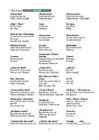
1. Basic Phrases ¡Buenos días! ¡Buenas tardes! ¡Buenas noches! bway-nohs dee-ahs bway-nahs tard-ays bway-nahs noh-chays Hello! / Good morning! Good afternoon! Good evening! / Good night! ¡Hola! / ¡Chao! Adiós. Por favor. oh-lah / chow ah-dee-ohs por fah-bor Hi! / Bye! Good bye. Please. Hasta la vista / Hasta luego. Hasta pronto. Hasta mañana. ah-stah lah vees-tah / ah-stah ah-stah prohn-toh ah-stah mahn-yahn-ah loo-ay-go See you soon. See you tomorrow. See you / See you later. (Muchas) Gracias. De nada. Bienvenidos (moo-chah...
Mikro ja makroökonoomika terminid Eesti keeles English На русском Majanduse alusmõisted. Fundamentals of Economics. Фундаментальные понятия ökonoomika economics экономика Ceteris paribus „Other –things-equal” assumption, «при прочих равных условиях» „Muude tingimuste samaks Ceteris paribus jäädes” põhimõtted Principles принципы Teaduslik meetod Scientific method Научный метод seos tradeoffs связь piiranalüüs Marginal analysis Предельный анализ kompositsiooniviga Fallacy of composition Композиционные ошибки Positiivne tõus Positive slope Положительный наклон Verikaalne ja horiso...
ACCESS ASSESSMENT COVER SHEET Student Name: Alex Callaghan EC1305063 Course: Access to Humanities Tutor: John Gordon Assessment Title: Critically evaluate Locke's theory of limited government Number of Words 1616 NOTE: The ESSAY should be 1500 words in length. Student signature - Alex Callaghan Date - 24/04/2014 Critically evaluate Locke's theory of limited government The end of law is not to abolish or restrain, but to preserve and enlarge freedom. For in all the states of created beings, capable of laws, where there is no law there is no freedom. John Locke Although John Locke is not the progenitor of social contract theory and is not by any means the last philosopher to wrestle with this concept, his views on fiduciary power, majority consent and limited government have been instrumental in western political thought from the time of the publication of his Two treatises of government to the present day. Locke...
ENVIRONMENTAL PROBLEMS Our environment is constantly changing. However, as our environment changes, so does the need to become increasingly aware of the problems that surround it. With a massive influx of natural disasters people need to be aware of what types of environmental problems our planet is facing. Current environmental problems make us vulnerable to disasters and tragedies, now and in the future. Unless we address the various issues seriously we are surely doomed for disaster. Current environmental problems require urgent attention. 1. Pollution: Pollution of air, water and soil require millions of years to recoup. Industry and motor vehicle exhaust are the number one pollutants. Heavy metals, nitrates and plastic are toxins responsible for pollution. While water pollution is caused by oil spill, acid rain, urban runoff; air pollution is caused by various gases and toxins released ...
 annaabi.ee