 50 punkti
Autor soovib selle materjali allalaadimise eest saada 50 punkti.
50 punkti
Autor soovib selle materjali allalaadimise eest saada 50 punkti.
 ~ 1 leht
Lehekülgede arv dokumendis
~ 1 leht
Lehekülgede arv dokumendis
 2009-12-09
Kuupäev, millal dokument üles laeti
2009-12-09
Kuupäev, millal dokument üles laeti
 55 laadimist
Kokku alla laetud
55 laadimist
Kokku alla laetud
 0 arvamust
Teiste kasutajate poolt lisatud kommentaarid
0 arvamust
Teiste kasutajate poolt lisatud kommentaarid
 Kadri Uiga
Õppematerjali autor
Kadri Uiga
Õppematerjali autor
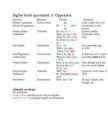
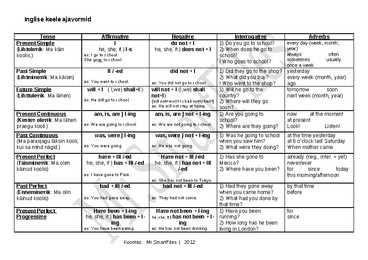
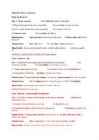
Inglise keele ajavormid Tense Affirmative Negative Interrogative Adverbs Present Simple I do not + I 1) Do you go to school? every day (week, month, (Lihtolevik: Ma käin he, she, it } I-s he, she, it } does not + I 2) When does he go to year) koolis.) ex: I go to school. school? always often She goes to school. ! Who goes to school? sometimes usually once a week Past Simple II / -ed did not +
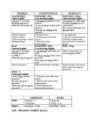
Get/ Have something TENSE ACTIVE PASSIVE WHEN? done Present Simple Am/is/are + Every day, year, often, I pv + do/does Have/ get + sth+ III pv Lihtolevik III pv usually, always Past Simple Yesterday, last year, II pv(-ed)+ did Was/ were + III pv Had/got + sth + III pv Lihtminevik last week Present
had + 3. pv We were tired. We had walked ten kilometers. We had seen this film so we didn't go to the cinema. Had you been abroad be 5 Ennetulevik Future perfect Tulevikus toimuma hakkav tegevus. Tomorrow, next week, next year, in 2020. Will + 3. pv Two more years and I hope I will pass my exams. I will go swimming with my sister next week. Will you help me with my homework tomorrow. Üldminevik Past tense Üldminevik väljendab inglise keeles minevikus aset leidnud lõpetatud tegevust. Kasutatakse väljendeid: yesterday, two minutes ago, last Friday, five years ago. Reeglipärastele verbidele liidetakse tegusõna vormile ed. to watch he watched ta vaatas to listen he listened ta kuulas to walk he walked ta kõndis Üksiku rõhulise tähe järel muutub üksik lõpukaashäälik kahekordseks (p, b, t, d, g, m, n)
had + 3. pv We were tired. We had walked ten kilometers. We had seen this film so we didn't go to the cinema. Had you been abroad be 4 Ennetulevik Future perfect Tulevikus toimuma hakkav tegevus. Tomorrow, next week, next year, in 2020. Will + 3. pv Two more years and I hope I will pass my exams. I will go swimming with my sister next week. Will you help me with my homework tomorrow. Üldminevik Past tense Üldminevik väljendab inglise keeles minevikus aset leidnud lõpetatud tegevust. Kasutatakse väljendeid: yesterday, two minutes ago, last Friday, five years ago. Reeglipärastele verbidele liidetakse tegusõna vormile ed. to watch he watched ta vaatas to listen he listened ta kuulas to walk he walked ta kõndis Üksiku rõhulise tähe järel muutub üksik lõpukaashäälik kahekordseks (p, b, t, d, g, m, n)
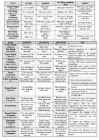
SIMPLE CONTINUOUS PERFECT I (-s) DO/DOES AM/IS/ARE + ING HAVE/HAS + III pv. I learn English I am learning English I have learned English. I get up at 7 every day. I'm reading a good book at the I've learned 10 words today. He doesn't get up at 7. moment. He hasn't learned any new What time do you get up? He isn't reading anything at the words today. moment. How many words have you What are you reading at the learned today? moment? 1 Korduv tegevus. 1 Praegu toimuv. 1 Äsja lõppenud 2 Püsiv olukord. 2 Praeguse perioodi vältel 2 Täna/sel nädalal toimunud 3 Tulevikus toimuv, seotud toimuv. 3 Elavate inimeste koht
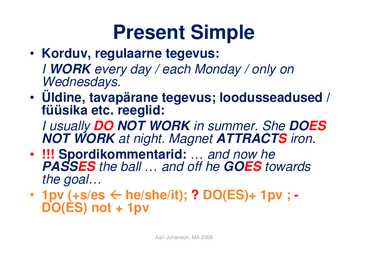
Present Simple · Korduv, regulaarne tegevus: I WORK every day / each Monday / only on Wednesdays. · Üldine, tavapärane tegevus; loodusseadused / füüsika etc. reeglid: I usually DO NOT WORK in summer. She DOES NOT WORK at night. Magnet ATTRACTS iron. · !!! Spordikommentarid: ... and now he PASSES the ball ... and off he GOES towards the goal... · 1pv (+s/es Å he/she/it); ? DO(ES)+ 1pv ; - DO(ES) not + 1pv Aari Juhanson, MA 2008 Present Progressive · Hetkel toimuv, pooleliolev tegevus: S/he IS TALKing on the phone now. I AM READing an interesting book. · Ajutine, regulaarsele ja tavapärasele vastanduv tegevus (tulevikku viitav): This summer they ARE not GROWing cucumbers as usual. They'RE GROWing tomatoes instead. · !!! Halvakspanu väljendus harjumuspärase tegevuse kohta: He IS always COMPLAINing! · BE (am/is/are) + 1pv-ing Aari Juhanson, MA 2008 Present Perfect ON -NUD ·
PRESENT SIMPLE (lihtolevik) Form: 1st form (+s) Use: 1. Things in general. Nurses look after patients in hospitals. 2. Things that happen all the time or repeatedly. She usually goes away at weekends. 3. Laws of nature (things that are true in general). The sun rises in the east. 4. Timetable events. The train leaves at 6.50 p.m. Negative form: I don't (do not) normally eat my lunch here. He doesn't (does not) like this film at all. Question form: Do you live here? How often does it rain around here? Signal words: always, every day/month, never, normally, often, seldom, sometimes, usually etc. PRESENT CONTINUOUS/PROGRESSIVE (kestev olevik) Form: am/is/are + ing Use: 1. Unfinished actions happening at or around the time of speaking. Listen! Somebody is crying. They are building a new bridge in our town. 2. Changes happening around now.
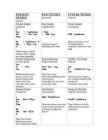
PRESENT PAST TENSES FUTURE TENSES TENSES minevik tulevik olevik Present Simple Past Simple Future Simple lihtolevik Lihtminevik Lihttulevik I You + I põhivorm + II pv We ? , - Do + I pv. ?, - Did + I pv Will + I põhivorm They He + I põhivorm + S Tegevus tulevikus, mis ei She ?,- Does + I pv Lõpetatud tegevus ole ettekavatsetud It (yesterday, last week) (tomorrow, next week, next year) Korduv tegevus, faktid (always, often, usually, every day, normally) Present Continuous Past Continuous GOING-TO Future Kestev olevik Kestev minevik Tulevik Am Is + ING
 annaabi.ee








Kõik kommentaarid