 10 punkti
Autor soovib selle materjali allalaadimise eest saada 10 punkti.
10 punkti
Autor soovib selle materjali allalaadimise eest saada 10 punkti.
 ~ 1 leht
Lehekülgede arv dokumendis
~ 1 leht
Lehekülgede arv dokumendis
 2016-09-29
Kuupäev, millal dokument üles laeti
2016-09-29
Kuupäev, millal dokument üles laeti
 1 laadimist
Kokku alla laetud
1 laadimist
Kokku alla laetud
 0 arvamust
Teiste kasutajate poolt lisatud kommentaarid
0 arvamust
Teiste kasutajate poolt lisatud kommentaarid
 NikaVjal
Õppematerjali autor
NikaVjal
Õppematerjali autor
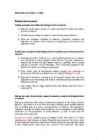
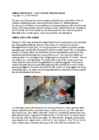
PSYCHOLOGY PART 1: CORE Biological level of analysis Outline principles that define the biological level of analysis. 1) Behavior can be innate, because it is genetically based. Evolution may play a key role in behavior. 2) Animals may be studied as a means of understanding human behavior. 3) There are biological correlates of behavior. Cognitions, emotions and behaviors are products of the anatomy and physiology of our nervous and endocrine system. Explain how principles of the biological level of analysis may be demonstrated in research. 1) Correlational studies: Study by Buss, who hypothesized that across cultures, men will prefer to marry younger women because of greater reproductive capacity and women will place greater value on a potential mate's earning potential to provide survival advantages. This evolutionary hypothesis was tested in 37 cultures by sending out questioners. 2) Twin studies (type of correlational stud
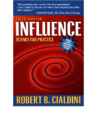
More praise for Influence: Science and Practice! "We've known for years that people buy based on emotions and justify their buying decision based on logic. Dr. Cialdini was able, in a lucid and cogent manner, to tell us why this happens." --MARK BLACKBURN, Sr. Vice President, Director of Insurance Operations, State Auto Insurance Companies "Dr. Cialdini's ability to relate his material directly to the specifics of what we do with our customers and how we do it, enabled us to make significant changes. His work has enabled us to gain significant competitive differentiation and advantage" -LAURENCE HOF, Vice President, Relationship Consulting, Advanta Corporation "This will help executives make better decisions and use their influence wisely ... Robert Cialdini has had a greater impact on my thinking on this topic than any other scientist." -CHARLES T. MUNGER, Vice Chairman, Berkshire Hathaway, Inc.
Inuit Culture, Traditions, and History Traditional Inuit way of life was influenced by the harsh climate and stark landscapes of the Arctic tundra from beliefs inspired by stories of the aurora to practicalities like homes made of snow. Inuit invented tools, gear, and methods to help them survive in this environment. Read on to learn more about traditional Inuit ways of life, and how Inuit culture has been changed over the past century. Geography Inuit communities are found in the Arctic, in the Northwest Territories, Labrador and Quebec in Canada, above tree line in Alaska (where people are called the Inupiat and Yupik), and in Russia (where people are called the Yupik people). In some areas, Inuit people are called "Eskimos" however many Inuit find this term offensive. The word "Inuit" means "the people" in the Inuktitut language. Inuit Homes In the tundra, where Inuit communities are found, there are not many building materials. No trees grow in the tundra so houses can not be ma
It is only knowledge produced with difficulty that we truly value. To what extent do you agree with this statement? Session: May 2017 Word count: 1212 It is only knowledge produced with difficulty that we truly value. To what extent do you agree with this statement? To be knowledgeable is to have an understanding about how things are and how things work. Knowledge is the combination of facts, information, and/or skills that when put together create a whole picture enabling us to fully understand a subject or situation. We, as ordinary people, can acquire knowledge either from our first hand experiences (personal knowledge) or from education and research (shared knowledge). Difficulty depends on how much effort or skill must be implemented for the information to be acquired, and the value of something lies in it's importance, usefulness or worth. We all value differen
AMBER AND RUSSET - LATE COLOUR CHANGE GENES Copyright 2014, Sarah Hartwell The ancestors of the domestic cat were nondescript black/brown striped tabbies. Over the centuries, mutation produced a wide array of colours based on 2 different pigments. Eumelanin gives the blacks, browns and blues while phaeomelanin gives the reds, fawns and creams. A few other genes give further variations on those colours such silvers, colourpoints and solids/selfs. Mutations continue to occur and unexpected colours also turn up due to inbreeding where recessive genes, hidden for generations, start showing up. AMBER AND LIGHT AMBER During the 1990s, some purebred Norwegian Forest Cats in Sweden produced chocolate/lilac and cinnamon/fawn offspring. However, those colours are not found in the purebred Norwegian Forest Cat gene pool. Had the gene pool become polluted by someone, perhaps generations ago, breeding their Norwegian Forest Cat to another breed? Was it a spontaneous mutation? Crossing of those c
Ameerika Kirjandus 30.01.13 Naturalism · France, Emile Zola · Put down his theory in 1879: Le Roman Experimental, attempt to explain the development of human society throuch biological laws · Outlook is deterministic, pessimistic, fatalistic (fate or biology) · Man as an animal-clever than other beasts, still explainable within the framework · Man is not a free agent, is govern by something · Unable to determine his own faith · Hereditary · Naturalists tried to apply in fiction the processes of natural sciences · Writers task is to record facts, systems of behaviour, living conditions, never revealing any natural unbiased (completely natural) · Point of view: amoral-outside the category of morality, neither good or bad · Naturalist find it absurd to blame the wicked. These criminals are doing what nature, environment, their unconscious tells them to do. Naturalists do not judge their characters, they sim
Maturita Solutions Upper-Intermediate Workbook Key Unit 1 2 members of the royal family, politicians, reality TV contestants, 4 1 2 had known had been waiting singers and TV presenters 3 had enjoyed/had been enjoying 1A Talking about people
All Quiet on the Western Front Erich Maria Remarque Character List Paul Bäumer - A young German soldier fighting in the trenches during World War I. Paul is the protagonist and narrator of the novel. He is, at heart, a kind, compas-sionate, and sensitive young man, but the brutal expe-rience of warfare teaches him to detach himself from his feelings. His account of the war is a bitter invective against sentimental, romantic ideals of warfare. Read an in-depth analysis of Paul Bäumer. Stanislaus Katczinsky - A soldier belonging to Paul's company and Paul's best friend in the army. Kat, as he is known, is forty years old at the beginning of the novel and has a family at home. He is a resourceful, inventive man and always finds food, clothing, and blankets whenever he and his friends need them. Albert Kropp - One of Paul's classmates who serves with Paul in the Second Company. An intelligent, speculative young man, Kropp is one of Paul's closest friends during the war. His interest
 annaabi.ee




Kõik kommentaarid