 50 punkti
Autor soovib selle materjali allalaadimise eest saada 50 punkti.
50 punkti
Autor soovib selle materjali allalaadimise eest saada 50 punkti.
 ~ 3 lehte
Lehekülgede arv dokumendis
~ 3 lehte
Lehekülgede arv dokumendis
 2009-12-07
Kuupäev, millal dokument üles laeti
2009-12-07
Kuupäev, millal dokument üles laeti
 17 laadimist
Kokku alla laetud
17 laadimist
Kokku alla laetud
 0 arvamust
Teiste kasutajate poolt lisatud kommentaarid
0 arvamust
Teiste kasutajate poolt lisatud kommentaarid
 Kristine Vilja
Õppematerjali autor
Kristine Vilja
Õppematerjali autor
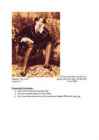
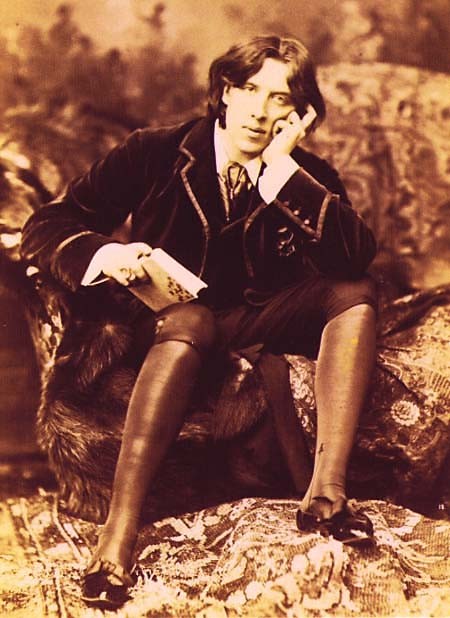
However, Hardy remained preoccupied with Emma's sudden death, and tried to overcome his remorse by writing poetry. Hardy fell ill with pleurisy in December 1927 and died in January 1928, having dictated his final poem to his wife on his deathbed. Hardy's first novel, The Poor Man and the Lady, finished by 1867 Under the Greenwood Tree (1872) In 1873 A Pair of Blue Eyes Far from the Madding Crowd (1874) The Mayor of Casterbridge (1886) Oscar Wilde Oscar Fingal O'Flahertie Wills Wilde (October 16, 1854 November 30, 1900) was an Irish playwright, novelist, poet, and author of short stories. Known for his barbed wit, he was one of the most successful playwrights of late Victorian London, and one of the greatest celebrities of his day. As the result of a famous trial, he suffered a dramatic downfall and was imprisoned for two years of hard labour after being convicted of the offence of "gross indecency."
Aestheticism – “science of beauty”, “art for art’s sake” – art need not have a deeper meaning. Fin-‐de-‐siecle, French for ‘end of the century’. Paintings by Aubrey Beardsley; literature by Oscar Wilde. Celebration of decadence (decay of standards, morals, dignity), paganism, perversity and the bizarre. No real theory behind it, deals more with feelings and tastes. Beauty in the perversity of form and matter; deformed language and paradoxes. Literature reflects the perversity of the
Police were set on Edalji's conviction, even though the mutilations continued after their suspect was jailed. It was partially as a result of this case that the Court of Criminal Appeal was established in 1907, so not only did Conan Doyle help George Edalji, his work helped establish a way to correct other miscarriages of justice. The story of Conan Doyle and Edalji is told in fictional form in Julian Barnes' 2005 novel, Arthur & George. The second case, that of Oscar Slater a German Jew and gambling-den operator convicted of bludgeoning an 82-year-old woman in Glasgow in 1908, excited Conan Doyle's curiosity because of inconsistencies in the prosecution case and a general sense that Slater was framed. After the death of his wife Louisa in 1906, and the deaths of his son Kingsley, his brother Innes, his two brothers-in-law, and his two nephews shortly after World War I, Conan Doyle sank into depression. He found solace supporting Spiritualism and its alleged
He respected everybody, however small he might be. And he was afraid of nobody, however great he might be. After the Second World War Chaplin spoke against McCarthy witch-hunts against Communists and refused to help drive them out of the Hollywood film industry. For that he was "punished" by being deprived of the right to live in the United States. Chaplin said that he would never go back to America. But he went back to accept the highest prize the film industry could offer a special Oscar Award for his brilliant career. As a man he was very human, shy, nervous, restless and firm at the same time. The last twenty-five years of his life he spent in a quiet Swiss village. He died peacefully when he was 88 years old. 14) WALTER SCOTT (1771-1832) He was born in Edinburgh, Scotland. As a boy he suffered from ill health. An attack of fever in early childhood had left him permanently lame. It was considered dangerous to exert any kind of pressure on him
insecurity, instability e.g slow, slubbish, sloppy. The phonestheme here is sl meaning of inactivity, slowness. Spry, sprag..(ei loe välja), springy. Spr suggests the idea of energetic brisk, lively motion. Adherent connotation The kind that words may acquire in a certain context and outside it is not present. 5 e.g 1 Oscar Wilde ,,I tell you what, you are very rude; and, after all, what are you? Only a student." 2 Oscar Wilde ,,He is some brainless, beautiful creature who should be in here in winter when we have no flowers." 3 ,,They are worse than schoolteachers" These examples show that adherent connotation may be positive (brainless) or negative (students, schoolteachers). The type of context is important for creating adherent connotations. Negative connotation
Russian philology The meaning of the word "philology" is "love for word". This is love that unites teachers and researchers of modern and Classical languages and literature, interpreters and diplomats, journalists and publishers, writers and poets. Russian philologis are highly demanded in various spheres of scholarly research and education, in the mass media, in civil service at the Ministry of Foreign Affairs, in archives, libraries, museums, in travel agencies, as well as Russian and international companies. Curriculum within in philological faculty includes courses of Russian and European languages and literature, courses of Linguistics and Theory of Literature for students to familiarize themselves with various schools and trends of Russian and foreign philology. The core curriculum also includes a number of Liberal Arts courses (Philosophy, History, Psychology, Pedagogy), as well as courses of basic mathematics and computer studies, and optional courses of science and the
Rudyard Kipling - One of the most memorable English writers of all time Family of Joseph Rudyard Kipling Mother- Alice MacDonald Kipling. Alice Kipling (one of four remarkable Victorian sisters) was a vivacious woman about whom a future Viceroy of India would say, "Dullness and Mrs. Kipling cannot exist in the same room."[3] Father - John Lockwood Kipling. Lockwood Kipling, a sculptor, an illustrator, museum curator and pottery designer, was the principal and professor of architectural sculpture at the newly- founded Sir Jamsetjee Jeejeebhoy School of Art and Industry in Bombay. Later in life Kipling illustrated many of Rudyard Kipling's books, and other works. Kipling also remained editor of the Journal of Indian Art and Industry, which carried drawing works from the students of the Mayo School. COUPLE named their son after the place they had first met Rudyard Lake. Alice Kipling Fleming - Sister of British author Rudyard Kipling who became a well-known psychic, producing automa
Lewis Carroll 27 January 1832 14 January 1898 Charles L. Dodgson Charles Lutwidge Dodgson (27 January 1832 14 January 1898), better known by the pseudonym Lewis Carroll, was an English author, mathematician, logician, Anglican deacon and photographer. His most famous writings are Alice's Adventures in Wonderland and its sequel Through the LookingGlass, as well as the poems "The Hunting of the Snark" and "Jabberwocky", all examples of the genre of literary nonsense. He is noted for his facility at word play, logic, and fantasy, and there are societies dedicated to the enjoyment and promotion of his works and the investigation of his life in many parts of the world, including the United Kingdom, Japan, the United States, and New Zealand. Family Dodgson's family was predominantly northern En
 annaabi.ee






Kõik kommentaarid