Vajad kellegagi rääkida?
Küsi julgelt abi LasteAbi
Logi sisse

Nigeria population (0)

1 Hindamata
Punktid
181 383 962
Current population
91 848 775
Current male population (50.6%)
89 535 186
Current female population (49.4%)
4 659 042
Births this year
11 325
Births today
2 107 131
Deaths this year
5 122
Deaths today
-9 184
Net migration this year
-22
Net migration today
2 542 727
Population growth this year
6 181
Population growth today

Population of Nigeria 2014


As of 1 January 2015, the population of Nigeria was estimated to be 178 841 235 people. This is an increase of 1.94 % (3 400 050 people) compared to population of 175 441 185 the year before. In 2014 the natural increase was positive , as the number of births exceeded the number of deaths by 3 412 331. Due to external migration, the population declined by 12 281. The sex ratio of the total population was 1.026 (1 026 males per 1 000 females) which is higher than global sex ratio. The global sex ratio in the world was approximately 1 016 males to 1 000 females as of 2014. See also map of the world by sex ratio of total population.

Nigeria population 2015


During 2015 Nigeria population is estimated to be increased by 3 465 943 people and reach 182 307 178 in the beginning of 2016 . The natural increase is expected to be positive, as the number of births will exceed the number of deaths by 3 478 462. If external migration will remain on the previous year level, the population will be declined by 12 519 due to the migration reasons. It means that amount of people who leaves Nigeria to settle permanently in another country (emigrants) will prevail over the amount of people who moves into the country (to which they are not native ) in order to settle there as permanent residents ( immigrants ).

Population dynamics in 2015


According to our estimations, daily change rates of Nigeria population in 2015 will be the following :
  • 17 399 live births average per day (724.96 in a hour )
  • 7 869 deaths average per day (327.88 in a hour)
  • -34 emigrants average per day (-1.43 in a hour)

The population of Nigeria will be increased by 9 496 persons daily in 2015.

Nigeria population density


Nigeria population density is 193.6 people per square kilometer as of October 2015. Density of population is calculated as permanently settled population of Nigeria divided by total area of the country. Total area is the sum of land and water areas within international boundaries and coastlines of Nigeria. The total area of Nigeria is 923 770 km2according to the United Nations Statistics Division .

Nigeria age structure


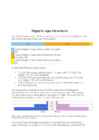
As of the beginning of 2015 according to our estimations Nigeria had the following population age distribution:
40.9
55.9
3.1
- percentage of population under 15 years old
- percentage of population between 15 and 64 years old
- percentage of population above 64 years old
In absolute figures (estimation):
  • 73 212 236 young people under 15 years old ( 37 420 740 males / 35 793 285 females)
  • 100 047 364 persons between 15 and 64 years old ( 51 039 500 males / 49 009 652 females)
  • 5 581 635 persons above 64 years old ( 2 696 926 males / 2 882 921 females)

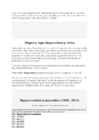
We prepared a simplified model of the population distribution pyramid which is broken down into 3 main age groups. The groups are the same as we used above: population under 15, between 15 and 64 and population which is over 65 year old.
65+
15-64
0-14
male
female
Note : The pyramid provided is not corresponding to data given above because the age groups have different number of years.
As we can see the Nigeria population pyramid has an expanding type. This type of pyramid is common for developing countries with high birth and death rates. Relatively short life expectancy, as well as low level of education and poor health care are also describe such kind of population age distribution model.

Nigeria age dependency ratio


Dependency ratio of population is a ratio of people who are generally not in the labor force (the dependents) to workforce of a country (the productive part of population). The dependent part includes the population under 15 years old and people aged 65 and over. The productive part of population accordingly consists of population between 15 and 64 years.
This ratio shows the pressure on productive population produced by the dependent part of population.
The total dependency ratio of population in Nigeria is 78.8 %.
As we can see the dependent part of population is comparable to the working part. It means that each working person in Nigeria must provide goods for himself and cover expenditure on one child or aged person additionally. The value of 78.8 % is very high.

Nigeria historical population (1960 - 2015)


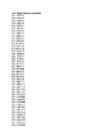
The data is given as of 1st of January of an year.
1960196319661969197219751978198119841987199019931996199920022005200820112014050,000,000100,000,000150,000,000200,000,000historical population
Year
Nigeria historical population
1960
45211614
1961
46144154
1962
47117859
1963
48128461
1964
49169820
1965
50238570
1966
51336376
1967
52468594
1968
53640549
1969
54859202
1970
56131845
1971
57453735
1972
58829321
1973
60285455
1974
61857025
1975
63565601
1976
65426979
1977
67425439
1978
69512236
1979
71619219
1980
73698099
1981
75729574
1982
77729805
1983
79729313
1984
81775217
1985
83901572
1986
86118046
1987
88412920
1988
90773617
1989
93179760
1990
95617350
1991
98085373
1992
100592242
1993
103144749
1994
105752796
1995
108424827
1996
111166210
1997
113979481
1998
116867371
1999
119831888
2000
122876727
2001
126004992
2002
129224641
2003
132550146
2004
135999250
2005
139585891
2006
143314909
2007
147187353
2008
151208080
2009
155381020
2010
159707780
2011
164192925
2012
168833776
2013
172105775
2014
175441185
2015
178841235

Growth Rate 1961 - 2015


19611964196719701973197619791982198519881991199419972000200320062009201220151.52.02.53.03.5Growth Rate %
Year
Growth Rate
1961
2.06
1962
2.11
1963
2.14
1964
2.16
1965
2.17
1966
2.19
1967
2.21
1968
2.23
1969
2.27
1970
2.32
1971
2.35
1972
2.39
1973
2.48
1974
2.61
1975
2.76
1976
2.93
1977
3.05
1978
3.09
1979
3.03
1980
2.9
1981
2.76
1982
2.64
1983
2.57
1984
2.57
1985
2.6
1986
2.64
1987
2.66
1988
2.67
1989
2.65
1990
2.62
1991
2.58
1992
2.56
1993
2.54
1994
2.53
1995
2.53
1996
2.53
1997
2.53
1998
2.53
1999
2.54
2000
2.54
2001
2.55
2002
2.56
2003
2.57
2004
2.6
2005
2.64
2006
2.67
2007
2.7
2008
2.73
2009
2.76
2010
2.78
2011
2.81
2012
2.83
2013
1.94
2014
1.94
2015
1.94

Nigeria population history


Year
Population
Growth Rate
1960
45 211 614
N/A %
1961
46 144 154
2.06 %
1962
47 117 859
2.11 %
1963
48 128 461
2.14 %
1964
49 169 820
2.16 %
1965
50 238 570
2.17 %
1966
51 336 376
2.19 %
1967
52 468 594
2.21 %
1968
53 640 549
2.23 %
1969
54 859 202
2.27 %
1970
56 131 845
2.32 %
1971
57 453 735
2.35 %
1972
58 829 321
2.39 %
1973
60 285 455
2.48 %
1974
61 857 025
2.61 %
1975
63 565 601
2.76 %
1976
65 426 979
2.93 %
1977
67 425 439
3.05 %
1978
69 512 236
3.09 %
1979
71 619 219
3.03 %
1980
73 698 099
2.90 %
1981
75 729 574
2.76 %
1982
77 729 805
2.64 %
1983
79 729 313
2.57 %
1984
81 775 217
2.57 %
1985
83 901 572
2.60 %
1986
86 118 046
2.64 %
1987
88 412 920
2.66 %
1988
90 773 617
2.67 %
1989
93 179 760
2.65 %
1990
95 617 350
2.62 %
1991
98 085 373
2.58 %
1992
100 592 242
2.56 %
1993
103 144 749
2.54 %
1994
105 752 796
2.53 %
1995
108 424 827
2.53 %
1996
111 166 210
2.53 %
1997
113 979 481
2.53 %
1998
116 867 371
2.53 %
1999
119 831 888
2.54 %
2000
122 876 727
2.54 %
2001
126 004 992
2.55 %
2002
129 224 641
2.56 %
2003
132 550 146
2.57 %
2004
135 999 250
2.60 %
2005
139 585 891
2.64 %
2006
143 314 909
2.67 %
2007
147 187 353
2.70 %
2008
151 208 080
2.73 %
2009
155 381 020
2.76 %
2010
159 707 780
2.78 %
2011
164 192 925
2.81 %
2012
168 833 776
2.83 %
2013
172 105 775
1.94 %
2014
175 441 185
1.94 %
2015
178 841 235
1.94 %
The data is given as of 1st of January of an year.
Vasakule Paremale
Nigeria population #1 Nigeria population #2 Nigeria population #3 Nigeria population #4 Nigeria population #5 Nigeria population #6 Nigeria population #7 Nigeria population #8 Nigeria population #9
Punktid 50 punkti Autor soovib selle materjali allalaadimise eest saada 50 punkti.
Leheküljed ~ 9 lehte Lehekülgede arv dokumendis
Aeg2017-01-24 Kuupäev, millal dokument üles laeti
Allalaadimisi 1 laadimist Kokku alla laetud
Kommentaarid 0 arvamust Teiste kasutajate poolt lisatud kommentaarid
Autor rassu16 Õppematerjali autor

Sarnased õppematerjalid

Maailmausundite statistika 3 - prognoos
26
pdf

Maailmausundite statistika 3 - prognoos

http://www.pewforum.org/2015/04/02/religious-projections-2010-2050/ APRIL 2, 2015 The Future of World Religions: Population Growth Projections, 2010-2050 Why Muslims Are Rising Fastest and the Unaffiliated Are Shrinking as a Share of the World’s Population The religious profile of the world is rapidly changing, driven primarily by differences in fertility rates and the size of youth populations among the world’s major religions, as well as by people switching faiths. Over the next four decades, Christians will remain the largest religious group, but Islam will grow faster than any other major religion. If current trends continue, by 2050 …

Usundiõpetus
Economic Country Review
16
docx

Economic Country Review

remarkable transformation from a farm/forest economy to a diversified modern industrial economy; per capita income is now among the highest in Western Europe. A member of the European Union since 1995, Finland was the only Nordic state to join the euro system at its initiation in January 1999. In the 21st century, the key features of Finland's modern welfare state are a high standard of education, equality promotion, and national social security system currently challenged by an aging population and the fluctuations of an exportdriven economy (Central Intelligence Agency, 2012, ISSN 15538133). 2.1.2 Geography Location: Northern Europe, bordering the Baltic Sea, Gulf of Bothnia, and Gulf of Finland, between Sweden and Russia Area: total: 338,145 km2 land: 303,815 km2 and water: 34,330 km2 Coastline: 1250 km Climate: cold temperate; potentially subarctic but comparatively mild because of moderating inf luence of the North Atlantic Current, Baltic Sea, and more than 60,000 lakes

Majandusanalüüs
Population
4
doc

Population

Population 1. Size, its changes 2. Distribution 3. Towns 4. Ethnic makeup 5. Age breakdown 6. Religion(s) 1. Size. 1 July 2006 population estimates by UK National Statistics: % (mid- Part Population (mid-2006) 2006) England 50,762,900 83.8 Scotland 5,116,900 8.4 Wales 2,965,900 4.9 Northern Ireland 1,741,600 2.9 United Kingdom 60,587,300 100 Although Britain is quite small in terms of land area (245,000 sq km), it has a large

British history (suurbritannia ajalugu)
Report-estonian ecnomy
8
docx

Report: estonian ecnomy

ERLE MAIDO TAAB11 Report Purpose The purpose of this report is to give an overview of Estonian population, political factors, technological factors, economic factors and the trends in Estonian economy compared to Germany and to briefly discuss Estonian business environment. Estonian population The total population of Estonia is 1 313 271 according to Statistics Estonia, of which 69.1% are Estonians, 25.1% Russians, 4.9% of which are of different nationalities for example Ukrainians, Belarusians and Finns. Rest are of unknown nationality. 68

Rahanduse alused
English as a Global Language
60
pdf

English as a Global Language

Large numbers of Irish came following the potato famine in Ireland in the 1840s. Germans and Italians came, escaping the consequences of the failed 1848 revolutions. And, as the century wore on, there were increasing numbers of Central European Jews, especially fleeing from the pogroms of the 1880s. In the first two decades of the twentieth century, immigrants were entering the USA at an average of three-quarters of a million a year. In 1900, the population was just over 75 million. This total had doubled by 1950. [3, p.35] Within one or two generations of arrival, most of these immigrant families had come to speak English, through a natural process of assimilation. Grandparents and grandchildren found themselves living in very different linguistic worlds. The result was a massive growth in mother-tongue use of English. [3, p.35] According to the 1990 census, the number of people (over five years of age) who

Inglise keel
FAMILY tööleht
14
docx

FAMILY tööleht

Included are the couples who cohabit without getting married, calling each other partners, and who often make their relationship official after the birth of their first child. Couples who live together are sometimes called common-law partners. The family picture of England today reflects a change away from the married couple model that dominated for most of the 20th Century. London has the smallest proportion of married couples. The second-largest proportion is the single population at 34.4%, followed by divorced at 7.8%, widowed at 6.6% and civil partnered at 0.2%. 2.9 million (15%) are lone parent families. Exercise 3. Answer the following questions. 1. What is the difference between a family and the household? The difference between a family and a household is that the people in the family are either related or in a partnership while household members are just living at the same address, sharing facilities and a living room. 2

Inglise keel
Society and culture of english-speaking countries
24
rtf

Society and culture of english-speaking countries

English monarch to set foot on the isle. 4. Who were settled in the province of Ulster by King James I? James I settled English and Scottish Protestants in Munster and Ulster. What has this resulted in? It has resulted in an amount of English people in Ireland. 5. What is meant by Home Rule? Home Rule was a movement that sought to repeal the Acts of Union 1800. The Home Rule Act, was meant to permit Ireland self-government within the UK. 6. Changes in the number of population since the 1840s. 1841: 6.5M in Ireland, 8.2M on the island 1901: 3.2M in Ireland, 5M on the island 1951: 3.0M in Ireland, 4.4M on the island 2011: 4.6M in Ireland, 6.4M on the island Causes of emigration from Ireland. The Irish Famine caused some 150,000 people to leave the island. The Great Famine (1845-52) killed roughly a million and prompted another million to emigrate. In 1890, 40 % of Irish people were living abroad

Inglise keel
Prague praha
18
doc

Prague(praha)

Gümnaasium Prague referaat Autor: Klass: Juhendaja: 2010 CONTENTS 1. Contents 2. Introduction 3. Compendium about Prague 4. Important about Czech Republic and Prague 5.-7. History 8. Independence 9. Main sights 10. the Czech Republic 11. List of famous people from Prague 12. Geography 13. Weather and climate 14. Population 15. Culture 2 INTRODUCTION The Czech Republic lies at the heart of Central Europe and at its center is the beautiful and historic city of Prague. With a population of some 1.3 million residents, the city lies on either side of the Vltava River in the middle of Bohemia that is one of the three historic Czech territories; the others being Moravia and Silesia. The

Inglise keel


Meedia

Kommentaarid (0)

Kommentaarid sellele materjalile puuduvad. Ole esimene ja kommenteeri


Sellel veebilehel kasutatakse küpsiseid. Kasutamist jätkates nõustute küpsiste ja veebilehe üldtingimustega Nõustun